The Budget Trap: Affording the Machine, but Not the Consumables
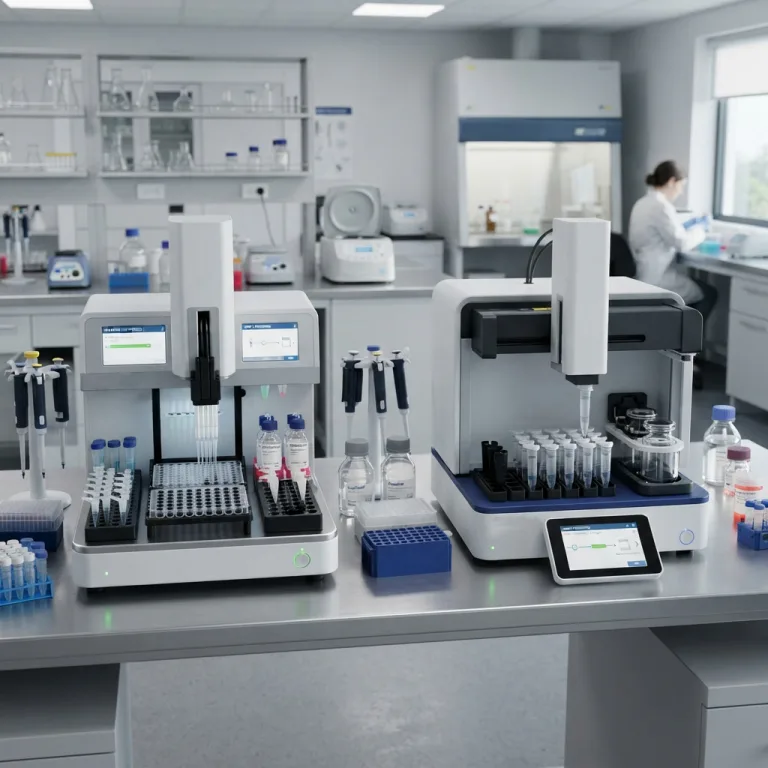
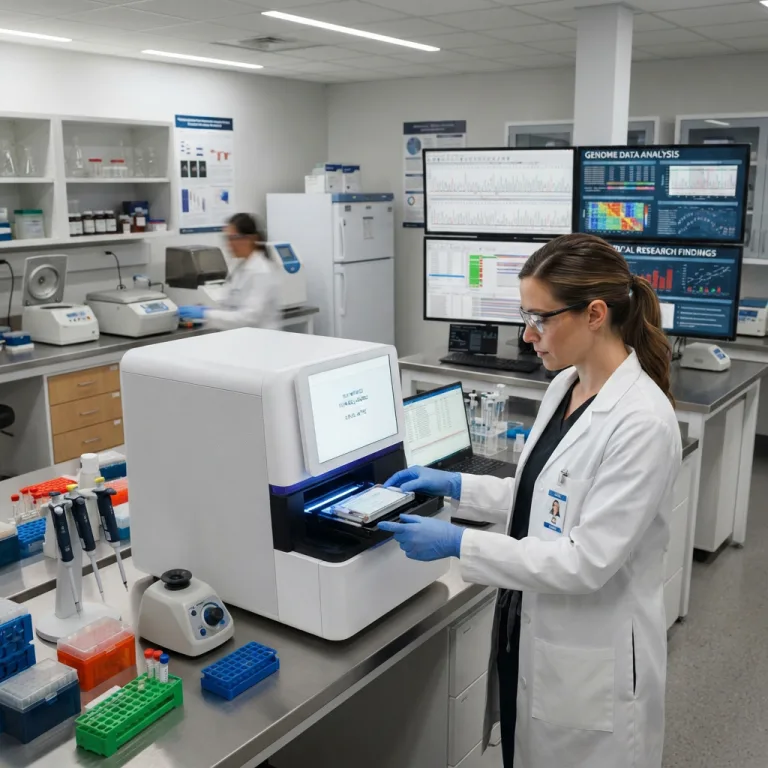
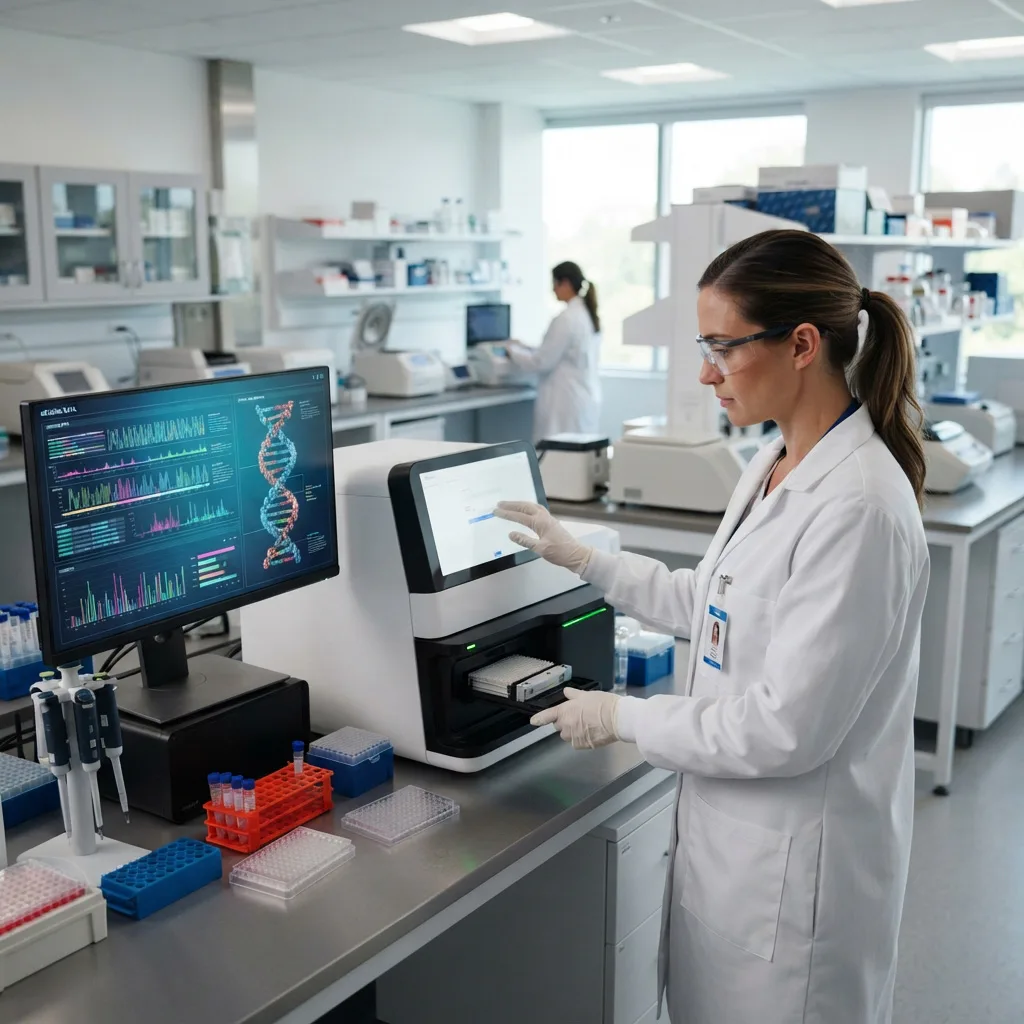
In the genomics sector, a dangerous procurement trap frequently captures newly established molecular laboratories, academic core facilities, and regional diagnostic centers. A laboratory secures a grant or budget to purchase a state-of-the-art, ultra-high-throughput DNA sequencer. The machine arrives, the installation looks impressive, and then the financial reality sets in: the laboratory cannot afford to turn the machine on.
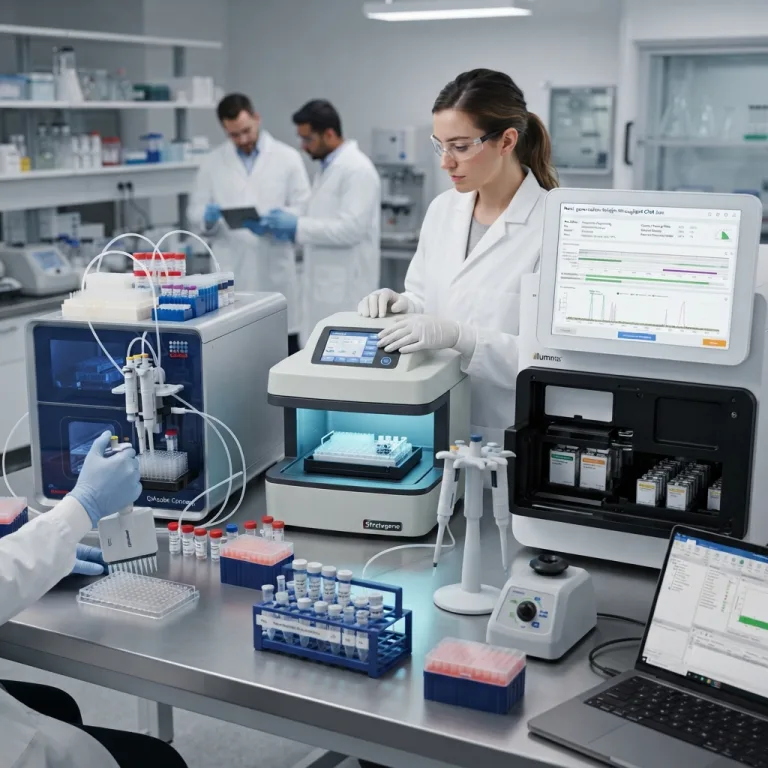
In Next-Generation Sequencing (NGS), the hardware instrument is essentially an advanced camera and fluidics pump. The true cost lies in the consumable flow cells and library preparation reagents. If a laboratory purchases a massive production-scale sequencer capable of reading 48 human genomes in a single run, but they only receive 5 patient samples per week, they face a terrible choice. They must either run the expensive high-capacity flow cell mostly empty (wasting thousands of dollars in unused sequencing capacity) or delay patient results for three weeks until they collect enough samples to fill the batch.
Procuring a DNA sequencer is an exercise in operational economics. A successful procurement strategy requires a deep audit of the laboratory’s turnaround time (TAT) requirements, the manufacturer’s closed-consumable ecosystem, and the massive IT infrastructure required to handle the data avalanche.
1. Throughput Matching: Desktop vs. Production Sequencers
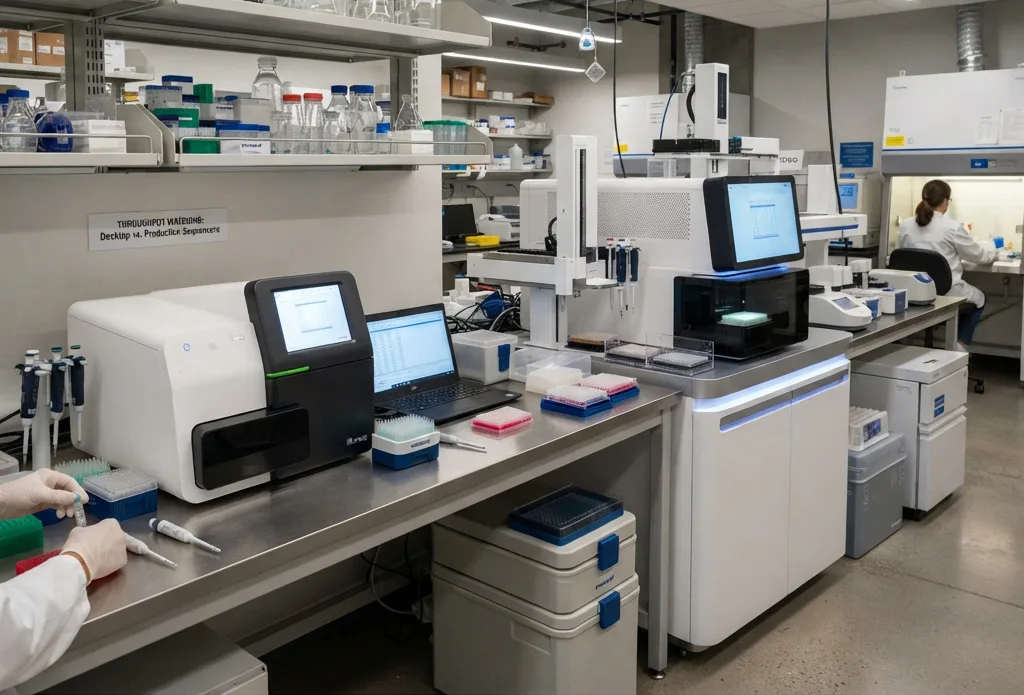
The sequencing market divides hardware into two distinct categories based on data output, measured in Gigabases (Gb) or Terabases (Tb) per run. Selecting the right tier dictates the laboratory’s profit margins.
Tier 1: Desktop Sequencers (Low to Mid-Throughput)
-
Output Range: 1 Gb to 30 Gb per run.
-
Run Time: Fast (4 to 24 hours).
-
Clinical Application: Targeted gene panels, viral genome sequencing, microbial profiling, and small-scale oncology biopsies (where turnaround time is more critical than cost per sample).
-
Economic Profile: Desktop sequencers have a low initial capital cost. However, because the flow cells produce less total data, the Cost per Gigabase (Cost/Gb) is relatively high.
-
Operational Advantage: Flexibility. A clinical laboratory can run just one or two patient tumor samples immediately without waiting days to batch dozens of samples together.
Tier 2: Production-Scale Sequencers (Ultra-High-Throughput)
-
Output Range: 100 Gb to 3,000+ Gb (3+ Tb) per run.
-
Run Time: Moderate to Slow (24 to 48+ hours).
-
Clinical Application: Whole Genome Sequencing (WGS), Whole Exome Sequencing (WES), and high-volume Non-Invasive Prenatal Testing (NIPT).
-
Economic Profile: These machines require a massive upfront capital investment. However, their ultra-dense patterned flow cells drive the Cost/Gb down to absolute rock bottom.
-
Operational Vulnerability: The Batching Bottleneck. To achieve that low cost per sample, the laboratory must completely fill the flow cell. If a flow cell fits 384 barcoded samples and the lab only has 50, the cost economics collapse.
Procurement Rule of Thumb: If a laboratory focuses on rapid clinical diagnostics where a physician needs an oncology report in 72 hours, buy two Desktop sequencers. If the laboratory is a Contract Research Organization (CRO) processing thousands of population-genetics samples per month, buy a Production sequencer.
2. The Razor-and-Blade Model: Flow Cells and Reagent Cartridges
Almost all short-read sequencing platforms operate on a strict “razor-and-blade” closed ecosystem. Once you purchase the hardware, you can only buy flow cells and sequencing reagents from that specific manufacturer. Because flow cells are highly engineered microfluidic glass chips coated in proprietary capture oligos, third-party generic alternatives do not exist.
Evaluating Flow Cell Economics
When reviewing a vendor’s tender, procurement officers must demand a clear breakdown of the consumable architecture:
-
Flow Cell Shelf Life: Sequencing reagents contain sensitive polymerase enzymes and fluorescent dyes that degrade rapidly. If a vendor requires a minimum bulk purchase of 10 flow cells per month to secure a discount, but the flow cells expire in 90 days, a low-volume lab will throw away thousands of dollars in expired reagents. Ensure the cold-chain logistics and expiration dates match your consumption rate.
-
Fixed vs. Flexible Lanes: On massive production sequencers, a flow cell is divided into physical lanes. Advanced hardware allows the laboratory to load different samples into different lanes and sequence them independently. If the flow cell does not have physical lane separation, all samples must be pooled together, severely limiting experimental flexibility.
-
Reagent Cartridge Stability: Does the sequencer support “Pause and Resume” functionality? If an error occurs or a power outage strikes during a 30-hour run, can the reagent cartridge be salvaged, or is the entire $2,000 consumable permanently destroyed?
The Cost of Library Preparation
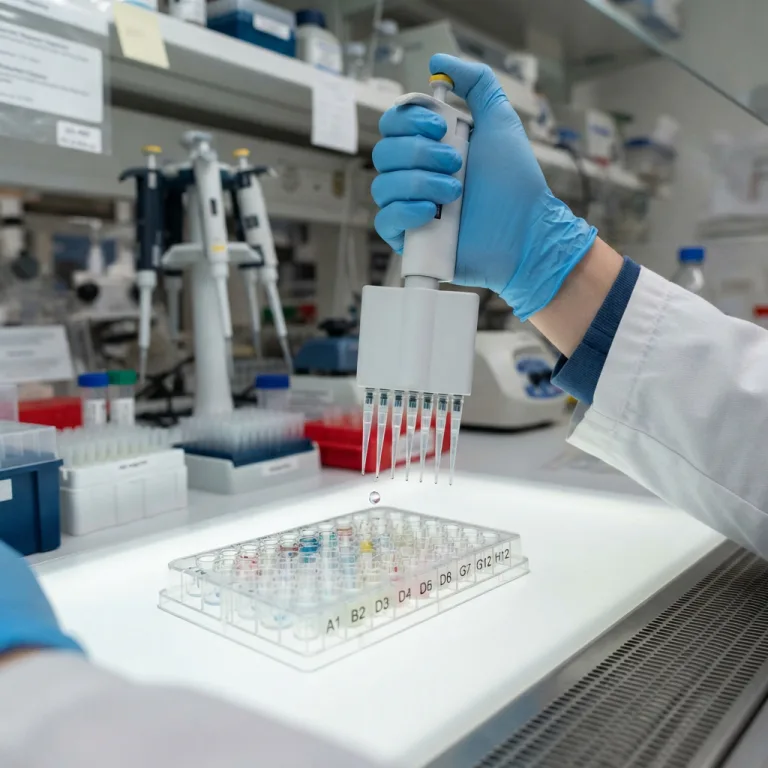
Do not just calculate the cost of the flow cell. Before DNA enters the sequencer, it must undergo Library Preparation (fragmentation, end-repair, and adapter ligation). Depending on whether the lab is running targeted amplicon panels or hybrid-capture exome enrichment, the library preparation kits, magnetic purification beads, and enzymes often cost more than the actual sequencing run itself.
3. The Hidden Iceberg: Bioinformatics and IT Overheads
In a standard clinical chemistry laboratory, a blood test generates a result like “CRP: 12.5 mg/L”—a data point occupying just a few bytes of text. In a genomics laboratory, sequencing a single human genome at 30x depth of coverage generates 90 to 120 Gigabytes of raw optical image data and FASTQ text files. If a production sequencer runs 48 genomes over the weekend, the laboratory must absorb and process 5 Terabytes of data by Monday morning.
If the procurement committee does not budget for bioinformatics infrastructure, the sequencing data will crash the hospital’s entire IT network.
                  THE GENOMIC DATA PROCESSING PIPELINE
+-------------------------------------------------------------------------+
| 1. PRIMARY ANALYSIS (On-Instrument)                                     |
|    - Converts raw CMOS camera images into base calls (A, T, C, G).      |
|    - Output: Raw unmapped reads (FASTQ files).                          |
|    - Hardware: Requires massive internal GPU/FPGA processing power.     |
|                                                                         |
| 2. SECONDARY ANALYSIS (Compute Server / Cloud)                          |
|    - Aligns the millions of short reads against the Human Reference     |
|      Genome and identifies variants (mutations).                        |
|    - Output: BAM (Alignment) and VCF (Variant Call Format) files.       |
|    - Hardware: Requires High-Performance Computing (HPC) clusters       |
|      with hundreds of CPU cores and massive RAM.                        |
|                                                                         |
| 3. TERTIARY ANALYSIS (Clinical Workstation)                             |
|    - Annotates the variants against medical databases (ClinVar) to      |
|      determine if a mutation is benign or pathogenic.                   |
|    - Output: The final Clinical Pathology PDF Report.                   |
+-------------------------------------------------------------------------+
Local Storage vs. Cloud Computing
When buying a high-throughput sequencer, the laboratory must choose an IT architecture:
-
On-Premise Local Servers (NAS): Buying physical servers and Network Attached Storage (NAS) racks requires a large upfront CAPEX, dedicated server rooms with heavy air conditioning, and a full-time IT administrator. However, it ensures absolute data sovereignty and zero recurring cloud upload fees.
-
Cloud Computing: Pushing FASTQ files to commercial cloud platforms avoids physical server costs. However, transferring 5 Terabytes of data requires dedicated fiber-optic gigabit internet lines. Furthermore, laboratories must pay recurring monthly fees for cloud compute time and long-term “cold storage” data archiving.
4. LIMS Integration and Regulatory Data Compliance
DNA sequencing in a clinical setting is not a research experiment; it is a definitive medical diagnostic tool that directs surgical interventions and targeted chemotherapy. Therefore, the sequencer’s software must adhere to the strictest global data integrity laws.
When drafting an equipment tender for a hospital or CRO, the following software specifications are non-negotiable:
FDA 21 CFR Part 11 and Data Integrity
The operating software running the sequencer must natively support:
-
Unalterable Audit Trails: Every time an operator logs in, starts a run, aborts a run, or changes a wash protocol, the system must permanently log the user ID, timestamp, and action in a hidden background file that cannot be deleted or edited.
-
Role-Based Access Control (RBAC): The system must not have a generic “Admin” account. It must integrate with the hospital’s Active Directory, ensuring that only certified technicians can start a run, and only laboratory directors can approve or override system parameters.
-
Electronic Signatures: The final primary analysis data package must be cryptographically locked and signed, proving that the raw base calls have not been manipulated post-run.
HIPAA and Patient Privacy Encryption
FASTQ and VCF files contain the ultimate personally identifiable information: the patient’s exact genetic code.
-
If the sequencer uses cloud-based secondary analysis, the data must be scrubbed of all patient names and medical record numbers, using only anonymized barcodes.
-
All data transmitted from the sequencer to the local server or the cloud must be encrypted in transit (TLS 1.2 or higher) and encrypted at rest (AES-256).
Bidirectional LIMS Connectivity
To prevent sample mix-ups, the sequencer must integrate tightly with the Laboratory Information Management System (LIMS).
-
The technician scans a 2D barcode on the patient’s DNA library tube.
-
The sequencer queries the LIMS via standard APIs or HL7 interfaces.
-
The LIMS automatically downloads the correct sequencing parameters (read length, indexing protocol, target panel) directly into the instrument.
-
Upon completion, the sequencer pushes the run-quality metrics (Q30 scores, cluster density) back to the LIMS for automated quality assurance review.
Frequently Asked Questions (FAQ)
Q1: What is sample multiplexing (barcoding), and how does it save money?
Multiplexing is a technique used to run hundreds of different patients on the same flow cell simultaneously to lower the cost per sample. During library preparation, a unique synthetic DNA sequence (a “barcode” or “index,” typically 6 to 10 base pairs long) is attached to the ends of Patient A’s DNA fragments, and a different barcode is attached to Patient B’s DNA. The samples are mixed into a single tube and sequenced together. Afterward, the bioinformatics software reads the barcodes and electronically sorts the data files back into separate patient folders (a process called demultiplexing).
Q2: What is a Q30 score, and why is it the most important sequencer specification?
In genomics, data output is meaningless if the data is inaccurate. The “Q score” (Phred quality score) is a logarithmic measure of base-calling accuracy. A score of Q30 means there is a 1 in 1,000 probability that the sequencer called the wrong letter (an accuracy of 99.9%). When evaluating competitive tenders, do not just look at “Total Gigabases Output.” Look at the “Percentage of Bases >= Q30”. A high-quality sequencer should guarantee that over 80% to 85% of its entire data output meets the strict Q30 accuracy threshold.
Q3: Why do some sequencers advertise “Paired-End” sequencing capabilities?
In single-read sequencing, the machine reads the DNA fragment from one end to the other (e.g., reading 150 bases from left to right). In Paired-End (PE) sequencing, the machine reads 150 bases from the left end, flips the DNA fragment over chemically, and reads 150 bases from the right end. This is critical for clinical oncology and structural variant detection because knowing the sequence at both ends of a fragment allows bioinformatics software to align the data against the human reference genome with drastically higher precision.
Q4: Does a DNA sequencer require a vibration-free laboratory environment?
Yes. Optical short-read sequencers utilize immense high-resolution microscopes that scan a glass flow cell continuously for 24 to 48 hours. The nanoscale distance between the objective lens and the flow cell is tightly controlled by precision autofocus lasers. If the sequencer is placed on a flimsy benchtop, near a centrifuge, or next to an elevator shaft, physical micro-vibrations will knock the camera out of focus, causing massive data loss or a complete run failure. Sequencers require dedicated, rigid, vibration-dampened laboratory benches.
Q5: Can I buy third-party generic library preparation kits to save money?
While you are forced to buy flow cells directly from the sequencer manufacturer, the Library Preparation market is highly open. Many laboratories save up to 40% on their OPEX by purchasing DNA extraction kits, fragmentation enzymes, and magnetic purification beads from specialized third-party biochemical manufacturers. The only requirement is that the final adapters ligated onto the DNA match the physical binding chemistry of your specific sequencer’s flow cell.
Summary
Purchasing a DNA sequencer is a complex balance of hardware capability, consumable economics, and massive IT infrastructure. By carefully matching throughput capacity to daily sample volume, negotiating the flow cell Cost per Gigabase (Cost/Gb), and ensuring the software meets FDA 21 CFR Part 11 data integrity laws, procurement teams can protect their facility from hidden operational bottlenecks. An affordable sequencer is useless if the laboratory cannot afford to turn it on, or if the hospital servers crash under the weight of the resulting data.