The Isolated Islands of Molecular Biology
When planning a new molecular diagnostics facility, laboratory directors often make a critical architectural mistake: they treat their equipment budget as a shopping list of isolated islands. They purchase a massive sequencer from one vendor, a basic nucleic acid extractor from another, and a standalone UV crosslinker from a third.
When the laboratory goes live, these isolated islands inevitably clash. The extractor outputs a sample volume that does not match the sequencer’s library preparation requirements. The manual tracking of samples between the extractor and the sequencer leads to human transcription errors. The lack of standard UV-C decontamination protocols between the extraction bench and the sequencing bench results in catastrophic amplicon carryover, ruining an entire batch of expensive sequencing flow cells.
In modern genomics—where clinical oncology reports dictate life-or-death chemotherapy decisions—the laboratory must operate as a perfectly integrated ecosystem.
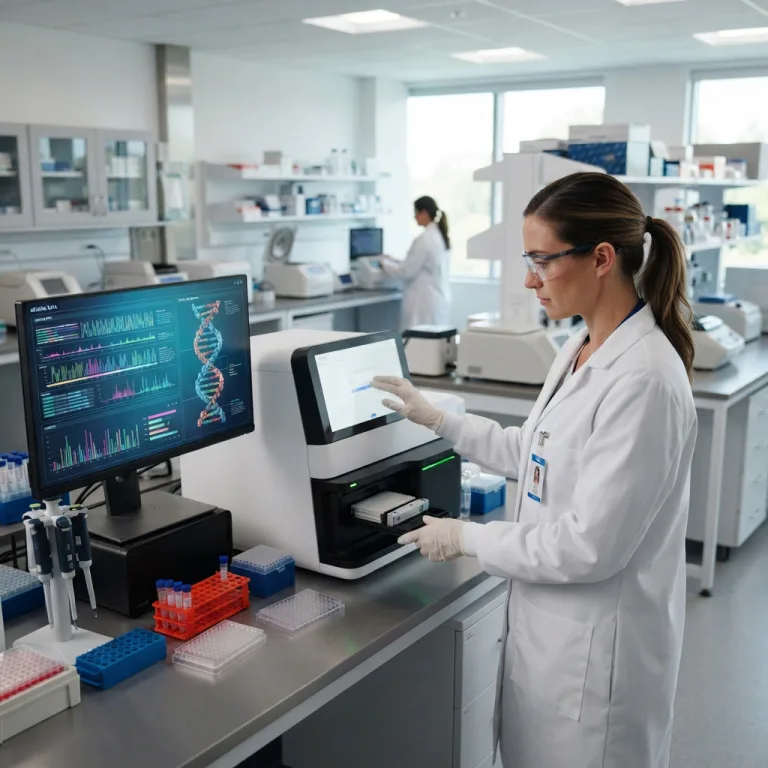
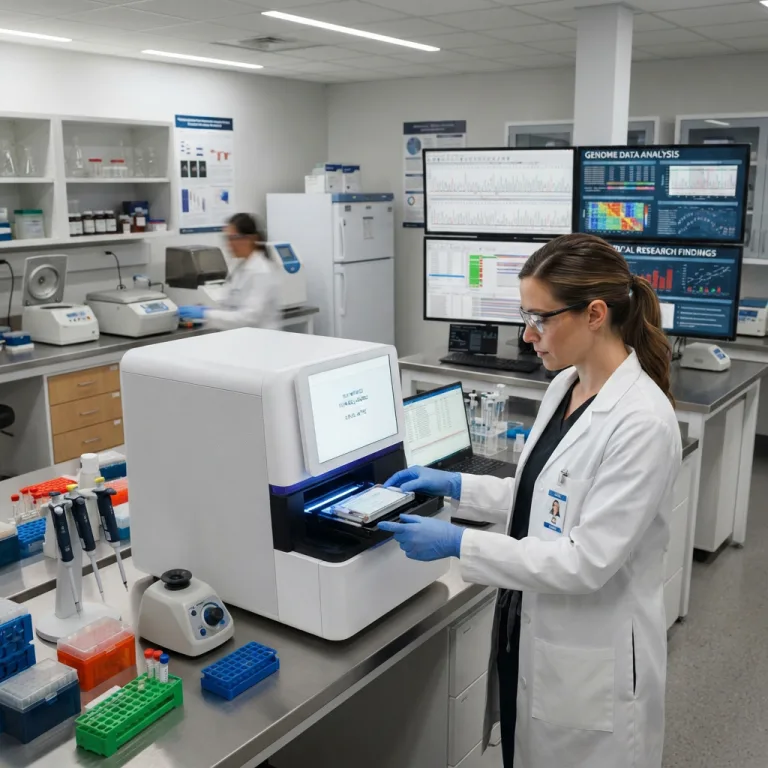
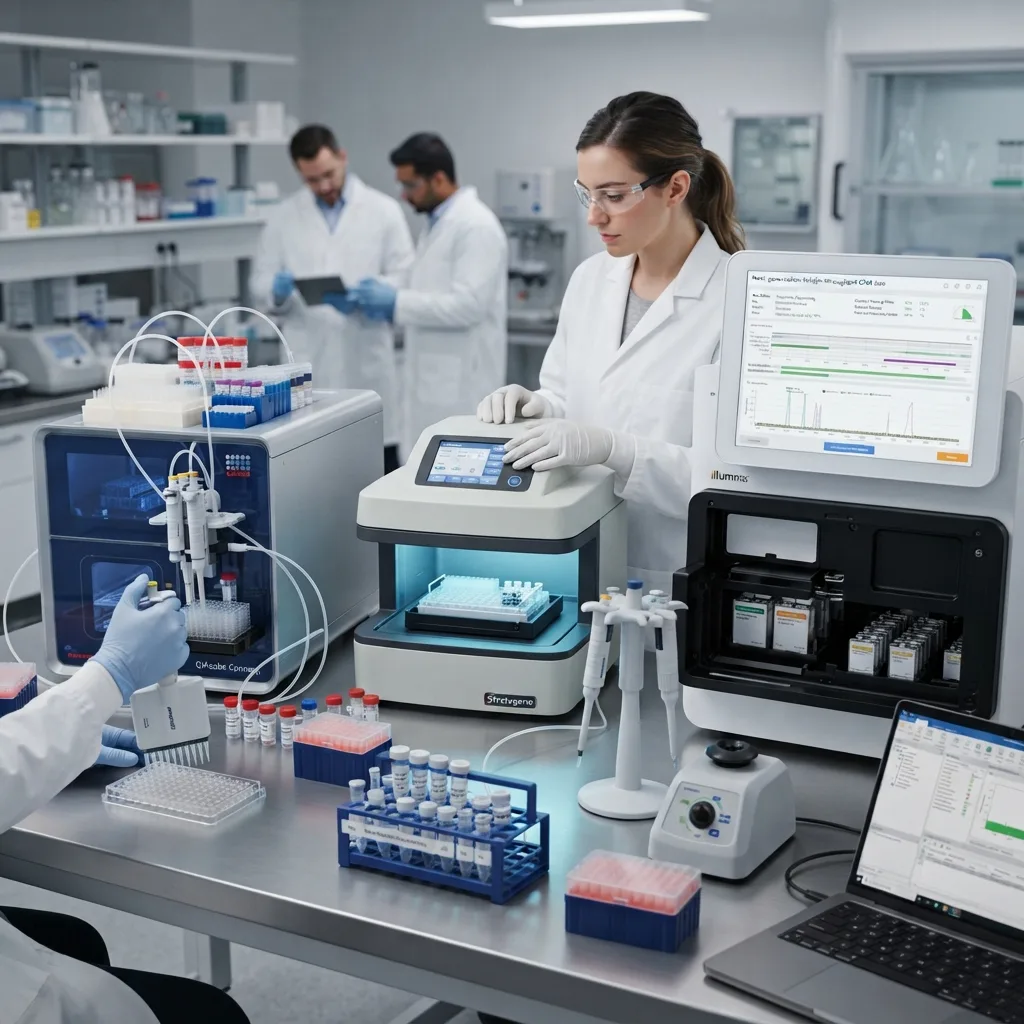
From the moment a frozen tumor biopsy arrives at the receiving dock to the moment the bioinformatics server generates a variant call file, the physical handling of the DNA and the digital tracking of the data must be completely synchronized. This guide explores how to integrate automated extractors, UV crosslinkers, and sequencers into a unified, high-throughput diagnostic pipeline.
Phase 1: The Foundation of the Pipeline (Automated Extraction)
The sequencing workflow does not begin inside the sequencer; it begins at the lysis block of the automated DNA extractor. As established in previous engineering breakdowns, a sequencer is entirely blind to the quality of the input material. If the input DNA is heavily fragmented by mechanical shearing or tainted by residual extraction salts, the sequencing flow cell will generate dark, unreadable optical clusters.
Standardizing the Input
By deploying a 96-channel magnetic bead automated extractor, a core laboratory establishes a highly rigid quality control foundation:
-
Uniformity: Processing 96 samples simultaneously ensures that Sample 1 and Sample 96 are subjected to the exact same 80-degree Celsius Proteinase K lysis duration and the exact same magnetic wash turbulence.
-
HMW Preservation: For laboratories utilizing Third-Generation long-read sequencing, the gentle nature of magnetic rod transfer preserves High Molecular Weight (HMW) DNA strands exceeding 50,000 base pairs, which is biologically impossible using legacy silica spin-column centrifuges.
-
Liquid Hand-Off: The 96-well elution plate generated by the automated extractor is geometrically standardized (ANSI/SLAS format). This allows a robotic liquid handler to pick up the plate and immediately begin Next-Generation Sequencing (NGS) library preparation without a human technician ever transferring fluid between individual tubes.
Phase 2: The Validation and Sterilization Bridge (UV Crosslinking)
It might seem counterintuitive to place a UV crosslinker—a machine designed to bombard DNA with destructive 254 nm ultraviolet light—in the middle of a delicate sequencing workflow. However, the UV crosslinker serves two absolutely indispensable roles in a clinical genomic facility.
Role A: Validation of Complex Structural Variations
While short-read NGS is incredible at finding single-nucleotide polymorphisms (SNPs) and small insertions/deletions, it struggles to map massive, highly repetitive structural variations (such as the triplet repeat expansions seen in Huntington’s Disease or Fragile X Syndrome). When an NGS pipeline flags a highly ambiguous structural variant, the laboratory must cross-reference and validate the finding. The technician runs the extracted DNA on a Southern blot, uses the microprocessor-controlled UV crosslinker to permanently fix the DNA to a nylon membrane via thymine dimer photochemistry, and probes it. This dual-technology approach ensures that diagnostic blind spots are completely eliminated.
Role B: The Sterilization Checkpoint
The greatest threat to a sequencing laboratory is Amplicon Contamination. During NGS library preparation, DNA is heavily amplified using PCR. If a microscopic droplet of this amplified DNA floats through the air and lands on the extraction bench, it will contaminate the next batch of patient samples.
To prevent this, the workflow must include strict physical decontamination checkpoints. Before any new raw samples are loaded into the automated DNA extractor, the deep-well plates, pipettes, and tube racks are placed inside the UV crosslinker. A calculated dose of 254 nm UV-C energy covalently crosslinks and permanently destroys any stray DNA or RNA fragments, ensuring the pre-amplification workspace remains biologically sterile.
Phase 3: The Data Engine (High-Throughput Sequencing)
Once the nucleic acids are extracted, purified, and the workspace is verified as sterile, the biological molecules are transformed into digital data.
Synchronizing Throughput
The most critical integration factor between Phase 1 and Phase 3 is Throughput Matching. If a laboratory purchases an ultra-high-throughput production sequencer capable of running 384 samples in a single batch, but their automated DNA extractor can only process 16 samples per run, a severe operational bottleneck forms. The sequencer will sit idle for days while the extraction technicians work overtime to accumulate enough purified DNA to fill the sequencing flow cell.
A perfectly integrated laboratory perfectly aligns its hardware scaling:
-
Mid-Tier Clinics: Pair a 32-channel magnetic bead extractor with a desktop-class sequencer (outputting 15 to 30 Gigabases per run). This allows for a fast, daily 24-hour turnaround time for acute oncology or infectious disease panels.
-
High-Tier CROs: Pair dual 96-channel automated extractors with a production-scale sequencer (outputting 1,000 to 3,000 Gigabases per run). The extractors can process 192 samples every 45 minutes, rapidly feeding the massive data appetite of the sequencing flow cells for Whole Genome Sequencing (WGS) projects.
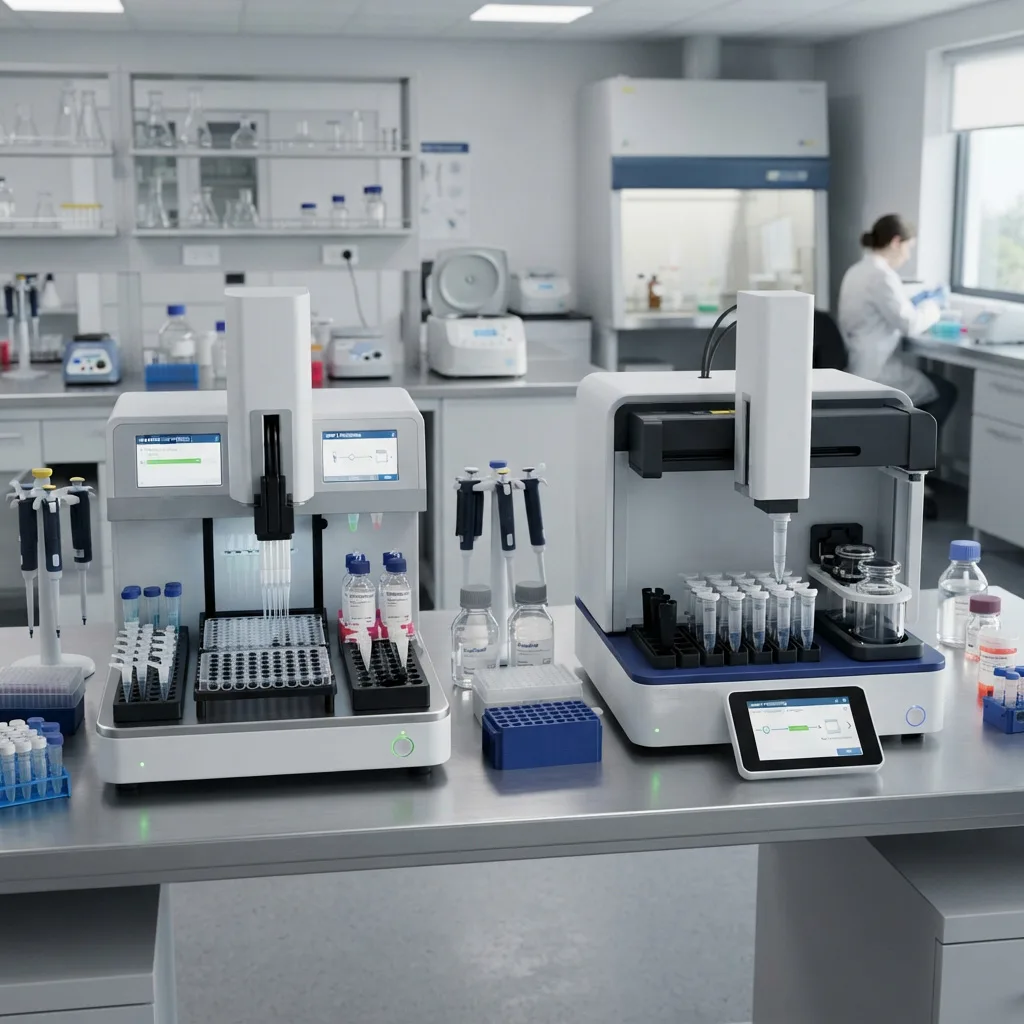
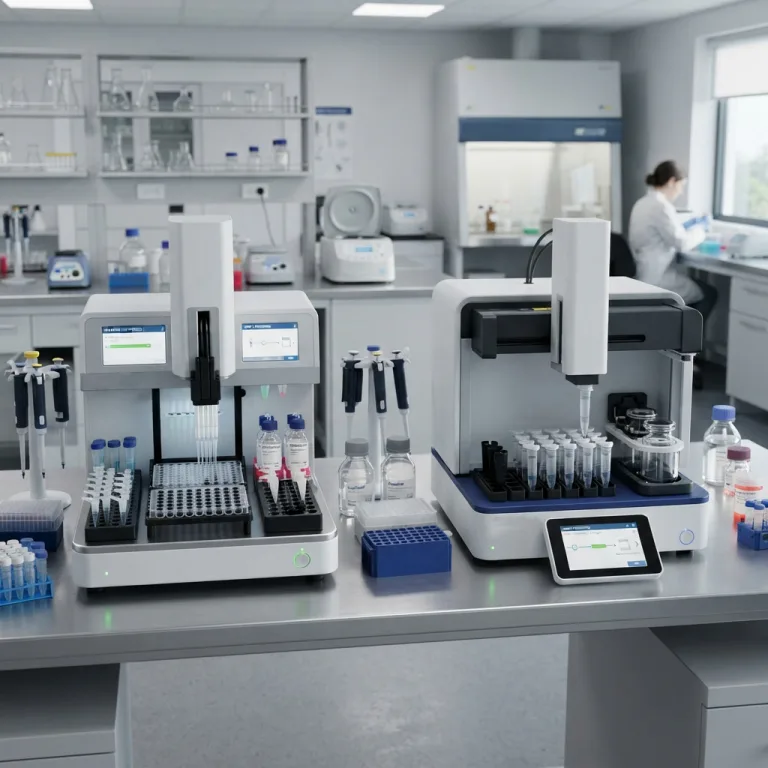
A molecular biology laboratory workbench showcasing a direct comparison between two distinct automated DNA/RNA extraction platforms, highlighting their robotic pipetting arms and sample processing decks.
Phase 4: LIMS Integration and FDA 21 CFR Part 11 Data Continuity
The physical movement of the plastic 96-well plates is only half of the workflow; the other half is the digital movement of the patient data.
In a fragmented laboratory, a technician extracts DNA from a tube labeled “Patient A,” manually types “Patient A” into an Excel spreadsheet, and then manually types “Patient A” into the sequencer’s software. This manual transcription violates modern Good Laboratory Practice (GLP) and introduces severe risks of sample swapping.
The Bidirectional Digital Thread
A modern, integrated genomic workflow relies on a unified Laboratory Information Management System (LIMS) and native FDA 21 CFR Part 11 software compliance across all devices:
-
The Extractor Log: The technician scans the raw blood tube. The automated extractor pushes a digital log to the LIMS confirming that extraction protocol “Blood_High_Yield_v2” was completed successfully, logging the exact timestamp, machine serial number, and operator ID.
-
The Sequencer Handshake: When the resulting library plate is loaded into the sequencer, the sequencer scans the plate barcode. It queries the LIMS, which automatically downloads the patient demographic data, the specific sequencing depth required, and the target diagnostic panel.
-
The Unalterable Audit Trail: From the extractor’s robotic movements to the sequencer’s final FASTQ file generation, every mechanical and digital event is locked into an encrypted, unalterable background audit trail. When regulatory agencies audit the facility, the laboratory director can instantly generate a cryptographically signed PDF proving the unbroken chain of custody for every single DNA molecule.
Phase 5: B2B Procurement and Single-Source Consolidation
For hospital networks, university core laboratories, and international medical equipment distributors, procuring this complex three-part ecosystem from three different manufacturers creates immense logistical friction.
When a distributor bids on a large government Ministry of Health (MOH) tender to equip a newly constructed national genomics center, adopting a Single-Source Consolidation strategy provides overwhelming advantages:
-
Unified Preventative Maintenance (PM): Instead of managing three different service contracts with three different dispatch teams, a single field service engineer can perform the annual calibration on the extractor’s magnetic rods, the crosslinker’s UV sensors, and the sequencer’s fluidic pumps in a single site visit.
-
Supply Chain Efficiency: Consolidating capital equipment purchases through one manufacturer drastically reduces international freight forwarding costs, consolidates customs clearance documentation, and maximizes volume-based wholesale discounts.
-
Standardized IT Architecture: Sourcing from a unified engineering ecosystem ensures that all touchscreens, software interfaces, and LIMS export protocols speak the same digital language, eliminating expensive third-party middleware software.
Bridging the Gap with UMY Medical
Executing this high-level laboratory integration requires partnering with an original equipment manufacturer (OEM) that possesses deep expertise across optical engineering, microfluidics, and robotic automation.
广州优迈医疗器械有限公司 (UMY Medical Equipment Co., Ltd.) provides a comprehensive, globally certified portfolio designed to outfit the modern molecular biology and clinical diagnostic laboratory from end to end.
-
End-to-End Compliance: Operating under strict ISO 13485 medical quality management systems, UMY Medical designs hardware that meets global CE IVD standards, ensuring seamless regulatory registration for international distributors.
-
The Automated Extractor Fleet: Featuring robust magnetic rod robotics, deep-well 80-degree heating blocks, and internal HEPA/UV sterilization, their automated extractors guarantee high-yield, PCR-ready nucleic acids.
-
The UV Crosslinker Standard: Engineered with microprocessor-controlled energy sensors and highly reflective stainless steel chambers, their crosslinkers provide mathematically perfect DNA fixation and sterile workspace decontamination.
-
B2B Partnership: By eliminating third-party trading intermediaries, UMY Medical allows international distributors, CROs, and hospital procurement teams to access direct-factory wholesale pricing, comprehensive OEM/ODM branding, and unified biomedical engineering support. (To review the complete laboratory hardware portfolio and request B2B tender specifications, visit the official website at https://www.umymedical.com/).
Frequently Asked Questions (FAQ)
Q1: Can a laboratory mix and match extractors and sequencers from different brands?
Yes, the chemical output of any standard automated DNA extractor (purified DNA in an aqueous buffer) is universally compatible with any brand of DNA sequencer. The challenge is not biological compatibility; the challenge is IT software integration, consumable logistics, and ensuring the physical plastic output plates of the extractor fit directly into the deck of the automated library preparation robot without manual pipetting.
Q2: Why is UV-C decontamination necessary if the extractor is fully enclosed?
While the automated extractor itself protects the sample during the lysis and washing phases, the laboratory technician must still manually pipette the raw biological fluid (blood or saliva) into the initial deep-well plates on the open laboratory bench. This pre-analytical step is where amplicon aerosol contamination most frequently occurs. Utilizing a UV crosslinker to bathe the pipettes, tube racks, and empty plates in 254 nm light before the technician begins work guarantees a sterile starting environment.
Q3: How do we prevent bioinformatics bottlenecks when running continuous genomic workflows?
As throughput scales up, data storage becomes the primary failure point. A fully integrated laboratory must deploy a dual-tier IT architecture: a high-speed, local Network Attached Storage (NAS) array for immediate primary analysis (base calling) directly off the sequencer, paired with an automated script that pushes the massive FASTQ files to secure, long-term cloud storage (like AWS or Azure) for secondary alignment and variant calling, freeing up the local servers for the next day’s run.
Q4: Does the magnetic bead extraction method impact the downstream sequencing error rate?
Indirectly, yes. If an extraction method fails to completely wash away chaotropic salts, ethanol, or cellular proteins, these chemical inhibitors will interfere with the polymerase enzymes during the sequencer’s Library Preparation and Sequencing-by-Synthesis phases. This interference causes optical clustering failures and drops the sequencer’s Q30 accuracy score. High-quality automated magnetic bead extraction ensures peak enzyme efficiency, maximizing the sequencer’s data output.
Q5: What is the typical ROI (Return on Investment) timeline for fully automating this workflow?
For a clinical diagnostic laboratory processing more than 50 complex molecular samples per day, the ROI for integrating automated extractors and cohesive software tracking is typically achieved within 6 to 12 months. The financial return is driven by a massive reduction in hands-on technician labor hours, the elimination of costly manual pipetting errors (which require expensive sequencing re-runs), and the ability to scale up test volume during infectious disease outbreaks without hiring additional staff.
Conclusion of the Molecular Genomics Series
This concludes our comprehensive 7-part master guide on Molecular Biology and Genomic Laboratory Instrumentation. Throughout this series, we have deconstructed the photochemical physics of UV DNA Crosslinkers, mapped the technological evolution of DNA Sequencers, and detailed the robotic fluidics of Automated DNA Extractors.
By abandoning the isolated approach and treating the laboratory as a fully integrated, closed-loop ecosystem, healthcare institutions and Contract Research Organizations can maximize their diagnostic throughput, enforce absolute data integrity, and ultimately deliver life-saving genetic insights with unparalleled accuracy and speed.