The Overnight Throughput Collapse
When a regional respiratory virus outbreak occurs, a clinical pathology laboratory that typically processes 50 patient swabs a day can suddenly receive 2,000 swabs overnight. Under this immense pressure, a laboratory relying on manual pipetting or small benchtop extractors will instantly collapse. Technicians will suffer severe repetitive strain injuries, human pipetting errors will skyrocket, and the diagnostic reporting backlog will delay critical patient quarantines.
Choosing an automated nucleic acid extractor is not just an exercise in upgrading technology; it is an investment in operational elasticity.
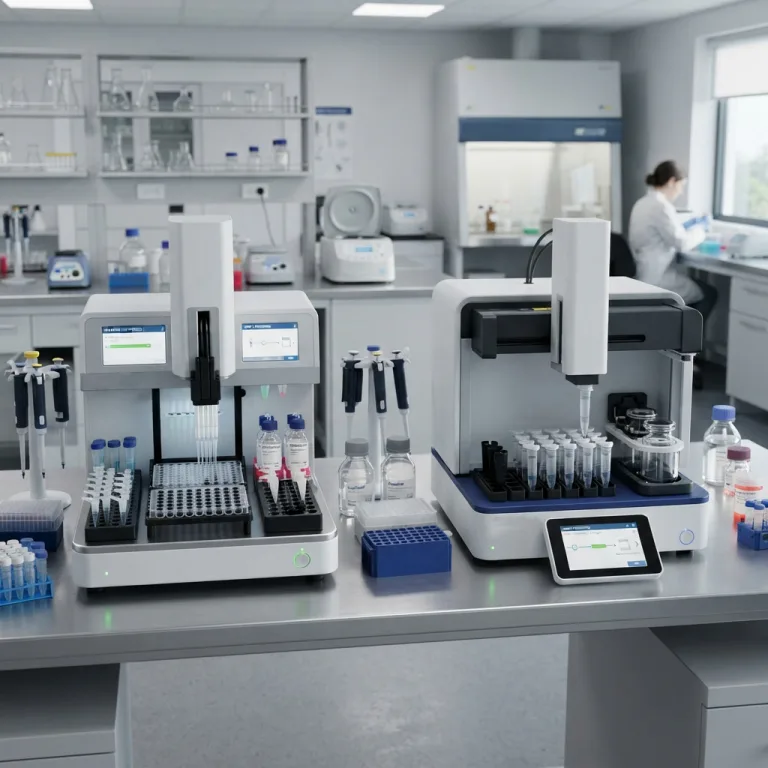
However, not all automated extractors are engineered equally. Some rely on complex pneumatic liquid pumps that constantly jam, while others lack the internal heating elements required to fully break down dense tissue samples. For hospital procurement committees, independent clinical laboratories (ICLs), and scientific equipment distributors, evaluating an extractor requires looking past the exterior casing to audit the internal robotics, thermal controls, and IT infrastructure.
1. Hardware Throughput: 32-Channel vs. 96-Channel Systems
The most critical decision when purchasing a nucleic acid extractor is sizing the throughput. Extractor capacity is dictated by the robotic footprint and the type of standard ANSI/SLAS microplates the machine can accommodate.
| Hardware Tier | Throughput Capacity | Optimal Plate Format | Primary Laboratory Application |
| Low-Throughput | 1 to 16 samples per run | Single-use pre-filled cartridges | Small remote clinics, STAT emergency testing, mobile laboratories. |
| Mid-Throughput | 16 to 32 samples per run | 96-Deep Well Plates (used across 3 rows) | Routine hospital pathology, tumor biopsy profiling, forensic DNA labs. |
| High-Throughput | 96 samples per run | 96-Deep Well Plates (fully utilized) | Blood screening centers, epidemiology outbreak tracking, large CROs. |
The 32-Well Sweet Spot
For a standard mid-sized hospital laboratory, a 32-channel extractor often provides the best Return on Investment (ROI). These machines utilize standard 96-deep well plates. A single 96-well plate is divided into different zones (e.g., Lysis, Wash 1, Wash 2, Elution). The 32 magnetic rods move 32 patient samples sequentially through these zones on a single plate. This minimizes plastic waste and keeps the machine compact enough to fit inside a standard biosafety cabinet (BSC).
The 96-Well Workhorse
When scaling up to a 96-channel extractor, the robotic footprint expands. Because all 96 rods are processing 96 patient samples simultaneously, the machine cannot use just one plate. The deck must accommodate up to six separate 96-deep well plates side-by-side (one dedicated entirely to Lysis, one entirely to Wash 1, etc.). The robotic arm lifts the 96 magnetic rods and traverses horizontally across the massive deck. This requires significantly more bench space but delivers unparalleled turnaround time for mass population screening.
2. Robotic Architecture: Moving the Beads vs. Moving the Liquid
There are two fundamentally different engineering approaches to automating magnetic bead extraction.
The Flawed Approach: Liquid Handling Workstations
Older automated systems operate like robotic pipettes. They keep the magnetic beads and the DNA stationary in a tube, apply a magnetic block to the side of the tube, and use robotic syringe pumps to suck out the dirty liquid and inject fresh wash buffer.
-
The Problem: Pumping liquid is highly prone to splashing and aerosol generation. Furthermore, liquid handling workstations require the laboratory to purchase thousands of expensive, specialized disposable conductive pipette tips, massively inflating the Cost per Test.
The Modern Standard: Magnetic Rod Transfer (Moving the Beads)
Modern nucleic acid extractors abandon liquid pumping entirely. Instead, they use arrays of retractable Magnetic Rods.
-
All the liquids (lysis buffer, washes, elution buffer) are pre-filled into the deep-well plates. The liquid never leaves its assigned well.
-
The machine drops the magnetic rods into the lysis well. The rods capture the magnetic beads (which are bound to the DNA).
-
The robotic arm lifts the rods completely out of the liquid.
-
The arm moves horizontally and drops the beads directly into the next wash well.
-
The magnetic field is temporarily turned off, and the rods vibrate rapidly to stir and wash the beads in the new liquid.
-
The Engineering Advantage: Because no liquids are being sucked or squirted, the risk of aerosol cross-contamination drops to near zero. More importantly, it eliminates the need for disposable robotic pipette tips, slashing consumable operating expenses (OPEX).
3. Thermal Management: The Necessity of Deep-Well Heating
DNA extraction is heavily dependent on temperature. The initial step—chemical lysis and protein degradation—relies on Proteinase K, an enzyme that reaches peak efficiency between 55 and 65 degrees Celsius. The final step—elution—often requires temperatures between 70 and 80 degrees Celsius to force heavy, long-strand DNA to fully release from the magnetic beads.
If an automated extractor lacks built-in heating blocks, the laboratory technician must perform the lysis step manually in an external water bath, completely defeating the purpose of buying an automated machine.
Evaluating the Heating Subsystem
When drafting a procurement tender, inspect the heating mechanics:
-
Conformational Fit: The aluminum heating blocks on the deck must be precisely milled to match the exact curvature of the U-bottom or V-bottom 96-deep well plates. If there is an air gap between the plastic plate and the metal block, the heat transfer will be uneven, causing the outer wells to reach 70 degrees while the inner wells only reach 50 degrees.
-
Independent Temperature Zones: A premium 96-channel extractor must feature independent heating control for the Lysis plate position and the Elution plate position. This allows the machine to pre-heat the elution buffer while the lysis step is still occurring, shaving 10 to 15 minutes off the total run time.
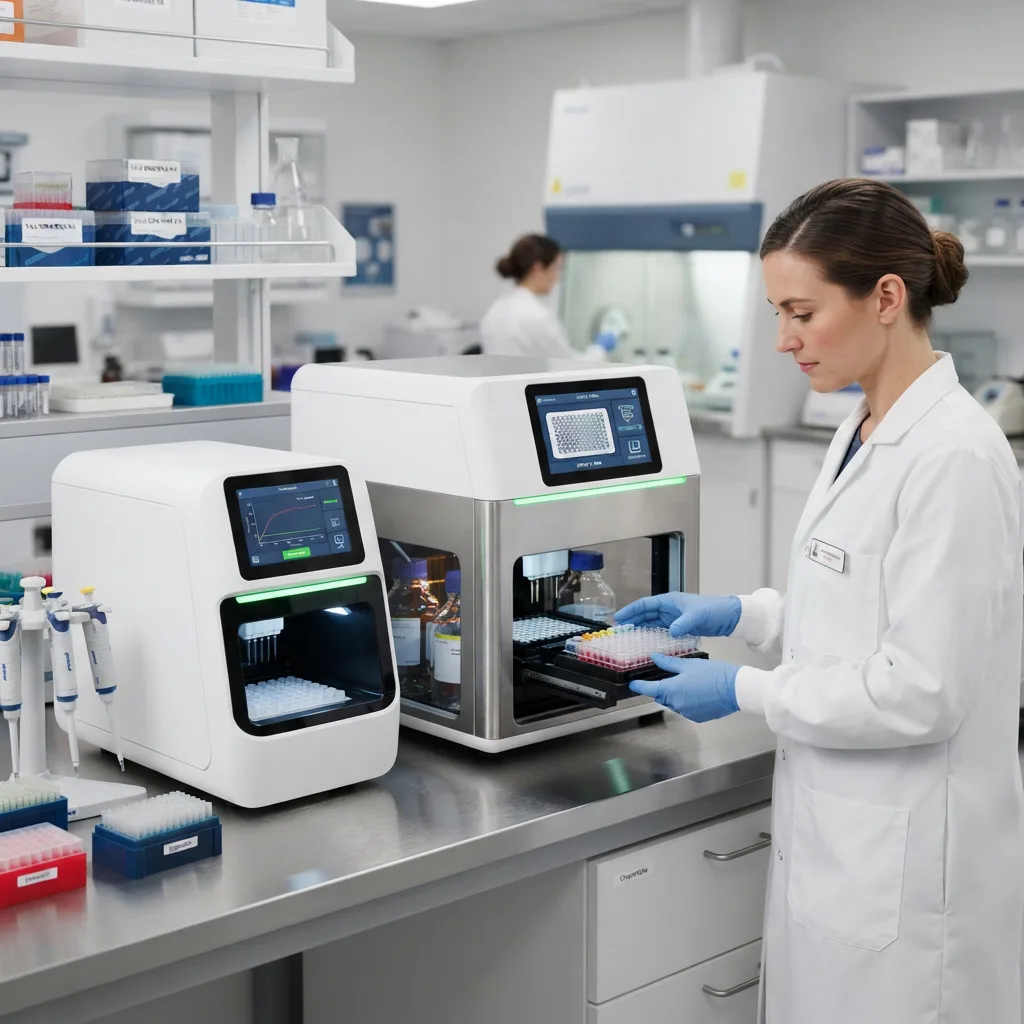
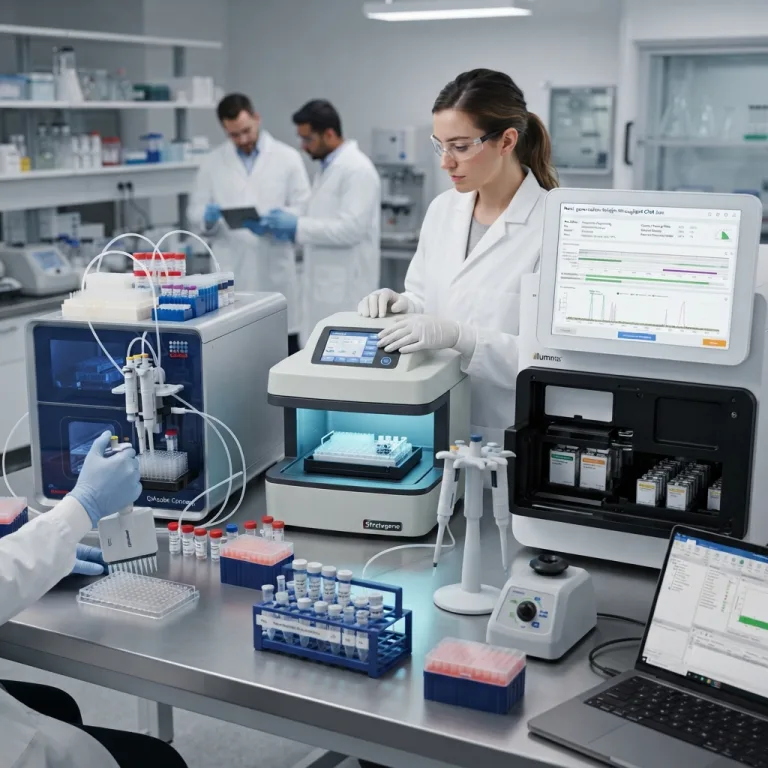
A clinical researcher loads a prepared sample plate into a high-throughput automated nucleic acid extraction machine, streamlining the purification of DNA and RNA for diagnostic testing.
4. Biosafety and Cross-Contamination Prevention
In a clinical PCR laboratory, a single microscopic droplet of DNA splashing from a positive patient well into an adjacent negative patient well will result in a false-positive diagnosis. When 96 wells are packed tightly together on a single plastic plate, managing cross-contamination is the ultimate engineering challenge.
To pass a rigorous hospital procurement audit, an automated extractor must feature the following protective hardware:
A. Disposable Magnetic Rod Covers (Tip Combs)
The permanent magnetic rods attached to the robot arm never actually touch the biological sample. Before the run begins, the machine picks up a disposable plastic sheath—called a Tip Comb or rod cover—which fits over the 96 magnets like a glove. The DNA and beads stick to the outside of this cheap, disposable plastic sleeve. After the elution is complete, the machine automatically ejects the contaminated sleeve into a waste bin.
B. Anti-Drip Motor Algorithms
When the robotic arm lifts the beads out of a wash well to move them to the next plate, a drop of liquid often clings to the bottom of the beads. If that drop falls while the arm is moving across the deck, it will contaminate whatever well it lands in. Premium extractors feature programmed dwell times and vibration algorithms. The arm lifts the beads just above the liquid surface, pauses for two seconds, and vibrates slightly to shake off the hanging drop back into its original well before moving horizontally across the deck.
C. Active HEPA Filtration and UV-C Sterilization
The entire robotic deck must be enclosed in a sealed, transparent acrylic housing.
-
HEPA Airflow: The machine should feature a built-in exhaust fan paired with a High-Efficiency Particulate Air (HEPA) filter. This creates a slight negative pressure environment inside the chamber, ensuring that any infectious aerosols generated during the vigorous mixing steps are trapped in the filter and not blown into the technician’s face.
-
UV-C Decontamination: Between batch runs, the operator must be able to activate an internal 254 nm UV-C lamp for 15 to 30 minutes. As discussed in previous molecular biology articles, this UV light permanently crosslinks and destroys any stray DNA fragments that may have landed on the deck, ensuring absolute sterility for the next patient batch.
5. LIMS Integration and Open Reagent Ecosystems
An automated machine is only as efficient as its software interface. In a modern diagnostic laboratory, manually typing 96 patient names into a touchscreen is an unacceptable bottleneck that guarantees transcription errors.
Bidirectional Data and Barcoding
The extractor must feature either a built-in barcode scanner or support a handheld USB scanner. When the technician scans the 1D or 2D barcode on the deep-well plate, the extractor’s software should immediately query the hospital’s Laboratory Information Management System (LIMS). The LIMS tells the machine exactly which extraction protocol to run (e.g., “Run the 45-minute High-Yield Blood protocol”). Upon completion, the extractor pushes a digital log back to the LIMS, recording the exact time, the protocol used, and any mechanical errors, ensuring full FDA 21 CFR Part 11 traceability.
The Value of Open Software Architecture
Many legacy sequencer and extractor manufacturers lock their hardware, forcing the laboratory to exclusively buy their expensive brand-name magnetic bead kits. Procurement officers should heavily favor Open-System Extractors. An open system allows the laboratory director to program custom temperature profiles, mixing speeds, and magnetic capture times directly on the touchscreen. This freedom allows the hospital to purchase highly cost-effective magnetic bead reagents from third-party biochemical suppliers, drastically lowering the laboratory’s 5-year operating expenditures.
Frequently Asked Questions (FAQ)
Q1: Can a 96-channel automated extractor process just 10 samples if the lab is having a slow day?
Yes. Modern extractors are highly flexible. If a laboratory only has 10 patient samples, the technician simply fills the first 10 columns of the 96-deep well plate with reagents and samples, leaving the rest empty. The machine will lower all 96 magnetic rods, but only the 10 rods that enter liquid will capture DNA. However, this does waste the entire 96-well plastic tip comb.
Q2: What is the typical turnaround time for a fully automated magnetic bead extraction?
Depending on the complexity of the sample and the specific magnetic bead chemistry, a standard viral RNA extraction (such as for influenza or SARS-CoV-2) can be completed in 15 to 25 minutes. A more complex genomic DNA extraction from whole blood or solid tissue, which requires extended high-temperature Proteinase K incubation, typically takes 35 to 45 minutes.
Q3: Why does the machine vibrate or spin the magnetic rods rapidly during the wash steps?
When the magnetic beads are captured by the magnet, they clump tightly together into a dense pellet. If they remain clumped in the wash buffer, the salts trapped in the center of the pellet will never wash away. By turning off the magnetic field and spinning or rapidly vibrating the plastic rod covers (often up to 2,000 rpm), the machine creates violent fluidic turbulence. This instantly breaks apart the bead pellet and resuspends every individual microscopic bead in the wash buffer, ensuring 100% chemical washing efficiency.
Q4: How is maintenance handled on the magnetic rod drives?
The robotic axes (X, Y, and Z stepper motors) are the most critical mechanical components. Routine maintenance primarily involves keeping the internal stainless steel deck completely free of spilled salt buffers, which are highly corrosive. Most manufacturers recommend an annual preventative maintenance (PM) visit where a biomedical engineer lubricates the linear guide rails, calibrates the Z-axis drop height to prevent the rods from crashing through the bottom of the plastic plates, and verifies the heating block temperature uniformity.
Q5: Can these extractors handle high-volume samples, like 5 mL of blood?
Standard 96-deep well plates max out at a liquid volume of roughly 2.0 mL per well. If a laboratory needs to extract circulating cell-free DNA (cfDNA) from a large 5 mL or 10 mL plasma sample (common in liquid biopsy oncology), standard 96-well extractors will overflow. For large volumes, laboratories must procure specialized 24-channel extractors that utilize massive 24-deep well plates with 10 mL to 15 mL well capacities.
Summary
Choosing an automated nucleic acid extractor requires a rigorous evaluation of laboratory throughput and mechanical robotics. By bypassing flawed liquid-handling pumps in favor of magnetic rod transfer technology, incorporating 80-degree deep-well heating blocks, and ensuring biosafety through HEPA filtration and UV-C sterilization, a laboratory guarantees both maximum DNA yield and absolute protection against clinical cross-contamination.