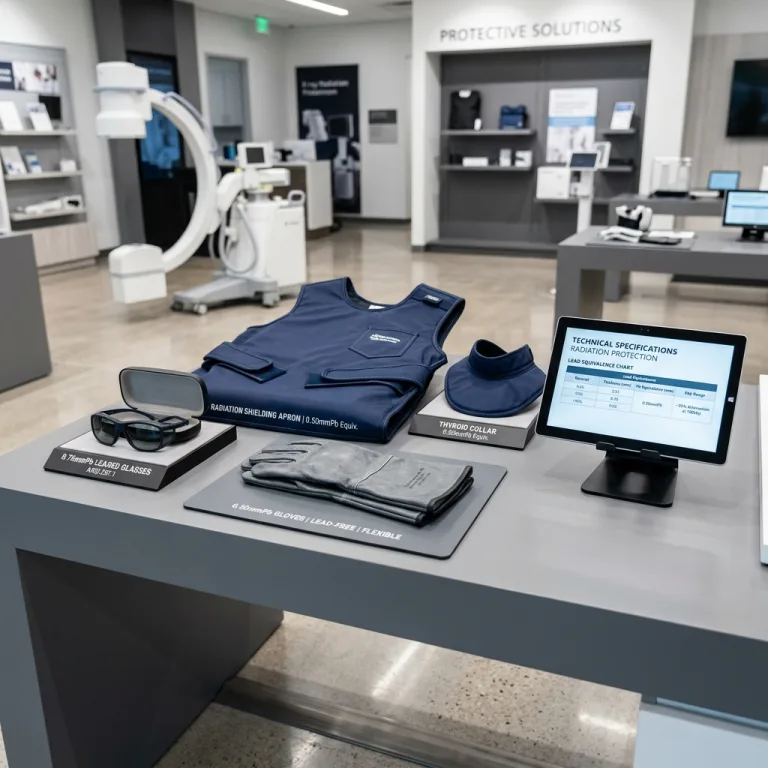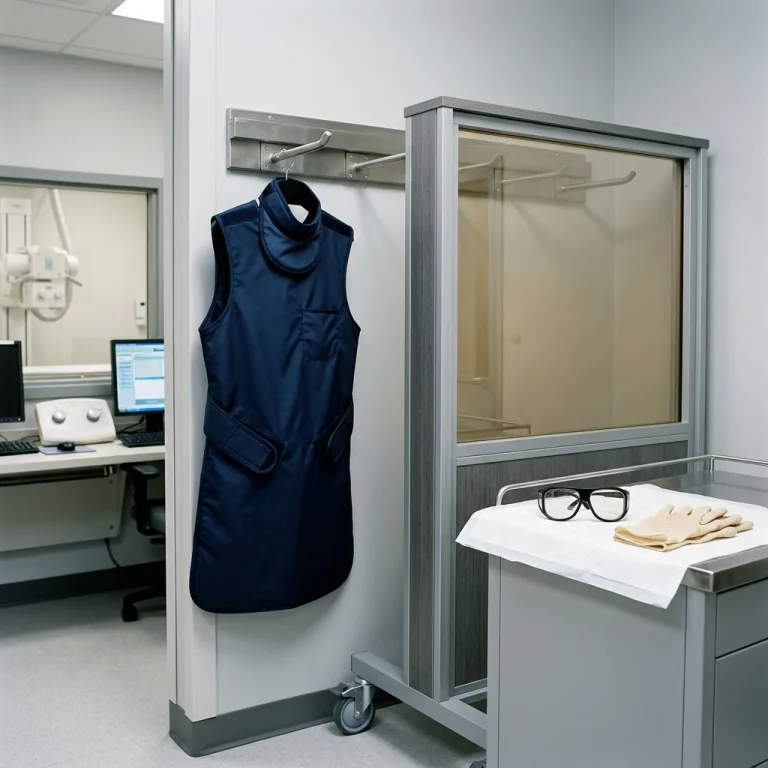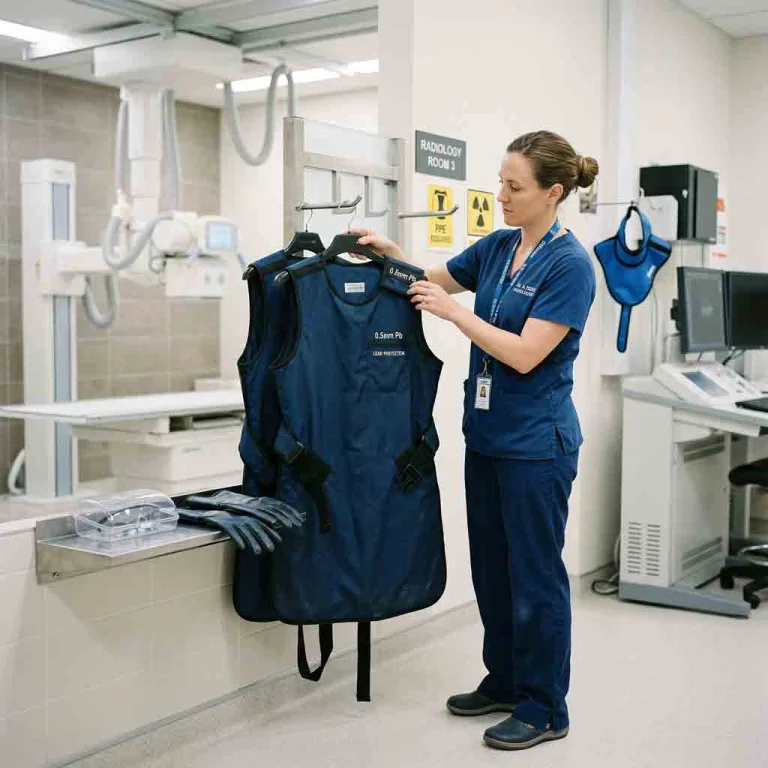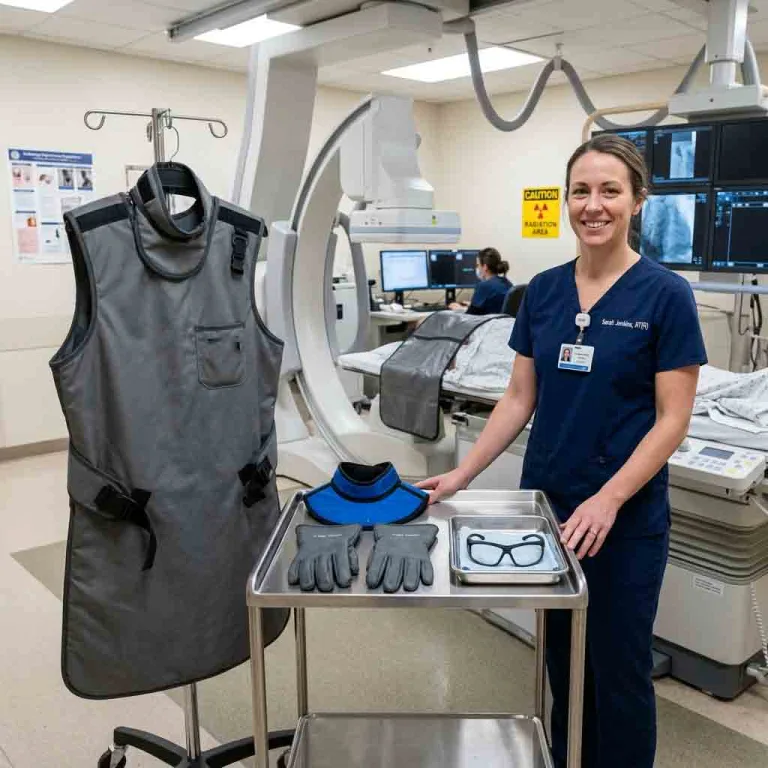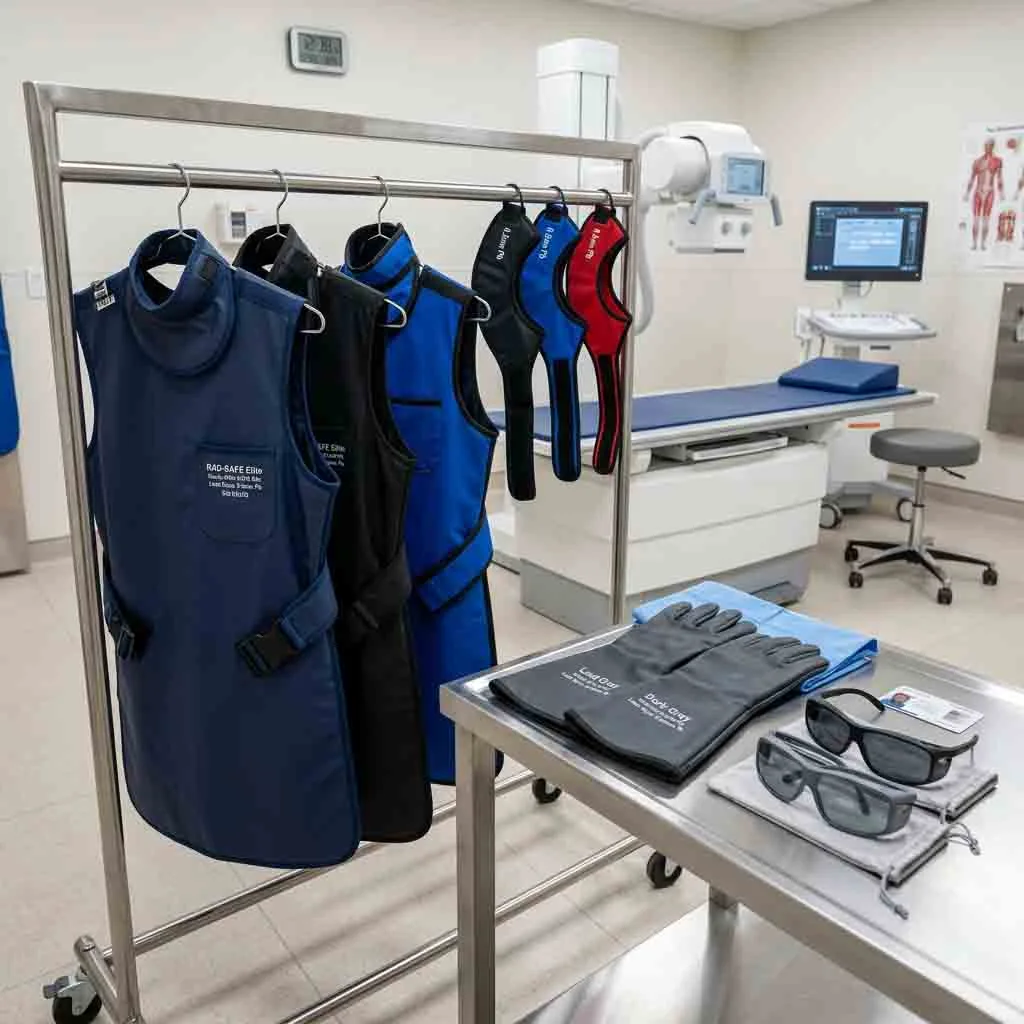
How Much Does X-Ray Protective Clothing Cost?
Searches such as X-ray protective clothing price, lead apron price, radiation protection suit cost, X-ray protective equipment price, and X-ray apron wholesale price are common among buyers.
However, medical radiation protection products are normally quoted according to specifications rather than one fixed retail price.
For example, a basic single front-protection apron and a wrap-around apron are not identical products. A lightweight lead-free apron and a traditional lead-containing apron may also have different manufacturing costs.
Customization can further change the price.
A buyer requesting:
- custom colors
- company logo
- private labeling
- special sizes
- custom packaging
- different lead-equivalent options
- large quantities
- matching protection sets
should normally expect a different quotation from a buyer purchasing standard stock products.
Therefore, a procurement comparison should always compare like-for-like specifications.
Example of a useful quotation comparison
| Item | Supplier A | Supplier B |
|---|---|---|
| Product | X-ray protective apron | X-ray protective apron |
| Material | Lead-free composite | Lead |
| Lead equivalence | 0.35 mmPb | 0.35 mmPb |
| Size | L | L |
| Coverage | Front | Wrap-around |
| Quantity | 50 pcs | 50 pcs |
| Logo | Included | Extra charge |
| Packaging | Individual carton | Individual carton |
| Certification documents | Included/available | Available |
| Shipping term | FOB | EXW |
The lower unit price does not automatically mean the quotation represents the same product.
X-Ray Protective Clothing Wholesale Buying: What Changes with Larger Orders?
Hospitals and distributors may search for terms such as:
X-ray protective clothing wholesale, X-ray apron wholesale, radiation protection equipment wholesale, medical X-ray protection supplier, bulk X-ray aprons, X-ray lead apron bulk order, X-ray protective products manufacturer, and wholesale radiation protection clothing.
Larger orders can provide commercial advantages, but the actual pricing depends on the product configuration and supplier.
For example, a distributor purchasing 10 units for testing has a different purchasing requirement from an importer ordering 500 units for regional distribution.
A wholesale quotation may include:
Unit price + packaging + documentation + shipping + customization + inspection costs
rather than simply a product unit price.
Buyers should also clarify whether the quotation is:
EXW, FOB, CIF, DAP or another agreed Incoterm.
This matters because a low factory quotation can become a much higher landed cost after freight, customs, insurance, local delivery, taxes, and other import-related expenses.
For repeat orders, buyers can also ask whether the manufacturer can maintain the same specifications and packaging for future production.
Consistency is particularly important for medical distributors selling products under a local brand.
China X-Ray Protective Clothing Suppliers: Why Do Buyers Source from China?
China is a major sourcing market for medical equipment and accessories, including X-ray protective clothing and radiation protection products.
A buyer searching for:
China X-ray protective clothing manufacturer
may actually be looking for several different things:
- direct factory supply
- lower procurement cost
- OEM production
- private-label manufacturing
- flexible order quantities
- product customization
- export experience
- documentation support
- combined medical equipment sourcing
But “China supplier” does not automatically mean “factory.”
The company you contact may be:
- a manufacturer,
- a trading company,
- an OEM supplier,
- a distributor,
- or a company combining manufacturing with external supply-chain partners.
Understanding this difference is important before placing a large order.
How to Find a Reliable X-Ray Protective Products Manufacturer in China
When searching Google for an X-ray protective clothing manufacturer, buyers should look beyond product photographs.
A manufacturer evaluation can start with six simple questions.
1. Does the company provide clear product specifications?
A professional supplier should be able to explain the product material, lead equivalence, available sizes, dimensions, product type, and intended application.
2. Can the supplier provide technical documents?
Depending on the product and destination, buyers may request:
- product specification sheet
- test reports
- declaration or statement of compliance
- certification documents
- labeling information
- packaging details
- user instructions
- inspection documentation
IEC 61331-3 specifically addresses requirements associated with accompanying documents, design, materials, sizing, attenuation, marking and standardized statements of compliance.
3. Is the quoted product the same product shown online?
This is especially important when purchasing through marketplaces.
Ask for the exact SKU, specification and quotation reference so that samples and mass production can be compared.
4. Can the manufacturer provide samples?
A sample allows a buyer to evaluate:
- fit
- flexibility
- workmanship
- surface quality
- closure design
- seams
- packaging
- labels
- actual dimensions
5. Does the supplier support repeat orders?
For distributors, long-term supply can be more important than a one-time low price.
6. Can the supplier support export documentation?
International medical equipment procurement may require accurate product descriptions and documentation.
For U.S. imports, for example, FDA states that applicable requirements can include establishment registration, device listing, premarket requirements where applicable, labeling and other regulatory obligations. FDA also verifies import information such as the declared manufacturer and importer against its systems.
This means the buyer should check the requirements of the destination country before ordering.
X-Ray Protective Clothing OEM and Private Label
Another common search category is:
X-ray protective clothing OEM
or
X-ray apron private label manufacturer.
OEM can be useful for distributors, hospital groups, regional medical brands and importers that want products under their own brand.
Possible customization may include:
Brand logo
Product label
Packaging
Color
Size
Product configuration
Carton design
User manual
Not every supplier supports every type of customization.
MOQ can also change according to the level of customization.
A standard product may be available in a small quantity, while customized packaging or private labeling may require a larger production quantity.
For this reason, a good RFQ should state:
Standard product or OEM?
Required quantity?
Target market?
Required certification?
Required packaging?
Logo or private label?
Required lead equivalence?
This allows manufacturers to produce a more accurate quotation.
X-Ray Protective Products MOQ: Is There Always a Minimum Order Quantity?
Searches for X-ray protective clothing MOQ, lead apron MOQ, and X-ray protection wholesale MOQ are common among distributors.
There is no universal MOQ.
It depends on the supplier, product, customization and production arrangement.
Some standard products may be available in very small quantities, while customized products may have higher minimum production requirements.
For example, UMY Medical’s current product page for one radiation protection suit lists an MOQ of 1 and provides options of 0.35 mmPb and 0.55 mmPb for the lead-equivalent specification. This is an example for that specific product, not a universal MOQ for every UMY product.
For a first-time distributor, a practical purchasing strategy can be:
sample → small trial order → market test → larger repeat order
This reduces the risk of committing to a large quantity before the product has been evaluated.
X-Ray Protective Clothing Certification: What Documents Should Buyers Ask For?
Certification is one of the most important parts of international medical product procurement.
But buyers should avoid treating the word “certificate” as a simple checkbox.
Instead, ask:
What product does this document apply to?
Who issued it?
What standard or regulation does it reference?
Does the document match the actual product model?
Is the name of the manufacturer consistent?
IEC 61331-3 is one relevant international standard for protective clothing, eyewear and protective patient shields used against diagnostic medical X-radiation.
However, the regulatory requirements for importing and selling a medical product can vary by country.
A product accepted in one market may require additional registration, documentation or labeling in another.
For example, FDA describes specific registration and listing obligations for applicable medical device establishments involved in U.S. commercial distribution.
Therefore, buyers should identify their destination-market requirements before asking a supplier to finalize the compliance package.
CE, ISO and Test Reports: How Should Buyers Read Them?
International buyers often search for:
CE certified X-ray apron
ISO certified X-ray protective clothing supplier
X-ray protective equipment CE manufacturer
and similar phrases.
These terms can be useful starting points, but they should not replace document verification.
A buyer should connect the documentation to the actual product.
For example:
Company certificate ≠ automatic proof that every product has the same certification status.
The certificate should be checked against the manufacturer, scope, validity and applicable product or quality-management requirements.
UMY Medical states on its company website that it serves healthcare entities in more than 168 countries and regions and operates with multiple medical subsidiaries and production bases. Its site also describes certifications and international supply capabilities.
For buyers considering UMY as one supplier option, the practical step is still to request the exact certification and product documentation for the specific products being purchased rather than relying only on general company information.
This principle applies to any manufacturer.
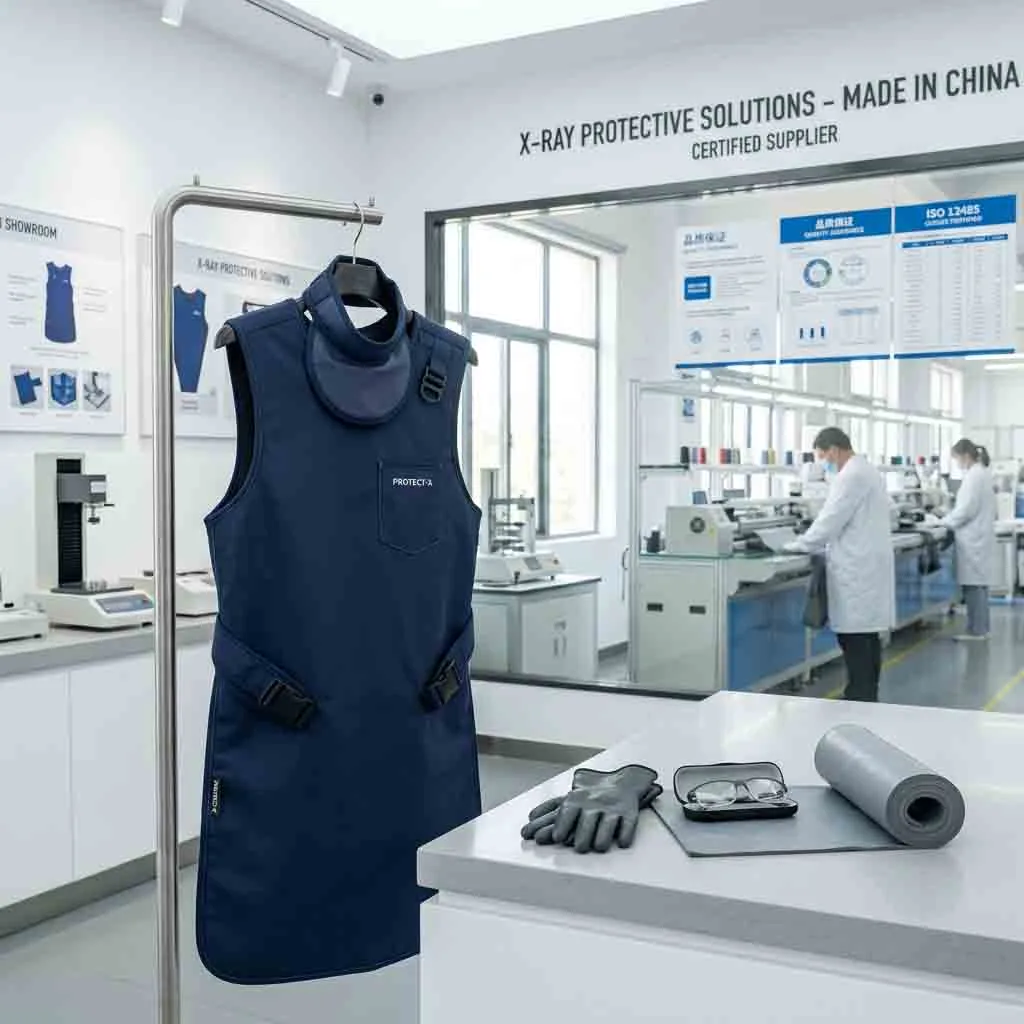
X-Ray Protective Clothing Manufacturer vs Trading Company
This is one of the most important questions for B2B buyers.
A trading company can be useful when a customer needs products from multiple factories or wants one purchasing contact.
A direct manufacturer may provide stronger control over:
- production specifications
- customization
- quality inspection
- packaging
- production scheduling
- repeat-order consistency
But the correct choice depends on the project.
For example, a hospital project may require dozens of different medical products.
A sourcing company with a broad supply chain can simplify procurement.
A distributor developing its own radiation protection product line may instead prioritize direct OEM manufacturing.
Therefore, buyers should compare supply capability, not simply company type.
What Should Be Included in an X-Ray Protective Clothing RFQ?
A clear X-ray protective clothing RFQ can save a significant amount of communication time.
A useful inquiry should contain:
Product
X-ray protective apron / vest-skirt / thyroid collar / protective gloves / lead glasses / barrier / other product.
Shielding requirement
Specify the required lead-equivalent level where applicable.
Size
For example:
S, M, L, XL or customized dimensions.
Quantity
Provide the expected order quantity and estimated annual demand where possible.
Application
Radiology, fluoroscopy, C-arm, dental, veterinary, interventional procedure, mobile imaging, etc.
Destination
Country and city or port.
Commercial requirement
EXW / FOB / CIF / DAP or another preferred Incoterm.
Certification
List the documentation required for your market.
Customization
Logo, packaging, color, label, size or private brand.
A complete RFQ produces a much more useful quotation than simply writing:
“Please send me your X-ray apron price.”
How to Compare X-Ray Protective Product Quotations
Price comparison is easier when all suppliers use the same specification sheet.
Consider these factors together:
| Comparison Factor | Why It Matters |
|---|---|
| Product type | Different designs provide different coverage |
| Material | Shielding material affects weight and cost |
| Lead equivalence | Indicates the specified attenuation level |
| Size | Larger products require more material |
| Coverage | Front and wrap-around designs are not equivalent |
| Weight | Important for daily users |
| Quantity | Affects production pricing |
| Certification | Required documentation varies by market |
| Customization | Logo and packaging may add cost |
| Packaging | Protects products during export |
| Delivery term | Determines which costs are included |
| Warranty/service | Relevant to long-term procurement |
The final purchasing decision should therefore consider total landed cost, not just factory unit price.
X-Ray Protective Clothing Shipping and Packaging
Radiation protection clothing is not usually purchased as a simple consumer garment.
Its packaging must protect the product during handling and international transportation.
Buyers should ask suppliers about:
individual packaging
carton size
number of pieces per carton
gross weight
net weight
carton dimensions
pallet requirements
export packaging
shipping marks
These details are important when calculating freight costs.
For larger orders, carton dimensions can influence container utilization and total logistics cost.
A quotation that includes only a unit price may not provide enough information for a complete landed-cost analysis.
How to Inspect X-Ray Protective Clothing After Delivery
The purchasing process should not end when the container arrives.
A receiving inspection can check:
Quantity
SKU
Size
Color
Material
Labels
Stitching
Closures
Surface condition
Packaging
Documentation
Products should also be handled and stored according to the manufacturer’s instructions.
For protective aprons and thyroid shields, FDA dental guidance recommends hanging or laying them flat rather than folding them and recommends regular inspection for damage such as tears, folds or cracks.
That is particularly relevant for healthcare facilities that keep radiation protection products in daily use.
Common Mistakes When Buying X-Ray Protective Products
Choosing the lowest quotation without checking specifications
A lower price may reflect different materials, coverage, size, certification or packaging.
Comparing lead equivalence without comparing product coverage
Two products can have similar lead-equivalent values while offering different physical coverage.
Buying before checking destination-market requirements
Import and medical-device requirements can vary by country.
Ordering a large quantity before receiving a sample
For a new supplier, a sample or trial order can reduce purchasing risk.
Focusing only on the product
Supplier responsiveness, documentation, packaging and repeat-order capability also affect the real purchasing experience.
Ordering customized products without confirming production details
Before mass production, buyers should confirm the artwork, label, size, packaging and exact product specification.
How to Buy X-Ray Protective Clothing from China Step by Step
A practical China sourcing process can be relatively simple.
Step 1: Define the application
Identify whether the product is for:
- general radiography
- fluoroscopy
- C-arm procedures
- dental imaging
- interventional procedures
- veterinary imaging
- mobile X-ray
Step 2: Define the product
Decide whether you need an apron, vest and skirt, thyroid collar, glasses, gloves, barrier, curtain, or a complete protection package.
Step 3: Define technical requirements
Specify the required material, lead equivalence, size, coverage and other essential specifications.
Step 4: Find several suppliers
Use Google, B2B platforms, medical equipment directories and manufacturer websites.
Step 5: Send the same RFQ
Use identical requirements when asking different suppliers for quotations.
Step 6: Compare documentation
Check technical sheets, test reports, certification documents and manufacturer information.
Step 7: Request a sample
Inspect the physical product before placing a larger order.
Step 8: Confirm commercial terms
Check MOQ, price, Incoterm, production lead time, packaging, payment terms and shipping.
Step 9: Approve the final specification
Do not rely only on photographs or an old quotation.
Step 10: Start with a controlled order
After successful inspection and delivery, establish a repeat-order specification for future purchasing.
How UMY Medical Fits into X-Ray Protection Procurement
UMY Medical Equipment Co., Ltd. operates as a China-based medical equipment supplier with a broad portfolio covering imaging equipment and other hospital products.
According to its current company information, UMY Medical reports serving more than 1,100 healthcare entities in over 168 countries and regions, supported by multiple medical subsidiaries and production bases.
Its current X-ray protection product range includes a radiation protection suit combining a lead apron and lead collar. The product page lists China as the origin, MOQ of one for that model, CE certification, one-year warranty and online technical support.
For international buyers, the broader value of working with a medical equipment supplier can be the ability to combine radiation protection products with other imaging-related procurement.
A buyer sourcing an X-ray system, flat panel detector, mobile X-ray equipment and radiation protection accessories may prefer to coordinate several products through one medical equipment supply chain rather than managing every item separately.
The important procurement principle remains the same: evaluate each product according to its actual specifications and regulatory requirements.