What X-Ray Protective Clothing Do You Actually Need?
X-ray protective clothing is used when medical staff or other personnel may need to remain close to an X-ray source or a patient during an imaging procedure.
The right protection depends on the procedure, working position, exposure conditions, and the amount of time a person spends near the source of scattered radiation. A general radiography room, a mobile X-ray examination, a dental clinic, a C-arm operating room, and an interventional radiology suite can have very different protection requirements.
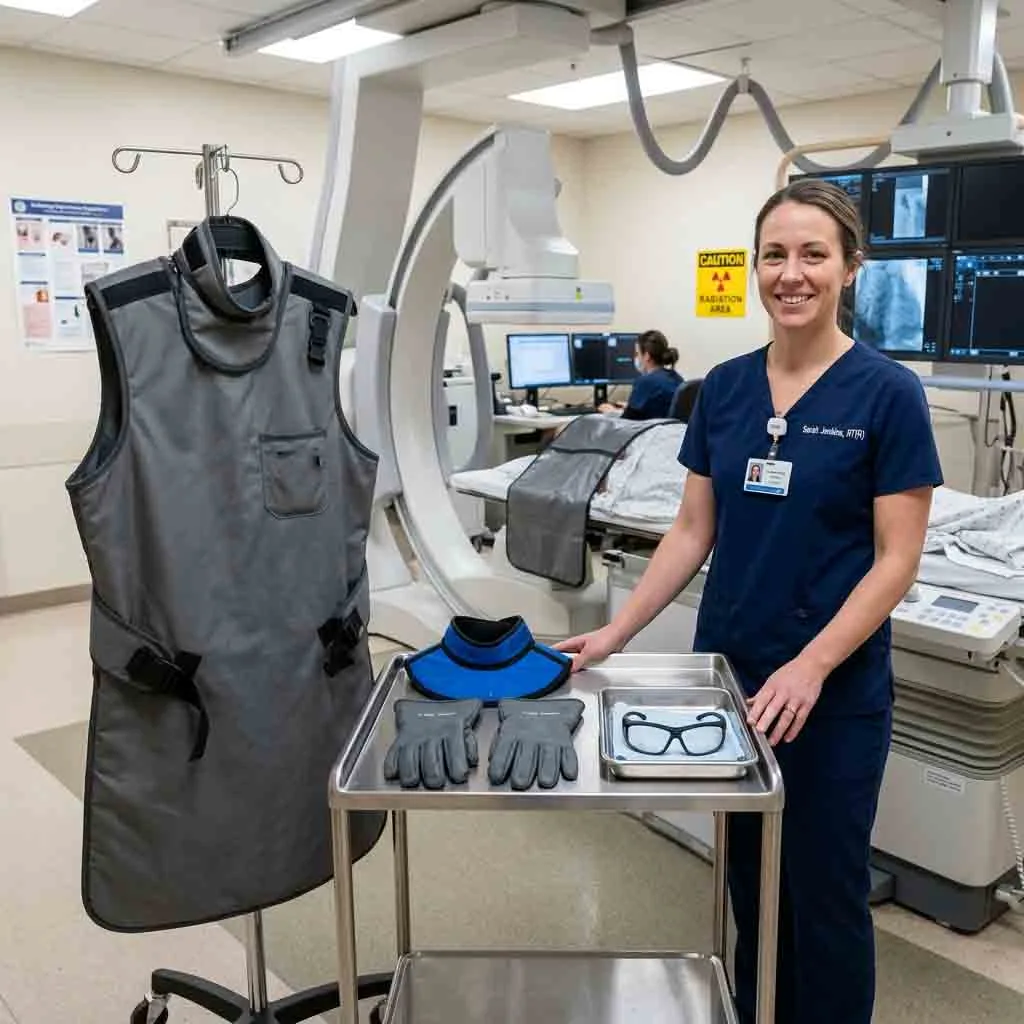
Common X-ray protective clothing and personal protective equipment include:
- X-ray lead aprons
- radiation protection aprons
- thyroid collars
- X-ray protective gloves
- radiation protective eyewear
- lead vests and skirts
- protective sleeves
- gonad protection
- other personal radiation protection products
IEC 61331-3 covers protective clothing and eyewear used against diagnostic medical X-radiation and specifically includes protective aprons, thyroid collars, protective gloves, protective mittens and protective eyewear. It also covers several patient protective devices.
This guide explains the main types of X-ray protective clothing, how they are used, what buyers should look for, and how different products fit different medical environments.
What Is X-Ray Protective Clothing?
X-ray protective clothing is a category of radiation protection equipment designed to reduce exposure to scattered X-rays during medical imaging and related procedures.
Unlike ordinary protective clothing, radiation protection clothing uses materials with X-ray attenuation properties. Depending on the product, these materials may contain lead or alternative shielding materials used in composite or lead-free designs.
The term X-ray protective clothing can refer to several products rather than one specific item.
Common search terms include:
- X-ray protective clothing
- X ray protective clothing
- radiation protective clothing
- X-ray protection clothing
- radiation protection apparel
- medical radiation protection clothing
- X-ray safety clothing
- radiology protective clothing
- X-ray protective wear
- radiation shielding clothing
For procurement purposes, it is important to distinguish between personal protective clothing and structural or room shielding.
A lead apron worn by an operator is personal protection. A fixed lead-lined wall, lead glass window, ceiling-suspended screen or mobile radiation barrier belongs to another category of radiation protection products.
The two categories can work together, but they should not be treated as interchangeable.
Main Types of X-Ray Protective Clothing
1. X-Ray Lead Aprons
The X-ray lead apron is one of the most commonly recognized forms of radiation protection clothing.
It is designed to cover parts of the torso and reduce exposure from scattered X-rays. Lead aprons are commonly used in environments where personnel may need to stay near the patient during an X-ray procedure.
Common terms include:
- lead apron
- X-ray lead apron
- X-ray apron
- radiation protection apron
- radiology lead apron
- medical lead apron
- leaded apron
- X-ray protective apron
- radiation shielding apron
- protective apron for X-ray
- lead apron for radiology
Different apron designs can provide different areas of coverage.
Common designs include:
- front protection aprons
- wrap-around aprons
- vest-style aprons
- skirt-style systems
- vest and skirt combinations
- dental X-ray aprons
- lightweight radiation protection aprons
- maternity-style protective garments
The correct design depends on the user’s position and procedure.
For example, personnel working around fluoroscopy may require more extensive coverage than someone who only occasionally enters an X-ray room.
IAEA guidance notes that protective aprons are available in different shapes, configurations, materials and lead-equivalence levels, and that the appropriate design should be selected according to intended use.
2. Thyroid Collars and Thyroid Shields
The thyroid is an important consideration in radiation protection because of its location close to the upper part of the body.
A thyroid collar, sometimes called a thyroid shield or thyroid protector, is designed to provide additional protection around the neck.
Common keywords include:
- thyroid collar
- thyroid shield
- X-ray thyroid protection
- radiation thyroid shield
- thyroid protector
- lead thyroid collar
- X-ray neck protection
- radiation protection collar
- thyroid protection for fluoroscopy
- thyroid shield for radiology
Thyroid protection can be particularly relevant in procedures where staff remain close to the patient and may be exposed to scattered radiation.
IAEA guidance lists thyroid shields as personal protective equipment alongside protective aprons, eyewear and gloves.
For procurement, buyers should consider:
- coverage around the neck
- compatibility with the apron
- material
- lead equivalence
- size
- fastening system
- flexibility
- comfort during extended procedures
A thyroid collar is not a replacement for an appropriate protective apron. It is an additional protection product designed for a specific body area.
3. X-Ray Protective Gloves
Hands may be positioned close to the radiation field during certain procedures, especially when staff must work close to the patient.
X-ray protective gloves are designed for situations where hand protection is appropriate.
Search terms include:
- X-ray protective gloves
- radiation protection gloves
- lead gloves
- X-ray lead gloves
- radiology gloves
- fluoroscopy gloves
- radiation shielding gloves
- medical radiation gloves
- protective gloves for X-ray
- leaded radiation gloves
Gloves should not be considered a reason to intentionally place hands in the primary X-ray beam.
Radiation protection relies on good working practices as well as protective equipment. Positioning, distance, exposure time, equipment settings and shielding all influence occupational exposure.
IAEA guidance identifies protective gloves as one category of personal protective equipment and recommends selecting personal protection according to the procedure and working conditions.
4. Radiation Protective Eyewear
Protective eyewear is another important category of radiation protection equipment.
It is particularly relevant to procedures in which the operator spends significant time close to the patient, including some fluoroscopy-guided and interventional procedures.
Common search terms include:
- radiation protective glasses
- X-ray protective eyewear
- lead glasses
- leaded glasses
- radiation protection glasses
- X-ray safety glasses
- radiology protective eyewear
- lead eyewear
- fluoroscopy radiation glasses
- radiation shielding glasses
Protective eyewear is generally designed to reduce radiation exposure to the eyes while allowing the operator to maintain a clear view of the procedure.
Fit is important. Eyewear should be comfortable enough to wear during the intended procedure and should not interfere with other equipment.
IAEA materials specifically discuss protective eyewear and the importance of appropriate positioning when using protective screens and eyewear.
5. Lead Vests and Skirts
Some radiation protection systems use separate protective vests and skirts instead of a single-piece apron.
This configuration can be useful for professionals who spend long periods working around fluoroscopy or other sources of scattered radiation.
Typical keywords include:
- lead vest
- X-ray protective vest
- radiation protection vest
- lead skirt
- X-ray protective skirt
- radiation protection skirt
- vest and skirt radiation protection
- wrap-around lead apron
- interventional radiology apron
- fluoroscopy protective clothing
A vest-and-skirt system can distribute the weight between the upper and lower body. IAEA guidance specifically discusses wrap-around aprons and notes that vest-and-skirt configurations can help distribute the weight.
The actual design should still be selected according to the user’s working position, required coverage and applicable local requirements.
6. Protective Clothing for Different Medical Applications
There is no single X-ray protective garment that is ideal for every medical procedure.
The application should be considered before selecting the product.
General Radiography
General X-ray examinations usually take place with the operator positioned behind a protective barrier or outside the room when practical.
Protective clothing may still be required for certain situations, such as assisting patients or remaining in the room for specific procedures.
Relevant searches include:
- radiography protective clothing
- X-ray technician protective clothing
- radiology radiation protection
- X-ray technician radiation protection
- radiographic protective apron
- X-ray room protective equipment
The exact protection program should be determined by the healthcare facility’s radiation protection procedures.
X-Ray Protective Clothing for Fluoroscopy
Fluoroscopy can involve longer periods of X-ray exposure than a simple single-image radiographic examination.
Medical staff may remain near the patient during the procedure, making scattered radiation an important consideration.
Typical searches include:
- fluoroscopy radiation protection
- fluoroscopy protective clothing
- fluoroscopy lead apron
- fluoroscopy thyroid shield
- fluoroscopy radiation glasses
- fluoroscopy protective gloves
- radiation protection for fluoroscopy
- fluoroscopic X-ray protection
IAEA guidance states that personal protective equipment and in-room protective devices may be needed when staff are required to remain in the room during procedures such as fluoroscopy and image-guided interventions.
X-Ray Protection for C-Arm Procedures
C-arm systems are widely used in operating rooms and other procedure areas.
Because the C-arm provides real-time X-ray imaging, medical teams may remain close to the patient while imaging is taking place.
Relevant keywords include:
- C-arm radiation protection
- C-arm X-ray protection
- C-arm protective clothing
- C-arm lead apron
- C-arm radiation safety
- surgical X-ray protection
- operating room radiation protection
- C-arm thyroid shield
- C-arm radiation glasses
- C-arm protective gloves
Common protective products may include:
- lead aprons
- wrap-around aprons
- thyroid collars
- protective eyewear
- protective gloves
- mobile radiation barriers
- ceiling-suspended protective screens
This is also an important internal-link opportunity for a medical equipment website that already publishes C-arm content.
The C-arm article can explain the imaging system, while this article addresses the radiation protection equipment used around the system.
X-Ray Protective Clothing for Dental Imaging
Dental X-ray is another search category with a large number of long-tail queries.
Potential keywords include:
- dental X-ray protection
- dental X-ray apron
- dental lead apron
- dental thyroid collar
- dental radiation protection
- dental X-ray safety
- radiation protection for dental X-ray
- protective clothing for dental X-ray
- X-ray apron for dental clinic
- thyroid shield for dental X-ray
FDA guidance on dental radiography discusses the use of protective aprons and thyroid collars when appropriate and emphasizes minimizing unnecessary radiation exposure through good radiographic practice.
Importantly, the protection approach should not be reduced to simply wearing an apron. Radiation safety also involves appropriate imaging technique, beam limitation, positioning, equipment performance and avoiding unnecessary exposures.
X-Ray Protection for Interventional Radiology
Interventional radiology can create different radiation protection requirements because procedures may involve extended fluoroscopic imaging and staff working close to the patient.
Search terms include:
- interventional radiology radiation protection
- interventional radiology lead apron
- interventional radiology protective clothing
- IR radiation protection
- radiation protection for interventional procedures
- interventional fluoroscopy protection
- interventional radiology eyewear
- interventional radiation protection gloves
- wrap-around apron for interventional radiology
IAEA guidance recommends considering appropriate personal and in-room protective devices for image-guided interventional procedures. It also discusses wrap-around aprons and vest-and-skirt designs for this type of work.
For facilities with frequent interventional procedures, protection should be considered as part of the wider radiation safety program rather than as an isolated clothing purchase.
X-Ray Protective Clothing for Mobile X-Ray
Mobile X-ray systems create another important use case.
When imaging is performed outside a dedicated radiology room, staff may need to work in environments such as:
- hospital wards
- intensive care units
- emergency departments
- operating rooms
- recovery areas
- isolation rooms
- other clinical spaces
Searches may include:
- mobile X-ray radiation protection
- portable X-ray protective clothing
- portable X-ray apron
- mobile radiography protection
- bedside X-ray protection
- portable radiography radiation safety
- mobile X-ray protective equipment
The specific protection required depends on the facility’s radiation protection assessment and how the mobile system is used.
Lead vs Lead-Free X-Ray Protective Clothing
One of the most common questions from buyers is whether they should choose lead or lead-free protective clothing.
The answer depends on the product design, application, required attenuation, weight, flexibility, durability and applicable specifications.
Lead-Based Protection
Traditional radiation protection products may use lead-containing materials because lead has strong X-ray attenuation properties.
Common searches include:
- lead radiation protection
- lead apron
- leaded X-ray clothing
- lead radiation shielding
- lead protective clothing
Lead-Free Protection
Some products use alternative shielding materials or composite formulations.
Common searches include:
- lead-free X-ray apron
- lead-free radiation protection
- non-lead radiation protection
- composite radiation protection
- lightweight lead-free apron
- alternative radiation shielding material
However, the label lead-free does not by itself tell a buyer how well a product performs.
When comparing products, buyers should examine the manufacturer’s technical documentation, specified attenuation or lead-equivalence information, intended X-ray conditions, construction and applicable conformity requirements.
IEC 61331-3 includes requirements related to materials, design, sizing, attenuation properties, marking and statements of compliance for covered protective devices.
What Does Lead Equivalence Mean?
Lead equivalence is commonly used when describing radiation protective materials.
You may see specifications such as:
- 0.25 mm Pb
- 0.35 mm Pb
- 0.50 mm Pb
- other specified lead-equivalence values
The exact value should not be treated as a universal measure of product quality.
A buyer should also consider:
- where the protection is located
- the area covered
- the test conditions
- material construction
- product design
- intended application
- applicable standards
For procurement, it is better to compare products using the manufacturer’s complete technical specification rather than selecting an apron based only on one number.
How Heavy Is an X-Ray Protective Apron?
Weight is a practical concern for healthcare workers.
A protective apron needs to provide the intended coverage while remaining usable during the procedure. A garment that is technically suitable but difficult to wear or move in may create practical problems.
Weight can be affected by:
- protective material
- garment size
- coverage area
- lead-equivalence specification
- material construction
- apron design
- overlapping panels
This is one reason why product selection should consider both radiation protection and ergonomics.
For staff who spend considerable time in fluoroscopy or interventional procedures, design and weight distribution can be particularly important.
How Should X-Ray Protective Clothing Be Stored?
Proper storage is an important part of product care.
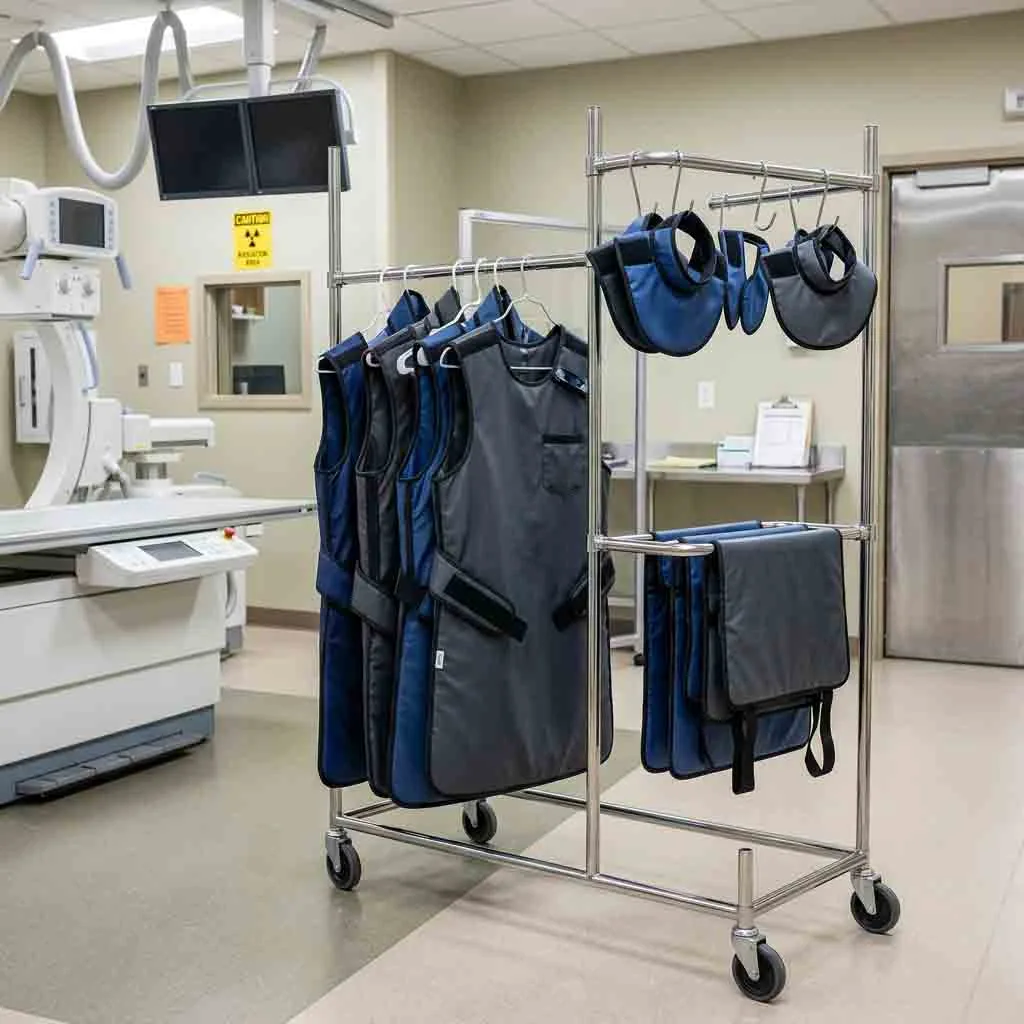
Protective aprons and similar shielding garments should generally be stored according to the manufacturer’s instructions and in a way that avoids unnecessary folding, creasing or mechanical damage.
For example, FDA dental radiography guidance says protective aprons and thyroid shields should be hung or laid flat rather than folded, and that protective shields should be inspected for damage such as tears, folds and cracks.
Healthcare facilities should also establish procedures for:
- regular visual inspection
- checking for physical damage
- proper storage
- cleaning according to manufacturer instructions
- tracking product condition
- removing damaged protective equipment from service
A damaged radiation protection garment should not simply be assumed to provide the same protection as an intact product.
How to Choose X-Ray Protective Clothing
For hospitals, clinics, dental practices and distributors, the purchasing process can be simplified into several questions.
1. Where Will It Be Used?
Identify the environment first:
- general radiography
- fluoroscopy
- C-arm
- interventional radiology
- dental imaging
- mobile X-ray
- veterinary X-ray
- other diagnostic imaging
The application determines the type of protection that should be considered.
2. Who Will Wear It?
Consider whether the user is:
- radiologist
- radiographer
- X-ray technician
- surgeon
- interventional physician
- nurse
- dental professional
- veterinary professional
- other clinical staff
3. What Body Areas Need Protection?
Possible products include:
- apron
- thyroid collar
- gloves
- eyewear
- vest
- skirt
- other specialized protection
4. What Level of Protection Is Required?
Review:
- lead equivalence
- attenuation information
- applicable standards
- intended X-ray energy range
- product documentation
- local regulatory requirements
5. How Often Will It Be Used?
A product used occasionally has different practical requirements from one used throughout a working day.
Frequent users may pay more attention to:
- weight
- flexibility
- fit
- ventilation
- fastening
- movement
- storage
- durability
X-Ray Protective Clothing Buyer Checklist
Before requesting a quotation, a hospital or distributor can prepare the following information:
Application
General X-ray / fluoroscopy / C-arm / dental / interventional / mobile X-ray
Product
Lead apron / thyroid collar / gloves / eyewear / vest / skirt / complete protection set
User
Doctor / radiographer / technician / nurse / dental professional / veterinary staff
Size
Small / medium / large / custom size
Coverage
Front / wrap-around / vest and skirt / specific body area
Material
Lead / lead-free / composite
Protection specification
Required lead equivalence or applicable technical specification
Quantity
Sample / small order / hospital project / distributor order / bulk purchase
Documentation
Technical datasheet / conformity documentation / test information / packaging information
This information allows manufacturers and suppliers to prepare a more accurate quotation.
Common Questions About X-Ray Protective Clothing
Is X-ray protective clothing the same as a lead apron?
Not exactly. A lead apron is one type of X-ray protective clothing. The wider category can also include thyroid collars, protective gloves, eyewear, vests, skirts and other protective garments.
What is an X-ray protective apron used for?
It is designed to reduce exposure to scattered X-rays for people who need to remain near the patient or X-ray procedure.
Do X-ray technicians need protective clothing?
The required protection depends on the working environment and radiation protection program. In many situations, staff can use distance, shielding and positioning to reduce exposure, while personal protective equipment may be needed when staff must remain close to the procedure.
What is a thyroid collar?
A thyroid collar is a radiation protection device designed to cover the neck and reduce radiation exposure to the thyroid region when appropriate.
Are lead-free X-ray aprons safe?
Lead-free products can be designed for radiation protection, but buyers should evaluate their documented attenuation performance, intended application and applicable standards rather than judging them only by the words “lead-free.”
Are radiation protection glasses necessary?
They may be appropriate for procedures where the eyes can receive significant scattered radiation, particularly some fluoroscopy and interventional procedures. The need should be determined by the facility’s radiation protection assessment.
Can X-ray protective gloves block all radiation?
No protective glove should be treated as making intentional exposure to the primary X-ray beam acceptable. Radiation protection also depends on proper positioning, distance, shielding and safe operating practices.
How often should an X-ray apron be inspected?
Inspection requirements depend on the facility’s radiation protection program and applicable guidance. Protective clothing should be checked for physical damage and maintained according to the manufacturer’s instructions.
Can an X-ray apron be folded?
Storage instructions depend on the product. Protective garments should be stored in a manner that avoids damage, and manufacturers’ instructions should be followed. FDA dental radiography guidance specifically advises hanging or laying protective aprons and thyroid shields flat rather than folding them.
What is the difference between an X-ray apron and a thyroid collar?
An X-ray apron primarily protects the torso, while a thyroid collar provides additional protection around the neck. They are complementary products rather than interchangeable products.
X-Ray Protective Clothing: A Practical Way to Think About It
Choosing radiation protection does not need to begin with a product catalog.
Start with the procedure.
What type of X-ray imaging is being performed?
Then consider:
Where will the operator stand?
How close will the operator be to the patient?
How frequently will the procedure be performed?
Which parts of the body require additional protection?
What specifications and regulatory requirements apply?
From there, the appropriate combination of X-ray protective clothing and other radiation protection products can be evaluated.
For hospitals and medical distributors, this approach is also useful when preparing procurement specifications. Instead of simply requesting “X-ray protective clothing,” buyers can specify the application, product type, size, coverage, material, protection specification, quantity and required documentation.
Final Takeaway
X-ray protective clothing is more than a single type of lead apron. The category includes a range of personal radiation protection products, such as protective aprons, thyroid collars, gloves and eyewear, with different designs for different medical environments.
The most useful way to select these products is to match protection requirements with the actual clinical application.
General radiography, fluoroscopy, C-arm procedures, dental imaging, mobile X-ray and interventional radiology can all create different working conditions. Product selection should therefore consider coverage, material, lead equivalence, fit, weight, storage, durability and applicable standards.
For medical equipment buyers, the next step is to compare individual X-ray protective products and understand how aprons, thyroid shields, gloves, eyewear, curtains, barriers and other shielding products work together.
That broader product comparison is the focus of the next article in this series.