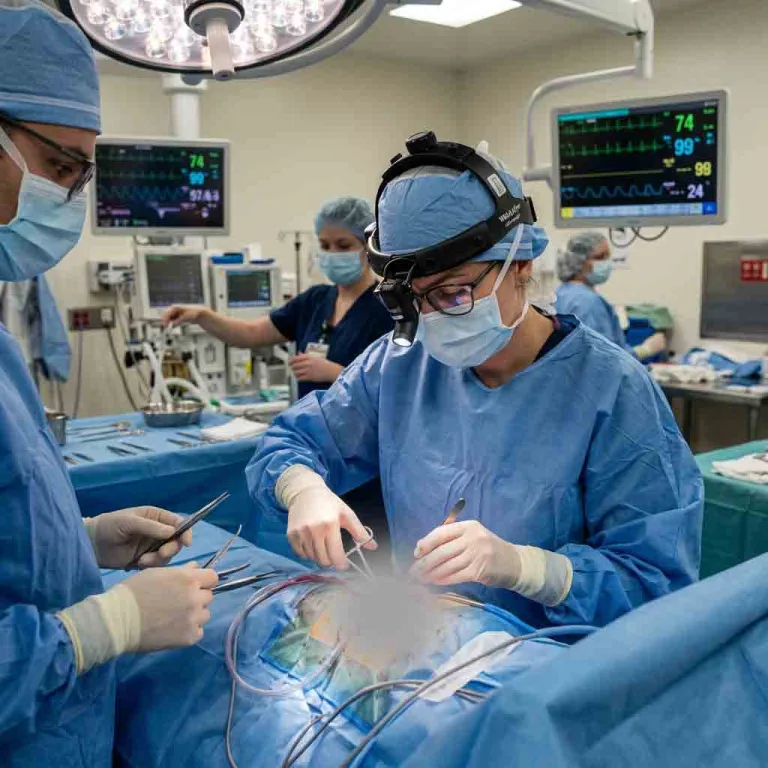
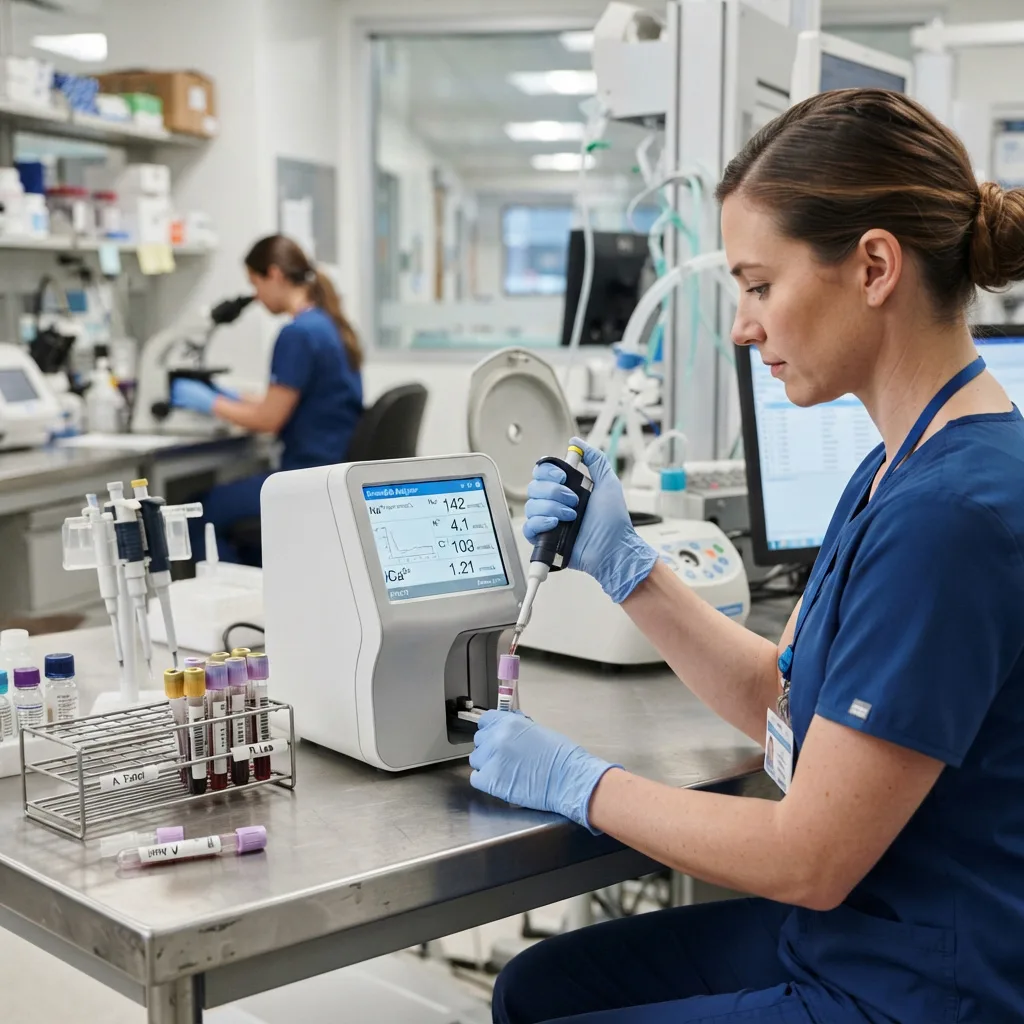
One Instrument, Different Healthcare Needs
A hospital central laboratory may process electrolyte samples throughout the day. An emergency department may need rapid results to support urgent clinical assessments. A smaller diagnostic laboratory may prioritize a compact instrument, simple operation and predictable consumable costs.
Although all three facilities may need sodium, potassium and chloride measurements, their equipment requirements can be quite different.
An electrolyte analyzer is a clinical laboratory instrument used to measure selected ions in biological samples. Common parameters include sodium (Na+), potassium (K+) and chloride (Cl−). Some models also measure additional parameters, depending on their configuration.
Electrolyte testing can support the assessment of fluid balance, electrolyte disturbances and certain kidney-related conditions. It may also form part of broader clinical chemistry testing.
For laboratory managers, hospital procurement teams and medical equipment distributors, the important question is not simply which electrolyte analyzer to buy. It is how the instrument will fit into the intended clinical workflow.
This guide explores the applications of electrolyte analyzers across different healthcare settings, compares point-of-care testing with central laboratory testing, and explains how to select a suitable system for each environment.
1. Hospital Central Laboratories
Hospital central laboratories are important users of clinical electrolyte analyzers.
These laboratories handle samples from different departments, including outpatient services, inpatient wards, emergency departments and intensive care units.
Electrolyte measurements may be performed as individual tests or as part of a broader laboratory panel.
Why Do Hospital Laboratories Need Electrolyte Analyzers?
Hospital laboratories need reliable procedures for measuring common electrolytes across different patient groups and clinical workflows.
Typical requirements include:
- Routine sodium, potassium and chloride testing
- Processing samples from multiple hospital departments
- Handling different sample types supported by the instrument
- Maintaining calibration and quality-control procedures
- Managing workload during busy periods
- Recording and reporting results
- Integrating laboratory instruments with existing information systems
The exact test menu depends on the analyzer. A dedicated electrolyte analyzer may focus on ion measurements, while a clinical chemistry analyzer can offer a wider menu of biochemical tests.
Some chemistry analyzers include an integrated ion-selective electrode module for electrolyte testing.
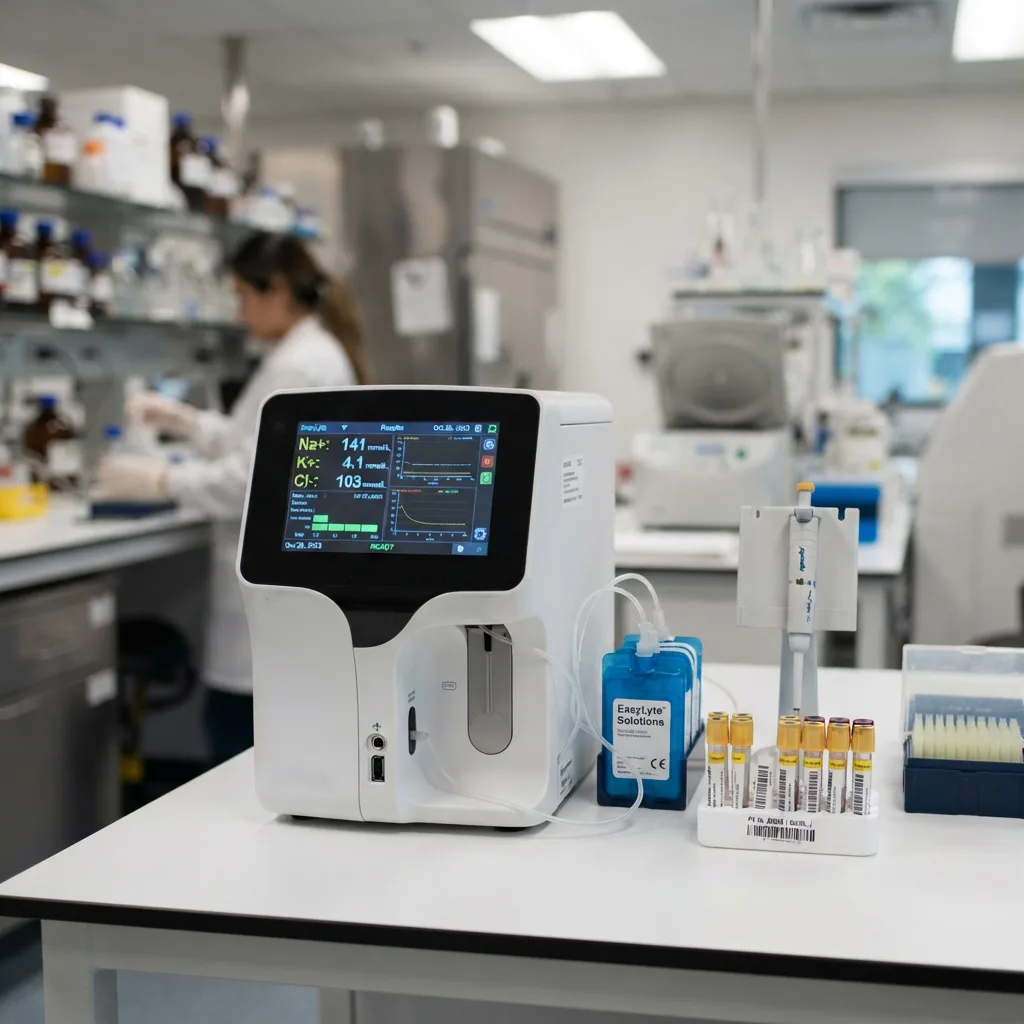
What Should a Central Laboratory Consider?
Testing workload
Estimate the average daily number of samples, peak demand and the proportion of urgent tests.
Throughput
Check how quickly the instrument processes samples under the manufacturer’s specified conditions.
Workflow integration
Consider sample identification, result storage, printing and laboratory information system connectivity.
Consumables
Review reagent use, electrode replacement, calibration solutions and quality-control materials.
Service support
Consider maintenance requirements, spare-parts availability and the arrangements for technical support.
A high-volume laboratory may benefit from automation and integration with existing systems. A smaller hospital laboratory may place greater importance on compact size and straightforward operation.
The correct configuration depends on the laboratory’s actual workload rather than the hospital’s size alone.
2. Electrolyte Analyzers in Emergency Departments
Emergency departments often need laboratory results quickly because clinicians must assess patients with different symptoms and levels of urgency.
Electrolyte testing may be requested when clinicians are investigating suspected electrolyte disturbances, dehydration, kidney-related problems or other conditions in which electrolyte measurements are relevant.
The exact tests ordered depend on the patient’s presentation and clinical assessment.
Why Does Turnaround Time Matter?
Traditional central laboratory testing involves several stages, including sample collection, transport, registration, analysis, result verification and reporting.
A point-of-care testing system can place analysis closer to the patient and may reduce the time required to obtain a result.
Research comparing point-of-care testing with central laboratory testing has reported shorter turnaround times in some emergency and critical-care workflows. However, the benefits depend on the setting, workflow and specific tests being compared.
A review of point-of-care blood gas and electrolyte testing in adult emergency settings discusses both the potential workflow benefits and the limitations associated with accuracy, operator training and integration with hospital information systems. Read the review on PubMed.
What Should Buyers Look for in an Emergency Electrolyte Analyzer?
Emergency departments may prioritize:
- Short analysis time
- Appropriate sample-volume requirements
- Straightforward sample handling
- A test menu suited to urgent workflows
- Clear result display
- Simple operator procedures
- Reliable quality-control processes
- Easy access to maintenance and technical support
Some departments use dedicated electrolyte analyzers, while others use blood gas analyzers that also measure selected electrolytes.
These systems are not automatically interchangeable. Buyers should confirm which parameters are available, which sample types are supported and whether the instrument is intended for the proposed use.
Is the Fastest Analyzer Always the Best Choice?
No.
A short analytical time is helpful, but the full turnaround time also depends on sample handling, workflow, quality-control status, result verification and reporting.
For emergency testing, it is useful to assess the complete process from sample collection to the availability of a result for clinical review.
3. Electrolyte Testing in Intensive Care Units
Intensive care units, or ICUs, care for patients who may require close monitoring and repeated laboratory assessments.
Depending on the patient’s condition, electrolyte measurements may be ordered alongside blood gas analysis, renal function testing and other laboratory investigations.
An ICU’s equipment requirements can differ from those of a routine central laboratory.
Why Might an ICU Need Rapid Electrolyte Measurements?
Some critical-care workflows require timely assessment of sodium, potassium and other parameters.
A blood gas analyzer with electrolyte measurement capabilities may be useful where both blood gases and selected electrolytes are needed as part of the same workflow.
Alternatively, an ICU may rely on a hospital’s central laboratory, depending on its testing policies, available equipment and clinical requirements.
The choice should be based on the intended use and the way the unit works.
Standalone Electrolyte Analyzer vs Blood Gas Analyzer
A dedicated electrolyte analyzer focuses on selected ion measurements.
A blood gas analyzer is designed to measure blood gas parameters such as pH, partial pressure of carbon dioxide and partial pressure of oxygen. Some models also measure sodium, potassium, chloride, ionized calcium and other parameters.
Before purchasing a system for an ICU, confirm:
- Which analytes are measured
- Whether the sample type is appropriate
- How quickly results are available
- Whether repeat measurements are needed
- Which consumables are required
- How quality control is managed
- How results are communicated to the clinical team
A combined blood gas and electrolyte analyzer may support a broader testing workflow, but it can also have different maintenance, consumable and operating-cost requirements.
Can Point-of-Care Results Replace Central Laboratory Results?
Not automatically.
Point-of-care and central laboratory instruments can use different measurement methods. Their results may differ for particular analytes and sample conditions.
A 2025 comparative study of emergency department testing found that agreement between a blood gas analyzer and core laboratory systems varied by parameter, with important differences reported for sodium in the specific setting studied. Read the study on PubMed.
This does not mean that all point-of-care results are inaccurate. It means that laboratories should establish appropriate quality-control, method-comparison and result-reporting procedures before treating results from different systems as interchangeable.
4. Electrolyte Analyzers in Dialysis Centers
Dialysis centers have specific laboratory needs because patients receiving dialysis may require regular assessment of fluid and electrolyte status as part of their overall care.
Electrolyte measurements may be incorporated into the center’s laboratory workflow or obtained through an affiliated hospital or diagnostic laboratory.
The appropriate equipment arrangement depends on the services provided, local clinical protocols and laboratory facilities.
What Should a Dialysis Center Consider?
A dialysis-related laboratory may evaluate:
Required parameters
Determine whether sodium, potassium, chloride or additional measurements are needed.
Sample requirements
Confirm whether the analyzer accepts the intended blood, serum or plasma specimens.
Testing frequency
Estimate the workload based on the center’s patient volume and testing procedures.
Result reporting
Consider whether results must be connected with an electronic laboratory or patient-record system.
Quality management
Define calibration, quality-control, documentation and maintenance procedures.
Consumable availability
Confirm that the necessary reagents, electrodes and other consumables can be supplied consistently.
Can a Routine Electrolyte Analyzer Test Dialysis Fluid?
A routine blood electrolyte analyzer should not automatically be assumed suitable for testing dialysis fluid.
Dialysate testing is a separate application that requires confirmation of the instrument’s intended use, sample compatibility, analytical method and applicable validation requirements.
If dialysis fluid testing is needed, buyers should specifically request equipment documented for that application rather than assuming a blood or serum analyzer can perform it.
This distinction is important when preparing a specification for a dialysis center or renal care project.
5. Electrolyte Analyzers in Clinics and Smaller Diagnostic Laboratories
Smaller healthcare facilities often have different priorities from large hospitals.
They may process fewer samples, operate with smaller teams and have limited laboratory space.
For these facilities, a compact benchtop electrolyte analyzer may be worth considering when its specifications match the required testing workflow.
What Makes an Analyzer Suitable for a Small Laboratory?
The product should match the laboratory’s daily work.
Useful criteria include:
- Required sodium, potassium and chloride measurements
- Acceptable analysis time
- Appropriate sample types
- Manageable sample-volume requirements
- Straightforward daily operation
- Convenient calibration and QC procedures
- Accessible consumables
- Practical maintenance requirements
- Suitable technical support
A small analyzer is not automatically appropriate simply because it occupies less space.
Buyers still need to review analytical performance, intended use, sample handling and the manufacturer’s documentation.
How Important Is Ease of Operation?
A simple user interface can help staff complete routine procedures, but the instrument should still be operated by appropriately trained personnel.
Training should cover sample handling, calibration, quality control, error messages, maintenance and documentation.
These requirements are important even for compact or automated systems.
The Centers for Disease Control and Prevention emphasizes that laboratory quality management includes appropriate procedures and controls to support the accuracy and reliability of clinical testing. CDC: Laboratory Quality.
6. Point-of-Care Electrolyte Testing vs Central Laboratory Testing
One of the major purchasing decisions is whether electrolyte measurements should be performed close to the patient or in a centralized laboratory.
Point-of-care testing (POCT) refers to testing performed near the patient rather than exclusively within a central laboratory.
Point-of-care electrolyte measurements may be provided by dedicated electrolyte analyzers or by blood gas analyzers with an appropriate electrolyte test menu.
Central laboratory testing may use dedicated electrolyte analyzers, clinical chemistry analyzers with ISE modules or other validated laboratory systems.
Key Differences
| Feature | Point-of-Care Testing | Central Laboratory Testing |
|---|---|---|
| Testing location | Near the patient or clinical department | Dedicated laboratory |
| Main workflow advantage | May reduce sample transport and turnaround time | Supports centralized laboratory workflows |
| Typical equipment | Compact electrolyte or blood gas/electrolyte analyzer | Dedicated electrolyte or integrated chemistry analyzer |
| Operator requirements | Staff need training appropriate to the testing system | Laboratory personnel follow laboratory-specific procedures |
| Quality control | Requires a defined POCT quality-management system | Requires the laboratory’s established QC system |
| Connectivity | Must suit the clinical location and reporting pathway | Often integrated with laboratory information systems |
| Purchasing focus | Speed, ease of use, consumables and local support | Workload, throughput, automation and integration |
These are typical patterns, not absolute rules. Equipment configurations and workflows vary.
Advantages of Point-of-Care Electrolyte Testing
POCT can offer several potential workflow benefits.
Faster access to results
Testing near the patient can reduce delays associated with transporting samples to a central laboratory.
Convenient location
A compact instrument may be useful where the laboratory is physically distant from the point of care.
Small sample requirements
Some systems are designed for small sample volumes, which can be useful in specific clinical workflows.
Integrated testing
A blood gas analyzer with electrolyte functions may provide multiple measurements using one sample.
These benefits must be weighed against consumable costs, analytical performance, operator training, quality-control requirements and connectivity.
Advantages of Central Laboratory Testing
Central laboratories can support standardized procedures, consolidated testing workflows and integration across multiple departments.
They may also be better suited to larger sample volumes or laboratories that need a wide range of different biochemical tests.
However, the suitability of a central laboratory system depends on the facility’s workload and operating model.
Which Approach Should a Hospital Choose?
Some hospitals use both.
A central laboratory may handle routine electrolyte testing, while point-of-care systems support selected emergency or critical-care workflows.
Where both are used, the laboratory should have appropriate procedures for method comparison, quality assurance and reporting differences.
The objective is not to select one testing model for every situation. It is to choose a workflow that meets the hospital’s clinical, operational and quality requirements.
7. Electrolyte Analyzer vs Blood Gas Analyzer
These two product categories overlap, but their primary functions differ.
Electrolyte Analyzer
A dedicated electrolyte analyzer is designed primarily for measuring selected ions such as sodium, potassium and chloride.
Depending on the model, additional ions may be available.
Blood Gas Analyzer
A blood gas analyzer focuses on parameters such as pH, pCO₂ and pO₂. Some models also measure electrolytes and other parameters.
Which One Is Right for Your Laboratory?
Consider the actual test requirements.
If the facility primarily performs electrolyte testing, a dedicated electrolyte analyzer may be appropriate.
If the workflow needs blood gas measurements and selected electrolytes from the same testing platform, a blood gas/electrolyte analyzer may be worth evaluating.
Buyers should compare the complete test menu, sample requirements, analytical performance, maintenance, consumables and total cost.
Do not assume that a combined analyzer measures every electrolyte or that all models have the same parameters.
8. Electrolyte Analyzer vs Clinical Chemistry Analyzer
The difference is mainly the breadth of testing.
A dedicated electrolyte analyzer focuses on selected ion measurements.
A clinical chemistry analyzer generally supports a broader range of biochemical assays, depending on its design and installed test menu. Some models incorporate ISE technology for electrolyte testing.
For a laboratory with a wide range of chemistry tests, an integrated system may suit its workflow.
For a facility focused on electrolytes, a standalone system may offer a more direct testing arrangement.
A purchasing comparison should consider:
- Required analytes
- Daily sample volume
- Test menu expansion
- Sample handling
- Reagent and consumable requirements
- Calibration and QC
- Maintenance
- Data integration
- Total operating cost
The smallest device or broadest test menu is not automatically the best choice. The equipment should fit the laboratory’s intended use.
9. How Electrolyte Testing Fits Into the Laboratory Workflow
Electrolyte testing is not just a measurement performed by a machine. It is a process that begins before the sample reaches the analyzer and continues after the result is produced.
A typical workflow includes the following stages.
Sample Collection
The correct specimen must be collected using an appropriate container or collection device.
Sample Identification
The sample should be linked to the correct patient and test request.
Sample Preparation
Any required preparation, mixing or separation must follow the analyzer’s instructions and the laboratory’s procedures.
Analyzer Testing
The operator introduces the sample and performs testing according to the instrument’s procedure.
Quality Control
Calibration and QC requirements must be met according to the laboratory’s quality system.
Result Review
The laboratory evaluates the result according to established reporting and verification procedures.
Result Transmission
Results may be printed, stored or transferred electronically, depending on the system.
Maintenance and Records
The laboratory maintains required quality-control, maintenance and troubleshooting documentation.
This end-to-end view is useful when selecting equipment because a fast analytical process does not automatically create an efficient laboratory workflow.
10. What Should Buyers Consider When Selecting an Electrolyte Analyzer for a Healthcare Project?
A hospital, diagnostic center or dialysis-related project should begin with a clear equipment specification.
Test Menu
Which electrolytes and additional parameters are required?
Intended Sample Types
Will the analyzer test whole blood, serum, plasma or another supported sample?
Workload
How many samples must be processed during routine and peak periods?
Testing Location
Will the instrument be used in a central laboratory, emergency department, ICU, clinic or another location?
Workflow Requirements
Is rapid individual testing required, or is the analyzer part of a centralized testing process?
Consumables
Which reagents, electrodes, calibrators and QC materials are necessary?
Data Connectivity
Does the instrument need to communicate with an LIS, HIS or another record system?
Maintenance and Training
What is required for routine servicing, troubleshooting and operator training?
Local Requirements
What product documentation, registration, installation and service arrangements apply in the destination market?
Total Cost of Ownership
What will the equipment cost to purchase, install, operate and maintain over the intended period?
A clear specification allows different suppliers to prepare comparable quotations and helps prevent missing items during procurement.
11. Choosing a Medical Laboratory Equipment Supplier
For international buyers, evaluating the supplier is part of choosing the equipment.
A supplier may provide a standalone electrolyte analyzer, an integrated blood gas system or other diagnostic laboratory instruments. Buyers should verify each model’s specifications and intended use separately.
Important evaluation criteria include:
- A clearly documented product range
- Detailed model-specific specifications
- Applicable technical and regulatory documentation
- Consistent consumable availability
- Installation and operating instructions
- Warranty conditions
- Spare-parts availability
- After-sales technical support
- Export and project coordination
UMY Medical Equipment Co., Ltd.
UMY Medical Equipment Co., Ltd. offers a broader medical equipment portfolio that includes clinical laboratory analyzers and related diagnostic equipment. For hospital procurement teams and overseas distributors sourcing several equipment categories, this broader portfolio may be relevant when evaluating suppliers for a wider healthcare project.
Buyers should still confirm the specific electrolyte analyzer model, its available test parameters, sample compatibility, consumables, documentation and after-sales arrangements before placing an order.
See UMY’s medical analyzer product category for its currently listed product range.
The main objective is to match the supplier’s actual capabilities to the project’s needs rather than relying on general company descriptions.
12. Common Questions About Electrolyte Analyzer Applications
Can an electrolyte analyzer be used in every hospital department?
Not necessarily. Its suitability depends on where testing takes place, the required sample types, the test menu, intended use and local laboratory procedures.
Is point-of-care testing always better than central laboratory testing?
No. POCT may provide quicker access to results in certain workflows, while central laboratories support different testing and quality-management requirements. Some healthcare systems use both approaches.
Can a blood gas analyzer replace a dedicated electrolyte analyzer?
It may provide the required electrolyte measurements if its test menu and intended use match the application. The complete specification and workflow should be compared before deciding.
Does every electrolyte analyzer support dialysis-related testing?
No. Buyers must distinguish routine blood electrolyte testing from specialized testing of dialysis fluid or other samples. Sample compatibility and intended use must be confirmed for the specific instrument.
What is the most important factor in selecting an analyzer?
There is no single factor for every facility. The core considerations are the required tests, analytical performance, sample compatibility, workload, quality management, consumables, connectivity and service support.
Final Takeaway
Electrolyte analyzers support different healthcare workflows, from routine hospital laboratory testing to selected emergency, critical-care, dialysis-related and point-of-care applications.
A central laboratory may prioritize throughput and system integration. An emergency department may need a fast, accessible testing process. A smaller diagnostic laboratory may focus on compact design, straightforward operation and predictable running costs.
The right analyzer should be chosen according to the intended application, not simply because it is described as a hospital electrolyte analyzer or a rapid electrolyte testing system.
Before purchasing, evaluate the test menu, sample requirements, analysis time, measurement method, quality-control process, consumables and technical support.
For international procurement projects, also verify the model-specific documentation, local requirements, spare-parts availability and installation arrangements.
The best equipment choice is the one that fits the healthcare facility’s testing workflow while supporting reliable measurements, effective quality management and practical long-term operation.
Frequently Asked Questions
1. Where are electrolyte analyzers used?
They are used in hospital laboratories, clinical diagnostic laboratories and selected emergency, intensive care, dialysis-related and point-of-care testing workflows.
2. Why do hospitals use electrolyte analyzers?
Hospitals use electrolyte analyzers to measure selected ions, commonly sodium, potassium and chloride, as part of clinical laboratory testing.
3. Are electrolyte analyzers used in emergency departments?
They can be used in emergency departments when their test menu, sample requirements and intended use match the clinical workflow. Some facilities use blood gas analyzers with electrolyte measurement functions.
4. Can an electrolyte analyzer be used in an ICU?
Yes, when the instrument is suitable for the required testing workflow. An ICU may use a dedicated electrolyte analyzer, a blood gas/electrolyte system or its central laboratory services.
5. Can electrolyte testing be performed at the point of care?
Yes. Some electrolyte or blood gas analyzers support point-of-care testing. The testing system must meet the applicable requirements for intended use, quality control, operator training and result reporting.
6. What is the difference between point-of-care and central laboratory electrolyte testing?
Point-of-care testing occurs near the patient and may reduce delays associated with sample transport. Central laboratory testing uses a dedicated laboratory workflow. Both approaches have distinct operational and quality-management considerations.
7. Is point-of-care electrolyte testing more accurate than central laboratory testing?
Neither approach is universally more accurate. Analytical performance depends on the instrument, method, specimen, operating conditions and quality-control program. Method comparison is important when results from different systems are used together.
8. What is the difference between an electrolyte analyzer and a blood gas analyzer?
A dedicated electrolyte analyzer focuses on selected ion measurements. A blood gas analyzer measures blood gas parameters and may also provide electrolyte results, depending on its configuration.
9. Can a blood gas analyzer measure sodium and potassium?
Some blood gas analyzers include sodium and potassium measurement functions. Confirm the available parameters and analytical specifications for the exact model.
10. Are electrolyte analyzers used in dialysis centers?
Electrolyte testing can form part of dialysis-related patient monitoring and laboratory workflows. The appropriate equipment depends on the testing requirements and supported sample types.
11. Can a routine blood electrolyte analyzer test dialysis fluid?
Not automatically. Dialysis fluid testing is a separate application that requires confirmation of the analyzer’s intended use, validated sample compatibility and relevant performance requirements.
12. What type of electrolyte analyzer is suitable for a small clinic?
A compact benchtop analyzer may be suitable if its test menu, sample requirements, workload, consumable costs and technical support meet the clinic’s needs.
13. Which electrolyte analyzer is suitable for a high-volume hospital laboratory?
The most appropriate system depends on sample volume, peak demand, automation, test menu, integration needs, consumables and maintenance arrangements. Buyers should compare performance under the expected workload.
14. What should a laboratory check before buying an electrolyte analyzer?
Check parameters, sample types, analysis time, throughput, analytical performance, QC, calibration, consumables, connectivity, technical documents and after-sales support.
15. Can all electrolyte analyzers connect to an LIS?
No. Connectivity varies by model. Buyers should confirm the interface, protocol and integration requirements with the supplier and laboratory IT team.
16. Do electrolyte analyzers require regular quality control?
Yes. The required QC procedures and frequency depend on the instrument, intended use, applicable rules and the laboratory’s quality-management plan.
17. What is the difference between an electrolyte analyzer and a chemistry analyzer?
An electrolyte analyzer focuses on selected ions. A clinical chemistry analyzer generally supports a broader menu of biochemical tests and may include an ISE module for electrolytes.
18. What parameters should a hospital electrolyte analyzer measure?
The required menu depends on the application. Sodium, potassium and chloride are common, while additional parameters depend on the model and clinical workflow.
19. What should medical equipment distributors ask suppliers?
Distributors should confirm product configurations, specifications, consumable availability, technical documentation, applicable registrations, warranty, spare parts, export arrangements and after-sales support.
20. How much does a hospital electrolyte analyzer cost?
The price depends on the model, test menu, automation, consumables, accessories, delivery, installation and service arrangements. Buyers should compare complete quotations and expected operating costs.