How Artificial Intelligence is Reshaping Total Laboratory Automation Systems
It is 2:00 AM in the central diagnostic laboratory of a major metropolitan hospital.
In a traditional clinical setting, this is the hour of friction. A critical metabolic panel arrives from the emergency department, but the on-call medical technologist is currently tied up manually aliquoting a backlog of routine morning blood draws. They must stop their workflow, manually log the STAT sample into the Laboratory Information System (LIS), load it into a centrifuge, wait 15 minutes, carefully pipette the serum, and walk it over to the chemistry analyzer. By the time the results reach the ER physician, 45 minutes have passed.
Now, picture the exact same scenario in an AI-driven smart lab architecture.
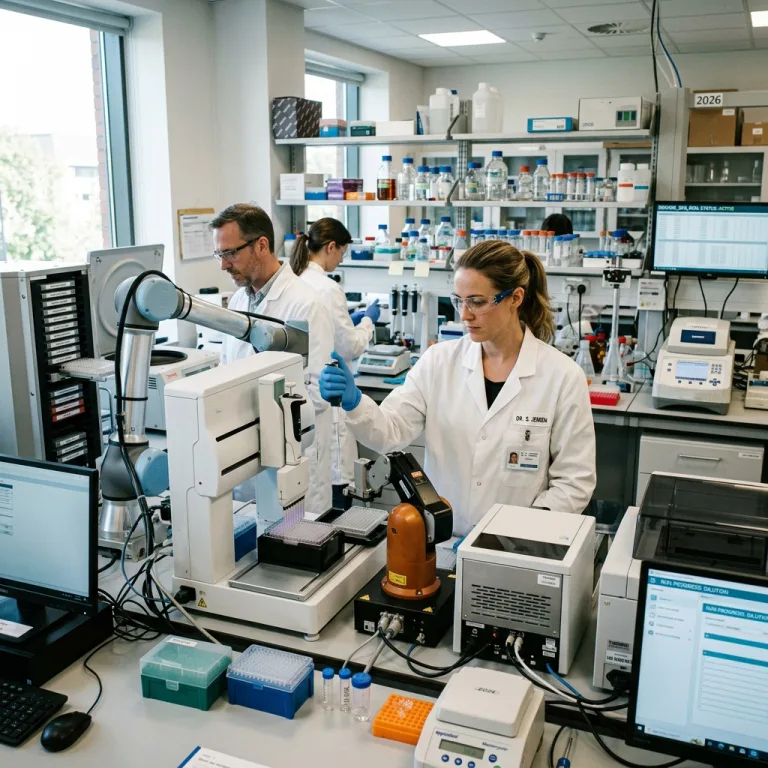
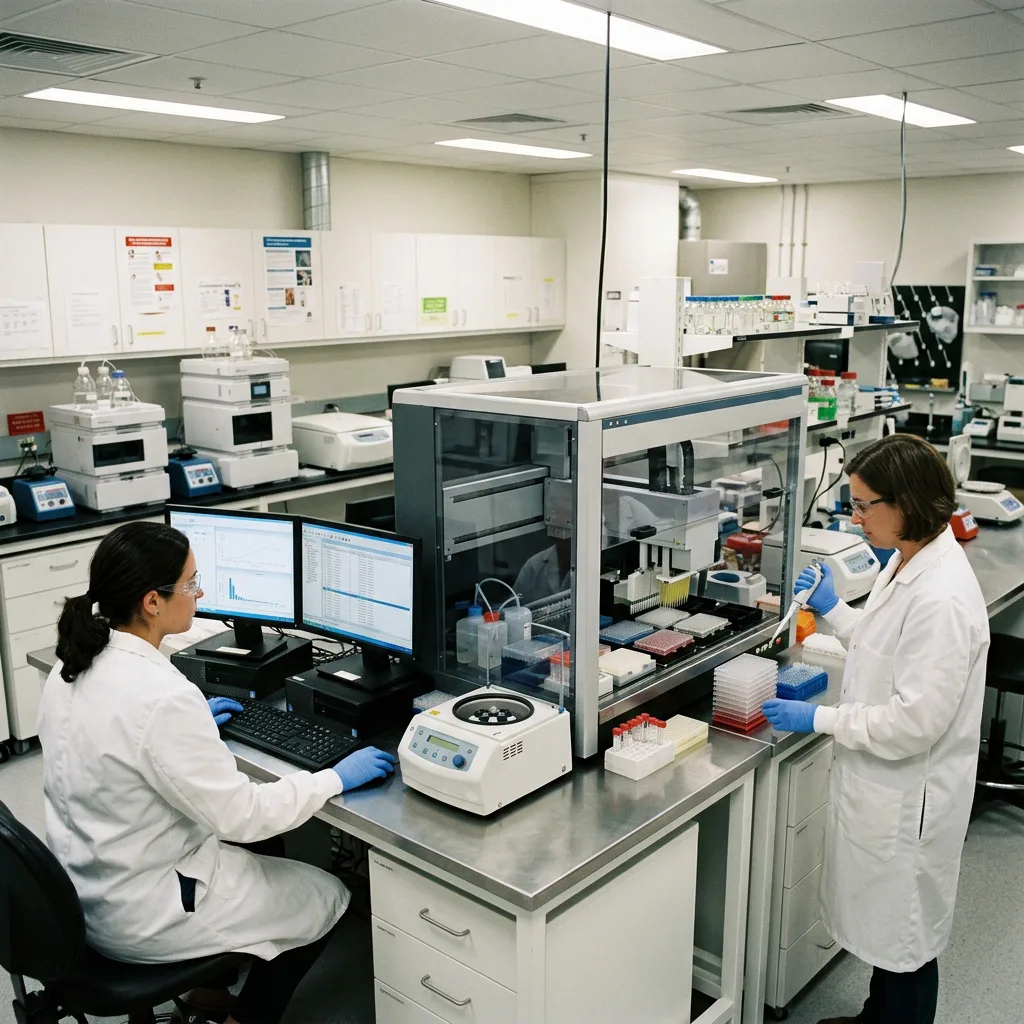
The STAT tube arrives via a pneumatic tube system and is immediately dropped into a bulk input module. A robotic arm instantly scans the 2D barcode. The AI-integrated middleware recognizes the emergency priority. It automatically routes the tube onto a high-speed magnetic conveyor track, bypassing the routine samples. The system performs rapid centrifugation, precise robotic liquid handling, and routes it directly to the analytical testing module. Once the analysis is complete, an artificial intelligence algorithm reviews the data against the patient’s historical electronic health records. Finding the critical flags consistent with the algorithm’s clinical parameters, it auto-validates the result and pings the ER doctor’s tablet. Total time elapsed: 18 minutes. No human hands touched the tube.
This is not science fiction; this is the reality of how artificial intelligence is reshaping laboratory automation systems today.
What is the role of AI in laboratory automation systems?
Direct Answer: Artificial intelligence in laboratory automation systems acts as the “brain” behind the mechanical robotics. While physical conveyor tracks and robotic arms move the clinical samples, AI algorithms analyze massive datasets to auto-validate normal test results, predict equipment failures before they happen, optimize the physical routing of sample tubes to prevent bottlenecks, and assist in complex visual diagnostics like digital morphology in hematology.
The Evolution from Mechanization to True Intelligence
For the past two decades, clinical lab managers have focused on mechanization—replacing manual pipetting and tube sorting with Task Targeted Automation (TTA) and Total Laboratory Automation (TLA) hardware. However, moving a tube from point A to point B on a motorized track is no longer enough to handle the exponentially growing volume of global diagnostic testing.
The next frontier is integrating machine learning (ML) and artificial intelligence (AI) directly into LIS middleware. This shift transforms a purely mechanical assembly line into a smart diagnostic ecosystem. The system no longer just follows rigid commands; it learns, adapts, and makes micro-decisions to optimize the entire clinical workflow.
Modular Automation (TLA vs. TTA) in the Era of AI
The ongoing debate between implementing Total Laboratory Automation (TLA) versus Task Targeted Automation (TTA) is heavily influenced by artificial intelligence.
In a TLA (Total Laboratory Automation) environment, AI acts as an air traffic controller. High-volume reference labs process thousands of tubes daily. AI algorithms continuously monitor the workload of every analyzer connected to the track. If Chemistry Analyzer A is running at 95% capacity and Analyzer B is at 40%, the AI will dynamically reroute incoming sample tubes to Analyzer B, ensuring no single machine becomes a bottleneck.
In a TTA (Task Targeted Automation) setup—where modular automation is deployed only at specific pinch points—AI still plays a massive role. For instance, an AI-powered pre-analytical sample sorting module can visually inspect incoming blood tubes using integrated cameras. It uses image recognition to detect insufficient sample volume, hemolysis (burst red blood cells), or lipemia (excess fat in the blood) before the tube ever reaches an expensive analyzer, saving the lab thousands of dollars in wasted chemical reagents.
Comparison: Traditional Lab Workflow vs. AI-Enhanced Smart Lab Workflow
| Workflow Phase | Traditional / Mechanized Laboratory | AI-Enhanced Smart Laboratory |
| Pre-Analytical Sorting | Technicians manually inspect tubes for volume and barcode clarity. | AI cameras detect hemolysis, lipemia, and volume issues instantly; route defective tubes to an exception lane. |
| Sample Routing | Tubes follow a fixed track path. If an analyzer goes down, a traffic jam occurs. | Dynamic load-balancing. AI reroutes tubes to available analyzers to maintain optimal turnaround times (TAT). |
| Result Validation | Technicians manually review and release results for most tests. | AI middleware auto-validates 70-80% of normal results, flagging only complex anomalies for human review. |
| Equipment Maintenance | Reactive maintenance (fixing machines after they break down). | Predictive maintenance. AI analyzes motor vibrations and sensor data to schedule repairs before failure occurs. |
| Quality Control (QC) | Scheduled manual QC runs at fixed intervals, wasting time and reagents. | Intelligent QC. The system predicts when calibration is actually needed based on real-time environmental drift. |

Predictive Analytics: Eliminating Unplanned Downtime
One of the highest hidden costs in any clinical diagnostic environment is unplanned instrument downtime. When a critical chemistry or immunoassay analyzer fails, the entire lab grinds to a halt, directly impacting patient care.
Artificial intelligence addresses this through Predictive Maintenance (PdM). Sensors embedded in the robotic liquid handling arms, centrifuges, and track motors continuously feed performance data back to the manufacturer’s cloud servers. Machine learning algorithms analyze this telemetry data to identify micro-anomalies—such as a robotic arm drawing slightly more electrical current than usual, or a centrifuge spinning 0.1 seconds slower.
The AI can predict that a specific motor will likely fail in 14 days. It automatically alerts the lab manager and dispatches a field service engineer with the exact replacement part needed, scheduling the maintenance during the lab’s lowest volume shift (e.g., Sunday at 3:00 AM). This guarantees near-zero unplanned downtime.
The Impact of AI on Hematology Lab Automation
Nowhere is the integration of AI more visually apparent than in hematology lab automation. Traditionally, conducting a complete blood count (CBC) with a differential required a technologist to prepare a glass slide, stain it, sit at a microscope, and manually count and classify hundreds of white blood cells. This process is subjective, visually fatiguing, and highly prone to human error.
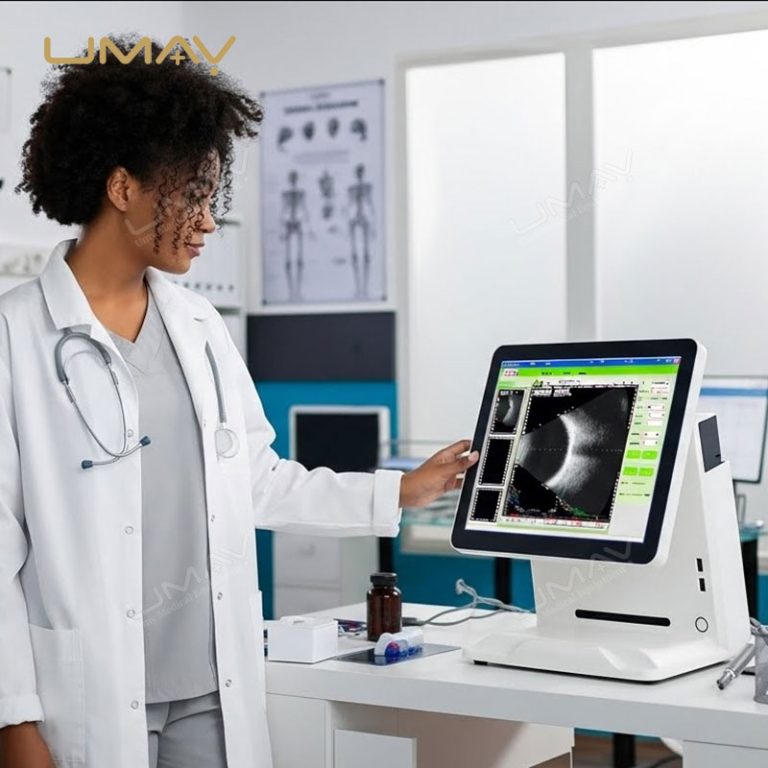
Today, advanced sample preparation systems automatically create and stain the slide. The slide is then fed into an automated digital morphology analyzer. Here, artificial intelligence utilizes deep neural networks trained on millions of expertly classified cell images. The AI scans the slide, captures high-resolution digital images of individual cells, pre-classifies them (e.g., neutrophils, lymphocytes, monocytes, or abnormal blast cells), and presents them on a high-definition monitor for the technologist to confirm.
This AI integration reduces the time to review a complex blood smear from 15 minutes to under 3 minutes, while significantly improving diagnostic accuracy and consistency across different shifts and personnel.
Overcoming the Implementation Hurdles of Smart Lab Architecture
While the benefits are transformative, migrating to an AI-driven laboratory automation system presents unique challenges that procurement teams and lab directors must navigate:
-
IT Infrastructure and Cybersecurity: AI-driven LIS middleware requires robust, low-latency network architecture. Furthermore, because these systems constantly transmit diagnostic data and predictive maintenance telemetry, they are prime targets for cyberattacks. Hospital IT departments must ensure end-to-end encryption and isolated VLANs for lab robotics.
-
The “Black Box” Trust Issue: Clinical technologists are scientists; they rely on transparent data. When an AI algorithm auto-validates a result or flags a sample as anomalous, staff must understand why. Manufacturers must design “explainable AI” that provides clear, rule-based logic for its decisions rather than operating as an opaque black box.
-
Continuous Algorithm Training: Medical parameters evolve. An AI system must be periodically updated and validated against the specific demographic data of the hospital’s patient population to prevent diagnostic bias.
Frequently Asked Questions (FAQ)
Will AI replace medical technologists in clinical labs?
No. AI is designed to augment human expertise, not replace it. By automating repetitive pre-analytical sample sorting, robotic liquid handling, and routine result validation, AI frees up highly educated medical technologists to focus on complex diagnostic challenges, quality assurance, and specialized testing that requires critical human judgment.
What is the difference between automated robotics and AI in a lab?
Automated robotics refers to the physical hardware—the motorized tracks, robotic arms, and centrifuges that physically move the sample tubes. AI is the intelligent software layer that analyzes data, makes routing decisions, predicts hardware failures, and performs image recognition to optimize the performance of those physical robots.
How does AI improve turnaround time (TAT) for critical lab results?
AI improves TAT primarily through dynamic load balancing (routing samples to the least busy analyzers) and auto-validation. By automatically releasing normal, unproblematic test results directly into the hospital’s electronic health records, AI eliminates the bottleneck of manual human review, delivering results to doctors significantly faster.
Is AI safe for clinical diagnostic use?
Yes, provided it is rigorously validated and regulated. Clinical AI algorithms must pass strict regulatory approvals (such as FDA clearance in the US or CE marking in Europe) before they can be deployed. Furthermore, AI is typically programmed with conservative clinical parameters; it is designed to instantly flag any borderline or suspicious result for mandatory manual review by a licensed human technologist.