1. What Is an Electrolyte Analyzer?
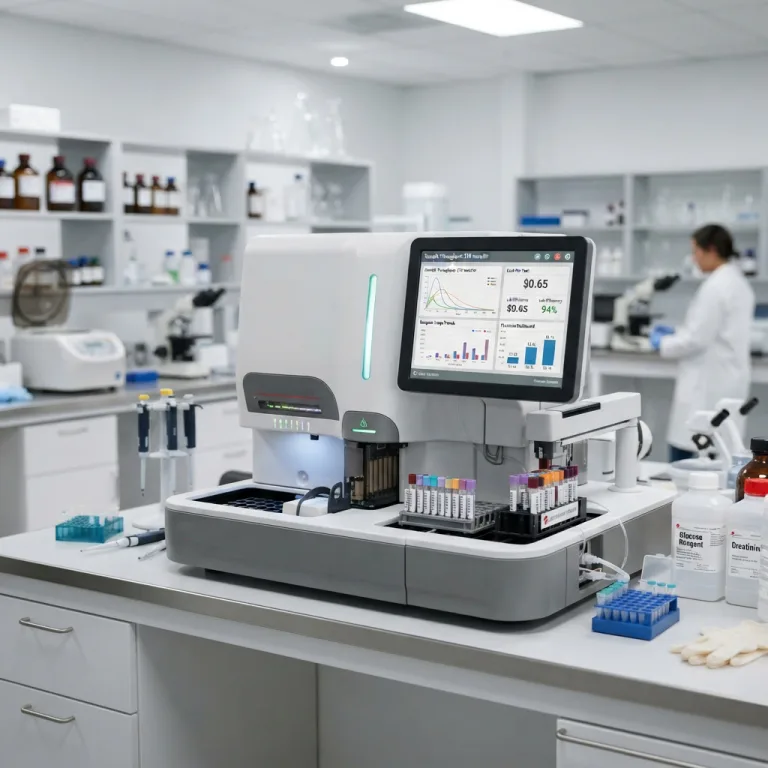
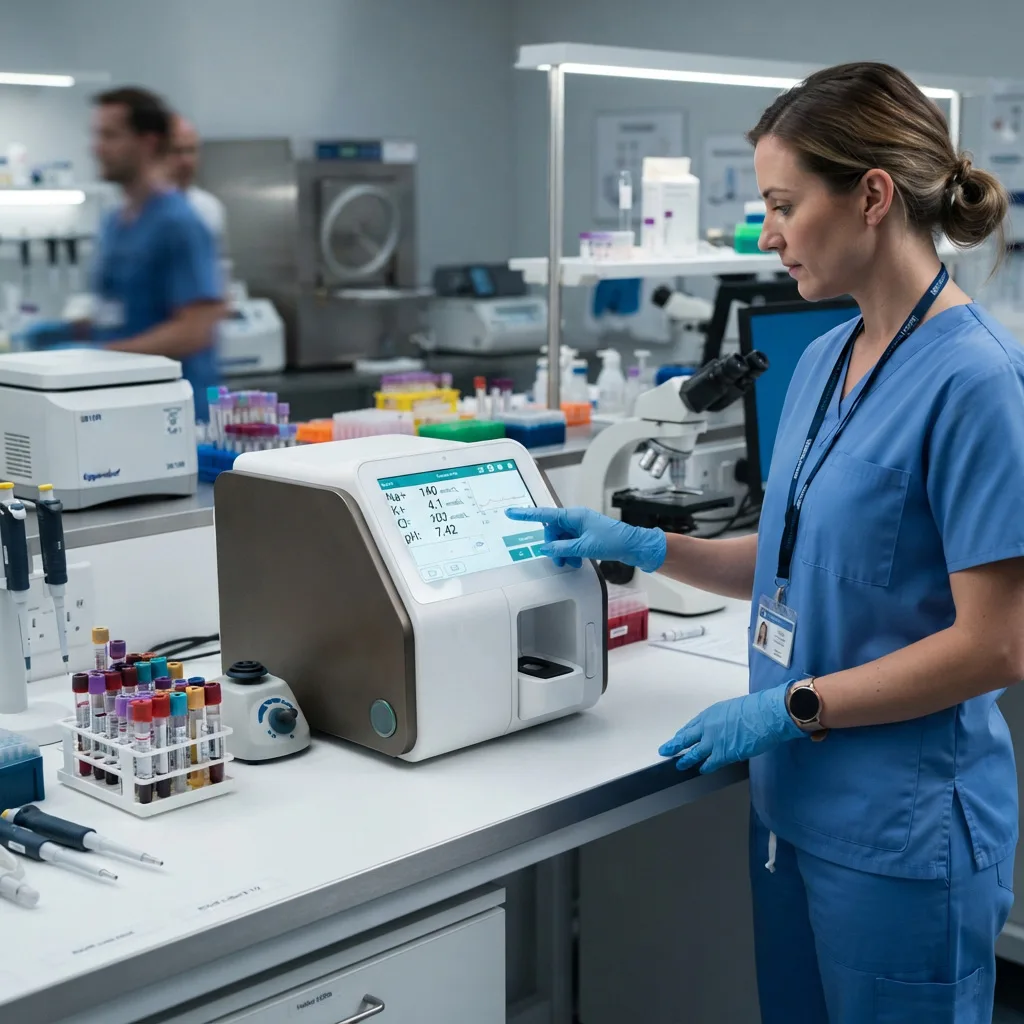
An electrolyte analyzer is a laboratory instrument that measures selected electrically charged particles, known as ions, in a biological sample.
These ions are called electrolytes. They are important in normal physiological processes, including fluid balance, nerve signaling and muscle function.
In clinical laboratories, electrolyte measurements can contribute to the assessment of fluid and electrolyte status, kidney-related conditions and other clinical situations. The clinical meaning of a result depends on the patient, the sample and other relevant test findings.
The most common parameters measured by a routine electrolyte analyzer include:
-
Sodium (Na+): A major electrolyte in extracellular fluid.
-
Potassium (K+): An important electrolyte involved in cellular and neuromuscular function.
-
Chloride (Cl−): An electrolyte involved in fluid balance and acid-base physiology.
Some analyzers also offer additional measurement options, such as lithium or ionized calcium, depending on the intended use and model configuration.
An electrolyte analyzer is sometimes called an electrolyte analysis machine, electrolyte testing instrument, clinical electrolyte analyzer or ISE analyzer.
Although these terms may describe similar equipment, buyers should confirm the actual measurement method and specifications rather than relying on the product name alone.
How Is an Electrolyte Analyzer Used in a Laboratory?
A typical testing workflow involves several stages.
Sample preparation: The operator confirms that the sample is appropriate for the instrument and the intended test.
Sample introduction: The sample is introduced manually or through the analyzer’s sampling system.
Measurement: The instrument measures the relevant ions using its analytical technology.
Calibration and quality control: The laboratory follows the manufacturer’s procedures and its quality management system to confirm that the instrument is operating acceptably.
Result display or transfer: The analyzer reports the measured values and may store, print or transmit the results.
The actual workflow differs between manual, automated, benchtop and integrated laboratory systems.

2. Which Electrolytes Can an Analyzer Measure?
Not every electrolyte analyzer measures the same combination of ions. For this reason, the test menu should be one of the first items checked on a product datasheet.
Sodium Analyzer: Na+
Sodium is one of the most frequently measured electrolytes in clinical laboratories.
A sodium measurement reports the amount of sodium represented by the instrument’s specified measurement method and reporting convention.
Sodium testing can be part of laboratory workflows involving fluid balance assessment and the investigation of electrolyte abnormalities.
Searchers looking for this capability may use terms such as:
-
sodium analyzer
-
sodium ion analyzer
-
Na+ analyzer
-
sodium electrolyte testing
-
sodium measurement equipment
-
clinical sodium analyzer
-
sodium testing instrument
A standalone sodium analyzer is not necessarily required. In many laboratories, sodium measurement is one of several functions provided by a multi-parameter electrolyte analyzer.
Potassium Analyzer: K+
Potassium is another core electrolyte parameter.
Potassium testing is widely used in clinical laboratory workflows, including those involving renal function assessment and urgent clinical testing.
Sample quality is particularly important for potassium measurement. For example, hemolysis can release intracellular potassium and affect the measured result.
This means an unexpectedly high result should be evaluated according to the laboratory’s specimen-quality and reporting procedures, rather than assuming the analyzer is faulty.
Relevant search terms include:
-
potassium analyzer
-
potassium ion analyzer
-
K+ analyzer
-
potassium electrolyte analyzer
-
potassium measurement equipment
-
blood potassium analyzer
-
potassium testing instrument
Chloride Analyzer: Cl−
Chloride is a major extracellular anion measured in many clinical chemistry and electrolyte testing systems.
Chloride results are often interpreted alongside sodium and other laboratory measurements.
A three-parameter electrolyte analyzer commonly measures sodium, potassium and chloride, although the exact configuration should always be confirmed.
Related terms include:
-
chloride analyzer
-
chloride ion analyzer
-
Cl− analyzer
-
chloride electrolyte testing
-
chloride measurement instrument
-
sodium potassium chloride analyzer
Can an Electrolyte Analyzer Measure Ionized Calcium?
Some analyzers and blood gas/electrolyte systems can measure ionized calcium (iCa).
Ionized calcium refers to the free, biologically active fraction of calcium in a sample. It is different from total calcium, which includes calcium in different chemical forms.
However, ionized calcium is not available on every standard electrolyte analyzer.
If ionized calcium is required, buyers should verify the available electrode configuration, sample requirements, measurement range and intended use.
Potential search terms include:
-
ionized calcium analyzer
-
iCa analyzer
-
ionized calcium measurement
-
blood gas and electrolyte analyzer
-
calcium ion analyzer
Can an Electrolyte Analyzer Measure Lithium?
Some specialized electrolyte analyzers include lithium as a measurement parameter.
This should not be confused with the measurement of every electrolyte in the body or with a universal capability across all analyzers.
For example, a manufacturer may offer a configuration that measures sodium and potassium plus either chloride or lithium. Other models use different test menus.
What About Magnesium, Bicarbonate and Other Parameters?
Magnesium, bicarbonate-related measurements and other biochemical parameters may be available through other analytical systems or specialized configurations.
Do not assume they are standard functions of a routine sodium-potassium-chloride analyzer.
In particular, total carbon dioxide, bicarbonate-related values, pH and anion gap are not interchangeable measurements. Depending on the instrument, some may be measured directly, while others may be calculated or obtained from separate tests.
Always review the actual test menu and technical documentation.
3. How Does an Electrolyte Analyzer Work?
Many clinical electrolyte analyzers use ion-selective electrode technology.
An ion-selective electrode is designed to respond preferentially to a particular ion. It uses a selective membrane and an electrochemical measurement system to produce a signal related to the activity of the target ion.
The analyzer processes this signal and converts it into a reported measurement using its calibration and analytical procedure. This is the basic principle of potentiometric ion measurement described in clinical chemistry literature.
What Is an Ion-Selective Electrode?
An ion-selective electrode, or ISE, contains a membrane designed to respond selectively to a target ion.
For example:
-
A sodium ISE responds to sodium-related ion activity.
-
A potassium ISE responds to potassium-related ion activity.
-
A chloride ISE responds to chloride-related ion activity.
The exact membrane materials and electrode construction depend on the ion and instrument design.
The electrode works alongside a reference electrode and the analyzer’s measurement electronics.
The resulting electrical potential is processed using the analyzer’s calibration system.
In simple terms:
Selective membrane → Electrical signal → Calibration and signal processing → Reported result
The analyzer does not simply count ions individually. It interprets an electrochemical signal using an established analytical method.
What Is Potentiometry?
Potentiometry is an electrochemical measurement technique that determines the potential difference between electrodes under defined conditions.
In an ISE system, this potential is related to the activity of the target ion in the sample.
The relationship is influenced by the chemistry of the sample and the characteristics of the electrode system.
Modern clinical analyzers use established measurement procedures to translate the signal into a result expressed in the instrument’s configured reporting units.
What Components Are Found in an Electrolyte Analyzer?
A typical benchtop electrolyte analyzer may include several of the following components, depending on the model.
Sample aspiration or sampling system: Introduces the sample into the measurement pathway.
Ion-selective electrodes: Measure specified ions.
Reference electrode: Provides the reference potential used by the measurement system.
Calibration system: Uses calibrators or calibration solutions to establish the relationship between the signal and reported results.
Fluidic pathway: Includes the tubing, valves, connectors or other components that move liquids through the analyzer.
Control electronics: Process the measured signals and manage the instrument’s operation.
Display and data system: Presents results, instrument status and other information.
Reagent and consumable system: Stores or connects the solutions and consumables required by that instrument.
Some systems integrate quality-control storage, automatic calibration functions, printers, barcode readers or computer connectivity. These are model-dependent features rather than universal specifications.
4. Direct ISE vs Indirect ISE: An Introduction
One of the most important terms in electrolyte analyzer technology is ISE measurement.
ISE systems are commonly grouped into two approaches: direct ISE and indirect ISE.
The distinction concerns how the sample is presented to the measurement system.
Direct ISE Measurement
Direct ISE measures the sample without the predilution step used by indirect ISE.
Direct ISE technology is commonly used in blood gas analyzers and point-of-care electrolyte testing systems, although it is also found in some laboratory analyzers.
Indirect ISE Measurement
Indirect ISE uses a dilution step before measurement.
This approach is commonly used in automated clinical chemistry analyzers, where the sampling and analytical system is designed to process many samples efficiently.
Both methods are established in clinical laboratories, but they do not always produce identical results under all sample conditions.
For example, differences in protein or lipid concentrations can affect sodium results obtained by indirect ISE in certain circumstances. Direct ISE measures the ion activity in the undiluted sample and is less affected by changes in sample solids in this specific way.
This does not mean that one method is universally superior for every application.
The appropriate method depends on the clinical workflow, instrument design, sample characteristics and laboratory requirements.
The more detailed comparison of analytical differences, interference and troubleshooting will be covered in Post 2: Direct vs Indirect ISE Electrolyte Testing.
5. Which Sample Types Can an Electrolyte Analyzer Accept?
Sample compatibility is a critical consideration when evaluating an electrolyte analyzer.
Different instruments may be validated for different sample types.
Common sample categories include:
| Sample Type | What Buyers Should Confirm |
|---|---|
| Whole blood | Whether the specific instrument accepts whole blood and which collection tubes or anticoagulants are permitted |
| Serum | Whether serum is supported for the requested parameters |
| Plasma | Whether the specified plasma type and anticoagulant are accepted |
| Urine | Whether urine measurement is supported and whether dilution or other preparation is required |
| Cerebrospinal fluid (CSF) | Whether the particular model is intended and validated for this sample type |
Not every analyzer supports all these sample types. For example, one manufacturer’s analyzer may accept serum, plasma, whole blood and urine, while another may have a more limited menu.
Whole Blood Electrolyte Testing
Whole blood testing can be convenient when the workflow requires measurements from an appropriate blood specimen without separating serum or plasma first.
However, the collection device, anticoagulant, sample volume, mixing procedure and time between collection and analysis must follow the manufacturer’s instructions.
Not all whole blood collection tubes are interchangeable across analyzer models.
Serum Electrolyte Testing
Serum is obtained after blood has clotted and the liquid portion has been separated.
Serum may be accepted by many clinical electrolyte analyzers, but users should confirm whether the instrument supports the required sample type and whether the intended testing procedure is validated.
Plasma Electrolyte Testing
Plasma is obtained from anticoagulated blood.
The anticoagulant matters because some anticoagulants can interfere with particular laboratory measurements.
Buyers should confirm the accepted anticoagulant and collection procedure in the analyzer’s instructions for use.
Urine Electrolyte Testing
Some analyzers support urine electrolyte measurement, but not all do.
Urine may require different preparation or dilution procedures depending on the instrument and measurement range.
When evaluating a urine-capable electrolyte analyzer, ask the supplier about supported electrolytes, sample preparation, analytical ranges and validation documentation.
Can All Electrolyte Analyzers Test Cerebrospinal Fluid?
No. CSF measurement should only be considered when the analyzer’s documentation explicitly supports the intended use.
This is a good example of why model-specific specifications are essential.
A product listing that says “multi-sample analyzer” does not automatically establish compatibility with every biological fluid.
6. What Do Electrolyte Analyzer Results Look Like?
Electrolyte analyzers usually report measured concentrations in units specified by the instrument and laboratory workflow.
One common reporting unit for sodium, potassium and chloride is mmol/L.
The exact unit, display resolution, measurement range, reference intervals and reporting format depend on the analyte and instrument.
What Is a Measurement Range?
The measurement range is the range over which the analyzer is specified to measure a parameter under defined conditions.
Different electrolytes can have different measurement ranges.
For example, a sodium analyzer and a potassium analyzer do not necessarily use the same range because the measured ions have different expected concentrations and analytical requirements.
A product datasheet should identify the range for each parameter rather than provide one general range for the instrument.
What Is Display Resolution?
Display resolution describes the smallest increment the instrument displays for a result.
It is not the same as accuracy.
An analyzer displaying more decimal places is not automatically more accurate than another analyzer.
Procurement teams should evaluate resolution alongside precision, method performance, calibration procedures, quality-control results and other relevant specifications.
What Is Analytical Precision?
Precision describes how closely repeated measurements agree under specified conditions.
An analyzer’s precision may be evaluated within a single run or across different runs or days.
The interpretation depends on the test procedure and the manufacturer’s performance study.
For buyers, the important question is not just how many decimal places appear on the screen, but whether the instrument’s documented performance is appropriate for its intended application.
7. How Is an Electrolyte Analyzer Different From a Clinical Chemistry Analyzer?
The terms can overlap in a laboratory equipment catalog, but the instruments have different typical roles.
An electrolyte analyzer specializes in measurements of selected ions, commonly sodium, potassium and chloride.
A clinical chemistry analyzer can measure a broader range of biochemical parameters, with the available menu depending on the model and installed methods.
Some clinical chemistry analyzers integrate indirect ISE technology for electrolyte testing. Other systems use standalone electrolyte analyzers to support dedicated testing workflows.
| Feature | Electrolyte Analyzer | Clinical Chemistry Analyzer |
|---|---|---|
| Main purpose | Measurement of selected electrolytes | Measurement of a broader biochemical test menu |
| Typical parameters | Na+, K+, Cl− and selected additional ions | Various biochemical analytes, depending on configuration |
| Analytical method | Commonly ISE | Multiple methods, depending on the assay |
| Typical workflow | Dedicated electrolyte testing | Multi-parameter chemistry testing |
| Equipment size | Often compact for standalone systems, but varies | Varies from compact to large automated systems |
| Procurement consideration | Electrolyte-specific performance and consumables | Breadth of assay menu and overall laboratory throughput |
The best configuration depends on sample volume, test requirements, existing laboratory equipment and the need for dedicated or integrated testing.
The next articles in this series will cover broader equipment comparisons and procurement decisions in more detail.
8. Where Are Electrolyte Analyzers Used?
Electrolyte analyzers are used across a range of clinical laboratory environments.
Hospital Laboratories
Hospitals may use electrolyte analyzers for routine testing and to support relevant clinical workflows.
The specific placement of the instrument depends on the hospital’s laboratory organization and sample volume.
Clinical Diagnostic Laboratories
Independent diagnostic laboratories may use standalone or integrated electrolyte testing systems depending on the available equipment and requested test menu.
Emergency and Critical Care Settings
Rapid electrolyte measurement can be part of emergency or critical care testing workflows.
The analyzer’s actual turnaround time, sample requirements and intended use should be checked before choosing a system for this environment.
Dialysis-Related Laboratories
Electrolyte testing can be relevant to dialysis services and associated laboratory workflows.
However, buyers should specify the exact sample type and application. An analyzer intended for blood or serum should not automatically be assumed suitable for dialysis fluid testing.
Point-of-Care Testing
Some compact direct ISE systems are used in point-of-care settings.
Their suitability depends on the instrument’s intended use, sample requirements, workflow, operator training and applicable local requirements.
These applications will be explored in greater depth in Post 4: Where Are Electrolyte Analyzers Used?
9. How to Read an Electrolyte Analyzer Datasheet
A product datasheet can contain many technical terms, but most buyers can start with a few important sections.
Test Parameters
Confirm which electrolytes are actually available.
Measurement Method
Check whether the analyzer uses direct ISE, indirect ISE or another specified technology.
Sample Types
Review the exact approved sample types and collection requirements.
Sample Volume
Confirm the volume needed for each measurement and any additional volume required by the sampling system.
Analysis Time
Check what the published time represents. One reported measurement time may not equal the total time needed to process a full workload.
Throughput
Look for the stated processing capacity and understand the manufacturer’s test conditions.
Calibration
Review whether calibration is automatic, manually initiated or handled through another procedure.
Quality Control
Check the available QC functions, storage and related requirements.
Consumables
Identify electrodes, reagents, calibrators, cleaning solutions and other model-specific items.
Data Output
Check the display, printer, data storage, interfaces and any LIS connectivity.
Environmental Requirements
Review power supply, temperature, humidity and operating conditions.
Maintenance and Support
Confirm routine maintenance, replacement-part availability, warranty and technical service options.
A well-structured datasheet makes it easier to compare products and prepare a clear request for quotation.
10. What Should a Laboratory Buyer Check Before Choosing a Model?
Even if a buyer is not yet ready to compare prices, several questions help determine which instrument category is appropriate.
Which ions need to be measured?
Start with the required test menu rather than a general product name.
Which sample types are required?
Confirm the actual workflow and the intended specimen types.
How many samples will be processed?
Estimate daily workload and peak periods.
Is the instrument used centrally or at the point of care?
This affects workflow, footprint, connectivity and user requirements.
Which analytical method is appropriate?
Review direct and indirect ISE in the context of the intended application.
What consumables are needed?
Check reagent availability, electrode service requirements and recurring costs.
What data functions are required?
Consider result storage, printed reports, electronic transfer and integration with the laboratory system.
What technical support is available?
Confirm that the supplier can provide relevant documentation and service arrangements.
These questions will form the basis of the dedicated purchasing guide in Post 3.
Frequently Asked Questions
1. What is an electrolyte analyzer?
An electrolyte analyzer is a clinical laboratory instrument used to measure selected ions in biological samples. Common parameters include sodium, potassium and chloride.
2. What is an electrolyte analyzer used for?
It is used in clinical laboratory workflows that require electrolyte measurements. The results may contribute to the evaluation of electrolyte and fluid balance and other clinical conditions.
3. How does an electrolyte analyzer work?
Many electrolyte analyzers use ion-selective electrodes. The electrodes generate an electrical potential related to the target ion, and the instrument processes the signal using its calibration and measurement system.
4. What is an ISE electrolyte analyzer?
An ISE electrolyte analyzer uses ion-selective electrode technology to measure selected ions, commonly sodium, potassium and chloride.
5. Which electrolytes can an analyzer measure?
Many systems measure sodium, potassium and chloride. Some models support additional parameters such as lithium or ionized calcium, depending on the configuration.
6. Can an electrolyte analyzer measure sodium and potassium at the same time?
Many multi-parameter electrolyte analyzers measure sodium and potassium in the same testing workflow. The exact parameters depend on the model.
7. What is the difference between direct ISE and indirect ISE?
Direct ISE measures an undiluted sample, while indirect ISE uses a predilution step. The methods can produce different results under certain sample conditions.
8. Which samples can an electrolyte analyzer test?
Depending on the model, samples may include whole blood, serum, plasma and sometimes urine or other specified fluids. Always confirm the manufacturer’s instructions.
9. Can an electrolyte analyzer test urine?
Some models support urine electrolyte measurements. Sample preparation and dilution requirements vary, so the user should follow the specific instrument documentation.
10. Can an electrolyte analyzer test cerebrospinal fluid?
Only if the particular instrument supports and is intended for the specified CSF testing application. Not every analyzer accepts this sample type.
11. Does every electrolyte analyzer measure ionized calcium?
No. Ionized calcium is available only on selected analyzers and configurations. Buyers should check the exact test menu.
12. Can an electrolyte analyzer measure lithium?
Some models offer lithium measurement, but this is not a standard feature across all electrolyte analyzers. Verify the intended use and technical specifications.
13. What is the difference between an electrolyte analyzer and a blood gas analyzer?
An electrolyte analyzer focuses on selected ion measurements. A blood gas analyzer measures blood gas parameters, and some models additionally measure electrolytes. The test menu varies by model.
14. What is the difference between an electrolyte analyzer and a clinical chemistry analyzer?
An electrolyte analyzer specializes in selected ions, whereas a clinical chemistry analyzer generally supports a broader range of biochemical measurements. Some chemistry analyzers integrate ISE technology for electrolyte testing.
15. What does mmol/L mean in electrolyte testing?
Millimoles per liter, abbreviated mmol/L, is a concentration unit commonly used to report sodium, potassium and chloride measurements. The reporting unit depends on the analyte and instrument.
16. Does a higher display resolution mean better accuracy?
Not necessarily. Display resolution refers to the displayed measurement increment, while accuracy and precision describe different aspects of analytical performance.
17. Why does an electrolyte analyzer need calibration?
Calibration establishes the relationship between the instrument’s measurement signal and the reported result. The procedure and schedule depend on the analyzer and its instructions.
18. How long does an electrolyte test take?
Analysis time varies by model, measurement method, sample handling procedure and operating conditions. Buyers should distinguish the stated analytical time from overall laboratory turnaround time.
19. What consumables does an electrolyte analyzer need?
Depending on the model, consumables may include electrodes, reagents, calibrators, QC materials, cleaning solutions and other components used by the sample pathway.
20. How do I choose an electrolyte analyzer for a laboratory?
Start with the required parameters, sample types, testing workload, analytical method, consumables, data functions, installation conditions and technical support.
21. Where are electrolyte analyzers commonly used?
They are commonly found in hospital laboratories, clinical diagnostic laboratories and selected emergency, critical care and point-of-care testing workflows.
22. What should buyers compare on an electrolyte analyzer datasheet?
Important items include test parameters, sample types, measurement method, measurement ranges, precision, calibration, sample volume, analysis time, consumables, connectivity and service requirements.
23. Can every electrolyte analyzer connect to a Laboratory Information System?
No. Connectivity varies by model. Buyers should confirm the available interfaces, communication protocols and integration requirements.
24. How much does an electrolyte analyzer cost?
The price depends on the model, available parameters, automation, consumables, service arrangements, configuration and destination-market requirements.
25. What should I ask an electrolyte analyzer manufacturer before purchasing?
Ask about the test menu, sample compatibility, analytical performance, calibration and QC, consumables, maintenance, data output, documentation, warranty and after-sales technical support.