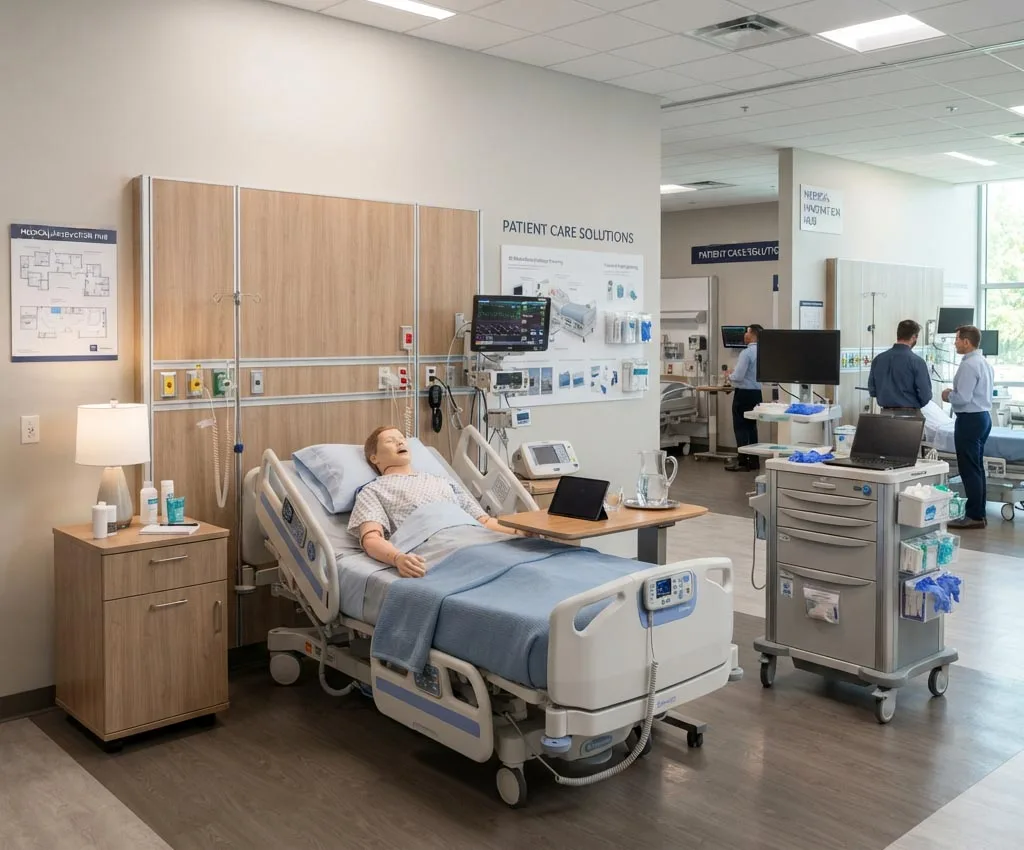
A Complete Hospital Room Needs More Than a Hospital Bed
When planning a new hospital, expanding an existing healthcare facility or renovating patient rooms, purchasing hospital beds is only one part of the process.
A functional patient room also needs bedside cabinets, overbed tables, patient chairs, storage furniture, privacy screens and suitable accessories. Depending on the department, the facility may also need patient transfer trolleys, wheelchairs, medical carts and specialized patient handling equipment.
These products should work together. A hospital bed may have the right functions, but the room can still be difficult to use if there is insufficient space for a wheelchair, no convenient place for patient belongings or poor access for nursing staff.
This is why many healthcare projects benefit from a complete hospital furniture planning approach rather than purchasing individual products without considering the overall room layout.
For hospital owners, medical equipment distributors, contractors and procurement teams, the goal is to create a practical environment that supports patient care, staff workflow, cleaning and long-term maintenance.
This guide explains how to plan hospital furniture and related patient-care equipment for different departments, prepare a procurement list and evaluate suppliers for a complete healthcare project.
1. What Is Included in a Complete Hospital Furniture Solution?
Hospital furniture includes the furniture and selected supporting products used in patient rooms, wards, treatment areas and other healthcare spaces.
The exact product list depends on the facility’s size, services, patient population and operating model.
A typical hospital furniture and patient room package may include the following categories.
1.1 Hospital Beds
Hospital beds are usually the central item in a patient room.
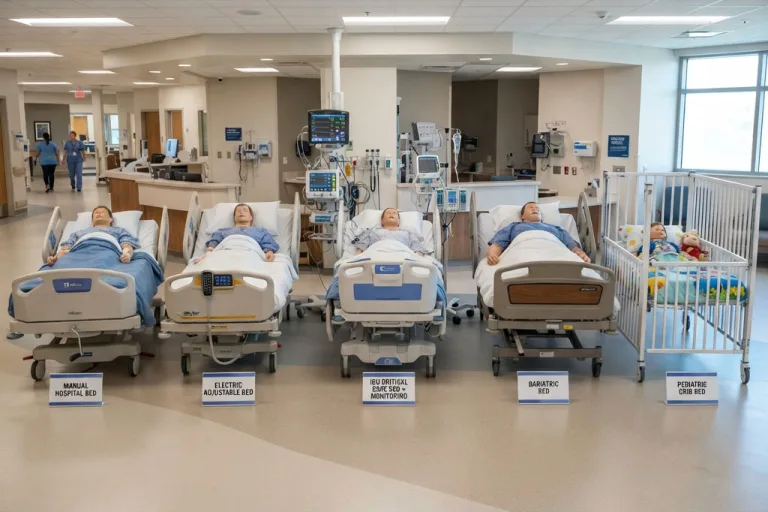
Common types include:
- Manual hospital beds
- Semi-electric hospital beds
- Fully electric hospital beds
- ICU beds
- Pediatric hospital beds
- Bariatric hospital beds
- Specialized medical beds
The required bed depends on the patient’s condition and the level of care provided.
For example, a general ward may use standard manual or electric beds, while an intensive care unit may require beds with more specialized positioning and accessory options.
1.2 Bedside Cabinets
A bedside cabinet provides storage for personal belongings and selected patient-care items.
Depending on its design, it may include drawers, shelves, a cabinet compartment, a pull-out tray or a small work surface.
A bedside cabinet should be positioned so patients can access essential belongings while nursing staff can still move around the bed.
1.3 Overbed Tables
Overbed tables provide a surface for meals, reading materials and selected daily activities.
Some models have adjustable height, tilting surfaces or wheels for movement around the patient bed.
For hospitals with frequent patient turnover, easy cleaning, stable construction and convenient adjustment are important considerations.
1.4 Patient Chairs and Recliners
Patient chairs provide seating for patients when they do not need to remain in bed.
They are used for meals, consultations, recovery and everyday activities.
Depending on the department, the facility may need standard patient chairs, reclining chairs or specialized seating systems.
1.5 Visitor and Companion Chairs
Visitor chairs provide seating for family members, caregivers and other visitors.
In private rooms and maternity departments, companion seating may be particularly important.
Some models are foldable or convertible into temporary resting furniture, depending on the product design and facility requirements.
1.6 Storage Cabinets and Wardroom Furniture
Hospitals need organized storage for personal belongings, linen, clothing and selected non-sterile supplies.
Common options include wardrobes, bedside storage, mobile cabinets and wall-mounted storage units.
Storage arrangements should support both patient access and nursing workflow.
1.7 Privacy Screens and Curtains
Privacy screens help create separate areas around patients in shared rooms, examination areas and treatment spaces.
Depending on the facility design, they may be portable folding screens, curtain systems or other partition solutions.
The selected option should allow staff to maintain patient privacy without obstructing access or creating unnecessary cleaning difficulties.
1.8 Medical Carts and Patient Mobility Equipment
Not all hospital furniture is stationary.
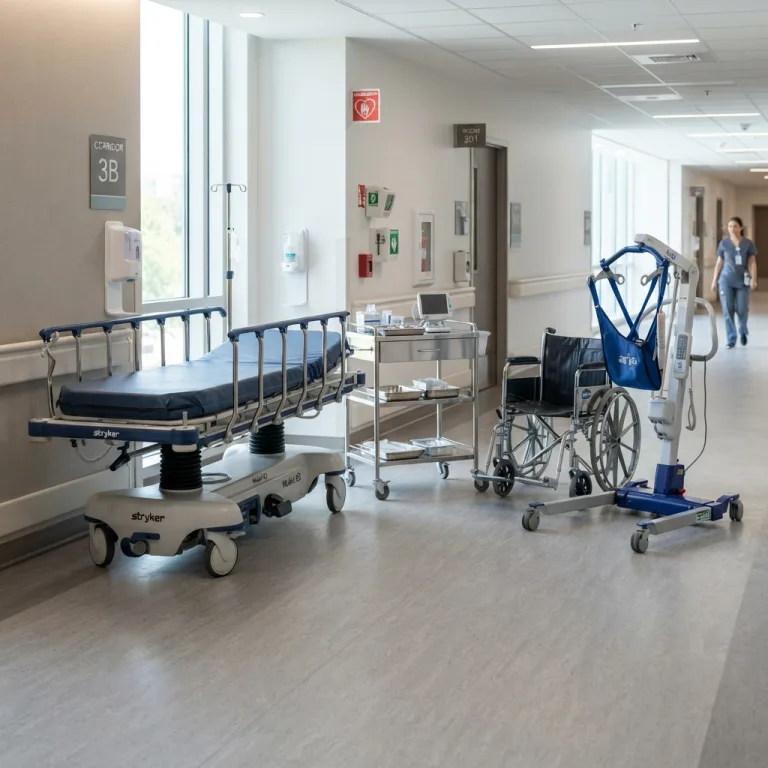
Medical carts, nursing carts, equipment trolleys, patient transfer trolleys and wheelchairs support daily hospital operations.
It is important to distinguish their functions:
- Hospital furniture supports patient rooms and care areas.
- Medical carts carry instruments, supplies or medical devices.
- Patient transport equipment moves patients between locations.
- Medical devices provide specific clinical functions.
A complete hospital project may require all four categories, even though they are not technically the same type of product.
2. Hospital Furniture Planning by Department
Different hospital departments have different requirements. A standard general ward does not need exactly the same furniture as an ICU, emergency department or rehabilitation center.
The most practical approach is to build an equipment list for each department.
2.1 General Hospital Ward
General wards provide routine inpatient care for patients who do not require the same level of monitoring as those in intensive care.
A typical patient room may require:
- Manual or electric hospital beds
- Bedside cabinets
- Overbed tables
- Patient chairs
- Visitor chairs
- Wardrobes or storage cabinets
- Privacy curtains or screens
- Waste bins and selected accessories
For shared rooms, furniture layout is particularly important.
Each patient should have convenient access to the bed, bedside storage and other daily-use items. Nursing staff should also be able to reach the patient from the necessary sides of the bed.
In multi-bed wards, the layout should consider privacy, movement between beds, access to shared facilities and cleaning procedures.
2.2 Private Patient Rooms
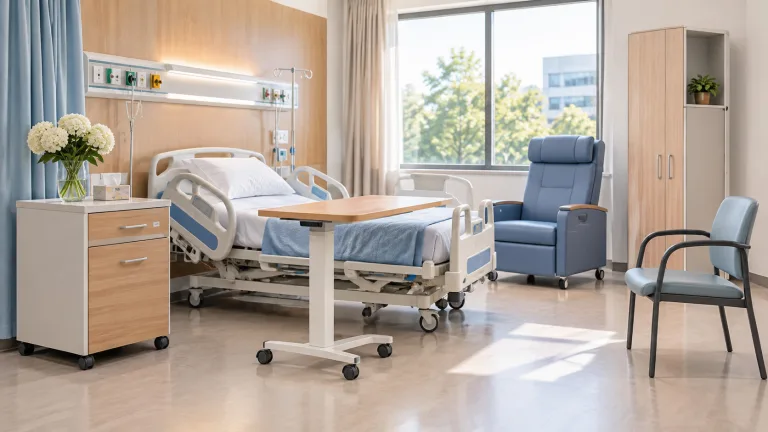
Private rooms offer greater privacy and may provide more space for visitors and personal belongings.
In addition to a hospital bed, a private room may include:
- A bedside cabinet
- An overbed table
- A patient recliner
- A visitor or companion chair
- A wardrobe
- Additional storage furniture
- A privacy partition for selected areas
The furniture should create a welcoming environment without compromising clinical access.
For example, an oversized visitor sofa may make the room less convenient for nursing procedures or patient transfers. Buyers should balance comfort with practical room dimensions.
2.3 Intensive Care Unit (ICU)
ICU rooms require specialized planning because patients may need continuous monitoring, respiratory support and other advanced care.
The central furniture item is usually a suitable ICU bed. The surrounding space must accommodate clinical devices and staff access.
Depending on the hospital’s clinical design, the room may also need:
- ICU-compatible hospital beds
- Medical equipment carts
- Monitor and device support systems
- Selected storage units
- Patient handling equipment
- Privacy solutions
It is important not to treat ICU planning as ordinary bedroom furniture selection.
The positions of electrical outlets, medical gas connections, monitoring equipment, cable routes and staff working areas should be coordinated with the hospital’s clinical and engineering teams.
The furniture should not block access to essential medical equipment or interfere with emergency procedures.
2.4 Emergency Department
Emergency departments need flexible spaces for assessment, observation and treatment.
Depending on the service configuration, possible products include:
- Emergency stretchers
- Examination tables
- Patient transfer trolleys
- Wheelchairs
- Patient chairs
- Medical utility carts
- Storage cabinets
- Privacy screens
The priority is efficient patient movement and access to equipment.
Mobile furniture should be easy to maneuver and should not obstruct corridors or emergency pathways.
For emergency departments with high patient turnover, cleaning and maintenance requirements should also influence purchasing decisions.
2.5 Obstetrics and Maternity Departments
Maternity departments serve pregnant women, mothers and newborns, so the furniture requirements differ from those of a standard inpatient ward.
Depending on the services offered, a maternity area may need:
- Maternity or delivery beds
- Adjustable hospital beds
- Bedside cabinets
- Patient recliners
- Visitor or companion chairs
- Newborn care furniture
- Storage cabinets
- Privacy curtains or screens
The actual equipment list should be based on whether the department provides antenatal care, labor and delivery, postnatal recovery or a combination of services.
Newborn care areas may require specialized equipment that should be planned separately from general patient room furniture.
2.6 Pediatric Departments
Pediatric wards care for children with different physical dimensions and support requirements from adults.
Furniture should be selected according to the age groups and patient sizes served by the facility.
Possible products include:
- Pediatric hospital beds
- Pediatric bedside cabinets
- Age-appropriate seating
- Storage furniture
- Visitor chairs for parents
- Suitable privacy solutions
Safety features, appropriate dimensions and cleaning requirements are important.
Adult beds should not automatically be treated as suitable for children. Buyers should confirm that pediatric products are designed and documented for their intended users.
2.7 Rehabilitation Departments
Rehabilitation departments support patients who are recovering mobility or working to improve physical function.
The furniture and equipment list may include:
- Rehabilitation or adjustable beds
- Patient chairs and recliners
- Wheelchairs
- Patient transfer equipment
- Transfer boards
- Patient lifts
- Storage cabinets
- Treatment tables
The requirements depend on the type of rehabilitation provided.
A department focusing on postoperative recovery may need a different configuration from one providing neurological rehabilitation or long-term mobility support.
For specialized rehabilitation devices, selection should involve qualified clinical or rehabilitation professionals.
2.8 Nursing Homes and Long-Term Care Facilities
Long-term care facilities support residents who may need assistance with daily activities over extended periods.
Their furniture needs often emphasize comfort, durability, accessibility and ease of cleaning.
Common products may include:
- Electric or manual care beds
- Bedside cabinets
- Overbed tables
- Patient recliners
- Companion chairs
- Wardrobes
- Wheelchairs
- Patient lifts and transfer aids
- Storage and utility carts
When equipment is used every day, maintenance arrangements and replacement parts should be considered before purchasing.
3. A Practical Hospital Furniture Procurement Checklist
A complete furniture procurement plan helps buyers identify what each department needs before requesting quotations.
The following table is a general reference for project planning.
| Department | Main Furniture | Additional Patient-Care Products |
|---|---|---|
| General ward | Hospital beds, bedside cabinets, overbed tables, chairs and wardrobes | Wheelchairs, transfer trolleys and nursing carts |
| Private rooms | Electric beds, bedside cabinets, overbed tables, recliners and wardrobes | Patient transfer equipment and selected medical carts |
| ICU | ICU beds and selected storage furniture | Medical equipment carts and specialized patient handling devices |
| Emergency | Patient chairs, storage and examination furniture | Emergency stretchers, wheelchairs and medical carts |
| Maternity | Maternity beds, patient chairs and storage | Delivery equipment and newborn care devices |
| Pediatric ward | Pediatric beds, suitable storage and seating | Pediatric patient mobility and care equipment |
| Rehabilitation | Adjustable beds, chairs and storage | Wheelchairs, transfer boards and patient lifts |
| Long-term care | Care beds, bedside cabinets, overbed tables and wardrobes | Patient lifts, slings and mobility aids |
The table is not a fixed product specification. Each hospital should adjust the list according to its services, patient capacity, room dimensions and clinical procedures.
Example: A General Patient Room Package
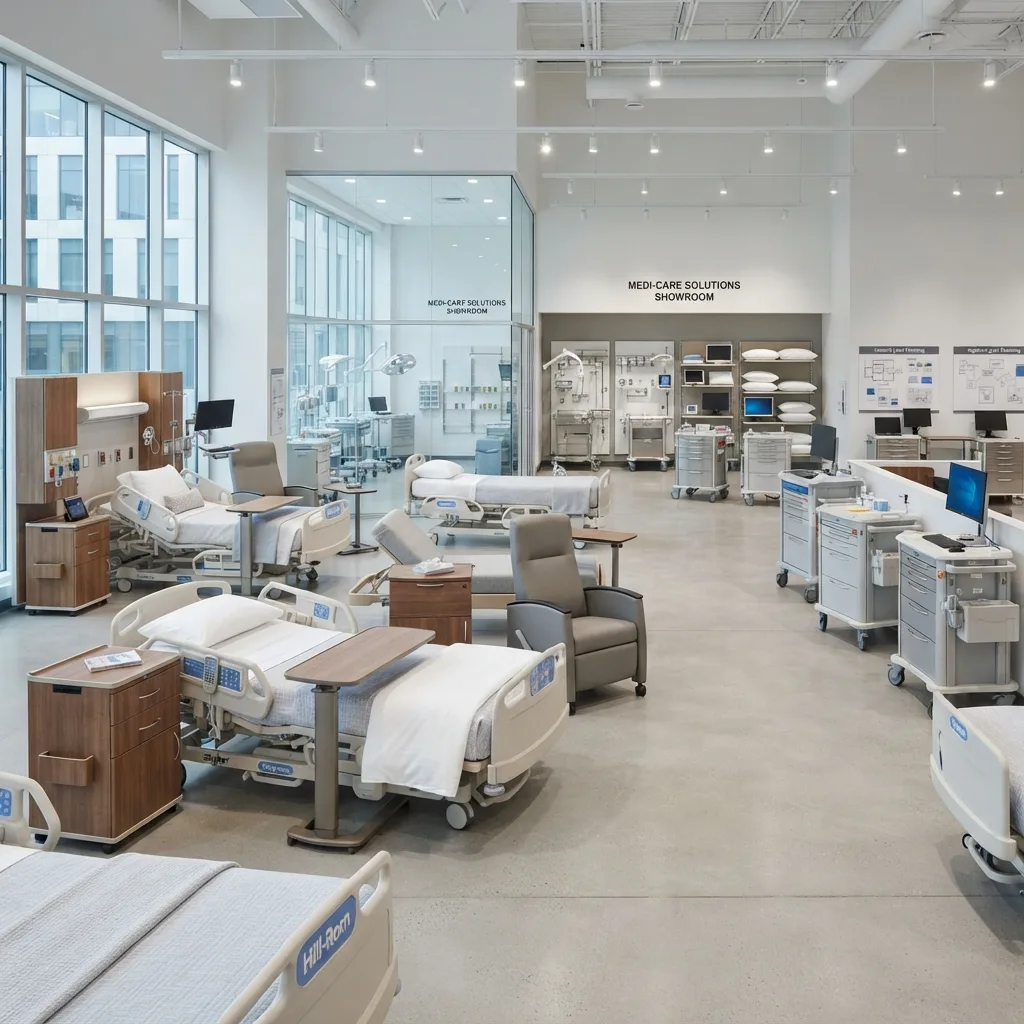
For a general inpatient room, a basic package may include:
| Item | Suggested Planning Quantity |
|---|---|
| Hospital bed | 1 per patient space |
| Bedside cabinet | 1 per patient space |
| Overbed table | 1 per patient space |
| Patient chair | Based on room design |
| Visitor chair | Based on visitor policy |
| Wardrobe or storage cabinet | Based on room type |
| Privacy curtain or screen | Based on room layout |
| Patient transfer equipment | Shared according to department needs |
The quantities are planning examples, not universal requirements. For example, a multi-bed ward may share certain equipment, while a private room may require more individual furniture.
4. How to Plan a Functional Hospital Room Layout
Even when every product is suitable, poor furniture placement can make a patient room difficult to use.
Room planning should begin with the hospital’s workflow and the physical characteristics of the room.
Keep the Hospital Bed as the Central Reference Point
The bed usually determines the position of other furniture.
Before selecting bedside cabinets and overbed tables, check how much space remains for staff access, patient transfers and routine nursing activities.
The design should allow staff to reach the patient and operate the bed’s relevant functions.
Position Bedside Cabinets for Easy Access
A bedside cabinet should be accessible to the patient without blocking essential movement areas.
In shared rooms, buyers should consider how cabinets will be positioned between beds and whether drawers or cabinet doors can open without hitting other furniture.
Check Overbed Table Movement
Overbed tables should be suitable for the bed design and the room layout.
The table should be easy to position and move away when it is not needed.
Buyers should check the base design, wheel movement and height adjustment before ordering large quantities.
Provide Appropriate Seating
Patient seating should be positioned so that patients can use it without creating obstacles around the bed.
Visitor chairs should be considered separately from patient chairs because their intended users and required functions are different.
Plan Storage Without Blocking Access
Wardrobes and storage units should provide sufficient space for belongings while allowing doors and drawers to open properly.
Large cabinets may be convenient for storage but can reduce usable space in smaller patient rooms.
Consider Doors, Corridors and Elevators
Furniture and equipment should be checked against the dimensions of the building.
Before ordering beds, stretchers, large storage cabinets or patient lifts, confirm that the products can pass through doors, corridors and elevators.
Also consider where the equipment will be assembled, stored and maintained.
Coordinate with Medical Infrastructure
The room design should consider electrical outlets, medical gas connections, lighting, handwashing facilities and other infrastructure.
Medical equipment and patient-care furniture should be placed in coordination with the hospital’s architectural, engineering and clinical teams.
There is no single room layout that is suitable for every hospital. Project drawings and physical dimensions should be reviewed before finalizing furniture orders.
5. Materials, Cleaning and Infection Prevention
Hospital furniture is used by patients, visitors and healthcare personnel. It may be touched frequently and exposed to spills, body fluids and cleaning products.
For this reason, material selection should consider both durability and cleaning requirements.
Choose Surfaces That Match the Cleaning Routine
Common furniture materials include coated metal, stainless steel, selected engineered boards, plastics and upholstery materials designed for healthcare environments.
The important question is not simply which material looks attractive. Buyers should understand how the finished surface will perform under the facility’s cleaning procedures.
Ask suppliers about:
- Surface resistance to routine cleaning products
- Compatibility with approved disinfectants
- Moisture resistance
- Corrosion resistance, where relevant
- Seam and joint design
- Ease of cleaning around corners and handles
- Replacement of damaged components
Pay Attention to High-Touch Areas
Common high-touch furniture areas include:
- Bed rails and bed controls
- Bedside cabinet handles
- Overbed table surfaces
- Chair armrests
- Door handles
- Mobile cart handles
- Privacy screen contact points
These areas should be considered when hospitals prepare cleaning procedures.
CDC guidance emphasizes more frequent cleaning and disinfection of high-touch surfaces in patient-care environments. Cleaning products should be used according to their instructions, including contact time and material compatibility.
Avoid Difficult-to-Clean Designs
Furniture with unnecessary grooves, difficult-to-reach corners or damaged surface coatings may be harder to clean effectively.
A practical design should allow staff to reach the surfaces that need regular cleaning.
For upholstered products, check whether the covering is suitable for the intended healthcare setting and whether it can tolerate the facility’s cleaning procedures.
Consider Replacement and Maintenance
Furniture surfaces can become damaged through frequent use and repeated cleaning.
Before purchasing, ask whether replacement panels, casters, handles, cushions and other components are available.
The ability to maintain furniture can help extend its useful service life.
6. How to Select Hospital Beds for a Complete Project
Because beds are usually the main investment in patient room furniture, they deserve a separate procurement assessment.
A hospital bed should be selected according to patient needs, clinical functions, room conditions and budget.
Manual Hospital Beds
Manual beds use mechanical controls, such as hand cranks, to adjust selected positions.
They can be considered for facilities that need basic positioning functions and do not require frequent powered adjustment.
Buyers should check the adjustment functions, frame construction, mattress platform, wheel system and maximum safe working load.
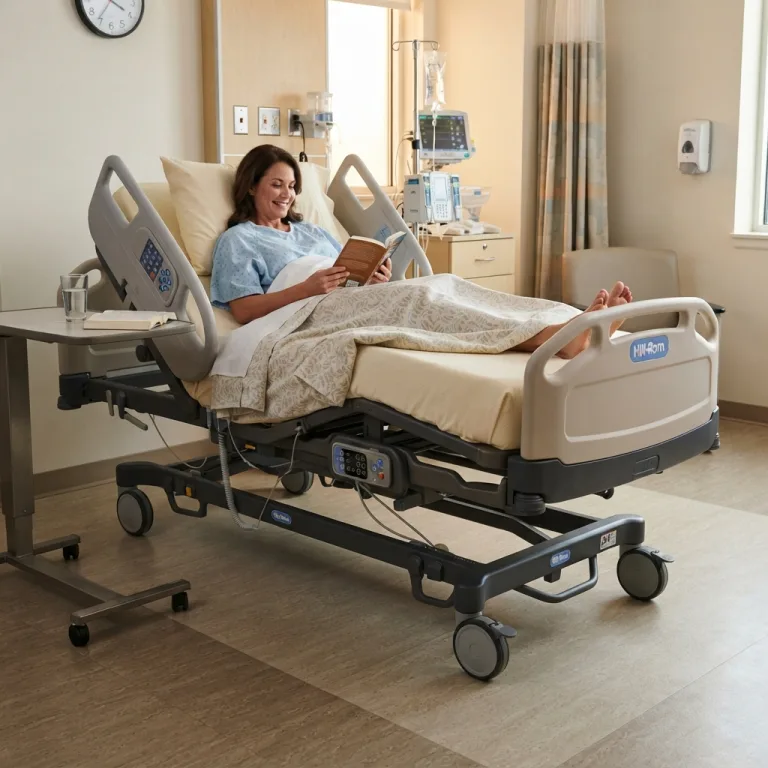
Electric Hospital Beds
Electric beds use powered controls to adjust selected sections or the overall bed height.
They may be useful in facilities where frequent adjustment is expected.
Before purchasing, confirm the available movements, control arrangement, electrical requirements, backup functions and maintenance support.
ICU Hospital Beds
ICU beds are designed for more demanding clinical environments.
Depending on the model, they may offer additional functions and accessories for intensive care workflows.
Buyers should confirm compatibility with the intended clinical applications, patient monitoring systems and surrounding equipment.
Pediatric and Bariatric Beds
Pediatric beds are intended for younger patients, while bariatric beds are designed for users who require different dimensions and load capacity.
The correct product should be selected based on the patient population and the relevant technical specifications.
Do not rely on a product name alone. Request documented dimensions, load ratings, safety features and intended-use information.
Medical Bed Standards and Documentation
For adult medical beds, buyers may need to review IEC 80601-2-52:2026 and the regulatory requirements applicable in the destination market.
This standard covers the basic safety and essential performance of medical beds for adults, including manual and electrically operated models within its scope.
It does not automatically cover every product described as a hospital bed. Pediatric beds, specialist products and equipment primarily intended for examination or transportation may fall under different requirements.
Buyers should request documentation for the exact model and confirm which standards and registrations apply.
7. How to Calculate the Total Cost of a Hospital Furniture Project
A low unit price does not always mean a low project cost.
A complete hospital furniture project may involve product prices, accessories, transportation, installation, training and maintenance.
Procurement teams should estimate the total cost before comparing quotations.
Product Purchase Cost
Start by preparing quantities for each department.
Separate the list into major categories such as beds, bedside cabinets, overbed tables, chairs, storage furniture, privacy screens and patient mobility equipment.
This makes quotations easier to compare.
Accessories and Optional Functions
Two products may have similar basic structures but different configurations.
For example, a hospital bed may be quoted with or without a mattress, side rails, IV pole, overbed table or other accessories.
Ask suppliers to list what is included and what must be purchased separately.
Transportation and Packaging
For international hospital projects, freight and packaging can affect the total project budget.
Request product dimensions, package dimensions, gross weight, packing method and estimated shipping volume.
Large furniture items may require different shipping arrangements from smaller medical devices.
Installation and Assembly
Some products require assembly or installation after delivery.
Confirm whether the supplier provides installation guidance, technical support or on-site services, and whether these are included in the quotation.
Maintenance and Spare Parts
Consider the cost of wheels, brakes, motors, batteries, control components, hydraulic parts and other replaceable items.
A supplier should explain how spare parts can be ordered and how warranty issues are handled.
Training and After-Sales Support
Powered beds, patient lifts and other adjustable equipment may require staff training.
Buyers should confirm what training materials and technical support are available.
The total project budget should reflect these needs rather than focusing only on the initial purchase price.
8. How to Evaluate a Hospital Furniture Supplier
A hospital furniture project may involve dozens or hundreds of product items. Choosing the right supplier can affect product consistency, delivery coordination and after-sales management.
The following points can help buyers evaluate suppliers.
Product Range and Supply Capability
Check whether the supplier can provide the product categories required for the project.
A supplier with a broad medical equipment portfolio may help coordinate multiple purchasing categories. However, buyers should still verify the actual availability, origin and specifications of each product.
Technical Specifications
Request a detailed datasheet for every major product.
Important information may include:
- Product dimensions
- Materials and construction
- Adjustment functions
- Maximum safe working load
- Electrical requirements
- Accessories
- Cleaning instructions
- Warranty terms
The specifications should identify the exact model being quoted.
Documentation and Compliance
Ask for applicable certificates, test reports, product declarations and registration documents.
Check that these documents match the product model and destination market.
A general company certificate should not be treated as proof that every product in the supplier’s catalogue meets the same requirements.
Customization
Some projects require specific dimensions, colors, accessories or product configurations.
Ask whether the supplier can support customization and whether it affects manufacturing time, price, technical documentation or warranty.
Delivery and Project Coordination
For large projects, delivery scheduling is as important as the product itself.
Confirm production lead times, packaging details, delivery terms, order milestones and the process for dealing with shortages or damaged products.
After-Sales Support
Ask about warranty coverage, spare parts, repair arrangements and technical communication.
For powered beds and patient lifting equipment, the availability of technical support can be particularly important.
9. UMY Medical Equipment and Broader Hospital Procurement
For buyers sourcing multiple categories of medical products, a supplier that offers a wider medical equipment portfolio may help simplify procurement coordination.
UMY Medical Equipment Co., Ltd. presents itself as a medical equipment supplier serving hospitals, clinics, laboratories and international distributors. Its official website features product categories covering X-ray systems, ultrasound scanners, laboratory equipment, surgical equipment and other medical products. It also describes one-stop procurement services for customers with broader project requirements.
Within its Hospital Furniture category, the current official catalogue lists a medical equipment rolling cart, model UMH-TC01, designed for supporting and moving selected medical devices.
For buyers planning a complete patient room project, it is important to confirm the availability and specifications of each required item individually. Hospital beds, bedside cabinets, overbed tables and patient mobility products should not be assumed to be available as UMY-manufactured models unless confirmed in the quotation and product documentation.
You can learn more about the company and its product range at https://www.umymedical.com/.
Frequently Asked Questions
1. What is included in a complete hospital furniture solution?
A typical solution may include hospital beds, bedside cabinets, overbed tables, patient chairs, visitor chairs, wardrobes, storage cabinets and privacy screens. Some projects also include medical carts and patient transfer equipment.
2. What furniture is needed in a general hospital ward?
A general ward commonly needs hospital beds, bedside cabinets, overbed tables, patient seating, visitor chairs and suitable storage. The exact quantities depend on room capacity and the hospital’s workflow.
3. How do I choose hospital furniture for an ICU?
Start with the ICU bed and the clinical workflow. Then consider device placement, staff access, storage, patient handling requirements and cleaning procedures. ICU planning should involve clinical and engineering teams.
4. What is the difference between hospital furniture and medical equipment?
Hospital furniture includes products such as beds, bedside cabinets, chairs and storage units. Medical equipment performs specific clinical functions, while patient transport equipment and medical carts support movement and daily operations.
5. How many bedside cabinets and overbed tables does a hospital need?
A common planning approach is one bedside cabinet and one overbed table for each patient space. Final quantities should be adjusted according to room design, hospital policy and the intended use of shared furniture.
6. What should I consider when buying hospital furniture in bulk?
Check product specifications, quantities, dimensions, materials, accessories, compliance documents, packaging, delivery schedules and after-sales support. Compare complete configurations rather than unit prices alone.
7. Which materials are suitable for hospital furniture?
Suitable materials depend on the product and cleaning requirements. Buyers should consider surface durability, moisture resistance, ease of cleaning and compatibility with the disinfectants used by the facility.
8. What documents should a hospital furniture supplier provide?
Depending on the product and market, buyers may request technical datasheets, user manuals, product declarations, applicable test reports, certificates, warranty information and spare parts details.
9. Can one supplier provide furniture and medical equipment for an entire hospital project?
Some suppliers offer multiple medical equipment categories and procurement coordination. Buyers should confirm the availability, specifications, manufacturing source and documentation for every individual product before placing an order.