Moving Patients Safely Is More Than Choosing a Stretcher
Moving a patient from an emergency department to an imaging room, from a hospital bed to a treatment area, or from a wheelchair to an examination table is a routine part of hospital operations. However, these movements require more than a convenient trolley or a set of wheels.
Healthcare facilities need different types of patient transfer and mobility equipment for patients with different physical conditions, mobility levels and care requirements. Some patients can walk with limited assistance. Others need a wheelchair, stretcher, transfer board or mechanical lifting device. Selecting the wrong equipment can make transfers uncomfortable, inefficient and potentially unsafe for both patients and healthcare staff.
For hospital buyers, distributors and healthcare project planners, understanding the differences between patient transport equipment, patient transfer devices and medical utility carts is an important first step.
This guide explains common types of patient mobility equipment, their applications, important product features and practical purchasing considerations.
1. What Is Patient Transfer and Mobility Equipment?
Patient transfer and mobility equipment refers to medical devices and assistive products that help move, reposition, lift or support patients within healthcare facilities.
These products are commonly used in hospitals, emergency departments, clinics, rehabilitation centers, nursing homes and long-term care facilities.
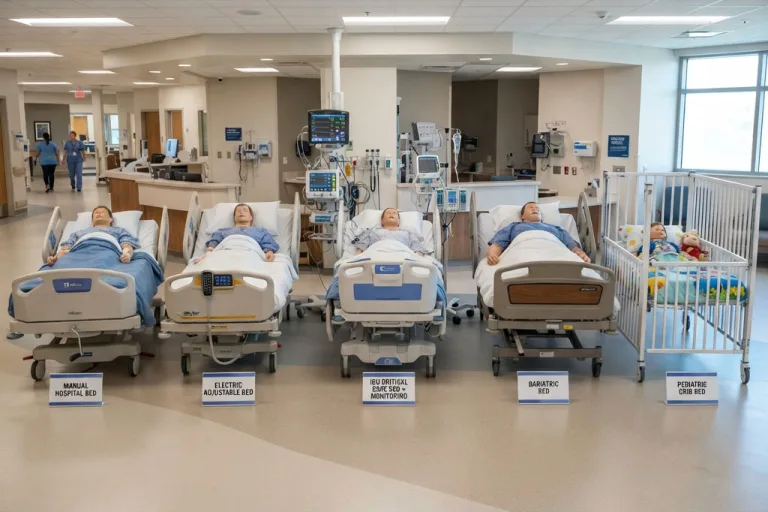
They can be divided into several main groups:
| Equipment Category | Main Function | Common Applications |
|---|---|---|
| Hospital stretchers | Transport patients in a lying or supported position | Emergency rooms, wards and imaging departments |
| Patient transfer trolleys | Move patients between hospital departments | Hospitals, examination rooms and treatment areas |
| Wheelchairs | Support seated patient mobility | Wards, outpatient departments and rehabilitation |
| Patient hoists and lifts | Help transfer patients who cannot move independently | Nursing units, rehabilitation and long-term care |
| Transfer boards and sheets | Assist with moving patients between surfaces | Beds, stretchers and examination tables |
| Medical utility carts | Transport medical supplies and equipment | Treatment rooms, nursing stations and operating areas |
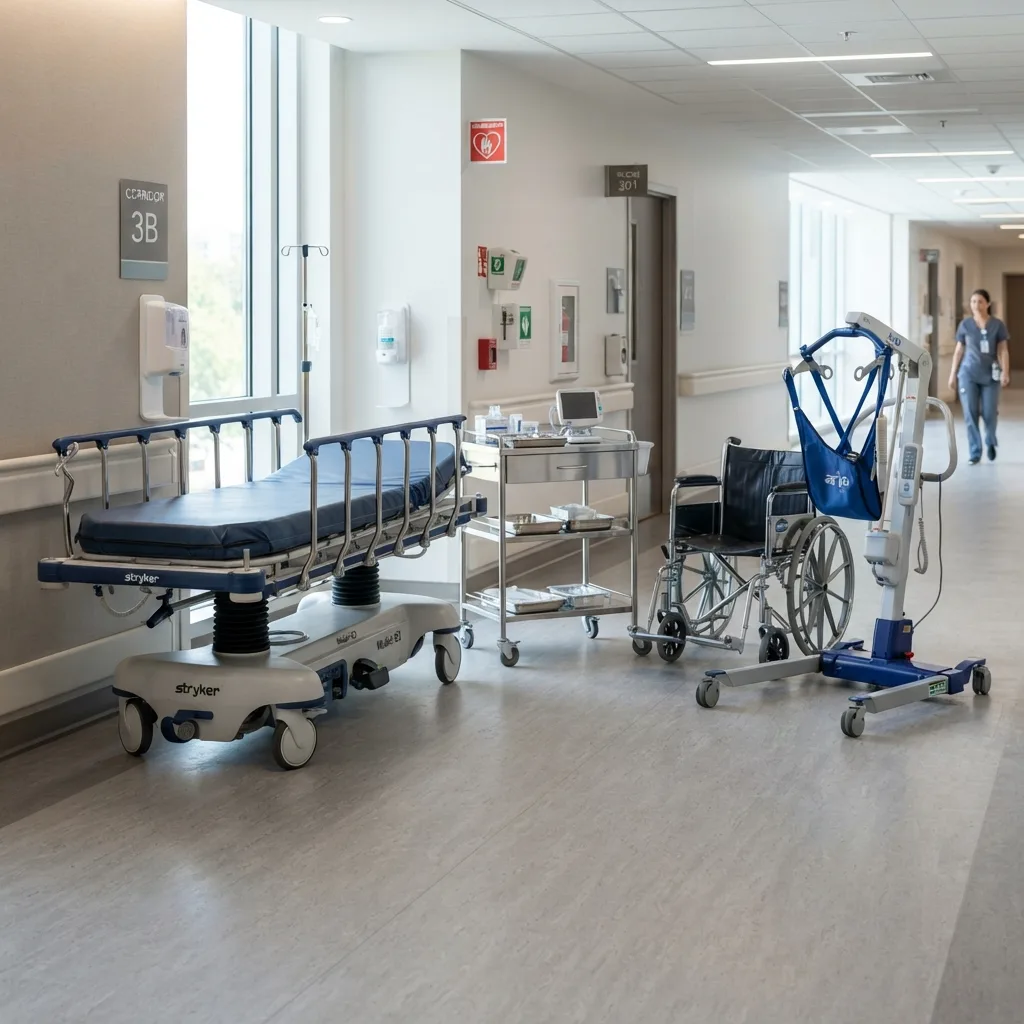
These categories serve different purposes. A patient transport stretcher is designed to carry a person, while a medical utility cart is designed to carry equipment, instruments or supplies. A patient lift supports lifting and transferring, rather than simply transporting a patient along a corridor.
Hospitals should evaluate each product according to its actual function instead of treating all hospital trolleys and mobility devices as interchangeable.
2. Hospital Stretchers: Types, Features and Applications
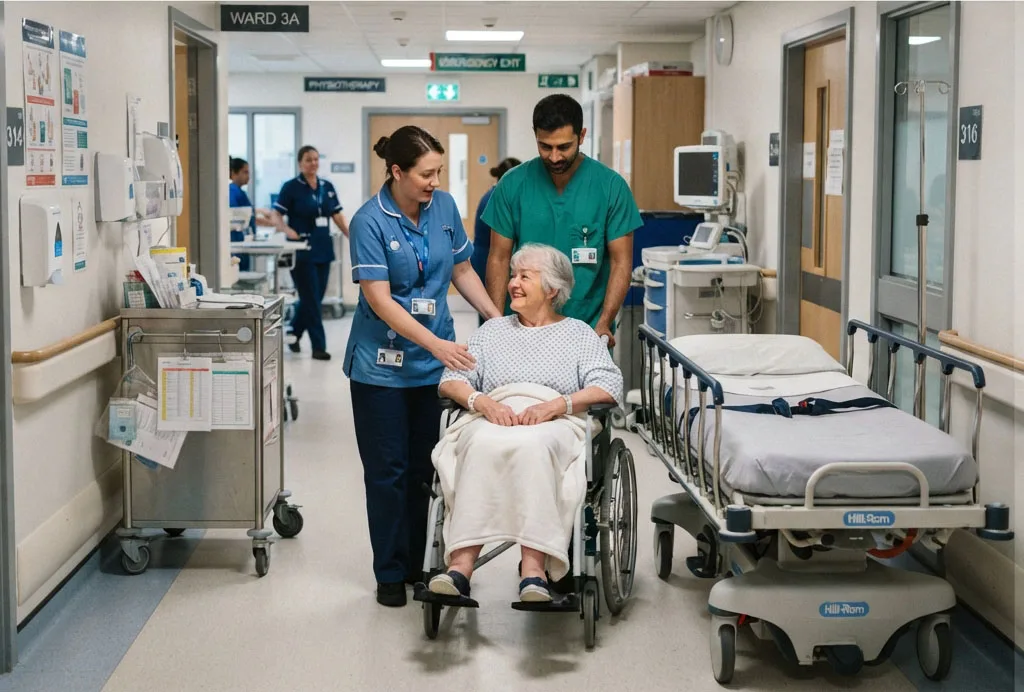
A hospital stretcher is one of the most widely used patient transport devices. It allows healthcare staff to move patients who cannot walk or should remain in a lying or supported position.
Stretchers are commonly found in emergency departments, intensive care units, operating departments, recovery rooms and radiology departments.
2.1 Standard Hospital Stretchers
A standard hospital stretcher usually includes a patient support surface, a metal frame, wheels, a mattress or padded surface, side rails and braking components.
Depending on the model, it may also include an adjustable backrest, IV pole, storage tray, oxygen cylinder holder or other accessories.
Standard stretchers are suitable for general patient transportation and short-term positioning. They are often used when patients need to move between hospital departments but do not require a specialized emergency or intensive care transport system.
When purchasing a standard hospital stretcher, buyers should check:
- Overall dimensions and patient support area
- Maximum safe working load
- Mattress material and surface design
- Wheel diameter and movement performance
- Brake and steering systems
- Side rail design and locking mechanism
- Height adjustment, if available
- Cleaning and disinfection requirements
Not every stretcher includes the same functions. Buyers should compare the actual product configuration rather than assume that all hospital stretchers have identical accessories.
2.2 Hydraulic Hospital Stretchers
Hydraulic stretchers use a hydraulic mechanism to adjust the height of the patient support platform.
Height adjustment can help healthcare staff align the stretcher with a hospital bed, examination table or other transfer surface. This can make patient transfers more manageable and reduce unnecessary bending during certain tasks.
Common features may include:
- Hydraulic height adjustment
- Adjustable backrest
- Central or individual wheel braking
- Side safety rails
- Directional steering functions
- Accessory holders
When evaluating a hydraulic stretcher, ask about the height adjustment range, operating method, maintenance requirements and whether the hydraulic system can be serviced locally.
2.3 Electric Hospital Stretchers
Electric hospital stretchers use powered controls to adjust selected positions or functions. Depending on the model, these may include height adjustment, backrest movement or other positioning functions.
Electric adjustment can be useful in facilities where stretchers are used frequently and where staff need to reposition patients regularly.
Buyers should check the following details:
- Which movements are electrically controlled?
- Does the stretcher have a manual emergency or backup function?
- What is the charging method?
- What is the expected battery operating time?
- How long does a full charge take?
- Can the battery be replaced locally?
- Are the controls easy to operate while wearing gloves?
A product described as an electric stretcher may not have every function available on another electric model. Always request a function list and technical datasheet.
2.4 Emergency Stretchers
Emergency stretchers are designed for patient movement in emergency care environments.
They are often used in emergency departments, ambulance reception areas and urgent treatment units. Their design may prioritize quick positioning, maneuverability and access to the patient.
Some models have adjustable backrests, side rails, wheel locks, accessory holders and removable or adjustable sections. Other specialized models may support different patient positions or emergency procedures.
When purchasing emergency stretchers, consider how they will be used during busy periods. The stretcher should be easy for staff to move, control and clean.
2.5 Ambulance Stretchers
Ambulance stretchers are designed for patient transfer into and out of ambulances. Their structure and loading arrangements are different from those of many ordinary hospital stretchers.
Important considerations include:
- Compatibility with the ambulance vehicle and loading system
- Locking and securing mechanisms
- Patient restraint arrangements
- Weight and dimensions
- Safe working load
- Folding or loading operation
- Maintenance and inspection requirements
An ambulance stretcher should not be selected solely because it looks similar to a hospital trolley. Buyers need to confirm that the model is compatible with the intended ambulance and applicable local requirements.
2.6 Folding and Portable Stretchers
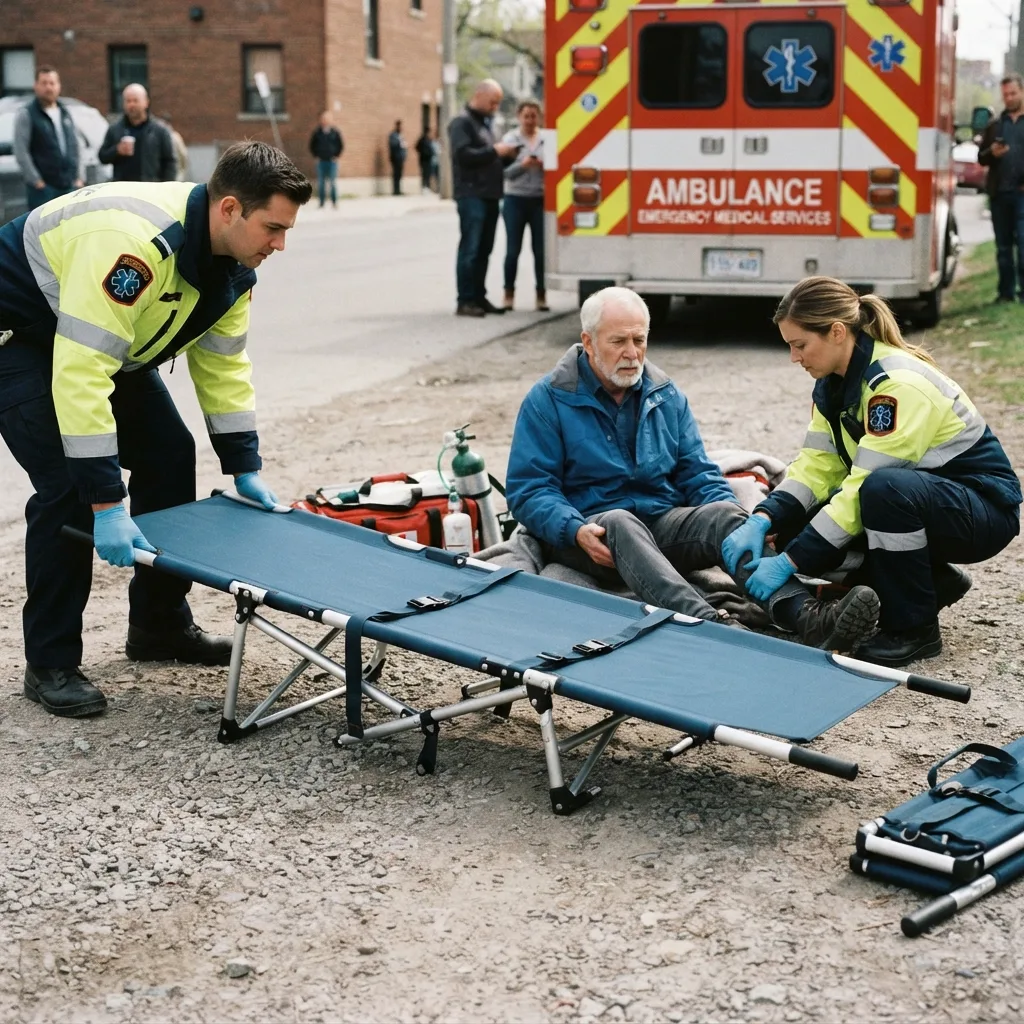
Folding stretchers are designed for situations where portability and compact storage are important.
They can be used in emergency response, first-aid services, clinics, sports facilities and certain rescue settings.
Before purchasing a folding stretcher, check the frame construction, locking joints, carrying handles, folded dimensions, product weight and maximum load capacity.
Portable stretchers are not automatically suitable for every hospital transfer task. The intended patient condition and required level of support should determine the product choice.
3. Patient Transfer Trolleys: How Are They Different from Stretchers?
The terms hospital stretcher, patient trolley and transfer trolley are sometimes used interchangeably in product listings. However, buyers should focus on the actual structure and intended application.
A patient transfer trolley generally refers to a wheeled platform that supports patients during movement between departments, beds or treatment areas. Many models are designed for lying patients and may include adjustable positioning, side rails and braking systems.
A transfer trolley can be used in:
- Emergency departments
- General hospital wards
- Diagnostic imaging departments
- Operating rooms
- Recovery rooms
- Outpatient treatment areas
Important Features of a Patient Transfer Trolley
Adjustable height
The ability to adjust platform height can help align the trolley with beds and examination tables. This may make lateral patient transfers easier when used with suitable transfer aids and trained staff.
Side rails
Side rails provide a barrier along the patient support surface. Buyers should examine their height, locking mechanism and ease of operation.
Wheel and braking system
The quality of the wheels affects movement, turning and positioning. A reliable braking system is important when the trolley is stationary or when a patient is being transferred.
Mattress and patient support surface
The mattress should suit the expected use, provide appropriate support and be compatible with the facility’s cleaning procedures.
Accessory compatibility
Depending on the clinical environment, hospitals may need IV pole holders, oxygen cylinder holders, drainage bag hooks or other accessories.
Weight capacity and dimensions
The maximum safe working load and support surface dimensions must match the patient population. Buyers should also check whether the trolley can pass through the facility’s doors, elevators and corridors.
Patient Transfer Trolley vs. Hospital Bed
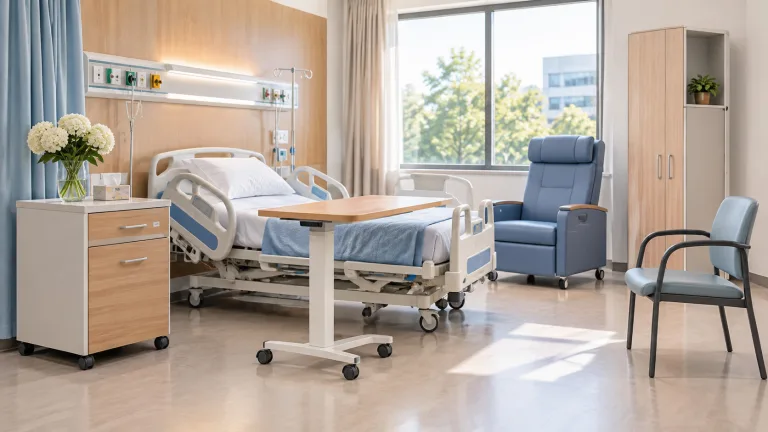
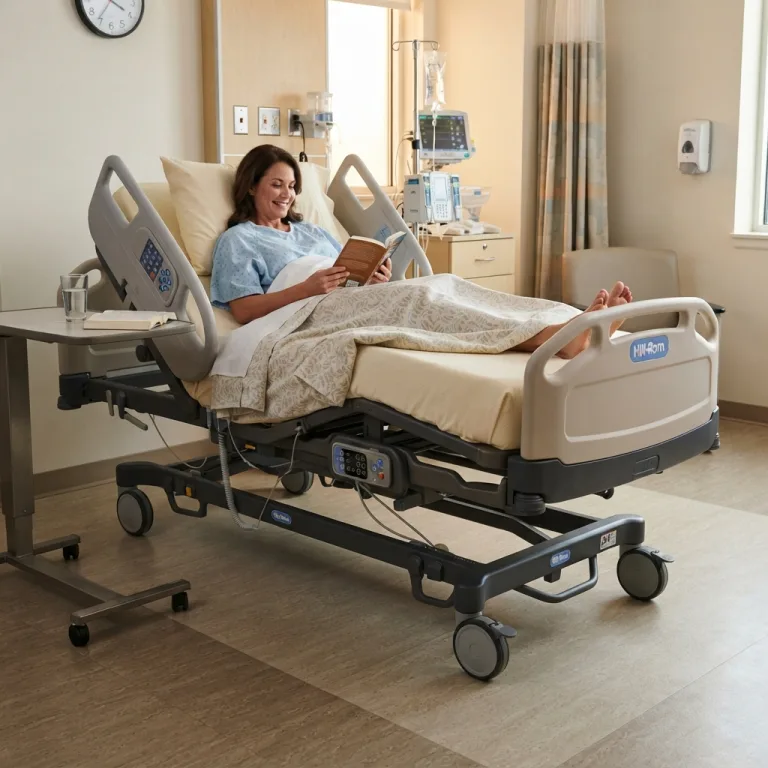
A hospital bed is intended for longer periods of patient care and positioning. A transfer trolley is generally designed for movement between locations.
| Comparison | Hospital Bed | Patient Transfer Trolley |
|---|---|---|
| Main purpose | Patient care and resting | Patient transportation |
| Typical use | Ward, ICU and patient room | Emergency, imaging and treatment departments |
| Positioning | Often supports multiple care positions | Usually focuses on transport and basic positioning |
| Mobility | Usually moved when required | Designed for frequent movement |
| Mattress | Selected for longer patient use | Selected for transport and shorter-term support |
Hospitals may need both products. A transfer trolley should not be regarded as a replacement for a hospital bed, and a hospital bed may not be the most practical choice for frequent department-to-department transportation.
4. Wheelchairs: Choosing the Right Model for Hospital Use
Wheelchairs support patients who have difficulty walking or cannot move independently over certain distances. They are widely used in hospitals, clinics, rehabilitation centers, nursing homes and community healthcare settings.
The right wheelchair depends on a patient’s physical condition, the distance to be traveled, the level of assistance available and the care environment.
4.1 Manual Wheelchairs
Manual wheelchairs are operated by the user or pushed by a caregiver.
Some models have large rear wheels that allow users with sufficient upper-body strength to propel themselves. Other models are designed mainly for attendant operation.
Manual wheelchairs are commonly used for:
- Outpatient transportation
- General hospital movement
- Rehabilitation
- Short-distance mobility
- Patient transfers between departments
Buyers should check seat width, seat depth, frame material, footrests, armrests, brakes, folded dimensions and maximum load capacity.
4.2 Transport Wheelchairs
Transport wheelchairs are generally designed to be pushed by a caregiver rather than propelled independently by the patient.
They often have smaller wheels and a relatively compact structure, which can make them useful for short-distance transportation in hospitals and clinics.
They are suitable for patients who need assistance moving between reception areas, consultation rooms and examination departments.
A transport wheelchair is not the same as a self-propelled wheelchair. Buyers should identify whether patients need to move themselves or whether staff will always provide assistance.
4.3 Reclining Wheelchairs
Reclining wheelchairs allow the backrest to move to different angles, depending on the model.
They may be considered for patients who need additional positioning support or who cannot remain comfortably upright for extended periods.
When assessing a reclining wheelchair, review the recline mechanism, head support, leg support, frame stability and intended patient population.
4.4 Tilt-in-Space Wheelchairs
Tilt-in-space wheelchairs change the angle of the seat and backrest together while maintaining the relationship between them.
They are used in selected care situations where additional postural support and positioning options are required.
These wheelchairs are usually more specialized than ordinary hospital transport chairs. Buyers should seek advice from clinical or rehabilitation professionals to determine whether the configuration is appropriate.
4.5 Bariatric Wheelchairs
Bariatric wheelchairs are designed for users who require a wider seating area and a higher weight capacity than standard models provide.
The buyer should verify the actual safe working load, seat width, seat construction, frame strength, wheel design and turning space.
A higher load rating alone does not guarantee suitability. The overall seating dimensions and patient support requirements must also be considered.
4.6 Pediatric Wheelchairs
Pediatric wheelchairs are designed for children and younger patients.
They have different seat dimensions, support arrangements and adjustment requirements compared with adult models. Depending on the patient, additional positioning accessories may be required.
Hospitals should select pediatric wheelchairs according to the child’s age, body size, mobility needs and professional assessment.
4.7 Electric Wheelchairs
Electric wheelchairs use powered controls and are generally intended for users who need powered mobility rather than simple caregiver-assisted transport.
They may be relevant in rehabilitation, long-term care and community mobility settings.
Before purchasing, buyers should review battery specifications, charging arrangements, control options, turning radius, indoor use requirements and maintenance support.
For routine hospital movement between departments, a manual transport wheelchair may be more appropriate than an electric wheelchair. The choice should reflect the intended user and application.
5. Patient Lifts and Hoists: Supporting Patients Who Cannot Transfer Independently
Some patients cannot safely move from a bed to a wheelchair, examination table or chair without assistance. In these situations, patient lifting and transfer devices may be required.
Patient hoists and lifts help caregivers move patients while reducing the need for unsupported manual lifting.
They are especially relevant in intensive care, rehabilitation, long-term care, nursing homes and facilities that provide care for patients with limited mobility.
5.1 Mobile Floor Patient Lifts
Mobile floor lifts are wheeled devices that move around a room and support patient lifting with a compatible sling or body-support unit.
They may be used for transfers between beds, wheelchairs, chairs and other suitable surfaces.
When selecting a mobile patient lift, buyers should consider:
- Maximum safe working load
- Base width and adjustable-leg design
- Lifting range
- Battery and charging arrangements
- Emergency lowering function
- Control system
- Sling compatibility
- Room and doorway clearance
A mobile lift must be compatible with the patient’s needs and the available space. The equipment should not be selected by weight capacity alone.
5.2 Sit-to-Stand Lifts
Sit-to-stand lifts are designed for patients who have some ability to support themselves and participate in standing transfers.
They are different from full-body lifts. A sit-to-stand device is not suitable for every patient, particularly those who cannot cooperate or bear sufficient weight.
Clinical staff should assess the patient’s condition before selecting this type of equipment.
5.3 Ceiling-Mounted Patient Lifts
Ceiling lifts use a track system installed above the care area. A compatible lifting unit and sling support the patient during transfer.
They may be used in hospitals, rehabilitation facilities and long-term care environments where frequent lifting is expected.
Before choosing a ceiling lift, project planners should assess building structure, track layout, installation requirements, maintenance access and compatibility with the intended slings.
5.4 Slings and Body-Support Units
A sling is a key component of many patient lifting systems. Different designs may support different body positions and transfer needs.
Examples include full-body slings, toileting slings, standing support slings and positioning slings.
The sling must be compatible with the patient lift and suitable for the patient’s body size, condition and transfer method.
Compatibility should be confirmed using the manufacturer’s documentation. A sling should not be assumed to fit every lift simply because the attachment points appear similar.
ISO 10535:2021 covers requirements and test methods for specified hoists and body-support units used to transfer people with disabilities. Buyers should check whether this standard applies to the particular product being considered.
6. Transfer Boards, Sliding Sheets and Lateral Transfer Devices
Not all patient transfers require a mechanical lift. Some patients can participate in movement with the assistance of suitable transfer aids.
These products can help move patients between two surfaces, such as a bed and a wheelchair or a hospital bed and a stretcher.
Transfer Boards
A transfer board creates a supported surface between two locations. It can help certain patients move from one seat or surface to another.
It is commonly considered in rehabilitation and mobility care. The patient’s strength, balance, ability to follow instructions and transfer technique should be assessed before use.
Sliding Sheets
Sliding sheets reduce friction between a patient and the support surface. They can help staff reposition patients in bed or perform certain lateral movements.
They are often used in wards, intensive care and long-term care facilities.
Air-Assisted Lateral Transfer Devices
Some lateral transfer systems use powered air to reduce friction beneath a patient during movement between compatible surfaces.
They may be useful in situations where patients need to be moved while lying down, particularly when conventional manual methods would require significant physical effort.
Hospitals should confirm the equipment’s compatibility with the bed, stretcher or trolley, and ensure staff receive appropriate training.
7. Medical Utility Carts: Moving Supplies and Equipment Around the Hospital
Medical utility carts are another important part of hospital operations. They are frequently included in medical equipment purchasing lists alongside patient trolleys and wheelchairs.
However, medical carts do not normally transport patients. Their purpose is to move supplies, instruments, medication, devices and other materials within healthcare facilities.
Common types include:
Nursing carts
Used by nursing staff to carry daily care supplies, documents and selected clinical equipment.
Dressing carts
Designed to transport dressing materials, wound care supplies and related instruments.
Medication carts
Used for organized medication storage and delivery. Their configuration may include drawers, compartments and locking arrangements.
Emergency carts
Used to keep emergency response equipment and supplies organized and accessible. The required layout depends on the facility’s emergency procedures.
Instrument and procedure carts
Used to move medical instruments and supplies between storage, preparation and treatment areas.
Medical equipment carts
Designed to support and transport selected devices, such as monitors or other portable equipment. Buyers should verify the cart’s load capacity, mounting system and compatibility with the specific device.
What Should Buyers Check When Purchasing Medical Carts?
Important considerations include:
- Frame material and structural stability
- Number, size and arrangement of drawers
- Drawer locks and security features
- Wheel quality and braking system
- Work surface dimensions
- Load capacity
- Cable management, where relevant
- Ease of cleaning and disinfection
- Accessory compatibility
A cart used in a general ward may have different requirements from one used in an operating room or emergency department.
For example, a medication cart may require secure storage, while a procedure cart may prioritize easy access to frequently used supplies.
8. How to Choose Patient Transfer Equipment for Different Hospital Departments
Different departments have different patient populations and movement requirements. Purchasing the same equipment for every department may lead to unnecessary costs or an unsuitable workflow.
Emergency Department
Emergency departments receive patients with a wide range of conditions, including trauma, sudden illness and mobility limitations.
Common equipment may include:
- Emergency stretchers
- Patient transfer trolleys
- Transport wheelchairs
- Medical utility carts
- Selected patient lifting and transfer aids
The main considerations are rapid access, stable movement, easy cleaning and compatibility with emergency department workflows.
Intensive Care Unit
ICU patients may require continuous monitoring, respiratory support or other medical interventions while being repositioned or transported.
Equipment selection should consider patient support, compatibility with attached medical devices, transport routes and the needs of clinical staff.
Depending on the facility, ICU areas may use specialized stretchers, transfer aids, patient lifts and equipment carts.
Radiology and Imaging Departments
Patients often need to move between wards and imaging rooms for X-ray, CT, MRI or other examinations.
The equipment should support efficient movement and allow patients to be positioned appropriately for the examination.
For imaging environments, buyers should check equipment compatibility with the relevant imaging system and room requirements. Do not assume that every stretcher, wheelchair or accessory is suitable for use inside every imaging room.
General Hospital Wards
General wards require equipment for routine transportation, patient mobility and daily nursing activities.
Common choices include manual wheelchairs, patient transfer trolleys, standard stretchers and nursing carts.
Ease of cleaning, maneuverability, storage and durability are important purchasing considerations.
Rehabilitation Departments
Rehabilitation facilities work with patients who may need support to improve mobility, balance and physical function.
Relevant equipment may include:
- Manual and specialized wheelchairs
- Patient transfer boards
- Mobile patient lifts
- Sit-to-stand devices
- Walking aids, where appropriate
The equipment should match the patient’s rehabilitation plan and be selected with input from qualified rehabilitation professionals.
Nursing Homes and Long-Term Care Facilities
Long-term care environments may provide support to people with reduced mobility over extended periods.
Patient lifts, compatible slings, transfer aids and wheelchairs may be needed for daily care.
Equipment availability, ease of use, staff training and maintenance are especially important when these products are used frequently.
11. Building a Practical Patient Mobility Equipment List for a Hospital Project
A hospital project may need several types of mobility and patient transfer equipment. The purchasing list should be based on the services provided, expected patient volume and workflow of each department.
A basic planning example is shown below.
| Department | Possible Equipment | Main Procurement Considerations |
|---|---|---|
| Emergency department | Emergency stretchers, wheelchairs and utility carts | Rapid access, maneuverability and cleaning |
| General wards | Patient trolleys, manual wheelchairs and nursing carts | Daily use, storage and durability |
| ICU | Specialized stretchers and selected patient transfer aids | Patient support and medical device compatibility |
| Radiology | Transfer trolleys and wheelchairs | Imaging-room access and positioning |
| Operating and recovery areas | Patient transfer trolleys and selected transfer devices | Transfer workflow and cleaning |
| Rehabilitation | Wheelchairs, transfer boards and patient lifts | Patient mobility and therapy needs |
| Long-term care | Patient hoists, slings and wheelchairs | Frequent use and staff training |
This table is a planning reference, not a fixed equipment specification. Each facility should determine quantities and configurations after reviewing its patient population, room layout and clinical procedures.
For larger procurement projects, it can be useful to separate equipment into three groups:
Patient transportation: stretchers, transfer trolleys and transport wheelchairs.
Patient lifting and repositioning: mobile lifts, ceiling lifts, slings, transfer boards and sliding sheets.
Medical supply transportation: nursing carts, dressing carts, medication carts and equipment carts.
This structure makes it easier to compare suppliers, prepare technical specifications and organize the procurement process.
12. Final Considerations: Choose Equipment Based on the Entire Transfer Process
Patient mobility equipment plays an important role in hospital efficiency and patient care. Stretchers move patients who need to remain lying down. Wheelchairs support seated mobility. Patient lifts and transfer aids help with movement between surfaces. Medical utility carts support the transportation of supplies and equipment.
The most appropriate product depends on the patient’s condition, the transfer task, the clinical environment and the staff who will use it.
For hospital procurement teams and medical equipment distributors, a practical approach is to define the application first, compare product specifications, verify documentation and evaluate maintenance support before placing an order.
A well-planned equipment list can help healthcare facilities create more organized patient movement workflows and make better use of their purchasing budget.
Frequently Asked Questions
1. What is the difference between a hospital stretcher and a patient transfer trolley?
These terms often overlap. Both may be wheeled devices used to transport patients in a lying position. Buyers should compare the actual structure, adjustment functions, safety features and intended application rather than relying only on the product name.
2. What type of stretcher is commonly used in emergency departments?
Emergency departments commonly use stretchers designed for patient transportation and positioning. The required functions depend on the hospital’s emergency workflow and patient population.
3. What is the difference between a transport wheelchair and a manual wheelchair?
A transport wheelchair is generally pushed by a caregiver and often has smaller wheels. A manual wheelchair may have larger rear wheels that allow the user to propel it independently, depending on their physical ability.
4. What is a patient hoist used for?
A patient hoist helps transfer a person who cannot safely move independently between surfaces such as a bed, wheelchair or chair. The lift and sling must be suitable for the patient and compatible with each other.
5. What is the difference between a patient lift and a transfer board?
A patient lift uses a mechanical system to support lifting and movement. A transfer board provides a surface that can help certain patients move between two locations with appropriate assistance.
6. What is the difference between a patient trolley and a medical utility cart?
A patient trolley is designed to support and transport a person. A medical utility cart is designed to carry medical supplies, instruments, medication or equipment.
7. What should buyers check before purchasing a hospital stretcher?
Check its dimensions, safe working load, mattress, wheels, braking system, side rails, adjustment functions, accessories, cleaning requirements and maintenance support.
8. Which standard is relevant to patient hoists?
ISO 10535:2021 specifies requirements and test methods for certain hoists and body-support units intended for transferring people with disabilities. Buyers should confirm its applicability to the specific model.
9. How can hospitals reduce the risks associated with patient transfers?
Hospitals should assess patient mobility, select suitable transfer equipment, train staff, maintain devices and establish safe patient handling procedures. Equipment selection should involve the staff who will use it