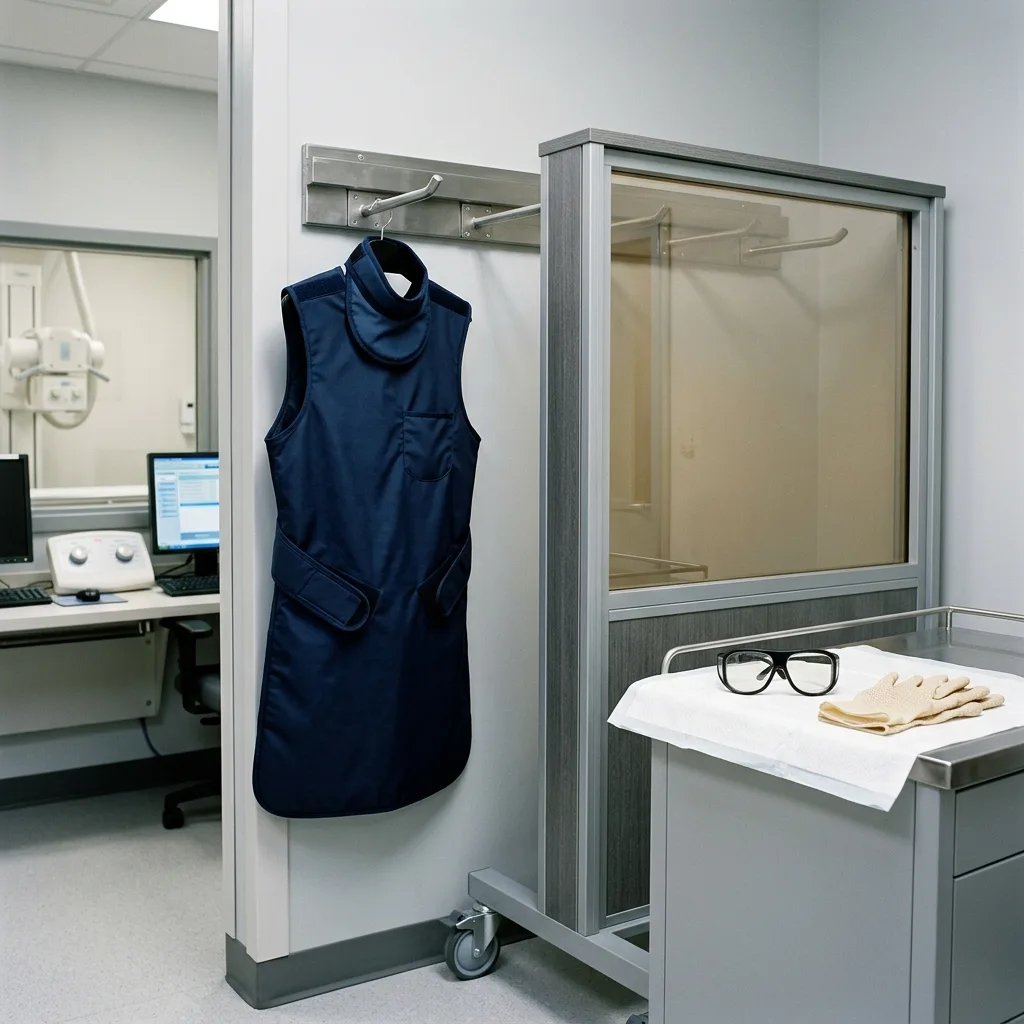
X-Ray Protection Starts With the Imaging Procedure
X-ray radiation protection is based on several factors, including the source of radiation, working distance, exposure time, equipment configuration, room layout and staff position.
WHO recommends measures such as shielding and protective barriers, restricting access to radiation areas, worker training, exposure monitoring and appropriate personal protective equipment including protective clothing, aprons, gloves and organ shields.
This means that radiation protection should not be viewed as a single product.
A lead apron may be appropriate in one situation, while another application may call for a mobile barrier or ceiling-suspended screen. In some procedures, staff may remain outside the room behind structural shielding and have little need for personal protective equipment during routine exposures.
The practical objective is to reduce unnecessary occupational and patient exposure while maintaining an efficient clinical workflow.
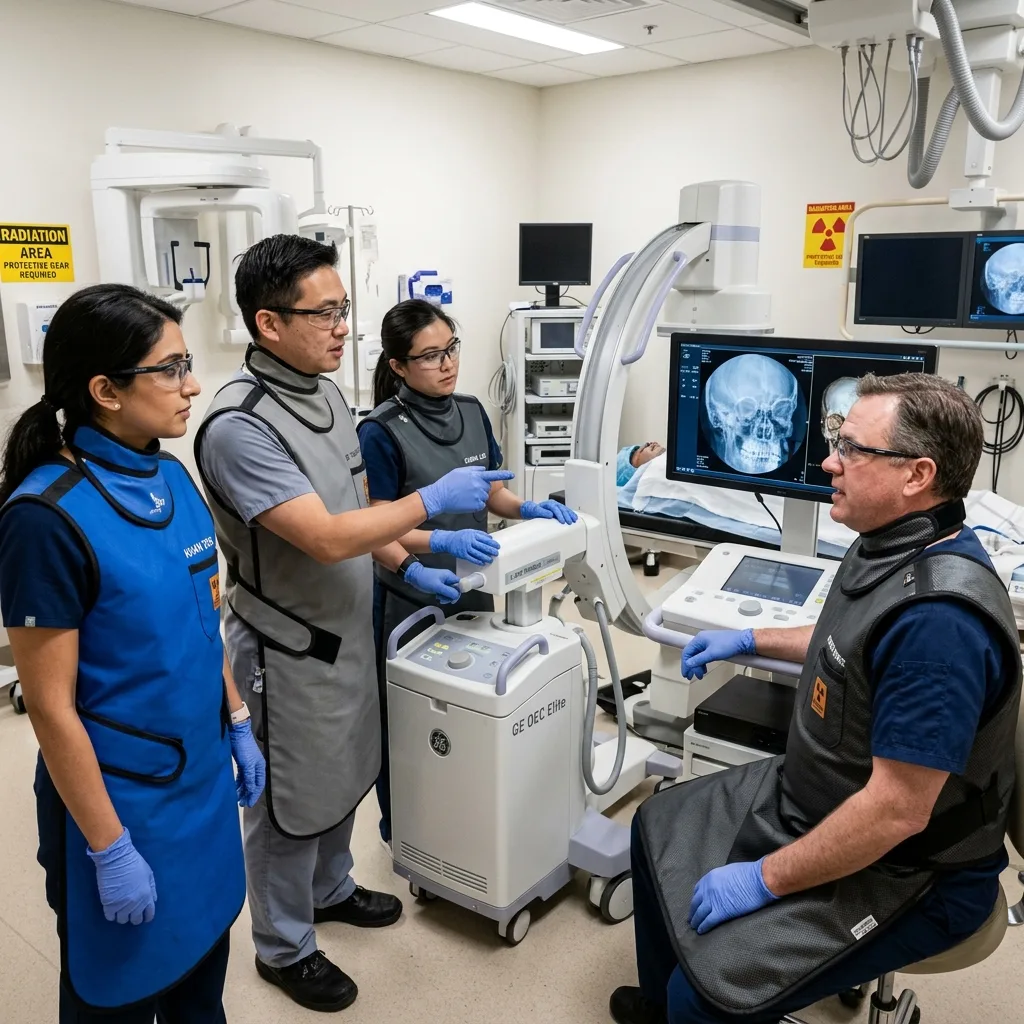
General Radiography: What X-Ray Protection Is Usually Considered?
General radiography includes routine imaging such as:
- chest X-ray
- abdominal X-ray
- orthopedic X-ray
- skeletal radiography
- portable radiography
- hospital radiography
- emergency radiography
In a conventional X-ray room, the operator will often use a protected control position or leave the room during exposure when the workflow allows it.
This creates an important distinction between structural radiation protection and personal radiation protection.
Structural Protection
A conventional radiography room may include:
- lead-lined walls
- radiation protection doors
- lead glass windows
- shielded control areas
- fixed protective barriers
Personal Protection
Personal protective equipment may be required when a worker must remain near the patient.
Common products include:
- X-ray protective apron
- lead apron
- thyroid collar
- protective gloves
- radiation protection glasses
Common Google searches around this application include:
- X-ray technician radiation protection
- radiographer radiation protection
- radiology protective clothing
- radiography radiation protection
- X-ray room protection
- X-ray operator protection
- protective equipment for radiography
- X-ray technician protective apron
- radiographic protective clothing
The exact combination should be based on the facility’s radiation protection procedures and the circumstances in which staff need to remain in the room.
Fluoroscopy Requires a Different Protection Strategy
Fluoroscopy is one of the most important applications when discussing X-ray protective products.
Unlike a single radiographic exposure, fluoroscopy provides real-time X-ray imaging and can involve repeated or prolonged exposures during a procedure.
This means healthcare workers may spend more time near the patient and therefore may receive more scattered radiation.
The FDA states that healthcare providers can be exposed to scattered radiation from patients during fluoroscopically guided procedures and need to use appropriate radiation protection measures.
For this environment, a broader range of X-ray protective products may be considered.
Common personal protection
- wrap-around lead apron
- vest and skirt system
- thyroid collar
- radiation protection glasses
- protective gloves
Additional shielding
- ceiling-suspended protective screen
- table-mounted protective curtain
- mobile radiation barrier
- other operator shielding systems
This creates a useful SEO cluster around:
- fluoroscopy radiation protection
- fluoroscopy protective clothing
- fluoroscopy lead apron
- fluoroscopy thyroid protection
- fluoroscopy radiation glasses
- fluoroscopy protective gloves
- fluoroscopy X-ray safety
- radiation protection for fluoroscopy
- fluoroscopic radiation protection equipment
- fluoroscopy protective equipment
The key point is that fluoroscopy protection is usually an environment-based decision, rather than simply a decision to buy one type of apron.
C-Arm Radiation Protection in the Operating Room
C-arm X-ray systems are widely used for image-guided procedures in operating rooms and other clinical environments.
Examples include:
- orthopedic surgery
- trauma surgery
- spine procedures
- pain management
- urology
- vascular procedures
- other image-guided interventions
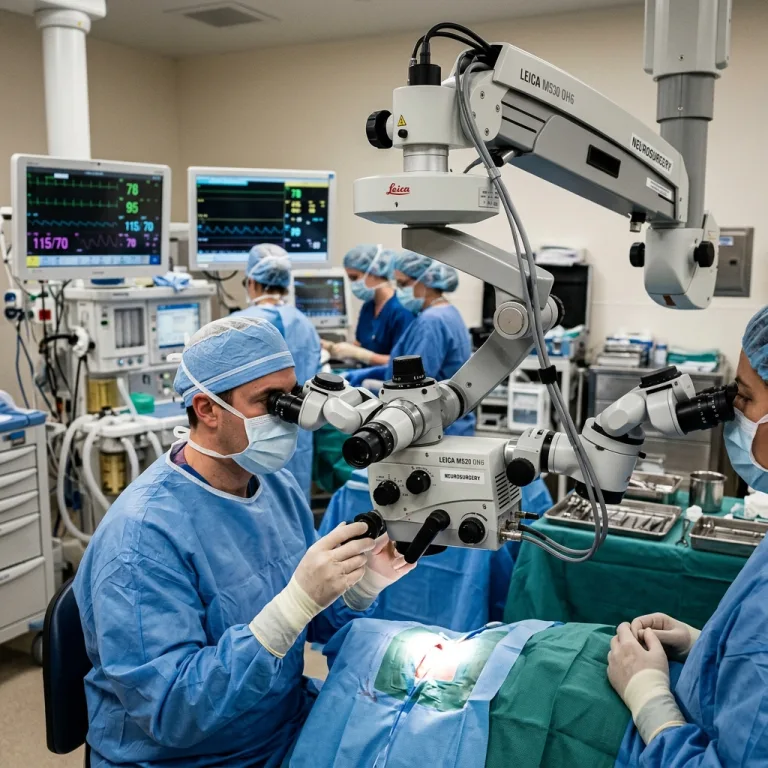
The operating room creates a special radiation protection challenge because the clinical team may need to remain close to the patient while the C-arm is producing images.
Searches related to this application include:
- C-arm radiation protection
- C-arm X-ray protection
- C-arm protective clothing
- C-arm lead apron
- C-arm radiation safety
- operating room radiation protection
- surgical X-ray protection
- C-arm protective equipment
- C-arm thyroid shield
- C-arm radiation glasses
- C-arm lead curtain
- C-arm radiation barrier
A typical protection strategy may combine wearable and environmental products.
Wearable Protection
Depending on the procedure and facility protocol:
- lead apron
- wrap-around apron
- thyroid collar
- radiation protective eyewear
- protective gloves
In-Room Protection
Depending on room configuration:
- mobile radiation barrier
- ceiling-suspended shield
- table-side protective curtain
- other fixed or movable shielding
The position of the operator and other staff members is particularly important.
A barrier is useful only when it is positioned correctly. An apron or thyroid collar also needs appropriate fit and coverage.
For this reason, hospitals planning a new C-arm room should consider radiation protection as part of the overall room workflow, not as an accessory added after the imaging system has already been installed.
Interventional Radiology and Image-Guided Procedures
Interventional radiology can involve repeated imaging throughout a procedure.
Staff may include:
- interventional radiologists
- physicians
- nurses
- radiographers
- technologists
- other supporting personnel
Because personnel may work close to the patient for extended periods, the product combination can be broader than in routine radiography.
Common searches include:
- interventional radiology radiation protection
- interventional radiology protective clothing
- interventional radiology lead apron
- IR radiation protection
- interventional X-ray protection
- interventional fluoroscopy protection
- radiation protection for interventional procedures
- interventional radiation protection equipment
A procurement list may include:
Personal protection
- wrap-around apron
- vest and skirt
- thyroid shield
- lead glasses
- protective gloves
Room protection
- ceiling-suspended protective screen
- mobile X-ray barrier
- protective curtain
IAEA guidance for image-guided interventional procedures discusses personal protective equipment and additional shielding, including protective aprons and ceiling-suspended protective screens.
The design of the procedure room also matters. Protection should be considered together with the location of the X-ray tube, detector, patient table, operator position and other staff positions.
Dental X-Ray Protection: A Smaller but Important Application
Dental radiography usually involves much lower exposure than many complex interventional procedures, but radiation safety remains part of good imaging practice.
Common dental imaging applications include:
- intraoral X-ray
- panoramic X-ray
- cephalometric imaging
- dental radiography
- dental CBCT
Common searches include:
- dental X-ray protection
- dental radiation protection
- dental X-ray protective clothing
- dental lead apron
- dental X-ray apron
- dental thyroid collar
- dental radiation shield
- dental X-ray safety
- dental protective equipment
- patient protection in dental X-ray
FDA guidance for dental radiography recommends appropriate radiation protection practices, including optimization of imaging technique, beam collimation, and use of protective aprons and thyroid collars when appropriate.
For dental buyers, it is important to distinguish between protection for patients and protection for operators.
Dental staff will normally use positioning and protective barriers so that they do not remain unnecessarily close to the patient during exposure.
In some situations, the operator can remain behind a protective barrier rather than wearing a lead apron.
This is a good example of why an X-ray protection article should not simply say that “everyone needs a lead apron.”
Mobile X-Ray Protection in Hospitals
Mobile X-ray systems are frequently used when bringing the patient to a dedicated imaging room is impractical.
Typical locations include:
- intensive care units
- emergency departments
- hospital wards
- operating rooms
- recovery areas
- bedside imaging areas
- other clinical departments
Mobile radiography creates a different environment because there may be no permanent radiation-controlled room.
Common search terms include:
- mobile X-ray radiation protection
- portable X-ray protection
- mobile radiography protection
- portable X-ray protective clothing
- portable X-ray apron
- mobile X-ray barrier
- bedside X-ray protection
- portable radiation protection screen
- mobile radiation shield
A mobile protection setup may involve:
- protective apron
- thyroid collar
- mobile barrier
- portable radiation screen
IAEA material on radiation protection in medical environments includes mobile shields as a useful protective measure where they are available and appropriate.
The hospital should also control access around the exposure area and ensure that staff understand where to stand during mobile examinations.
Pediatric X-Ray Protection
Pediatric imaging requires careful attention to radiation protection because children can be more sensitive to radiation and may require special positioning and imaging techniques.
Searches include:
- pediatric X-ray protection
- pediatric radiation protection
- child X-ray protection
- pediatric lead apron
- pediatric thyroid shield
- pediatric radiation safety
- child protective X-ray equipment
The most important principle is not simply adding more protective products.
Radiation protection begins with selecting the appropriate examination, using suitable exposure settings and avoiding unnecessary imaging.
Protective products may be used when indicated by the imaging protocol and facility practice.
The size and fit of any protective garment are especially important in pediatric applications. A product that is too large may be uncomfortable and may not provide the intended coverage in the correct position.
Veterinary X-Ray Protection
X-ray imaging is also common in veterinary clinics and animal hospitals.
A veterinary X-ray room can have a different workflow because staff may need to remain close to the animal to stabilize positioning.
Common search terms include:
- veterinary X-ray protection
- veterinary radiation protection
- veterinary X-ray apron
- veterinary lead apron
- veterinary X-ray gloves
- veterinary thyroid collar
- veterinary radiation protection equipment
- animal X-ray protective clothing
- veterinary X-ray safety
Depending on the procedure, veterinary staff may need protective clothing such as:
- lead apron
- thyroid collar
- protective gloves
- radiation eyewear
Some veterinary facilities may also benefit from movable barriers.
The important difference is that radiation protection should be designed around the actual working environment rather than simply selecting human medical products without considering fit, movement and cleaning.
Mammography and Specialized X-Ray Applications
Not every X-ray imaging application requires the same type of personal protective equipment.
Mammography, for example, uses specialized imaging equipment and positioning, with the operator normally separated from the X-ray exposure during acquisition.
This means a mammography room should not automatically be treated like a fluoroscopy room.
Potential searches include:
- mammography radiation protection
- mammography X-ray protection
- mammography room shielding
- mammography radiation safety
- mammography protective barrier
This principle applies to other specialized X-ray equipment as well.
The correct question is not:
“What radiation protection product do all X-ray departments use?”
It is:
“What radiation protection strategy is appropriate for this particular imaging system and workflow?”
That question-based approach is also useful when designing hospital procurement specifications.
X-Ray Protection for Different Staff Roles
Protection requirements can differ depending on a person’s job and location during an examination.
Radiologists
Radiologists may work with general radiography, fluoroscopy or image-guided procedures.
Relevant searches include:
- radiologist radiation protection
- radiologist lead apron
- radiologist X-ray protection
- interventional radiologist radiation protection
For staff working directly in interventional environments, protective clothing and additional shielding may become more important.
Radiographers and X-Ray Technicians
Common searches include:
- X-ray technician radiation protection
- radiographer protective clothing
- radiologic technologist radiation protection
- radiography lead apron
- X-ray technician lead apron
Surgeons
For C-arm-guided surgery:
- surgeon radiation protection
- surgeon lead apron
- surgical X-ray protection
- C-arm radiation safety for surgeons
Nurses and Supporting Staff
In some procedures, nurses or assistants may also need to remain close to the patient.
Searches include:
- nurse radiation protection
- nurse lead apron
- operating room radiation protection
- OR X-ray protection
The facility’s radiation protection program should determine when and where these workers require personal protection.
Matching Products to Applications
A simple way to think about the market is to create a product-to-application matrix.
| Application | Personal Protection | Additional Protection |
|---|---|---|
| General radiography | Apron, thyroid collar when appropriate | Fixed or mobile barrier |
| Fluoroscopy | Apron, thyroid collar, eyewear, gloves as appropriate | Ceiling screen, table curtain, mobile barrier |
| C-arm surgery | Apron, thyroid protection, eyewear | Mobile barrier, protective curtain or screen |
| Interventional radiology | Wrap-around apron, thyroid collar, eyewear | Ceiling-suspended screen, table shielding |
| Dental X-ray | Protection according to facility protocol | Operator barrier |
| Mobile X-ray | Apron and other PPE when needed | Mobile radiation barrier |
| Veterinary X-ray | Apron, gloves and other PPE as needed | Mobile shield where appropriate |
This does not mean every room needs every product.
Instead, it shows how the clinical application influences the procurement list.
Personal Protection vs Room Protection
This distinction is especially useful when planning medical equipment purchases.
Personal Radiation Protection
These products are worn or directly used by individuals:
- X-ray lead apron
- radiation protective apron
- thyroid collar
- protective gloves
- radiation glasses
- lead vest
- lead skirt
Movable Radiation Protection
These products can be positioned around the working area:
- mobile X-ray barrier
- movable radiation screen
- portable lead screen
- mobile radiation shield
Fixed or Integrated Protection
These products may become part of the imaging room or equipment installation:
- lead-lined wall
- radiation protection door
- lead glass window
- ceiling-suspended shield
- table-mounted protective curtain
Separating these categories helps avoid a common procurement problem: purchasing personal protective equipment when the real requirement is room shielding, or vice versa.
X-Ray Protection for C-Arm vs General X-Ray
A common buyer question is:
“Why would a C-arm room need different radiation protection from a general X-ray room?”
The main reason is the working environment.
With conventional radiography, staff can often leave the room or remain behind a fixed barrier during exposure.
With C-arm fluoroscopy, the surgical team may need to stay next to the patient while X-ray imaging is taking place.
That can increase the importance of:
- operator positioning
- distance
- mobile shielding
- protective curtains
- protective eyewear
- thyroid protection
- appropriately designed protective clothing
This is why the same hospital may purchase different X-ray protection products for different departments.
X-Ray Protection for Fluoroscopy vs Radiography
The distinction between fluoroscopy and radiography also creates useful long-tail search opportunities.
Radiography
Typical workflow:
Position → exposure → staff protected behind barrier or outside room
Potential products:
- protective apron for specific situations
- fixed barrier
- mobile barrier
Fluoroscopy
Typical workflow:
Position → imaging during procedure → staff may remain close to patient
Potential products:
- wrap-around apron
- thyroid collar
- radiation glasses
- protective gloves where appropriate
- ceiling-suspended shield
- protective curtain
- mobile barrier
The product strategy therefore follows the exposure environment.
What Protection Is Needed Around a C-Arm?
A buyer researching a new C-arm installation may ask:
What radiation protection is needed for a C-arm?
A practical procurement discussion may include:
Personnel
- lead apron
- thyroid collar
- radiation protective eyewear
- gloves when appropriate
Room
- ceiling-suspended radiation shield
- mobile protective barrier
- table-mounted protective curtain
Procedure
- staff positioning
- distance from the patient
- appropriate equipment settings
- exposure management
- restricted access
There is no single universal equipment package because room design and procedure type differ.
For a new operating room project, radiation protection should therefore be reviewed alongside the C-arm specifications and room layout.
How Many Protective Products Does a Hospital Need?
There is no useful universal number.
A small dental clinic may require only a limited number of products.
A hospital with:
- general radiography
- mobile X-ray
- fluoroscopy
- C-arm surgery
- interventional radiology
may need several types of protective clothing and shielding equipment.
The number of products can depend on:
- staff numbers
- number of rooms
- number of procedures
- shift structure
- product sizes
- equipment types
- room layout
- local regulations
- inspection and replacement policies
For procurement, it is more useful to calculate requirements department by department.
Choosing Protection for a New Imaging Room
When planning a new radiology or operating room, buyers can work through a simple sequence.
Step 1: Identify the Imaging Equipment
Examples:
- fixed X-ray
- mobile X-ray
- fluoroscopy system
- C-arm
- dental X-ray
- mammography system
Step 2: Identify Who Stays in the Room
Possible personnel:
- radiographer
- physician
- surgeon
- nurse
- assistant
- veterinarian
Step 3: Identify Where They Stand
This is important because radiation exposure depends heavily on location relative to the patient and source.
Step 4: Review Room Shielding
Consider:
- walls
- doors
- viewing windows
- mobile screens
- suspended barriers
- table-mounted shielding
Step 5: Select Personal Protection
Possible products:
- apron
- thyroid collar
- eyewear
- gloves
- vest and skirt
Step 6: Check Documentation
Request:
- technical specifications
- protection information
- applicable conformity documentation
- instructions for use
- maintenance information
Common Procurement Mistakes
Buying Only the Apron
A hospital may focus heavily on lead aprons while overlooking mobile barriers, protective curtains or other room shielding.
Choosing Based Only on Appearance
Two products may look similar but have different materials, dimensions, protection specifications and intended uses.
Ignoring Fit
Protective clothing should fit the intended user and provide suitable coverage.
Forgetting the Working Position
A product cannot be evaluated correctly without considering where the operator actually works.
Treating Every X-Ray Procedure the Same
General radiography, fluoroscopy, C-arm surgery and interventional radiology can involve different working conditions.
Ignoring Storage and Inspection
Protective garments can be damaged by inappropriate storage or handling.
FDA dental guidance specifically recommends that protective aprons and thyroid shields be hung or laid flat rather than folded and states that protective shields should be inspected regularly for damage such as tears, folds and cracks.
How to Build an X-Ray Protection Package for a Hospital
A hospital purchasing department can divide the project into three layers.
Layer 1: Staff Protection
- X-ray protective aprons
- thyroid collars
- protective eyewear
- protective gloves
- vest and skirt systems
Layer 2: Room Protection
- mobile X-ray barriers
- protective screens
- table curtains
- ceiling-suspended shields
- lead glass
Layer 3: Patient Protection
- patient shielding products where appropriate
- specialized localized protection
- products selected according to the examination and current clinical guidance
This structure can also make quotation comparison easier because suppliers can respond to separate product groups rather than one broad request for “radiation protection equipment.”
Questions to Ask an X-Ray Protection Supplier
Before placing an order, buyers can ask:
Product Questions
What product is recommended for the intended application?
What body area does it protect?
What sizes are available?
Is the product intended for radiography, fluoroscopy, C-arm, dental or another application?
Technical Questions
What material is used?
What protection specification is provided?
Under what test conditions was the protection evaluated?
What standards or conformity information apply?
Practical Questions
How should the product be stored?
How should it be cleaned?
How should damage be inspected?
What is the expected service life?
What warranty is provided?
Procurement Questions
What is the minimum order quantity?
Are standard and custom sizes available?
Can multiple products be supplied together?
Is OEM or private-label production available?
What technical documents are included?
What packaging is used for international shipment?
These questions can help hospitals and distributors compare suppliers more effectively.
X-Ray Protective Clothing and Products: A Practical Example
Imagine a hospital is purchasing a new mobile C-arm for an orthopedic operating room.
The buyer may initially search for:
C-arm X-ray machine
But the project also creates a second group of searches:
- C-arm radiation protection
- C-arm lead apron
- C-arm protective clothing
- operating room radiation shield
- mobile X-ray barrier
- radiation protection glasses
- thyroid collar
- C-arm lead curtain
The final procurement package may therefore contain both the imaging equipment and supporting radiation protection products.
This is also why medical equipment websites can benefit from linking:
C-arm equipment content
with
X-ray protective clothing content
and
X-ray protective products content.
The subjects are different, but they answer related questions within the same hospital purchasing journey.
How Radiation Protection Fits Into Medical Imaging Safety
Protective clothing should be treated as one part of a larger radiation safety system.
WHO recommends combining:
- shielding
- protective barriers
- controlled access
- worker training
- exposure monitoring
- suitable personal protective equipment
- regular inspection of medical radiation equipment
with appropriate occupational radiation safety procedures.
The basic principle is straightforward:
Use the X-ray only when clinically justified, keep exposure as low as reasonably achievable, and use appropriate protection for the actual working environment.
Personal protective equipment is especially relevant when staff need to remain close to the patient or source of scattered radiation.
Frequently Asked Questions
What X-ray protection is needed for radiology?
The requirement depends on the imaging procedure and room design. General radiography may rely heavily on structural shielding and controlled operator positioning, while situations requiring staff to remain near the patient may call for personal protective equipment.
What X-ray protection is needed for fluoroscopy?
Fluoroscopy may require a combination of protective clothing and additional shielding, such as aprons, thyroid collars, protective eyewear, mobile barriers, table curtains and ceiling-suspended screens, depending on the procedure and facility assessment.
What X-ray protection is needed for a C-arm?
A C-arm operating room may use lead aprons, thyroid protection, radiation eyewear, protective gloves where appropriate, mobile barriers and other shielding systems depending on the procedure and room layout.
Do dental clinics need lead aprons?
Protective equipment requirements depend on current clinical guidance and facility practice. FDA dental guidance discusses protective aprons and thyroid collars when appropriate, along with positioning, beam limitation and other measures to reduce exposure.
Is a lead apron enough for fluoroscopy?
Not necessarily. Radiation protection during fluoroscopy may also involve positioning, distance, protective screens, curtains, thyroid protection and eyewear.
What is the difference between a mobile X-ray barrier and a lead apron?
An apron protects a person by being worn. A mobile barrier creates a physical shield positioned between people and the source of scattered radiation.
What is a ceiling-suspended X-ray shield?
It is a movable protective screen mounted from the ceiling and designed to provide shielding between operators and scattered radiation during certain procedures.
What is a lead curtain used for?
A protective curtain can provide localized shielding around an X-ray table or imaging system, depending on its design and installation.
What X-ray protection is used in interventional radiology?
Interventional environments may use a combination of wrap-around protective clothing, thyroid collars, radiation eyewear, mobile or ceiling-suspended shields and table-mounted protection.
Does mobile X-ray require a radiation barrier?
A mobile barrier may be appropriate when available and when the clinical environment permits its use. The actual radiation protection arrangement should follow the facility’s assessment and procedures.
What is the best X-ray protective clothing?
There is no single product that suits every application. The correct selection depends on procedure type, coverage, protection specification, fit, weight, working position, room configuration and applicable requirements.
Can X-ray protective clothing replace room shielding?
No. Personal protective clothing and structural or movable shielding serve different purposes and should be considered as part of the overall radiation protection program.
Final Takeaway
The right X-ray protective product depends on the medical application.
General radiography often relies on controlled operator positioning and structural shielding. Fluoroscopy and interventional procedures can require more extensive combinations of wearable and in-room protection because staff may need to remain close to the patient. C-arm surgery creates similar considerations inside the operating room, while dental and mobile X-ray environments have their own workflows.
The main categories include:
- X-ray protective clothing
- lead aprons
- thyroid collars
- protective gloves
- radiation protective eyewear
- vest and skirt systems
- mobile X-ray barriers
- protective curtains
- ceiling-suspended screens
- lead glass and viewing protection
- patient protection products
For hospitals and distributors, the most practical approach is to begin with the equipment, procedure, staff position and room layout, then build the protection package around those conditions.
This application-based approach also helps buyers write clearer purchase specifications and ask suppliers more relevant questions.
The next stage is to compare these products from a technical perspective, including lead equivalence, shielding materials, weight, coverage, flexibility, durability, sizing and other specifications. That will be the focus of the next article.