The Digital Transformation of Bone Health Screening
Osteoporosis remains a widely underdiagnosed condition due to the historical reliance on fixed, central Dual-Energy X-Ray Absorptiometry (DXA) scanners located exclusively in tertiary hospitals. Modern bone health delivery models are shifting toward decentralized, mobile, and cloud-connected screening workflows.
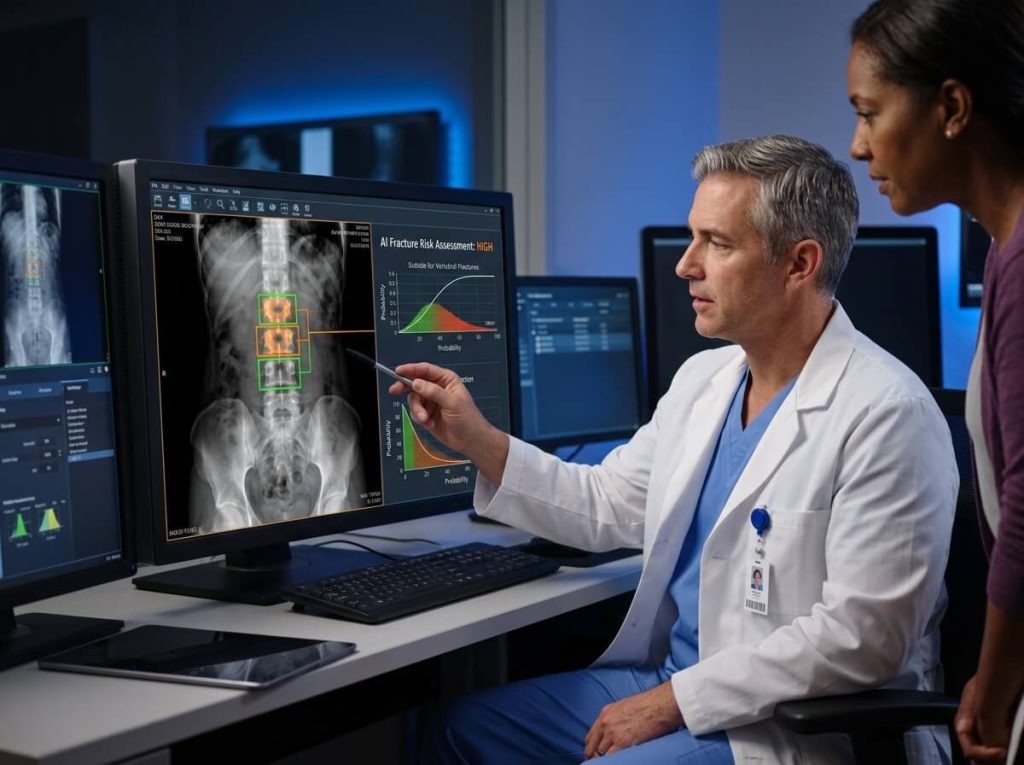
Driven by portable Quantitative Ultrasound (QUS) devices, compact peripheral DXA (pDXA) units, and artificial intelligence (AI) algorithms capable of opportunistic bone mineral density (BMD) estimation, healthcare providers can now screen high-risk populations in community clinics, long-term care facilities, and remote healthcare drives.
+-----------------------------------------------------------------------------------+
|                   NEXT-GENERATION BONE HEALTH SCREENING WORKFLOW                  |
+-----------------------------------------------------------------------------------+
|  1. Portable Screening   | Handheld/Desktop QUS or Mobile pDXA Scan               |
|  2. Opportunistic AI     | Deep learning software evaluates routine X-ray / CT    |
|  3. Cloud Tele-PACS      | Secure DICOM export to remote radiologist / EMR        |
|  4. Targeted Referral    | Confirmatory Central DXA for high-risk T-scores        |
+-----------------------------------------------------------------------------------+
1. Portable Bone Densitometry Modalities: QUS & Mobile pDXA
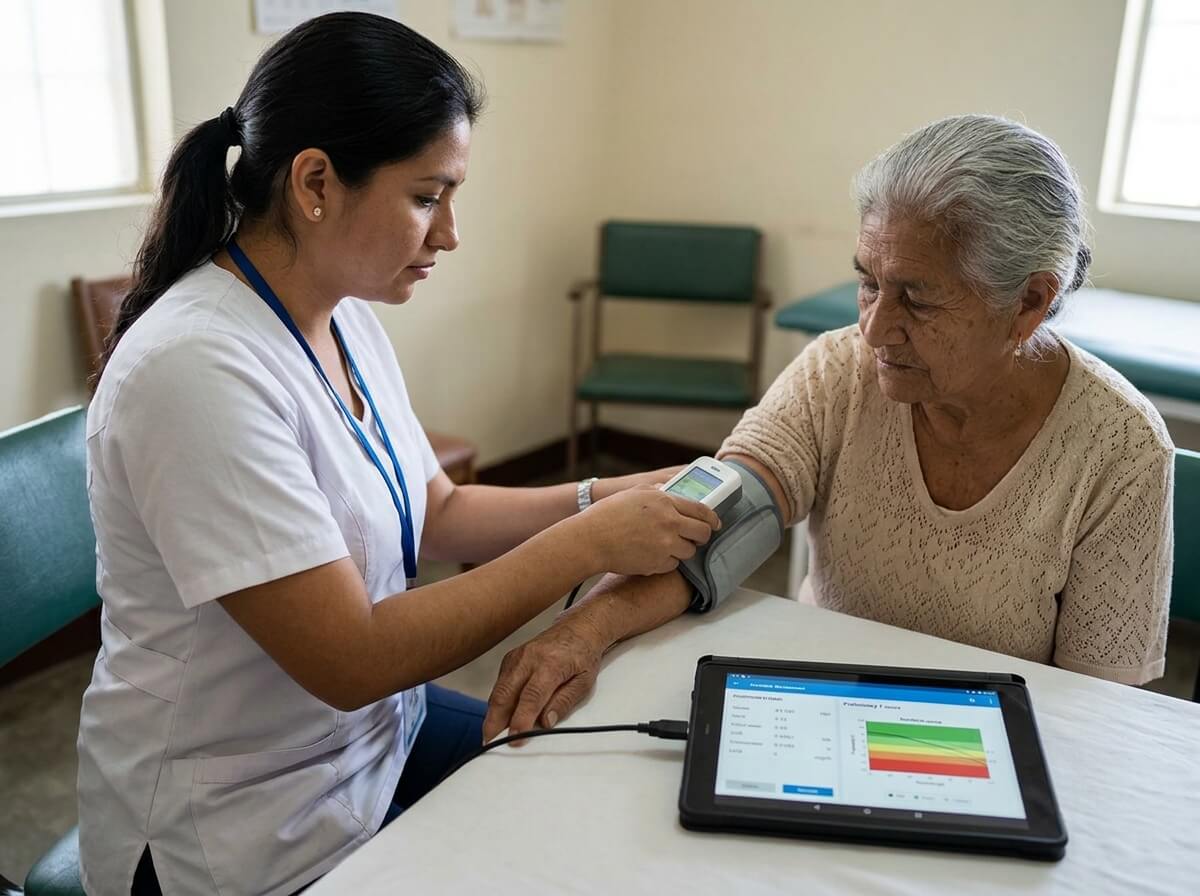
Portable bone densitometers bring diagnostic prescreening directly to the patient, overcoming geographical and space constraints.
Portable Quantitative Ultrasound (QUS) Systems
-
Working Principle: Transmits high-frequency ultrasound pulses through peripheral bone structures (most commonly the calcaneus/heel, radius, or tibia) to measure Speed of Sound (SOS) and Broadband Ultrasound Attenuation (BUA).
-
Key Advantages:
-
Zero Radiation: Completely safe for pregnant women, pediatric tracking, and frequent community screening drives.
-
Compact Form Factor: Lightweight desktop units or portable suitcase setups powered by internal lithium-ion batteries.
-
Rapid Cycle Time: Delivers a preliminary bone stiffness score and calculated T-score in 10 to 30 seconds.
-
Mobile Peripheral DXA (pDXA) Systems
-
Working Principle: Employs low-dose X-ray beams optimized for peripheral bone structures, primarily scanning the distal forearm (radius/ulna).
-
Key Advantages: Offers higher correlation with central DXA T-scores than ultrasound methods while maintaining a small footprint suitable for mobile health vans or primary care desks.
2. Artificial Intelligence (AI) in Osteoporosis Detection & Opportunistic Screening
Artificial intelligence software is transforming bone screening by analyzing existing diagnostic images and automating report generation.
                  AI-POWERED OSTEOPOROSIS SCREENING ECOSYSTEM
                                       |
       +-------------------------------+-------------------------------+
       |                                                               |
Opportunistic X-Ray / CT Analysis              Automated T-Score & Risk Triage
- Evaluates routine chest X-rays & CTs         - Deep-learning vertebral density check
- Extracts bone cortical thickness             - Auto-flags asymptomatic osteopenia
- Re-uses existing diagnostic images           - Instant DICOM structured report export
Opportunistic Bone Screening Algorithms
-
Routine Image Analysis: Deep-learning models analyze standard chest X-rays, abdominal CT scans, or dental radiographs obtained for other medical reasons to estimate lumbar spine and hip bone density.
-
Early Detection without Added Radiation: Automatically identifies patients showing early asymptomatic bone loss without requiring additional X-ray exposure or extra clinic visits.
Automated T-Score & Vertebral Fracture Identification
-
Automated Vertebral Height Measurement: AI algorithms detect subtle vertebral compression fractures (VCFs) on lateral X-rays that may be overlooked during routine manual review.
-
Rapid Clinical Triage: Generates risk assessment reports in seconds, enabling primary care physicians to immediately refer high-risk patients for central DXA confirmation or medical treatment.
3. Tele-Densitometry Infrastructure & Cloud PACS Connectivity
To support decentralized screening networks, portable densitometers and AI software must integrate smoothly with broader digital health platforms.
-
DICOM 3.0 Standard Compliance: Ensures portable ultrasound units and mobile X-ray devices export standardized image files and structured reports directly to hospital Picture Archiving and Communication Systems (PACS).
-
HL7 & EMR Automated Sync: Automatically populates patient bone density T-scores, Z-scores, and FRAX fracture risk scores directly into Electronic Medical Records (EMR).
-
Cloud Tele-Consultation Portals: Allows remote radiologists or endocrinologists to review mobile screening data, sign digital reports, and recommend treatment pathways from any web browser.
4. Operational Comparison: Station Central DXA vs. Portable AI-Enabled Screening
| Feature / Parameter | Fixed Tabletop Central DXA | Portable QUS / Mobile pDXA | AI Opportunistic Screening |
| Primary Deployment | Central Radiology Departments | Community Clinics, Health Vans | Cloud-Integrated PACS / CT |
| Ionizing Radiation | Low | None (QUS) / Ultra-Low (pDXA) | Zero Additional Dose |
| Operator Training Required | Certified Radiologic Technologist | General Nurse / Health Worker | Automated Software Engine |
| Primary Anatomical Site | Lumbar Spine, Proximal Femur | Calcaneus (Heel), Radius | Spine & Femur (from CT/X-ray) |
| Primary Clinical Purpose | Formal Diagnosis & Monitoring | Mass Screening & Risk Triage | Early Case Finding & Triage |
| Equipment Portability | Fixed Installation Only | Fully Portable / Battery Powered | Software License (Hardware Free) |
5. Strategic Buyer Checklist: Sourcing Mobile Units & AI Solutions
When purchasing portable bone densitometers or AI software licenses, healthcare procurement committees should evaluate the following criteria:
-
Validation Against Central DXA Standards: Verify that portable ultrasound or AI software demonstrates a high correlation coefficient ($r \ge 0.90$) when benchmarked against central DXA T-scores.
-
Battery Life & Power Flexibility: Ensure portable field scanners operate for at least 50 to 100 continuous patient scans on a single battery charge.
-
Cybersecurity & Data Privacy: Confirm that cloud tele-densitometry platforms feature AES-256 data encryption and comply with HIPAA and GDPR regulations.
-
Zero-Footprint PACS Integration: Check if AI screening software supports simple cloud-based API or DICOM routing without requiring expensive on-premise hardware servers.
6. Frequently Asked Questions (FAQ)
Q1: Can a portable ultrasound bone densitometer give an official diagnosis of osteoporosis?
No. Quantitative Ultrasound (QUS) devices are designed for prescreening and risk stratification. Patients flagged as low bone mass or high risk on a portable ultrasound device should be referred for a confirmatory central DXA scan of the hip and spine.
Q2: How does AI opportunistic bone screening work on standard CT scans?
AI software analyzes the Hounsfield Unit (HU) attenuation values of trabecular bone in the lumbar vertebrae during routine CT exams (such as abdominal or chest CTs), automatically calculating an estimated bone mineral density without extra radiation.
Q3: Are portable bone density scanners easy to operate for non-radiology staff?
Yes. Most modern portable ultrasound bone densitometers feature automated positioning guides, touch-screen software, and rapid acoustic coupling check features, allowing community nurses or medical assistants to perform accurate scans with minimal training.