Two Analyzers May Look Similar. Their Running Costs Can Be Very Different.
Imagine a diagnostic laboratory comparing two electrolyte analyzers. Both measure sodium, potassium and chloride. Both appear suitable for routine testing, and both fit within the laboratory’s budget.
However, one system may require different consumables, another may offer a different sample workflow, and their service requirements may vary. One might integrate with an existing laboratory information system, while the other may need additional work to connect with the laboratory’s reporting process.
Which instrument should the laboratory buy?
The right electrolyte analyzer is not necessarily the cheapest or the fastest. It is the system that matches the laboratory’s test menu, workload, sample requirements, operating budget and technical support needs.
This guide explains how to compare electrolyte analyzer specifications, assess different configurations, estimate long-term costs and evaluate manufacturers and suppliers. It is written for hospital procurement teams, clinical laboratory managers, diagnostic center owners, medical equipment distributors and buyers sourcing laboratory equipment internationally.
1. Start With Your Laboratory’s Daily Workload
Before comparing specifications or requesting prices, understand how the analyzer will be used.
A small diagnostic laboratory processing a limited number of samples each day may need a compact benchtop electrolyte analyzer. A busy hospital laboratory may prioritize workflow efficiency, instrument availability and integration with other laboratory systems. An emergency department may place greater emphasis on rapid testing and convenient operation.
These are different purchasing situations.
Start by answering four questions.
How many samples will you process?
Estimate the usual daily workload and the busiest periods. Do not base the purchase solely on an average day if testing demand varies substantially.
How quickly are results needed?
Determine whether the laboratory needs routine testing, urgent sample processing or both.
Who will operate the equipment?
Consider staff experience, training requirements, automated functions and ease of routine maintenance.
Will demand increase?
If the laboratory expects more patients, additional testing services or new clinical departments, consider whether the instrument can support the expected future workload.
WHO’s guidance for procuring in vitro diagnostic equipment identifies expected turnaround time, specimen throughput, test menu, operating environment, training and maintenance as important procurement considerations.
Low-Volume vs High-Volume Electrolyte Testing
A low-volume laboratory may prioritize a small footprint, simple operation and predictable consumable costs.
A higher-volume laboratory may place more emphasis on automation, continuous availability, sample handling capacity and integration with its existing workflow.
However, a larger analyzer is not automatically better for every laboratory.
A system with excessive capacity may cost more than necessary, while a low-capacity system could create delays during peak periods.
The goal is to select a capacity that matches the actual workload.
What should you estimate before purchasing?
Record the expected number of samples per day, the percentage of urgent tests, the operating hours, the number of operators and the anticipated increase in demand.
This information gives suppliers a practical basis for recommending a suitable analyzer.
2. Which Test Parameters Does Your Laboratory Need?
Not every electrolyte analyzer measures the same ions.
Many routine systems measure sodium, potassium and chloride. Some models offer additional measurements, such as ionized calcium or lithium, while certain blood gas analyzers combine electrolyte measurements with blood gas and other parameters.
Before requesting a quotation, create a list of required tests.
| Parameter | Common Abbreviation | What to Confirm |
|---|---|---|
| Sodium | Na+ | Availability and analytical performance |
| Potassium | K+ | Availability and sample requirements |
| Chloride | Cl− | Availability and measurement range |
| Ionized calcium | iCa | Whether this parameter is included in the model |
| Lithium | Li+ | Whether the intended application is supported |
| Blood gas parameters | pH, pCO₂, pO₂ | Relevant only when the selected system includes blood gas testing |
| Additional calculated values | Model-dependent | Whether each value is calculated or measured directly |
This distinction matters for procurement because an instrument’s product name does not guarantee that every parameter is included in the quoted configuration.

Standalone Electrolyte Analyzer or Multi-Parameter System?
A standalone electrolyte analyzer may be sufficient when the laboratory primarily needs electrolyte measurements.
A multi-parameter blood gas analyzer may be more appropriate when electrolyte testing is part of a wider workflow that includes blood gas measurements.
An integrated clinical chemistry analyzer may suit a laboratory that already processes electrolytes as part of a broader chemistry test menu.
Each approach has trade-offs.
A dedicated electrolyte analyzer can provide a focused workflow. An integrated system may reduce the need to operate multiple instruments or move samples between different workstations. A blood gas analyzer can support a different testing environment, particularly where rapid blood gas measurements are required.
The best choice depends on the laboratory’s overall needs, not simply the number of parameters listed in a brochure.
3. Sample Type and Sample Volume: What Should Buyers Check?
Sample compatibility is one of the most important technical considerations in medical laboratory equipment procurement.
Different electrolyte analyzers may support different sample types and collection methods.
Depending on the model, these may include:
-
Whole blood
-
Serum
-
Plasma
-
Urine
-
Other specifically validated specimens
Never assume that a model supports every sample type.
Whole Blood vs Serum vs Plasma
Whole blood contains blood cells and the liquid portion of blood. It is commonly used by suitable direct ISE systems and some blood gas analyzers.
Serum is the liquid portion obtained after blood has clotted and been separated.
Plasma is obtained from anticoagulated blood.
These specimens are not automatically interchangeable. Sample collection, anticoagulant compatibility, preparation and analytical method can affect whether a sample is suitable for a particular analyzer.
If a laboratory requires whole blood testing, ask whether the analyzer accepts arterial or venous samples, which collection devices are permitted, and whether any restrictions apply.
If serum or plasma is required, confirm the accepted sample type and anticoagulant.
What Is Electrolyte Analyzer Sample Volume?
Sample volume refers to the amount of specimen needed for the specified test or testing procedure.
For some instruments, the published volume describes the amount actually measured. For others, the instrument may require additional volume for aspiration, priming or other functions.
Therefore, do not compare sample-volume specifications without checking what each manufacturer’s stated figure represents.
A suitable procurement checklist should include:
-
Required sample volume
-
Minimum acceptable sample volume
-
Sample introduction method
-
Dead-volume requirements, where applicable
-
Accepted collection tubes or containers
-
Automatic or manual aspiration
-
Sample preparation requirements
Small sample volumes may be important in pediatric or other workflows where sample availability is limited, but the analyzer must still meet the laboratory’s analytical and clinical requirements.
4. Throughput and Turnaround Time Are Not the Same
Two specifications frequently appear in analyzer brochures: analysis time and throughput.
They are related, but they describe different things.
Analysis time usually refers to the time needed for a stated measurement or sample-processing procedure.
Throughput refers to the number of tests or samples the instrument can process within a defined period under specified conditions.
Neither figure automatically represents the time from collecting a patient’s sample to delivering an approved result.
Why Does Turnaround Time Matter?
In a routine laboratory, workflow may be organized around batches of samples.
In an emergency department, individual urgent samples may need to be prioritized.
In a point-of-care setting, the operator may need a short process with minimal sample preparation and straightforward result reporting.
These requirements can influence the choice of instrument.
When evaluating throughput, consider:
-
Time required for the first result
-
Time required for subsequent results
-
Continuous testing vs batch processing
-
Manual handling requirements
-
Calibration and quality-control downtime
-
Sample loading and unloading
-
Repeat testing
-
Operator workload
A brochure might state that an analyzer completes a measurement in a particular number of seconds. That figure should not be interpreted as a guarantee that every sample will be reported within the same period.
Ask the supplier to clarify how the claimed performance was measured.
Should You Buy the Fastest Electrolyte Analyzer?
Not necessarily.
A faster analyzer may be beneficial for a laboratory with urgent testing requirements or a larger workload. But speed is only useful when combined with acceptable performance, sufficient sample capacity, reliable operation and a manageable maintenance process.
For a smaller clinic, a compact instrument with suitable analysis time and lower operating costs may be a better fit.
The correct purchasing question is:
Does this analyzer provide enough capacity for our real workload without adding unnecessary operating costs?
5. Compare Automation and Workflow Features
Automation can reduce repetitive handling and support a more consistent testing workflow, but not every laboratory needs the same level of automation.
When comparing an electrolyte analyzer, review the following functions individually.
Sample Aspiration
Some instruments require the operator to introduce the sample manually. Others use an automatic aspiration system.
Automatic aspiration may be helpful when frequent testing is required or when the laboratory wants to simplify routine operation.
However, buyers should verify whether the system supports their sample containers, collection devices and required sample types.
Automatic Calibration
Automatic calibration can reduce some manual steps.
The exact calibration schedule and process depend on the model, so buyers should review the manufacturer’s instructions.
Quality-Control Functions
Some analyzers offer built-in QC recording, stored control data, trend charts or configurable QC functions.
These features can make routine review more convenient, but they do not replace the laboratory’s quality-management procedures.
Barcode Identification
Barcode support may help identify samples and reduce manual data entry when the analyzer is integrated into a suitable workflow.
Check whether the required scanner is included or optional.
Results Storage and Printing
Depending on the model, results may be stored internally, printed through a built-in printer or exported electronically.
The laboratory should consider how records are retained and how results are transferred to its reporting system.
Touchscreen and User Interface
A clear user interface can make routine testing easier, especially when several operators share an instrument.
Buyers should assess whether the interface displays warnings clearly, guides the operator through required steps and makes routine maintenance understandable.
Important: The availability of each feature must be confirmed for the exact model and configuration quoted.
6. Reagents, Electrodes and Consumables: The Real Running Costs
An electrolyte analyzer is not a one-time purchase. It requires compatible supplies and ongoing maintenance throughout its working life.
Depending on the model, routine operation may involve:
-
Electrolyte reagents
-
Calibration solutions
-
Quality-control materials
-
Ion-selective electrodes
-
Reference electrodes or related components
-
Cleaning solutions
-
Tubing and other fluidic components
-
Sample cups or other consumables, where required
-
Printer paper or accessories, where applicable
The exact list varies substantially between analyzers.
This is why buyers should ask for the complete consumables list before ordering rather than calculating costs from the equipment price alone.
Dedicated Reagents vs Open Reagent Systems
Some analyzers use dedicated consumables supplied for a specific instrument family. Others may support a broader range of compatible reagents.
The phrase open system can mean different things across medical laboratory equipment categories. Do not assume an electrolyte analyzer supports arbitrary third-party reagents merely because a supplier uses the word open.
Ask the manufacturer to specify which reagents, calibrators, electrodes and control materials are compatible, and whether using alternatives affects the validated performance or warranty.
Electrode Replacement Cost
Electrodes are particularly relevant to ISE analyzer operating costs.
Their service life depends on the electrode design, workload, sample types, operating conditions and maintenance procedures.
When comparing two models, ask:
-
Which electrodes need replacement?
-
What service-life information is available?
-
What conditions can shorten electrode life?
-
How are replacement electrodes installed?
-
Is recalibration or performance verification required afterwards?
-
Are compatible replacement parts consistently available?
Avoid relying on a single advertised electrode lifespan unless the supplier explains the conditions under which it applies.
Reagent Shelf Life and Storage
Reagents, calibrators and controls may have different storage conditions and stability periods.
For international buyers, this is especially important because products may spend time in transport, customs clearance and local warehousing before being used.
Confirm:
-
Shelf life at manufacture
-
Remaining shelf life required upon delivery
-
Storage temperature and humidity
-
Stability after opening
-
Onboard stability, if relevant
-
Shipping and handling conditions
-
Local availability of replenishment supplies
WHO procurement guidance specifically highlights reagent, control and calibrator stability, as well as workload, connectivity, training and maintenance, when purchasing in vitro diagnostic equipment.
7. How to Calculate the Total Cost of Ownership
A low purchase price does not necessarily mean the analyzer is cheaper to operate.
Total cost of ownership (TCO) means considering the cost of purchasing, installing, operating and maintaining the equipment throughout the period being evaluated.
For an electrolyte analyzer, relevant costs may include:
| Cost Category | What to Include |
|---|---|
| Initial purchase | Instrument, standard accessories and agreed configuration |
| Delivery | Packaging, freight, insurance and import-related charges |
| Installation | Site preparation, installation and commissioning where applicable |
| Training | Initial operator training and additional training if required |
| Consumables | Reagents, calibrators, control materials, electrodes and cleaning solutions |
| Maintenance | Scheduled servicing, preventive maintenance and repairs |
| Spare parts | Replacement components and service materials |
| Quality assurance | QC materials, verification and other applicable quality costs |
| Utilities | Electricity and other required operating resources |
| Downtime | The operational impact of unexpected interruptions |
| End-of-life | Replacement planning, disposal and transition to another instrument |
Not every item applies to every analyzer. The important point is to identify all relevant costs for the specific laboratory.
A peer-reviewed procurement study on clinical biochemistry analyzers also highlights the importance of including consumables, accessories, calibration, maintenance and other recurring expenses when calculating the cost of testing.
Compare Cost Per Reportable Test
For practical purchasing, one useful approach is to compare the cost of producing a reportable result rather than the price of the consumables alone.
Consider two analyzers that have similar purchase prices. Their operating costs could still differ because of variations in:
-
Reagent consumption
-
Calibration frequency
-
QC material consumption
-
Electrode replacement
-
Repeat testing
-
Maintenance requirements
-
Service charges
-
Downtime
A meaningful comparison should use the laboratory’s expected workload and the suppliers’ written cost information.
Do not assume that every sample produces a reportable result on the first attempt. Include the expected impact of repeats and failed tests when reliable local data are available.
Calculate Costs Over the Same Period
When comparing suppliers, use the same ownership period and workload assumptions for every quotation.
For example, a three-year comparison might include the purchase price, delivery, installation, consumables, maintenance and service costs over the same three years.
A five-year estimate may be more useful for a laboratory planning a longer equipment cycle, provided the assumptions are reasonable and clearly documented.
The goal is not to predict every expense perfectly. It is to prevent important recurring costs from being omitted.
8. Which Electrolyte Analyzer Is More Suitable for Your Laboratory?
The best configuration depends on the size and purpose of the laboratory.
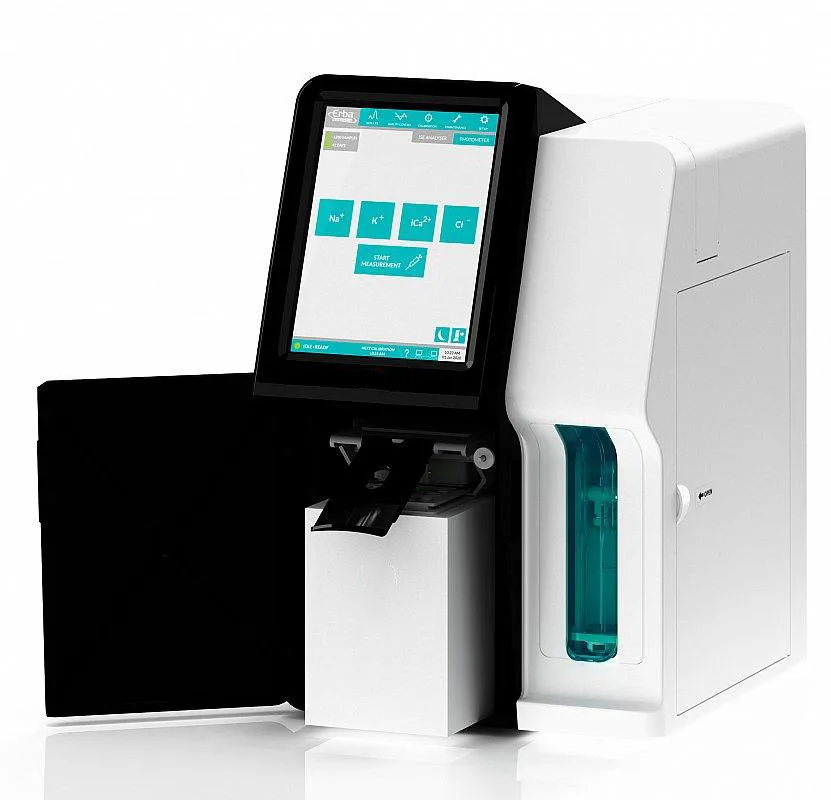
Small clinics and low-volume laboratories
Consider a compact benchtop electrolyte analyzer with a suitable test menu, manageable consumables and straightforward daily operation.
Key questions: Does it support the required samples? Are reagents readily available? Is the maintenance process manageable for the available staff?
Hospital and diagnostic laboratories
Evaluate throughput, sample workflow, QC functions, data handling and support arrangements. Confirm that the system can meet peak testing demand.
Key questions: Can it support the required workload? Can results be transferred into the existing reporting workflow? What happens when service is needed?
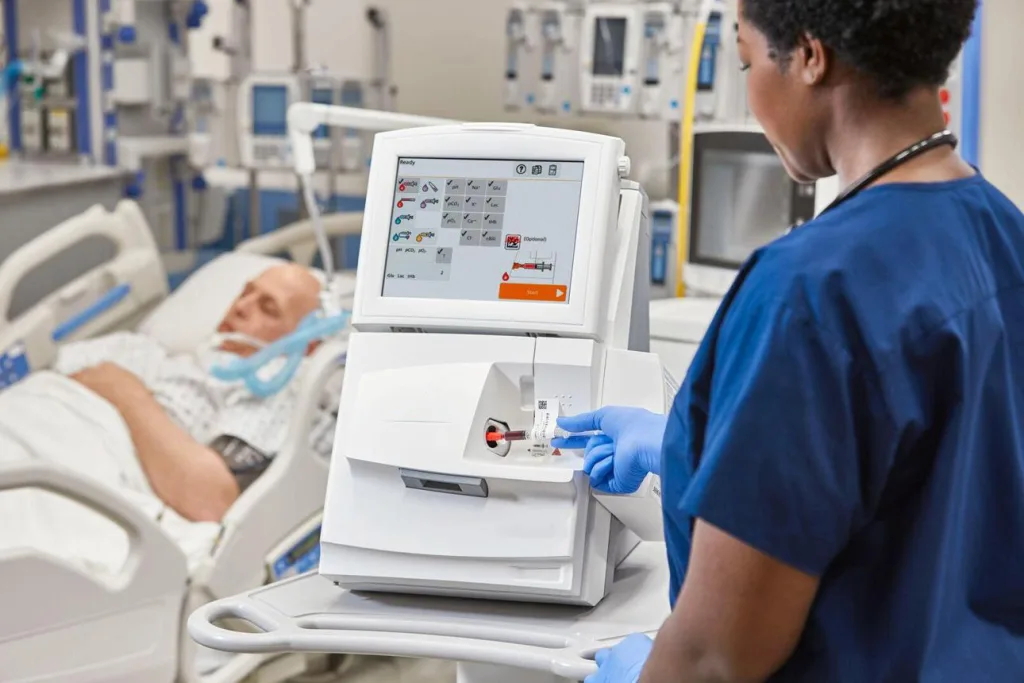
Emergency and critical-care workflows
Consider a suitable blood gas/electrolyte or point-of-care system when the clinical workflow requires rapid measurement of a defined test menu.
Key questions: What is the actual analysis time? Which parameters are measured? What are the sample requirements, QC procedures and service needs?
These are general selection examples, not fixed recommendations. Final selection should follow the intended use, available infrastructure, clinical requirements and the instrument’s documentation.
9. Standalone Electrolyte Analyzer vs Blood Gas Analyzer
This is an important comparison because some buyers search for a dedicated electrolyte analyzer, while others need a system that combines electrolyte measurements with blood gas testing.
Standalone Electrolyte Analyzer
A dedicated electrolyte analyzer is generally designed around selected ion measurements.
Potential advantages include a focused workflow and a configuration tailored to electrolyte testing.
Buyers should evaluate its actual test menu, analytical performance, sample types, throughput and operating costs.
Blood Gas Analyzer With Electrolytes
A blood gas analyzer may combine electrolyte measurements with blood gas parameters such as pH, partial pressure of carbon dioxide and partial pressure of oxygen.
Depending on the model, additional parameters may also be available.
This can suit workflows where blood gas and electrolyte testing are both required.
However, the additional functionality may involve different consumables, maintenance needs and operating costs.
Which Should You Buy?
A dedicated electrolyte analyzer may be appropriate when the main requirement is routine ion measurement.
A blood gas analyzer with electrolyte testing may be more suitable when the laboratory needs a combined blood gas and electrolyte workflow.
Compare the complete test menu and workflow rather than assuming one system can replace the other in every setting.
For example, UMY Medical publishes a blood gas analyzer with electrolyte testing. Its published specifications describe a model family with configurations that vary by test menu, so buyers should confirm the specific model and parameter combination before requesting a quotation.
This is a useful distinction for medical equipment procurement: a supplier’s catalog may include both standalone electrolyte analyzers and integrated blood gas/electrolyte systems, but their technical specifications are not interchangeable.
10. Laboratory Information System Connectivity and Data Management
Modern laboratory procurement increasingly involves data management as well as measurement performance.
Some electrolyte analyzers support standalone result storage and printing. Others offer electronic communication with a laboratory information system (LIS) or hospital information system (HIS).
The available functions depend on the model.
Before purchasing, consider the following.
Result Storage
How many results can be stored, and how are they retrieved or exported?
Printer
Is a built-in or external printer required? Is it included in the quoted package?
Barcode Scanner
Can sample identification be automated using the required barcode format?
LIS or HIS Connectivity
Does the instrument support the interface needed by the laboratory? Is additional software or integration work required?
Bidirectional Communication
Can the analyzer both send results and receive relevant sample or worklist information, where needed?
User Access
Does the system provide suitable operator identification or access control for the intended setting?
A connection port alone does not guarantee compatibility with a particular LIS. The technical interface, communication protocol and integration requirements should be confirmed with the supplier and the laboratory’s IT team.
For large projects, define connectivity needs before ordering. This is usually easier than trying to retrofit an unplanned data workflow after installation.
11. How to Evaluate an Electrolyte Analyzer Manufacturer
A good purchasing decision requires evaluating the equipment and the company supplying it.
This matters particularly for overseas buyers who may need technical documentation, replacement consumables and troubleshooting support after delivery.
Product Range and Configuration
Does the supplier offer the exact analyzer category required?
Confirm whether it is a standalone electrolyte analyzer, a combined blood gas/electrolyte analyzer or an integrated chemistry system with electrolyte measurement.
Technical Documentation
Can the supplier provide a datasheet, instructions for use, maintenance information, calibration procedures and compatible consumables list?
Quality and Regulatory Documentation
Ask for the applicable product registration, conformity documentation and quality-system information required for the destination market.
The exact documentation depends on the instrument, its intended use and local regulatory requirements. Buyers should verify documents for the actual model rather than relying on general company statements.
Consumables Availability
Confirm the availability of the electrodes, reagents, calibrators and QC materials needed for routine operation.
After-Sales Support
Ask who will answer technical questions, provide troubleshooting guidance and arrange service when necessary.
For international procurement, the availability of qualified local service personnel can be particularly important.
Export and Project Coordination
For distributors and hospital projects, the ability to coordinate specifications, packing, shipping and documentation can help simplify procurement.
About UMY Medical Equipment Co., Ltd.
UMY Medical Equipment Co., Ltd. presents a broad medical and laboratory equipment portfolio that includes electrolyte analyzers, clinical chemistry analyzers, hematology analyzers and blood gas analyzers. The company also publishes information on equipment selection, test menus, sample requirements and laboratory procurement considerations. See its medical analyzer product category for the range currently listed.
For buyers sourcing laboratory equipment from China, UMY can be considered as one supplier to evaluate, especially when a project involves multiple types of diagnostic equipment. As with any supplier, the final purchase should be based on the exact model, required test menu, technical documents, consumables availability and agreed after-sales arrangements.
13. Common Purchasing Mistakes to Avoid
Choosing Only by the Initial Price
A cheaper analyzer may have higher reagent costs, more frequent consumable replacement or more expensive service requirements.
Ignoring Sample Compatibility
A system that measures the required ions may still be unsuitable if it does not accept the laboratory’s intended sample types.
Comparing Different Test Menus
A three-parameter electrolyte analyzer and a multi-parameter blood gas/electrolyte analyzer should not be treated as equivalent products.
Relying Only on Advertised Speed
Published analysis time may not represent the full time needed to produce and report a result in a real laboratory.
Assuming All Consumables Are Interchangeable
Confirm the compatible reagents, electrodes, calibrators and control materials for the exact model.
Forgetting Data Integration
If the laboratory needs electronic result transfer, check interface compatibility before ordering.
Not Planning After-Sales Support
Installation guidance, spare parts and technical assistance can affect the long-term usability of the instrument.
Comparing Quotations With Different Inclusions
One quotation may include accessories or training that another lists separately. Compare complete configurations and total costs.
Final Takeaway: Choose the Analyzer That Fits Your Laboratory
Selecting an electrolyte analyzer is a technical and financial decision.
The most important factors are:
Test menu + sample compatibility + throughput + analytical performance + consumables + connectivity + service support + total cost of ownership.
A compact analyzer may be suitable for a smaller laboratory. A higher-throughput or integrated system may better support a larger workload or a combined testing workflow.
Before purchasing, confirm the required parameters, sample types, measurement method, operating costs and documentation. Then compare complete supplier quotations using the same assumptions.
For international buyers, the decision should also account for spare parts, consumables availability and technical support after delivery.
The best purchasing decision is not necessarily the instrument with the longest feature list. It is the analyzer that meets the laboratory’s actual requirements while remaining practical to operate and maintain.
Frequently Asked Questions
1. How do I choose an electrolyte analyzer?
Start with the required test parameters, sample types, daily workload, analysis time, measurement method, consumables, connectivity and service requirements. Compare total operating costs rather than purchase price alone.
2. How much does an electrolyte analyzer cost?
The price depends on the model, test menu, automation level, accessories, consumables, installation and support arrangements. Request a quotation based on your exact requirements.
3. What specifications should I compare before buying?
Important specifications include measurement parameters, sample types, analytical performance, sample volume, throughput, calibration, QC functions, consumables, data connectivity and maintenance requirements.
4. What is the difference between a standalone electrolyte analyzer and a blood gas analyzer?
A standalone electrolyte analyzer focuses on selected ion measurements. A blood gas analyzer measures blood gas parameters and may also include electrolyte testing, depending on the model.
5. Is a benchtop electrolyte analyzer suitable for a small laboratory?
It may be suitable when its test menu, sample requirements, throughput and operating costs match the laboratory’s needs. Installation conditions and support availability should also be considered.
6. How many samples can an electrolyte analyzer process per hour?
Capacity varies by instrument. Check the manufacturer’s specified throughput and clarify how it was measured. Actual performance depends on sample handling, testing workflow, calibration and other operating conditions.
7. What sample types can an electrolyte analyzer accept?
Depending on the model, supported samples may include whole blood, serum, plasma or urine. Confirm compatibility and collection requirements in the manufacturer’s instructions.
8. What consumables does an electrolyte analyzer need?
Routine consumables may include reagents, calibration solutions, QC materials, ISE electrodes, cleaning solutions and other model-specific components.
9. How often do ISE electrodes need replacement?
Electrode service life varies with design, workload, sample characteristics and maintenance. Follow the manufacturer’s replacement recommendations and assess performance when problems arise.
10. What is the difference between direct and indirect ISE?
Direct ISE measures an undiluted sample, whereas indirect ISE uses a dilution step before measurement. The methods can produce different sodium results under certain sample conditions.
11. Is an electrolyte analyzer easy to operate?
Many modern systems provide guided workflows and automated functions, but training is still important. Buyers should review operator requirements, troubleshooting procedures and the manufacturer’s training arrangements.
12. Can an electrolyte analyzer connect to a laboratory information system?
Some models support LIS or HIS connectivity. Confirm the required interface and whether additional software or integration work is needed.
13. What should I include in an electrolyte analyzer RFQ?
Include the required test menu, sample types, expected workload, throughput, consumables, connectivity, installation requirements, destination country, warranty and documentation needs.
14. How do I compare electrolyte analyzer manufacturers in China?
Compare technical specifications, product documentation, quality and regulatory information, consumables availability, manufacturing capability, export experience and after-sales support. Verify claims for the exact model offered.
15. What is the total cost of ownership of an electrolyte analyzer?
It includes the initial purchase and relevant delivery, installation, consumables, calibration, QC, maintenance, spare parts, training and downtime costs over the selected ownership period.