The 15% Iceberg: Why Initial Sticker Price Misleads Procurement Teams
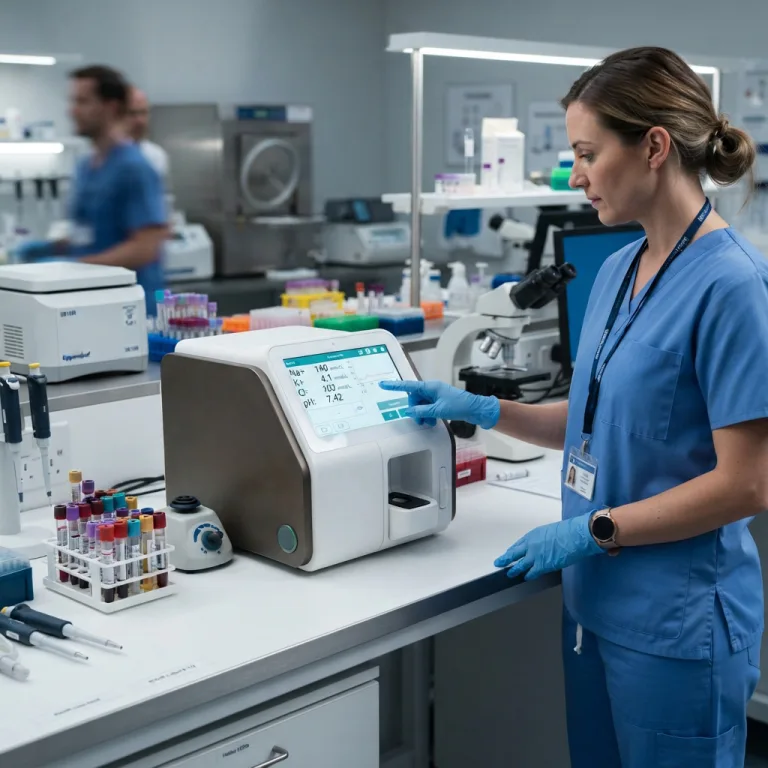
In clinical laboratory tenders, the upfront purchase price of a urine analyzer typically accounts for less than 15% to 20% of its five-year financial footprint.
When hospital procurement officers, laboratory directors, or B2B medical distributors evaluate competing bids solely on hardware invoice price, they frequently walk into the classic IVD “razor-and-blade” trap. A vendor may offer a heavily subsidized or even “free placement” urine analyzer, only to lock the laboratory into a multi-year consumable contract featuring proprietary, RFID-chipped reagent strips, expensive single-use sediment cartridges, and mandatory annual service renewals that cost three times the machine’s actual manufacturing value.
Beyond direct consumable markups, an under-specified urine analyzer generates substantial hidden labor costs:
-
If a semi-automated strip reader lacks continuous loading during peak morning clinic hours, a highly paid medical technologist must stand beside the bench for two hours hand-dipping strips every 30 seconds.
-
If a dry chemistry unit cannot communicate reflex rules to a sediment module, staff must manually hunt down positive sample tubes across dozens of racks to spin them down for microscopy.
-
If the analyzer lacks bidirectional Laboratory Information System (LIS) connectivity, clerical transcription errors inevitably creep into patient charts.
Procuring the right urinalysis platform requires looking beneath the surface of the hardware brochure. This B2B buyer’s guide provides a comprehensive framework for matching throughput tiers to clinical workflows, auditing LIS and quality control architectures, and calculating true Total Cost of Ownership.
1. The Four Automation Tiers: Matching Hardware to Daily Specimen Volume
The global urinalysis market is segmented into four distinct hardware categories. Choosing an oversized workstation wastes capital budget and floor space, while choosing an undersized unit creates an immediate morning bottleneck during peak outpatient collection windows (typically 8:00 AM to 11:00 AM).
Plaintext
                    URINALYSIS HARDWARE SELECTION SPECTRUM
                                      |
     +--------------------+-----------+-----------+--------------------+
     |                    |                       |                    |
     v                    v                       v                    v
[ TIER 1: POCT ]   [ TIER 2: HIGH-SPEED ]  [ TIER 3: WALK-AWAY ] [ TIER 4: HYBRID ]
Compact Strip      Continuous Load         Robotic Rack Auto-    Coupled Dry Chem +
Reader             Semi-Automated          Sampler Chemistry     Automated Sediment
(1–30 samples/day) (30–100 samples/day)    (100–300 samples/day) (150–1,000+ /day)
Tier 1: Compact Point-of-Care (POCT) & Single-Strip Readers
-
Target Facility: Physician offices, urgent care clinics, prenatal OB/GYN suites, community health centers, and small veterinary practices processing 1 to 30 samples per day.
-
Operational Workflow: The operator manually dips a reagent strip into the urine cup, blots the edge on absorbent paper to remove excess fluid, and places the strip onto a motorized sliding tray. Within 45 to 60 seconds, an internal reflectance photometer reads the pads and prints the result on an integrated thermal printer or uploads it via Wi-Fi/USB.
-
Throughput: Typically 45 to 120 tests per hour.
-
Pros & Cons: Extremely compact footprint, zero liquid tubing maintenance, and low initial cost. However, incubation timing and dipping consistency still depend partially on the human operator.
Tier 2: High-Speed Continuous-Load Semi-Automated Analyzers
-
Target Facility: Outpatient diagnostic centers, regional polyclinics, and small hospital emergency laboratories processing 30 to 100 samples per day.
-
Operational Workflow: Instead of waiting 60 seconds for one strip to finish before inserting the next, these analyzers use a continuous conveyor belt or rotating incubation wheel. The technician dips strips and places them onto the loading zone every 6 to 7 seconds. The machine automatically transports each strip through the exact 60-second incubation path, reads the pads, and dumps the used strip into an internal biohazard waste bin.
-
Throughput: 300 to 520 tests per hour.
-
Pros & Cons: Delivers massive hourly speed at a fraction of the cost of a robotic system, but still requires an operator to stand at the machine to dip strips during batch runs.
Tier 3: Fully Automated “Walk-Away” Dry Chemistry Analyzers
-
Target Facility: Medium-to-large hospital laboratories and commercial reference labs processing 100 to 300+ samples per day.
-
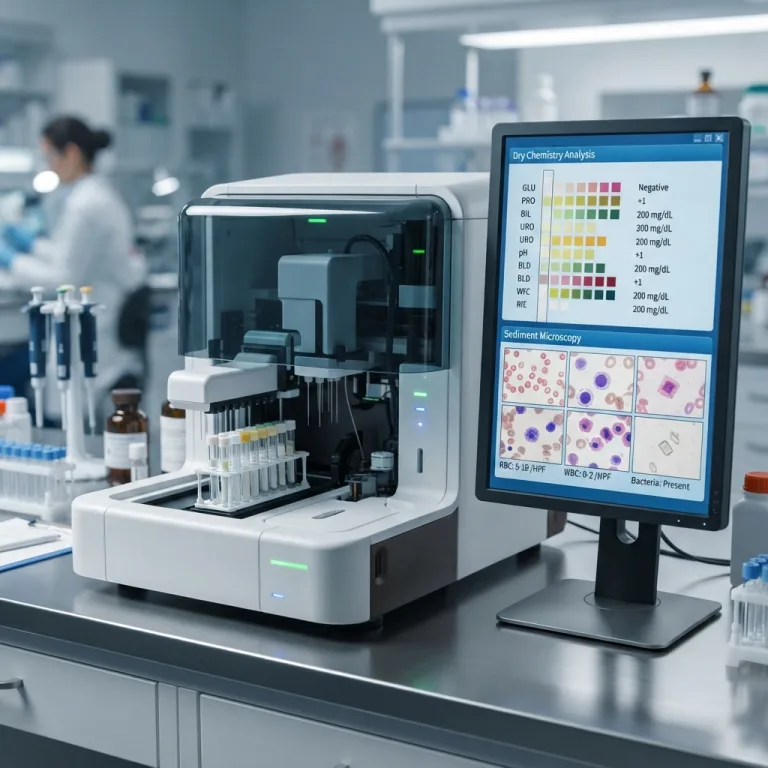
Operational Workflow: True walk-away automation. The technician pours native urine into barcoded standard tubes, places the tubes into 10-tube sample racks, and loads the racks onto an automated feeder track. The analyzer scans each tube’s barcode, mixes the specimen, aspirates a precise volume via a robotic sampling probe, dispenses micro-droplets onto individual pads of a strip pulled automatically from an internal desiccant hopper, and measures Specific Gravity via a built-in optical refractometer.
-
Throughput: 200 to 300 tests per hour with hands-free rack capacity of 50 to 100+ tubes per batch.
-
Pros & Cons: Eliminates human dipping variability, prevents chemical pad run-over, and frees staff for other tasks. Requires daily liquid line flushing and periodic peristaltic tube replacement.
Tier 4: Integrated Hybrid Workstations (Dry Chemistry + Automated Sediment)
-
Target Facility: Tertiary university hospitals, central core laboratories, and nephrology centers processing 150 to 1,000+ samples per day.
-
Operational Workflow: Physically bridges a Tier 3 Walk-Away Dry Chemistry Analyzer with an Automated Urine Sediment Analyzer (Digital Flow Microscopy or Laser Flow Cytometry) along a unified robotic transport track. A single sample rack moves seamlessly from chemical analysis to microscopic formed-element imaging without human intervention.
-
Throughput: 100 to 240+ complete combined profiles per hour.
-
Pros & Cons: The gold standard for laboratory lean management. Enables intelligent reflex testing and cross-check auto-verification, reducing manual microscopic slide reviews by up to 85%.
2. Side-by-Side Hardware Tier Comparison Matrix
Procurement committees can use this technical comparison table to align tender specifications with institutional requirements:
| Evaluation Metric | Tier 1: Compact POCT Reader | Tier 2: High-Speed Belt Reader | Tier 3: Walk-Away Auto Chemistry | Tier 4: Integrated Hybrid Workstation |
| Optimal Daily Volume | 1 – 30 specimens | 30 – 100 specimens | 100 – 300 specimens | 150 – 1,000+ specimens |
| Nominal Throughput | 60 – 120 strips/hr | 300 – 500 strips/hr | 200 – 300 strips/hr | 120 – 240 combined tests/hr |
| Sample Loading Method | Manual single-strip tray | Manual continuous belt | Robotic 50–100 tube rack feeder | Unified bridge track + STAT port |
| Sample Application | Manual dip in urine cup | Manual dip in urine cup | Robotic micro-pipette point drop | Robotic aspiration for Chem + Sed |
| Specific Gravity (SG) | Chemical strip pad only | Chemical strip pad only | Built-in Optical Refractometer | Optical Refractometer + Turbidimeter |
| Strip Desiccant Storage | External bottle (Manual) | External bottle (Manual) | Sealed internal humidity hopper | Dual sealed internal hoppers (200–400) |
| Sediment Microscopy | None (Manual centrifuge) | None (Manual centrifuge) | External standalone only | Integrated Digital Imaging or Flow |
| Hands-On Tech Time | ~45 sec per sample | ~10 sec per sample | Walk-away (Load rack & leave) | Walk-away + 80% Auto-Verification |
3. Intelligent Workflow Engineering: Reflex Testing & STAT Priority
In a high-volume core laboratory, performing a full microscopic sediment analysis on every single incoming outpatient wellness checkup is financially wasteful. Conversely, skipping microscopy on a patient with early renal disease is clinically dangerous.
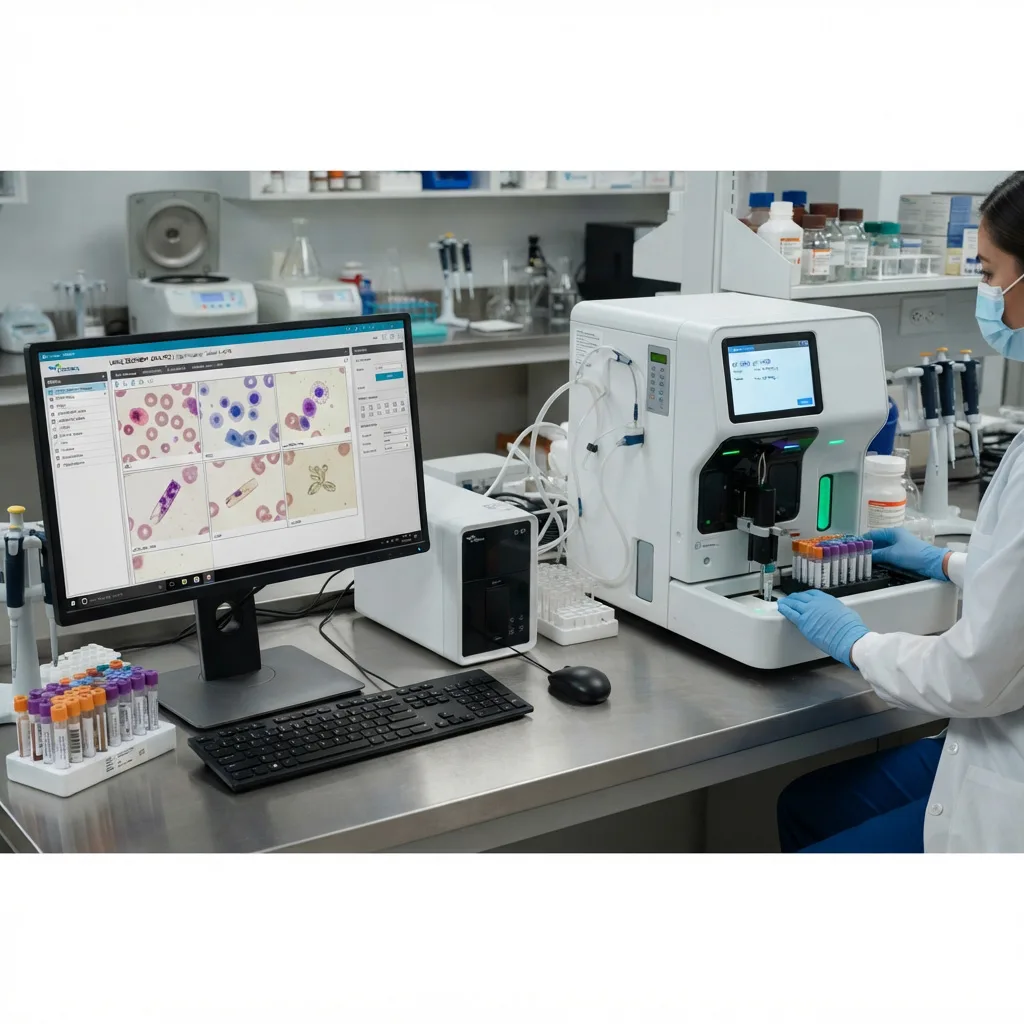
Integrated urine workstations solve this dilemma through programmable Reflex Testing (Sieving Rules) and Auto-Verification.
Plaintext
                    AUTOMATED REFLEX TESTING LOGIC
+-------------------------------------------------------------------------+
| STEP 1: Sample Rack Enters Dry Chemistry Module                         |
|         - Evaluates 11–14 Strip Parameters + Color, Clarity & SG        |
|                                   |                                     |
|          +------------------------+------------------------+            |
|          | (All Parameters Normal & Clear)                 | (Flagged)  |
|          v                                                 v            |
| [ AUTO-VERIFICATION PATH ]                 [ AUTOMATED REFLEX PATH ]    |
| - Skips sediment consumables               - Track routes rack to       |
| - Releases normal report to LIS              Sediment Module            |
|   in < 90 seconds                          - Captures RBC, WBC, Casts,  |
| - Saves 40%–60% on sediment OPEX             Crystals & Bacteria        |
+-------------------------------------------------------------------------+
How Programmable Reflex Rules Save Consumable Budget
When a sample rack is loaded onto a hybrid workstation, the dry chemistry module tests the specimen first. The middleware immediately evaluates the results against customizable laboratory rules:
-
The Sieving Trigger: If Protein, Blood, Leukocyte Esterase, Nitrite, Glucose, and Turbidity are all completely negative (and the sample did not originate from an oncology, nephrology, or pediatric ward), the track automatically bypasses the sediment analyzer and releases the validated normal result directly to the hospital LIS.
-
The Reflex Trigger: If any chemical parameter is abnormal (for example, trace protein, 1+ blood, or cloudy turbidity), or if the ordering physician specifically requested a microscopic exam via the barcode order, the robotic bridge routes the tube into the sediment module for full cellular and cast quantification.
By deploying reflex sieving for general outpatient screening populations, laboratories reduce sediment sheath fluid and cuvette consumption by 40% to 60% without sacrificing diagnostic sensitivity.
Dedicated STAT Emergency Interruption
Hospital emergency departments (ED) and intensive care units (ICU) frequently send urgent specimens—such as suspected urosepsis, diabetic ketoacidosis, or acute pediatric abdominal pain—that cannot wait behind 80 routine morning ward tubes.
-
When evaluating Tier 3 and Tier 4 analyzers, procurement officers must verify the presence of a dedicated STAT (Short Turnaround Time) position.
-
A true STAT port allows the technician to insert a single emergency tube at any moment; the analyzer pauses routine rack aspiration after the current cycle, processes the STAT tube immediately, and resumes routine rack operation automatically.
4. Digital Ecosystem: Bidirectional LIS, HL7/ASTM & IQC Management
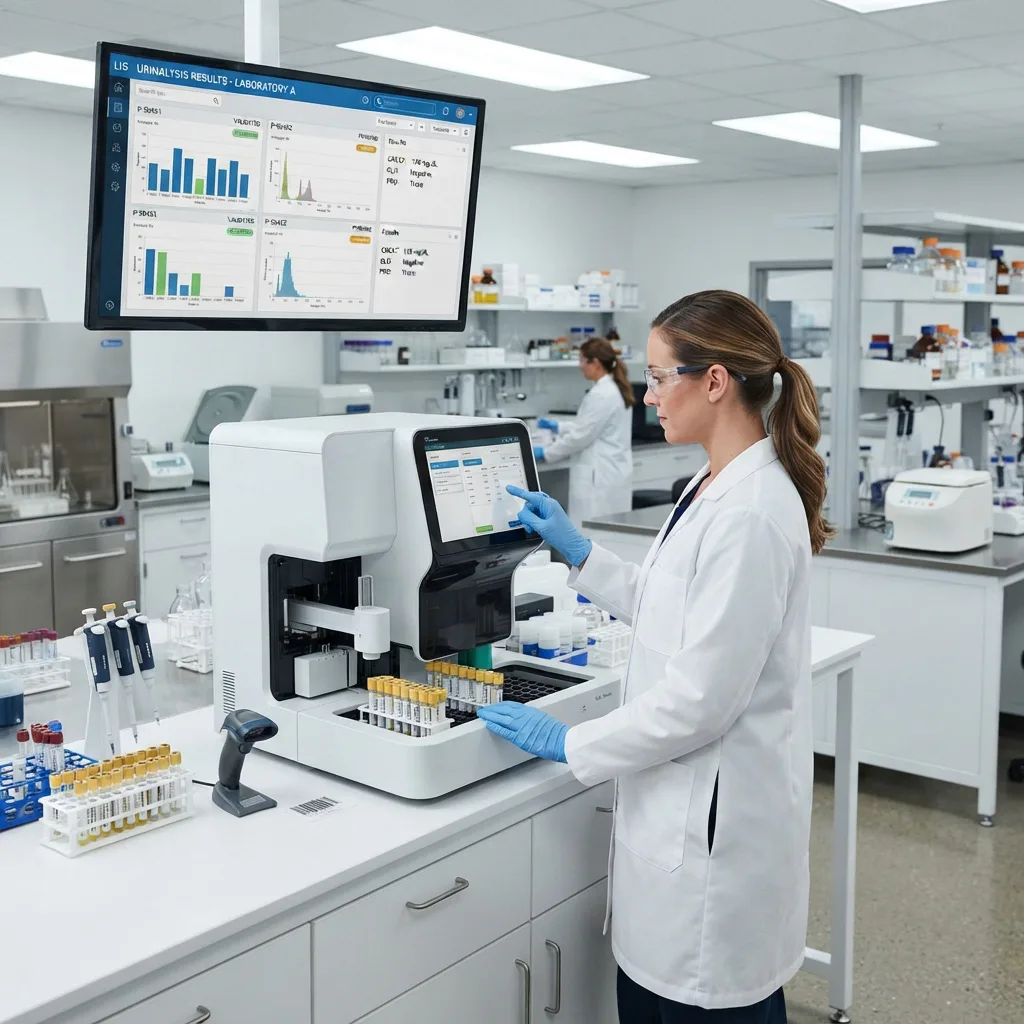
A modern urine analyzer is an information terminal as much as an optical instrument. Manual data entry—typing 14 chemical parameters and 12 sediment counts into a computer screen—is the single largest source of pre- and post-analytical laboratory error.
Plaintext
                  BIDIRECTIONAL LIS / HIS COMMUNICATION
+-------------------------------------------------------------------------+
| HOSPITAL LIS / EHR SERVER                                               |
|   |                                                   ^                 |
|   | 1. Host Query (ASTM / HL7 Order Download)         | 2. Result Upload|
|   |    "Barcode #90842 = Run Chem + Sediment"         |    Numeric Data |
|   v                                                   |    + Cell Photos|
| URINE ANALYZER WORKSTATION ---------------------------+                 |
| - Built-in 1D/2D Barcode Reader scans sample tube                       |
| - Enforces Westgard QC Lockout before releasing patient data            |
+-------------------------------------------------------------------------+
Unidirectional vs. Bidirectional LIS Connectivity
When reviewing vendor quotes, hospital IT directors must distinguish between basic one-way data output and true two-way host query connectivity:
-
Unidirectional (One-Way) Output: The analyzer pushes completed test results out to the LIS via an RS-232 serial port or Ethernet cable. However, the analyzer does not know what test was ordered on the tube prior to running it.
-
Bidirectional (Two-Way Host Query) Connectivity: As soon as the analyzer’s internal barcode scanner reads the specimen tube label, it sends a query message to the LIS. Within milliseconds, the LIS replies with patient demographics (Name, Age, Sex, Ward) and the exact test order (Dry Chemistry Only, Sediment Only, or Combined Panel). Once analysis finishes, the workstation transmits both quantitative numerical values and high-resolution cropped digital microscopy images back to the patient’s electronic chart using standardized HL7 (v2.3.1 / v2.5) or ASTM (E1381 / E1394) protocols.
Automated Internal Quality Control (IQC) & ISO 15189 Compliance
To maintain clinical laboratory accreditation (such as ISO 15189 or CAP), urine analyzers must feature built-in quality assurance software:
-
Barcode-Driven Liquid QC: Supports automated scanning of Level 1 (Normal/Negative) and Level 2 (Abnormal/Pathological) liquid control lot numbers and expiration dates.
-
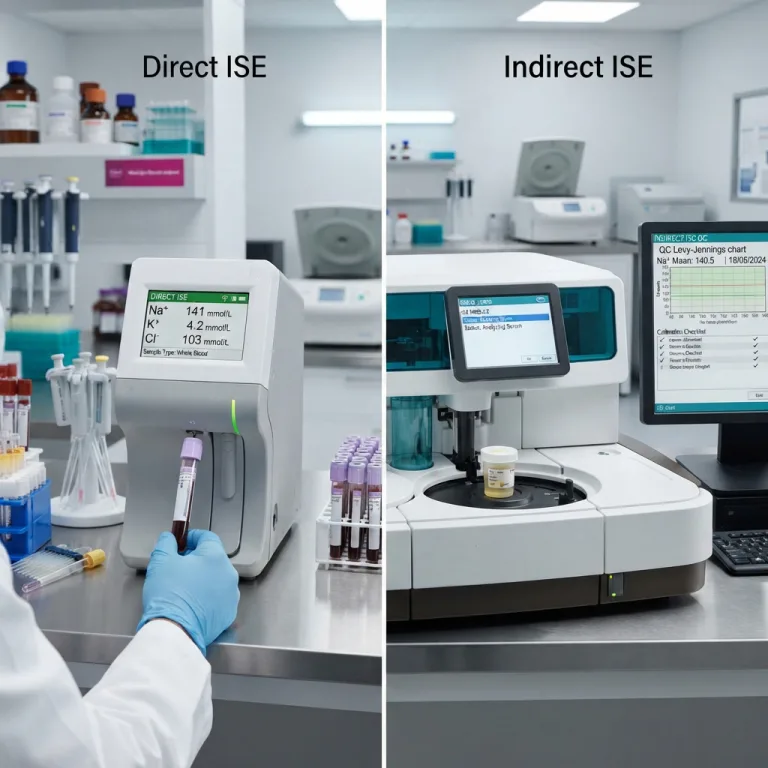
Levey-Jennings Charts & Westgard Rules: The workstation automatically plots daily QC runs on visual Levey-Jennings graphs. If a control run violates Westgard thresholds, an optional QC Lockout function prevents operators from processing patient samples until recalibration or troubleshooting is documented.
-
Humidity Exposure Protection: Reagent strips degrade rapidly if exposed to ambient room moisture. High-end automated analyzers house their bulk strips inside a sealed, sensor-monitored desiccant hopper that alerts the operator if the cap is left ajar or if desiccant silica packets require replacement.
5. Consumable Economics: Open vs. Closed Systems & 5-Year TCO Modeling
For laboratory managers and B2B medical distributors, understanding consumable architecture is the key to long-term profitability.
Open vs. Closed Reagent Architectures
-
Closed Proprietary Systems: Use encrypted RFID tags, proprietary cassette shapes, or encrypted barcode locks on every bottle of strips and container of sheath fluid. The hospital can only buy consumables from the original brand at locked-in prices. Furthermore, if an RFID chip has a factory read error, an entire bottle of 100 strips becomes unusable.
-
Open & Flexible Factory Systems: Allow laboratories to calibrate the optical reflectance reader to validated, cost-effective multiparameter strips or utilize factory-direct OEM strips without artificial digital paywalls. In sediment modules, systems that utilize permanent quartz-glass planar flow cells flushed with clean sheath buffer eliminate the plastic waste and recurring expense of disposable single-use plastic cuvette cartridges.
5-Year Financial TCO Comparison (150 Samples/Day Hospital Lab)
Consider a regional hospital laboratory running 150 urinalysis samples per day (54,750 tests per year, or 273,750 tests over 5 years):
| Cost Category (5-Year Horizon) | Legacy Closed-Brand System | Factory-Direct Open/OEM System |
| Upfront Instrument CAPEX | $18,000 – $35,000 (Subsidized) | $12,000 – $22,000 (Factory Direct) |
| Dry Chemistry Strips (273,750 pcs) | $0.35 – $0.60/strip ($95k – $164k) | $0.12 – $0.22/strip ($32k – $60k) |
| Sediment Consumables (Flow vs Cuvette) | Disposable Cuvettes ($80k – $120k) | Permanent Flow Cell + Buffer ($15k – $25k) |
| Mandatory Service & License Fees | $4,000 – $7,000/yr ($20k – $35k) | Zero License Fees; Low-Cost Parts ($4k) |
| Estimated 5-Year Total Cost (TCO) | $213,000 – $354,000 USD | $63,000 – $111,000 USD (Up to 65% Saved) |
6. Direct Factory Sourcing: The UMY Medical Equipment Co Ltd Advantage
When hospital purchasing committees, clinical reference laboratories, and international IVD distributors look to escape high consumable markups without compromising analytical precision, partnering directly with an established original equipment manufacturer is the most effective strategy.
UMY Medical Equipment Co Ltd is a globally recognized manufacturer of in-vitro diagnostic (IVD) and clinical laboratory analyzers, supplying hospitals, government health tenders, and distribution networks across more than 80 countries.
Plaintext
                  THE UMY MEDICAL URINALYSIS ADVANTAGE
                                   |
     +-----------------------------+-----------------------------+
     |                             |                             |
     v                             v                             v
[ Optical & Fluidic Precision ] [ Certified IVD Compliance ]  [ High-Margin B2B Economics ]
 Long-Life Cold LED Photometry   ISO 13485 & CE Marked         Low Per-Test Consumable Cost
 Anti-Block Hydrophobic Probes   Native HL7 / LIS Integration  Full OEM/ODM Brand Support
Why Global Laboratories and Distributors Choose UMY Medical:
-
Full-Spectrum Product Portfolio: Whether a client requires a compact portable POCT strip reader for rural clinics, a high-speed 500 T/H continuous conveyor analyzer, or a fully automated walk-away dry chemistry and digital sediment workstation, UMY Medical manufactures scalable models tailored to every daily sample volume.
-
Cold LED Optical Longevity & Precision Fluidics: UMY Medical analyzers utilize multi-wavelength monochromatic cold LED optical heads rated for over 50,000 hours of drift-free operation, paired with dual-wavelength infrared background compensation and precision anti-carryover peristaltic fluidics.
-
Predictable, Low-TCO Consumable Supply: By manufacturing and supplying high-stability 11-to-14 parameter reagent strips (including Microalbumin-to-Creatinine ACR strips) and permanent flow-cell sediment solutions directly from the factory, UMY Medical slashes recurring per-test operating costs by 30% to 50% compared to legacy closed brands.
-
Seamless IT & Regulatory Compliance: All UMY Medical urine analyzers operate under certified ISO 13485 quality management systems, carry CE marking, and feature subscription-free workstation software with native HL7 and ASTM LIS connectivity.
-
Turnkey OEM/ODM & Distributor Backing: For regional IVD importers, UMY Medical provides comprehensive private-label OEM customization, multi-language software localization, factory training for biomedical engineers, and rapid air-courier spare parts fulfillment.
Frequently Asked Questions (FAQ)
Q1: When should a laboratory upgrade from a semi-automated strip reader to a fully automated walk-away system?
The operational tipping point typically occurs around 60 to 80 urine samples per day. Above this volume, manual dipping, blotting, and tube centrifugation consume more than 2.5 hours of dedicated technician labor daily and introduce significant timing inconsistencies during morning rush hours. A walk-away rack analyzer frees that full-time technician to handle higher-complexity microbiology or hematology tasks.
Q2: Can generic urine test strips be used on any automated urine analyzer?
Not without proper optical calibration. Different strip manufacturers use slightly different chromogenic chemical concentrations, pad spacing dimensions, and reaction kinetics. Using uncalibrated third-party strips on a reflectance photometer can cause the optical head to misalign with the pads or misread color thresholds. Always procure strips that are factory-calibrated for your specific analyzer model or use an analyzer with programmable multi-brand strip profiles.
Q3: How much daily maintenance does a fully automated urine analyzer require?
Modern walk-away urine analyzers are engineered for minimal daily intervention. At the end of a shift, the operator places a tube of enzymatic detergent or sodium hypochlorite cleaning solution onto the rack; the analyzer automatically executes a 5-to-10-minute self-cleaning fluidic flush before powering down into standby mode. Emptying the solid strip waste bin takes less than 60 seconds.
Q4: What happens if a viscous or mucoid urine sample clogs the sampling probe?
High-end automated urine analyzers feature liquid-level sensing (LLS) and clot/viscosity pressure sensors inside the aspiration pump line. If mucoid threads or heavy sediment obstruct the probe, the pressure sensor immediately aborts the aspiration, triggers a high-pressure back-flush at the wash station, flags the specific sample tube on the workstation screen, and moves seamlessly to the next tube in the rack without stalling the batch.
Q5: How can hospital procurement teams or distributors request wholesale pricing from UMY Medical?
Hospital purchasing committees, laboratory directors, and international IVD distributors can contact UMY Medical Equipment Co Ltd directly through their official B2B web portal. By sharing your daily specimen volume and required test parameters, you can receive tailored hardware recommendations, 5-year consumable TCO breakdowns, and factory-direct wholesale quotations.