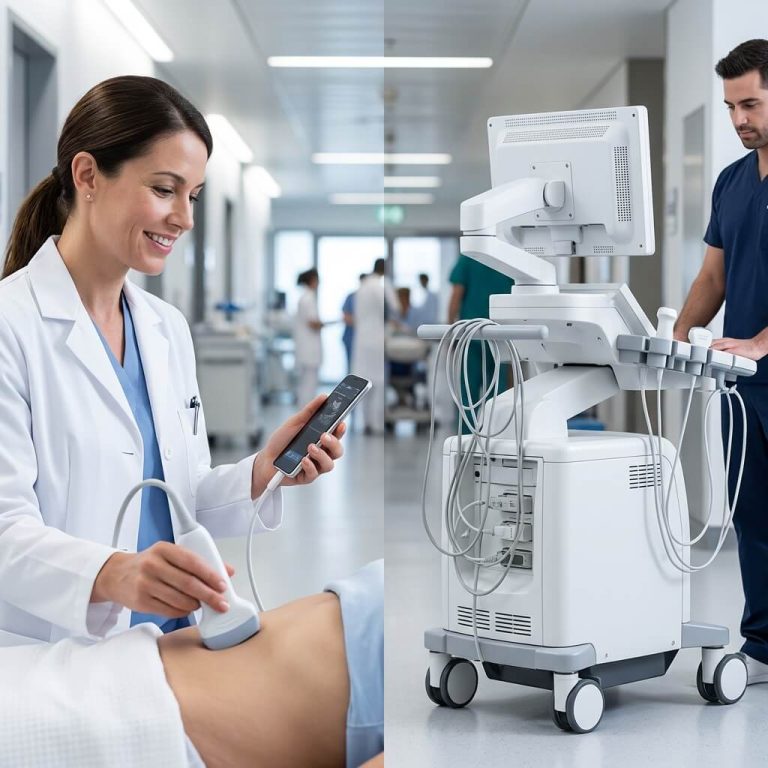
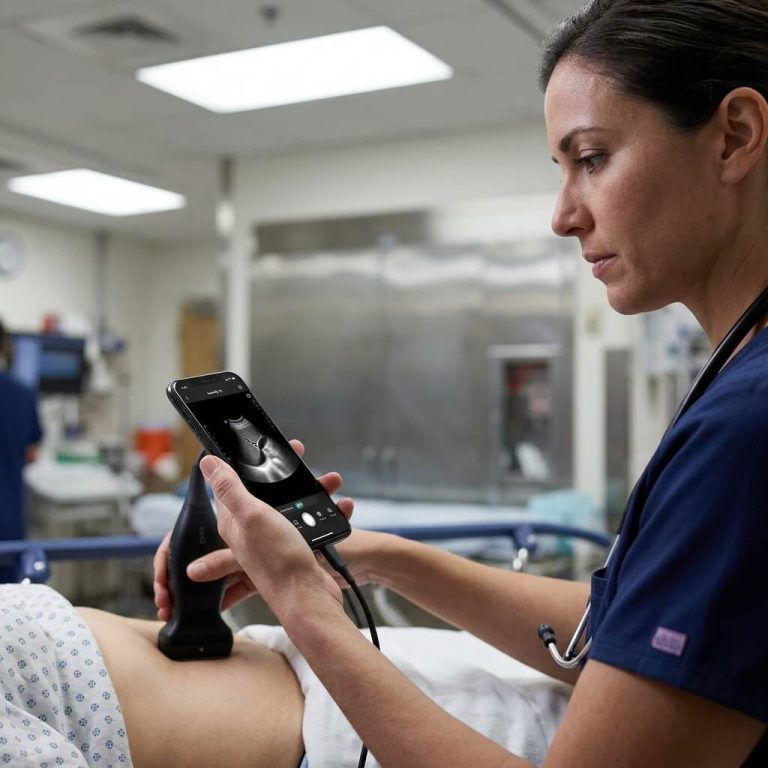
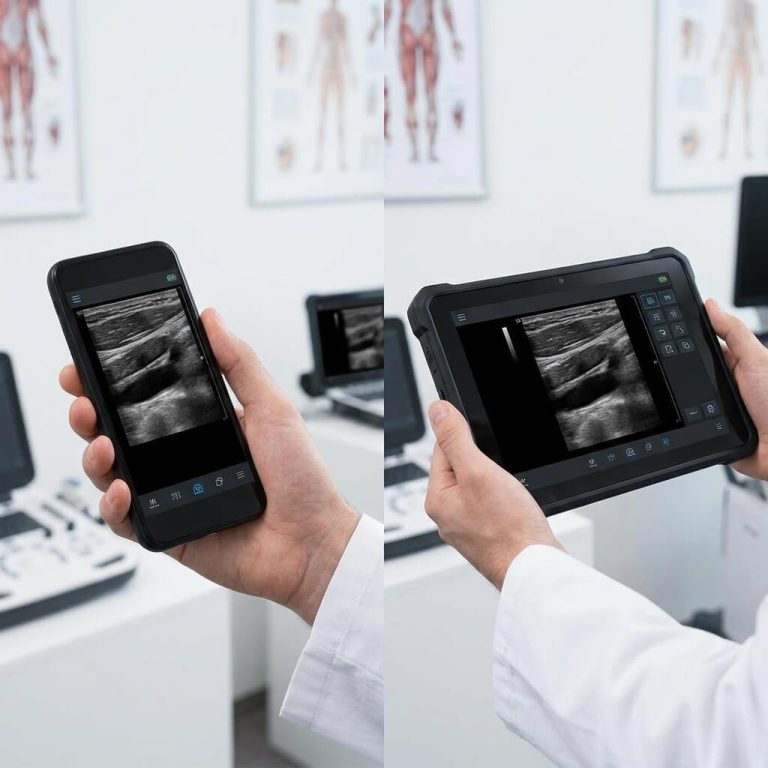
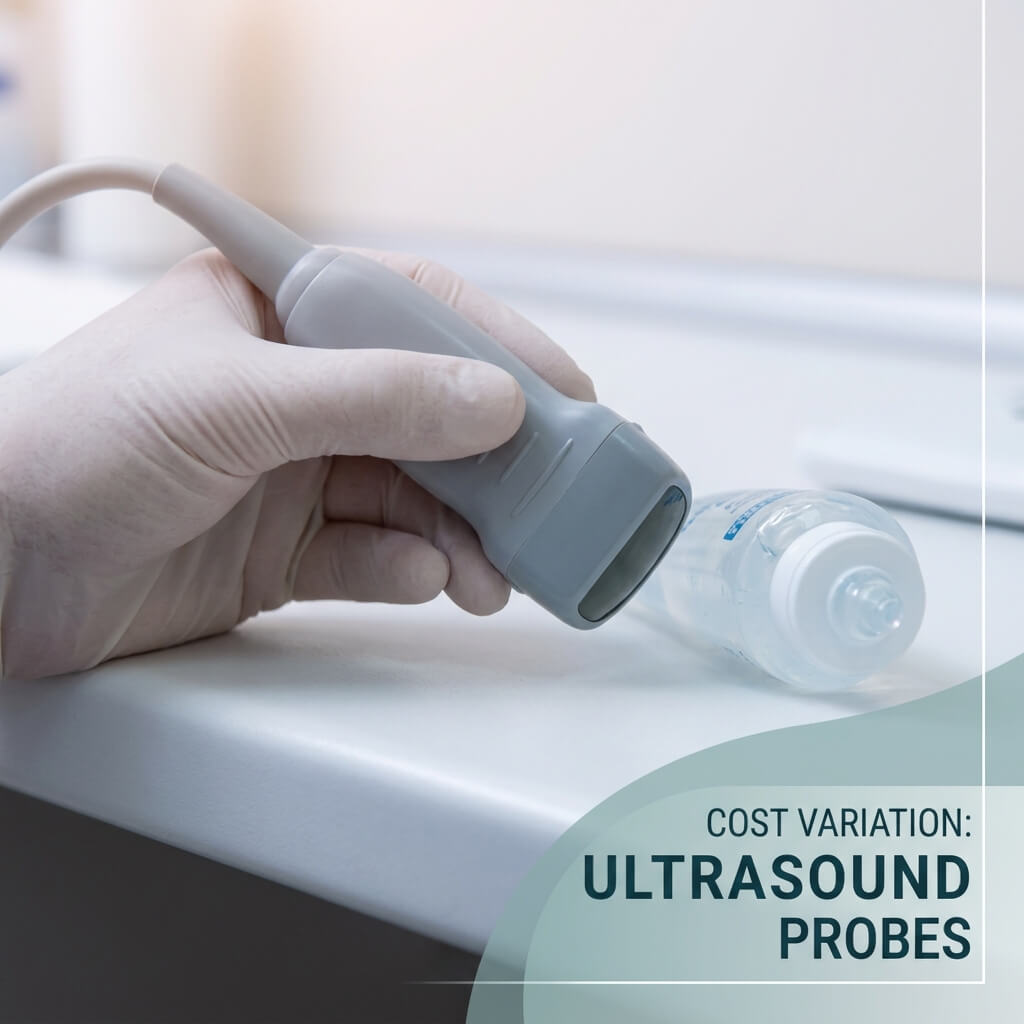
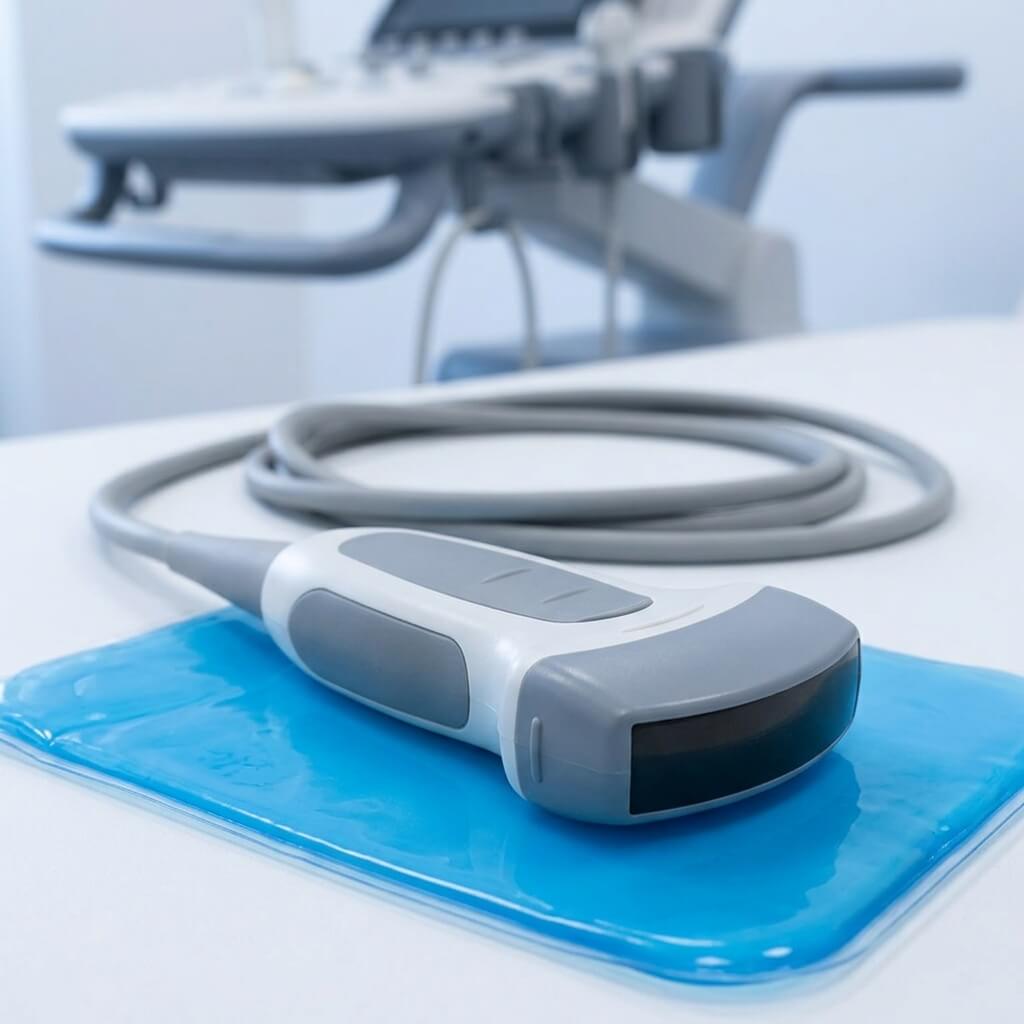
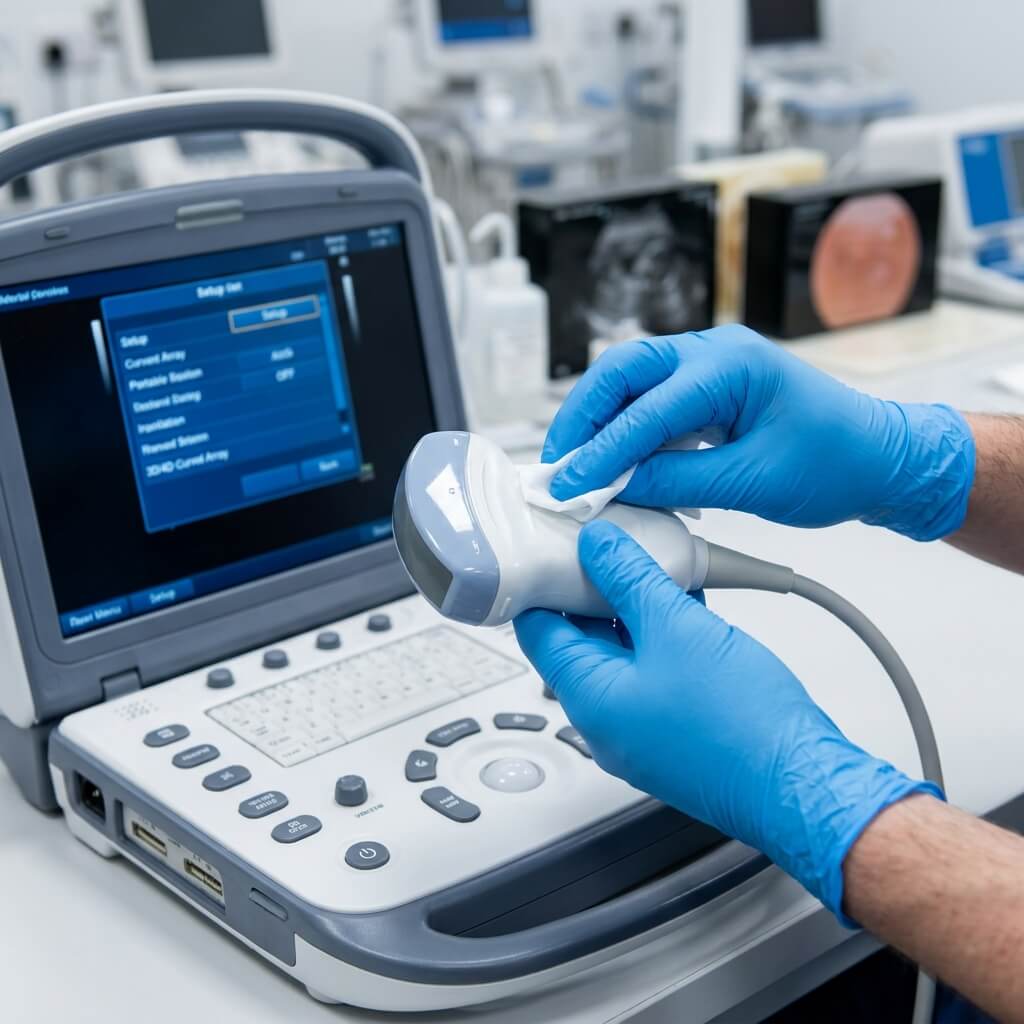
An ultrasound probe, also called an ultrasound transducer, is the key component that connects the ultrasound machine with the patient.
It performs two important functions:
- Sending ultrasound waves into the body
- Receiving returning echoes and converting them into electrical signals
The ultrasound system processes these signals and creates real-time medical images.
In simple words:
Ultrasound Machine = Computer System
Ultrasound Probe = Imaging Sensor
Without the correct ultrasound transducer, the ultrasound machine cannot produce useful diagnostic images.
Today, ultrasound probes are widely used in:
- General imaging
- Obstetrics and gynecology
- Cardiology
- Vascular examination
- Musculoskeletal imaging
- Emergency medicine
- Point-of-care ultrasound (POCUS)
For hospitals, clinics and medical equipment distributors, understanding ultrasound probe types, functions and applications is important when selecting ultrasound equipment or replacement transducers.
1. Ultrasound Probe vs Ultrasound Transducer: Are They the Same?
A common question from buyers is:
“What is the difference between an ultrasound probe and an ultrasound transducer?”
The answer is:
They usually refer to the same medical device.
The term:
- Ultrasound transducer focuses on the technical function of converting energy.
- Ultrasound probe is the commonly used clinical term.
In the medical industry, both keywords are widely used:
- Ultrasound probe
- Ultrasound transducer
- Medical ultrasound transducer
- Diagnostic ultrasound probe
- Ultrasound scanner probe
- Ultrasound imaging probe
For procurement searches, customers may use either term when looking for:
- New ultrasound probes
- Replacement probes
- Compatible transducers
- OEM ultrasound probe suppliers

2. How Does an Ultrasound Transducer Work?
Many people ask:
“How does an ultrasound probe create an image?”
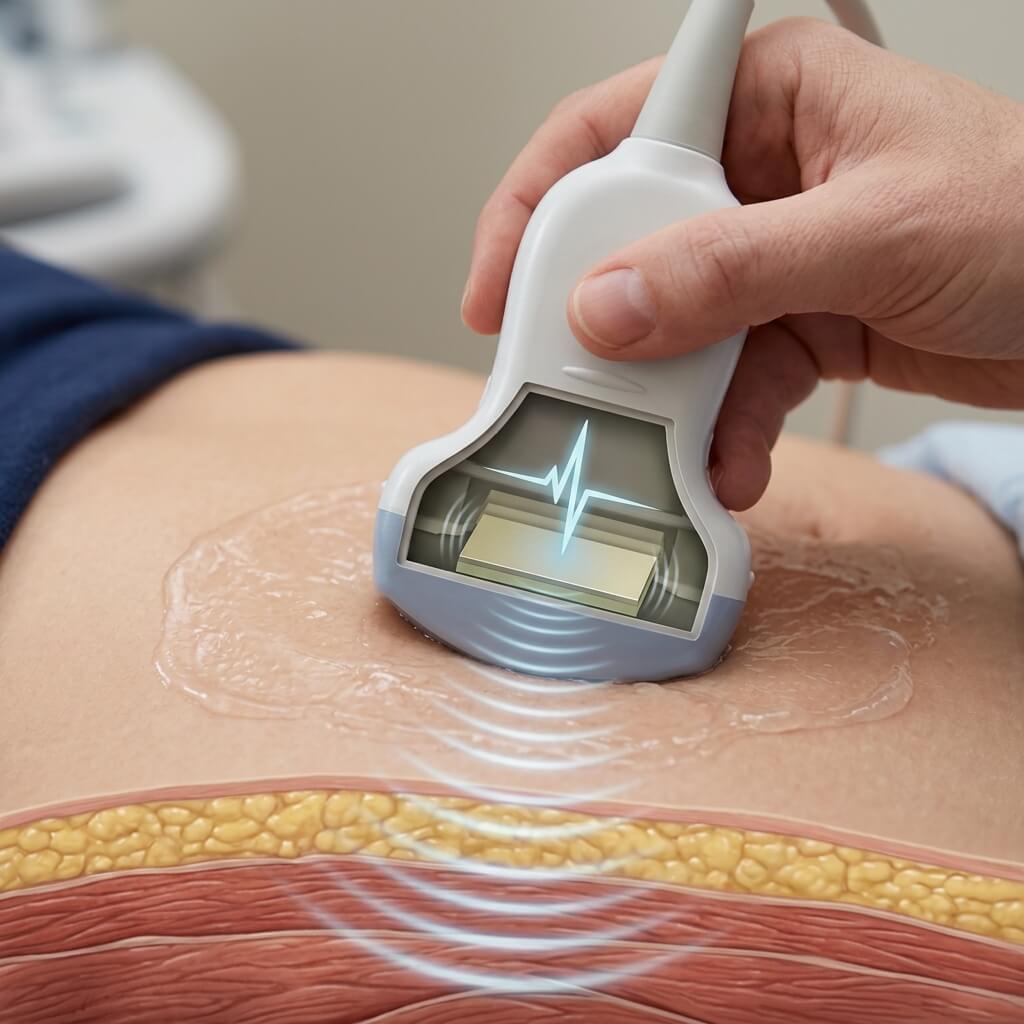
The working principle is based on the piezoelectric effect.
Inside an ultrasound transducer are special materials called piezoelectric crystals.
These crystals can:
- Convert electrical energy into sound waves
- Convert returning sound waves back into electrical signals
This energy conversion allows the ultrasound system to create images of internal body structures.
Step-by-Step Ultrasound Imaging Process
Step 1: Electrical Signal Generation
The ultrasound machine sends an electrical pulse to the probe.
Step 2: Ultrasound Wave Transmission
The piezoelectric elements inside the probe vibrate and create high-frequency sound waves.
These waves travel into the patient’s body.
Step 3: Echo Reception
When ultrasound waves meet different tissues, some waves are reflected back.
Examples:
- Tissue boundaries
- Blood vessels
- Organs
- Fluid areas
Step 4: Signal Conversion
The probe receives the returning echoes.
The piezoelectric crystals convert these echoes into electrical signals.
Step 5: Image Formation
The ultrasound machine processes these signals and creates images displayed on the monitor.
This allows doctors to view:
- Organs
- Blood flow
- Tissue structures
- Fetal development
- Muscles and tendons
3. Main Components of an Ultrasound Probe
A medical ultrasound probe is a precision device made of multiple components.
The main parts include:
1. Piezoelectric Crystal Elements
The piezoelectric element is the core component.
Its functions:
- Generate ultrasound waves
- Receive reflected echoes
The quality of these elements affects:
- Image clarity
- Sensitivity
- Resolution
2. Acoustic Matching Layer
The matching layer improves energy transfer between the probe and human tissue.
Without proper matching, much of the ultrasound energy would be reflected inside the probe.
3. Backing Material
The backing layer controls vibration from the crystal elements.
It helps improve:
- Pulse control
- Image quality
- Resolution
4. Acoustic Lens
The acoustic lens helps focus ultrasound waves.
It affects:
- Beam shape
- Imaging area
- Resolution
5. Cable and Connector
The cable transfers signals between:
- Probe
- Ultrasound system
The connector determines compatibility with different ultrasound machines.
6. Probe Housing
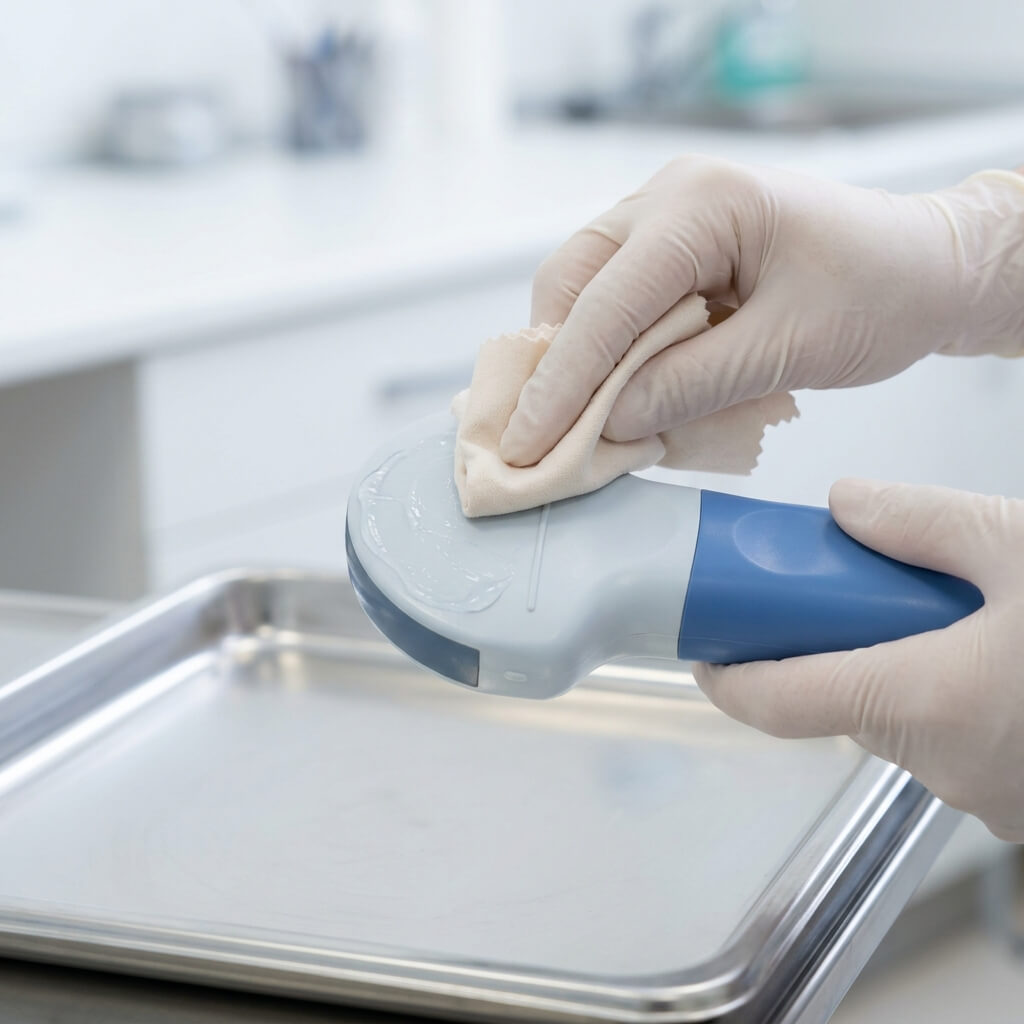
The external housing protects internal components and allows healthcare professionals to safely handle the probe.
4. Different Types of Ultrasound Probes
One of the most searched questions online is:
“What are the different types of ultrasound probes?”
Different probes are designed for different anatomical areas.
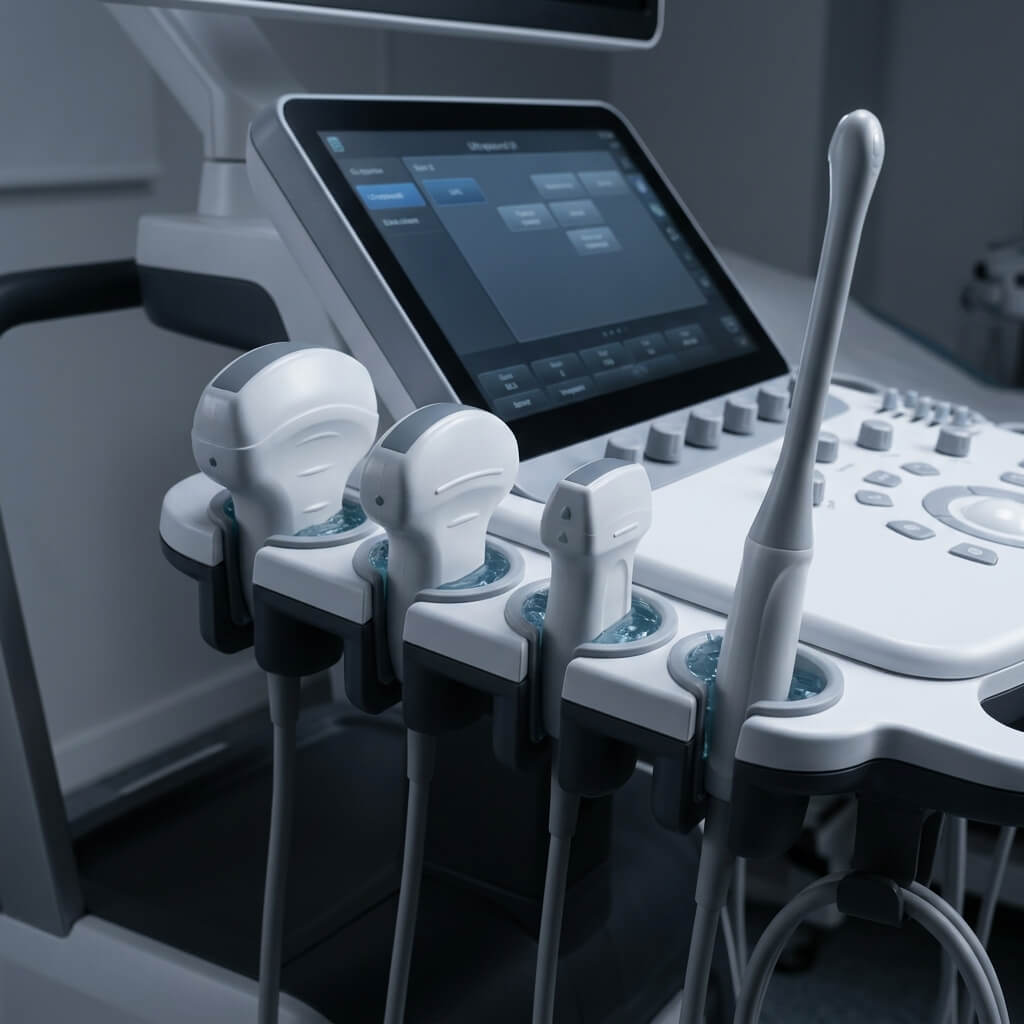
The main ultrasound transducer types include:
- Linear ultrasound probe
- Convex ultrasound probe
- Phased array ultrasound probe
- Endocavity ultrasound probe
- 3D/4D ultrasound probe
- Wireless ultrasound probe
- Doppler ultrasound probe
The choice depends on:
- Examination type
- Imaging depth
- Required resolution
- Clinical application
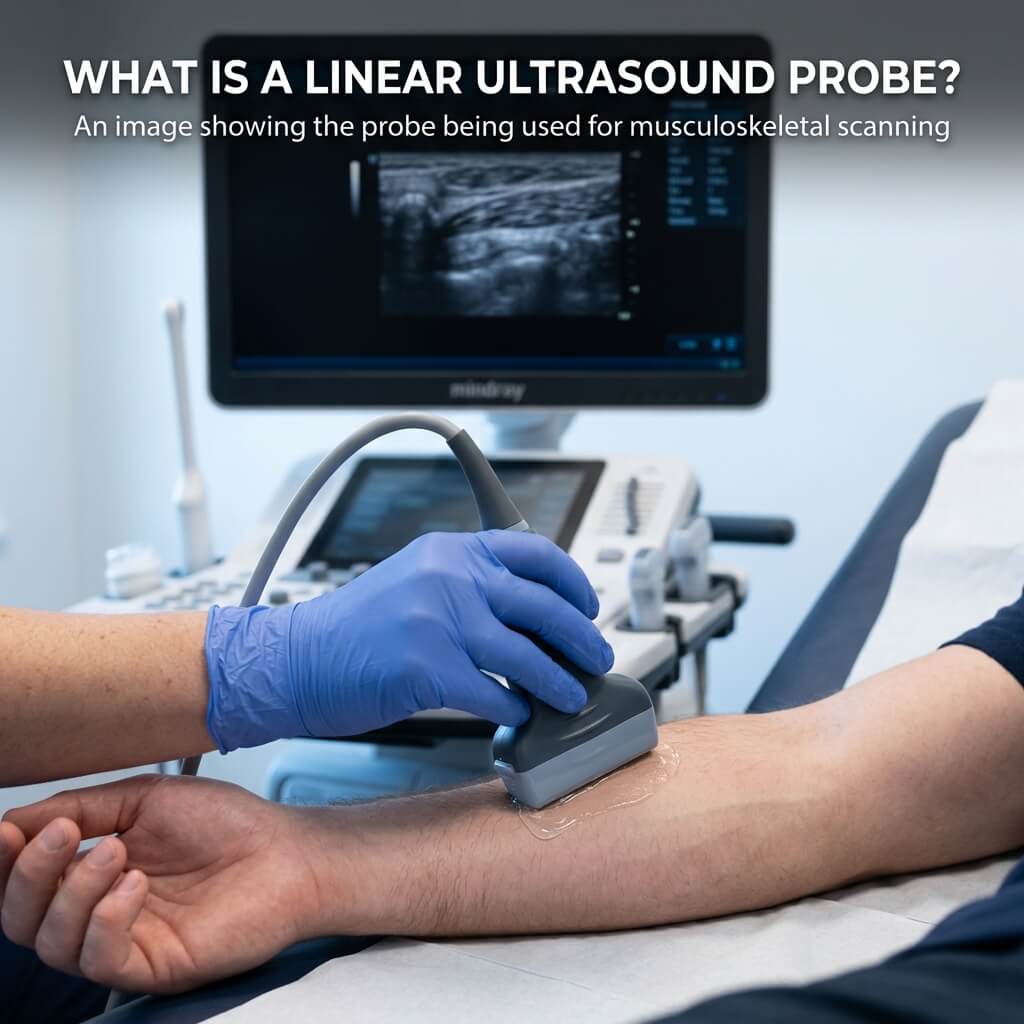
5. Linear Ultrasound Probe
What Is a Linear Probe?
A linear ultrasound probe has a flat surface and produces a rectangular image.
It usually operates at higher frequencies.
Common keywords:
- Linear ultrasound probe
- Linear array transducer
- High frequency ultrasound probe
- Vascular ultrasound probe
- High resolution ultrasound transducer
Applications of Linear Probes
Linear probes are commonly used for superficial structures:
Vascular Ultrasound
Used for:
- Veins
- Arteries
- Blood vessels
Keywords:
- Vascular ultrasound probe
- Doppler vascular transducer
Thyroid Examination
Keywords:
- Thyroid ultrasound probe
- Thyroid imaging transducer
Breast Ultrasound
Keywords:
- Breast ultrasound probe
- Breast imaging transducer
Musculoskeletal Imaging
Used for:
- Tendons
- Ligaments
- Muscles
- Joints
Keywords:
- MSK ultrasound probe
- Musculoskeletal transducer
Advantages of Linear Probes
- High image resolution
- Excellent superficial imaging
- Suitable for small structures
6. Convex Ultrasound Probe
What Is a Convex Probe?
A convex ultrasound probe, also called a curved array transducer, has a curved scanning surface.
It provides:
- Wider viewing area
- Deeper penetration
Common keywords:
- Convex ultrasound probe
- Curved array transducer
- Abdominal ultrasound probe
Applications of Convex Probes
Abdominal Ultrasound
Used for:
- Liver
- Kidney
- Gallbladder
- Abdominal organs
Pregnancy Ultrasound
Commonly used for:
- Fetal examination
- Obstetric imaging
Keywords:
- Pregnancy ultrasound probe
- OB ultrasound transducer
- Obstetric ultrasound probe
Advantages of Convex Probes
- Deep penetration
- Large scanning area
- Suitable for abdominal imaging
7. Phased Array Ultrasound Probe
What Is a Phased Array Probe?
A phased array ultrasound probe uses electronically controlled elements to create a sector-shaped image.
Common keywords:
- Phased array ultrasound probe
- Cardiac ultrasound probe
- Echo probe
- Heart ultrasound transducer
Applications
Mainly used in:
Cardiology
For:
- Echocardiography
- Heart imaging
- Cardiac assessment
Emergency Medicine
Used in:
- Point-of-care ultrasound
- Fast examination
Advantages
- Small footprint
- Works well between ribs
- Suitable for heart imaging
8. Endocavity Ultrasound Probe
What Is an Endocavity Probe?
An endocavity probe is designed for internal examinations.
Common keywords:
- Endocavity ultrasound probe
- Transvaginal ultrasound probe
- Transrectal ultrasound probe
Applications
Gynecology
Used for:
- Pelvic examination
- Pregnancy assessment
Urology
Used for:
- Prostate examination
9. 3D and 4D Ultrasound Probes
What Are 3D/4D Ultrasound Probes?
These probes collect volume data and create three-dimensional images.
Keywords:
- 3D ultrasound probe
- 4D ultrasound transducer
- Volume ultrasound probe
Applications
Commonly used in:
- Obstetrics
- Fetal imaging
- Advanced ultrasound examination
10. Wireless Ultrasound Probe
What Is a Wireless Ultrasound Probe?
A wireless ultrasound probe integrates:
- Transducer
- Processing technology
- Wireless communication
Keywords:
- Wireless ultrasound probe
- Portable ultrasound probe
- Handheld ultrasound transducer
Advantages
Wireless probes support:
- Mobile scanning
- Point-of-care diagnosis
- Emergency applications
11. Ultrasound Probe Frequency Explained
A very common buyer question:
“What does ultrasound probe frequency mean?”
Frequency affects:
- Image resolution
- Penetration depth
Generally:
High Frequency Probe
Advantages:
- Better detail
- Higher resolution
Applications:
- Vascular
- Thyroid
- MSK
Low Frequency Probe
Advantages:
- Deeper penetration
Applications:
- Abdomen
- Pregnancy
- Deep organs
The basic relationship is:
Higher Frequency = Better Resolution + Less Depth
Lower Frequency = More Depth + Lower Resolution
12. How to Choose the Right Ultrasound Probe?
Hospitals and distributors should consider several factors.
1. Clinical Application
First determine:
- What examination will be performed?
- Which department will use the probe?
Examples:
| Application | Recommended Probe |
|---|---|
| Abdomen | Convex Probe |
| Cardiology | Phased Array Probe |
| Vascular | Linear Probe |
| Pregnancy | Convex Probe |
| Thyroid | Linear Probe |
| Gynecology | Endocavity Probe |
2. Ultrasound Machine Compatibility
Important questions:
- Is the connector compatible?
- Is the software compatible?
- Is it original or replacement equipment?
Keywords:
- Compatible ultrasound probe
- Replacement ultrasound transducer
- Ultrasound probe for GE
- Ultrasound probe for Philips
- Ultrasound probe for Mindray
- Ultrasound probe for Siemens
3. Image Quality Requirements
Consider:
- Frequency range
- Resolution
- Bandwidth
- Application needs
4. Supplier Capability
For medical equipment buyers, evaluate:
- Manufacturing experience
- Quality control
- Technical support
- OEM capability
- After-sales service
13. Choosing a Reliable Ultrasound Probe Supplier
When purchasing ultrasound probes internationally, buyers should consider more than price.
A reliable supplier should provide:
- Product information
- Compatibility guidance
- Quality inspection
- Technical communication
- Export support
14. UMY Medical Equipment Co., Ltd. Ultrasound Equipment Solutions
For hospitals, clinics and distributors looking for medical equipment partners, supplier experience is an important factor.
UMY Medical Equipment Co., Ltd. is a China-based medical equipment supplier providing healthcare solutions for international markets.
The company has more than 20 years of experience in medical equipment supply and provides products and solutions covering medical imaging, laboratory equipment, operating room equipment and other healthcare fields.
UMY Medical supports international customers through:
- Medical equipment supply solutions
- OEM/ODM services
- Customized requirements
- Global project communication
For ultrasound-related projects, professional support includes understanding:
- Application requirements
- Equipment compatibility
- Market needs
- Customer configuration requirements
15. Frequently Asked Questions About Ultrasound Probes
What is an ultrasound probe?
An ultrasound probe is a transducer that sends and receives ultrasound waves to create medical images.
Are ultrasound probes and transducers the same?
Yes. In medical imaging, these terms are commonly used for the same device.
Which ultrasound probe is used for pregnancy?
A convex ultrasound probe is commonly used for abdominal pregnancy examinations.
Which ultrasound probe is used for the heart?
A phased array ultrasound probe is commonly used for cardiac imaging.
Which probe is best for vascular ultrasound?
A high-frequency linear ultrasound probe is commonly used for vascular imaging.
How long does an ultrasound probe last?
The lifespan depends on:
- Usage frequency
- Cleaning method
- Storage conditions
- Maintenance
Can ultrasound probes be replaced?
Yes. Hospitals can purchase replacement probes or compatible transducers depending on ultrasound system requirements.
Conclusion
The ultrasound probe is one of the most important components of any ultrasound imaging system.
Understanding:
- Ultrasound transducer technology
- Probe types
- Frequency selection
- Clinical applications
- Compatibility requirements
helps hospitals and medical equipment buyers make better purchasing decisions.
Different probes serve different purposes:
- Linear probes for superficial imaging
- Convex probes for abdominal and pregnancy imaging
- Phased array probes for cardiac applications
- Endocavity probes for internal examinations
- 3D/4D probes for volume imaging
For healthcare organizations choosing ultrasound equipment, selecting the correct transducer is essential for building an efficient diagnostic workflow.