Main Types of Digital X-Ray Machines
Not every healthcare facility requires the same imaging solution. Selecting the appropriate type of digital X-ray system depends on clinical workload, available space, patient demographics, and budget.
Below are the most common categories.
Portable X-Ray Machine
Portable X-ray machines are compact, lightweight systems designed for easy transportation.
Typical applications include:
- Home healthcare
- Disaster relief
- Military medicine
- Sports events
- Rural healthcare
- Ambulance services
- Field hospitals
Advantages:
- Lightweight design
- Battery-powered operation
- Easy transportation
- Flexible positioning
- Lower installation cost
Limitations:
- Lower generator power
- Smaller patient throughput
- Limited advanced positioning features
Portable systems are ideal where mobility is more important than examination volume.
Mobile Digital Radiography System
A mobile DR system is commonly used inside hospitals.
Unlike portable units, mobile systems feature larger generators, integrated workstations, and wireless flat panel detectors.
They are frequently used in:
- ICU
- NICU
- Emergency departments
- Isolation wards
- Operating rooms
- COVID-19 screening
- Bedside imaging
Benefits include:
- Rapid bedside diagnosis
- Reduced patient transport
- Faster emergency workflow
- Improved infection control
- High image quality
Many hospitals now consider mobile DR systems essential equipment for critical care.
Floor-Mounted X-Ray Machine
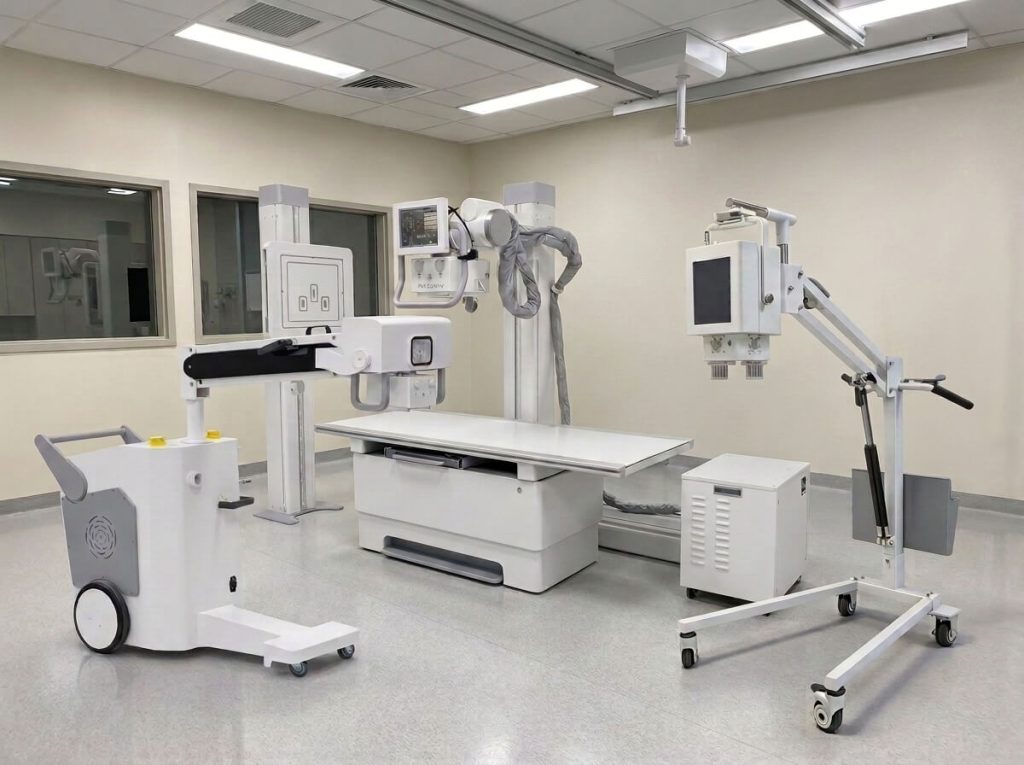
Floor-mounted systems remain one of the most popular solutions for general radiography.
They typically include:
- X-ray tube
- Tube stand
- Patient table
- Wall bucky stand
- High-frequency generator
- Flat panel detector
- Acquisition workstation
They are suitable for:
- Community hospitals
- Orthopedic clinics
- Imaging centers
- General hospitals
- Outpatient facilities
Advantages include excellent cost-effectiveness, stable positioning, and relatively simple installation.
Ceiling-Mounted Digital Radiography System
Large hospitals often prefer ceiling-mounted systems because they provide maximum positioning flexibility.
These systems allow smooth movement of the X-ray tube in multiple directions, making examinations faster and more comfortable for both technologists and patients.
Ceiling-mounted systems are ideal for:
- High-volume radiology departments
- Trauma centers
- Teaching hospitals
- Comprehensive medical centers
Although they require higher initial investment, they often deliver greater efficiency over the equipment’s lifetime.
U-Arm Digital Radiography System
The U-arm DR system integrates the X-ray tube and detector into a synchronized U-shaped structure.
This design simplifies patient positioning while reducing examination time.
Typical applications include:
- Routine chest examinations
- Orthopedic imaging
- Health screening centers
- Outpatient imaging
- General radiography departments
Many healthcare providers appreciate U-arm systems for their intuitive workflow and compact footprint, especially where installation space is limited.
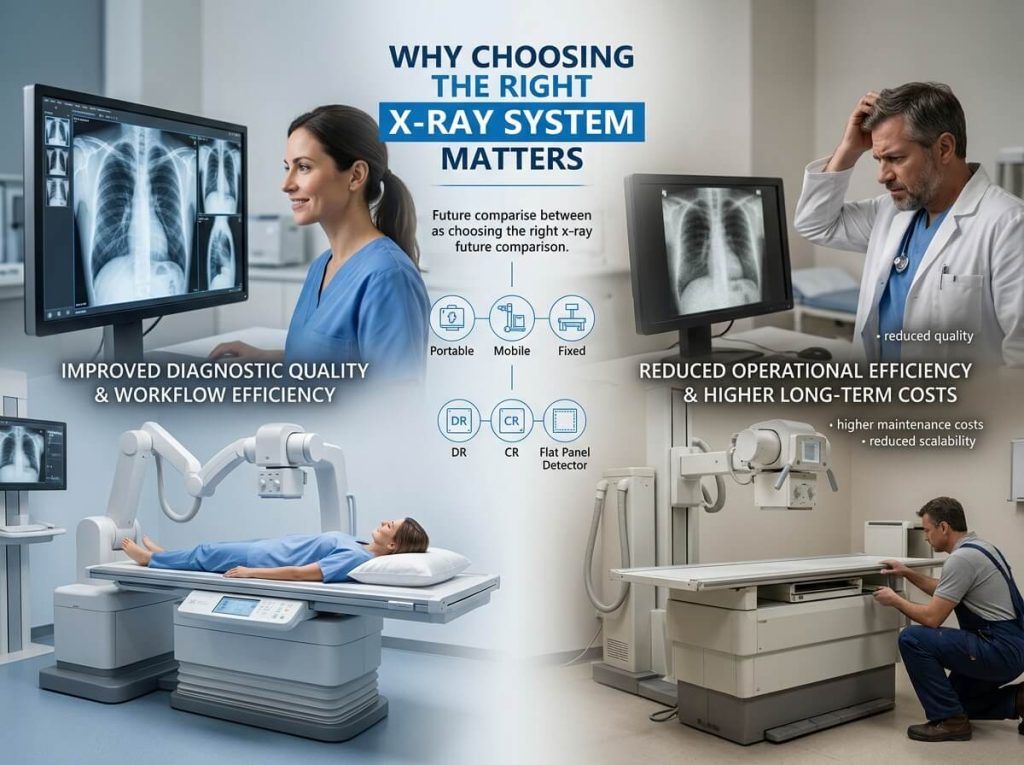
Why Choosing the Right X-Ray System Matters
Selecting the right digital X-ray machine is not only about today’s clinical needs—it is an investment that will influence diagnostic quality, workflow efficiency, maintenance costs, and future scalability for many years.
A system that matches your patient volume, examination types, available space, and long-term development plan can improve operational efficiency while delivering better outcomes for both clinicians and patients.
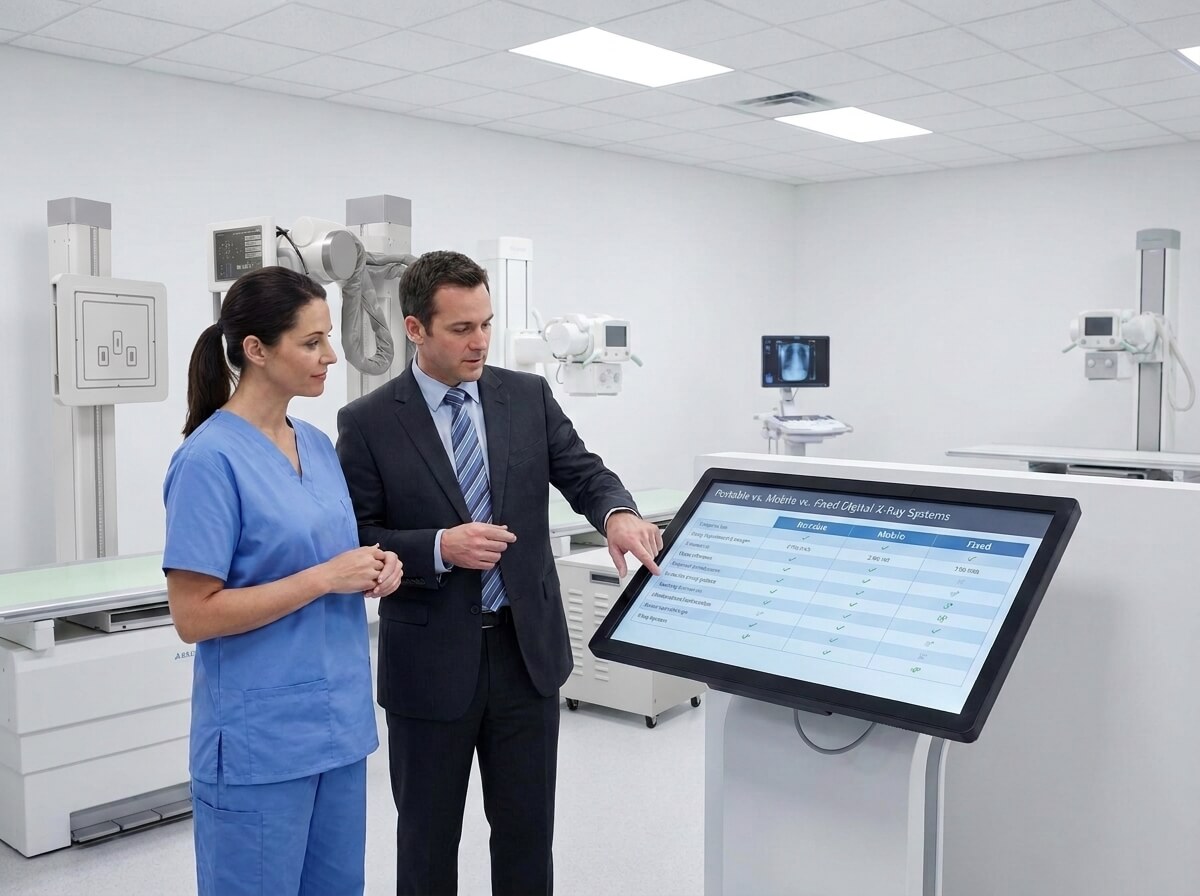
In the next section of this guide, we will compare Portable vs. Mobile vs. Fixed Digital X-Ray Systems, explain DR vs. CR technology, discuss Flat Panel Detector selection, and provide practical recommendations to help buyers choose the most suitable configuration for different healthcare environments.