Introduction: The Era of Wireless Gastrointestinal Imaging
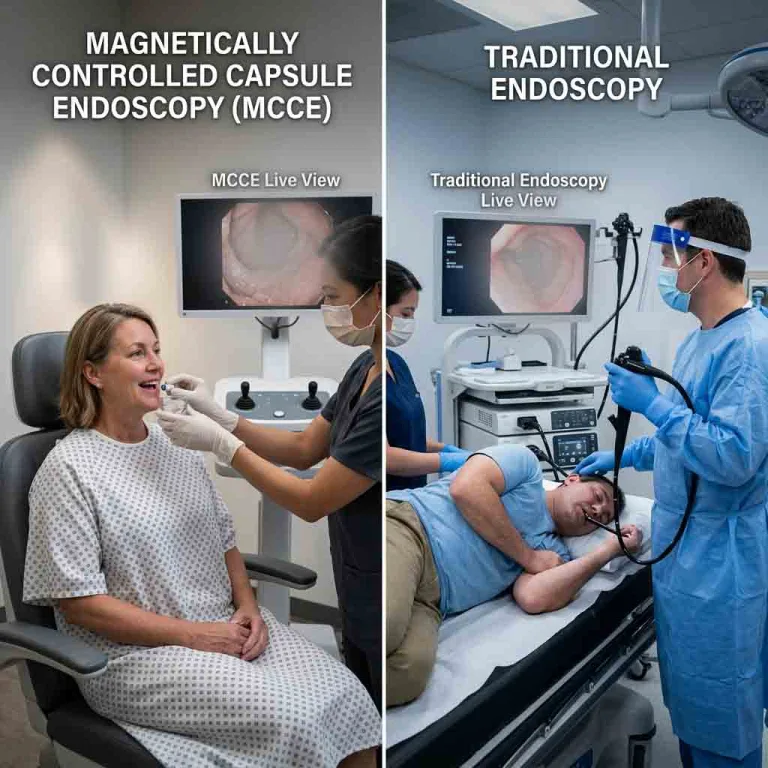
For decades, diagnosing gastrointestinal bleeding, polyps, and inflammatory bowel diseases required invasive procedures like traditional gastroscopy and colonoscopy. While effective, these procedures often cause patient discomfort, require clinical sedation, and struggle to reach the deep segments of the small intestine (small bowel).
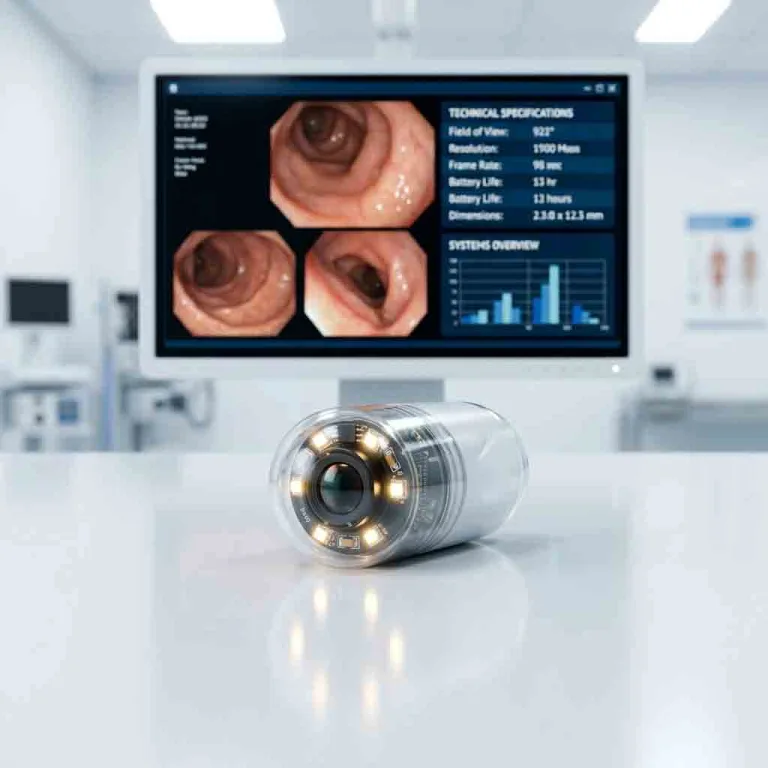
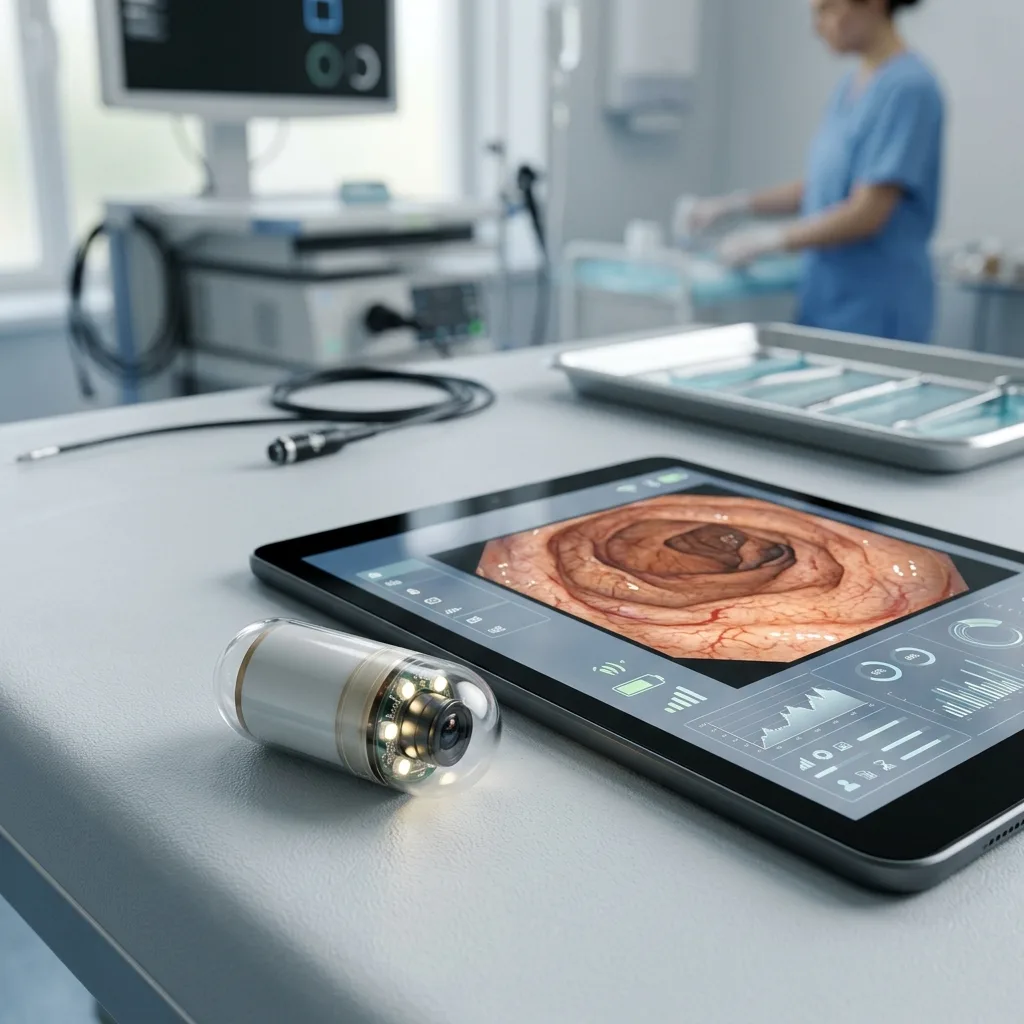
The invention of Wireless Capsule Endoscopy (WCE) revolutionized GI diagnostics. By packaging a high-resolution camera, lighting system, and wireless transmitter into a swallowable pill—typically measuring around 11 mm by 26 mm—doctors can now perform a painless, non-invasive visual examination of the entire digestive tract.
For hospital procurement officers, medical equipment distributors, and clinic directors, choosing the right medical endoscopy capsule system is a critical investment. This ultimate buyer’s guide breaks down the core hardware components, optical specifications, and system architectures you need to understand to make an informed purchasing decision.
2. Anatomy of a Medical Endoscopy Capsule
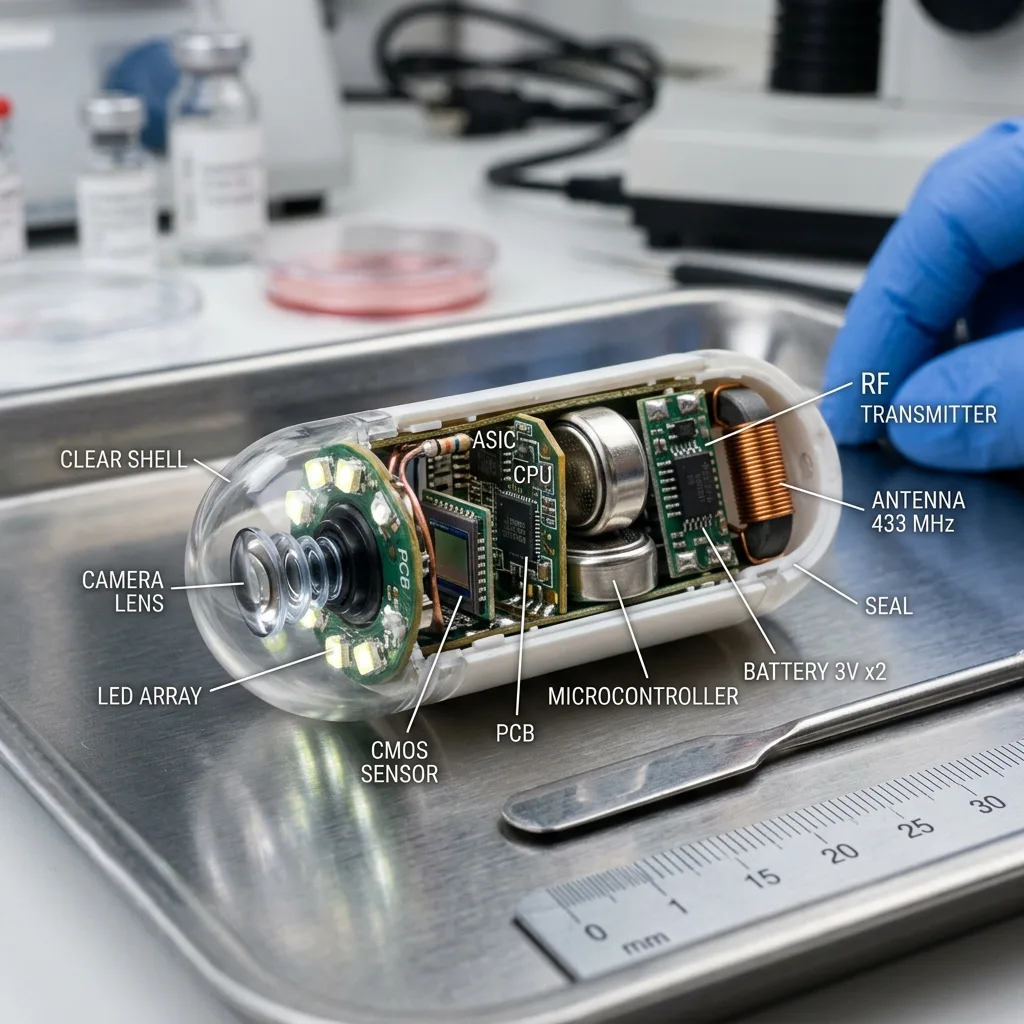
Despite its tiny size, a medical endoscopy capsule is a marvel of micro-engineering. To evaluate a supplier’s product, buyers must understand what is inside the pill.
Plaintext
[ Internal Architecture of a Capsule Endoscope ]
------------------------------------------------
1. Optical Dome       --> Scratch-resistant, anti-reflective biocompatible polymer
2. LED Array          --> 4 to 6 white LEDs for uniform cavity illumination
3. Optical Lens       --> Ultra-wide micro-lens (140 to 160 degree FOV)
4. Image Sensor       --> High-resolution CMOS digital sensor
5. Processing Chip    --> Compresses images and manages adaptive frame rates
6. RF Antenna         --> Transmits data wirelessly to the patient's recorder belt
7. Micro Battery      --> Silver-oxide or Lithium button cells (12+ hours life)
------------------------------------------------
The Optical Dome & Biocompatibility
The outer shell must be made of medical-grade, acid-resistant polycarbonate or similar biocompatible plastics. It must withstand the highly acidic environment of the stomach (pH 1.5 to 3.5) without degrading, while the optical dome must remain crystal clear and resist scratching as it passes through the intestines.
CMOS Image Sensors
Modern pill cameras utilize CMOS (Complementary Metal-Oxide-Semiconductor) sensors rather than older CCD sensors. CMOS technology draws significantly less power, extending the capsule’s battery life, while delivering crisp, high-definition tissue images that make it easier for gastroenterologists to spot micro-lesions and mucosal bleeding.
White LED Illumination
The GI tract is completely dark. Capsules rely on a ring of micro-LEDs surrounding the lens. High-quality capsules use smart illumination algorithms that adjust LED brightness based on the proximity of the intestinal wall, preventing image overexposure (glare) or underexposure (dark spots).
3. Key Technical Specifications to Evaluate
When comparing spec sheets from different endoscopy capsule manufacturers, focus on these four performance pillars:
A. Battery Life & Operating Time
The journey through the human digestive system takes time. Gastric emptying takes 2 to 4 hours, small bowel transit takes 3 to 6 hours, and colonic transit can take 10 to 40 hours.
-
Standard Requirement: A reliable capsule must provide at least 12 to 16 hours of continuous continuous operating life to guarantee imaging of the entire small bowel and a significant portion of the colon before the battery dies.
B. Frame Rate (Frames Per Second – FPS)
The capsule captures thousands of still images as it moves.
-
Fixed Frame Rate: Older models capture a steady 2 fps, resulting in roughly 50,000 images over an 8-hour period.
-
Adaptive Frame Rate (Smart Capture): Premium capsules feature adaptive frame rates. When the capsule is moving slowly, it captures 1 to 2 fps to save battery. When peristalsis (gut movement) speeds up, the capsule automatically accelerates capture to 4 to 6 fps, ensuring no pathology is missed during rapid transit.
C. Field of View (FOV)
A narrow FOV creates blind spots behind tissue folds.
-
Optimal FOV: Look for an optical field of view between 140 degrees and 160 degrees. A wider angle allows the camera to see more of the intestinal wall lining at once, increasing the diagnostic yield for hidden polyps and flat lesions.
D. Depth of Field (DOF)
The Depth of Field determines the focus range. Because the intestinal wall constantly rubs against the optical dome, the capsule must be able to focus on objects very close to the lens (e.g., 0 mm to 30 mm). High-quality optics ensure the mucosa remains in sharp focus whether the bowel is collapsed or fully distended.
4. Single-Lens vs. Dual-Lens Systems
Medical endoscopy capsules are generally categorized by their lens configuration. The choice depends entirely on the targeted clinical application.
| Feature / Spec | Single-Lens Endoscopy Capsule | Dual-Lens Endoscopy Capsule |
| Camera Configuration | One camera pointing forward | Two cameras (Forward & Backward) |
| Primary Clinical Use | Small Bowel Screening | Colon, Esophagus, & Pan-Enteric |
| Field of View (Total) | ~140 to 160 degrees | ~280 to 320 degrees combined |
| Frame Rate | 2 to 6 fps | 4 to 35 fps (depending on model) |
| Battery Draw | Standard | High (Requires advanced power management) |
| Diagnostic Focus | Crohn’s disease, Obscure GI bleeding | Colon polyps, colorectal cancer screening |
Buyer’s Advice: For most gastroenterology clinics addressing obscure GI bleeding or small intestine disorders, the Single-Lens Small Bowel Capsule is the gold standard and most cost-effective consumable. For facilities launching non-invasive colon cancer screening programs, the Dual-Lens Capsule is required to see behind the complex anatomical folds (haustra) of the large intestine.
5. The Complete Diagnostic Ecosystem: More Than Just a Pill
A medical endoscopy capsule cannot function alone. When a hospital or distributor purchases a system, they are investing in a three-part diagnostic ecosystem.
Part 1: The Consumable Capsule
The single-use, sterile packaged pill camera that the patient swallows. This is the recurring consumable cost for the hospital.
Part 2: The Data Recorder & Sensor Belt
Because the capsule does not have the storage capacity to hold 50,000+ HD images, it transmits data via Radio Frequency (RF) or Human Body Communication (HBC) to a receiver.
-
The Sensor Belt: A comfortable, wearable belt with integrated antenna arrays worn around the patient’s abdomen.
-
The Data Recorder: A lightweight, battery-powered device (similar in size to a smartphone) connected to the belt. It stores the incoming images on an SD card or internal memory. Modern recorders feature LCD screens allowing nurses to verify the capsule’s real-time position in the stomach before sending the patient home.
Part 3: The Clinical Workstation Software
After the patient returns the data recorder, the data is downloaded to a hospital computer. The workstation software compiles the thousands of still images into a seamless video.
-
Crucial Software Features: High-quality software includes color enhancement for blood detection, timeline navigation, and AI-assisted lesion flagging to help doctors reduce their reading time from hours down to minutes. (Note: We will dive deeper into AI software in Post 4 of this series).
6. Sourcing Quality: Why UMY Medical Equipment Co Ltd Stands Out
Procuring ingestible medical devices requires strict adherence to international quality and safety standards. Defective capsules can lead to failed tests, lost data, or worst-case scenarios, battery leakage inside the patient.
When B2B buyers and hospital networks source from UMY Medical Equipment Co Ltd, they secure a direct-factory partnership built on uncompromising medical-grade engineering.
-
ISO 13485 & CE Certification: UMY Medical operates under strict international medical device manufacturing protocols. Every capsule is produced in a certified cleanroom environment and undergoes rigorous quality assurance testing.
-
Sterile & Safe Packaging: All endoscopy capsules are individually sealed and sterilized using Ethylene Oxide (ETO), guaranteeing zero cross-contamination risk—a major advantage over traditional reusable endoscopes.
-
Advanced Optical Engineering: UMY Medical capsules utilize premium CMOS sensors and adaptive LED illumination, providing gastroenterologists with pristine, glare-free mucosal imaging.
-
Factory-Direct Value: By eliminating third-party trading markups, UMY Medical provides highly competitive pricing on both the capital equipment (recorders and workstations) and the recurring capsule consumables, maximizing the Return on Investment (ROI) for medical facilities.
7. Frequently Asked Questions (FAQ) for Buyers and Clinics
Q1: How large is a standard medical endoscopy capsule?
Most small bowel endoscopy capsules measure approximately 11 mm in diameter and 26 mm in length. They are similar in size to a large vitamin pill and are easily swallowed by most adults with a glass of water.
Q2: Are endoscopy capsules reusable?
No. Medical endoscopy capsules are strictly single-use, disposable medical devices. Once swallowed, they travel naturally through the digestive tract and are excreted in the patient’s stool. They are flushed away safely, eliminating any risk of patient-to-patient cross-infection.
Q3: Does the wireless transmission interfere with pacemakers?
While modern capsules use low-power RF bands (usually in the 400 MHz range or ultra-wideband), patients with cardiac pacemakers or implanted defibrillators should consult their cardiologist. Most modern capsule systems are tested for electromagnetic compatibility (EMC), but clinical precautions are still advised.
Q4: What happens if the capsule gets stuck?
Capsule retention is rare (occurring in roughly 1 to 2 percent of cases), usually caused by strictures, tumors, or severe Crohn’s disease narrowing the bowel. If retention is suspected, doctors can locate the capsule via a standard X-ray. It can then be retrieved via device-assisted enteroscopy or during the surgical treatment of the underlying stricture.
Q5: How can my hospital or distribution company procure UMY Medical capsules?
Healthcare procurement officers, clinic directors, and medical equipment distributors can contact UMY Medical Equipment Co Ltd directly to request product datasheets, clinical sample images, and wholesale pricing for complete capsule endoscopy systems.