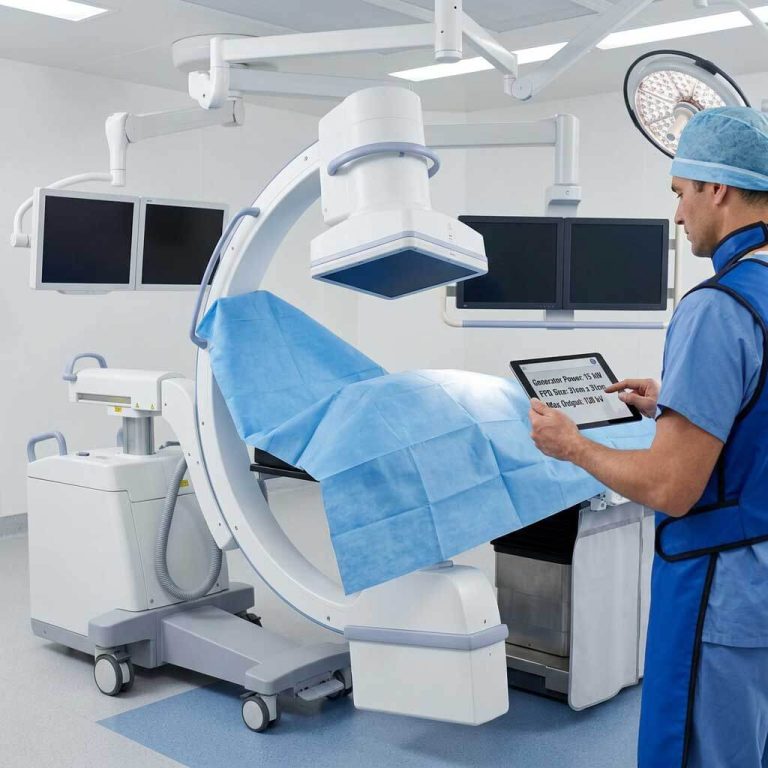
What Is Surgical Navigation?
Surgical navigation is a form of computer-assisted surgery that provides surgeons with digital guidance during a procedure.
The basic idea is relatively easy to understand.
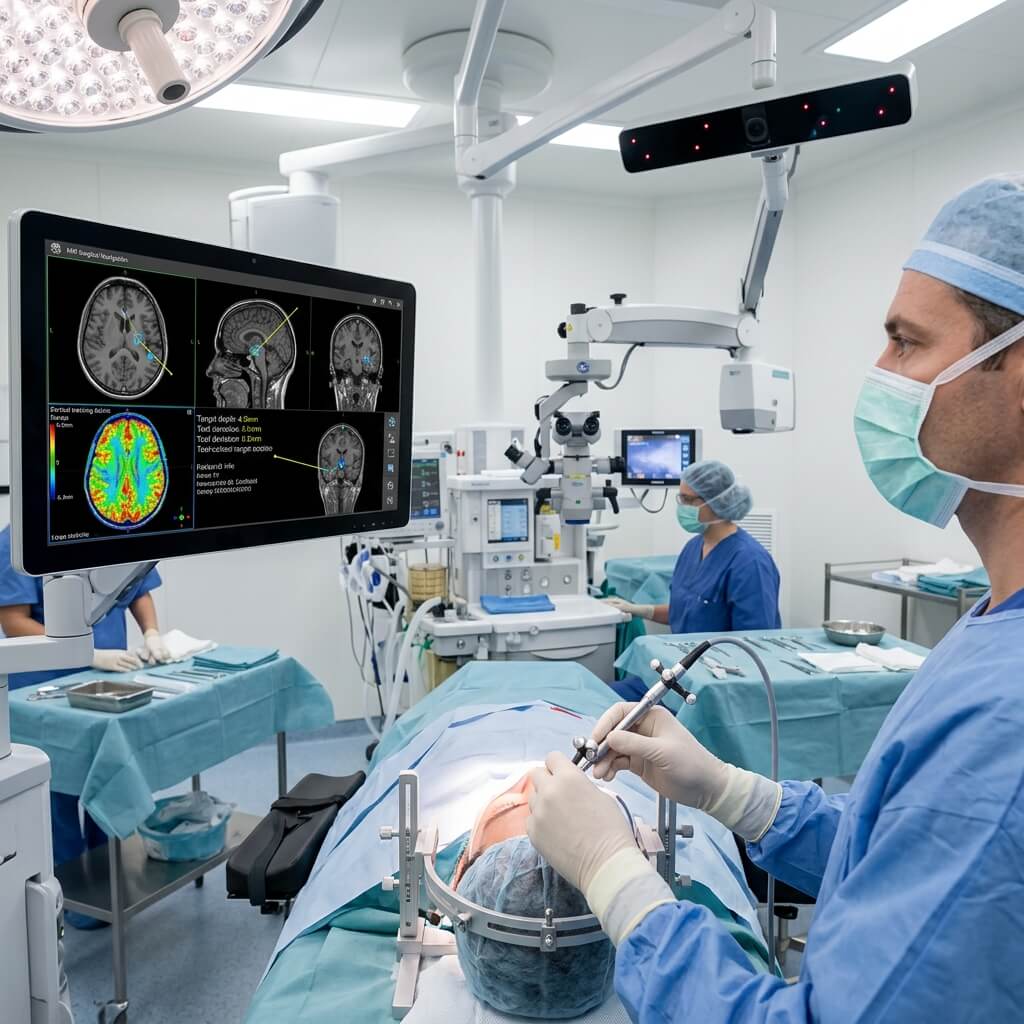
Before or during surgery, medical images such as CT or MRI scans can be processed to create a digital representation of the patient’s anatomy. A navigation system then tracks the position and orientation of selected surgical instruments.
The software connects these two pieces of information:
Patient anatomy + Medical images + Instrument position = Surgical navigation
The surgeon can then see where a tracked instrument is located in relation to anatomical structures displayed on the navigation monitor.
This is why the technology is also known as:
- Image-guided surgery
- Image-guided navigation
- Computer-assisted surgery
- Computer-assisted surgical navigation
- Surgical guidance system
- Intraoperative navigation
- Surgical tracking system
- Navigation surgery system
- Medical navigation system
- 3D surgical navigation
- Image-guided surgical system
The exact functionality depends on the specific navigation platform, software and instruments.
2. How Does a Surgical Navigation System Work?
Although different systems use different technologies, the overall workflow usually follows several basic steps.
Step 1: Medical Imaging
The process starts with medical images.
Depending on the system and procedure, image data may come from:
- CT
- MRI
- 3D imaging
- Fluoroscopy
- Intraoperative imaging
- Other compatible imaging sources
The images provide a digital representation of the patient’s anatomy.
Step 2: Image Processing
Navigation software processes the image dataset.
It can allow the user to:
- View images
- Create 3D models
- Select anatomical structures
- Plan trajectories
- Measure structures
- Identify targets
- Prepare the navigation dataset
Some systems may also provide segmentation or image-fusion functions.
Step 3: Patient Registration
The navigation system needs to establish the relationship between the patient’s actual anatomy and the corresponding digital images.
This process is called registration.
The system uses anatomical landmarks, surface information, fiducial markers or another registration method depending on its design.
Step 4: Tracking
The system tracks a reference device and selected surgical instruments.
Tracking may use:
- Optical tracking
- Infrared tracking
- Electromagnetic tracking
- Other tracking technologies
Optical systems generally require a suitable line of sight between the tracking camera and tracked markers, while electromagnetic systems use a generated electromagnetic field and do not rely on the same direct optical line of sight. Each technology has its own environmental and workflow considerations.
Step 5: Navigation Display
The software combines the tracking information with the registered patient images.
The surgeon can then see the tracked instrument’s location and orientation in relation to the selected anatomy.
This is the fundamental concept behind image-guided surgical navigation.
3. What Are the Main Components of a Surgical Navigation System?
A surgical navigation system is not simply a computer and a camera.
It is a combination of hardware, software, imaging information and surgical accessories.
Common components include:
| Component | Main Function |
|---|---|
| Navigation workstation | Runs navigation software and manages image data |
| Tracking camera or sensor | Detects instrument position |
| Navigation software | Processes images and tracking information |
| Surgical instruments | Provide tracked tool location |
| Patient reference frame | Establishes a reference coordinate system |
| Registration tools | Match real anatomy with image data |
| Monitor/display | Shows images and navigation information |
| Image data | Provides anatomical information |
| Accessories | Support different procedures and workflows |
The exact configuration depends on the intended application.
FDA documentation for optical navigation systems describes combinations including a camera array, computer workstation, application software and probes.
4. Navigation Workstation
The navigation workstation is the computer-based center of the system.
It manages several functions, which may include:
- Image import
- Image viewing
- 3D reconstruction
- Patient data
- Registration
- Instrument tracking
- Surgical planning
- Image display
- Measurement
- Data storage
- Navigation controls
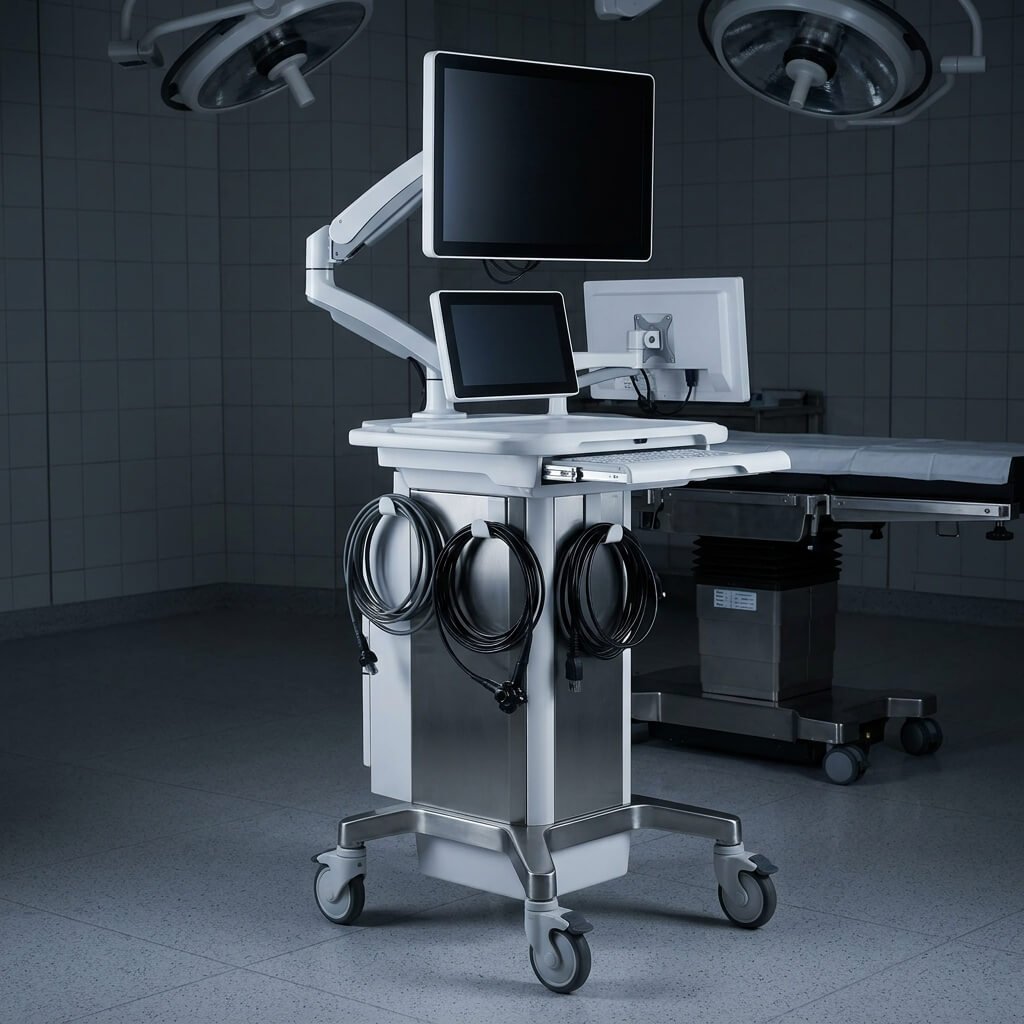
A workstation may be integrated into a navigation cart or configured as part of a larger operating-room system.
The user interface is important because surgical navigation involves multiple pieces of information that need to be displayed clearly.
5. Surgical Navigation Software
Software is one of the most important parts of the system.
A navigation platform may provide functions such as:
2D image viewing
Users can review individual CT or MRI slices.
3D visualization
Cross-sectional images can be reconstructed into a three-dimensional representation.
Image registration
The digital image dataset can be aligned with the patient’s anatomy.
Instrument tracking
The system displays the location of a tracked instrument.
Trajectory planning
Some platforms allow the user to plan a target or instrument path.
Measurement
Users may measure distances, angles or anatomical relationships where supported.
Image fusion
Some systems can combine compatible image datasets.
Segmentation
Selected anatomical structures can be highlighted or separated within the digital model.
The exact software functions should always be confirmed against the manufacturer’s specifications because navigation capabilities vary substantially between systems.
6. What Is Surgical Tracking?
Surgical tracking is the process of determining the position and orientation of a tracked object during a procedure.
The tracked object can include:
- Surgical probe
- Pointer
- Instrument
- Reference frame
- Surgical tool
- Catheter or other compatible device
The navigation computer receives the tracking information and displays it in relation to the registered patient images.
This is what makes navigation different from simply looking at a CT scan.
A CT scan shows anatomy.
A navigation system can additionally show:
Where the tracked instrument is relative to that anatomy.
7. Optical Surgical Navigation
Optical surgical navigation uses cameras to identify markers or tracking patterns attached to surgical instruments and reference devices.
An optical tracking system can determine the position and orientation of these objects from the camera information.
Common related search terms include:
- Optical surgical navigation
- Optical navigation system
- Optical tracking system
- Optical tracking surgery
- Infrared surgical navigation
- Infrared tracking system
- Surgical navigation camera
- Navigation tracking camera
- Optical surgical tracker
- Infrared navigation system
- Optical instrument tracking
Optical tracking has been widely used in computer-assisted surgery. Its main practical consideration is maintaining an appropriate line of sight between the camera and tracked markers.
The detailed comparison between optical and electromagnetic navigation is covered separately in Post 2: Types of Surgical Navigation Systems.
8. Electromagnetic Surgical Navigation
Electromagnetic navigation uses an electromagnetic field and sensors to determine the location of compatible instruments.
Related terms include:
- Electromagnetic surgical navigation
- Electromagnetic tracking system
- EM navigation system
- Electromagnetic navigation system
- EM surgical navigation
- Electromagnetic instrument tracking
- Surgical electromagnetic tracking
One potential advantage is that electromagnetic tracking does not depend on the same direct optical line-of-sight requirement found in optical systems.
However, electromagnetic tracking can be influenced by certain metallic or ferromagnetic objects in the working environment, so system-specific operating conditions need to be considered.
9. What Is a Patient Reference Frame?
A patient reference frame is used to establish a stable reference point for navigation.
Depending on the system, the reference may be attached to:
- The skull
- Vertebrae
- Bone
- A fixation device
- Another appropriate anatomical structure
The purpose is to allow the navigation system to understand the position of the patient’s anatomy within its coordinate system.
A reference device is particularly important because patient movement relative to the navigation dataset can affect navigation accuracy.
Research describing surgical navigation identifies the tracking system, reference frame and tracked probe or instrument as fundamental components of frameless navigation.
10. What Is Image Registration?
Image registration is one of the key concepts in surgical navigation.
Imagine a surgeon has:
A CT model of the patient
and
The actual patient on the operating table.
The system needs to establish that a particular location in the digital model corresponds to the same location on the patient’s body.
This matching process is called registration.
Depending on the technology, registration can involve:
- Anatomical landmarks
- Surface registration
- Fiducial markers
- Reference devices
- Automatic registration
- Manual registration
- Intraoperative imaging
Related SEO terms include:
- Surgical image registration
- Patient registration
- Medical image registration
- Navigation registration
- Surgical navigation registration
- Image-to-patient registration
- Patient-to-image registration
- Registration accuracy
- Navigation registration error
- Image guided registration
11. What Is Image-Guided Surgery?
Image-guided surgery (IGS) uses medical imaging information to assist surgical planning and intraoperative orientation.
The term includes a broad family of technologies.
A simplified workflow is:
Medical image → Digital model → Registration → Tracking → Surgical guidance
Image-guided surgery is particularly useful when the surgeon needs a clearer spatial relationship between an anatomical target, surrounding structures and a surgical instrument.
Modern navigation research describes the purpose of image-guided systems as creating a digital or three-dimensional roadmap that relates tracked instruments to patient anatomy and imaging information.
12. What Is Neuronavigation?
Neuronavigation is surgical navigation used for procedures involving the brain, skull and related neurological anatomy.
You may also see:
- Neuronavigation system
- Neuro navigation system
- Neurosurgical navigation
- Neurosurgery navigation system
- Brain navigation system
- Cranial navigation system
- Brain surgery navigation
- Cranial navigation
- Image-guided neurosurgery
- Stereotactic navigation
Neuronavigation can help surgeons relate surgical instruments to preoperative imaging datasets during selected procedures.
Research has described neuronavigation applications including brain tumor surgery, biopsy and other neurosurgical procedures, while also noting that anatomical changes during surgery can affect the reliability of preoperative navigation data.
This is an important concept for buyers: navigation is an aid to surgical orientation, not a replacement for surgical judgment or appropriate imaging and registration workflows.
13. Surgical Navigation for Spine Surgery
Navigation can also be used in spine surgery.
Common search terms include:
- Spine navigation system
- Spinal navigation system
- Spine surgery navigation
- Spinal navigation technology
- Computer-assisted spine surgery
- Image-guided spine surgery
- 3D spine navigation
- Spine surgical navigation
- Pedicle screw navigation
- Spinal instrument tracking
FDA-cleared navigation systems have included applications for spinal procedures where tracked instruments are visualized relative to clinical images and surgical plans.
The exact indication varies by device and should be checked against the manufacturer’s regulatory documentation.
14. Surgical Navigation for Orthopedics
Orthopedic navigation uses computer-assisted navigation techniques for selected orthopedic procedures.
Potential applications include:
- Bone surgery
- Joint procedures
- Knee surgery
- Hip surgery
- Trauma surgery
- Orthopedic implant positioning
- Bone alignment
- Instrument guidance
Useful search terms include:
- Orthopedic navigation system
- Orthopedic surgical navigation
- Computer-assisted orthopedic surgery
- Navigation system for orthopedic surgery
- Surgical navigation for orthopedics
- Orthopedic image guidance
- Bone navigation system
- Orthopedic tracking system
Navigation may assist with spatial orientation and instrument positioning, depending on the specific procedure and system configuration.
15. ENT Surgical Navigation
ENT is another important area for surgical navigation.
Common search terms include:
- ENT navigation system
- ENT surgical navigation
- ENT image guidance
- Sinus navigation system
- Sinus surgery navigation
- Skull base navigation
- Image-guided ENT surgery
- Electromagnetic ENT navigation
- ENT image guided surgery
Navigation can be particularly relevant when complex anatomy makes spatial orientation important.
Published literature describes both optical and electromagnetic navigation approaches in head-and-neck procedures, including skull-base and sinus-related surgery.
16. CT-Based Surgical Navigation
CT-based navigation uses CT image datasets as part of the navigation workflow.
CT is useful for displaying structures with strong bony contrast and can provide detailed three-dimensional anatomical information.
Related keywords include:
- CT navigation system
- CT-based navigation
- CT surgical navigation
- CT image guided surgery
- CT navigation surgery
- 3D CT surgical navigation
- CT image guidance
- CT-based surgical navigation system
The navigation system may process CT data before the operation or integrate appropriate intraoperative imaging depending on the platform.
17. MRI-Based Surgical Navigation
MRI provides a different type of anatomical information and may be incorporated into selected navigation workflows.
Related searches include:
- MRI surgical navigation
- MRI navigation system
- MRI image guided surgery
- MRI-based navigation
- MRI image guidance
- MRI neuronavigation
MRI can provide useful soft-tissue information, although the exact navigation workflow depends on the imaging equipment, software and operating environment.
Some navigation platforms can work with multiple imaging modalities, but compatibility needs to be verified for the specific system.
18. 2D and 3D Surgical Navigation
Navigation systems may use different visualization approaches.
2D Navigation
Displays:
- Axial images
- Sagittal images
- Coronal images
- Other image planes
3D Navigation
Provides a three-dimensional representation that can help users understand spatial relationships.
A navigation workstation may allow the operator to switch between:
2D slices + 3D reconstruction + tracked instrument position
This can make complex anatomical relationships easier to interpret.
FDA documentation for some navigation technologies describes software that creates and displays 3D models from imaging data.
19. Surgical Navigation vs Robotic Surgery
These technologies are sometimes confused.
Surgical Navigation
The system primarily provides:
- Image guidance
- Instrument tracking
- Anatomical localization
- Surgical planning
- Real-time positional information
The surgeon still manually controls the surgical instrument.
Robotic Surgery
A robotic system generally provides a mechanical platform that assists with instrument movement or positioning.
A robotic system can incorporate navigation, and a navigation system can work alongside robotic or other surgical technologies, but the two terms do not describe exactly the same technology.
This distinction is useful when searching for:
- Surgical navigation vs robotic surgery
- Navigation system vs surgical robot
- Image-guided surgery vs robotic surgery
- Computer-assisted surgery vs robotic surgery
20. What Are the Benefits of Surgical Navigation?
The value of navigation depends on the procedure and system design.
Potential benefits include:
Better Spatial Orientation
Digital images can help visualize the relationship between instruments and anatomy.
Surgical Planning
The system may provide tools for reviewing anatomy and planning selected trajectories or targets.
Instrument Localization
Tracked instruments can be displayed in relation to registered images.
3D Visualization
Three-dimensional models may provide additional spatial information compared with individual 2D images.
Workflow Support
A navigation platform can bring imaging, tracking and planning information into a common interface.
However, navigation does not automatically guarantee a specific clinical outcome. Performance depends on the system, registration, tracking, imaging, workflow and operator use.
21. What Can Affect Navigation Accuracy?
When evaluating surgical navigation, the word accuracy requires context.
Factors that can affect navigation performance include:
- Registration quality
- Patient movement
- Reference-frame movement
- Tracking accuracy
- Instrument calibration
- Line-of-sight interruption
- Electromagnetic interference
- Image quality
- Anatomical deformation
- Changes in anatomy during surgery
- Software processing
- User technique
For example, optical navigation can be affected by interruption of the camera’s view, while electromagnetic tracking can be influenced by environmental factors including metallic objects.
In neurosurgery, another important issue is that anatomy may shift during a procedure, meaning that preoperative imaging may no longer perfectly represent the current intraoperative anatomy. Research on neuronavigation has specifically discussed this limitation and the role of intraoperative imaging in updating navigation information.
Therefore, buyers should avoid judging a navigation system from a single advertised accuracy number.
22. What Is Computer-Assisted Surgery?
Computer-assisted surgery (CAS) is a broad term describing surgical workflows that use computers to support planning, navigation, visualization, measurement or instrument positioning.
Related terms include:
- Computer-assisted surgery
- Computer-aided surgery
- Computer-assisted surgical system
- Computer-assisted navigation
- CAS navigation system
- Computer-guided surgery
- Digital surgery
- Surgical guidance technology
Surgical navigation is one important category within computer-assisted surgery.
23. Who Uses Surgical Navigation Systems?
A surgical navigation system may be considered by:
- Hospitals
- Neurosurgery departments
- Spine centers
- Orthopedic hospitals
- ENT departments
- Specialty surgical centers
- Teaching hospitals
- Medical universities
- Research institutions
- Surgical clinics
For healthcare procurement teams, the most important factor is not simply whether a hospital wants “navigation technology.”
The buyer needs to determine:
Which department?
Which procedures?
Which imaging source?
Which tracking technology?
Which instruments?
Which software functions?
These questions become increasingly important when comparing systems from different manufacturers.
24. What Should Hospitals Consider Before Buying?
Before purchasing a surgical navigation system, procurement teams should define the required workflow.
Consider:
Clinical Application
Will the system be used mainly for:
- Neurosurgery?
- Spine surgery?
- Orthopedics?
- ENT?
- Cranial procedures?
- Multiple specialties?
Imaging
What image sources are required?
- CT
- MRI
- Fluoroscopy
- 3D imaging
- Intraoperative imaging
Tracking
Which tracking approach is appropriate?
- Optical
- Electromagnetic
- Other supported technology
Software
Which functions are required?
- 3D reconstruction
- Registration
- Trajectory planning
- Instrument tracking
- Measurement
- Image fusion
- Data management
Integration
Does the hospital require:
- DICOM
- PACS
- Worklist
- Network connectivity
- External imaging integration?
These detailed purchasing questions are covered in Post 4: How to Choose a Surgical Navigation System.
25. Surgical Navigation System for International Medical Equipment Buyers
For distributors and hospital procurement teams, a navigation system is normally evaluated as a complete solution rather than as an individual piece of hardware.
A supplier quotation may need to cover:
- Main navigation platform
- Tracking camera or sensor
- Navigation workstation
- Monitor
- Software
- Reference frames
- Navigation instruments
- Registration tools
- Accessories
- Imaging integration
- DICOM compatibility
- Installation
- Training
- Warranty
- Technical support
This is especially important for international projects because certification, local registration, electrical configuration, shipping and after-sales support can vary by destination.
26. UMY Medical Equipment Co., Ltd. and Medical Equipment Supply
UMY Medical Equipment Co., Ltd. is a China-based medical equipment provider offering a broad range of medical equipment and consumables.
According to the company’s current official website, UMY Medical reports serving 1,100+ healthcare entities across 186+ countries and regions and offering more than 1,500 types of medical equipment and consumables. Its portfolio covers areas including X-ray, dental, surgical and other hospital equipment. The company also highlights OEM services, pre-shipment calibration and international technical support.
For a surgical navigation project, a buyer should focus on the actual required configuration rather than selecting a system based solely on supplier reputation.
Useful information to provide to a medical equipment supplier includes:
- Target department
- Surgical applications
- Required navigation technology
- Imaging modality
- Required tracking method
- Number of operating rooms
- DICOM/PACS requirements
- Destination country
- Certification requirements
- Quantity
- Installation requirements
- Training requirements
This gives the supplier enough information to recommend an appropriate configuration and prepare a project quotation.
27. Surgical Navigation System: Key Terms to Know
For buyers new to this technology, the following terms are useful:
| Term | Simple Meaning |
|---|---|
| Surgical navigation | Computer-assisted surgical guidance |
| Image-guided surgery | Surgery supported by medical image information |
| Neuronavigation | Navigation used in neurosurgical applications |
| Optical tracking | Camera-based tracking |
| Electromagnetic tracking | Tracking using an electromagnetic field |
| Registration | Matching patient anatomy with image data |
| Reference frame | Fixed reference used for navigation |
| Tracker | Device used to identify object position |
| Navigation probe | Tracked tool used for localization |
| Navigation software | Software that processes images and tracking information |
| 3D reconstruction | Creation of a three-dimensional model |
| Trajectory planning | Planning a path toward a target |
| DICOM | Standard used to exchange medical imaging information |
| PACS | System for storing and managing medical images |
Understanding these terms makes it easier to compare surgical navigation suppliers and technical specifications.
Surgical Navigation System FAQ
What is a surgical navigation system used for?
A surgical navigation system provides computer-assisted image guidance by relating tracked surgical instruments to patient anatomy and medical images. Applications depend on the specific device.
How does surgical navigation work?
The basic workflow includes image acquisition, image processing, patient registration, instrument tracking and navigation display.
What is image-guided surgery?
Image-guided surgery uses medical image information to help surgeons understand anatomy and guide selected surgical instruments or procedures.
What are the main components of a surgical navigation system?
Common components include a navigation workstation, software, tracking camera or sensor, reference frame, tracked instruments, registration tools and display system.
What is optical tracking in surgery?
Optical tracking uses cameras to detect markers or tracking patterns associated with surgical instruments and reference devices.
What is electromagnetic surgical navigation?
Electromagnetic navigation uses an electromagnetic field and compatible sensors to identify instrument position and orientation.
Is optical navigation more accurate than electromagnetic navigation?
There is no universal answer. Performance depends on the specific system, environment, registration process, tracking conditions and procedure. Optical systems can be affected by line-of-sight issues, while electromagnetic systems can be affected by certain environmental factors.
What is neuronavigation?
Neuronavigation is image-guided surgical navigation used for selected neurosurgical procedures involving the brain, skull and related anatomy.
What is spine navigation?
Spine navigation uses tracking and image guidance to support selected spinal procedures and instrument positioning.
Can surgical navigation use CT images?
Yes. CT datasets can be used by compatible navigation systems as part of image-guided surgical workflows.
Can surgical navigation use MRI?
Some navigation platforms can use MRI data. Compatibility and workflow depend on the specific system.
What is patient registration?
Patient registration is the process of matching the physical patient’s anatomy with the corresponding anatomical information in the navigation image dataset.
What is a reference frame in surgical navigation?
A reference frame provides a stable coordinate reference that allows the system to calculate the location of tracked instruments relative to the patient.
Is surgical navigation the same as robotic surgery?
No. Navigation primarily provides image guidance, tracking and positioning information, while robotic surgery involves a mechanical robotic platform. Some systems can be integrated.
Does surgical navigation replace the surgeon?
No. Surgical navigation is a computer-assisted guidance technology. The surgeon remains responsible for clinical decisions and instrument control.
How accurate is a surgical navigation system?
Accuracy varies by system and workflow. Registration, tracking, reference stability, patient movement, imaging and other factors can affect navigation performance.
What is 3D surgical navigation?
3D surgical navigation uses three-dimensional anatomical representations and tracked instruments to provide spatial guidance during selected procedures.
What does DICOM mean in surgical navigation?
DICOM is a medical imaging data standard used to exchange and manage imaging information. Navigation systems may use DICOM to import or export compatible image data.
Does a surgical navigation system need PACS?
Not necessarily. However, PACS connectivity can be useful when a hospital needs to integrate navigation imaging data with its existing medical imaging infrastructure.
How do I choose a surgical navigation system?
Start with the intended surgical application, then compare tracking technology, imaging compatibility, registration workflow, navigation software, instrument compatibility, display, data integration, service and total cost.