Why Safety and Compliance Are Non-Negotiable in Mobile Radiology
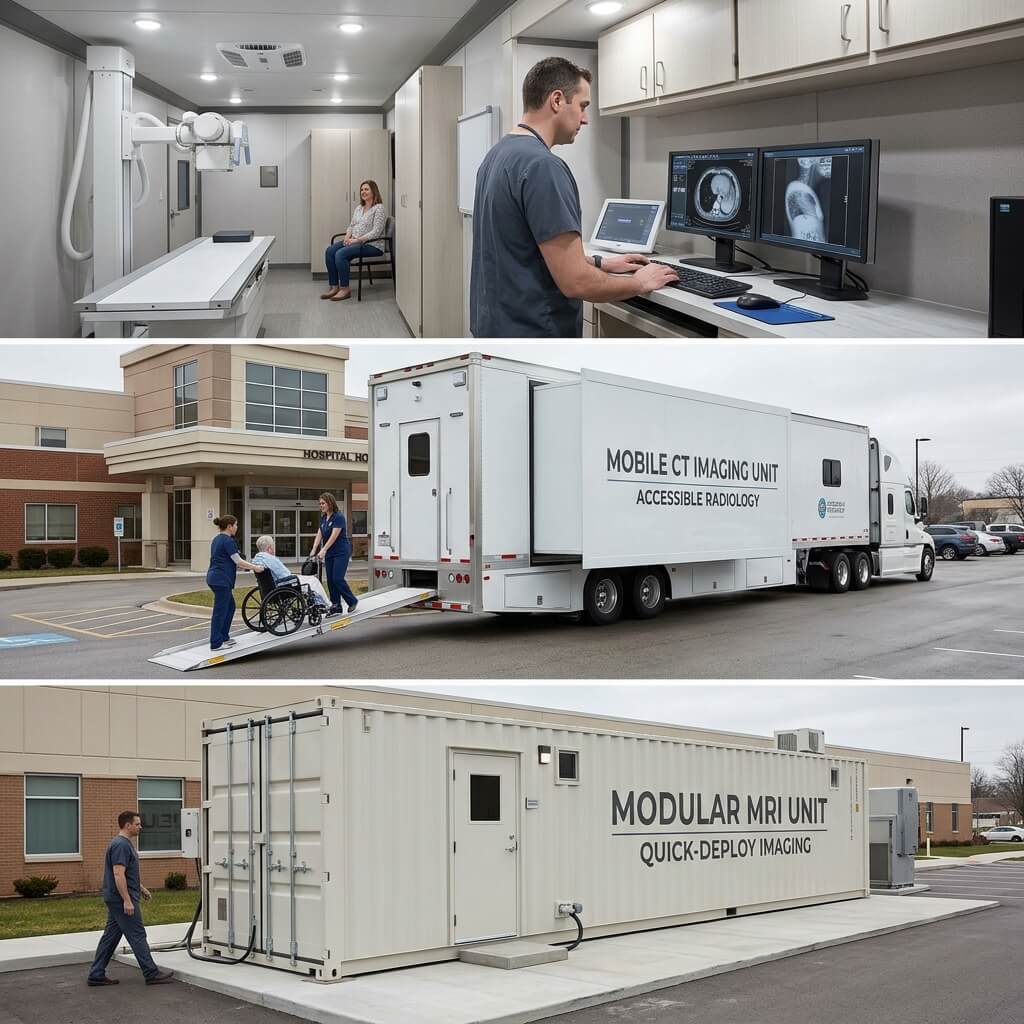
Operating a mobile radiology room introduces unique engineering and operational challenges that static hospital environments rarely face. A mobile imaging unit must deliver hospital-grade radiation safety while enduring road vibrations, varying weather extremes, fluctuating power sources, and multi-location deployment.
Failure to maintain strict radiation shielding or equipment stabilization can lead to dangerous radiation leakage, costly diagnostic tube failures, corrupted PACS image data, or regulatory shutdown by national health authorities.
This final guide in our 5-part series details the essential radiation safety standards, structural shock dampening mechanisms, IT data compliance frameworks, and preventative maintenance protocols required to keep mobile radiology units operating safely and profitably—and explains how UMY Medical Equipment Co Ltd sets the benchmark for mobile healthcare safety worldwide.
1. Radiation Protection & Lead Shielding Engineering
Ensuring zero radiation leakage is the highest priority when building a mobile diagnostic unit. Because mobile shelters are positioned in public parking areas, community centers, or adjacent to emergency rooms, external radiation levels must not exceed strict public dose limits (typically < 0.02 mSv in any single hour).
                      SEAMLESS LEAD SHIELDING ARCHITECTURE
+---------------------------------------------------------------------------------+
| EXTERNAL SHELTER WALL --> High-Strength Steel / Aluminum Alloy                  |
| THERMAL INSULATION    --> Polyurethane Foam Core (-30°C to +55°C)                |
| CONTINUOUS LEAD LAYER  --> 2.0mm - 3.0mm Pure Sheet Lead (15mm Seam Overlap)    |
| INTERNAL FINISH PANEL --> Medical-Grade Anti-Bacterial FRP / Stainless Steel   |
+---------------------------------------------------------------------------------+
Essential Lead Shielding Requirements
-
Perimeter Wall Shielding: Walls surrounding Digital Radiography (DR) X-ray systems require a minimum of 1.5 mm to 2.0 mm Pb lead equivalency. High-voltage Computed Tomography (CT) units require 2.5 mm to 3.0 mm Pb lead lining across all surrounding walls.
-
Seam Overlaps & Baffles: Vibration during vehicle transport can shift internal wall panels. Premier manufacturers like UMY Medical mandate a minimum 15 mm lead-to-lead sheet overlap at all structural joints, wall corners, and floor seams. Wiring conduits, AC vents, and plumbing pass-throughs feature angled lead baffles to eliminate direct radiation paths.
-
Lead-Glass Operator Control Booth: Operators are protected inside a dedicated control booth shielded with 2.0 mm to 3.0 mm Pb lead walls and a heavy-duty lead-glass window, allowing full visual observation of the patient during scans.
-
Safety Door Interlocks: Access doors feature automatic radiation interlock switches. If a door is accidentally opened during an exposure, the X-ray tube or CT gantry immediately cuts power, preventing accidental public exposure.
2. International Regulatory Standards & Healthcare Compliance
Deploying a mobile radiology trailer or container requires compliance with global medical device manufacturing directives and regional atomic safety standards.
                     INTERNATIONAL COMPLIANCE FRAMEWORK
                                     |
     +-------------------------------+-------------------------------+
     |                               |                               |
     v                               v                               v
[ ISO 13485 Certification ]     [ CE & FDA Compliance ]      [ IAEA Radiation Guidelines ]
- Quality management system     - Electrical & mechanical    - Public dose limit (<1mSv/yr)
- Medical vehicle manufacturing - Equipment safety directives  - Radiation Leakage Audits
Key Regulatory Frameworks
-
ISO 13485 (Medical Devices — Quality Management Systems): Standardized manufacturing protocols ensuring that structural welding, electrical installation, lead shielding application, and equipment mounting meet medical-grade safety controls.
-
CE Marking (Conformité Européenne): Certifies that the mobile radiology shelter, onboard electrical wiring, power generation, and hydraulic systems comply with European health, safety, and environmental protection directives.
-
IAEA Safety Standards (International Atomic Energy Agency): Dictates international guidelines for radiation protection, requiring routine radiation surveys, calibrated dosimeters for operators, and certified Radiation Safety Officer (RSO) oversight.
-
Local Atomic Energy Licensing: Prior to scanning patients, local radiation safety authorities conduct a physical radiation audit using calibrated survey meters to verify zero leakage outside the mobile unit during high-kVp exposures.
3. Shock Absorption & Vibration Isolation Systems
Driving a heavy diagnostic unit across unpaved rural roads, highway potholes, or speed bumps generates multi-axis mechanical shocks. Without proper vibration dampening, sensitive glass X-ray tubes, ceramic bearings in CT gantries, and delicate digital flat-panel detectors can suffer permanent structural damage.
                   THREE-STAGE VIBRATION DAMPENING
+---------------------------------------------------------------------------------+
| STAGE 1: VEHICLE SUSPENSION  --> Heavy-Duty Commercial Air-Ride Suspension       |
| STAGE 2: MOUNTING SHOCK PADS --> Heavy-Duty Rubber / Elastomeric Isolation Mounts|
| STAGE 3: HYDRAULIC LEVELING  --> 4-Point Auto-Leveling Jacks (Zero Chassis Sway)|
+---------------------------------------------------------------------------------+
Engineering Protective Safeguards
-
Air-Ride Chassis Suspension: Replaces rigid leaf springs with commercial air suspension bags that absorb road impacts and maintain chassis equilibrium during transit.
-
Equipment Isolation Mounts: CT gantries and high-voltage generators are mounted onto specialized elastomeric and steel-spring shock absorbers designed to dampen low-frequency engine vibration and high-impact road shocks.
-
Gantry Transport Locks: During transit, mechanical locking pins secure the CT gantry rotators, DR X-ray tube arms, and ceiling cranes to prevent mechanical movement and component fatigue.
-
Automated Hydraulic Stabilization: Once parked, multi-point hydraulic outriggers extend from the chassis, lifting the tires slightly off the ground to level the floor and eliminate vehicle sway caused by patient movement.
4. IT Security, DICOM Integration & Telemedicine Protocols
Mobile radiology units rely heavily on cellular and satellite network connections to transmit patient image files to cloud PACS servers and hospital databases. Protecting patient privacy and ensuring seamless image transfer requires strict data compliance.
                   TELEMEDICINE & IT DATA ARCHITECTURE
+---------------------------------------------------------------------------------+
| Diagnostic Acquisition  --> Local DICOM / PACS Workstation (Onboard Server)    |
|                                          |                                      |
|                                          v                                      |
| Cybersecurity Gateway    --> Hardware Firewall + Encrypted VPN Tunnel            |
|                                          |                                      |
|                                          v                                      |
| Data Transmission        --> Dual 5G Router / LEO Satellite Gateway             |
|                                          |                                      |
|                                          v                                      |
| Central Hospital PACS   --> HIPAA / GDPR Compliant Cloud Storage & Reporting     |
+---------------------------------------------------------------------------------+
Core IT & Cybersecurity Guidelines
-
HIPAA & GDPR Compliance: Patient health information (PHI) must be encrypted both at rest (on local workstation drives) and in transit across wireless networks using AES-256 bit encryption protocols.
-
DICOM Structured Reporting (SR): Modern mobile units automatically tag scan data with standardized DICOM metadata (patient ID, exposure factors, contrast volume, radiation dose indices like CTDIvol and DLP) for audit compliance.
-
Dual-SIM 5G & Satellite Redundancy: Industrial-grade cellular routers with dual-SIM auto-failover and satellite terminals guarantee reliable network connections even in remote off-grid locations.
5. Master Preventative Maintenance Schedule
A rigorous preventative maintenance program prevents unexpected breakdowns, extends equipment operational lifespan, and ensures radiation safety.
| Maintenance Frequency | System Focus Area | Recommended Inspection / Service Tasks |
| Daily (Pre-Scan) | Safety & Environment | Verify door radiation interlocks; inspect lead glass window; check HVAC temperature; verify generator fuel & oil levels. |
| Monthly | Mechanical & Power | Inspect hydraulic leveling jack fluid; test ATS shore-power transfer switch; clean air conditioner filters; check tire pressures and air suspension bags. |
| Quarterly | Radiation & IT | Conduct survey-meter radiation leakage sweep; calibrate DR/CT exposure outputs; backup local PACS server databases; inspect lead door seam seals. |
| Bi-Annually | Generator & Chassis | Full engine service on diesel generator (oil, fuel filters, air filters); inspect chassis brake systems; calibrate CT gantry laser alignment. |
| Annually | Certified Quality Audit | Full certified radiation safety survey by an independent Radiation Safety Officer (RSO); structural chassis weld inspection; complete ISO 13485 quality audit. |
6. Why UMY Medical Equipment Co Ltd Leads in Safety & Engineering
When procuring mobile radiology rooms, partnering with a certified direct-factory manufacturer guarantees that every vehicle shelter meets strict international safety standards and operational specifications.
                  UMY MEDICAL SAFETY & QUALITY STANDARDS
                                     |
     +-------------------------------+-------------------------------+
     |                               |                               |
     v                               v                               v
[ Certified Lead Protection ]   [ ISO 13485 & CE Directives ] [ Turnkey Factory Support ]
 2.0-3.0mm Pb Leak-Tested      Full International QC Audit    Direct Engineering & Warranty
Why Global Procurement Teams Trust UMY Medical:
-
Precision Lead Shielding Fabrication: UMY Medical Equipment Co Ltd installs continuous, high-purity sheet lead with 15 mm overlapping seams and angled lead baffles, performing multi-point radiation leakage tests on every unit before factory release.
-
ISO 13485 & CE Certified Manufacturing: Every mobile trailer, expandable container, and truck body is manufactured in state-of-the-art facilities certified under ISO 13485, ISO 9001, and CE safety directives.
-
Factory-Direct Pricing & Global Service: By sourcing directly from UMY Medical’s manufacturing facility, healthcare organizations eliminate middleman agency fees while receiving direct engineering support, spare parts availability, and custom floor plan designs.
Frequently Asked Questions (FAQ)
Q1: How is radiation leakage tested in a newly built mobile radiology container?
Prior to factory dispatch, quality control engineers use calibrated ionization chamber survey meters to measure radiation levels at various external wall points, door frames, AC vents, and operator booths while the X-ray tube or CT gantry fires at maximum high-kVp exposure settings.
Q2: What happens if the power cuts out during a mobile CT scan?
UMY Medical mobile radiology units include an online Uninterruptible Power Supply (UPS) battery system. If generator or shore power fails, the UPS maintains power to CT computers, detectors, and PACS servers long enough to safely park the gantry, save patient data, and shut down gracefully.
Q3: How often should lead shielding in a mobile radiology truck be inspected?
Lead shielding integrity should be inspected visually and tested with a radiation survey meter annually, or immediately following any significant vehicle traffic collision or major structural chassis repair.
Q4: Are UMY Medical mobile radiology shelters compliant with local healthcare regulations?
Yes. UMY Medical builds units in strict compliance with ISO 13485, CE directives, and IAEA radiation protection guidelines. Detailed engineering schematics, lead shielding certificates, and material compliance sheets are provided to help clients secure local health authority licensing.
Q5: How can a hospital or ministry request a customized compliance proposal from UMY Medical?
Procurement officers, healthcare administrators, and project managers can contact UMY Medical Equipment Co Ltd directly via their B2B web portal or international sales office to request floor plans, radiation compliance documentation, technical specifications, and factory-direct quotations.
Conclusion: Complete 5-Part Blog Series Summary
This article concludes our 5-Part Master Guide to Mobile Radiology Rooms. Across this comprehensive series, we have covered every critical aspect of mobile imaging unit procurement, engineering, clinical applications, cost modeling, and radiation safety:
-
Post 1: The Ultimate Buyer’s Guide to Mobile Radiology Rooms & Trailers – Overview of mobile radiology platforms, procurement factors, and core engineering requirements.
-
Post 2: Comparing Mobile Imaging Solutions: Semi-Trailers, Expandable Containers & Truck Vans – Structural analysis, platform comparison matrices, and lead/RF shielding design.
-
Post 3: Key Applications of Mobile Radiology Rooms: Emergency Care, Field Medicine & Cancer Screening – Clinical workflows in disaster response, rural health, disease screening, and military medicine.
-
Post 4: Mobile Radiology Room Cost Analysis: TCO, ROI & Factory-Direct Sourcing Strategies – Financial breakdown of CAPEX/OPEX, static vs. mobile ROI comparisons, and direct factory savings.
-
Post 5: Radiation Protection, Regulatory Compliance & Maintenance in Mobile Radiology Rooms – Lead shielding specs, ISO 13485/CE compliance, vibration dampening, and preventative maintenance.
By choosing UMY Medical Equipment Co Ltd as your direct manufacturing partner, healthcare organizations gain access to world-class mobile radiology architecture, certified radiation protection, and substantial factory-direct cost savings.