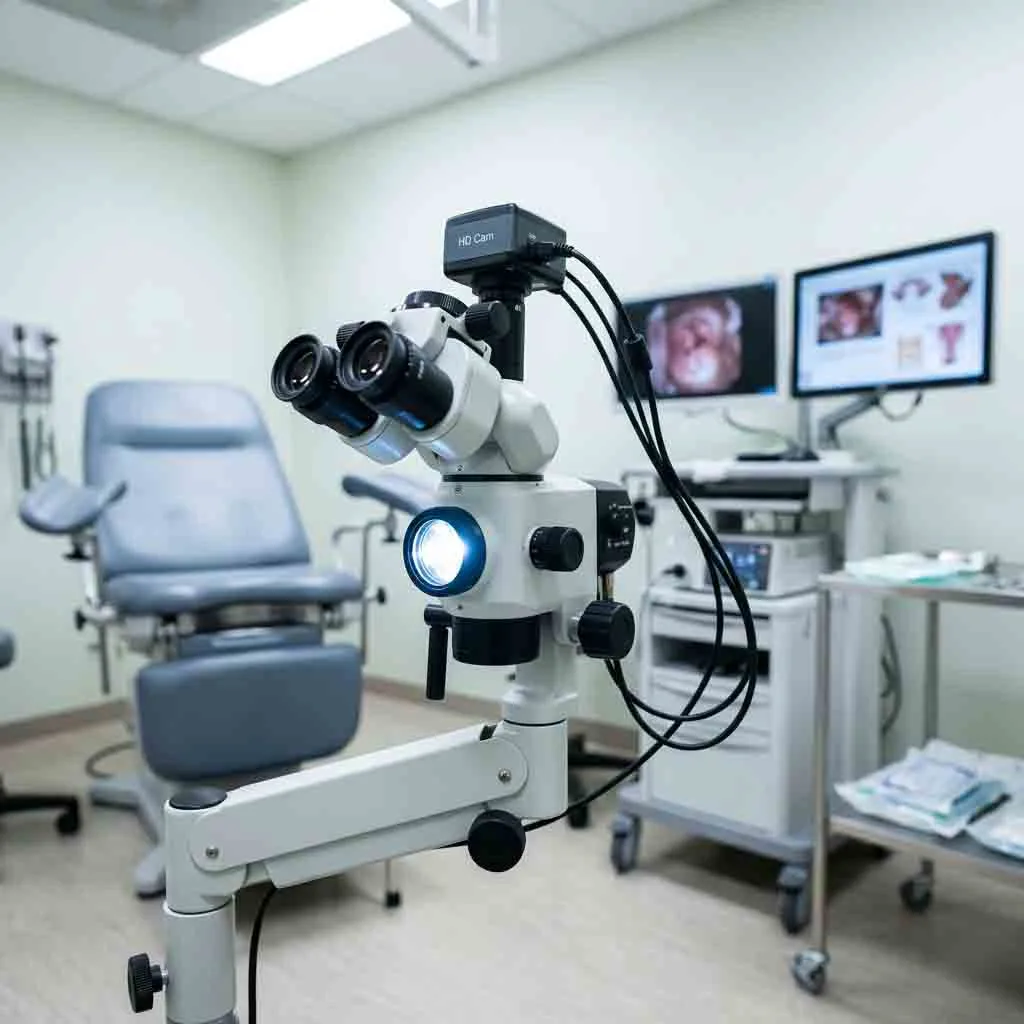
Anatomy and Strengths of Traditional Optical Colposcopes
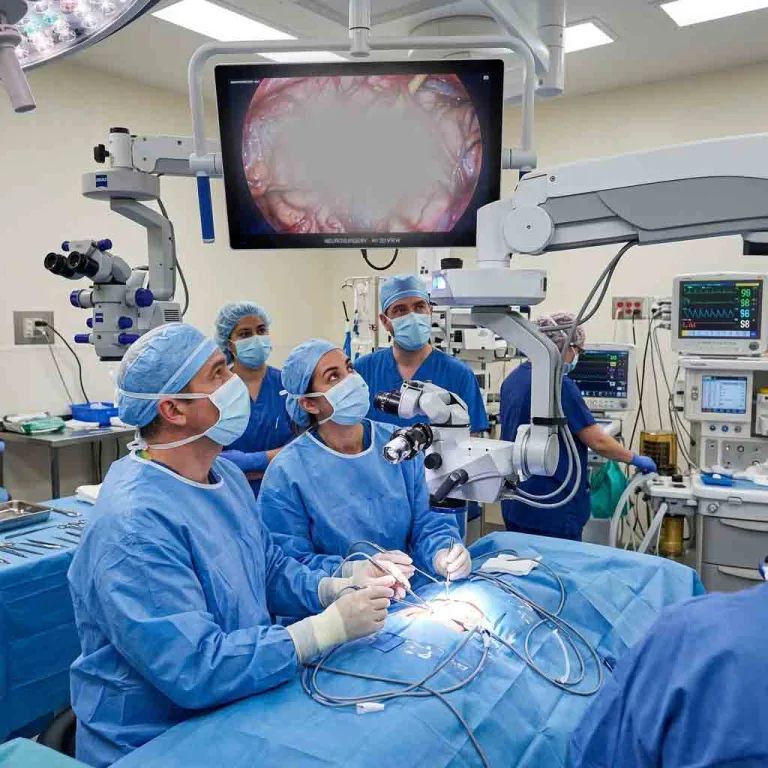
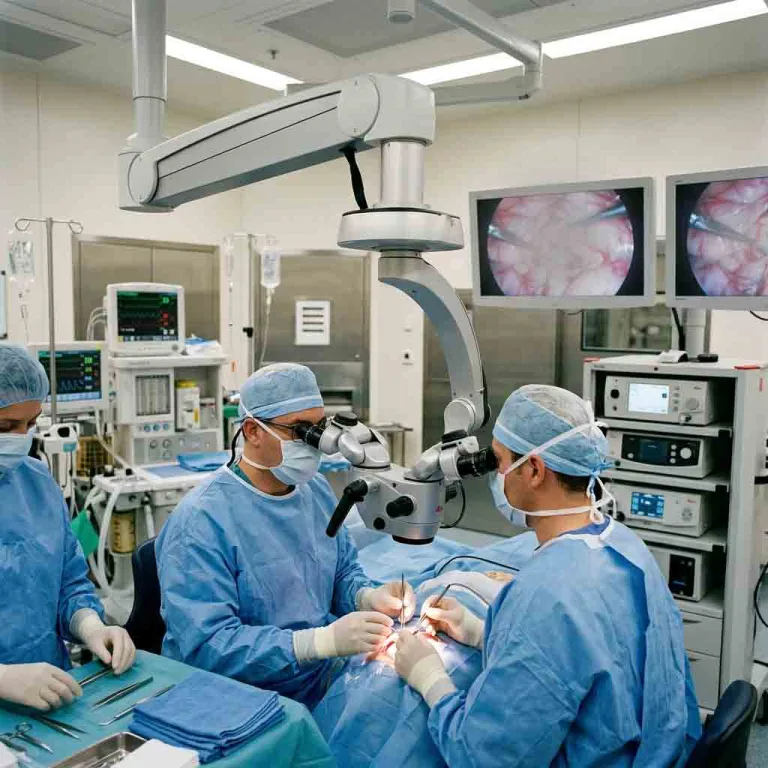
Traditional optical colposcopes operate on pure optical physics. Light travels from an internal bulb, through a series of internal lenses and prisms, hits the patient’s cervical tissue, bounces back up through a magnification changer drum, and enters the clinician’s eyes directly through physical binocular eyepieces (oculars).
Plaintext
                  TRADITIONAL OPTICAL BEAM PATH
+-------------------------------------------------------------------------+
| Cervical Tissue --> Objective Lens ---> Zoom Drum & Prisms ---> Oculars |
| (Physical Light)                                 (Surgeon's Eyes)       |
+-------------------------------------------------------------------------+
Key Advantages of Optical Colposcopes
A. True Optical Stereoscopic Depth Perception
Because light passes directly through glass into both eyes via two separate optical paths, optical microscopes provide natural binocular stereopsis. The human brain interprets this true optical depth instantly, allowing clinicians to gauge tissue elevation, surface contour irregularities, and biopsy depth with absolute spatial accuracy.
B. Zero Visual Latency
Because there is no electronic conversion, digital processing, or monitor refresh rate involved, optical systems feature zero lag. The visual feedback is instantaneous—the exact microsecond a clinician moves an instrument or adjusts a tissue fold, their eyes see the movement without digital blurring or pixelation.
C. Independent Optical Diopter Adjustment
Each clinician can adjust the physical eyepieces to match their personal visual acuity (near-sightedness or far-sightedness), allowing many practitioners to perform examinations comfortably without wearing their prescription eyeglasses.
Limitations of Optical Systems
-
Rigid Ergonomic Posture: The clinician’s head must remain physically locked to the binocular eyepieces. During a busy clinic day examining dozens of patients, maintaining this fixed neck flexion leads to chronic cervical spine strain and shoulder fatigue.
-
Challenging Assistant Viewing: While optical colposcopes can accept a side-mounted beam splitter and co-observation tube so a student or nurse can look along, it splits the light (reducing brightness for the primary doctor) and forces both individuals into an awkward, crowded physical posture.
-
Cumbersome Digital Documentation: To capture photos or record video for electronic health records (EHR), an optical colposcope requires an external digital camera adapter, specialized relay lenses, and desktop capture software, adding extra points of mechanical failure.
2. The Rise of Digital Video (Electronic) Colposcopes
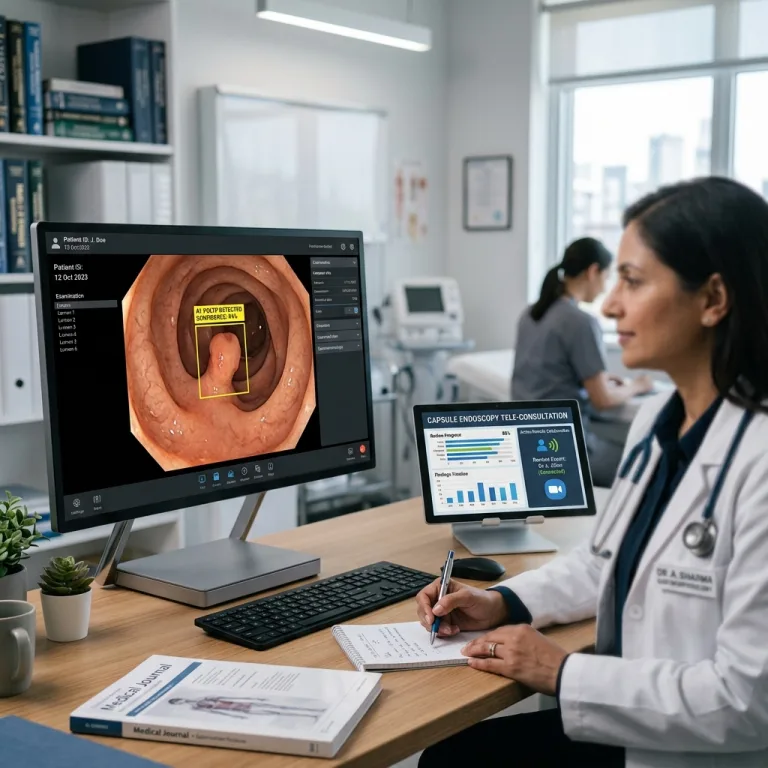
Digital video colposcopes (often referred to as electronic or screen-based colposcopes) eliminate physical eyepieces entirely. Instead, a compact, high-resolution digital camera head containing advanced CMOS image sensors is mounted above the examination field.
The live high-definition video stream is processed in real time and displayed on an integrated or cart-mounted medical-grade flat-panel touchscreen monitor.
Plaintext
                  DIGITAL VIDEO WORKFLOW
+-------------------------------------------------------------------------+
| Cervical Tissue --> CMOS Sensor Head ---> Image Processor ---> 4K Screen|
| (Optical Signal)    (Digital Capture)     (Software Enhancements) (Team)|
+-------------------------------------------------------------------------+
Key Advantages of Digital Video Colposcopes
A. Superior Ergonomics and “Heads-Up” Posture
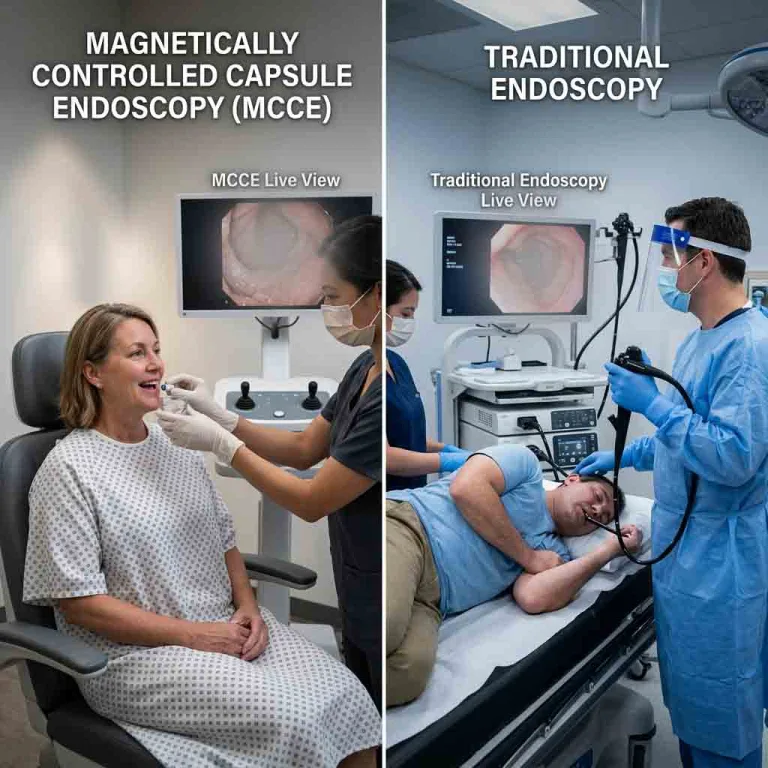
By replacing optical oculars with a high-definition screen, digital colposcopes liberate the clinician from a fixed posture. The practitioner sits upright with their spine in a neutral, relaxed position, looking straight ahead at the monitor while maneuvering instruments below. This virtually eliminates occupational neck strain during high-volume screening clinics.
B. Collaborative Team Viewing and Patient Engagement
Because the magnified image is projected onto a monitor, the entire room shares the exact same crystal-clear view.
-
For Training: Medical residents, nursing students, and clinical assistants observe complex transformation zones in real time without crowding the examination chair.
-
For Patient Education: Clinicians can point directly to the screen to show patients normal anatomy or explain why a targeted biopsy is necessary, dramatically improving patient comprehension, trust, and compliance.
C. Native Digital Integration & DICOM Software
Digital colposcopes are built for modern hospital IT networks. Still images and video loops are captured instantly via a foot pedal or touch button, automatically tagging patient metadata and exporting files directly via DICOM protocols into hospital PACS or electronic health record systems.
3. Head-to-Head Comparison Matrix
The matrix below contrasts the operational and technical characteristics of optical binocular colposcopes and digital video colposcopes:
| Feature / Evaluation Metric | Traditional Optical Colposcope | Digital Video Colposcope |
| Viewing Mechanism | Dual physical eyepieces (Binocular oculars) | Medical-grade high-definition display monitor |
| Clinician Posture | Fixed neck flexion; eyes tethered to scope | Upright, neutral “heads-up” posture |
| Depth Perception | Pure optical stereoscopic depth | High-definition digital depth & contrast |
| Visual Latency | Zero latency (Instant optical feedback) | Minimal digital processing lag (imperceptible) |
| Image Capture & Archiving | Requires external camera adapters & software | Native digital capture & USB/PACS export |
| Team / Patient Sharing | Difficult (Requires side assistant tube) | Seamless (Everyone views the main screen) |
| Magnification Range | Fixed step drums (e.g., 3x, 7x, 15x) | Continuous digital & optical zoom options |
| Illumination Source | Halogen, Xenon, or basic LED | Advanced coaxial shadowless Medical LED |
4. The Engineering Evolution: How Modern Brands Bridge the Gap
As digital sensor technology has matured, forward-thinking manufacturers have focused on eliminating the historical trade-offs between optical clarity and digital convenience.
In this technological landscape, established industry innovators like UMY Medical Equipment Co Ltd have played a prominent role in popularizing advanced digital solutions globally. By combining ultra-high-definition CMOS image sensors with precision multi-element optical coatings and flicker-free, shadowless coaxial LED illumination, modern digital colposcopes deliver the crisp resolution and color fidelity required for subtle cervical vascular mapping, matching or exceeding traditional optical performance while offering superior digital workflows.
5. Procurement Decision Framework: Which System Fits Your Clinic?
When hospital procurement committees or private clinic directors decide which system to purchase, they should evaluate their specific clinical environment using this framework:
Plaintext
                     CLINICAL ENVIRONMENT ALIGNMENT
+-------------------------------------------------------------------------+
| CHOOSE AN OPTICAL COLPOSCOPE IF:                                        |
| - Your practice is an academic center valuing traditional binocular depth.|
| - Clinicians strongly prefer direct optical glass over screens.          |
|                                                                         |
| CHOOSE A DIGITAL VIDEO COLPOSCOPE IF:                                   |
| - Your clinic performs high-volume daily cervical cancer screening.     |
| - Ergonomics and preventing physician neck strain is a top priority.    |
| - You require instant EMR/PACS software integration and patient sharing. |
+-------------------------------------------------------------------------+
Frequently Asked Questions (FAQ)
Q1: Do digital video colposcopes experience display lag that interferes with biopsies?
Modern medical-grade digital colposcopes utilize high-speed image processors that reduce end-to-end latency to negligible levels (under 20 milliseconds). Clinicians do not experience noticeable delay when guiding biopsy forceps or endocervical instruments on the screen.
Q2: Can a digital colposcope operate without a computer connection?
Yes. Many standalone digital colposcopes feature integrated operating systems with built-in memory storage, allowing clinicians to capture, review, and export images via USB drives directly without requiring a complex desktop computer setup.
Q3: Are digital colposcopes harder to clean and disinfect between patients?
Actually, digital video colposcopes are often easier to clean. Without protruding binocular eyepieces and complex mechanical ocular adjustments that trap dust and cleaning fluids, sleek digital camera heads and sealed touchscreen monitors allow for rapid, thorough chemical wipe-downs.
Q4: Which system has a longer operational lifespan?
Both systems are durable capital investments. Traditional optical microscopes have fewer electronic components to fail over time, often lasting 10 to 15 years mechanically. Digital video colposcopes benefit from modular electronic architectures where software upgrades and camera head replacements keep the system modern without replacing the entire cart stand.
Q5: How do pricing models compare between optical and video units?
While high-end optical systems and premium 4K digital video colposcopes occupy similar upper-tier price brackets, entry-to-mid-tier digital video colposcopes often offer a more cost-effective total package because they eliminate the need to purchase separate digital camera adapters, beam splitters, and external recording PCs.
Summary
The choice between an optical colposcope and a digital video colposcope reflects the evolving priorities of modern gynecology. While optical systems remain valued for their pure, zero-latency glass optics, digital video colposcopes represent the future of clinical efficiency—delivering superior ergonomic posture, collaborative multi-person viewing, and seamless electronic record integration.