MRI and CT Are Two Important Medical Imaging Technologies
Medical imaging plays an essential role in modern healthcare. Doctors rely on advanced imaging systems to diagnose diseases, monitor treatment, and make accurate clinical decisions.
Among all medical imaging technologies, MRI (Magnetic Resonance Imaging) and CT (Computed Tomography) are two of the most widely used solutions.
Many hospitals, medical investors, and even patients often ask:
What is the difference between MRI and CT?
Which one is better?
Should a hospital invest in an MRI machine or CT scanner?
The answer depends on:
- Clinical requirements
- Examination type
- Budget
- Patient volume
- Diagnostic purpose
MRI and CT are not competitors. They are complementary technologies with different advantages.
This guide explains the differences between MRI and CT scanners, including technology, applications, cost, speed, image quality, and purchasing considerations.
1. What Is an MRI Machine?
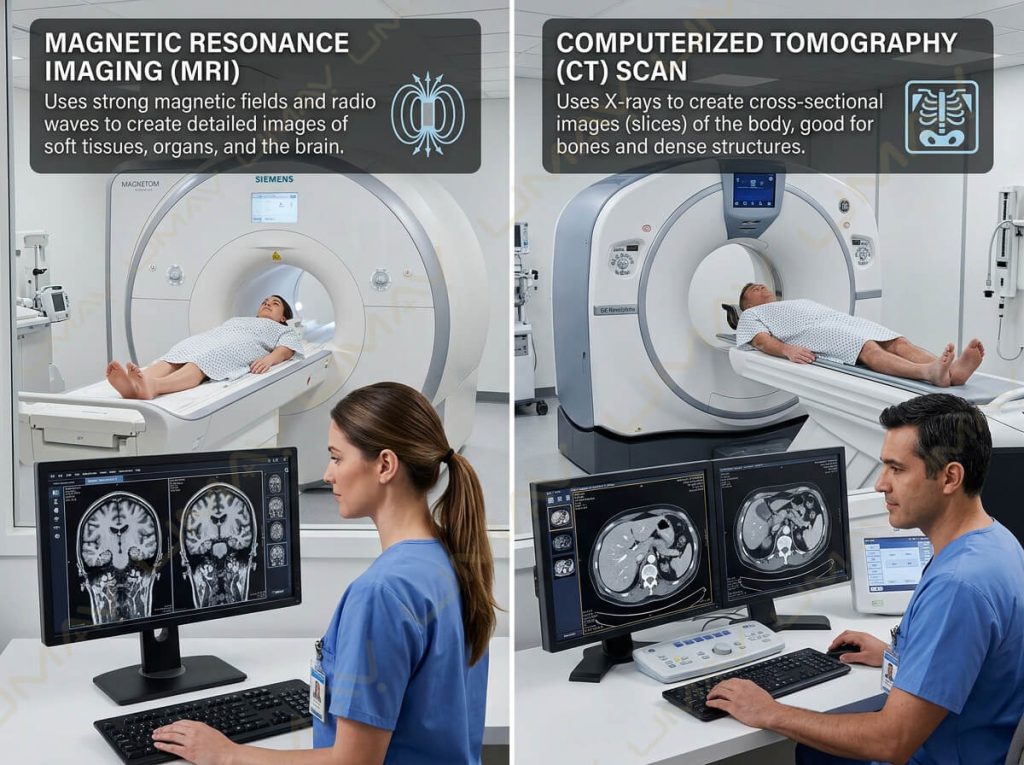
MRI stands for Magnetic Resonance Imaging.
An MRI scanner uses:
- Strong magnetic fields
- Radio waves
- Advanced computer processing
to create detailed images of internal body structures.
Unlike X-ray and CT technology, MRI does not use ionizing radiation.
MRI is especially effective for imaging:
- Soft tissues
- Brain
- Spinal cord
- Muscles
- Ligaments
- Joints
- Internal organs
Common MRI Applications
MRI is widely used in:
Brain Imaging
MRI can detect:
- Brain tumors
- Stroke-related changes
- Neurological disorders
- Brain injuries
Spine Imaging
MRI provides detailed images of:
- Spinal discs
- Nerves
- Spinal cord
- Vertebrae
Orthopedic Imaging
Common examinations:
- Knee MRI
- Shoulder MRI
- Hip MRI
- Sports injury diagnosis
Oncology Imaging
MRI helps doctors evaluate:
- Tumor location
- Tumor size
- Treatment response
2. What Is a CT Scanner?
CT stands for Computed Tomography.
A CT scanner uses:
- X-ray technology
- Rotating tube and detectors
- Computer reconstruction
to create cross-sectional images of the body.
CT provides fast and detailed images, making it extremely important in emergency medicine.
Common CT Applications
CT is commonly used for:
Emergency Diagnosis
Examples:
- Trauma
- Internal bleeding
- Brain injury
- Emergency chest imaging
Lung Imaging
CT is widely used for:
- Lung disease detection
- Pulmonary examination
- Chest screening
Bone Imaging
CT provides excellent images of:
- Fractures
- Bone structures
- Complex injuries
3. MRI vs CT: Main Differences
| Feature | MRI | CT |
|---|---|---|
| Technology | Magnetic field + radio waves | X-ray + computer reconstruction |
| Radiation | No ionizing radiation | Uses X-ray radiation |
| Image Quality | Excellent soft tissue imaging | Excellent bone and emergency imaging |
| Scan Speed | Slower | Faster |
| Cost | Higher | Usually lower |
| Equipment Cost | Higher investment | Medium investment |
| Patient Comfort | Longer examination | Faster examination |
4. MRI vs CT Radiation Difference
One of the most common questions is:
Does MRI have radiation?
The answer is:
No.
MRI does not use X-ray radiation.
Instead, it uses magnetic fields and radio frequency signals.
CT scanners use X-ray radiation.
Modern CT systems have improved significantly with:
- Dose reduction technology
- Advanced reconstruction algorithms
- Improved detector systems
However, radiation exposure remains an important consideration.
5. MRI vs CT Image Quality Comparison
MRI Image Advantages
MRI provides superior soft tissue contrast.
It is better for:
- Brain
- Nerves
- Muscles
- Tendons
- Ligaments
- Spinal cord
Example:
A doctor evaluating a ligament injury usually prefers MRI.
CT Image Advantages
CT provides excellent:
- Bone imaging
- Emergency imaging
- Lung imaging
Example:
For a patient with severe trauma, CT is often preferred because it provides rapid results.
6. MRI vs CT Scan Time
MRI Scan Time
Typical MRI examination:
15-60 minutes
depending on:
- Body area
- Imaging protocol
- Equipment performance
MRI requires patients to remain still during scanning.
CT Scan Time
Typical CT examination:
Several seconds to several minutes.
This makes CT ideal for emergency situations.
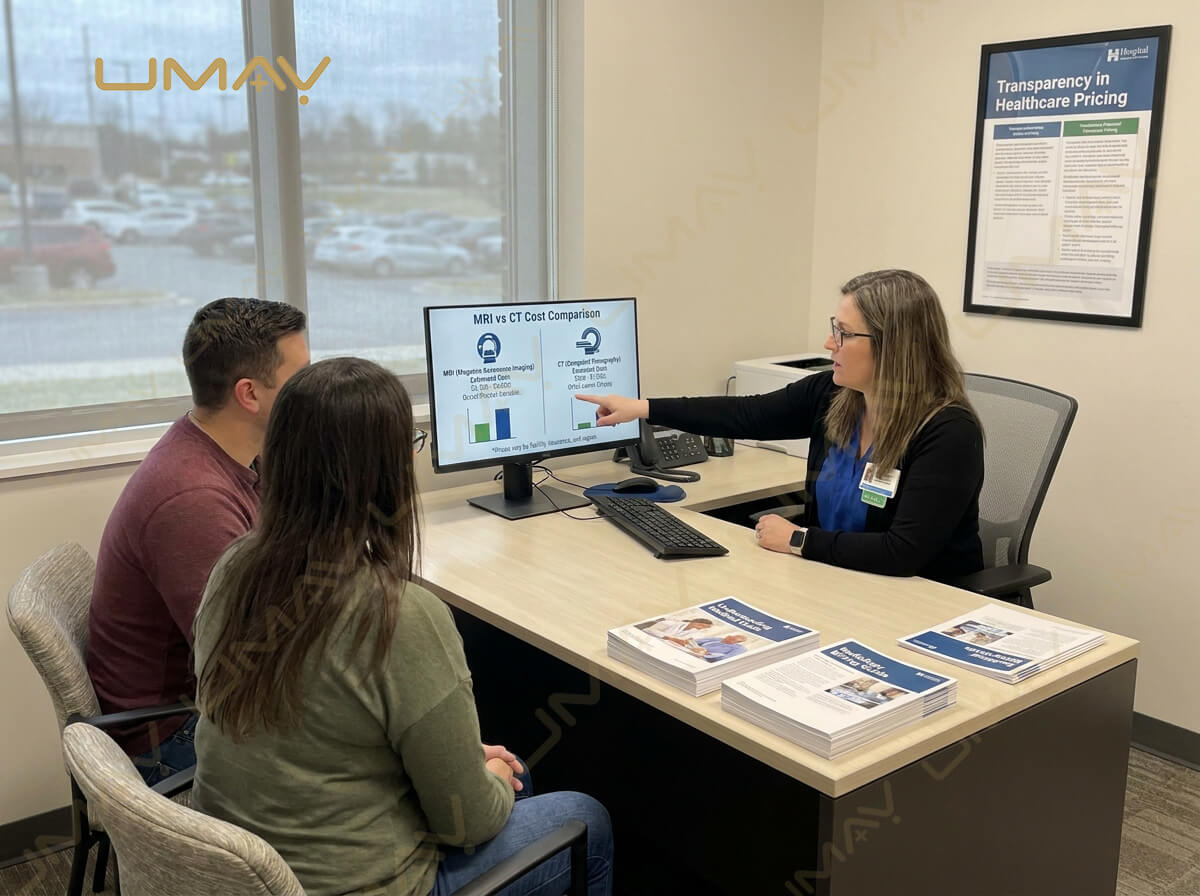
7. MRI vs CT Cost Comparison
Equipment Cost
Generally:
MRI machines cost more than CT scanners.
Why?
Because MRI systems require:
- Superconducting magnets
- Advanced RF systems
- Complex software
- Specialized installation
Examination Cost
MRI examinations are usually more expensive because:
- Scan time is longer
- Equipment investment is higher
- Operation requirements are more complex
CT examinations are usually faster and lower cost.
8. MRI vs CT for Different Medical Conditions
Brain Imaging
MRI:
Better for:
- Brain tumors
- Multiple sclerosis
- Neurological diseases
- Detailed brain structure
CT:
Better for:
- Emergency stroke evaluation
- Brain bleeding
- Head trauma
Spine Imaging
MRI is usually preferred because it clearly shows:
- Discs
- Nerves
- Soft tissues
Bone Injuries
CT is often preferred because it provides:
- High-resolution bone images
- Fast scanning
Cancer Diagnosis
Both technologies can be used.
MRI advantages:
- Soft tissue detail
- Tumor characterization
CT advantages:
- Fast whole-body assessment
- Treatment monitoring
9. MRI vs CT for Hospitals: Which Equipment Should You Buy?
For healthcare investors and hospital managers, choosing between MRI and CT requires strategic planning.
When Should a Hospital Buy MRI?
MRI is suitable when hospitals need:
- Advanced diagnostic capability
- Neurology services
- Orthopedic imaging
- Oncology imaging
MRI is especially valuable for:
- Large hospitals
- Specialized centers
- Premium diagnostic facilities
When Should a Hospital Buy CT?
CT is suitable when hospitals need:
- Emergency diagnosis
- Trauma imaging
- Fast patient turnover
CT is often the first imaging investment for:
- Emergency hospitals
- General hospitals
- High-volume facilities
10. Should a Hospital Have Both MRI and CT?
Many modern hospitals operate both systems.
Why?
Because they serve different clinical needs.
A complete imaging department may include:
- X-ray machine
- Ultrasound system
- CT scanner
- MRI scanner
Together, these technologies provide comprehensive diagnostic solutions.
11. MRI vs CT Investment Analysis
From a business perspective:
MRI Advantages:
✔ Higher examination value
✔ Strong demand for advanced diagnosis
✔ Premium healthcare service positioning
CT Advantages:
✔ Faster patient turnover
✔ Lower investment cost
✔ Emergency application demand
The best choice depends on:
- Hospital size
- Patient population
- Medical specialties
- Local healthcare demand
12. MRI and CT Equipment Supplier Selection
When purchasing medical imaging equipment, hospitals should evaluate suppliers carefully.
Important factors include:
Manufacturing Capability
Check:
- Factory experience
- Production quality
- Export history
Technical Support
A reliable supplier should provide:
- Installation assistance
- Operator training
- Maintenance support
Product Customization
Some hospitals require:
- Different configurations
- OEM solutions
- Customized software packages
FAQ: MRI vs CT Questions
Q1: Is MRI better than CT?
Neither technology is always better. MRI is better for soft tissues, while CT is better for fast imaging and emergency diagnosis.
Q2: Which is more expensive, MRI or CT?
MRI machines generally cost more than CT scanners because of their complex magnetic systems.
Q3: Is MRI safer than CT?
MRI does not use radiation, while CT uses X-ray radiation. However, both are widely used and considered safe when medically appropriate.
Q4: Should a hospital buy MRI or CT first?
Many hospitals choose CT first because of emergency applications, then add MRI when advanced diagnostic needs increase.
Q5: Can MRI replace CT?
No. MRI and CT have different advantages and are complementary technologies.
Conclusion
MRI and CT scanners are both essential medical imaging technologies, but they serve different purposes.
MRI provides:
- Superior soft tissue imaging
- Detailed anatomical information
- Radiation-free scanning
CT provides:
- Faster examination
- Excellent emergency diagnosis
- High-quality bone imaging
For hospitals planning medical equipment investment, the best decision depends on clinical needs, patient volume, budget, and long-term development strategy.
Choosing the right imaging technology and a reliable medical equipment supplier can help healthcare providers improve diagnostic capability and deliver better patient care.