Why Choosing the Right Endoscope System Matters
Medical endoscopy has become one of the most important technologies in modern healthcare. From minimally invasive surgery to diagnostic procedures, endoscopic systems allow doctors to examine internal organs, perform precise operations, and improve patient recovery while reducing surgical trauma.
With the continuous development of medical imaging technology, hospitals and clinics today have many choices, including rigid endoscopes, flexible endoscopes, HD endoscope systems, 4K surgical camera systems, and integrated endoscopy solutions.
However, selecting the right medical endoscope system is not always easy.
Healthcare providers need to consider multiple factors:
- Image quality
- Camera resolution
- Light source performance
- Compatibility
- Surgical applications
- Maintenance requirements
- Sterilization methods
- Supplier reliability
- Total ownership cost
A wrong purchasing decision may lead to poor surgical visualization, higher maintenance costs, and unnecessary equipment replacement.
This complete endoscope buying guide explains everything you need to know before purchasing a medical endoscopy system, helping hospitals, distributors, and healthcare professionals choose the right solution.
1. What Is a Medical Endoscope?
A medical endoscope is a specialized medical imaging device that allows physicians to view inside the human body through natural openings or small surgical incisions.
Unlike traditional open surgery, endoscopic procedures use small instruments and cameras to provide real-time visualization of internal structures.
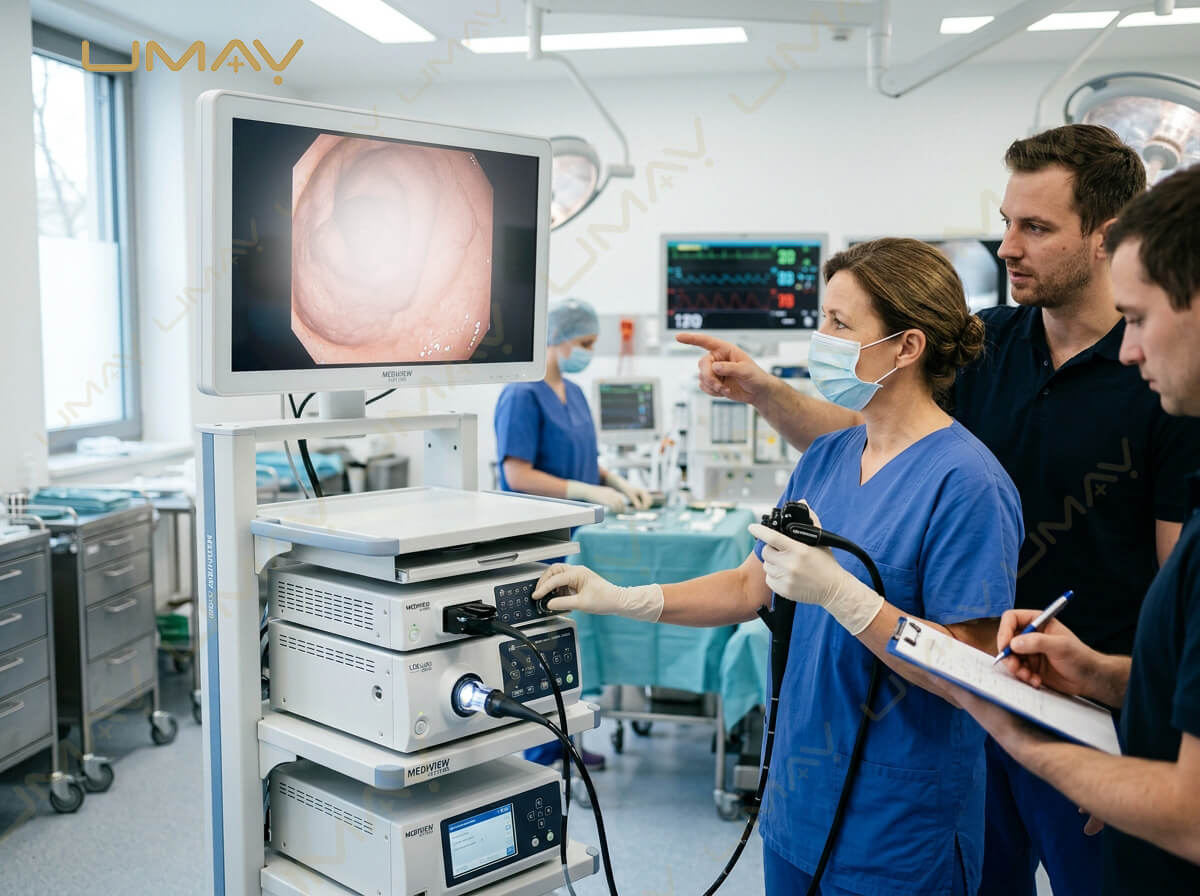
A complete endoscope system usually includes:
- Endoscope camera head
- Endoscope lens
- Camera control unit (CCU)
- LED light source
- Medical monitor
- Recording system
- Surgical accessories
Modern endoscope systems provide high-definition images that help surgeons perform minimally invasive procedures with greater accuracy.
Today, medical endoscopes are widely used in:
- General surgery
- Laparoscopy
- Arthroscopy
- ENT surgery
- Urology
- Gynecology
- Orthopedics
- Neurosurgery
- Veterinary applications
2. Different Types of Medical Endoscopes
Before purchasing an endoscope system, buyers should understand the different categories available.
Rigid Endoscope
Rigid endoscopes are commonly used in minimally invasive surgery.
They contain a straight optical tube with high-quality lenses that provide excellent image clarity.
Common applications include:
- Laparoscopic surgery
- Arthroscopic surgery
- ENT procedures
- Urological surgery
- Gynecological surgery
Advantages of Rigid Endoscopes
- Excellent optical quality
- High durability
- Easy sterilization
- Stable image transmission
- Long service life
Rigid endoscopes are often preferred by hospitals requiring reliable surgical visualization.
2.2 Flexible Endoscope
Flexible endoscopes use a bendable insertion tube that allows doctors to navigate complex anatomical structures.
Common applications:
- Gastrointestinal examination
- Bronchoscopy
- Colonoscopy
- Respiratory diagnosis
Advantages
- Better access to difficult areas
- Comfortable patient experience
- Suitable for diagnostic procedures
However, flexible endoscopes generally require more maintenance because of their complex structure.
2.3 HD Endoscope System
High-definition endoscope systems have become the standard choice for many hospitals.
An HD endoscopy system usually includes:
- HD camera
- HD monitor
- Advanced image processing technology
- High brightness LED light source
Benefits:
- Clearer surgical images
- Better tissue recognition
- Improved surgical accuracy
- Enhanced doctor confidence
2.4 4K Endoscope System
4K endoscopy represents the latest generation of surgical visualization technology.
Compared with traditional HD systems, 4K systems provide:
- Higher resolution
- More detailed images
- Better color reproduction
- Improved surgical precision
4K endoscope systems are commonly used in:
- Advanced hospitals
- Teaching hospitals
- Complex surgical departments
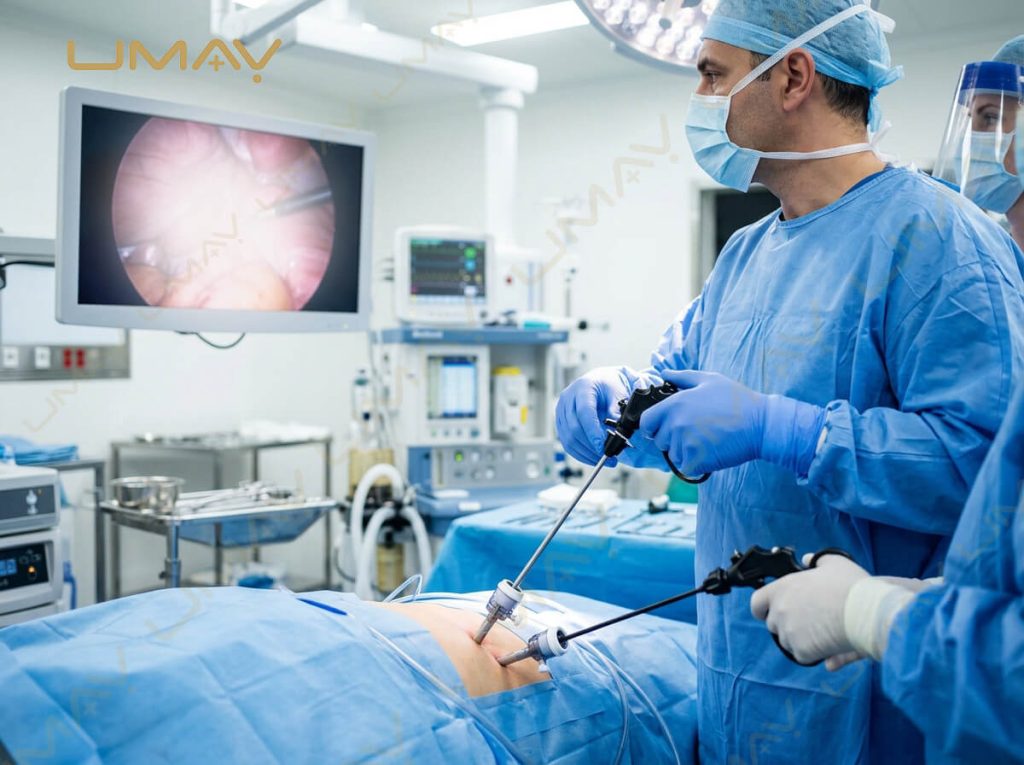
Surgeons operating laparoscopic instruments and laparoscopic camera system during a minimally invasive abdominal procedure.
3. Key Factors When Buying an Endoscope System
3.1 Image Quality and Resolution
Image quality is the most important factor when selecting an endoscope.
Important specifications include:
- Resolution
- Sensor technology
- Color accuracy
- Image processing
- Noise reduction
A high-quality endoscope camera system should provide:
- Clear anatomical details
- Natural colors
- Stable video output
- Low latency transmission
For hospitals performing advanced procedures, investing in HD or 4K imaging technology can significantly improve surgical performance.
3.2 Endoscope Camera System
The camera system is the “eye” of the endoscope.
A complete surgical camera system includes:
- Camera head
- Camera control unit
- Image processor
Important purchasing considerations:
Camera Resolution
Common options:
- Standard Definition (SD)
- HD 1080P
- Full HD
- 4K UHD
Camera Features
Professional endoscope cameras may include:
- Digital zoom
- Automatic brightness adjustment
- White balance control
- Image enhancement
- Recording function
3.3 Light Source Technology
A powerful light source is essential for clear visualization.
Modern endoscope systems usually use LED illumination because of:
- Long lifespan
- Low heat generation
- Stable brightness
- Energy efficiency
When purchasing an endoscope system, buyers should check:
- Light intensity
- Color temperature
- LED lifespan
- Compatibility with scopes
3.4 Monitor Quality
A medical-grade monitor directly affects visualization quality.
Recommended features:
- High resolution display
- Accurate color reproduction
- Wide viewing angle
- Medical certification
A poor-quality monitor can reduce the benefits of a high-end camera system.
4. How Much Does a Medical Endoscope System Cost?
The price of an endoscope system depends on many factors.
Typical price factors include:
Technology Level
Basic systems:
- Standard camera
- Basic light source
- Standard monitor
Advanced systems:
- 4K camera
- Professional image processing
- Large medical display
Application
Different specialties require different configurations.
For example:
- ENT endoscope systems
- Laparoscopic systems
- Arthroscopy systems
- Urology endoscope systems
Accessories
Additional accessories affect total investment:
- Surgical instruments
- Camera heads
- Monitors
- Recording devices
- Sterilization equipment
Therefore, buyers should evaluate the complete solution instead of only comparing equipment prices.
5. How to Choose a Reliable Endoscope Manufacturer?
Choosing the right supplier is as important as choosing the equipment.
A professional endoscope manufacturer should provide:
Factory Capability
Check:
- Production facilities
- Quality control systems
- Engineering team
- Manufacturing experience
Certifications
Important certifications may include:
- CE certification
- ISO quality management
- International compliance
OEM and ODM Capability
For distributors and medical equipment companies, OEM services are valuable.
A reliable manufacturer should support:
- Customized branding
- Product customization
- Technical support
- After-sales service
6. China Endoscope Manufacturer: What International Buyers Should Know
China has become one of the world’s important medical equipment manufacturing centers.
International buyers choose Chinese endoscope suppliers because of:
- Competitive pricing
- Advanced manufacturing capability
- OEM availability
- Large production capacity
- Export experience
When sourcing from China, buyers should evaluate:
- Manufacturer background
- Customer cases
- Product certifications
- Quality inspection
- Technical support
7. Endoscope Applications in Different Medical Fields
Laparoscopic Surgery
Endoscopy allows surgeons to perform minimally invasive abdominal procedures.
Applications:
- Gallbladder surgery
- Hernia repair
- Gynecological surgery
ENT Endoscopy
Used for:
- Nasal examination
- Sinus surgery
- Ear procedures
Arthroscopy
Used in:
- Knee surgery
- Shoulder surgery
- Joint diagnosis
Urology Endoscopy
Applications include:
- Urinary tract examination
- Stone treatment
- Minimally invasive procedures
8. Common Questions Before Buying an Endoscope System
Q1: What is the best endoscope system for hospitals?
The best system depends on surgical requirements, budget, and application.
For general hospitals, HD endoscope systems provide a good balance between performance and cost.
For advanced surgical centers, 4K endoscope systems offer superior visualization.
Q2: Is a rigid endoscope better than a flexible endoscope?
Neither is universally better.
Rigid endoscopes provide better image quality and durability, while flexible endoscopes offer better access to complex areas.
The right choice depends on clinical applications.
Q3: What should I consider when buying an endoscope from China?
Important factors include:
- Manufacturer experience
- Certifications
- Product quality
- Technical support
- Warranty service
9. Why Choose UMY Medical Endoscope Solutions?
UMY Medical Equipment Co., Ltd. provides professional medical imaging and surgical equipment solutions for hospitals, clinics, distributors, and healthcare organizations worldwide.
With years of experience in medical equipment manufacturing, UMY Medical focuses on providing reliable endoscopy solutions, including:
- Surgical endoscope systems
- HD camera systems
- Medical imaging equipment
- Operating room solutions
Supported by professional manufacturing capabilities, strict quality control, and international cooperation experience, UMY Medical helps healthcare providers improve surgical efficiency and patient care.
Conclusion
Choosing the right medical endoscope system requires a comprehensive understanding of technology, applications, image quality, supplier capability, and long-term value.
Whether you are a hospital, distributor, or medical equipment buyer, selecting a reliable endoscope manufacturer is essential for ensuring stable performance and sustainable development.
By considering factors such as resolution, camera technology, light source, compatibility, and after-sales support, you can make a smarter purchasing decision.
A professional endoscope system is not only medical equipment—it is an investment in better diagnosis, safer surgery, and improved healthcare outcomes