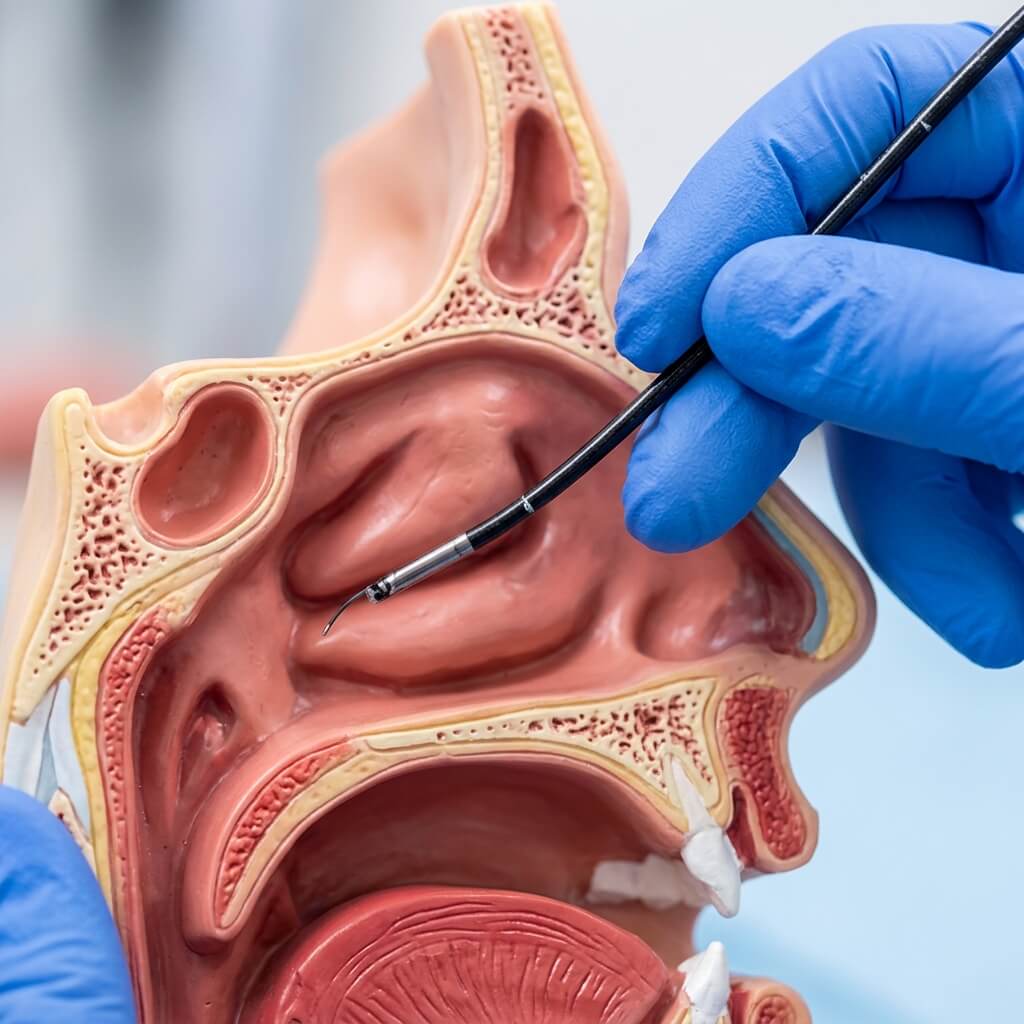
What Should You Check Before Buying a Medical Fiberscope?
A procurement team should avoid starting with price.
Start by answering five questions:
What will the scope be used for?
Which department will use it?
What anatomical area needs to be reached?
Will instruments pass through a working channel?
What imaging and reprocessing system is already available?
The answers determine the appropriate product configuration.
Common searches include:
- How to choose a medical fiberscope
- Medical fiberscope buying guide
- Fiberoptic endoscope buying guide
- Flexible fiberscope specifications
- Medical fiberscope specifications
- Flexible endoscope selection
- Fiberoptic scope comparison
- Medical endoscope purchase guide
2. Select the Fiberscope by Clinical Application
The first specification is not a number. It is the intended clinical use.
| Application | Typical Scope |
|---|---|
| Bronchoscopy | Flexible bronchoscope |
| Airway management | Airway fiberscope / intubation scope |
| ENT | Nasopharyngoscope / laryngoscope |
| Urology | Cystoscope / ureteroscope |
| Gastroenterology | Gastroscope / GI endoscope |
| Gynecology | Hysteroscope |
| Pediatric procedures | Pediatric or small-diameter scope |
A supplier should be given the intended application before being asked for a model recommendation.
For example, saying:
“We need a flexible fiberscope.”
provides less information than:
“We need a flexible bronchoscope for adult airway examination with a working channel.”
The second description gives the supplier a much clearer basis for selecting specifications.
3. Outer Diameter: One of the Most Important Fiberscope Specifications
Outer diameter refers to the diameter of the insertion tube.
It is often one of the first specifications listed on a flexible endoscope data sheet.
Common keywords include:
- Fiberscope diameter
- Medical fiberscope diameter
- Flexible endoscope diameter
- Fiberoptic scope diameter
- Insertion tube diameter
- Small diameter fiberscope
- Small caliber endoscope
- Ultrathin fiberscope
Why Does Diameter Matter?
A smaller outer diameter may make access easier in narrow anatomical pathways.
However, reducing the diameter can affect other design features, such as:
- Working-channel size
- Instrument compatibility
- Optical configuration
- Mechanical strength
Therefore, the buyer should not simply request the smallest available fiberscope.
The correct question is:
“What diameter provides the access required while maintaining the functions we need?”
4. Small-Diameter vs Standard Fiberscope
A small-diameter scope may be considered when:
- The anatomical pathway is narrow
- Pediatric patients are involved
- Less invasive access is required
- Instrument size needs to be limited
Common searches:
- Small diameter medical fiberscope
- Pediatric fiberscope
- Small diameter bronchoscope
- Ultrathin endoscope
- Mini flexible endoscope
A smaller scope can be useful, but it may have a smaller working channel.
This creates an important procurement trade-off:
Smaller Diameter ↔ Access
versus
Larger Working Channel ↔ Instrument Capability
The appropriate balance depends on the procedure.
5. Working Length
Working length describes the usable length of the insertion section.
Related keywords:
- Fiberscope working length
- Flexible endoscope working length
- Endoscope insertion length
- Medical scope length
- Bronchoscope working length
- Cystoscope working length
Working length should be matched to the anatomical distance and intended procedure.
A scope that is too short may not reach the target.
A scope that is unnecessarily long may be more difficult to manage.
For buyers, it is therefore important to compare working length, not simply total product length.
6. Field of View
Field of view (FOV) describes how much of the surrounding area can be seen through the optical system.
Common keywords include:
- Fiberscope field of view
- Fiberoptic endoscope field of view
- Endoscope FOV
- Medical endoscope viewing angle
- Fiberscope viewing angle
A wider field of view can allow a larger area to be seen at once, while a narrower field of view provides a different visual perspective.
The appropriate FOV depends on the clinical application.
The measurement of field of view and direction of view for medical endoscopes is covered by ISO 8600-3, which is recognized by the FDA as a consensus standard.
When comparing suppliers, buyers should ask for the measured field of view and viewing direction, rather than relying only on descriptions such as “wide view.”
7. Direction of View
Another specification that buyers sometimes overlook is direction of view.
This describes the angle between the instrument’s longitudinal axis and the viewing direction.
Common search terms:
- Endoscope direction of view
- Fiberscope viewing direction
- Endoscope angle of view
- Forward-viewing endoscope
- Oblique-viewing endoscope
Examples include:
0° forward view
and
angled or oblique view
The correct configuration depends on the anatomy and clinical application.
Direction of view is particularly important when comparing products designed for different specialties.
8. Tip Deflection and Bending Angle
A flexible fiberscope is useful partly because its distal tip can be controlled.
Tip deflection describes how far the distal tip can bend.
Related keywords:
- Fiberscope tip deflection
- Fiberscope bending angle
- Flexible endoscope angulation
- Endoscope tip movement
- Distal tip deflection
- Flexible scope bending range
Tip movement may be described separately for:
- Up
- Down
- Left
- Right
or as a combined range depending on the product.
A greater bending range can provide more maneuverability, but the required range depends on the anatomy.
9. Why Tip Deflection Matters
Imagine a scope moving through a curved anatomical pathway.
If the distal tip cannot bend sufficiently, the operator may not be able to direct the viewing end toward the required area.
Therefore, tip deflection affects:
- Navigation
- Maneuverability
- Target access
- Working convenience
For a procurement team, the relevant question is not:
“Does the tip bend?”
but:
“What is the exact bending range, and is it suitable for our application?”
10. Working Channel
The working channel is one of the most important functional specifications for many flexible medical scopes.
Common keywords include:
- Fiberscope working channel
- Flexible endoscope working channel
- Endoscope instrument channel
- Biopsy channel
- Suction channel
- Endoscope accessory channel
A working channel can be used for compatible accessories, depending on the device.
Possible functions include:
- Suction
- Fluid delivery
- Brush sampling
- Biopsy
- Other compatible instruments
11. Working Channel Size
The working-channel diameter matters because it determines which instruments can be passed through the scope.
For example, a buyer may need compatibility with:
- Biopsy forceps
- Cytology brushes
- Suction tubing
- Other specialty instruments
A larger channel can support larger compatible instruments, but it can also influence overall scope dimensions.
This is why buyers should evaluate:
Outer Diameter + Working Channel
as a pair.
12. Image Quality of a Medical Fiberscope
Image quality is one of the most difficult areas to summarize with a single specification.
Relevant factors include:
- Fiber bundle quality
- Number of optical fibers
- Optical resolution
- Objective lens
- Illumination
- Field of view
- Contrast
- Image transmission
Common search terms:
- Fiberoptic endoscope image quality
- Medical fiberscope image quality
- Fiberscope resolution
- Fiber bundle resolution
- Flexible endoscope image clarity
- Fiberoptic scope resolution
A traditional fiberoptic fiberscope transmits an image through an organized optical-fiber bundle. This differs fundamentally from a video endoscope, which uses an electronic image sensor.
13. Fiber Bundle and Image Resolution
The image bundle is made up of many optical fibers arranged to transmit image information.
The quality and arrangement of the bundle affect the visible image.
Potential issues with a damaged or aging fiber bundle include:
- Dark spots
- Image distortion
- Reduced resolution
- Reduced brightness
A fiberscope with damaged fibers may still produce an image, but image quality may no longer be satisfactory for the intended application.
For purchasing teams, this is one reason to evaluate not only new equipment but also the supplier’s service and replacement policies.
14. Illumination and Light Source
An image cannot be useful without adequate illumination.
A medical fiberscope may connect to a dedicated light source through a compatible light guide.
Common search terms:
- Fiberscope light source
- Endoscope light source
- Fiberoptic endoscope illumination
- Medical endoscope light system
- Fiberoptic scope light source
When purchasing a fiberscope, confirm:
- Light-source compatibility
- Connector type
- Required light source
- Whether the light source is included
A quotation that excludes the light source may not represent the complete system cost.
15. Camera Compatibility
Some traditional fiberscopes can be connected to a camera or camera adapter.
This allows the image to be displayed on a monitor or recorded digitally.
Common searches:
- Fiberscope camera
- Fiberoptic endoscope camera
- Fiberscope camera adapter
- Medical endoscope camera
- Fiberoptic scope monitor
Buyers should confirm:
- Camera compatibility
- Adapter compatibility
- Image output
- Monitor connection
- Recording capability
A fiberoptic scope and a video endoscope are not automatically interchangeable.
16. Fiberscope vs Video Endoscope for Buyers
This is an important commercial comparison.
| Feature | Fiberoptic Fiberscope | Video Endoscope |
|---|---|---|
| Image transmission | Optical fiber bundle | Electronic image sensor |
| Viewing | Eyepiece or camera system | Usually monitor |
| Digital image processing | Limited in traditional designs | Commonly available |
| Camera requirement | May be optional | Usually integrated into system |
| Main consideration | Optical performance | Sensor, processor and display |
A buyer should select based on the actual workflow.
A clinic that needs simple direct visualization may have different requirements from a hospital that needs digital recording, PACS integration and advanced image processing.
17. Fiberscope Compatibility
Compatibility is a major issue when purchasing a replacement scope.
Common searches include:
- Compatible medical fiberscope
- Replacement fiberscope
- Compatible fiberoptic endoscope
- Replacement bronchoscope
- Replacement cystoscope
- Compatible flexible endoscope
Compatibility may depend on:
- Connector
- Light source
- Camera
- Processor
- Software
- Mechanical interface
- Accessories
Never assume that two products are compatible simply because they have the same scope type.
18. Replacement Fiberscope vs Original Equipment
Hospitals sometimes look for a replacement after a scope reaches the end of its service life.
Possible options include:
Original Manufacturer Replacement
Potential advantages:
- Known compatibility
- Original ecosystem
Potential considerations:
- Higher acquisition cost
Compatible Replacement
Potential advantages:
- Different price point
- Replacement availability
Potential considerations:
- Compatibility must be verified
- Service and warranty terms should be checked
For a replacement order, provide the supplier with the ultrasound-equivalent information for endoscopy: exact original scope model, connector, application, diameter and required functions.
In practice, the safest approach is to provide the original scope’s model number and technical specification sheet for confirmation.
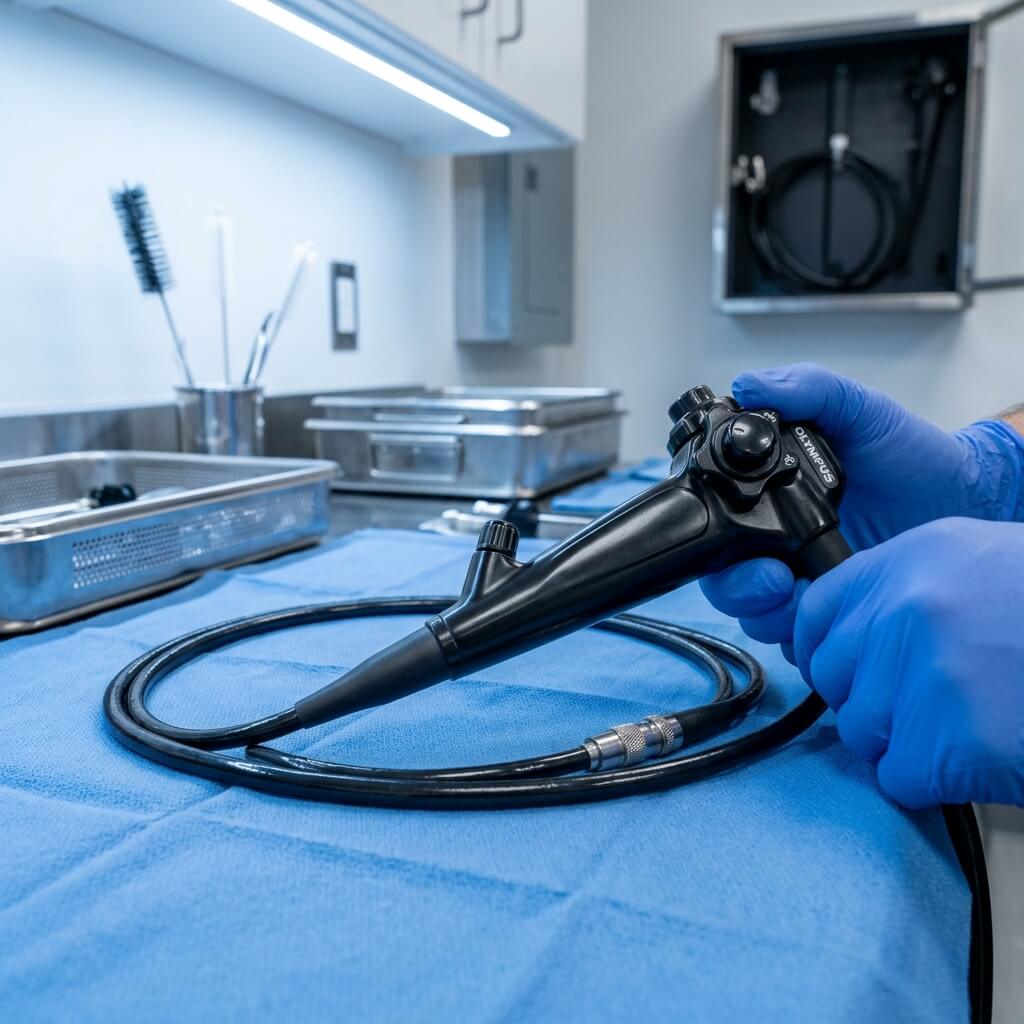
19. Reprocessing Requirements
For reusable flexible endoscopes, cleaning and reprocessing are not secondary issues.
FDA states that reusable medical devices such as endoscopes require appropriate reprocessing between uses, including cleaning followed by disinfection or sterilization as required by the device and its labeling.
Flexible endoscopes can be particularly challenging because of:
- Narrow channels
- Internal cavities
- Complex structures
- Limited access to internal surfaces
FDA’s recognized AAMI ST91:2021 standard covers processing of flexible and semi-rigid endoscopes, including flexible GI endoscopes, bronchoscopes, ENT endoscopes and urology endoscopes.
20. Ask About Cleaning and Disinfection Before Buying
A buyer should ask the manufacturer:
- Is the scope reusable?
- What cleaning method is specified?
- Is leak testing required?
- What disinfection method is validated?
- Is sterilization required?
- What chemicals are compatible?
- What temperature limits apply?
- What accessories are required for cleaning?
FDA emphasizes that manufacturers should validate their cleaning, disinfection and sterilization instructions, and that reusable devices require device-specific reprocessing procedures.
This means procurement teams should not assume that a generic endoscope-cleaning method is appropriate for every fiberscope.
21. Reprocessing Should Be Part of Product Selection
A scope with a convenient clinical design may still create operational challenges if the cleaning process is difficult.
For hospital procurement, consider:
Scope Design → Cleaning Access → Reprocessing Equipment → Staff Training → Quality Control
This should be evaluated before purchase rather than after installation.
For certain flexible endoscopes, working channels and complex internal pathways make validated reprocessing especially important. FDA specifically identifies flexible bronchoscopes, GI endoscopes, ENT endoscopes and urology endoscopes within its reprocessing framework.
22. Durability and Mechanical Construction
A medical fiberscope is used repeatedly and may experience:
- Bending
- Insertion
- Cleaning
- Disinfection
- Transportation
- Cable movement
Important mechanical considerations include:
- Insertion tube flexibility
- Bending durability
- Handle construction
- Cable strength
- Connector design
- Distal-tip protection
- Water resistance according to manufacturer specification
The buyer should request applicable durability or environmental specifications from the supplier instead of assuming that all flexible scopes have the same level of robustness.
23. Scope Ergonomics
Technical performance is only one part of usability.
Consider:
- Handle size
- Control layout
- Weight
- Tip-control mechanism
- Cable position
- Button design
- Operator comfort
A scope that is uncomfortable to control may reduce workflow efficiency even when its optical specifications are acceptable.
For a hospital doing repeated procedures, ergonomics can become a practical purchasing factor.
24. Pediatric Fiberscope Selection
For pediatric applications, scope dimensions deserve additional attention.
Important specifications include:
- Outer diameter
- Working length
- Tip deflection
- Working channel
- Image quality
Smaller scopes may improve access, but the reduced diameter can limit the available working channel.
Therefore:
Pediatric Scope Selection = Access + Visualization + Instrument Requirements
rather than simply choosing the smallest scope available.
25. How to Choose a Fiberscope for Bronchoscopy
For a bronchoscopy buyer, the checklist can include:
Clinical
- Adult or pediatric
- Diagnostic or selected therapeutic use
- Airway management requirement
Mechanical
- Outer diameter
- Working length
- Tip deflection
- Working-channel diameter
Optical
- Field of view
- Direction of view
- Image quality
- Illumination
System
- Light source
- Camera
- Monitor
- Accessories
26. How to Choose a Fiberscope for ENT
For ENT procurement, consider:
- Nasal or laryngeal application
- Scope diameter
- Working length
- Viewing direction
- Field of view
- Tip deflection
- Working channel, if required
- Camera compatibility
Common searches:
- ENT fiberscope specifications
- Flexible laryngoscope specifications
- Nasopharyngoscope specifications
- ENT fiberoptic endoscope supplier
27. How to Choose a Fiberscope for Urology
For urology, buyers may compare:
- Flexible cystoscope
- Flexible ureteroscope
Important specifications include:
- Outer diameter
- Working length
- Deflection
- Working channel
- Irrigation
- Optical performance
For ureteroscopes, additional attention may be given to scope flexibility, deflection and accessory compatibility because the anatomical pathway and procedure requirements are different from those of a cystoscope.
28. Fiberscope Specification Comparison Table
Use a standardized RFQ when comparing suppliers.
| Specification | Supplier A | Supplier B | Supplier C |
|---|---|---|---|
| Scope type | |||
| Clinical application | |||
| Outer diameter | |||
| Working length | |||
| Field of view | |||
| Direction of view | |||
| Tip deflection | |||
| Working channel | |||
| Fiber bundle / imaging | |||
| Light source | |||
| Camera compatibility | |||
| Monitor compatibility | |||
| Accessories | |||
| Reprocessing method | |||
| Warranty | |||
| Technical support | |||
| Spare parts |
This is more useful than comparing three quotations based only on unit price.
29. What Should Be Included in a Medical Fiberscope Quotation?
When requesting a quotation, ask whether the following are included:
☐ Fiberscope
☐ Light guide
☐ Light source
☐ Camera adapter
☐ Camera
☐ Monitor
☐ Working-channel accessories
☐ Cleaning accessories
☐ Storage case
☐ User manual
☐ Reprocessing instructions
☐ Warranty
☐ Spare parts
Not every project requires every item.
The purpose of this checklist is to make supplier quotations comparable.
30. How to Evaluate a Medical Fiberscope Supplier
Product specifications are only one part of supplier evaluation.
For international buyers, consider:
Manufacturing Capability
Does the supplier have actual medical equipment production or manufacturing resources?
Technical Support
Can the supplier answer questions about:
- Diameter
- Working length
- Deflection
- Compatibility
- Reprocessing
Documentation
Can the supplier provide:
- Technical specification
- User manual
- Certification
- Reprocessing instructions
After-Sales Support
Check:
- Warranty
- Spare parts
- Repairs
- Remote support
31. UMY Medical Equipment Co., Ltd. and Fiberscope Selection
UMY Medical Equipment Co., Ltd. currently offers fiber-optic endoscopy products covering several applications, including fiber cystoscope, nasopharyngoscope, bronchoscope, choledochoscope and hysteroscope. Its published product information includes examples of a 90° field of view, 5.0/3.8 mm insertion diameter and up/down bending specifications, with exact configuration varying according to the product type.
For international buyers, UMY Medical’s role can extend beyond selecting the scope itself. A fiberscope project may also involve:
- Technical specification matching
- Scope configuration
- Accessories
- Camera or imaging equipment
- Documentation
- International shipping
- After-sales support
The buyer should provide the intended application and existing equipment details before requesting a final model and quotation.
32. A Practical Medical Fiberscope Selection Process
A simple procurement process is:
Step 1: Define the Application
Bronchoscopy, ENT, urology, GI, gynecology or another specialty.
Step 2: Define the Patient Group
Adult, pediatric or both.
Step 3: Define Access Requirements
Determine the appropriate outer diameter and working length.
Step 4: Define Navigation Requirements
Check tip deflection and viewing direction.
Step 5: Define Procedure Requirements
Decide whether a working channel is needed.
Step 6: Define Imaging Requirements
Compare field of view, fiber bundle and camera options.
Step 7: Check Compatibility
Confirm light source, camera, monitor and accessory compatibility.
Step 8: Check Reprocessing
Review manufacturer-specific cleaning and disinfection instructions.
Step 9: Compare Suppliers
Compare product, documentation, warranty and technical support.
Step 10: Review Total Cost
Calculate:
Equipment + Accessories + Installation + Training + Maintenance + Replacement Parts
33. Common Buying Mistakes
Mistake 1: Choosing Only by Price
A lower quotation may exclude accessories, installation or service.
Mistake 2: Choosing Only by Diameter
A smaller scope is not automatically more appropriate.
Mistake 3: Ignoring Working Channel
The scope may not support the instruments required.
Mistake 4: Ignoring Compatibility
A scope may not connect to an existing light source or camera.
Mistake 5: Ignoring Reprocessing
The cleaning and disinfection workflow needs to be understood before purchase.
Mistake 6: Comparing Marketing Claims Instead of Specifications
Request measurable technical data whenever possible.
34. Frequently Asked Questions About Choosing a Medical Fiberscope
What is the most important specification for a medical fiberscope?
There is no single most important specification. Application, diameter, working length, deflection, working channel and imaging requirements should be considered together.
What fiberscope diameter should I choose?
Choose a diameter appropriate for the anatomical pathway while maintaining the working-channel and imaging functions required for the procedure.
What is the difference between working length and total length?
Working length refers to the usable insertion length, while total product length can include the handle and other components.
What does field of view mean in a fiberscope?
Field of view indicates the extent of the visible area through the optical system.
What is direction of view?
It describes the direction in which the scope’s optical system views relative to the longitudinal axis of the instrument.
Why is tip deflection important?
Tip deflection determines how the distal end can be steered and can affect access to curved anatomical pathways.
Why is the working channel important?
It determines whether compatible suction, biopsy or other instruments can pass through the scope.
Is a smaller fiberscope always better?
No. A smaller diameter can improve access but may reduce working-channel size or change other design characteristics.
What is the difference between a fiberscope and a video endoscope?
A traditional fiberscope transmits an image through optical fibers, while a video endoscope generally uses an electronic image sensor.
Can one fiberscope be used for several specialties?
Not necessarily. Scope dimensions, working channels, optical characteristics and intended use differ among specialties.
How do I choose a replacement fiberscope?
Confirm the original scope model, connector, clinical application, diameter, working length, deflection, working channel and compatibility with the existing equipment.
What should hospitals ask a fiberscope supplier?
Ask for complete technical specifications, compatibility information, accessories, reprocessing instructions, warranty and after-sales support.
What should be checked before buying a reusable fiberscope?
Check the manufacturer’s validated cleaning, disinfection or sterilization instructions and whether the hospital has the necessary equipment and trained staff to follow them. FDA emphasizes device-specific validated reprocessing procedures for reusable medical devices.