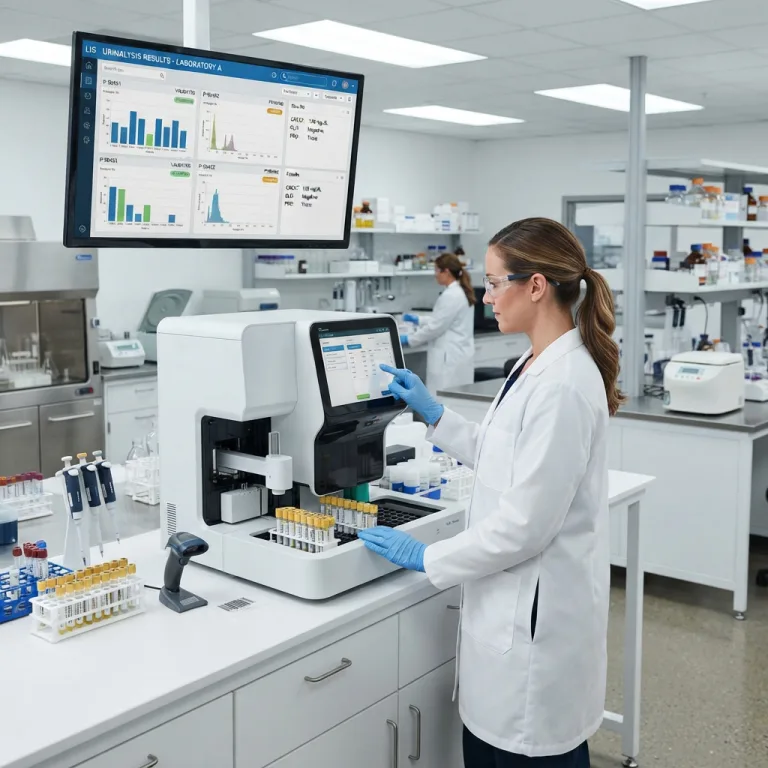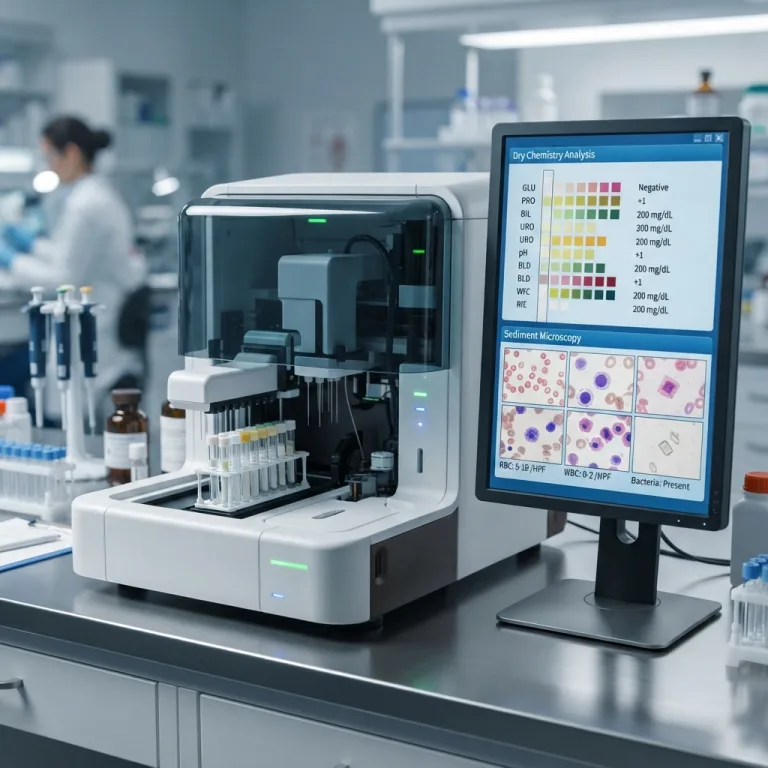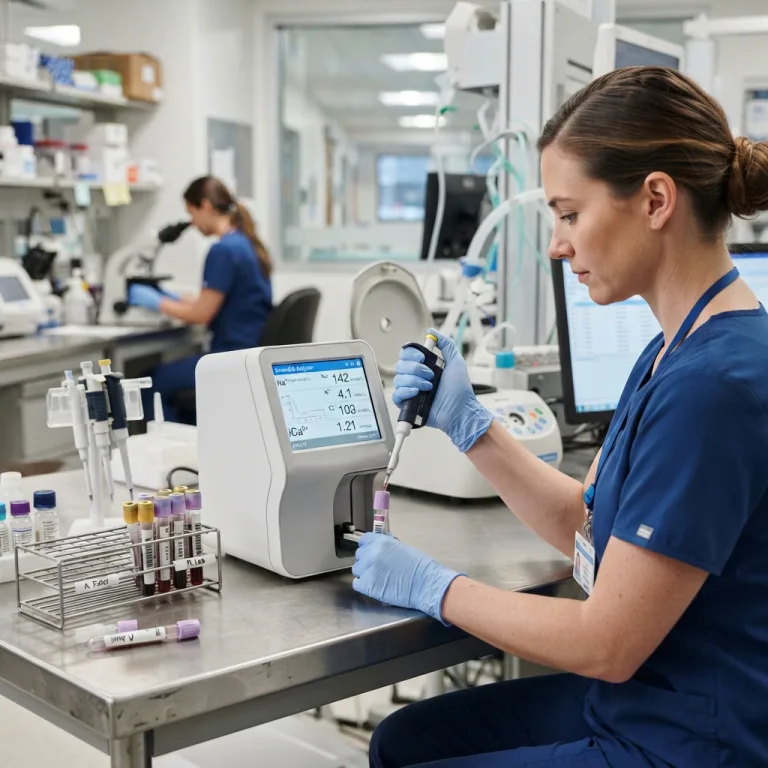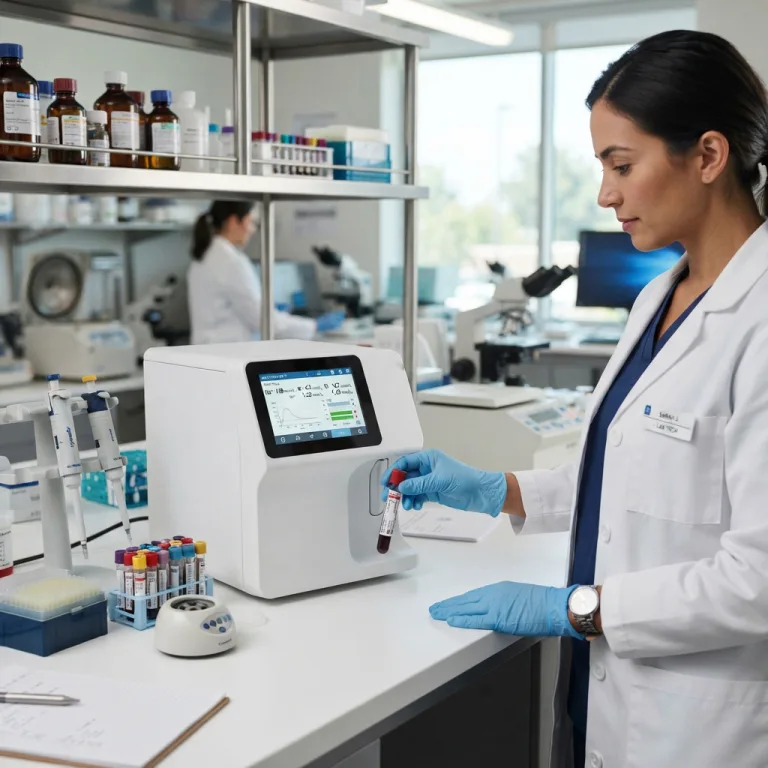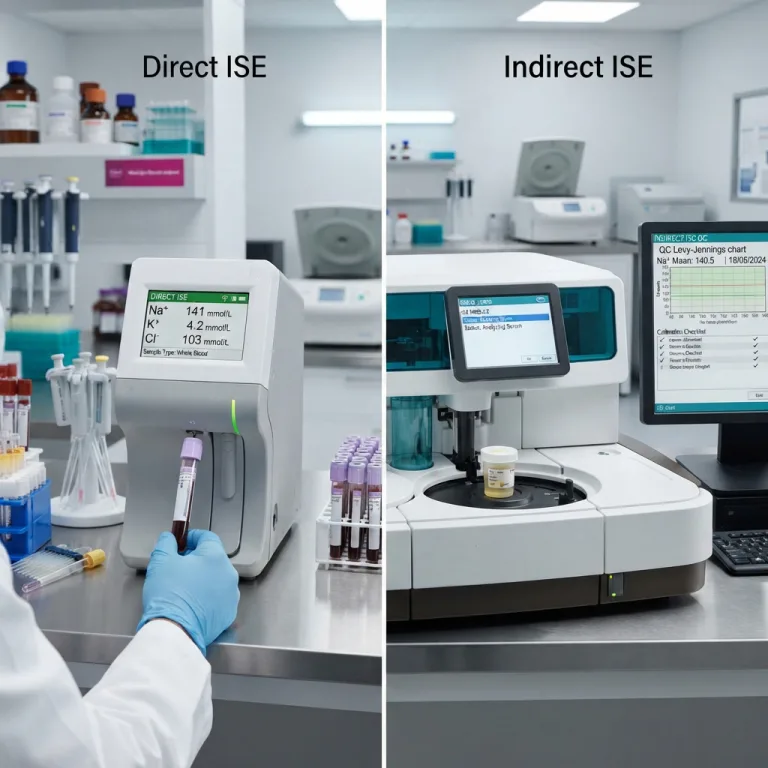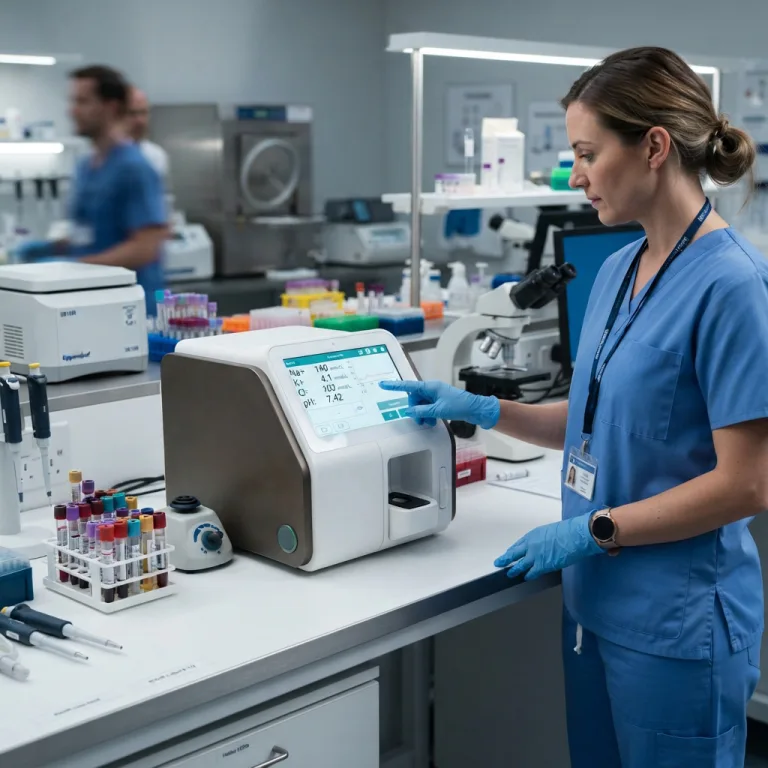
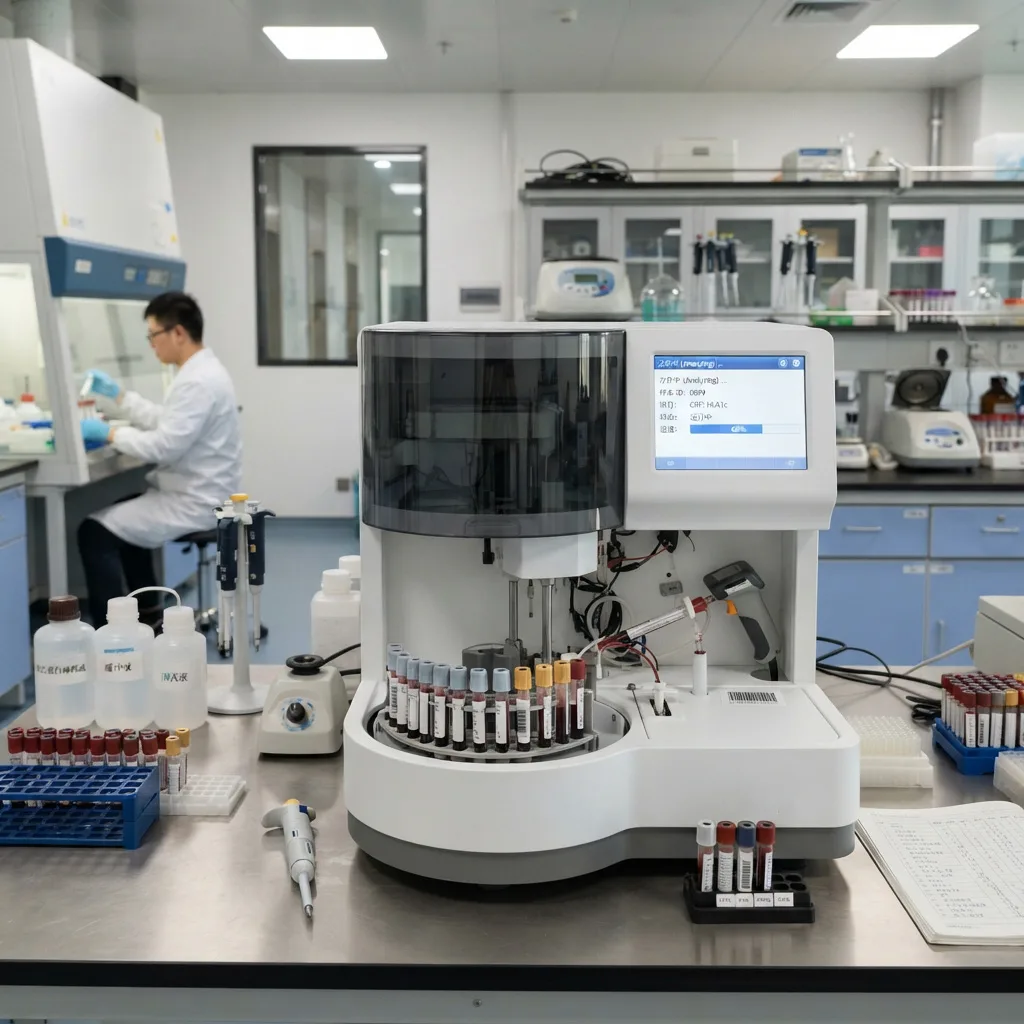
The 9:00 AM Morning Rush: The True Test of Laboratory Turnaround Time (TAT)
Imagine a typical Monday morning at 9:00 AM in a bustling regional hospital laboratory. The emergency department drops off 80 pediatric fingerstick capillary tubes for suspected viral versus bacterial fever triage. Simultaneously, the endocrinology outpatient clinic delivers 100 EDTA anti-coagulated tubes for routine HbA1c screening.
If the laboratory relies on a traditional biochemistry analyzer for protein testing, every single one of those 180 tubes must undergo a time-consuming pre-analytical workflow. The technician must manually uncap the tubes (risking aerosol biohazard exposure), load them into a centrifuge, spin them for 15 minutes to separate the serum or plasma, re-rack them, and finally place them on the analyzer. By the time the first CRP or HbA1c result reaches the ordering physician, 45 minutes have elapsed—delaying pediatric antibiotic administration and bottlenecking the outpatient waiting room.
Modern specific protein analyzers are engineered specifically to obliterate this pre-analytical bottleneck. By integrating closed-tube piercing, direct whole-blood aspiration, and automated hematocrit correction, these instruments turn a 45-minute ordeal into a 3-minute rapid response.
For hospital Chief Financial Officers (CFOs), laboratory directors, and B2B medical distributors, evaluating specific protein analyzers requires looking past basic optical claims and auditing the mechanical robotics, consumable architecture, and Total Cost of Ownership (TCO).
1. The Pre-Analytical Advantage: Cap-Piercing and Whole Blood Processing
The single greatest operational advantage of a dedicated specific protein analyzer over a general chemistry analyzer is its ability to process native whole blood directly through a closed tube.
                  THE CAP-PIERCING WHOLE BLOOD WORKFLOW
+-------------------------------------------------------------------------+
| [ STEP 1: Closed-Tube Rack Loading ]                                    |
|   - EDTA tubes placed directly on analyzer rack (Zero centrifugation)   |
|                                                                         |
| [ STEP 2: Cap-Piercing Aspiration ]                                     |
|   - Heavy-duty titanium/steel probe pierces rubber stopper              |
|   - Aspirates 2 to 10 microliters of whole blood                        |
|   - Washes exterior probe wall upon withdrawal (Zero carryover)         |
|                                                                         |
| [ STEP 3: Automated HCT Correction & Hemolysis ]                        |
|   - Blood mixed with saponin buffer to lyse Red Blood Cells (RBCs)      |
|   - Optical reader measures total hemoglobin to calculate HCT %         |
|   - Result is mathematically corrected to report pure plasma protein    |
+-------------------------------------------------------------------------+
Why Hematocrit (HCT) Correction is Mandatory
When testing C-Reactive Protein (CRP) or Serum Amyloid A (SAA) from a whole blood sample, the target proteins exist entirely in the liquid plasma. However, the physical volume of a whole blood sample is heavily occupied by red blood cells.
-
If a severely anemic patient has a Hematocrit (HCT) of 20%, their blood is 80% plasma.
-
If a healthy adult has an HCT of 45%, their blood is only 55% plasma. If an analyzer aspirates 5 microliters of whole blood from both patients and simply runs the test without adjusting for the red blood cell volume, the anemic patient will falsely appear to have a much higher plasma protein concentration.
Advanced specific protein analyzers solve this by automatically hemolyzing the red blood cells, using the photometer to read the released hemoglobin concentration, calculating the exact Hematocrit percentage of that specific tube, and mathematically adjusting the final CRP or SAA result. This guarantees that whole blood results perfectly match centrifuged serum results, completely eliminating the need for a centrifuge.
Liquid Level Sensing (LLS) and Anti-Collision Robotics
When a stainless steel probe plunges into a primary collection tube, it must be intelligent.
-
Liquid Level Sensing: The probe uses capacitance or pressure sensing to stop exactly 1 millimeter below the fluid surface, ensuring it aspirates pure liquid rather than plunging to the bottom and sucking up plastic debris or clotting gel.
-
Crash Protection: If the probe strikes a hard obstruction (such as an improperly loaded tube or a frozen sample), a vertical suspension spring and micro-switch instantly halt the motor. The analyzer retracts the probe and flags the error on screen, preventing a bent needle and saving the laboratory thousands of dollars in mechanical repair costs.
2. Hardware Tiers: Matching Throughput to Laboratory Volume
Purchasing an oversized floor-standing workstation for a rural clinic wastes capital, while placing a single-channel point-of-care (POCT) reader in a central hospital core laboratory guarantees morning breakdowns. Buyers must align the hardware tier with peak hourly specimen volume.
| Feature / Specification | Tier 1: Single-Channel POCT | Tier 2: Multi-Channel Semi-Auto | Tier 3: Fully Automated Walk-Away |
| Target Daily Volume | 5 to 30 tests / day | 30 to 100 tests / day | 100 to 500+ tests / day |
| Throughput (Speed) | 1 test every 3 minutes | 4 to 8 tests simultaneously | 100 to 200+ tests per hour |
| Operator Workflow | Manual pipetting required | Manual pipetting into cuvettes | 100% Walk-away robotic track |
| Reagent Format | Single-use pre-filled cards | Bulk liquid vials | Refrigerated bulk liquid cassettes |
| Whole Blood Handling | Fingerstick capillary tube | Manual dilution required | Automated Cap-Piercing |
| Optimal Facility | Pediatric clinics, urgent care | Small community hospitals | Central hospitals, core labs, CROs |
-
The POCT Dilemma: Single-channel POCT readers are highly affordable (low CAPEX) but usually rely on single-use microfluidic cartridges that cost significantly more per test (high OPEX). They are ideal for low-volume clinics where a bulk liquid reagent bottle would expire before being used up.
-
The Walk-Away ROI: For facilities running over 50 HbA1c or CRP tests daily, upgrading to a Tier 3 fully automated workstation yields massive ROI. The laboratory transitions to low-cost bulk liquid reagents, eliminates human pipetting errors, and frees the technologist to perform high-complexity tasks elsewhere.
3. Intelligent Calibration and Reagent Management
In clinical chemistry, calibrating a new batch of reagents is a painful, time-consuming process. The technician must reconstitute 5 to 6 expensive liquid calibrator vials, run them through the machine, and mathematically verify the spline curve before patient testing can begin. This wastes up to an hour of labor and thousands of dollars in calibrator fluid annually.
RFID and Smart Card Master Curves
Modern specific protein analyzers eliminate manual liquid calibration through Smart Card Technology (utilizing magnetic stripe cards, RFID chips, or 2D QR codes).
-
When the factory manufactures a new lot of CRP or HbA1c reagent, they perform rigorous multi-point calibration on industrial reference analyzers.
-
They encode this exact 6-point non-linear mathematical curve (the “Master Curve”) onto an RFID chip affixed to the reagent box.
-
When the laboratory opens the box, they simply tap the RFID card against the analyzer. The instrument instantly downloads the new lot number, expiration date, and master curve in one second. The laboratory only needs to run a quick single-point or bi-level liquid Quality Control (QC) check to verify optical alignment, cutting calibration time by 98%.
Onboard Refrigeration and 3D Mixing
Latex-enhanced specific protein reagents contain billions of sub-micron polystyrene beads coated in antibodies.
-
Reagent Cooling: If these biological reagents sit at room temperature for a week, the antibodies degrade. Walk-away analyzers feature a Peltier-cooled reagent carousel that maintains a constant 2 to 8 degrees Celsius inside the machine. This allows reagents to remain onboard 24/7 with a typical stability of 30 to 60 days.
-
Automated Mixing: Over several days, heavy latex microparticles slowly settle to the bottom of the reagent bottle. Advanced analyzers use a rotating paddle or intelligent orbital tray shaking to gently resuspend the latex beads every few hours, ensuring homogenous optical scattering without generating destructive air bubbles.
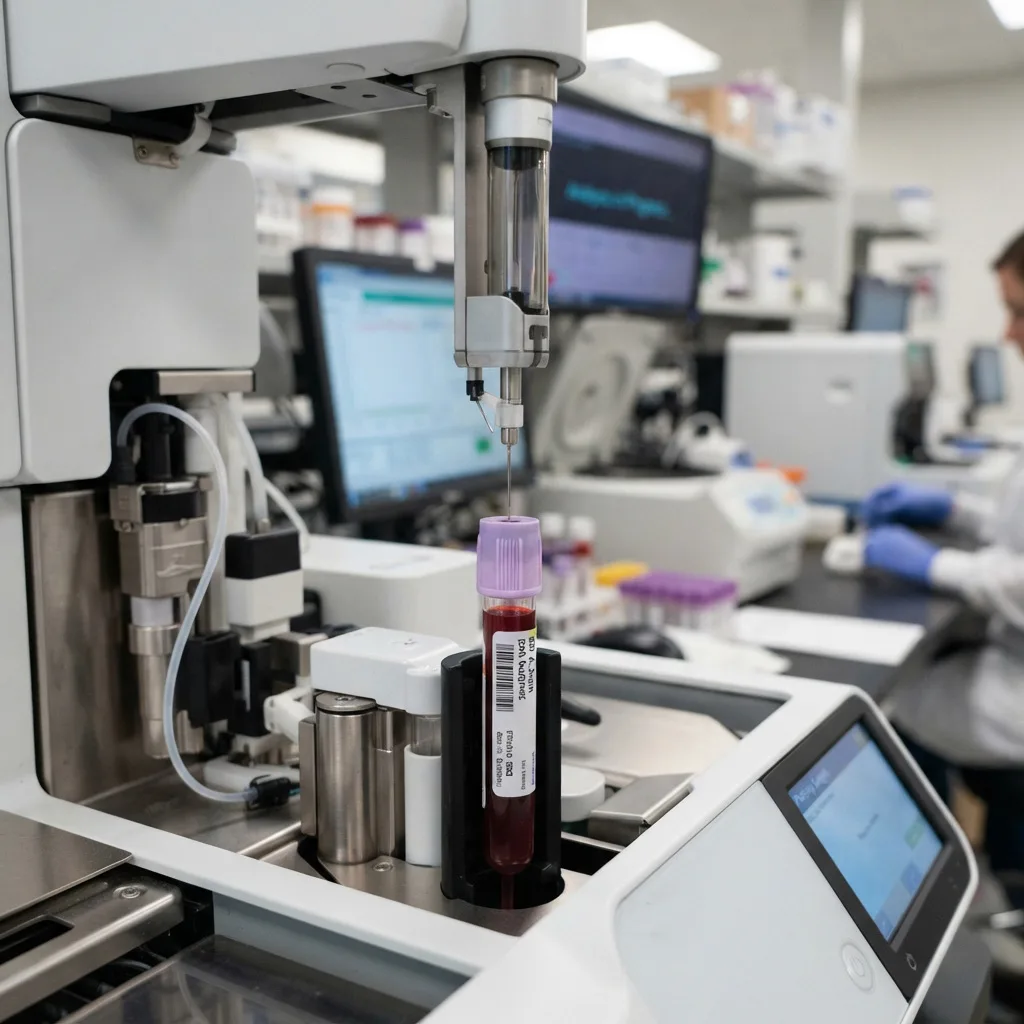
Close-up view of an automated clinical analyzer’s precision robotic probe piercing a vacuum tube to aspirate a blood sample for diagnostic testing.
4. Calculating the 5-Year Total Cost of Ownership (TCO)
The most common mistake made by hospital procurement committees is judging vendor bids solely on the upfront hardware price (CAPEX) while ignoring the 5-year operational footprint (OPEX).
               TCO BREAKDOWN: THE "RAZOR AND BLADE" IVD MODEL
+-------------------------------------------------------------------------+
| INITIAL HARDWARE CAPEX (15% to 20% of 5-Year Cost)                      |
| - Analyzer Mainframe, Robotic Sampler, Workstation PC, Barcode Scanner  |
|                                                                         |
| RECURRING CONSUMABLE OPEX (80% to 85% of 5-Year Cost)                   |
| - Reagent Kits (Latex R1/R2 buffers, Saponin hemolysis buffer)          |
| - Disposable Reaction Cuvettes (or permanent flow-cell wash solutions)  |
| - Liquid Bi-Level Quality Control (IQC) materials                       |
| - Calibrator buffers and daily enzymatic wash detergents                |
+-------------------------------------------------------------------------+
Minimizing Reagent Dead Volume
In walk-away analyzers, the reagent probe aspirates fluid from a plastic bottle. Because the rigid probe cannot scrape the absolute bottom of the bottle without risking an air bubble, there is always “Dead Volume” (residual reagent that must be thrown away).
-
When comparing bids, check the required test volume vs. packaged volume. If a test requires 150 microliters of reagent, and the bottle contains 15 milliliters, theoretically it yields 100 tests. But if the bottle has a 2-milliliter dead volume, you lose 13 tests per bottle. Premium analyzers use angled bottle bottoms and precision level sensing to reduce dead volume to under 0.5 milliliters.
Cuvette Architecture: Disposable vs. Permanent
-
Disposable Cuvettes: The analyzer feeds continuous plastic cuvettes from a hopper. This eliminates sample carryover entirely but adds a recurring cost of a few cents per test. For highly infectious samples or high-volume labs, the convenience often outweighs the cost.
-
Permanent Quartz Cuvettes / Flow Cells: The reaction occurs in a permanent optical glass chamber that is washed with alkaline detergent between every test. This slashes solid waste and consumable OPEX but requires strict adherence to daily maintenance wash cycles to prevent latex protein biofilms from clouding the glass over time.
5. LIS Connectivity and Data Integrity
A specific protein analyzer generates critical diagnostic data that dictates emergency room prescribing. If that data requires manual keyboard transcription, human error is inevitable.
When drafting procurement tenders, IT directors must mandate Bidirectional LIS/HIS Connectivity:
-
Native HL7 and ASTM Protocols: The analyzer must communicate directly with the hospital Laboratory Information System using standard HL7 (v2.3.1/v2.5) or ASTM (E1381) protocols via a standard TCP/IP Ethernet port.
-
Bidirectional Host Query: The analyzer’s internal 1D/2D barcode scanner reads the patient tube label and asks the LIS, “What tests are ordered for Patient X?” The LIS replies instantly (e.g., “Run CRP and HbA1c”). The analyzer automatically pipettes the correct reagents, completes the tests, and pushes the final numerical results back to the patient’s electronic medical record (EMR).
-
Zero Subscription Fees: Beware of vendors that offer cheap hardware but lock data export capabilities behind proprietary “middleware” software that requires expensive annual licensing fees.
6. Factory-Direct B2B Sourcing: A Competitive Advantage
For regional healthcare networks, international IVD distributors, and clinical research organizations (CROs), securing the best specific protein analyzer means bypassing multi-tier middleman trading companies. Sourcing directly from an original equipment manufacturer (OEM) provides massive capital efficiency and supply chain security.
广州优迈医疗器械有限公司 (UMY Medical Equipment Co., Ltd.) stands as a premier global manufacturer of medical laboratory instruments, operating under strict ISO 13485 medical quality management systems and holding CE marking for seamless international regulatory compliance.
Why Distributors and Hospitals Rely on UMY Medical:
-
Advanced Whole-Blood Automation: UMY Medical specific protein workstations integrate robust cap-piercing robotics, highly accurate automated hematocrit (HCT) correction, and liquid-level anti-collision sensing, ensuring rapid, hands-free throughput for both EDTA whole blood and centrifuged serum.
-
Cold LED & Latex Optimization: By pairing long-life, drift-free cold LED optical photometers with high-quality latex-enhanced immunonephelometric and turbidimetric reagents, UMY Medical systems deliver exceptional sensitivity for critical markers like hs-CRP, SAA, PCT, and Cystatin C.
-
Frictionless Open Architecture: Featuring RFID smart-card master curve uploads and subscription-free bidirectional HL7 software, the instruments integrate smoothly into any hospital IT ecosystem.
-
Maximized ROI & TCO: By manufacturing the optical hardware and supplying optimized reagent packaging directly from the factory, UMY Medical eliminates third-party trading markups, allowing B2B distributors to protect their profit margins and hospitals to drastically lower their per-test OPEX. (To review wholesale specifications and comprehensive laboratory solutions, visit the official website at https://www.umymedical.com/).
Frequently Asked Questions (FAQ)
Q1: Why must we use EDTA tubes instead of Heparin tubes for HbA1c whole blood testing?
HbA1c testing requires preserving the structural integrity of the red blood cells until the analyzer intentionally lyses them. EDTA (Ethylenediaminetetraacetic acid) acts as an excellent chelating anticoagulant that preserves red blood cell morphology perfectly. Heparin can sometimes induce micro-clots or interfere with latex-antibody binding kinetics in certain immunoturbidimetric assays, making EDTA the universal gold standard for whole-blood protein testing.
Q2: What happens if a severely lipemic or icteric (jaundiced) serum sample is loaded?
High concentrations of circulating triglycerides (lipemia) or bilirubin (icterus) scatter and absorb light, causing severe baseline optical interference. Advanced specific protein analyzers handle this by utilizing kinetic rate nephelometry. Because kinetic algorithms only measure the dynamic rate of change (the slope of the reaction after reagent is added), static background interference from lipid droplets or bilirubin pigment is mathematically subtracted and ignored, preventing false-positive results.
Q3: How frequently does the optical lamp or LED need to be replaced?
Legacy analyzers utilizing halogen-tungsten lamps required replacement every 1,000 to 2,000 hours (roughly every 6 months) because the filament burns out and the light intensity degrades continuously. Modern specific protein analyzers utilize monochromatic cold LED arrays or solid-state lasers. These light sources emit negligible heat, exhibit virtually zero optical drift over time, and boast operational lifespans exceeding 50,000 to 100,000 hours—meaning the light source will easily outlast the entire 10-year lifespan of the instrument.
Q4: Does the analyzer require daily manual calibration?
No. Thanks to factory-provided RFID/Smart Card master curves, the complex 6-point mathematical calibration is uploaded instantly. The laboratory only needs to run a standard Level 1 (Normal) and Level 2 (Pathological) liquid Quality Control (QC) sample every morning. As long as the QC results fall within the accepted Levey-Jennings target ranges, the analyzer is ready for immediate patient testing. Actual recalibration is only required when changing to a completely different lot number of reagents or if major preventative maintenance is performed.
Q5: Can the analyzer perform multiple different tests on the same patient tube simultaneously?
Yes. Fully automated workstations feature random-access programming. If the LIS orders a “Fever Panel” (CRP + SAA + PCT) and an “Immune Panel” (IgG + IgA + IgM) for the same patient tube, the analyzer’s robotic probe will sequentially aspirate the required micro-volumes, dispense them into separate optical cuvettes, add the respective reagents, and process all six tests in parallel, delivering the complete consolidated report to the LIS in minutes.
Purchasing a specific protein analyzer is a strategic investment that directly impacts emergency room triage speeds, pediatric bio-safety, and long-term laboratory operating budgets. By prioritizing cap-piercing whole blood automation, demanding RFID master-curve calibration, securing subscription-free bidirectional LIS connectivity, and evaluating the 5-year reagent TCO, hospital procurement teams guarantee clinical excellence. Partnering directly with an ISO 13485-certified manufacturer like 广州优迈医疗器械有限公司 (UMY Medical Equipment Co., Ltd.) ensures that healthcare networks achieve this high-tier automation without the financial burden of legacy closed-system markups.