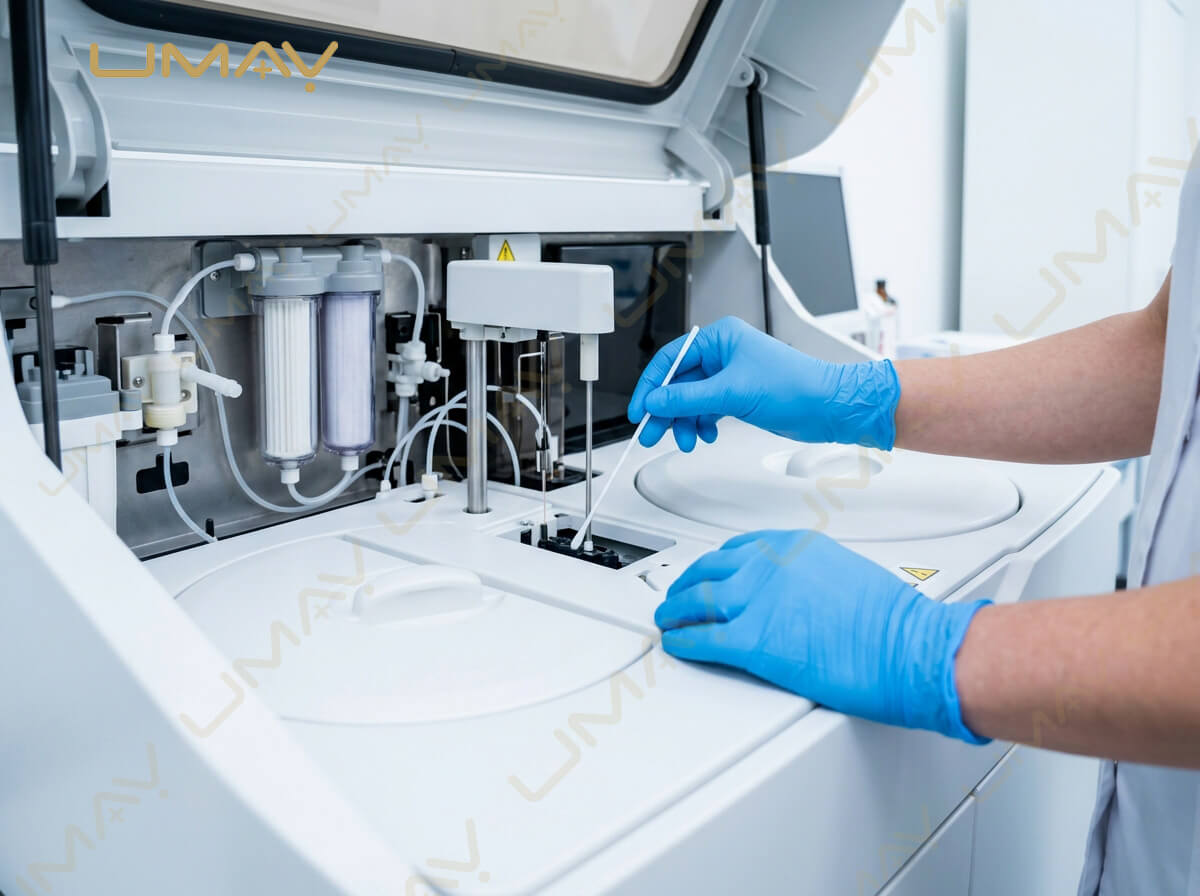
A biochemical analyzer is an important part of modern clinical laboratories. Hospitals, diagnostic centers, clinics and medical laboratories rely on chemistry analyzers for routine tests such as glucose, urea, creatinine, cholesterol, triglycerides, ALT, AST, bilirubin and other biochemical parameters.
However, purchasing a good analyzer is only the beginning.
Regular biochemical analyzer maintenance, proper reagent management, calibration and quality control are essential for keeping laboratory testing consistent and reliable.
For laboratory managers and procurement teams, maintenance should also be considered before purchasing an analyzer. A system that is easy to clean, simple to operate and supported by reliable technical service may be easier to manage over its working life.
This guide explains the main areas of biochemistry analyzer maintenance, common problems, quality control procedures and questions buyers should ask manufacturers.
1. Why Is Biochemical Analyzer Maintenance Important?
Routine maintenance helps laboratories keep equipment operating according to the manufacturer’s instructions.
A poorly maintained analyzer may experience:
- Unstable test results
- Increased error messages
- Reagent problems
- Probe blockage
- Cuvette contamination
- Poor optical performance
- Increased carryover
- Calibration failure
- Unexpected downtime
Maintenance does not mean simply cleaning the outside of the analyzer.
It can include:
- Cleaning
- Inspection
- Calibration
- Quality control
- Reagent management
- Consumable replacement
- Waste management
- Software checks
- Preventive maintenance
The exact procedure depends on the analyzer model.
2. What Is Biochemical Analyzer Maintenance?
Biochemical analyzer maintenance refers to the routine activities performed to keep a clinical chemistry analyzer functioning properly.
Maintenance may be divided into:
- Daily maintenance
- Weekly maintenance
- Monthly maintenance
- Preventive maintenance
- Corrective maintenance
The manufacturer’s user manual should always be the primary reference for specific maintenance procedures.
Different biochemical analyzers have different designs, cleaning requirements and consumables.
3. Daily Biochemical Analyzer Maintenance
Daily maintenance is usually the most basic part of laboratory analyzer care.
Depending on the analyzer, daily tasks may include:
- Checking the instrument
- Cleaning the sample probe
- Cleaning reagent probes
- Checking reaction cuvettes
- Checking washing solutions
- Checking reagent levels
- Emptying waste containers
- Checking water supply
- Checking system alarms
- Running required QC procedures
Operators should follow the manufacturer’s daily maintenance checklist.
A simple daily inspection can help identify problems before they become larger failures.
4. Weekly Biochemical Analyzer Maintenance
Some analyzers require additional weekly maintenance.
Possible tasks include:
- Deep cleaning of probes
- Cleaning reaction areas
- Checking tubing
- Inspecting pumps
- Cleaning mixing components
- Checking reagent compartments
- Reviewing error logs
- Checking optical components
The actual schedule depends on the instrument.
A laboratory should not create a maintenance procedure that conflicts with the manufacturer’s instructions.
5. Monthly Preventive Maintenance
Some laboratory analyzers require periodic preventive maintenance by trained personnel.
This may include:
- Mechanical inspection
- Optical system inspection
- Pump inspection
- Probe inspection
- Tubing inspection
- Temperature system checks
- Software diagnostics
- Consumable replacement
For high-volume laboratories, preventive maintenance is particularly important because equipment downtime can affect the entire laboratory workflow.
6. What Is Preventive Maintenance?
Preventive maintenance means performing planned maintenance before equipment failure occurs.
Instead of waiting for an analyzer to stop working, the laboratory follows a scheduled maintenance plan.
Preventive maintenance may include:
- Cleaning
- Inspection
- Lubrication where specified
- Consumable replacement
- Probe maintenance
- Optical checks
- Calibration verification
- System diagnostics
The goal is to reduce unexpected downtime and maintain consistent equipment performance.
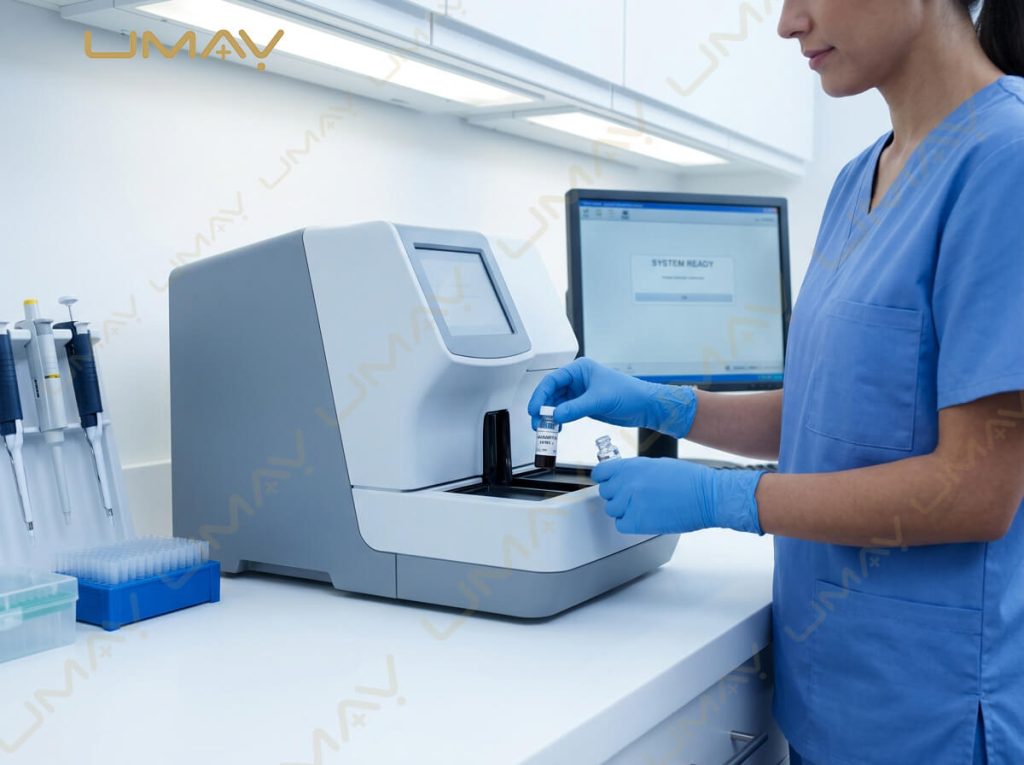
7. Biochemical Analyzer Calibration
Calibration is an important part of clinical chemistry testing.
Calibration establishes the relationship between an instrument’s measurement response and the expected analytical value for a particular assay system.
Calibration requirements depend on:
- Analyzer
- Reagent
- Test method
- Calibrator
- Reagent lot
- Manufacturer instructions
Common search terms include:
- biochemical analyzer calibration
- chemistry analyzer calibration
- clinical chemistry calibration
- biochemical analyzer calibrator
- automatic chemistry analyzer calibration
- laboratory analyzer calibration
8. When Is Calibration Required?
The exact calibration schedule varies.
Calibration may be required:
- During initial setup
- When a reagent lot changes
- When a calibrator changes
- After certain maintenance procedures
- When QC results indicate a problem
- According to the manufacturer’s recommended schedule
Laboratory personnel should follow the validated procedure for the specific reagent and analyzer.
9. What Happens When Calibration Fails?
A calibration failure can have several possible causes.
For example:
- Incorrect calibrator
- Expired calibrator
- Incorrect reagent preparation
- Reagent deterioration
- Incorrect calibration settings
- Dirty cuvette
- Probe problem
- Optical problem
- Temperature problem
The operator should follow the analyzer’s troubleshooting instructions rather than simply repeating calibration multiple times.
10. Biochemical Analyzer Quality Control
Quality control, commonly called QC, is an essential part of laboratory operations.
QC helps laboratories monitor whether the analytical system is performing within established limits.
A laboratory may use control materials at different concentration levels.
Common terms include:
- biochemical analyzer QC
- chemistry analyzer quality control
- clinical chemistry QC
- laboratory quality control
- biochemical test QC
- chemistry analyzer control material
The laboratory should establish QC procedures according to its quality management system and applicable laboratory requirements.
11. Why Is QC Important?
Imagine an analyzer produces results that look normal but its analytical performance has gradually changed.
Without appropriate QC monitoring, the problem may not be noticed immediately.
QC can help laboratories identify:
- Systematic changes
- Random variation
- Reagent problems
- Calibration problems
- Instrument problems
QC results should be reviewed according to the laboratory’s established procedures.
12. Calibration vs Quality Control
Calibration and QC are related but different.
Calibration
Calibration establishes the measurement relationship for a test system.
Quality Control
QC monitors the performance of the analytical system after calibration.
A simple way to remember the difference is:
Calibration sets the measurement relationship.
Quality control monitors performance.
Both are important parts of laboratory quality management.
13. Reagent Management
Reagents are critical to biochemical analyzer operation.
Poor reagent management can cause:
- Incorrect results
- Calibration failure
- QC failure
- Reagent alarms
- Increased testing costs
- Wasted materials
Laboratories should monitor:
- Reagent expiration dates
- Storage conditions
- Lot numbers
- Open-vial stability
- Reagent volume
- Reagent contamination
- Reagent loading
The exact storage and stability requirements should follow the reagent manufacturer’s instructions.
14. How Should Biochemical Analyzer Reagents Be Stored?
Different reagents have different storage requirements.
Some may require refrigerated storage, while others may have different conditions.
Important factors include:
- Temperature
- Light exposure
- Container sealing
- Expiration date
- Open-vial stability
- Transportation conditions
Laboratories should use temperature monitoring where required and follow the manufacturer’s storage instructions.
15. Reagent Expiration and Open-Vial Stability
A reagent can have more than one relevant time limit.
For example:
Manufacturer expiration date
and
Open-vial stability
These are not necessarily the same.
Once a reagent is opened, its usable period may be shorter than the unopened shelf life.
Always check the specific reagent instructions.
16. Biochemical Analyzer Probe Cleaning
The sample probe and reagent probe are important components in an automated chemistry analyzer.
Probe contamination can potentially affect:
- Sample aspiration
- Reagent dispensing
- Carryover
- Pipetting accuracy
Depending on the analyzer, routine probe maintenance may include:
- Automatic probe washing
- Manual cleaning
- Inspection
- Replacement when necessary
Operators should use only the cleaning solutions and procedures specified by the manufacturer.
17. What Is Carryover?
Carryover occurs when material from one sample or reagent affects another measurement.
It can become an important consideration in high-throughput clinical chemistry systems.
Manufacturers may reduce carryover through:
- Probe washing
- Cuvette washing
- Special wash procedures
- Software-controlled sequences
- Appropriate system design
When purchasing a biochemical analyzer, buyers can ask for the manufacturer’s carryover specifications.
18. Reaction Cuvette Maintenance
Reaction cuvettes are used for chemical reactions in many automated biochemical analyzers.
Depending on the analyzer design, cuvettes may be:
- Reusable and automatically washed
- Replaceable
- Disposable
Cuvette contamination can potentially affect optical measurement.
Operators should follow the manufacturer’s recommended:
- Cleaning procedure
- Washing solution
- Replacement schedule
- Inspection procedure
19. Optical System Maintenance
Many biochemical analyzers use a photometric or spectrophotometric optical system.
The optical system may include:
- Light source
- Filters or wavelength selection components
- Optical path
- Detector
- Measurement chamber
Dust, contamination, lamp aging or other system issues may affect measurement performance.
Optical maintenance should generally be performed according to the manufacturer’s procedures.
20. Biochemical Analyzer Lamp Maintenance
Some chemistry analyzers use a lamp or other light source for photometric measurement.
A lamp may have a specified operating life.
Possible signs of an optical light-source problem include:
- Optical alarms
- Unstable absorbance readings
- Calibration problems
- QC abnormalities
If the analyzer reports a lamp or optical error, follow the manufacturer’s troubleshooting procedure.
Do not replace components without confirming that the lamp is the actual cause of the problem.
21. Water System Maintenance
Some automated biochemical analyzers use water for washing or other system functions.
Water quality can therefore be important.
Depending on the analyzer, laboratories may need to monitor:
- Water source
- Water quality
- Water supply
- Water filters
- Tubing
- Wastewater
Always follow the analyzer’s specified water requirements.
22. Waste Management
Automated analyzers may generate liquid and solid waste.
Waste containers should be checked regularly.
Operators should monitor:
- Waste level
- Waste tubing
- Waste container condition
- Leakage
- Biohazard handling requirements
Waste should be handled according to the laboratory’s safety procedures and applicable local requirements.
23. Temperature Control
Some biochemical reactions require controlled temperatures.
The analyzer may therefore have a reaction temperature system.
Possible temperature-related problems include:
- Temperature alarm
- QC shift
- Calibration failure
- Unstable reaction results
When troubleshooting, check whether the analyzer reports a temperature error and follow the manufacturer’s recommended procedure.
24. Common Biochemical Analyzer Problems
Laboratory staff may encounter various analyzer errors.
Common problems include:
- Calibration failure
- QC failure
- Probe blockage
- Reagent shortage
- Reagent error
- Cuvette contamination
- Optical alarm
- Temperature alarm
- Sample aspiration error
- Communication failure
- Barcode error
- Waste alarm
The correct solution depends on the specific instrument.
25. Biochemical Analyzer Calibration Error
A calibration error can be caused by several factors.
Possible Causes
- Expired calibrator
- Incorrect calibrator
- Wrong reagent
- Reagent deterioration
- Incorrect reagent preparation
- Dirty reaction cuvette
- Probe contamination
- Optical problem
Basic Troubleshooting Approach
- Check the analyzer error message.
- Check reagent and calibrator expiration.
- Confirm the correct reagent application.
- Check sample and reagent loading.
- Inspect probes and cuvettes according to the manual.
- Repeat the required procedure if appropriate.
- Contact technical support if the problem continues.
Avoid making changes to calibration settings without following the manufacturer’s instructions.
26. Biochemical Analyzer QC Failure
When QC is outside the laboratory’s established acceptable limits, do not immediately assume the analyzer itself is defective.
Possible causes include:
- Reagent deterioration
- Calibration problem
- Control material problem
- Pipetting issue
- Temperature problem
- Optical issue
- Incorrect control preparation
A systematic troubleshooting process can help identify the cause.
27. What to Do When QC Is Out of Range?
A basic troubleshooting sequence can include:
Step 1: Review the QC Result
Check whether the result is a one-time event or part of a trend.
Step 2: Check Control Material
Verify:
- Expiration
- Storage
- Preparation
- Lot
Step 3: Check Reagents
Review:
- Expiration
- Storage
- Lot
- Remaining volume
Step 4: Review Calibration
Check whether calibration was recently performed or has failed.
Step 5: Check the Analyzer
Look for:
- Error messages
- Probe problems
- Cuvette problems
- Temperature alarms
- Optical warnings
Step 6: Escalate if Necessary
If the problem cannot be resolved using approved procedures, contact the manufacturer’s technical support.
28. Biochemical Analyzer Probe Blockage
A blocked probe can affect sample aspiration or reagent dispensing.
Possible causes include:
- Sample clot
- Contamination
- Crystallized reagent
- Improper cleaning
- Foreign material
The correct cleaning procedure depends on the analyzer.
Do not force a blocked probe or insert unapproved tools into the instrument.
29. Biochemical Analyzer Sample Error
Sample-related errors are common in laboratory workflows.
Possible causes include:
- Insufficient sample
- Incorrect tube
- Clot
- Air bubble
- Improper sample placement
- Barcode problem
- Sample quality issue
If the analyzer reports a sample error, check the sample according to the manufacturer’s instructions.
30. Reagent Alarm on Biochemical Analyzer
A reagent alarm may indicate:
- Low reagent volume
- Empty reagent position
- Incorrect reagent placement
- Expired reagent
- Missing reagent information
- Temperature problem
The operator should check the analyzer screen and reagent status.
For automated systems, correct reagent identification is especially important.
31. Barcode Errors
Barcode systems can improve sample identification, but they can also produce errors.
Possible causes include:
- Damaged barcode
- Incorrect barcode position
- Barcode reader problem
- Incorrect sample ID
- LIS communication issue
A laboratory should have procedures for handling unreadable or incorrect barcodes.
32. LIS Communication Problems
If an analyzer cannot communicate with the LIS, possible causes may include:
- Network connection
- Communication configuration
- Software problem
- Interface problem
- Server issue
The operator should first check the status of the analyzer and laboratory network according to local procedures.
Technical support may be required for configuration problems.
33. Biochemical Analyzer Preventive Maintenance Checklist
A laboratory can create a maintenance checklist based on the manufacturer’s instructions.
Daily
- Check system status
- Check reagent levels
- Check waste
- Clean specified components
- Check water supply
- Review alarms
- Perform required QC
Weekly
- Perform deeper cleaning
- Inspect probes
- Check tubing
- Review system logs
- Inspect reaction components
Monthly or Periodically
- Perform scheduled preventive maintenance
- Replace specified consumables
- Inspect optical components
- Check mechanical components
- Review maintenance records
The exact schedule should always follow the analyzer manufacturer’s official maintenance instructions.
34. Maintenance Records
Keeping maintenance records can help laboratories track equipment performance.
A maintenance record may include:
- Date
- Maintenance type
- Operator
- Component checked
- Cleaning performed
- Consumable replaced
- Error observed
- Corrective action
- Technical service visit
This information can help identify recurring problems.
For laboratory managers, maintenance records can also support equipment management and quality documentation.
35. How Often Should a Biochemical Analyzer Be Serviced?
There is no universal service interval.
The recommended schedule depends on:
- Analyzer model
- Workload
- Operating environment
- Manufacturer requirements
- Maintenance history
High-volume laboratories may require more frequent professional service than low-volume laboratories.
The manufacturer’s preventive maintenance schedule should be used as the primary reference.
36. How to Reduce Biochemical Analyzer Downtime
Laboratories can take several practical steps to reduce unexpected downtime.
1. Follow Daily Maintenance
Do not skip routine maintenance.
2. Monitor QC
Look for unusual trends before they become major problems.
3. Manage Reagents Properly
Store and use reagents according to their instructions.
4. Keep Spare Consumables
Maintain appropriate stocks of frequently replaced components.
5. Train Operators
Make sure staff understand normal operation and basic troubleshooting.
6. Maintain Technical Support
Keep supplier contact information available.
7. Keep Maintenance Records
Use historical information to identify recurring problems.
37. Operator Training for Biochemical Analyzers
Training is an important part of analyzer operation.
Operators should understand:
- Startup
- Shutdown
- Sample loading
- Reagent loading
- Test selection
- Calibration
- QC
- Cleaning
- Error handling
- Waste management
- Basic troubleshooting
Manufacturers should ideally provide user manuals and appropriate operator training.
38. Biochemical Analyzer Maintenance for International Buyers
For laboratories purchasing equipment from overseas manufacturers, after-sales service should be evaluated before placing the order.
Ask the supplier:
- Is remote technical support available?
- Are manuals provided?
- Is operator training included?
- Are spare parts available?
- Are maintenance videos or guides available?
- How are software updates handled?
- Is local service available?
- How quickly can replacement parts be supplied?
These questions can help reduce service difficulties after installation.
39. Spare Parts for Biochemical Analyzers
Common replacement components may include:
- Sample probes
- Reagent probes
- Tubing
- Pumps
- Valves
- Lamps
- Filters
- Cuvettes
- Electrodes
- Other manufacturer-specified consumables
Not every analyzer uses the same components.
Before purchasing, ask for a recommended spare parts list.
40. How Long Does a Biochemical Analyzer Last?
The working life of a biochemical analyzer depends on:
- Analyzer design
- Daily workload
- Maintenance
- Operating environment
- Replacement parts
- Technical support
- Software support
A laboratory should avoid assuming a fixed lifespan for every analyzer.
Instead, evaluate the manufacturer’s expected service life, maintenance requirements and spare parts support.
41. Environmental Conditions
Laboratory equipment can be affected by the operating environment.
Important conditions may include:
- Temperature
- Humidity
- Dust
- Vibration
- Stable power supply
- Adequate ventilation
Before installation, laboratories should review the manufacturer’s environmental specifications.
This is particularly important in regions with high temperature, humidity or unstable electricity.
42. Power Protection
Unstable electrical power can affect laboratory equipment.
Depending on local conditions, laboratories may consider appropriate:
- Voltage protection
- Surge protection
- UPS systems
- Backup power
The correct solution depends on the analyzer’s electrical requirements and the laboratory environment.
Buyers should discuss power requirements with the manufacturer before installation.
43. Cleaning Products and Maintenance Materials
Never assume that any laboratory cleaning product can be used on an analyzer.
Use:
- Manufacturer-approved cleaning solutions
- Recommended disinfectants
- Approved maintenance materials
Using unsuitable chemicals may damage:
- Probes
- Tubing
- Plastic components
- Optical components
- Seals
Always follow the manufacturer’s maintenance instructions.
44. Biochemical Analyzer Maintenance and Laboratory Safety
Maintenance should be performed with appropriate laboratory safety procedures.
Depending on the equipment and sample type, staff may need to consider:
- Personal protective equipment
- Biological sample handling
- Waste disposal
- Chemical reagent handling
- Electrical safety
- Moving mechanical components
Only trained personnel should perform service procedures that require opening the instrument or accessing internal components.
45. Common Maintenance Mistakes
Mistake 1: Skipping Daily Cleaning
Small contamination problems can become larger maintenance issues.
Mistake 2: Using Expired Reagents
Expired reagents can affect analytical performance.
Mistake 3: Ignoring QC Trends
A gradual QC shift may indicate an issue that deserves investigation.
Mistake 4: Using Unapproved Cleaning Solutions
Incorrect chemicals may damage instrument components.
Mistake 5: Ignoring Error Messages
Repeated alarms should be investigated.
Mistake 6: Not Recording Maintenance
Without records, recurring problems are harder to identify.
Mistake 7: Poor Operator Training
Incorrect operation can increase errors and downtime.
46. What Should Buyers Ask a Biochemical Analyzer Manufacturer About Maintenance?
Before purchasing, ask the manufacturer:
Maintenance
- What is the daily maintenance procedure?
- What is the weekly maintenance procedure?
- What preventive maintenance is required?
- How long does routine maintenance take?
Consumables
- Which parts need regular replacement?
- How often should they be replaced?
- What is their approximate cost?
Service
- Is remote technical support available?
- Is on-site service available?
- What is the warranty period?
- Are spare parts available?
Training
- Is operator training included?
- Are maintenance manuals provided?
- Are troubleshooting guides available?
These questions can reveal the real maintenance requirements of an analyzer.
47. How to Compare Biochemical Analyzer Maintenance Requirements
When comparing two analyzers, create a simple table.
| Maintenance Factor | Analyzer A | Analyzer B |
|---|---|---|
| Daily cleaning | ||
| Weekly maintenance | ||
| Probe cleaning | ||
| Cuvette maintenance | ||
| Calibration | ||
| QC functions | ||
| Reagent management | ||
| Consumable replacement | ||
| Preventive maintenance | ||
| Spare parts | ||
| Technical support | ||
| Training |
This can be useful when purchasing equipment for a new laboratory.
48. Biochemical Analyzer Maintenance Cost
Maintenance cost can include:
- Replacement parts
- Consumables
- Service visits
- Labor
- Calibration materials
- Cleaning materials
- Technical support
- Software support
When evaluating the purchase price, buyers should ask suppliers for an estimated annual maintenance cost.
This can provide a better understanding of the total cost of ownership.
49. Biochemical Analyzer Quality Management
Maintenance is only one part of laboratory quality management.
A broader quality system may include:
- Equipment management
- Reagent management
- Calibration
- Quality control
- Staff training
- Documentation
- Preventive maintenance
- Corrective actions
- Result review
A well-managed laboratory treats the analyzer as one component of the overall testing process.
50. A Practical Biochemical Analyzer Maintenance Workflow
A simple workflow can be:
Check → Clean → Calibrate if required → Run QC → Test Samples → Review Results → Record Maintenance
If an error occurs:
Stop → Read the Error → Check Basic Causes → Follow the Manual → Document → Contact Technical Support if Needed
This simple process can help laboratory operators handle routine analyzer operation more systematically.
Frequently Asked Questions
How often should a biochemical analyzer be cleaned?
Cleaning frequency depends on the analyzer model and manufacturer instructions. Many systems require daily cleaning of specified components, with additional periodic maintenance.
How often should a biochemical analyzer be calibrated?
There is no universal schedule. Calibration requirements depend on the analyzer, reagent, assay, calibrator and manufacturer instructions.
What should I do if QC fails?
Review the QC result, control material, reagents, calibration status and analyzer alarms according to your laboratory’s established troubleshooting procedure.
Why does a biochemical analyzer show a calibration error?
Possible causes include reagent problems, calibrator problems, contamination, incorrect settings, optical issues or other instrument conditions.
Why is my biochemical analyzer giving a reagent alarm?
Possible causes include low reagent volume, incorrect reagent placement, expired reagent, incorrect reagent information or storage problems.
What causes biochemical analyzer carryover?
Carryover can be associated with sample or reagent contamination between tests. Probe washing, cuvette washing and appropriate analyzer design help control carryover.
How do I maintain a fully automatic biochemical analyzer?
Follow the manufacturer’s daily, weekly and periodic maintenance procedures. Pay particular attention to probes, reaction cuvettes, reagent systems, waste, water systems, calibration and QC.
Does a biochemical analyzer need professional servicing?
Periodic professional or manufacturer-authorized maintenance may be required depending on the analyzer model, workload and manufacturer’s recommendations.
What maintenance should I ask about before buying an analyzer?
Ask about daily cleaning, preventive maintenance, consumables, replacement parts, calibration, QC, warranty, training and technical support.
Is biochemical analyzer maintenance expensive?
Maintenance cost varies by analyzer model, workload, consumables and service requirements. Buyers should request estimated annual maintenance and consumable costs before purchasing.