Deconstructing the Financial Model: CAPEX vs. OPEX in Colposcopy
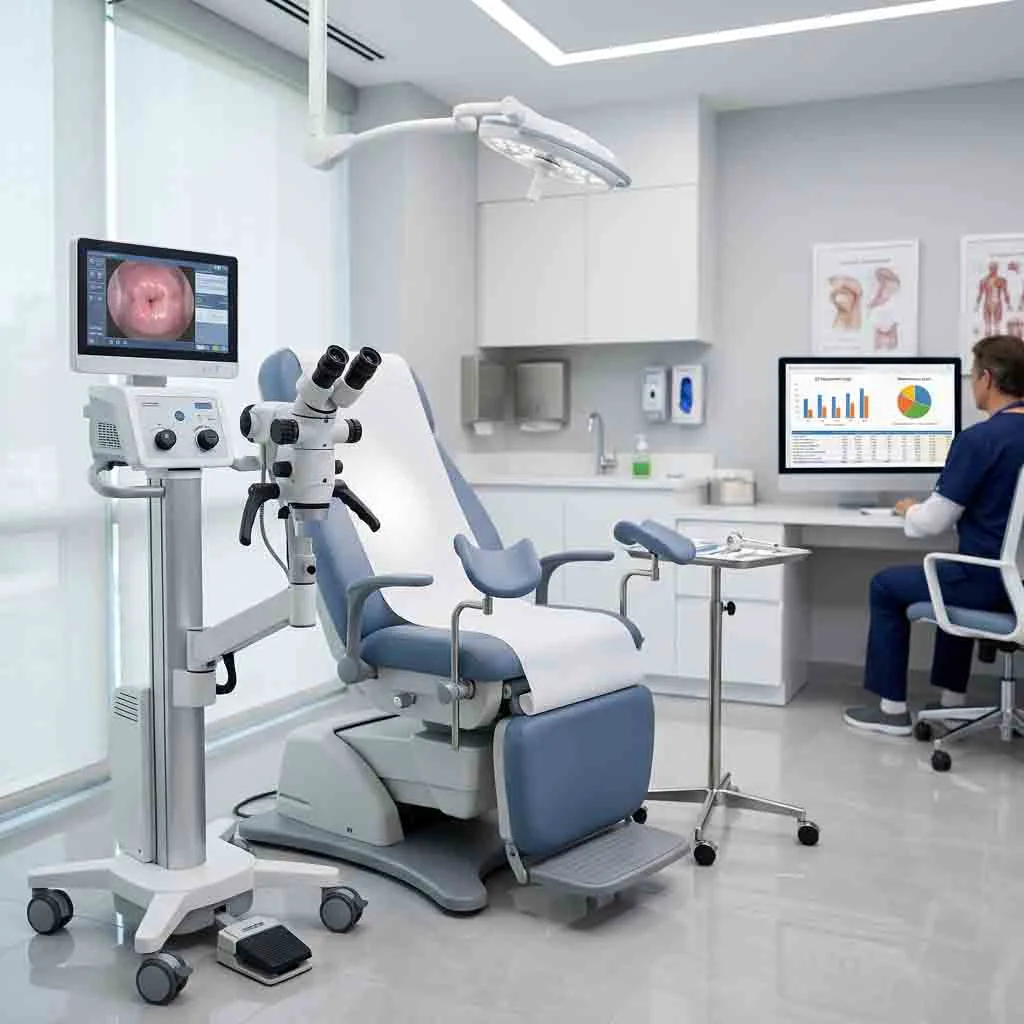
To evaluate the financial footprint of a colposcopy system, procurement teams must divide expenditures into two categories: Capital Expenditure (CAPEX) and Operational Expenditure (OPEX).
Plaintext
                     10-YEAR TOTAL COST OF OWNERSHIP (TCO)
+-------------------------------------------------------------------------+
| CAPITAL EXPENDITURE (CAPEX) : ~35% - 45% of Lifetime Cost               |
| - Optical Head / CMOS Video Sensor Head                                 |
| - Articulated Swing-Arm & Heavy-Duty Rolling Stand                      |
| - Medical-Grade Display Monitor & Workstation Hardware                  |
| - Integrated Fine-Focus Mechanics & Beam Splitters                      |
|                                                                         |
| OPERATIONAL EXPENDITURE (OPEX): ~55% - 65% of Lifetime Cost             |
| - Bulb Replacements (Legacy Halogen/Xenon)                              |
| - Fiber-Optic Light Cable Replacements                                  |
| - Annual Software Licensing & PACS Cloud Export Fees                    |
| - Preventative Maintenance Agreements & Biomedical Recalibration        |
+-------------------------------------------------------------------------+
The Illumination Factor: Eliminating the Consumable Trap
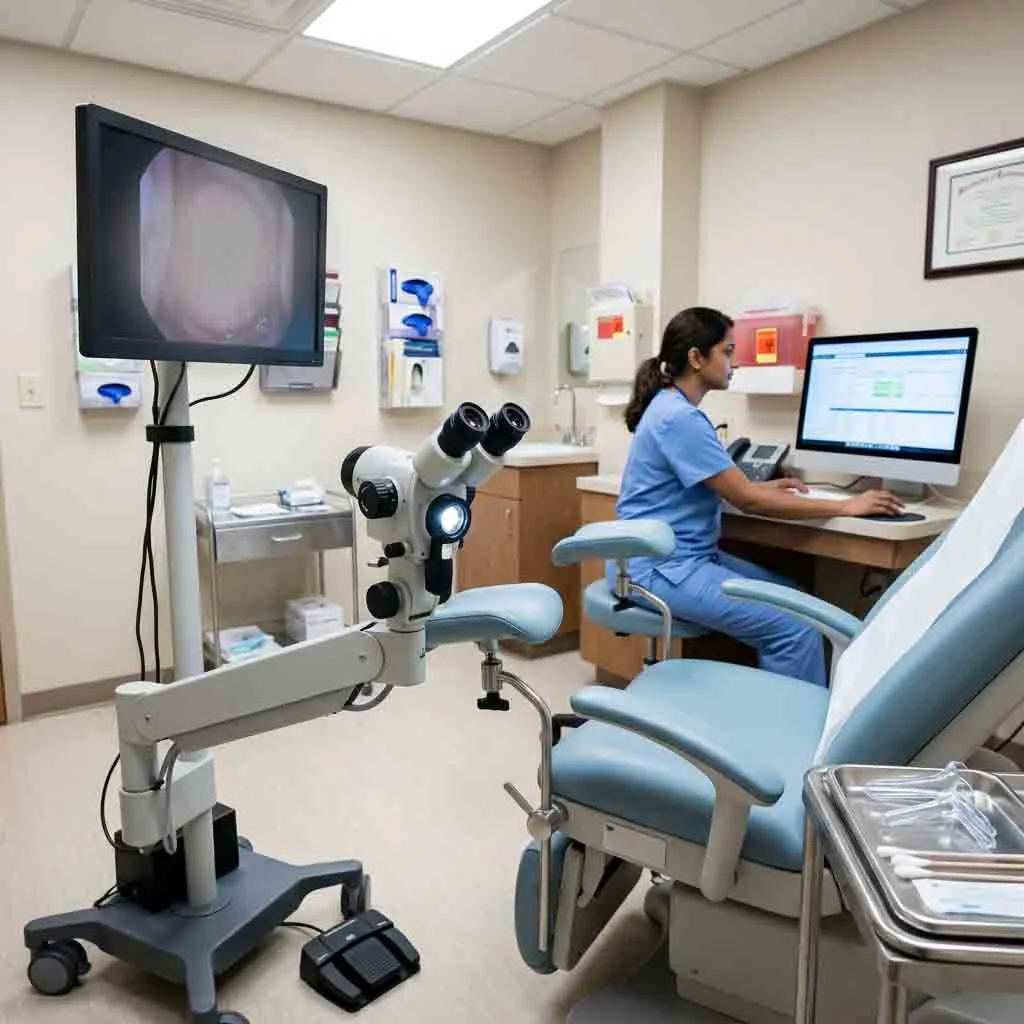
Historically, the largest ongoing OPEX drain on a colposcopy unit was the light source:
-
Legacy Halogen & Xenon Units: Halogen bulbs last only 50 to 100 hours before their color temperature degrades into an unacceptable yellow cast. Xenon bulbs last approximately 500 hours but cost hundreds of dollars per replacement cartridge. Over a decade of heavy clinical use, a facility can spend more money purchasing replacement bulbs than the original machine cost to buy.
-
The Modern LED Standard: Purchasing a colposcope equipped with Medical Cold LED technology completely eliminates this recurring OPEX line item. Medical LEDs operate continuously for 50,000+ hours. In a busy clinic operating 8 hours a day, 5 days a week, a quality LED light source will last well over 20 years without needing a single replacement.
The Software Licensing Trap
As digital video colposcopes have gained popularity, certain legacy brands have adopted software-as-a-service (SaaS) business models. They sell the hardware at an attractive price point, but charge mandatory annual software license renewals to keep the patient reporting database active, export high-definition images, or transmit files via DICOM.
Procurement Rule: Always demand subscription-free software architecture. Ensure the vendor provides perpetual software licenses, free firmware updates, and open DICOM 3.0 export capabilities included in the base hardware purchase.
2. Hospital and Clinic ROI Modeling: Calculating the Payback Period
A colposcope is a core revenue-generating asset for women’s health clinics, private practices, and outpatient hospital departments. Calculating the Return on Investment (ROI) demonstrates how quickly the capital equipment pays for itself through standard clinical billing.
Plaintext
               OUTPATIENT COLPOSCOPY REVENUE ARCHITECTURE
+-------------------------------------------------------------------------+
| PRIMARY REVENUE DRIVERS:                                                |
| 1. Diagnostic Colposcopy Examination (Initial Cervical Triage)          |
| 2. Directed Punch Biopsies (Ectocervical Tissue Sampling)               |
| 3. Endocervical Curettage (ECC Canal Scraping)                          |
| 4. Post-Treatment Follow-Up Exams (Assessing Margin Healing Post-LEEP)  |
+-------------------------------------------------------------------------+
A Practical Break-Even Scenario
Consider a moderately sized outpatient gynecology center or private women’s clinic that acquires a modern digital video colposcopy system:
-
Initial Hardware Investment (Factory-Direct): ~$3,500 to $6,500 USD (Includes full digital colposcope, articulating swing-arm, HD monitor, and workstation software).
-
Weekly Patient Volume: 15 abnormal Pap smear triage examinations per week.
-
Average Blended Reimbursement / Fee: ~$150 to $300 USD per procedure (combining basic visual examination fees with occasional biopsy coding, depending on local national insurance tariffs or private clinic fees).
-
Weekly Gross Clinical Revenue (15 Patients): ~$2,250 to $4,500 USD.
-
Direct Consumable Costs per Exam: ~$15 to $25 USD (Speculum, acetic acid, Lugol’s iodine, biopsy forceps sterilization, and pathology collection vials).
-
Net Weekly Operating Margin: ~$2,000 to $4,100 USD.
The Payback Timeline: At this standard clinical volume, the entire capital purchase price of the colposcope is fully recovered within 3 to 6 weeks of deployment. For the remaining 10 to 14 years of the machine’s operational lifespan, the system generates pure operating margin while delivering essential cancer prevention care.
Indirect ROI: Ergonomic Longevity and Patient Trust
Beyond direct procedural billing, modern digital colposcopes generate indirect financial returns:
-
Preventing Physician Downtime: Traditional optical microscopes force clinicians into awkward neck flexion. Upgrading to an ergonomic, heads-up digital video colposcope reduces cervical spine strain, minimizing occupational fatigue and medical leave for senior gynecologists.
-
Accelerating Patient Consultation Time: High-resolution digital displays allow clinicians to capture, freeze, and annotate images in seconds. Explaining the visual findings directly on-screen to the patient increases clinical comprehension, reduces consultation delays, and improves patient adherence to follow-up treatments.
3. Sourcing Strategy: Multi-Tier Distribution vs. Direct Factory Supply
When procuring medical equipment, understanding the structure of the international medical supply chain is the key to controlling capital budgets.
Plaintext
                  THE TRADITIONAL VS. FACTORY-DIRECT SUPPLY CHAIN
+-------------------------------------------------------------------------+
| TRADITIONAL DISTRIBUTION (40% - 70% Cumulative Markup)                 |
| [ Factory ] -> [ Export Agent ] -> [ National Importer ]                |
|             -> [ Regional Sub-Dealer ] -> [ Hospital End-User ]         |
|                                                                         |
| DIRECT FACTORY SUPPLY (Optimized Margins & Transparent Support)         |
| [ Certified Manufacturer ] -----------------------> [ Hospital / Direct |
|                                                       Distributor ]     |
+-------------------------------------------------------------------------+
The Cost of Multi-Tier Distribution
In the traditional procurement model, medical devices pass through export brokers, national importing companies, and regional sales sub-dealers before reaching the hospital. Every intermediary tier adds shipping markups, administrative overhead, and profit margins, frequently inflating the final purchase price by 40% to 70%.
Furthermore, this fragmented supply chain creates communication barriers. When a hospital biomedical engineer needs a technical schematic, a replacement circuit board, or a customized software driver, the request must travel back through multiple layers of dealers, resulting in weeks of clinical downtime.
The Advantages of Factory-Direct Procurement
Sourcing directly from an established original equipment manufacturer (OEM) provides significant strategic advantages:
-
True Wholesale Pricing: Hospitals and distribution partners acquire medical-grade equipment at factory-direct unit costs, maximizing procurement budgets and tender competitiveness.
-
Direct Engineering Support: Technical inquiries, software customizations, and warranty claims are handled directly by the factory engineers who designed the machine, ensuring rapid issue resolution.
-
Guaranteed Long-Term Spare Parts: Direct factory contracts guarantee access to genuine optical components, replacement swing-arm springs, and electronic boards for 7 to 10+ years, protecting the hospital from premature equipment obsolescence.
4. Regulatory Compliance & Quality Auditing for Global Importers
Importing medical diagnostic equipment requires strict adherence to international safety and quality directives. Customs authorities, national ministries of health, and hospital accreditation boards will reject equipment that lacks verified regulatory credentials.
Plaintext
                     INTERNATIONAL REGULATORY MATRIX
+-------------------------------------------------------------------------+
| FACTORY-LEVEL QUALITY MANAGEMENT:                                       |
| - ISO 13485: Medical Devices - Quality Management Systems               |
|   (Mandatory standard for medical optical manufacturing)                |
|                                                                         |
| PRODUCT-LEVEL SAFETY & PERFORMANCE:                                     |
| - CE Marking: Conformity with European Medical Device Directives        |
| - IEC 60601-1: General Requirements for Basic Safety & Essential Perf.  |
| - IEC 60601-1-2: Electromagnetic Compatibility (EMC Medical Testing)    |
| - RoHS / WEEE: Environmental Restriction of Hazardous Substances        |
+-------------------------------------------------------------------------+
The B2B Factory Quality Audit: What to Look For
Before signing an international procurement agreement, purchasing directors and medical distributors should review the factory’s manufacturing standards:
-
Scope of ISO 13485 Certification: Verify that the manufacturer’s ISO 13485 certificate is issued by a recognized, accredited notified body and that the certified scope explicitly covers “Design, Manufacturing, and Distribution of Optical and Electronic Colposcopy Systems.”
-
Optical Cleanroom Assembly: Precise optical prisms and CMOS image sensors must be assembled in controlled cleanroom environments to ensure that zero microscopic dust particles or humidity are trapped inside the sealed optical barrel.
-
Mechanical Stress & Anti-Tip Testing: Demand proof of mechanical stability testing. Articulated swing-arms must undergo cycle endurance testing (e.g., 20,000+ articulation cycles without spring failure), and heavy rolling bases must comply with international tilt-table safety standards to ensure the stand cannot tip over if bumped in a busy clinical hallway.
-
Electrical Safety & Grounding: Ensure that all electronic workstations, power supplies, and LED drivers have certified test reports verifying leakage currents meet strict patient-safety thresholds under IEC 60601-1.
5. OEM & ODM Capabilities: Scaling Private Labels for Medical Distributors
For independent medical equipment distributors, regional healthcare supply chains, and private clinic networks, developing a proprietary brand identity creates lasting enterprise value.
Partnering with an OEM/ODM-capable manufacturing plant allows distributors to market high-performance colposcopes under their own established brand name without investing millions of dollars in optical machining infrastructure.
| Customization Level | Engineering & Manufacturing Scope | Strategic Commercial Benefit |
| Level 1: Visual Branding (OEM) | Custom housing colors, laser-etched corporate logos, branded packaging and manuals. | Fast time-to-market; establishes immediate regional brand presence. |
| Level 2: Software Localization | Multi-language UI translation, custom clinical report templates, distributor contact embedding. | Adapts the equipment to local health guidelines and linguistic requirements. |
| Level 3: Mechanical Adaptation | Custom vertical column heights, chair-integrated brackets, custom monitor arms. | Tailors hardware to fit specific hospital examination table models or spatial constraints. |
| Level 4: Full Hardware ODM | Custom optical head design, unique sensor integrations, custom electronic footswitches. | Creates an exclusive, proprietary medical product line protected from local competition. |
6. Sourcing Comparison Matrix: Brand-Name vs. Trading Company vs. Direct Factory
When evaluating procurement avenues, use this comparison matrix to evaluate operational and financial trade-offs:
| Sourcing Parameter | High-End Western Brand | Middleman Trading Company | UMY Medical (Direct Factory) |
| Unit Purchase Price | Premium ($12,000 – $25,000+) | Moderate ($5,000 – $8,000) | Wholesale Direct ($2,500 – $5,500) |
| Recurring Software Fees | High annual subscription fees | Often unsupported, pirated apps | Zero Subscriptions (Perpetual License) |
| Illumination Lifespan | Modern LED (or costly Xenon) | Inconsistent LED quality | 50,000+ Hour Medical Cold LED |
| Quality Management System | Certified (ISO / CE / FDA) | None (Broker status only) | Fully Certified ISO 13485 & CE Mark |
| OEM / Private Labeling | Strictly Prohibited | Limited / Poor quality control | Full Turnkey OEM / ODM Support |
| Spare Parts Fulfillment | Slow, expensive dealer network | Unreliable, third-party sourcing | Direct Factory Express Dispatch |
| Direct Engineering Contact | None (Filtered by local sales) | None (Non-technical personnel) | Direct Access to R&D & Tech Teams |
7. Why UMY Medical Equipment Co Ltd Is the Premier Global Sourcing Partner
When the strategic objective is to reduce Total Cost of Ownership while maintaining uncompromising diagnostic excellence, direct factory collaboration is the most effective procurement pathway.
UMY Medical Equipment Co Ltd stands as a premier global manufacturer of medical optical and digital imaging systems. Operating from advanced production facilities, UMY Medical supplies public health screening initiatives, university hospitals, and international B2B distributors across more than 80 countries.
Plaintext
                  THE UMY MEDICAL DIRECT FACTORY ADVANTAGE
                                     |
     +-------------------------------+-------------------------------+
     |                               |                               |
     v                               v                               v
[ Direct Factory Economics ]    [ Certified Manufacturing ]     [ Complete B2B Support ]
 Eliminate Middleman Markups   ISO 13485 & CE Directives       Full OEM / ODM Private Label
 Rapid 60-90 Day Hospital ROI  Class 100,000 Cleanroom Optics  Global Logistics & Spare Parts
Why Procurement Directors Choose UMY Medical:
-
Unmatched Factory-Direct Pricing: By manufacturing optical lenses, precision mechanical arms, and digital video processing units in-house, UMY Medical eliminates third-party trading company margins, delivering wholesale cost savings of 30% to 50% directly to purchasing organizations.
-
International Regulatory Compliance: Every colposcope produced by UMY Medical is built in strict adherence to ISO 13485 medical quality management standards and carries verified CE marking, ensuring effortless customs clearance and rapid registration with regional health ministries.
-
High-Precision Diagnostic Optics: UMY Medical systems combine multi-coated apochromatic optical glass with advanced, high-definition CMOS image sensors and daylight-balanced Medical Cold LED lighting (CRI $\ge$ 90), delivering the crisp contrast, natural color rendering, and clear vascular definition required for confident cervical cancer triage.
-
Open Digital Ecosystem: UMY Medical operates on a strict zero-subscription policy. Clinical software workstations include perpetual licensing, free lifetime firmware updates, and native DICOM 3.0 functionality for seamless integration into hospital PACS and electronic medical records.
-
Dedicated OEM/ODM & Logistics Services: From custom logo laser-etching and localized multi-language software interfaces to drop-tested, reinforced export packaging and expedited international freight, UMY Medical provides end-to-end commercial backing for global medical distributors and tender projects.
Frequently Asked Questions (FAQ)
Q1: What is the standard Minimum Order Quantity (MOQ) for factory-direct purchases from UMY Medical?
For standard factory-branded colposcopy units, UMY Medical offers flexible, low-MOQ starter arrangements (often starting at 1 to 2 units) to allow clinical engineering teams and distribution partners to evaluate build quality and software interfaces. For comprehensive OEM private-label branding, customized packaging, and localized software builds, MOQs are determined based on specific production run requirements.
Q2: How are international warranty claims and spare parts handled by a direct manufacturer?
UMY Medical provides a comprehensive multi-year factory warranty on all colposcope models. Because clients deal directly with the factory rather than an intermediate retail dealer, replacement components (such as electronic control boards, camera modules, or articulating joints) are dispatched via express international air courier, accompanied by step-by-step engineering service guides and remote video technical support.
Q3: Can UMY Medical supply complete tender documentation for government and hospital bids?
Yes. UMY Medical routinely supports international distributors and procurement committees by supplying complete regulatory documentation packages, including ISO 13485 certificates, CE certificates, Certificates of Origin, product technical datasheets, electrical safety reports (IEC 60601), and formal manufacturer authorization letters for public tenders.
Q4: How long does international freight delivery take for bulk colposcope orders?
Standard production lead times for factory-direct orders typically range from 1 to 3 weeks, depending on order volume and custom OEM requirements. International air freight delivery takes approximately 5 to 7 business days, while containerized sea freight shipments typically arrive within 20 to 35 days, depending on destination port logistics.
Q5: How can a hospital, clinic, or distributor request a formal wholesale quotation from UMY Medical?
Procurement directors, hospital purchasing committees, and medical device distributors can contact UMY Medical Equipment Co Ltd directly through their official B2B web portal or international sales department to request technical specifications, software demonstration videos, and direct factory wholesale pricing schedules.