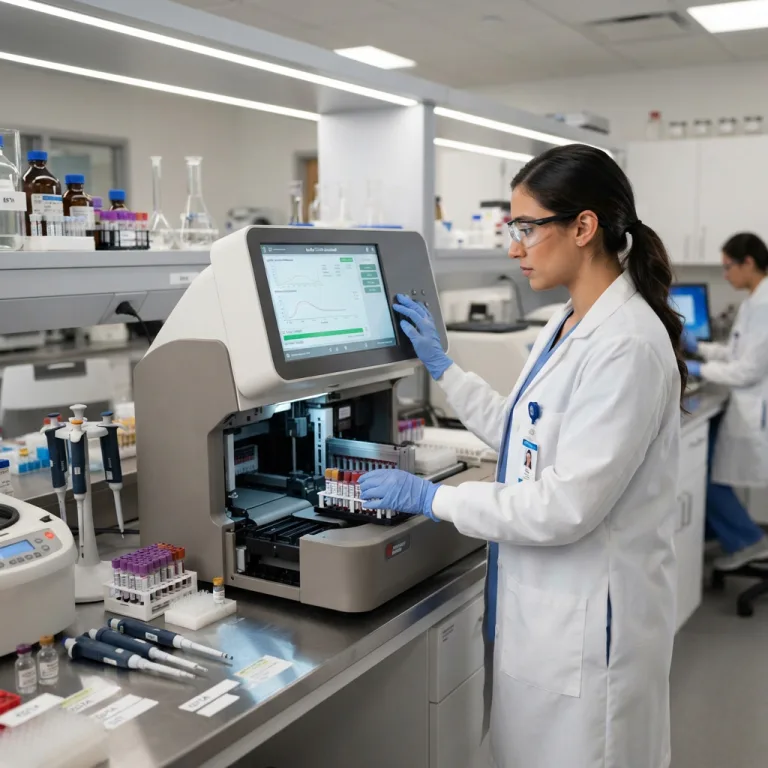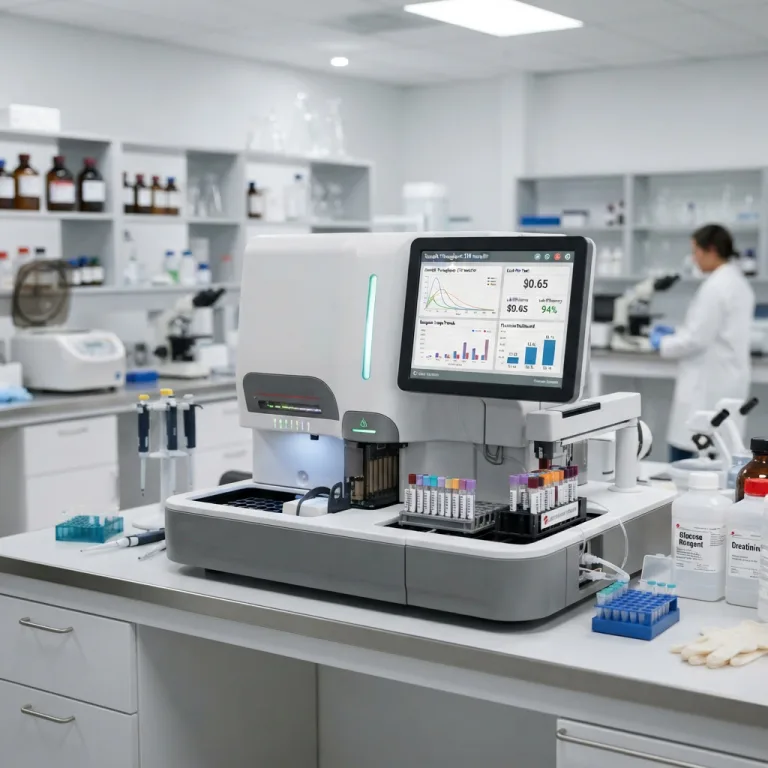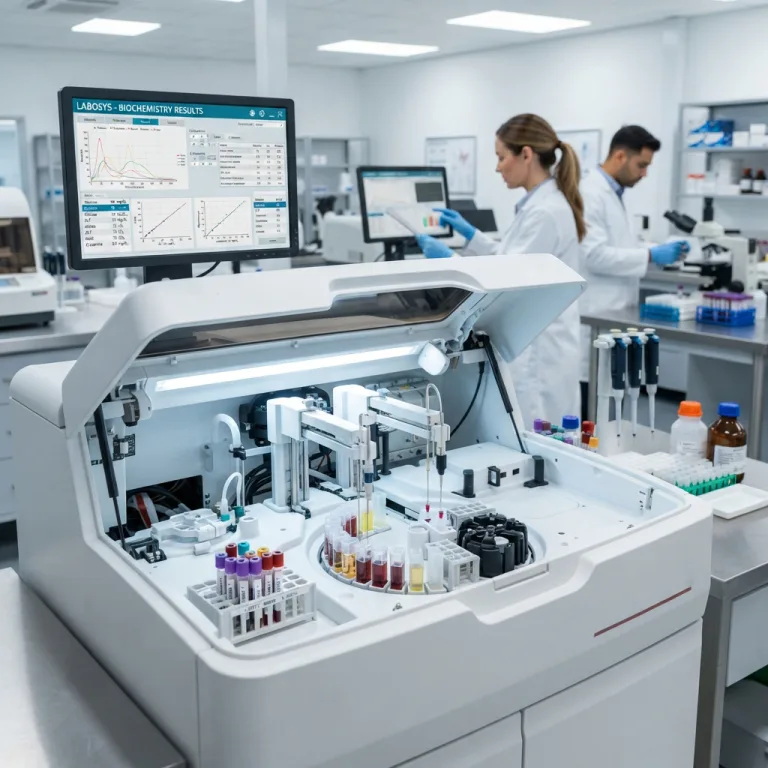
Step inside the central pathology department of a modern high-throughput medical center, and the shift is immediately palpable.
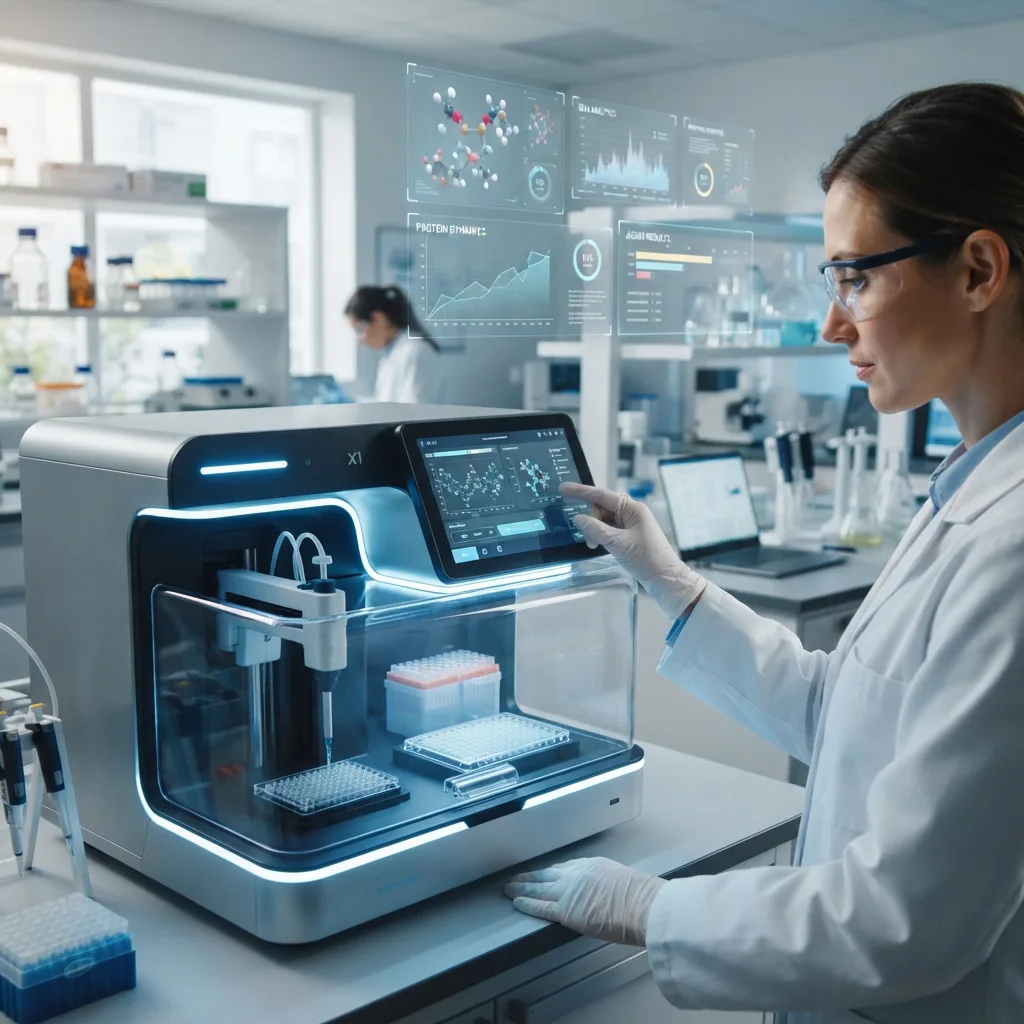
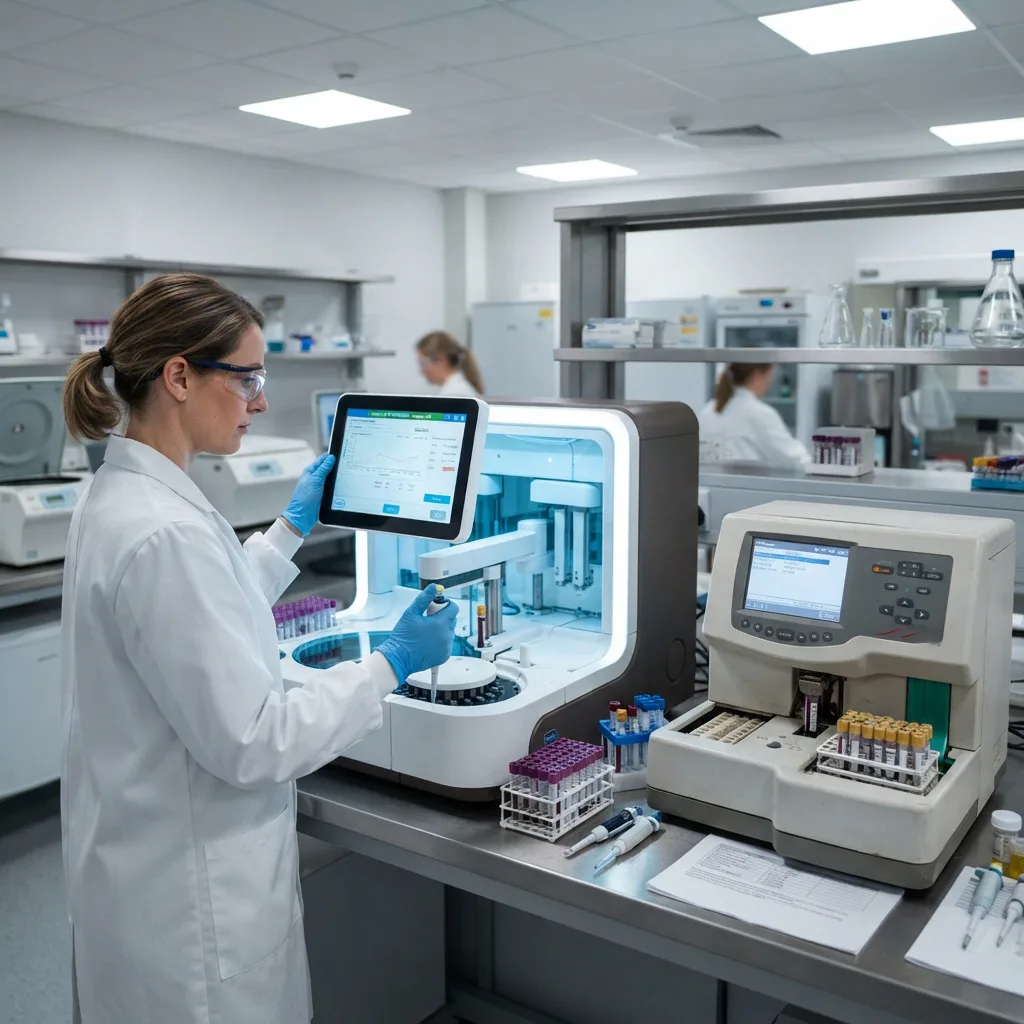
The frantic clatter of manual pipettes, the stacks of paper test requisitions, and the stress of troubleshooting unexpected machine errors have vanished. Instead, a sleek, quiet instrument hums steadily on the bench. A multi-axis robotic arm moves with microscopic precision, aspirating minute droplets of serum smaller than a grain of sand. Optical cameras continuously scan passing tubes, instantly assessing serum clarity before a single drop of reagent is spent. High-speed IoT telemetry beams performance data to the cloud, silently verifying that motor torque, fluidic pressures, and incubation temperatures remain within fraction-of-a-millimeter tolerance.
This is the reality of the next-generation clinical biochemistry analyzer.
For decades, the basic formula of clinical chemistry remained largely mechanical: mix serum with reagent in a plastic cup, warm it up, and shoot a beam of light through it. Today, the convergence of artificial intelligence (AI), ultra-micro-dosing robotics, and Internet of Things (IoT) predictive maintenance is transforming biochemistry analyzers from passive optical meters into self-optimizing diagnostic powerhouses.
What defines a next-generation biochemistry analyzer?
Direct Answer: A next-generation biochemistry analyzer is an intelligent clinical instrument that integrates high-precision micro-volume liquid handling, computer-vision serum quality assessment, artificial intelligence for automated reflex testing, and cloud-connected IoT sensors. Unlike traditional mechanical analyzers, next-gen systems consume up to 50% less chemical reagent, self-diagnose mechanical wear before failures occur, and dynamically optimize daily test throughput without requiring constant technician supervision.
The Micro-Volume Revolution: Doing More with Less
The single largest recurring operational expenditure for any diagnostic laboratory is the ongoing cost of chemical reagents. Historically, automated analyzers required substantial reaction volumes—often between $250\text{ }\mu\text{L}$ and $400\text{ }\mu\text{L}$ of mixed liquid per test—to achieve a readable optical path across a standard cuvette.
Next-generation systems have completely rewritten this paradigm through ultra-micro-dosing liquid handling.
REAGENT CONSUMPTION EVOLUTION

Legacy Systems (1990s-2000s):
┌──────────────────────────────────────────┐
│  250 µL – 400 µL Total Reaction Volume   │  ➔ High Reagent Waste & High Cost/Test
└──────────────────────────────────────────┘

Standard Automated Systems (2010s):
┌──────────────────────────────────────────┐
│  180 µL – 250 µL Total Reaction Volume   │  ➔ Moderate Operating Expenses
└──────────────────────────────────────────┘

Next-Generation Smart Systems (Today):
┌──────────────────────────────────────────┐
│  80 µL – 120 µL Total Reaction Volume    │  ➔ Up to 60% Savings in Reagent Budget
└──────────────────────────────────────────┘
1. Nanoliter Pipetting and Digital Syringe Pumps
Modern analyzers employ advanced positive-displacement micro-syringes driven by ultra-fine stepper motors. These robotic pipetting systems can aspirate and dispense patient serum volumes as small as 1.0mu\L to 1.5mu\L with a coefficient of variation (CV) of less than 1%.
-
Pediatric and Geriatric Care: Because the machine requires mere drops of serum, phlebotomists no longer need to draw multiple large vacuum tubes from fragile veins, drastically improving the patient experience in neonatal intensive care units (NICU) and oncology wards.
-
Radical Cost Reduction: By shrinking the total reaction volume inside the cuvette to under 100mu\L, the volume of expensive diagnostic reagent needed per test is cut in half. For a regional laboratory running 100,000 tests annually, this efficiency translates to tens of thousands of dollars saved on consumables every year.
2. High-Frequency Ultrasonic Mixing
Traditional analyzers use mechanical stainless-steel paddles to stir sample and reagent inside the cuvette. These physical paddles require continuous washing, introduce liquid carryover risks, and cause micro-splashes.
Next-generation instruments replace physical stirring with non-contact ultrasonic transducers. High-frequency acoustic sound waves pass directly through the cuvette wall, creating controlled cavitation that thoroughly blends the liquid in less than one second. Zero physical contact means zero probe contamination, zero liquid loss, and zero mechanical wear.
AI and Computer Vision: The End of Undetected Sample Interference
In clinical chemistry, the most common threat to analytical accuracy is sample integrity interference—specifically Hemolysis (burst red cells), Icterus (high bilirubin), and Lipemia (high blood lipids), known collectively as the HIL Indices.
In legacy workflows, a technician must visually inspect every tube against the light, or the machine must waste expensive reagents running separate optical interference assays. Next-generation systems leverage computer vision and multi-wavelength AI analysis.
SMART PRE-ANALYTICAL INTERFERENCE DETECTION

[Primary Blood Tube Enters Analyzer Carousel]
                     │
                     ▼
  [High-Resolution Multi-Angle CCD Camera Array]
                     │
                     ▼
[AI Model Evaluates Meniscus, Serum Color & Clot Risk]
                     │
         ┌───────────┴───────────┐
         ▼                       ▼
   [Normal Serum]         [Compromised Sample Detected]
         │                       │
[Proceed to Pipetting]   [Auto-Calculate HIL Index Rating]
                                 │
                 ┌───────────────┴───────────────┐
                 ▼                               ▼
       [Mild: Auto-Adjust]             [Severe: Quarantine]
       Applies mathematical            Alerts technician via LIS;
       blanking algorithm to           rejects tube before reagent
       cancel background color.        is wasted.
-
Automated HIL Index Profiling: Before aspirating serum, an onboard high-resolution camera array captures images of the centrifuged tube under multiple light spectrums. An embedded neural network instantly calculates the precise grade of hemolysis or turbidity.
-
Dynamic Algorithmic Compensation: If mild hemolysis is detected, the analyzer software automatically applies a specific mathematical correction curve to affected assays (such as AST or potassium), eliminating false reporting without requiring technician intervention.
-
Smart Clot and Bubble Interception: Using high-speed micro-pressure transducers along the fluidic pathway, the pipetting probe senses pressure changes in real time. If a micro-clot or air bubble touches the needle, aspiration stops in milliseconds, the tip performs an automated high-pressure purge, and the system logs an exception code—protecting internal fluidics from clogs.
Predictive Maintenance and IoT Connectivity
Unplanned equipment downtime is the single greatest operational disruption a clinical laboratory faces. When an analyzer breaks down unexpectedly during a busy shift, emergency room turnaround times skyrocket, outpatient backlogs build, and expensive emergency technician callouts are required.
Next-generation biochemistry analyzers eliminate this reactive cycle by operating as connected Industrial Internet of Things (IoT) devices.
Continuous Telemetry and Self-Diagnostics
Dozens of low-profile digital sensors are distributed across the analyzer’s sub-assemblies, continuously streaming operational data:
-
Stepper Motor Torque: Detects microscopic friction increases in conveyor belts or robotic arms before a mechanical jam occurs.
-
Incubation Bath Micro-Fluctuations: Monitors the thermal stability of the reaction disc down to ±0.05°C, ensuring enzymes are never under- or over-incubated.
-
Optical Lamp Degradation: Tracks photodiode voltage output and halogen filament resistance. The software can predict that an optical lamp will fail in 72 hours, alerting the lab team to replace the bulb during scheduled evening downtime rather than mid-shift.
-
Pneumatic and Vacuum Line Pressures: Identifies pinhole leaks or declining pump efficiency weeks before fluid aspiration is impacted.
Cloud-Connected Remote Diagnostics
If an anomaly is flagged, the analyzer’s onboard operating system transmits encrypted diagnostic logs directly to the manufacturer’s engineering support center. Technical specialists can remotely assess fluidic drift, recalibrate optical sensors, or update software patches over secure networks. When a field engineer does visit the facility, they arrive with the exact replacement part already in hand, reducing mean time to repair (MTTR) by more than 60%.
Engineering Resilience: The UMY Medical Advantage
While software algorithms and digital connectivity capture headlines, the performance of any clinical chemistry analyzer ultimately rests on its underlying mechanical build quality. Sophisticated artificial intelligence cannot compensate for flimsy stepper motors, cheap plastic gears, or unstable optical blocks that degrade under constant clinical use.
This intersection of digital sophistication and heavy-duty engineering is where UMY Medical Equipment Co Ltd has established global leadership.
Recognized across international diagnostic markets for manufacturing exceptionally durable and accessible medical equipment, UMY Medical Equipment Co Ltd designs biochemistry analyzers built to thrive in demanding, high-volume environments.
Why Global Laboratories Trust UMY Medical Equipment Co Ltd:
-
Industrial-Grade Mechanical Engineering: UMY incorporates wear-resistant optical glass cuvettes, aircraft-grade aluminum alloy chassis, and industrial ceramic syringe pumps. This focus on heavy-duty mechanics shields laboratories from premature component fatigue and frequent alignment drift.
-
Proprietary Smart Micro-Dosing: UMY systems feature highly optimized fluidic pathways that execute micro-volume sampling with extraordinary repeatability. By bringing reaction volumes down to optimal clinical minimums, UMY analyzers slash monthly reagent consumption without sacrificing diagnostic sensitivity.
-
Integrated Hardware Self-Protection: UMY’s automated analyzers integrate multi-zone collision detection, real-time liquid level sensing, and proactive sensor suites that actively prevent operator-induced probe damage and unexpected mechanical shutdowns.
-
Accessible Diagnostic Architecture: Rather than trapping clinics behind closed, proprietary software walls, UMY Medical champions versatile open-system compatibility. Laboratories gain the operational flexibility to pair next-generation hardware reliability with cost-effective regional reagent supply chains.
By combining cutting-edge diagnostic features with rugged mechanical hardware, UMY Medical Equipment Co Ltd delivers an optimal balance of technological innovation and long-term capital protection for clinics worldwide.
Feature Matrix: Traditional vs. Next-Generation Biochemistry Analyzers
| Functional Area | Traditional Automated Analyzers | Next-Generation Smart Analyzers |
| Minimum Reaction Volume | 200uL – 350uL | 80uL – 120uL (Substantial reagent savings) |
| Sample Mixing Method | Mechanical stainless-steel paddle (wash required) | Non-contact ultrasonic acoustic mixing |
| Serum Quality Verification | Manual visual check or costly optical assay | Integrated computer vision with automated HIL index scoring |
| Equipment Maintenance | Reactive (repairing after breakdown occurs) | Proactive IoT predictive maintenance & remote telemetry |
| Sample Priority Handling | Batched runs; emergency samples wait for cycle end | Dynamic STAT interruption with instant lane bypassing |
| Data Architecture | Basic uni-directional serial interface (RS232) | High-speed bi-directional cloud / HL7 / LIS integration |
| Optical System | Front-optics with mechanical filter wheel | Holographic concave flat-field grating (reverse optics) |
The Rise of Holographic Reverse-Optics
One of the most profound physical engineering upgrades in modern biochemistry analyzers is the transition from traditional optical filter wheels to reverse-optics holographic concave grating.
OPTICAL SYSTEM COMPARISON

Legacy Forward-Optics System:
[Light Source] ➔ [Mechanical Filter Wheel] ➔ [Specific Color Beam] ➔ [Cuvette] ➔ [Detector]
* Mechanical parts wear out; only one wavelength read at a time.

Next-Generation Reverse-Optics System:
[White Light Beam] ➔ [Cuvette] ➔ [Holographic Concave Grating Splits Light] ➔ [Photodiode Array]
* Zero moving parts; captures 12-16 simultaneous wavelengths instantaneously.
In older analyzers, a mechanical wheel physically spun different colored glass filters in front of the light bulb to select a wavelength. These mechanical wheels wear out, jam, and can only read one wavelength at a time.
Next-generation systems use reverse-optics:
-
Stable full-spectrum white light shines directly through the reaction cuvette.
-
After passing through the liquid, the light beam hits a static, high-precision concave holographic diffraction grating.
-
The grating splits the transmitted beam into a complete rainbow spectrum across a stationary photodiode array.
Because there are zero moving parts, the optical system is virtually indestructible. Furthermore, the analyzer can measure 12 to 16 distinct optical wavelengths simultaneously in real time. This allows the system to perform complex dual-wavelength and multi-wavelength blanking, completely eliminating optical noise caused by cuvette imperfections or minor scratches.
Future-Proofing Laboratory Procurement: 5 Essential Guidelines
When evaluating next-generation biochemistry analyzers for your hospital or diagnostic center, use these criteria to ensure your capital purchase remains competitive for the next decade:
-
Verify True Micro-Volume Capability: Do not just ask for maximum throughput; ask for the minimum reaction volume and minimum sample volume. An instrument running at 400 tests per hour that requires 300uL of reagent per test will cost significantly more over five years than a 300-test-per-hour machine that runs on 100uL.
-
Demand Open LIS/HIS Connectivity: Ensure the analyzer’s communication module natively supports modern HL7 and ASTM bi-directional protocols over standard Ethernet (TCP/IP). Avoid instruments that rely on outdated RS232 serial cables requiring expensive third-party interface converter boxes.
-
Inspect the Optical Engine: Confirm whether the system uses a legacy rotating filter wheel or a modern reverse-optics concave grating system. Grating-based systems last years longer and require far less optical calibration.
-
Evaluate Onboard Reagent Refrigeration: Ensure the reagent compartment maintains independent, continuous cooling 24 hours a day, 7 days a week, even when the primary user console is powered down.
-
Review Telemetry and Remote Support Protocols: Ask the vendor whether their software supports remote error diagnosis and automated firmware patching over secure connections, which drastically reduces field service downtime.
Frequently Asked Questions (FAQ)
How does micro-volume sampling affect diagnostic accuracy?
Micro-volume sampling actually improves diagnostic accuracy when paired with high-precision digital syringe pumps and liquid-level sensing. By eliminating the manual volumetric variations common in hand-pipetting and standard mechanical dispensers, micro-dosing delivers consistent aspiration down to the microliter, resulting in ultra-low analytical variance (<1 % CV).
What is the difference between forward-optics and reverse-optics in biochemistry?
In forward-optics, light passes through a filter wheel before entering the reaction cuvette, allowing only one wavelength to be measured at a time. In reverse-optics, full-spectrum light passes through the cuvette first and is subsequently split by a holographic diffraction grating onto a diode array, allowing the analyzer to record multiple wavelengths simultaneously with zero moving parts.
Can AI-driven biochemistry analyzers run completely unattended overnight?
Yes. Modern high-throughput analyzers are designed for “walk-away” operation. With onboard continuous reagent cooling, automatic cuvette washing stations, dynamic clot detection, and automated QC monitoring, an operator can load sample racks at the end of a shift, and the analyzer will process batches, auto-validate normal results, and enter an automated low-power standby mode upon completion.
How does IoT predictive maintenance reduce overall service costs?
IoT predictive maintenance prevents minor mechanical wear from cascading into catastrophic component failures. By alerting engineers to early motor resistance or optical lamp dimming before a breakdown occurs, repairs can be handled during scheduled preventative maintenance visits, avoiding emergency service callout charges and expensive mid-operation downtime.
In our fifth and final post, we will tackle the final operational frontier: how integrating your biochemistry analyzer with modern Laboratory Information Systems (LIS) and Hospital Information Systems (HIS) completely eliminates manual data entry bottlenecks and slashes diagnostic turnaround times.