1. What Is Surgical Navigation Used For?
A common question from hospitals is:
“Which surgeries require a surgical navigation system?”
The answer depends on the clinical application.
Surgical navigation is generally considered when surgeons need better understanding of:
- Complex anatomy
- Small anatomical structures
- Difficult surgical approaches
- Instrument positioning
- Implant placement
- Surgical trajectory planning
Common search terms include:
- Surgical navigation applications
- Surgical navigation system uses
- Image-guided surgery applications
- Computer-assisted surgery applications
- Navigation guided surgery
- Medical navigation system applications
- Intraoperative navigation applications
The technology does not replace the surgeon. Instead, it provides additional digital information to support surgical planning and intraoperative orientation.
2. Neurosurgical Navigation System
What Is Neurosurgical Navigation?
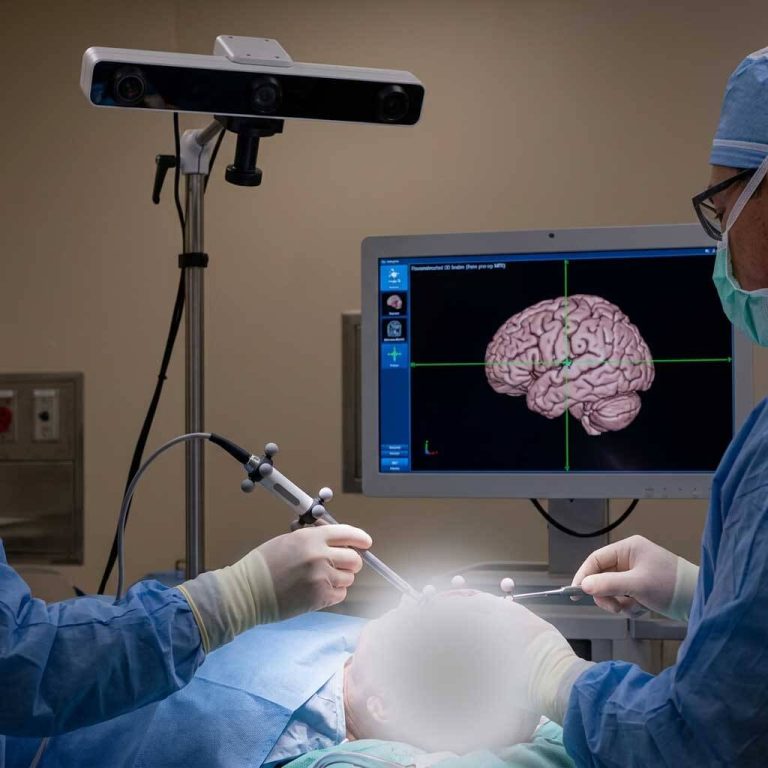
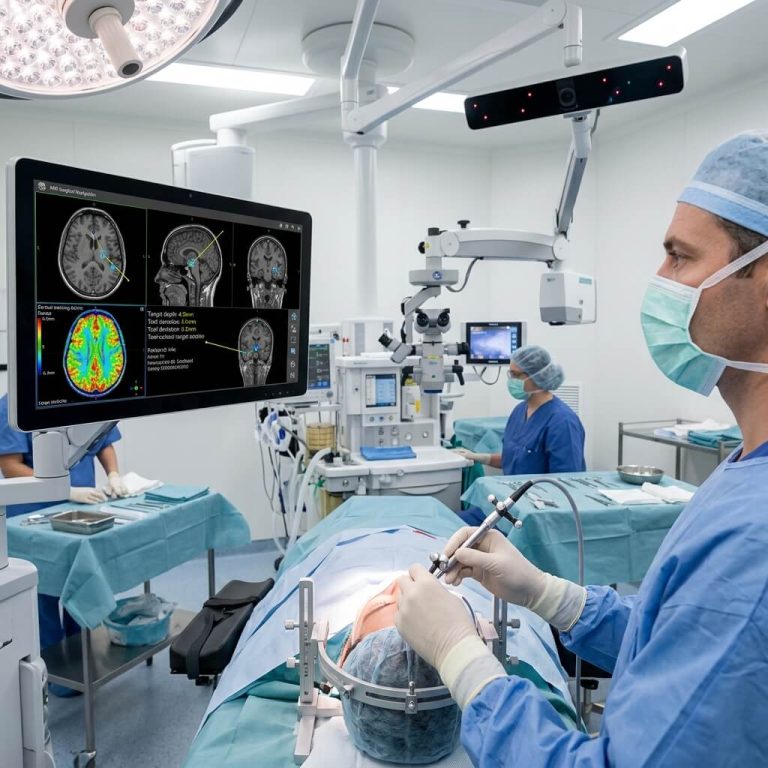
Neurosurgical navigation, also called neuronavigation, is one of the most recognized applications of surgical navigation technology.
It uses medical imaging data and tracking technology to help surgeons understand the relationship between surgical instruments and brain or cranial anatomy.
Common keywords include:
- Neurosurgical navigation system
- Neurosurgery navigation system
- Neuronavigation system
- Brain navigation system
- Cranial navigation system
- Brain surgery navigation
- Image-guided neurosurgery
- Neuro navigation technology
- Surgical navigation for brain surgery
How Does Neuronavigation Work?
A typical neuronavigation workflow includes:
1. Image Data Preparation
The system may use:
- MRI images
- CT images
- Functional imaging data
- Other compatible image information
2. Image Processing
The navigation software processes the images and creates views of the patient’s anatomy.
Possible functions include:
- 3D reconstruction
- Anatomical visualization
- Measurement
- Surgical planning
3. Registration
The system matches the patient’s physical anatomy with the digital image dataset.
4. Instrument Tracking
Tracked instruments are displayed relative to the registered anatomy.
Neurosurgery Applications
Neuronavigation may support selected procedures such as:
Brain Tumor Surgery
Keywords:
- Brain tumor navigation
- Brain tumor surgery navigation
- Image-guided tumor surgery
- Neurosurgical image guidance
Navigation can help surgeons understand the location of surgical instruments in relation to anatomical structures shown on imaging.
Brain Biopsy Procedures
Keywords:
- Brain biopsy navigation
- Stereotactic navigation
- Navigation guided biopsy
- Neurosurgical guidance system
Navigation may support planning and instrument positioning during selected biopsy workflows.
Epilepsy Surgery
Keywords:
- Epilepsy surgery navigation
- Neurosurgical planning system
- Brain mapping navigation
Navigation can be part of a broader surgical planning workflow.
Cranial Surgery
Keywords:
- Cranial navigation system
- Skull navigation
- Cranial image guidance
- Skull surgery navigation
Cranial navigation focuses on procedures involving skull and intracranial anatomy.
Benefits of Neurosurgical Navigation
Potential advantages include:
Better Anatomical Orientation
Brain anatomy can be difficult to understand from traditional views alone.
Navigation provides additional spatial information.
Surgical Planning Support
Doctors can review imaging information before and during selected procedures.
Instrument Localization
Tracked instruments can be displayed relative to image data.
Minimally Invasive Procedure Support
Navigation can assist selected approaches where precise anatomical orientation is important.
3. Spine Navigation System
What Is Spine Navigation?
A spine navigation system is designed to support selected spinal procedures by combining imaging data and instrument tracking.
Common keywords:
- Spine navigation system
- Spinal navigation system
- Spine surgery navigation
- Image-guided spine surgery
- Computer-assisted spine surgery
- 3D spine navigation
- Navigation system for spine surgery
- Spinal surgical navigation
- Pedicle screw navigation
Spine surgery often involves complex three-dimensional anatomy, which makes image guidance valuable for selected workflows.
How Is Navigation Used in Spine Surgery?
A spine navigation workflow may include:
Imaging
Common image sources:
- CT
- Intraoperative imaging
- 3D imaging
Registration
The system connects patient anatomy with digital images.
Tracking
Surgical instruments are tracked.
Navigation Display
The surgeon can view instrument position relative to spinal structures.
Spine Navigation Applications
Pedicle Screw Placement
One of the most searched topics:
- Pedicle screw navigation
- Navigation assisted spinal instrumentation
- Computer-assisted pedicle screw placement
- Spine implant navigation
Navigation may provide additional guidance information during selected spinal procedures.
Spinal Fusion Surgery
Keywords:
- Spine fusion navigation
- Spinal fusion image guidance
- Navigation guided spine surgery
Minimally Invasive Spine Surgery
Keywords:
- Minimally invasive spine navigation
- MIS spine navigation
- Image-guided minimally invasive spine surgery
Why Hospitals Consider Spine Navigation Systems
Spine navigation may help support:
- 3D anatomical understanding
- Instrument positioning
- Surgical planning
- Complex spinal procedures
However, the final system selection depends on:
- Surgical volume
- Procedure type
- Imaging workflow
- Surgeon preference
- Hospital requirements
4. Orthopedic Navigation System
What Is Orthopedic Navigation?
An orthopedic navigation system uses computer-assisted technology to support selected orthopedic procedures.
Common keywords:
- Orthopedic navigation system
- Orthopedic surgical navigation
- Computer-assisted orthopedic surgery
- Orthopedic image guidance
- Bone navigation system
- Joint navigation system
- Orthopedic tracking system
Orthopedic navigation focuses on improving understanding of anatomical position, alignment and instrument location.
Orthopedic Navigation Applications
Joint Surgery
Keywords:
- Joint navigation system
- Knee navigation system
- Hip navigation system
- Arthroplasty navigation
Navigation can support selected joint replacement workflows.
Trauma Surgery
Keywords:
- Trauma navigation system
- Orthopedic trauma navigation
- Fracture navigation
- Bone fracture navigation
Navigation can assist selected trauma procedures where anatomical positioning is important.
Bone Surgery
Keywords:
- Bone navigation system
- Computer-assisted bone surgery
- Orthopedic image-guided surgery
Benefits of Orthopedic Navigation
Potential advantages include:
Alignment Assistance
Navigation may provide information about anatomical alignment.
Implant Position Support
Some workflows use navigation information during implant-related procedures.
Digital Surgical Planning
Image-based planning can support selected orthopedic applications.
5. ENT Surgical Navigation System
What Is ENT Navigation?
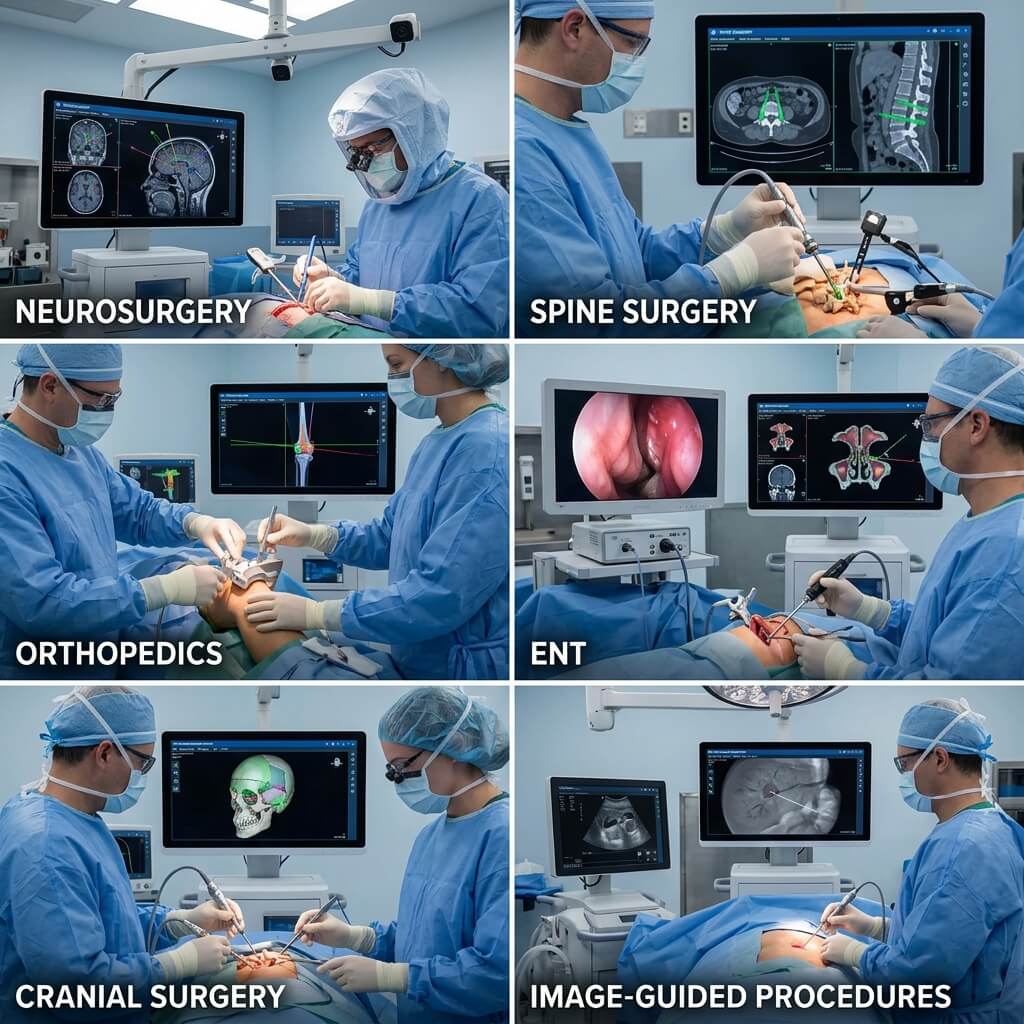
ENT navigation systems are used in ear, nose and throat procedures where anatomical structures can be complex and closely located.
Common keywords:
- ENT navigation system
- ENT surgical navigation
- ENT image-guided surgery
- Sinus navigation system
- Sinus surgery navigation
- Skull base navigation
- Endoscopic navigation system
- Image-guided ENT surgery
ENT Navigation Applications
Sinus Surgery
Keywords:
- Sinus navigation system
- Endoscopic sinus surgery navigation
- Image-guided sinus surgery
- Navigation for sinus surgery
Navigation may help surgeons understand the relationship between instruments and surrounding anatomy during selected sinus procedures.
Skull Base Surgery
Keywords:
- Skull base navigation
- Skull base surgery navigation
- ENT skull base navigation
- Image-guided skull base surgery
The skull base contains complex anatomical structures, making spatial orientation important.
Why ENT Departments Use Navigation
Potential benefits include:
- Improved anatomical orientation
- Instrument localization
- Image-guided workflow support
- Surgical planning assistance
6. Skull Base Surgery Navigation
What Is Skull Base Navigation?
Skull base navigation focuses on procedures involving the complex region between the brain, facial structures and surrounding anatomy.
Related keywords:
- Skull base navigation system
- Skull base surgical navigation
- Cranial base navigation
- Image-guided skull base surgery
Because skull base anatomy contains many critical structures, navigation technology may provide additional spatial information during selected procedures.
7. Trauma Surgery Navigation
What Is Trauma Navigation?
Trauma navigation refers to the use of image-guided technologies during selected trauma procedures.
Keywords:
- Trauma surgery navigation
- Orthopedic trauma navigation
- Fracture navigation system
- Image-guided trauma surgery
Potential applications include:
- Complex fractures
- Bone reconstruction
- Implant positioning
8. Minimally Invasive Surgery Navigation
What Is Minimally Invasive Navigation?
Minimally invasive procedures often involve smaller access points and limited direct visualization.
Navigation may provide additional information about:
- Instrument location
- Anatomical structures
- Surgical pathway
Keywords:
- Minimally invasive surgical navigation
- MIS navigation system
- Image-guided minimally invasive surgery
- Computer-assisted minimally invasive surgery
9. Surgical Navigation in Teaching Hospitals
Teaching hospitals and medical universities may use navigation systems for:
- Advanced surgical training
- Clinical education
- Research
- New surgical workflow development
Keywords:
- Surgical navigation training system
- Medical university navigation system
- Surgical technology education
- Image-guided surgery training
Navigation allows students and surgeons to better understand the relationship between digital images and real anatomy.
10. Surgical Navigation for Hospital Departments
Different hospital departments may have different requirements.
| Department | Common Navigation Needs |
|---|---|
| Neurosurgery | Brain and cranial image guidance |
| Spine Surgery | Spinal anatomy and instrument positioning |
| Orthopedics | Bone alignment and implant workflow |
| ENT | Sinus and skull base orientation |
| Trauma | Complex anatomical localization |
| Teaching Hospitals | Training and research |
This is why hospitals should define their clinical goals before selecting a system.
11. How Different Departments Choose Surgical Navigation Systems?
A hospital should consider:
Surgical Volume
Questions:
- How many procedures are performed annually?
- Which departments will use the system?
Clinical Application
Examples:
- Brain surgery
- Spine surgery
- ENT procedures
- Orthopedic surgery
Imaging Requirements
Consider:
- CT compatibility
- MRI compatibility
- 3D imaging
- Intraoperative imaging
Tracking Technology
Options:
- Optical tracking
- Electromagnetic tracking
- Hybrid solutions
Software Requirements
Examples:
- 3D reconstruction
- Image registration
- Surgical planning
- Instrument tracking
12. UMY Medical Equipment Co., Ltd. and Surgical Equipment Solutions
For international hospitals and distributors, surgical navigation projects usually require more than a single device.
A medical equipment partner needs to understand:
- Hospital workflow
- Department requirements
- Installation conditions
- Training needs
- Technical support
UMY Medical Equipment Co., Ltd. provides medical equipment solutions for international healthcare markets.
According to UMY Medical’s official company information, the company supports healthcare customers globally with a broad portfolio of medical equipment products and international supply experience. The company provides solutions for hospitals, distributors and healthcare projects, including OEM and customized service options. (umymedical.com)
For surgical technology projects, UMY Medical focuses on helping customers evaluate:
- Application requirements
- Equipment configuration
- Project needs
- Country-specific requirements
- After-sales support
13. Frequently Asked Questions About Surgical Navigation Applications
What surgeries use surgical navigation systems?
Common applications include neurosurgery, spine surgery, orthopedic surgery, ENT surgery, skull base procedures and selected trauma surgeries.
What is neuronavigation used for?
Neuronavigation is used in selected neurosurgical procedures to relate surgical instruments to brain and cranial image data.
Is surgical navigation used in spine surgery?
Yes. Spine navigation systems are used in selected spinal procedures where image guidance and instrument positioning are important.
What is ENT surgical navigation?
ENT navigation uses image-guided technology to support selected sinus, skull base and head-and-neck procedures.
Can surgical navigation be used for orthopedic surgery?
Yes. Orthopedic navigation can support selected bone, joint and implant-related procedures.
What imaging is used for surgical navigation?
Depending on the system, imaging may include CT, MRI, fluoroscopy or other compatible image sources.
Is surgical navigation only used in large hospitals?
Navigation systems are commonly considered by hospitals, specialty centers, teaching institutions and surgical facilities depending on clinical needs.
Does surgical navigation replace surgeons?
No. It provides additional digital guidance. Clinical decisions remain with qualified medical professionals.
Conclusion
Surgical navigation systems are used across multiple medical specialties because they provide a connection between patient anatomy, medical images and surgical instruments.
The most common application areas include:
- Neurosurgery
- Spine surgery
- Orthopedics
- ENT
- Skull base surgery
- Trauma surgery
- Minimally invasive procedures
For hospitals and medical equipment buyers, the key question is not simply:
“Which surgical navigation system is available?”
The more important question is:
“Which navigation solution matches our department, procedures, imaging workflow and future development plans?”
Choosing the correct application-focused configuration helps hospitals build an effective image-guided surgical workflow.