1. What Are Surgical Navigation Technologies?
A surgical navigation system combines several technologies:
Medical Imaging + Tracking Technology + Navigation Software + Surgical Instruments
The tracking technology is one of the biggest differences between navigation platforms.
A navigation system needs to answer one important question:
“Where is the surgical instrument located compared with the patient’s anatomy?”
Different technologies solve this problem in different ways.
The main tracking approaches include:
- Optical tracking
- Electromagnetic tracking
- Image-based navigation
- Hybrid tracking solutions
These technologies support applications such as:
- Neurosurgery
- Spine surgery
- Orthopedic surgery
- ENT surgery
- Skull base surgery
- Trauma surgery
- Minimally invasive procedures
2. Optical Surgical Navigation System
What Is Optical Surgical Navigation?
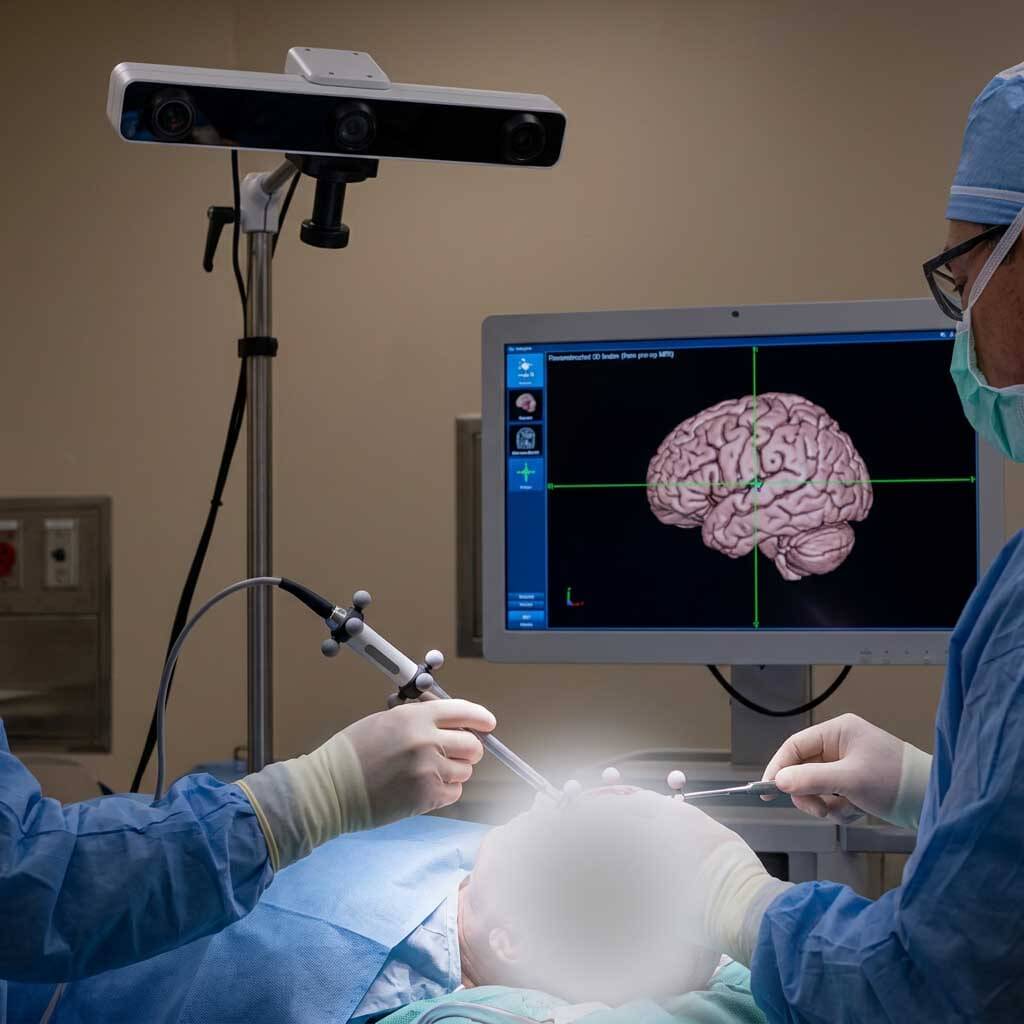
An optical surgical navigation system uses cameras to track surgical instruments and reference devices equipped with optical markers.
The system detects the position of these markers and calculates the location of the instrument in three-dimensional space.
Common keywords include:
- Optical surgical navigation system
- Optical navigation system
- Optical tracking navigation
- Optical tracking system
- Infrared surgical navigation
- Infrared tracking system
- Surgical navigation camera
- Navigation tracking camera
- Optical instrument tracking
- Camera-based surgical navigation
Optical navigation is one of the most widely used tracking methods in image-guided surgery.
How Does Optical Tracking Work?
The basic workflow is:
Step 1: Camera Detection
A tracking camera detects reflective markers or active markers attached to:
- Surgical instruments
- Navigation probes
- Patient reference frames
Step 2: Position Calculation
The system calculates:
- Instrument position
- Instrument direction
- Reference location
- Spatial relationship
Step 3: Navigation Display
The software displays the tracked instrument position on:
- CT images
- MRI images
- 3D models
- Navigation screens
This allows the surgeon to understand the instrument location relative to anatomical structures.
Advantages of Optical Surgical Navigation
Optical navigation systems are widely used because they offer:
High-Speed Tracking
The camera can continuously detect marker movement during procedures.
Three-Dimensional Position Detection
The system can calculate instrument location and orientation.
Established Clinical Workflow
Optical tracking has been adopted in many navigation applications.
Multiple Instrument Support
Several tracked instruments can often be monitored depending on system configuration.
Considerations for Optical Navigation
Although optical tracking has many advantages, buyers should understand several practical factors.
Line of Sight Requirement
The camera needs to maintain visibility of tracking markers.
Potential challenges include:
- Instruments blocking markers
- Camera position
- Operating room arrangement
- Staff movement
Marker Maintenance
Tracking markers need proper handling and cleaning according to manufacturer instructions.
Operating Room Setup
Hospitals need to consider:
- Camera location
- Surgical table position
- Equipment arrangement
- Available space
Common Applications of Optical Navigation
Optical navigation may be used in:
Neurosurgery
Keywords:
- Optical neuronavigation
- Brain navigation system
- Cranial navigation system
- Neurosurgical navigation system
Spine Surgery
Keywords:
- Optical spine navigation
- Spine navigation system
- Computer-assisted spine surgery
- Pedicle screw navigation
Orthopedics
Keywords:
- Orthopedic navigation system
- Surgical tracking for orthopedic procedures
- Bone navigation system
3. Electromagnetic Surgical Navigation System
What Is Electromagnetic Navigation?
An electromagnetic surgical navigation system uses an electromagnetic field generator and sensors embedded in compatible surgical instruments.
Instead of using cameras, the system detects instrument position through electromagnetic signals.
Related keywords include:
- Electromagnetic surgical navigation
- Electromagnetic navigation system
- EM navigation system
- Electromagnetic tracking system
- EM tracking surgery
- Electromagnetic instrument tracking
- Surgical EM navigation
Electromagnetic navigation is commonly discussed in applications where flexible instrument tracking or reduced dependence on direct camera visibility is important.
How Does Electromagnetic Navigation Work?
The workflow usually includes:
Electromagnetic Field Generation
A field generator creates a controlled electromagnetic tracking environment.
Sensor Detection
Small sensors inside compatible instruments communicate their position.
Navigation Calculation
The system calculates:
- Instrument location
- Direction
- Movement
Image Display
The software displays the instrument position on registered medical images.
Advantages of Electromagnetic Navigation
No Traditional Camera Line of Sight Requirement
Unlike optical systems, electromagnetic tracking does not rely on a direct camera view of markers.
This can be useful in certain procedures where instrument visibility is difficult.
Small Tracking Sensors
Electromagnetic sensors can be integrated into relatively small instruments.
Flexible Workflow
It can support selected minimally invasive procedures.
Considerations for Electromagnetic Navigation
Electromagnetic navigation also has factors buyers should evaluate.
Environmental Factors
Certain metallic objects or equipment may influence electromagnetic tracking conditions.
Hospitals should evaluate:
- Operating room environment
- Equipment placement
- Compatible accessories
Instrument Compatibility
Only compatible electromagnetic tracking instruments can be used.
Clinical Application
The suitable application depends on the system design and regulatory indications.
Optical vs Electromagnetic Surgical Navigation
Many buyers search:
- Optical navigation vs electromagnetic navigation
- Optical tracking vs electromagnetic tracking
- EM navigation vs optical navigation
- Which surgical navigation system is better?
The answer depends on the clinical requirement.
| Feature | Optical Navigation | Electromagnetic Navigation |
|---|---|---|
| Tracking method | Camera and markers | Electromagnetic field and sensors |
| Direct camera view | Usually required | Not based on optical line of sight |
| Instrument sensor | Marker-based tracking | Embedded electromagnetic sensor |
| Environment factors | Camera visibility | Electromagnetic environment |
| Common considerations | Marker positioning | Field interference |
| Application | Depends on system design | Depends on system design |
There is no universal “best” navigation technology.
Hospitals should select based on:
- Surgical specialty
- Workflow
- Instruments
- Imaging requirements
- Operating room environment
4. CT-Based Surgical Navigation System
What Is CT-Based Navigation?
A CT-based surgical navigation system uses computed tomography (CT) image data as the anatomical reference for navigation.
CT images provide detailed information about:
- Bone structures
- Anatomical landmarks
- Three-dimensional relationships
Common keywords include:
- CT-based surgical navigation
- CT navigation system
- CT image-guided surgery
- CT guided navigation
- 3D CT navigation
- CT surgical guidance
- CT image guidance system
How Does CT Navigation Work?
The typical workflow includes:
CT Image Acquisition
A CT scan creates digital anatomical images.
Image Processing
The navigation software processes the CT dataset.
Registration
The patient anatomy is matched with the CT image.
Instrument Tracking
Tracked instruments are displayed relative to CT images.
Why Is CT Used in Surgical Navigation?
CT is commonly valuable because it provides strong visualization of:
- Bone anatomy
- Spine structures
- Skull structures
- Implant-related anatomy
This makes CT-based navigation widely discussed in:
- Spine surgery
- Cranial surgery
- Orthopedic procedures
- Trauma surgery

5. MRI-Based Surgical Navigation System
What Is MRI Navigation?
MRI-based surgical navigation uses magnetic resonance imaging data as part of an image-guided surgical workflow.
Related keywords:
- MRI surgical navigation
- MRI navigation system
- MRI image guided surgery
- MRI-based navigation
- MRI neuronavigation
- MRI surgical guidance
MRI provides detailed soft tissue information.
It is commonly associated with:
- Neurosurgery
- Brain procedures
- Soft tissue visualization
CT Navigation vs MRI Navigation
| Feature | CT Navigation | MRI Navigation |
|---|---|---|
| Main strength | Bone visualization | Soft tissue visualization |
| Common use | Spine, bone, cranial structures | Brain and soft tissue |
| Image source | CT scan | MRI scan |
| Navigation workflow | Depends on system | Depends on system |
The choice depends on the clinical application.
6. Fluoroscopy-Based Surgical Navigation
What Is Fluoroscopy Navigation?
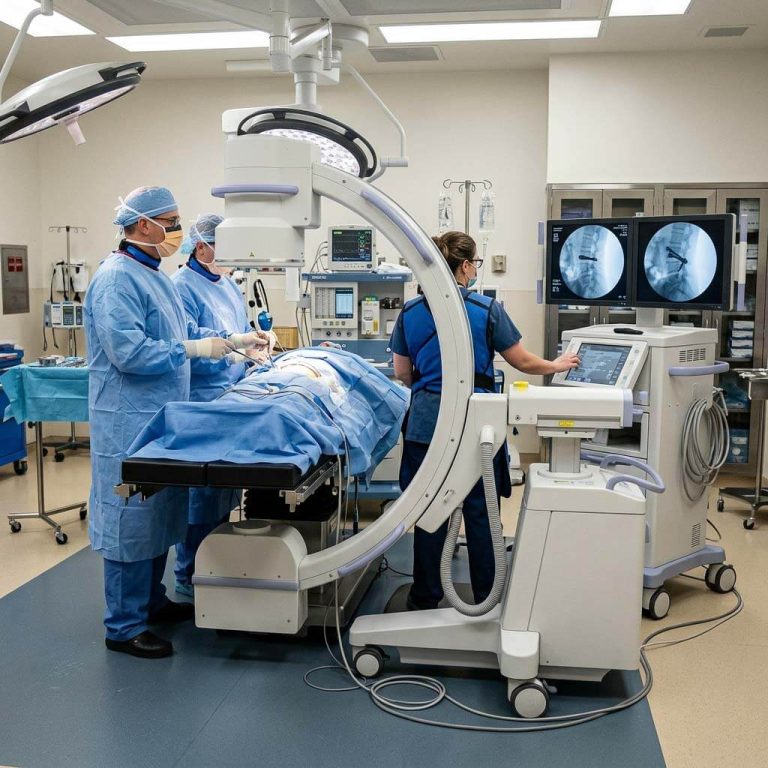
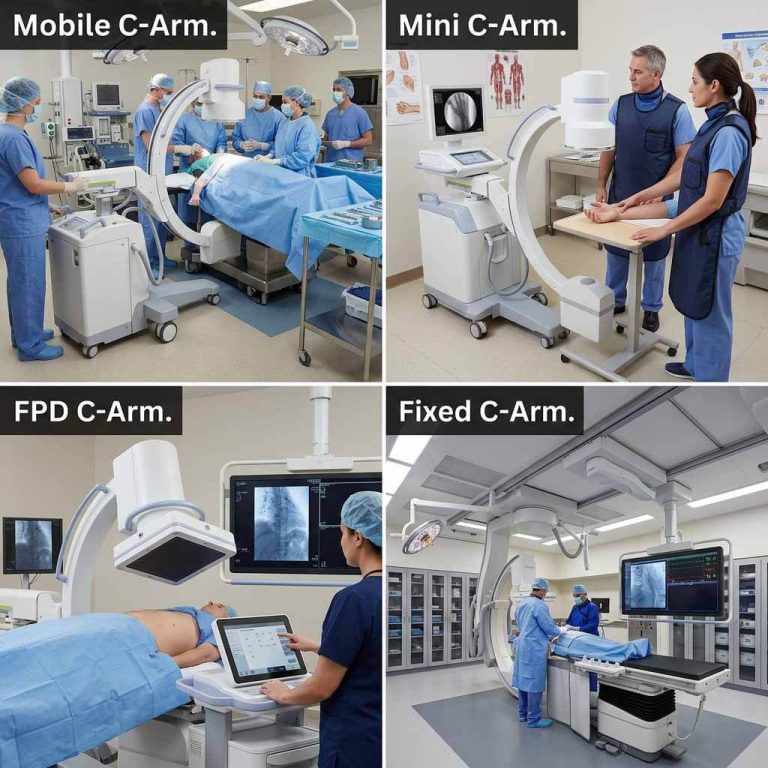
Fluoroscopy-based navigation uses real-time X-ray imaging information during surgical procedures.
Related keywords:
- Fluoroscopy navigation system
- X-ray guided navigation
- Fluoroscopy surgical navigation
- Intraoperative fluoroscopy
- C-arm navigation system
Fluoroscopy can provide dynamic imaging during procedures.
It may be integrated with navigation workflows in selected surgical environments.
7. 3D Surgical Navigation System
What Is 3D Navigation?
A 3D surgical navigation system creates a three-dimensional representation of patient anatomy.
Related keywords:
- 3D surgical navigation
- 3D navigation system
- Three-dimensional surgical navigation
- 3D image guided surgery
- 3D surgical guidance
Compared with traditional 2D image viewing, 3D visualization can help users understand:
- Spatial relationships
- Anatomical structures
- Instrument position
- Surgical pathways
Components Commonly Used in 3D Navigation
A 3D navigation workflow may include:
- CT or MRI data
- 3D reconstruction software
- Tracking technology
- Navigation workstation
- Surgical instruments
- Display system
8. Hybrid Surgical Navigation System
What Is Hybrid Navigation?
A hybrid surgical navigation system combines different technologies or workflows.
Examples may include:
- Optical + electromagnetic tracking
- Navigation + intraoperative imaging
- Navigation + robotic assistance
- Navigation + 3D imaging
Related keywords:
- Hybrid surgical navigation system
- Hybrid navigation technology
- Integrated surgical navigation
- Advanced image-guided surgery
- Combined navigation system
Why Are Hybrid Systems Developed?
Different technologies have different strengths.
A hybrid approach may help hospitals:
- Support multiple procedures
- Improve workflow flexibility
- Integrate different imaging sources
- Provide additional guidance options
However, the complexity and requirements of the system should always match the hospital’s actual clinical needs.
9. Surgical Navigation System Classification by Application
Besides tracking technology, navigation systems can also be classified by specialty.
Neurosurgical Navigation System
Keywords:
- Neurosurgery navigation
- Neuronavigation system
- Brain navigation
- Cranial navigation
- Brain surgery navigation
Used for selected brain and skull-related procedures.
Spine Navigation System
Keywords:
- Spine navigation system
- Spinal navigation system
- Spine surgery navigation
- Pedicle screw navigation
- 3D spine navigation
Used in selected spinal procedures.
ENT Navigation System
Keywords:
- ENT navigation system
- Sinus navigation system
- Skull base navigation
- ENT image guidance
Used in selected ear, nose and throat procedures.
Orthopedic Navigation System
Keywords:
- Orthopedic navigation
- Orthopedic surgical navigation
- Bone navigation
- Joint navigation
Used in selected orthopedic workflows.
10. How Should Hospitals Compare Different Navigation Technologies?
Before purchasing, hospitals should ask:
1. What Procedures Will Be Performed?
Examples:
- Neurosurgery
- Spine
- Orthopedics
- ENT
2. What Imaging Data Is Required?
Examples:
- CT
- MRI
- Fluoroscopy
- 3D imaging
3. Which Tracking Technology Fits the Workflow?
Options:
- Optical
- Electromagnetic
- Hybrid
4. What Software Functions Are Needed?
Examples:
- 3D reconstruction
- Registration
- Planning tools
- Instrument tracking
- Image fusion
5. What Support Does the Supplier Provide?
Consider:
- Installation
- Training
- Technical service
- Spare parts
- Warranty
11. Choosing a Surgical Navigation Supplier
For international buyers, selecting a supplier is not only about the navigation hardware.
A reliable medical equipment supplier should provide:
- Technical consultation
- Product configuration support
- Documentation
- Installation guidance
- Training service
- After-sales support
UMY Medical Equipment Co., Ltd. provides international medical equipment solutions with experience supporting healthcare customers worldwide.
According to UMY Medical’s official information, the company serves customers across global markets and provides a wide range of medical equipment solutions, including hospital equipment, imaging equipment and surgical-related products. The company also highlights OEM services, international project support and customized solutions for healthcare buyers. (umymedical.com)
For surgical navigation projects, UMY Medical focuses on understanding customer requirements, including:
- Department application
- Hospital project needs
- Equipment configuration
- Country requirements
- Technical specifications
12. Frequently Asked Questions About Surgical Navigation Types
What are the main types of surgical navigation systems?
The main types include optical navigation, electromagnetic navigation, CT-based navigation, MRI-based navigation, fluoroscopy navigation and hybrid navigation systems.
Which is better: optical or electromagnetic navigation?
Neither technology is universally better. The suitable choice depends on procedure requirements, workflow and operating environment.
What is the most common surgical navigation technology?
Optical and electromagnetic tracking are two commonly discussed navigation technologies.
Is CT required for surgical navigation?
Not always. Navigation systems may support different imaging workflows depending on the system.
Can MRI images be used in surgical navigation?
Some systems can use MRI data depending on software compatibility and clinical workflow.
What is 3D surgical navigation?
It is a navigation method using three-dimensional anatomical models and tracked instruments.
What is hybrid surgical navigation?
A hybrid system combines different technologies or imaging workflows.
Which surgical specialties use navigation systems?
Common specialties include neurosurgery, spine surgery, orthopedics and ENT.
Conclusion
Surgical navigation systems are built around one core purpose:
Connecting medical images with real-time instrument positioning.
Different technologies achieve this through different methods:
- Optical navigation uses cameras and markers.
- Electromagnetic navigation uses sensors and electromagnetic fields.
- CT navigation uses CT image data.
- MRI navigation uses MRI information.
- 3D navigation creates three-dimensional anatomical views.
- Hybrid systems combine multiple technologies.
For hospitals and medical equipment buyers, the best navigation system is not simply the one with the most features. It is the system that matches the hospital’s procedures, imaging workflow, technical requirements and long-term service needs.