Choosing Between Rigid and Flexible Endoscopes
Medical endoscopy has transformed modern healthcare by allowing doctors to diagnose diseases and perform minimally invasive procedures with smaller incisions and faster patient recovery.
When hospitals, clinics, and medical distributors purchase endoscopy equipment, one of the most common questions is:
Should we choose a rigid endoscope or a flexible endoscope?
Both rigid and flexible endoscopy systems have their own advantages, applications, and limitations.
The correct choice depends on:
- Medical specialty
- Surgical requirements
- Image quality requirements
- Budget
- Maintenance capability
- Hospital workflow
This complete comparison guide explains the key differences between rigid and flexible endoscopes, helping healthcare buyers select the most suitable endoscopy solution.
1. What Is a Rigid Endoscope?
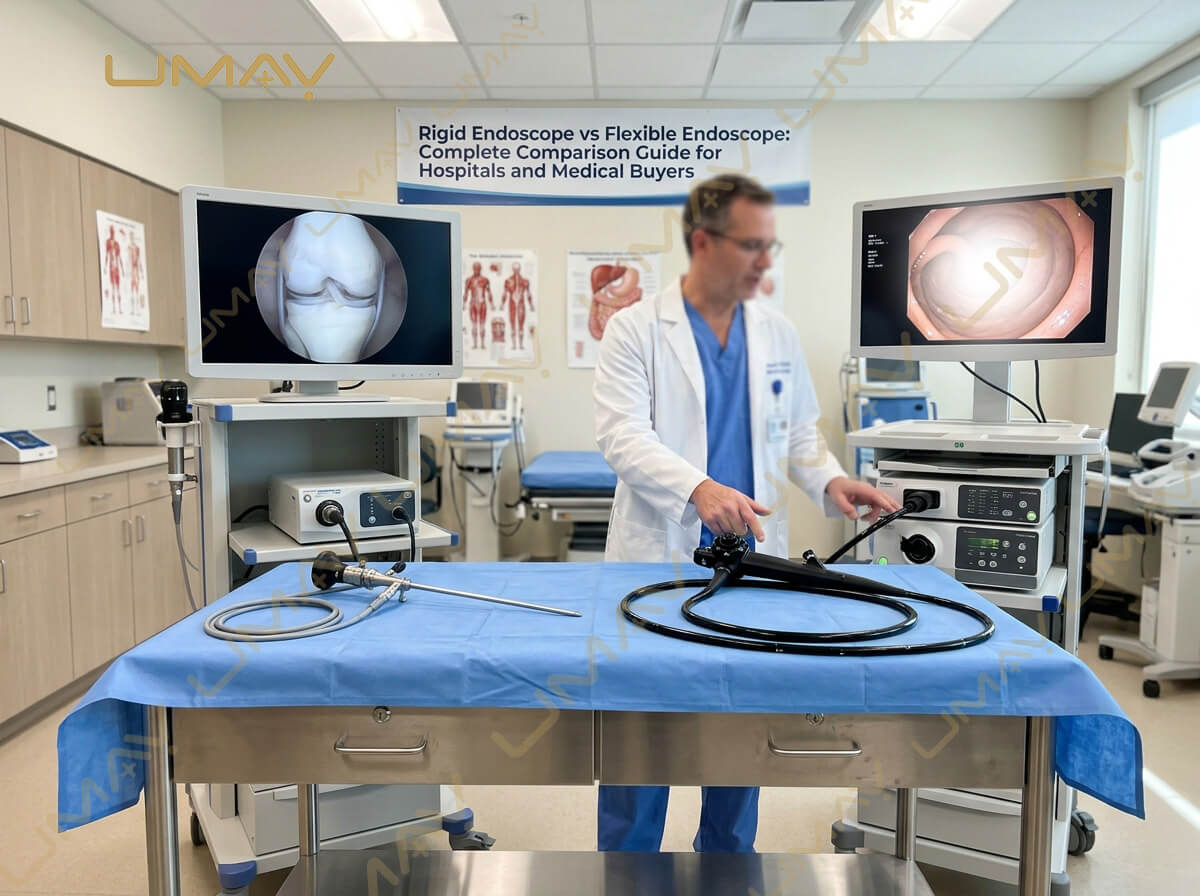
A rigid endoscope is a medical optical instrument with a straight, non-flexible tube.
It uses advanced optical lenses to transmit images from inside the body to a camera system and medical monitor.
Rigid endoscopes are widely used in minimally invasive surgeries because they provide excellent visualization and high image quality.
Common applications include:
- Laparoscopic surgery
- Arthroscopy
- ENT surgery
- Gynecological procedures
- Urological surgery
- Orthopedic surgery
A complete rigid endoscope system usually includes:
- Rigid scope
- Endoscope camera
- Camera control unit
- LED light source
- Medical monitor
- Surgical instruments
2. What Is a Flexible Endoscope?
A flexible endoscope is designed with a bendable insertion tube that allows doctors to navigate through complex anatomical structures.
Unlike rigid scopes, flexible endoscopes can change direction and reach areas that are difficult to access.
Flexible endoscopy is commonly used for:
- Gastrointestinal examination
- Colonoscopy
- Bronchoscopy
- Respiratory diagnosis
- Digestive tract procedures
Flexible endoscopes often include:
- Flexible insertion tube
- Camera sensor
- Light transmission system
- Control handle
- Suction and working channels
3. Rigid Endoscope vs Flexible Endoscope: Key Differences
| Feature | Rigid Endoscope | Flexible Endoscope |
|---|---|---|
| Structure | Straight tube | Bendable tube |
| Image quality | Excellent optical clarity | Good, depends on technology |
| Durability | Higher durability | More sensitive |
| Sterilization | Easier | More complicated |
| Maintenance cost | Lower | Higher |
| Access ability | Limited angles | Excellent flexibility |
| Main use | Surgery | Diagnosis & navigation |
| Price | Usually lower | Usually higher |
4. Image Quality Comparison
Rigid Endoscope Image Quality
One of the biggest advantages of rigid endoscopes is superior image quality.
Because rigid scopes use high-quality optical lenses, they provide:
- High resolution
- Better brightness
- Accurate color reproduction
- Stable image transmission
For surgical procedures where precision is critical, image quality is extremely important.
Examples:
- Laparoscopic surgery
- Arthroscopic surgery
- ENT surgery
Modern rigid endoscope systems combined with:
- HD camera systems
- 4K medical monitors
- Advanced image processors
can provide extremely detailed surgical visualization.
Flexible Endoscope Image Quality
Flexible endoscopes have improved significantly with modern digital imaging technology.
Advanced flexible systems now provide:
- HD imaging
- Digital enhancement
- Narrow-band imaging
- Improved visualization
However, because of their flexible structure and smaller diameter, traditional flexible endoscopes may not always match the optical clarity of rigid systems.
5. Application Comparison: Which Endoscope Is Better?
Rigid Endoscope Applications
Laparoscopic Surgery
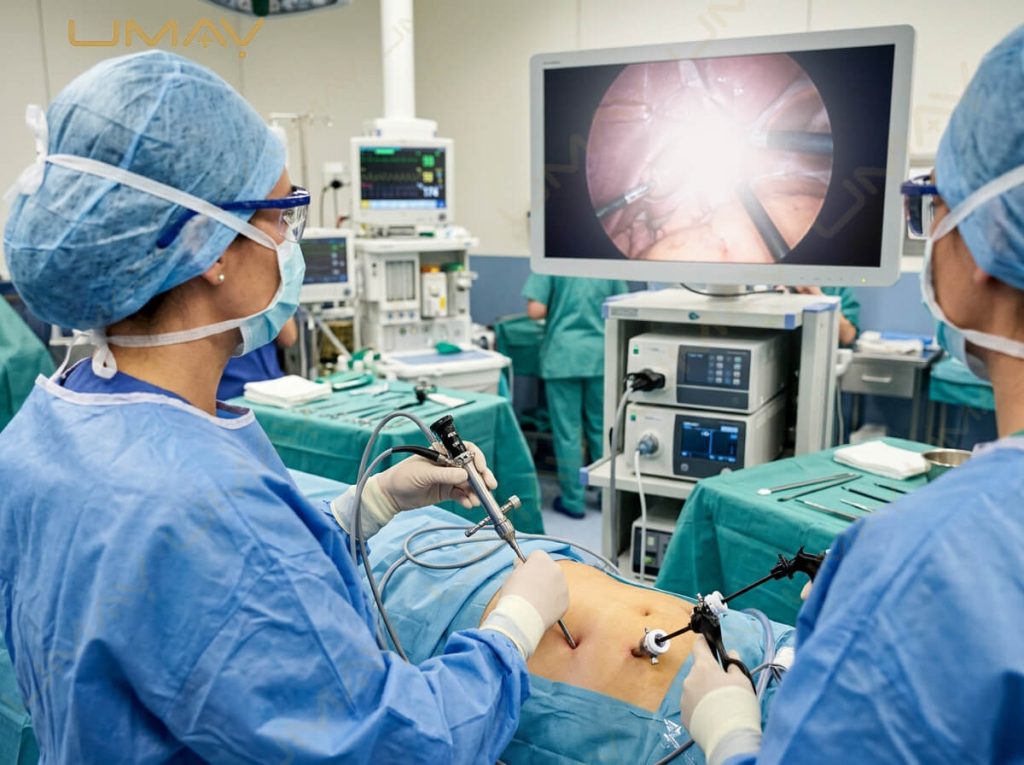
Rigid laparoscopic endoscopes are widely used in minimally invasive abdominal surgery.
Common procedures:
- Gallbladder removal
- Hernia repair
- Appendectomy
- Gynecological surgery
Advantages:
- Clear surgical field
- Stable image
- Precise operation
Arthroscopy
Rigid endoscopes are essential tools in orthopedic surgery.
Used for:
- Knee examination
- Shoulder surgery
- Joint repair
Benefits:
- Excellent visualization
- Small surgical incision
- Faster recovery
ENT Surgery
Rigid endoscopes are commonly used in:
- Nasal examination
- Sinus surgery
- Ear procedures
Doctors prefer rigid scopes because they provide clear images and accurate positioning.
Flexible Endoscope Applications
Gastrointestinal Endoscopy
Flexible endoscopes are the standard equipment for:
- Gastroscopy
- Colonoscopy
- Digestive system examination
Benefits:
- Patient comfort
- Easy navigation
- Access to curved pathways
Bronchoscopy
Flexible bronchoscopes allow doctors to examine the respiratory system.
Applications:
- Lung diagnosis
- Airway examination
- Tissue sampling
6. Advantages of Rigid Endoscope
1. Superior Optical Performance
Rigid scopes provide excellent image transmission because of advanced optical design.
2. Higher Durability
Rigid endoscopes have a strong structure and usually have a longer service life.
3. Lower Maintenance Cost
Compared with flexible scopes, rigid endoscopes are:
- Easier to clean
- Easier to sterilize
- Less expensive to repair
4. Better for Surgical Procedures
For operations requiring accuracy, rigid endoscopes provide stable visualization.
7. Advantages of Flexible Endoscope
1. Excellent Accessibility
The biggest advantage is flexibility.
Doctors can reach:
- Curved organs
- Narrow pathways
- Complex anatomical structures
2. Better Patient Comfort
Flexible scopes are commonly used for diagnostic procedures because they reduce discomfort.
3. Multiple Clinical Applications
Flexible endoscopes are widely used in:
- Gastroenterology
- Pulmonology
- Urology
8. Rigid Endoscope vs Flexible Endoscope: Cost Comparison
Cost is an important factor for hospitals and distributors.
Rigid Endoscope Cost Factors
Price depends on:
- Optical quality
- Diameter
- Viewing angle
- Camera system
- Accessories
A complete rigid endoscopy system may include:
- Scope
- Camera
- Light source
- Monitor
Flexible Endoscope Cost Factors
Flexible systems are usually more expensive because they contain:
- Complex mechanical structures
- Advanced sensors
- Internal channels
- More complicated manufacturing processes
Maintenance costs are also higher because flexible scopes require professional repair services.
9. Which Endoscope Should Hospitals Buy?
Choose Rigid Endoscope If You Need:
✔ Surgical procedures
✔ High image quality
✔ Long-term durability
✔ Lower maintenance cost
✔ Stable operation
Recommended departments:
- Surgery department
- Orthopedics
- ENT
- Gynecology
Choose Flexible Endoscope If You Need:
✔ Diagnostic examinations
✔ Access to complex areas
✔ Patient comfort
✔ Gastrointestinal procedures
Recommended departments:
- Gastroenterology
- Respiratory department
- Internal medicine
10. How to Choose an Endoscope Manufacturer?
Whether purchasing rigid or flexible endoscopy equipment, choosing the right supplier is critical.
A professional medical endoscope manufacturer should provide:
Quality Control
Look for:
- Manufacturing experience
- Inspection process
- Reliable components
International Certification
Important certifications include:
- CE
- ISO13485
Technical Support
A reliable supplier should provide:
- Installation support
- Training
- Spare parts
- After-sales service
11. Why Choose UMY Medical Endoscope Solutions?
UMY Medical Equipment Co., Ltd. provides professional medical equipment solutions for hospitals, clinics, and distributors worldwide.
With advanced manufacturing capability and experience in medical imaging and surgical equipment, UMY Medical offers reliable endoscopy solutions designed for different clinical applications.
Our endoscope solutions focus on:
- High-definition imaging
- Reliable performance
- Easy operation
- Professional support
By combining manufacturing expertise, quality control, and international service experience, UMY Medical helps healthcare organizations build efficient minimally invasive surgery solutions.
Frequently Asked Questions
Q1: Is rigid endoscope better than flexible endoscope?
It depends on the application.
Rigid endoscopes are better for surgery because they provide clearer images and better stability.
Flexible endoscopes are better for diagnostic procedures requiring navigation through curved pathways.
Q2: Which endoscope has better image quality?
Generally, rigid endoscopes provide superior optical image quality because they use advanced lens systems.
Q3: Which endoscope is cheaper?
Rigid endoscopes usually have lower purchase and maintenance costs compared with flexible endoscopy systems.
Q4: What endoscope system is best for hospitals?
Hospitals should choose based on departments and procedures.
A surgical hospital may prefer HD rigid endoscope systems, while diagnostic centers may require flexible endoscopy equipment.
Conclusion
Both rigid and flexible endoscopes play important roles in modern healthcare.
Rigid endoscopes provide excellent image quality, durability, and precision for minimally invasive surgery.
Flexible endoscopes provide outstanding accessibility and patient comfort for diagnostic examinations.
The best choice depends on your clinical needs, budget, and future development plans.
Before purchasing an endoscope system, hospitals and distributors should carefully evaluate applications, supplier capability, technology level, and long-term service support.
Choosing the right endoscopy solution helps healthcare providers improve surgical efficiency, diagnostic accuracy, and patient outcomes.