Navigating Capital Equipment Sourcing for Centrifuges
Procuring laboratory centrifuges requires balancing upfront equipment acquisition costs against ongoing operational maintenance, rotor investments, and facility utility requirements. Whether equipping a clinical diagnostics chain, university research department, or industrial QA lab, buyers must navigate options ranging from OEM manufacturers to regional medical equipment distributors.
A comprehensive procurement strategy evaluates market price tiers, long-term maintenance overhead, software/hardware customizability, and international quality certifications to maximize capital efficiency.
+-----------------------------------------------------------------------------------+
|                   CENTRIFUGE PROCUREMENT LIFECYCLE                                |
+-----------------------------------------------------------------------------------+
|  1. Needs Analysis         | Determine speed (RCF), volume, & thermal requirements|
|  2. Vendor Sourcing        | Direct OEM, ODM supplier, or authorized distributor  |
|  3. Financial Modeling     | Purchase price, rotor packages, shipping, & TCO      |
|  4. Quality Assurance      | ISO 13485 audit, CE/UL verification, & SLA terms     |
+-----------------------------------------------------------------------------------+
1. Market Price Benchmarks Across Centrifuge Tiers
Capital costs vary widely depending on motor drive sophistication, cooling compressor integration, rotor capacity, and build materials.
Personal & Mini Centrifuges
-
Price Range: $150 – $800
-
Target Users: Individual bench stations, PCR prep rooms, field testing kits.
-
Cost Drivers: Fixed-speed vs. adjustable RPM controls, brush vs. brushless motors, and included microtube/PCR strip rotor bundles.
Clinical & General Purpose Benchtop Centrifuges
-
Price Range: $1,200 – $4,500 (Ventilated) | $3,500 – $8,500 (Refrigerated)
-
Target Users: Medical clinics, hospital pathology labs, university teaching units.
-
Cost Drivers: Touchscreen interface, programmable memory, aerosol-tight biocontainment lids, and multi-rotor compatibility.
High-Speed & High-Capacity Benchtop Units
-
Price Range: $8,000 – $18,000
-
Target Users: Molecular biology labs, biopharmaceutical research, central blood banks.
-
Cost Drivers: Advanced refrigeration compressors, carbon fiber rotor options, and automatic rotor recognition systems.
Floor-Standing & Ultracentrifuges
-
Price Range: $25,000 – $120,000+
-
Target Users: Biomanufacturing facilities, viral vector production plants, structural biology institutes.
-
Cost Drivers: High-vacuum chamber pumps, structural armor plating, energy recovery drives, and continuous-flow separation capabilities.
2. Calculating Total Cost of Ownership (TCO)
Evaluating a centrifuge solely on the initial sticker price omits hidden operational and accessory expenses that occur over the equipment lifecycle.
+-----------------------------------------------------------------------------------+
|                 5-YEAR COST DISTRIBUTION EXAMPLE (REFRIGERATED)                   |
+-----------------------------------------------------------------------------------+
| Base Centrifuge Chassis (55%)          | $6,500                                   |
| Specialized Rotors & Tube Buckets (22%)| $2,600                                   |
| Service Plans & Calibration Audits (13%)| $1,500 ($300 / year post-warranty)       |
| Shipping, Tariffs & Installation (10%) | $1,200                                   |
+-----------------------------------------------------------------------------------+
Hidden Cost Factors to Consider
-
Rotor & Adapter Modular Bundles: Base chassis quotes rarely include all needed rotors. Purchasing additional fixed-angle rotors, swinging buckets, and custom tube adapters can add 20% to 40% to the initial equipment invoice.
-
Energy Consumption & HVAC Load: High-power refrigerated centrifuges draw up to 1,500–2,500 Watts during active cooling. The heat dissipated into the room also increases facility HVAC cooling loads.
-
Routine Service & Spare Parts: Replacement drive belts, chamber door gaskets, carbon brushes (if non-brushless), and annual tachometer calibration certificates represent recurring expenses.
3. Sourcing Strategy: Direct OEM vs. ODM vs. Authorized Distributors
Selecting the right supply chain partner determines post-sale technical support, spare parts availability, and unit pricing flexibility.
                      CENTRIFUGE SOURCING MODELS
                                   |
       +---------------------------+---------------------------+
       |                                                       |
Original Equipment Manufacturer (OEM)         Authorized Regional Distributor
- Direct factory pricing (bulk savings)       - Local inventory & immediate dispatch
- Full custom branding / ODM options          - Higher unit markup (30%–50% margin)
- Direct access to engineering teams          - Local field engineer installation & service
Direct OEM / ODM Manufacturers
-
Best Suited For: Bulk purchasers, regional brand distributors, high-volume lab networks, and contract development and manufacturing organizations (CDMOs).
-
Pros: Lowest per-unit cost, options for custom exterior branding/colors, private label firmware options, and direct factory technical support.
-
Cons: Higher Minimum Order Quantities (MOQs), longer shipping lead times, and requiring in-house or third-party service setup.
Authorized Regional Distributors
-
Best Suited For: Single laboratory purchases, emergency replacements, and academic institutions requiring localized billing.
-
Pros: Rapid local delivery, regional field service engineers, and turnkey installation support.
-
Cons: Substantial pricing markups, restricted to franchised rotor models, and ongoing software renewal fees.
4. Laboratory Centrifuge Procurement Matrix
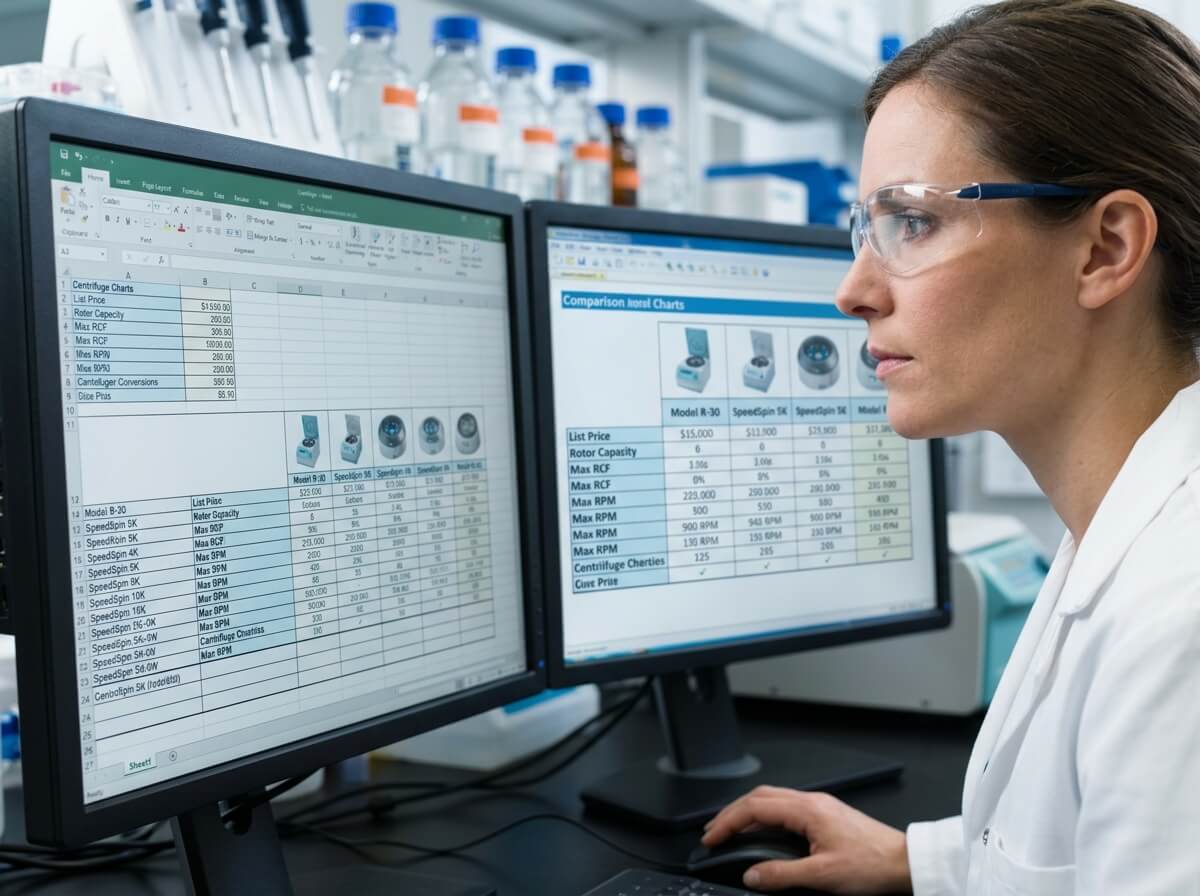
| Equipment Tier | Average Unit Cost (USD) | Typical MOQ (OEM) | Essential Accessories | Expected Equipment Lifespan |
| Personal Microcentrifuge | $150 – $800 | 10 – 50 Units | Fixed microtube rotor, strip adapters | 3 to 5 Years |
| Clinical Benchtop | $1,200 – $4,500 | 5 – 20 Units | Blood tube swinging bucket, cell buckets | 6 to 10 Years |
| Refrigerated High-Speed | $3,500 – $18,000 | 2 – 5 Units | Aerosol-tight fixed angle, conical bucket | 8 to 12 Years |
| Floor-Standing Ultra | $25,000 – $120,000+ | 1 Unit | Titanium rotors, vacuum seal kits | 10 to 15 Years |
5. B2B Supplier Evaluation & Quality Assurance Audit
When sourcing centrifuges from international manufacturers or B2B platforms, use this quality assurance framework to screen prospective vendors:
-
Quality Management Systems (QMS): Verify ISO 9001 (general manufacturing quality) and ISO 13485 (medical device manufacturing standards) certifications.
-
Electrical & Product Safety Clearances: Ensure hardware carries CE marking, UL listing, or RoHS compliance certificates verifying non-hazardous electrical build materials.
-
Guaranteed Spare Parts Availability: Require written commitments that motor drive parts, electronic control boards, and replacement seals will remain stocked for at least 7 to 10 years post-model production.
-
Export-Grade Packaging: Confirm that heavy benchtop and refrigerated centrifuges are shipped in shock-isolated, ocean/air-certified wooden crates with tilt/impact indicator labels.
6. Frequently Asked Questions (FAQ)
Q1: What is the average price difference between ventilated and refrigerated benchtop centrifuges?
Integrating a refrigeration compressor, temperature sensors, and insulated chamber seals typically adds $2,000 to $4,000 to the base cost of a benchtop centrifuge chassis.
Q2: Why do specialized rotors cost so much compared to the main centrifuge unit?
Rotors are precision-engineered from solid blocks of high-grade aerospace aluminum or carbon fiber. They must withstand immense gravitational forces without warping or micro-fracturing, requiring intensive CNC machining, anodization, and ultrasonic stress testing.
Q3: Is it more cost-effective to buy centrifuges directly from overseas OEM manufacturers?
For multi-unit purchases or private-label distribution, buying directly from an OEM yields unit cost savings of 30% to 50%. However, individual labs needing single units often benefit from local distributors who handle customs clearance, delivery, and local warranty servicing.