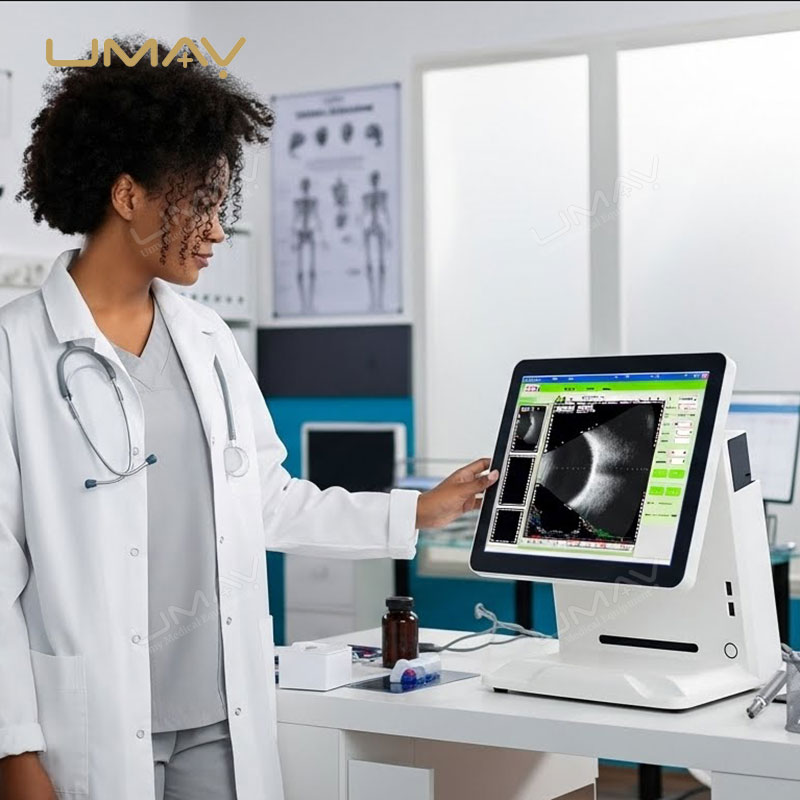
In modern clinical diagnostics, point-of-care ultrasound (POCUS) has transformed how emergency physicians, critical care specialists, and outpatient practitioners evaluate patients. For hospital procurement committees, chief medical officers, and medical device distributors, sourcing a high-performance hand held ultrasound machine or mobile ultrasound platform represents a strategic investment that enhances diagnostic velocity, optimizes patient outcomes, and reduces overall clinical overhead.
By placing clinical-grade imaging directly into the pocket of healthcare providers, pocket ultrasound devices bridge the gap between initial physical examination and complex diagnostic imaging. This B2B guide analyzes technical parameters, transducer engineering, clinical workflows, and purchasing factors for healthcare procurement officers.
Technical Specifications: Handheld Ultrasound vs. Traditional Cart-Based Systems
When evaluating mobile ultrasound platforms for hospital wards or international distribution, understanding key engineering differences helps align hardware with clinical expectations:
| Technical & Operational Parameter | Pocket Handheld Ultrasound Machine | Premium Cart-Based Ultrasound Suite |
| Form Factor & Portability | Pocket-sized transducer (150g–350g), smartphone/tablet display | Heavy rolling console chassis with multi-transducer ports |
| Boot-up & Readiness | Instantaneous (< 5 seconds) | 30 to 90 seconds warm-up time |
| Transducer Options | Dual-head (Convex + Linear) or All-in-One Phased Array | Multiple dedicated interchangeable probe connectors |
| Power & Battery Life | Continuous 2–4 hours active scan time; wireless charging | AC wall outlet required; internal battery for cart mobility |
| Primary Clinical Settings | Emergency Triage (FAST), ICU Bedside, Vascular Access, Outpatient | Comprehensive Cardiology, OB/GYN, Complex Radiology Suites |
| Average Price Range (USD) | $2,500 – $8,000 per unit | $25,000 – $80,000+ per suite |
Key Clinical Benefits for Hospitals and Emergency Departments
1. Rapid Point-of-Care Assessment (POCUS)
In emergency medicine and intensive care units (ICUs), seconds count. A handheld ultrasound allows clinicians to perform immediate Focused Assessment with Sonography for Trauma (FAST) exams, cardiac contractility checks, or pleural effusion screenings without waiting for a cart-based ultrasound or moving the patient to radiology.
2. Enhanced Procedural Safety and Vascular Access
Ultrasound-guided central venous catheterization (CVC), peripheral line insertion, and nerve blocks significantly reduce arterial puncture risks and procedural complications. Handheld devices provide crystal-clear real-time needle visualization directly at the bedside.
3. Lower Total Cost of Ownership (TCO) & Easy Deployment
Pocket ultrasound devices drastically lower capital expenditure (CapEx) compared to bulky diagnostic consoles. Their durable, solid-state construction requires minimal maintenance, while app-based software updates keep hardware at peak imaging performance over time.
4 Essential Evaluation Pillars for B2B Healthcare Buyers
-
Transducer Architecture & Image Quality: Look for high-density piezoceramic element probes or modern Silicon Soundwave / CMOS technology. A dual-headed probe (combining a deep-penetration Convex transducer with a high-frequency Linear transducer) provides maximum versatility across abdominal, cardiac, vascular, and MSK applications.
-
Connectivity & DICOM 3.0 Integration: High-volume hospitals require immediate DICOM transmission to PACS networks. Ensure the mobile ultrasound software supports encrypted Wi-Fi 6 / Bluetooth data export, DICOM Modality Worklist (MWL), and cloud archiving.
-
Ergonomics & Battery Life: Hospital ward rounds demand continuous duty capacity. Choose devices with low thermal emission, ergonomic grips, IPX7 waterproof ratings for easy immersion disinfection, and fast wireless charging docks.
-
App Ecosystem & Platform Compatibility: Verify whether the handheld probe interfaces seamlessly with both iOS and Android tablets or smartphones without requiring costly recurring software licensing fees.
Why Partner with UMY Medical for Global Medical Equipment Procurement?
As a trusted developer and global supplier of medical imaging systems, UMY Medical (www.umymedicalequip.com) supports hospitals, emergency centers, and medical device distributors worldwide.
-
Direct Factory Wholesale Value: Sourcing directly from UMY Medical optimizes procurement budgets while securing Tier-1 image quality and international regulatory compliance.
-
Full DICOM & PACS Network Interoperability: Engineered for rapid hospital workflow integration, enabling instant diagnostic sharing with zero network latency.
-
Turnkey B2B Support: UMY Medical offers international buyers flexible OEM/ODM customization options, robust warranty protection, site layout engineering, and responsive technical service.
Frequently Asked Questions (FAQ)
Q1: Can a handheld ultrasound machine replace a traditional cart-based ultrasound suite?
A handheld ultrasound machine is designed primarily for point-of-care screening, triage, and ultrasound-guided procedures (POCUS). While it provides exceptional image clarity for rapid decision-making, high-end cart-based suites remain necessary for complex diagnostic examinations (such as full fetal anomaly scans or advanced 4D echocardiograms).
Q2: How do clinicians sterilize handheld ultrasound probes between patients?
Modern handheld ultrasound probes feature seamless, waterproof designs (often rated IPX7) that allow complete immersion in high-level liquid disinfectants or thorough wiping with hospital-grade disinfectant wipes, fulfilling strict infection control standards.
Q3: Are there subscription fees associated with mobile ultrasound software?
Pricing models vary by manufacturer. High-value B2B suppliers offer lifetime software access with purchase, while other brands charge annual subscription fees for cloud storage and advanced imaging algorithms. Always clarify software licensing terms during procurement.
Request a Custom Equipment Quote & Technical Specification Package
Looking to upgrade your healthcare facility’s point-of-care imaging capabilities or source certified diagnostic hardware for international distribution?
Contact the UMY Medical sales engineering team today to receive technical data sheets, wholesale price catalogs, and customized B2B procurement packages.