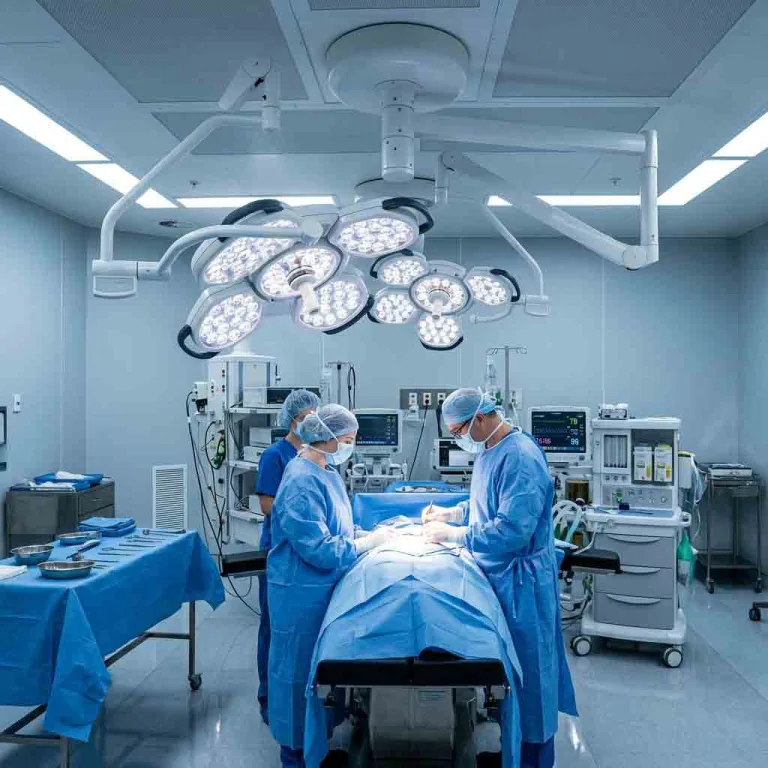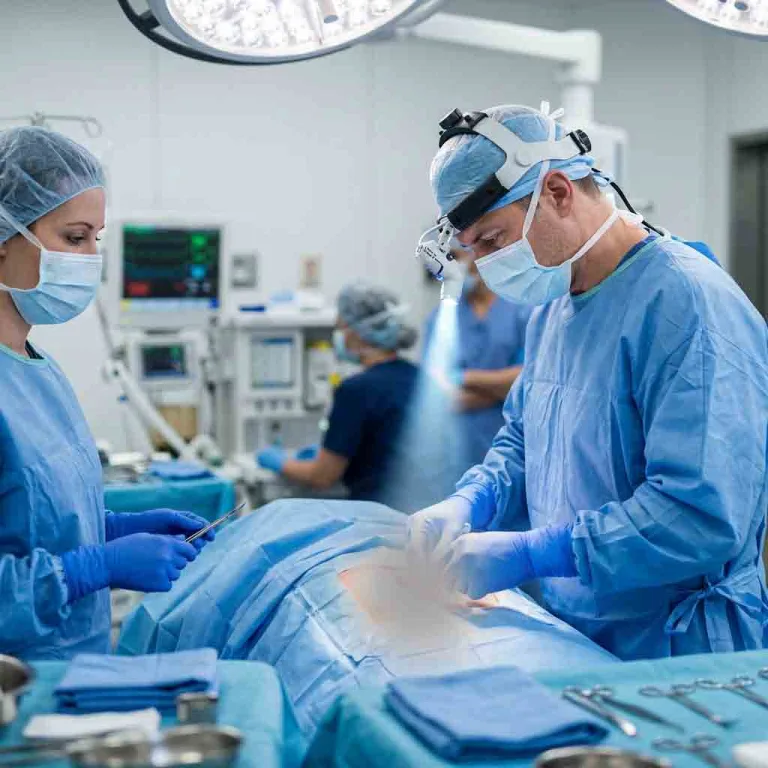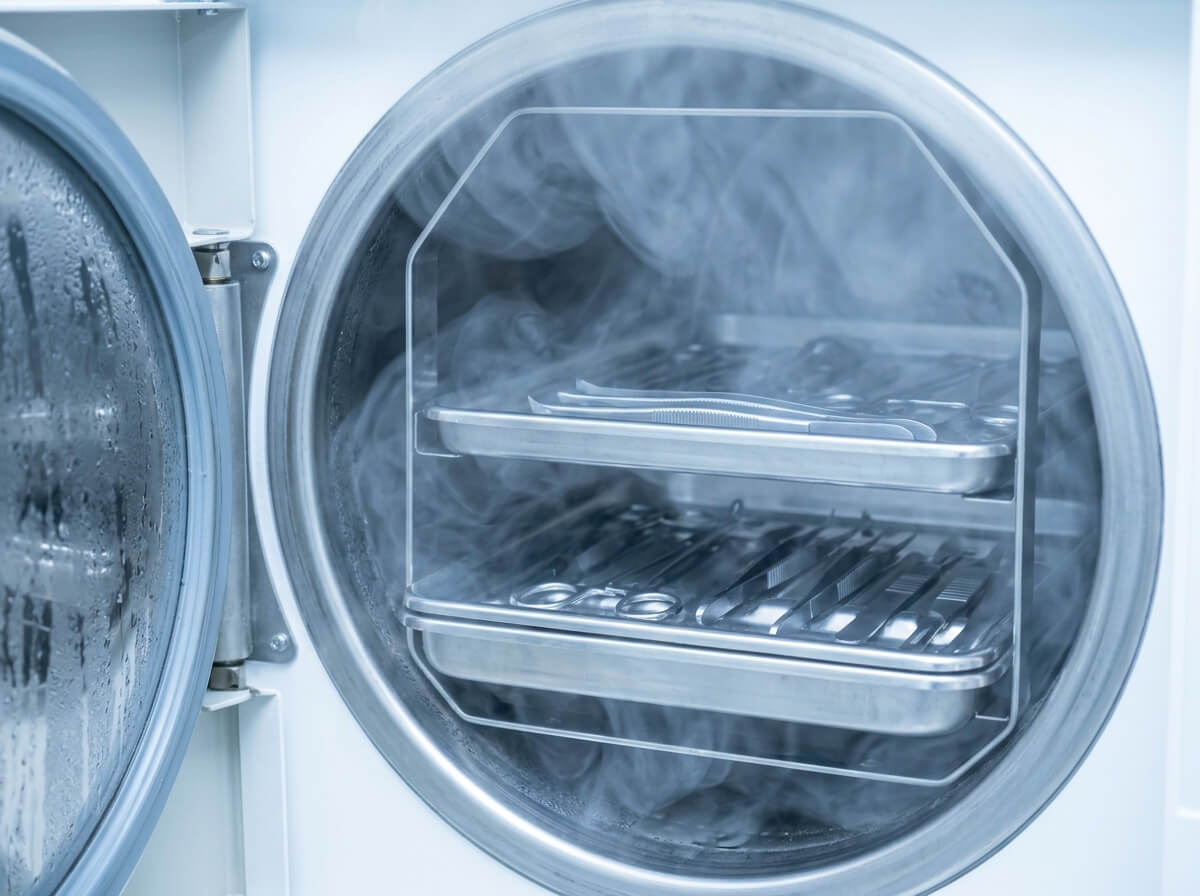
An autoclave is one of the most widely used types of steam sterilization equipment. It can be found in hospitals, dental clinics, laboratories, veterinary facilities, research institutions, and other environments where suitable heat- and moisture-resistant materials need to be processed.
The exact autoclave required depends on the application, load type, chamber capacity, sterilization cycle, packaging, workflow, and applicable regulations.
A small dental clinic may need a compact tabletop autoclave. A hospital CSSD may require a large horizontal steam sterilizer. A microbiology laboratory may need a laboratory autoclave for media, glassware, or suitable laboratory waste. A pharmaceutical facility may require a more controlled sterilization system with process documentation and validation.
CDC states that steam sterilization is the preferred method for critical medical and surgical instruments that are not damaged by heat, steam, pressure, or moisture. It also emphasizes following the instructions of the instrument manufacturer, sterilizer manufacturer, and packaging or container manufacturer.
WHO similarly treats sterilization as part of a broader reprocessing workflow involving collection, cleaning, preparation, sterilization, storage, distribution, infrastructure, and quality control.
This guide explains the major autoclave applications and helps hospitals, clinics, laboratories, distributors, and medical equipment buyers understand which type of sterilizer may fit different environments.
What Is an Autoclave Used For?
An autoclave is primarily used to sterilize suitable materials using steam under pressure.
Common applications include:
- Surgical instrument sterilization
- Dental instrument sterilization
- Laboratory material sterilization
- Culture media sterilization
- Glassware sterilization
- Veterinary instrument sterilization
- Pharmaceutical sterilization
- Medical waste treatment
- Research material processing
- Certain outpatient and clinic applications
The machine is not suitable for every material. Heat-sensitive or moisture-sensitive equipment may require another sterilization technology. CDC recommends low-temperature methods for critical devices that cannot tolerate heat or moisture.
1. Hospital Autoclave
A hospital autoclave is used to sterilize suitable reusable medical devices and instruments.
It is commonly found in:
- Hospitals
- Surgical centers
- CSSD departments
- Central sterile supply departments
- Operating departments
- Medical treatment facilities
Hospital sterilization can involve a large number of reusable instruments and different load configurations.
Typical items may include:
- Surgical instruments
- Metal trays
- Forceps
- Scissors
- Retractors
- Certain reusable medical devices
- Suitable textiles
- Other heat- and moisture-resistant materials
The actual sterilization process is only one part of instrument reprocessing.
A typical workflow is:
Collection → Cleaning → Inspection → Packaging → Sterilization → Storage → Distribution
WHO emphasizes that medical-device decontamination is a sequence of interconnected steps and that quality control is needed throughout the process.
2. CSSD Autoclave
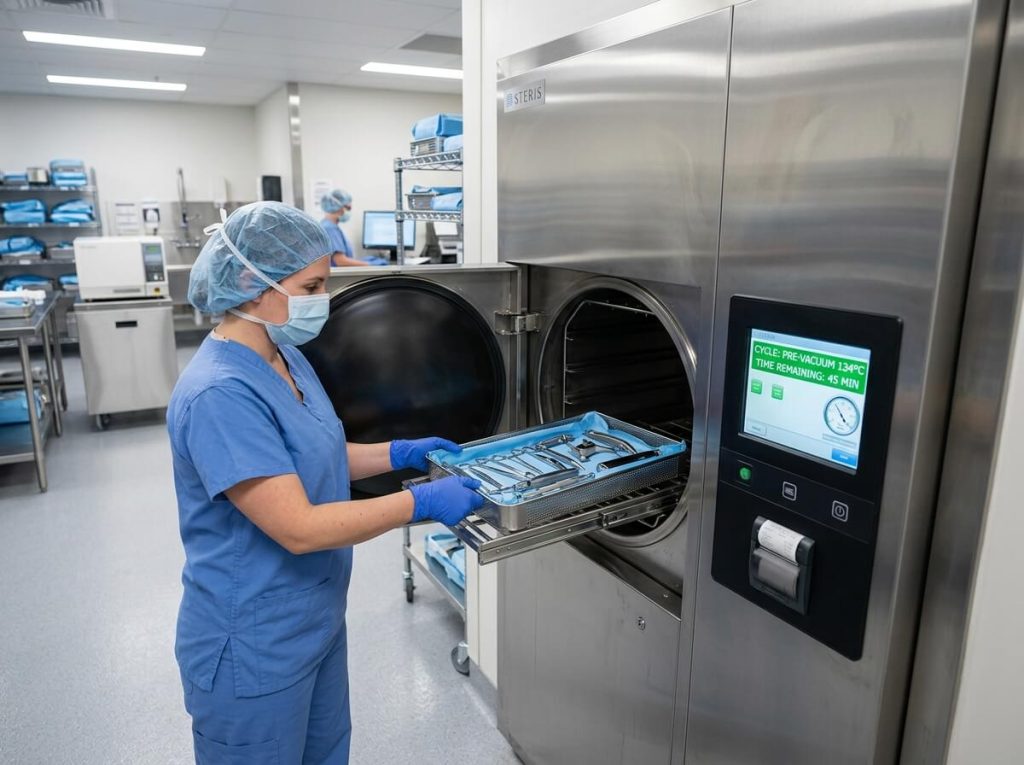
CSSD, or Central Sterile Supply Department, is a major application for hospital steam sterilizers.
A CSSD may handle instruments from:
- Operating rooms
- Emergency departments
- Wards
- Dental departments
- Procedure rooms
- Other clinical areas
A CSSD autoclave often requires greater capacity and workflow flexibility than a small clinic sterilizer.
Common features may include:
- Large sterilization chamber
- Pre-vacuum cycles
- Automatic programs
- Drying
- Cycle recording
- Alarm management
- Loading trolleys
- Stainless steel baskets
- Single-door or double-door configuration
For larger hospitals, pass-through sterilizers with doors on both the loading and unloading sides may be considered as part of a controlled CSSD workflow.
The actual equipment design should follow the healthcare facility’s layout, workflow, regulations, and validated processing requirements.
3. Surgical Instrument Sterilizer
A surgical instrument sterilizer is designed for suitable reusable instruments used in surgical procedures.
Steam sterilization is widely used for heat-resistant critical medical instruments. CDC identifies steam as the preferred sterilization method for such instruments when they are not damaged by steam, heat, pressure, or moisture.
Common surgical instruments include:
- Surgical scissors
- Forceps
- Hemostatic clamps
- Retractors
- Needle holders
- Stainless steel instruments
- Surgical trays
Before sterilization, instruments should be properly cleaned and prepared.
The sterilizer must be operated according to the instrument and sterilizer manufacturer’s instructions.
4. Operating Room Sterilization
Operating rooms depend on a reliable supply of appropriately processed instruments.
Although instruments may be sterilized in a centralized CSSD, the operating room sterilization workflow is an important application area for sterilization equipment.
Hospitals may need to process:
- Surgical trays
- Orthopedic instruments
- General surgery instruments
- Gynecological instruments
- ENT instruments
- Dental surgery instruments
- Other reusable instruments
For a hospital project, the choice between centralized and point-of-use sterilization depends on the hospital’s infrastructure and processing system.
5. Dental Autoclave
A dental autoclave is one of the most common small-scale applications for steam sterilization.
Dental clinics use autoclaves for suitable reusable dental instruments.
Examples can include:
- Dental forceps
- Dental mirrors
- Scalers
- Excavators
- Elevators
- Surgical dental instruments
- Other heat-tolerant instruments
WHO guidance states that heat using steam under pressure is the preferred sterilization method for dental instruments and identifies portable tabletop steam sterilizers as an option when rapid reprocessing is required.
CDC likewise states that steam sterilization is commonly used for heat-stable dental instruments and that dental practices should follow equipment and instrument manufacturer’s instructions for sterilization parameters.
6. Tabletop Dental Autoclave
A tabletop dental autoclave is designed for facilities with smaller instrument volumes and limited space.
Common users include:
- Dental clinics
- Private dental practices
- Small outpatient centers
- Medical clinics
- Rural healthcare facilities
Typical features may include:
- Compact chamber
- Automatic cycle programs
- Digital display
- Vacuum cycle on supported models
- Drying function
- Water reservoir
- Stainless steel chamber
When buying a dental tabletop autoclave, consider:
- Chamber capacity
- Instrument tray size
- Cycle options
- Drying
- Water quality requirements
- Monitoring
- Maintenance
- Accessories
A compact machine is useful only when its configuration matches the instruments being processed.
7. Dental Instrument Sterilization
Dental instrument sterilization involves more than placing instruments inside an autoclave.
A typical workflow includes:
Cleaning → Inspection → Packaging → Sterilization → Drying → Storage
CDC recommends sterilizing heat-tolerant patient-care items in dentistry and emphasizes following the manufacturer’s recommended time, temperature, and operating parameters, as well as proper use of wraps and indicators.
This creates several useful SEO topics:
- dental instrument sterilization
- dental sterilization equipment
- dental autoclave machine
- dental steam sterilizer
- dental instrument sterilizer
- dental clinic autoclave
- dental autoclave supplier
- dental autoclave manufacturer
8. Laboratory Autoclave
A laboratory autoclave is widely used in research and testing environments.
Laboratory applications can include:
- Microbiology
- Biotechnology
- Medical research
- University laboratories
- Public health laboratories
- Pharmaceutical research
- Quality control laboratories
Common laboratory loads include:
- Glassware
- Laboratory tools
- Culture media
- Suitable liquid loads
- Certain waste
- Heat-resistant materials
Laboratory autoclaves can be configured as:
- Vertical autoclaves
- Horizontal autoclaves
- Benchtop autoclaves
- Large-capacity laboratory sterilizers
CDC notes that gravity-displacement steam sterilizers are frequently used in microbiology and other laboratory environments.
9. Microbiology Laboratory Autoclave
Microbiology laboratories often use autoclaves for materials that may contain microorganisms.
Potential applications include:
- Culture media
- Glassware
- Laboratory tools
- Suitable laboratory waste
- Certain contaminated materials
Autoclave operation in a laboratory requires appropriate training.
CDC notes that laboratory personnel should understand autoclave hazards, follow validated loading and packaging procedures, and receive training in emergency procedures.
Laboratories should also avoid processing materials that are incompatible with steam sterilization or that contain hazardous chemicals not intended for autoclaving.
10. Autoclave for Culture Media
Culture media sterilization is an important laboratory application.
Many laboratories sterilize suitable microbiological media before use.
A laboratory autoclave may be used for:
- Culture media
- Prepared solutions
- Laboratory containers
- Suitable glassware
Liquid cycles require careful control because liquids can behave differently from solid instrument loads.
The selected cycle should be suitable for:
- Liquid volume
- Container type
- Load arrangement
- Sterilizer design
The manufacturer’s validated liquid cycle should be followed.
11. Autoclave for Laboratory Glassware
Suitable laboratory glassware can often be sterilized using steam.
Examples may include:
- Flasks
- Bottles
- Beakers
- Tubes
- Certain laboratory containers
However, glassware should be inspected for cracks and defects before processing.
The load should be arranged to allow effective steam contact.
Laboratory staff should also allow the load to cool appropriately before handling.
12. Autoclave for Research Institutions
Universities and research centers often use laboratory autoclaves for a wide range of projects.
Potential users include:
- Universities
- Biomedical research centers
- Public health institutions
- Biotechnology laboratories
- Microbiology departments
- Pharmaceutical research facilities
A research facility may need more flexibility than a clinic.
It may require different programs for:
- Instruments
- Glassware
- Liquids
- Media
- Waste
For this reason, programmable laboratory autoclaves can be useful for facilities with varied workflows.
13. Pharmaceutical Autoclave
A pharmaceutical autoclave is used in appropriate pharmaceutical manufacturing, research, and quality-control environments.
Applications can include suitable:
- Equipment
- Containers
- Components
- Manufacturing tools
- Laboratory materials
Pharmaceutical sterilization often has stricter requirements for:
- Process control
- Documentation
- Validation
- Traceability
- Environmental control
- Load configuration
Therefore, pharmaceutical buyers should evaluate the entire sterilization process rather than purchasing an autoclave based only on chamber size and temperature.
14. Pharmaceutical Steam Sterilizer
A pharmaceutical steam sterilizer may require features such as:
- Programmable cycles
- Precise temperature control
- Pressure monitoring
- Vacuum control
- Data recording
- Alarm systems
- Process documentation
- Validation support
The exact system depends on what is being sterilized.
A pharmaceutical production environment may also require specialized chamber design, piping, steam quality, sensors, and validation procedures.
The equipment should be selected with the pharmaceutical quality and validation teams involved.
15. Autoclave in Pharmaceutical Laboratories
Pharmaceutical laboratories can use smaller sterilizers than production facilities.
Applications may include:
- Laboratory glassware
- Culture media
- Tools
- Suitable components
- Research materials
A laboratory autoclave for pharmaceutical use may therefore have different requirements from a large production sterilizer.
Purchasing teams should identify the intended load and required validation level before selecting the machine.
16. Veterinary Autoclave
A veterinary autoclave is used in animal hospitals, veterinary clinics, and veterinary laboratories.
Potential applications include sterilizing:
- Surgical instruments
- Dental instruments
- Reusable medical equipment
- Laboratory materials
- Suitable veterinary instruments
Veterinary clinics may choose:
- Tabletop autoclaves
- Vertical autoclaves
- Horizontal sterilizers
The choice depends on:
- Number of procedures
- Instrument volume
- Available space
- Required capacity
- Clinical workflow
17. Veterinary Surgical Instrument Sterilization
Veterinary surgery requires appropriately processed reusable instruments.
A typical workflow can include:
Cleaning → Inspection → Packaging → Steam Sterilization → Drying → Storage
The same basic principles apply as in human healthcare, but equipment configuration can vary according to the clinic.
A larger animal hospital may require greater chamber capacity than a small veterinary practice.
SEO opportunities include:
- veterinary autoclave
- veterinary sterilizer
- veterinary clinic autoclave
- veterinary surgical instrument sterilizer
- animal hospital sterilizer
- veterinary steam sterilizer
18. Autoclave for Medical Waste
Another important application is medical waste sterilization.
Some autoclaves are specifically designed to treat appropriate medical or regulated waste streams.
Potential applications may include:
- Certain infectious waste
- Laboratory waste
- Contaminated materials
- Selected disposable medical materials
However, not all waste can be treated in the same way.
Waste-management requirements depend on:
- Waste category
- Local regulations
- Facility design
- Sterilizer configuration
- Treatment objective
CDC identifies gravity-displacement autoclaves as being used for regulated medical waste among other suitable applications.
19. Laboratory Waste Autoclave
Laboratory waste may contain biological material and may require treatment before disposal.
A laboratory waste autoclave can be used for appropriate loads according to laboratory biosafety procedures.
CDC recommends using approved biohazard-labelled autoclave bags for applicable biomedical waste and emphasizes operator training and safe loading procedures.
The waste autoclave should therefore be selected specifically for the facility’s waste type and operating procedures.
20. Medical Waste vs Instrument Sterilization
It is important to distinguish between:
Medical instrument sterilization
and
Medical waste treatment
They may use steam, but the equipment and load requirements can be very different.
Instrument Sterilizer
Designed for:
- Surgical instruments
- Dental instruments
- Reusable medical devices
- Packaged instruments
Waste Autoclave
Designed for:
- Appropriate waste bags
- Laboratory waste
- Certain infectious materials
- Selected disposable items
The two systems should not automatically be considered interchangeable.
21. Autoclave for Clinics
Small clinics may use tabletop or compact sterilizers.
Potential users include:
- General medical clinics
- Outpatient clinics
- Specialist clinics
- Minor procedure clinics
- Rural healthcare facilities
A clinic autoclave may focus on:
- Simple operation
- Compact size
- Automatic cycles
- Short workflow
- Easy cleaning
- Basic data recording
The right chamber size depends on daily workload.
22. Autoclave for Rural Healthcare Facilities
Portable or tabletop steam sterilizers can be useful where a healthcare facility has:
- Limited space
- Lower instrument volume
- Fewer staff
- Limited infrastructure
CDC identifies portable tabletop steam sterilizers as being used in outpatient, dental, and rural clinics.
Before purchasing equipment for a remote location, buyers should also check:
- Electricity
- Water supply
- Water quality
- Drainage
- Installation conditions
- Spare parts
- Technical support
Local infrastructure can be just as important as the sterilizer’s specifications.
23. Autoclave for Research and Biotechnology
Research and biotechnology facilities may use autoclaves for:
- Laboratory glassware
- Media
- Research instruments
- Suitable waste
- Reusable containers
A laboratory autoclave should be selected according to the range of materials processed.
For research facilities with highly variable workloads, programmable cycles can be useful.
24. Autoclave for Universities and Educational Laboratories
Universities often use autoclaves for teaching and research.
Typical users include:
- Biology departments
- Microbiology departments
- Medical schools
- Veterinary schools
- Chemistry-related laboratories
- Biotechnology programs
A university laboratory may benefit from:
- Easy operation
- Clear controls
- Safety features
- Training functions
- Multiple programs
- Simple maintenance
Training is particularly important when many students or researchers share the equipment.
25. Autoclave for Food and Research Laboratories
Some food and research laboratories use autoclaves for applicable laboratory materials.
Potential applications may include:
- Culture media
- Glassware
- Laboratory containers
- Suitable research materials
The sterilizer should be selected according to the actual laboratory process rather than using a generic medical-device configuration.
26. Autoclave for Tattoo and Piercing Studios
Some professional tattoo and piercing environments use steam sterilization for compatible reusable instruments.
However, the exact legal and infection-control requirements vary by location.
Operators should follow:
- Local regulations
- Equipment manufacturer’s instructions
- Instrument manufacturer’s instructions
- Applicable infection-control guidance
This application can also generate SEO searches such as:
- tattoo autoclave
- tattoo sterilizer
- piercing autoclave
- tattoo equipment sterilizer
- small steam sterilizer
For international SEO, these terms may attract users outside traditional hospital procurement.
27. Autoclave for Beauty and Aesthetic Clinics
Some aesthetic and cosmetic healthcare environments may use sterilization equipment for suitable reusable instruments.
Potential applications include:
- Minor procedure instruments
- Reusable tools
- Suitable metal instruments
The appropriate sterilization method depends on the specific instrument and intended use.
A beauty clinic should not assume that every tool can be processed in an autoclave.
28. Autoclave for Outpatient Facilities
Outpatient facilities may have lower instrument volumes than hospitals but still require appropriate sterilization.
A compact steam sterilizer can be considered for:
- Minor procedures
- Dental services
- Specialist clinics
- Ambulatory care
The key factors include:
- Instrument volume
- Cycle speed
- Chamber size
- Workflow
- Staff training
- Available infrastructure
29. Autoclave Applications by Industry
The following overview can help buyers compare applications:
| Application | Typical Autoclave Type | Common Loads |
|---|---|---|
| Hospital CSSD | Large horizontal / pre-vacuum | Surgical instruments, wrapped loads |
| Dental Clinic | Tabletop steam sterilizer | Dental instruments |
| General Clinic | Tabletop / compact | Instruments, small loads |
| Laboratory | Vertical / horizontal | Glassware, media, lab materials |
| Microbiology | Laboratory autoclave | Media, suitable waste |
| Pharmaceutical | Specialized steam sterilizer | Equipment, components, validated loads |
| Veterinary | Tabletop / vertical / horizontal | Surgical instruments |
| Medical Waste | Waste autoclave | Suitable regulated waste |
| University | Laboratory autoclave | Research materials |
| Research Center | Laboratory / large capacity | Instruments, media, research loads |
| Rural Clinic | Compact / tabletop | Small instrument loads |
| Tattoo/Piercing | Small steam sterilizer | Suitable reusable tools |
This is a general application guide. The exact sterilizer should always be selected according to the load, manufacturer’s instructions, applicable standards, and local regulations.
30. Choosing an Autoclave by Application
A useful purchasing approach is:
Hospital
Prioritize:
- Chamber capacity
- Pre-vacuum capability
- Drying
- Data recording
- Workflow
- Central sterilization integration
- Service support
Dental Clinic
Prioritize:
- Compact size
- Appropriate instrument capacity
- Automatic cycles
- Drying
- Simple controls
- Easy maintenance
Laboratory
Prioritize:
- Flexible cycles
- Liquid cycle capability where required
- Chamber volume
- Safety
- Waste-processing capability where appropriate
Pharmaceutical Facility
Prioritize:
- Process control
- Validation
- Documentation
- Data recording
- Steam quality
- Qualified installation
Veterinary Clinic
Prioritize:
- Instrument volume
- Chamber capacity
- Ease of use
- Accessories
- Maintenance
Medical Waste Facility
Prioritize:
- Waste compatibility
- Chamber capacity
- Loading system
- Treatment cycle
- Waste handling
- Local regulatory compliance
31. Autoclave Chamber Size by Application
Different applications require different chamber capacities.
Small Capacity
Suitable for:
- Dental clinics
- Small clinics
- Low-volume laboratories
Medium Capacity
Suitable for:
- Veterinary clinics
- Medium laboratories
- Outpatient facilities
Large Capacity
Suitable for:
- Hospitals
- CSSD
- Pharmaceutical facilities
- Research institutions
- High-volume laboratories
Capacity should be calculated based on the actual workflow.
A larger chamber does not automatically mean better performance.
32. Tabletop vs Vertical Autoclave by Application
| Feature | Tabletop Autoclave | Vertical Autoclave |
| Footprint | Compact | Moderate |
| Loading | Usually front-loading | Usually top-loading |
| Common users | Dental, clinic | Laboratory, veterinary |
| Capacity | Small to medium | Small to larger |
| Portability | Relatively high | Lower |
| Laboratory use | Possible | Very common |
| Dental use | Very common | Less common |
| Large hospital use | Limited | Depends on model |
The ideal design depends on workflow and available space.
33. Hospital vs Laboratory Autoclave
These two categories can overlap, but their priorities are often different.
Hospital Autoclave
Usually focused on:
- Reusable medical devices
- Wrapped instruments
- Air removal
- Drying
- CSSD workflow
- Documentation
Laboratory Autoclave
May focus on:
- Media
- Liquids
- Glassware
- Laboratory waste
- Research materials
A laboratory may therefore require different programs from a hospital CSSD.
The best equipment is based on the actual load profile.
34. Dental vs Medical Autoclave
A dental autoclave and a hospital sterilizer may both use steam, but they can differ in:
- Chamber size
- Cycle options
- Loading system
- Vacuum system
- Data management
- Workflow
- Installation requirements
A dental clinic may prefer a compact tabletop device.
A hospital may need a large pre-vacuum sterilizer with advanced documentation and loading systems.
The terms dental autoclave and medical autoclave should therefore be treated as application categories rather than completely separate sterilization technologies.
35. Autoclave Application and Load Type
The load is one of the most important factors when selecting a sterilizer.
Ask:
What exactly are we sterilizing?
Possible answers:
- Wrapped surgical instruments
- Unwrapped instruments
- Dental instruments
- Glassware
- Culture media
- Liquids
- Textiles
- Laboratory waste
- Veterinary instruments
- Pharmaceutical components
Once the load is clear, the appropriate autoclave type and cycle become easier to determine.
36. Why Cleaning Comes Before Sterilization
Sterilization cannot replace proper cleaning.
Organic material and debris can interfere with the sterilization process.
WHO’s reprocessing guidance places cleaning before disinfection and sterilization and describes cleaning as an important step in reducing contamination and improving contact between the sterilization process and the device surface.
A simplified workflow is:
Cleaning → Inspection → Packaging → Sterilization
This applies across many healthcare applications.
37. Autoclave Packaging by Application
Packaging is particularly important for reusable medical instruments.
Suitable packaging should:
- Permit sterilizing-agent penetration
- Maintain sterility after processing
- Be compatible with the selected cycle
- Be suitable for the load
CDC emphasizes correct use of containers and wraps together with the manufacturer’s sterilization parameters.
Packaging requirements can differ between:
- Hospitals
- Dental clinics
- Laboratories
- Pharmaceutical facilities
38. Sterilization Monitoring by Application
Different environments may have different monitoring requirements.
Hospitals may use:
- Mechanical monitoring
- Chemical indicators
- Biological indicators
- Cycle records
Dental facilities may also use appropriate chemical and biological indicators.
Laboratories may monitor cycle parameters and use appropriate biological indicators according to their procedures.
CDC describes mechanical, chemical, and biological monitoring as components of steam sterilization monitoring.
39. Autoclave Safety by Application
Safety requirements vary, but every operator should understand that an autoclave involves:
- Heat
- Steam
- Pressure
- Hot loads
- Potential burns
- Potential chemical hazards
Laboratory operators should receive specific training.
CDC warns that autoclaves generate substantial heat and pressure and recommends appropriate operator training, including packaging, loading, labelling, validated cycles, and emergency procedures.
Materials containing incompatible chemicals or hazardous substances should not be autoclaved unless specifically authorized by appropriate procedures.
40. Autoclave Supplier for Different Applications
For international procurement, buyers may search for:
- hospital autoclave supplier
- dental autoclave supplier
- laboratory autoclave supplier
- pharmaceutical autoclave manufacturer
- veterinary autoclave supplier
- medical waste autoclave manufacturer
The right supplier should understand the application, not just sell a standard machine.
A good supplier should be able to discuss:
- Load type
- Cycle requirements
- Chamber size
- Installation
- Water
- Power
- Monitoring
- Accessories
- Compliance
- Warranty
- Spare parts
- Technical support
41. Questions to Ask Before Buying an Autoclave for a Hospital
Ask:
- What types of instruments will be processed?
- Are loads wrapped?
- Are porous materials included?
- Is a pre-vacuum cycle required?
- What chamber capacity is needed?
- How many loads are expected per day?
- Is drying required?
- Is cycle data recording required?
- Is central monitoring or data integration needed?
- Does the hospital require a pass-through design?
- What water quality is available?
- What electrical supply is available?
- What local regulatory documentation is required?
- What technical support is available?
42. Questions to Ask Before Buying a Dental Autoclave
Ask:
- What instruments will be sterilized?
- What is the daily instrument volume?
- Are wrapped loads required?
- Is a vacuum cycle required?
- Is drying available?
- What is the chamber capacity?
- What water quality is needed?
- What indicators are compatible?
- What maintenance is required?
- What accessories are included?
- What warranty is available?
- Are spare parts available?
43. Questions to Ask Before Buying a Laboratory Autoclave
Ask:
- Will the autoclave process liquids?
- Will it process culture media?
- Will glassware be processed?
- Will laboratory waste be processed?
- What is the maximum load?
- Is a liquid cycle available?
- Is a cooling function required?
- Is programmable control required?
- What chamber size is needed?
- What safety features are included?
This information allows the supplier to recommend a more suitable laboratory sterilizer.
44. Questions to Ask Before Buying a Pharmaceutical Autoclave
Pharmaceutical buyers should also consider:
- Validation requirements
- Data integrity
- Cycle records
- Sensor calibration
- Steam quality
- Chamber design
- Load configuration
- Qualification documentation
- Installation requirements
- Maintenance
- Regulatory expectations
Pharmaceutical sterilization should be treated as a validated process rather than simply an equipment purchase.
45. Autoclave Application SEO Keyword Opportunities
This application-based structure creates many long-tail SEO combinations.
Hospital Keywords
- hospital autoclave
- hospital steam sterilizer
- medical autoclave
- hospital sterilization equipment
- surgical instrument sterilizer
- CSSD autoclave
- central sterile supply sterilizer
Dental Keywords
- dental autoclave
- dental sterilizer
- dental steam sterilizer
- dental instrument sterilizer
- tabletop dental autoclave
- dental autoclave machine
- dental clinic sterilizer
Laboratory Keywords
- laboratory autoclave
- laboratory sterilizer
- lab steam sterilizer
- microbiology autoclave
- culture media autoclave
- laboratory waste autoclave
- research laboratory sterilizer
Pharmaceutical Keywords
- pharmaceutical autoclave
- pharmaceutical sterilizer
- pharmaceutical steam sterilizer
- pharma autoclave manufacturer
- pharmaceutical sterilization equipment
Veterinary Keywords
- veterinary autoclave
- veterinary sterilizer
- veterinary clinic autoclave
- animal hospital sterilizer
- veterinary surgical instrument sterilizer
Waste Keywords
- medical waste autoclave
- medical waste sterilizer
- biomedical waste autoclave
- laboratory waste sterilization
- infectious waste autoclave
These keyword combinations can be used naturally throughout the article and linked to your relevant product pages.
Autoclave Applications FAQ
What is a hospital autoclave?
A hospital autoclave is a steam sterilizer used for suitable reusable medical devices and instruments in healthcare environments.
What is a dental autoclave?
A dental autoclave is a steam sterilizer commonly used for suitable reusable dental instruments.
What is a laboratory autoclave?
A laboratory autoclave is used to sterilize suitable laboratory materials such as glassware, media, instruments, and certain waste.
What is a pharmaceutical autoclave?
A pharmaceutical autoclave is a steam sterilization system designed for appropriate pharmaceutical production, research, or quality-control applications.
What is a veterinary autoclave?
A veterinary autoclave is a sterilizer used in veterinary clinics, animal hospitals, and veterinary laboratories for suitable reusable instruments and materials.
Can an autoclave sterilize surgical instruments?
Yes, suitable heat- and moisture-resistant surgical instruments can be sterilized by steam according to the manufacturer’s validated instructions.
Can a dental autoclave sterilize surgical instruments?
This depends on the autoclave’s specifications, chamber size, cycle capability, and the instrument manufacturer’s instructions.
Can a laboratory autoclave sterilize medical instruments?
Some laboratory autoclaves may be technically capable of processing compatible instruments, but the intended use and validated cycle must be checked before doing so.
Can a hospital autoclave process laboratory waste?
Not automatically. Waste processing must match the equipment’s intended use, load requirements, and applicable regulations.
What autoclave is suitable for a dental clinic?
A compact tabletop steam sterilizer is commonly used, but the choice should depend on instrument volume, packaging, cycle requirements, and applicable requirements.
What autoclave is suitable for a laboratory?
Vertical, horizontal, or tabletop laboratory autoclaves can be suitable depending on the materials, liquids, waste, capacity, and workflow.
What autoclave is suitable for a hospital?
Hospitals may use larger horizontal or pre-vacuum steam sterilizers, especially in CSSD environments, depending on their instrument volume and workflow.
Can autoclaves sterilize liquids?
Some autoclaves are designed for compatible liquid loads using dedicated cycles. Liquid processing requires appropriate containers and cycle settings.
Can autoclaves sterilize medical waste?
Some autoclaves are designed for appropriate medical or regulated waste treatment. Not all autoclaves are suitable for this application.
Can an autoclave sterilize plastic?
Only plastics compatible with the manufacturer’s steam sterilization instructions should be processed.
Can an autoclave sterilize glassware?
Suitable heat-resistant laboratory glassware can be steam sterilized when compatible with the selected cycle.
Why is steam commonly used in hospitals?
CDC identifies steam as the preferred sterilization method for critical medical and surgical instruments that tolerate heat, steam, pressure, and moisture.
What is the difference between a dental autoclave and hospital autoclave?
They use the same basic steam sterilization principle, but they may differ in chamber size, cycle configuration, workflow, loading system, monitoring, and intended application.
What should I consider when choosing an autoclave?
Consider the application, load type, chamber capacity, cycle type, air removal, drying, utilities, safety, monitoring, regulatory documentation, accessories, maintenance, and supplier support.