The Sweating Surgeon: A 20th Century Operating Room
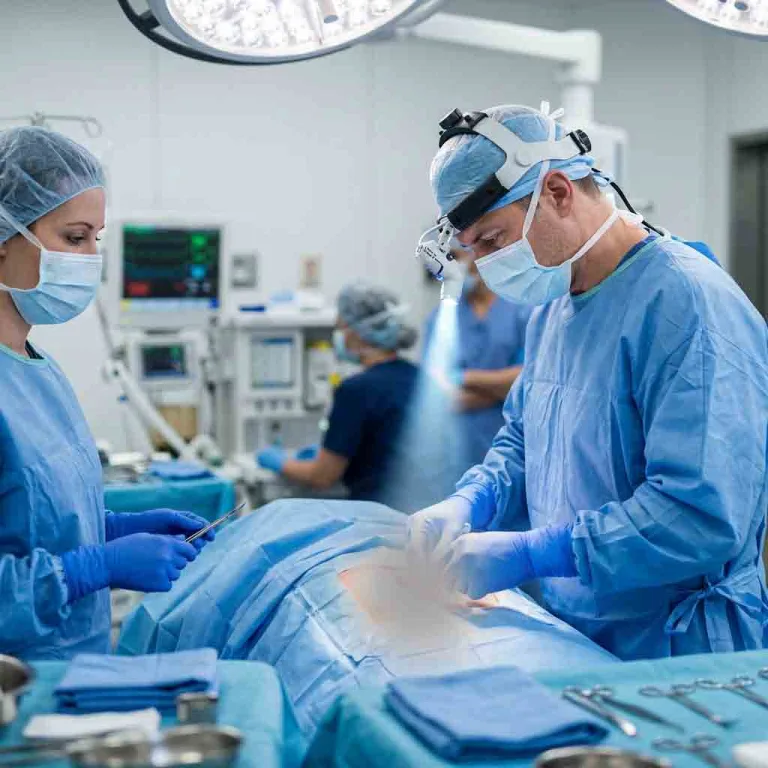
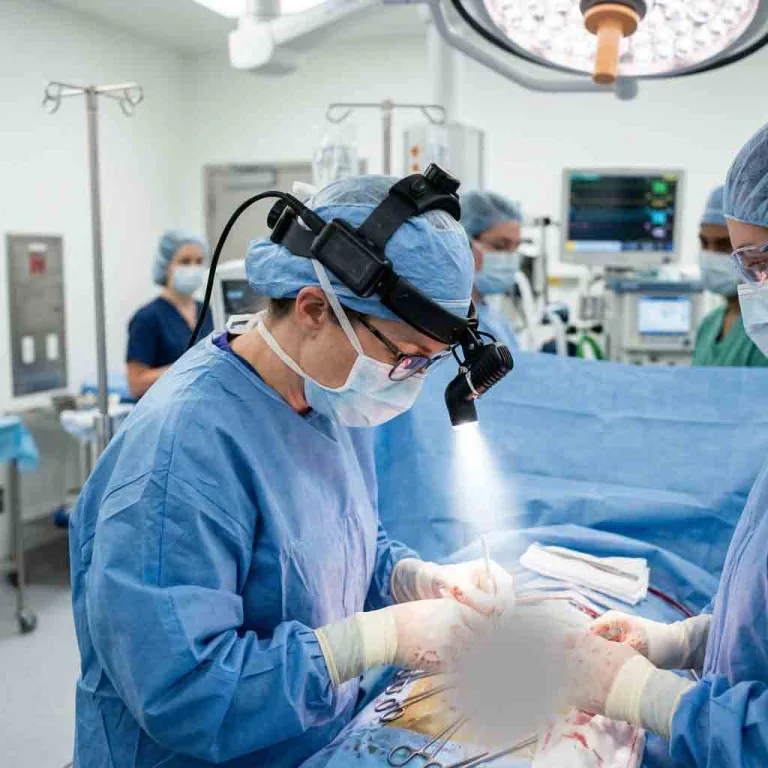
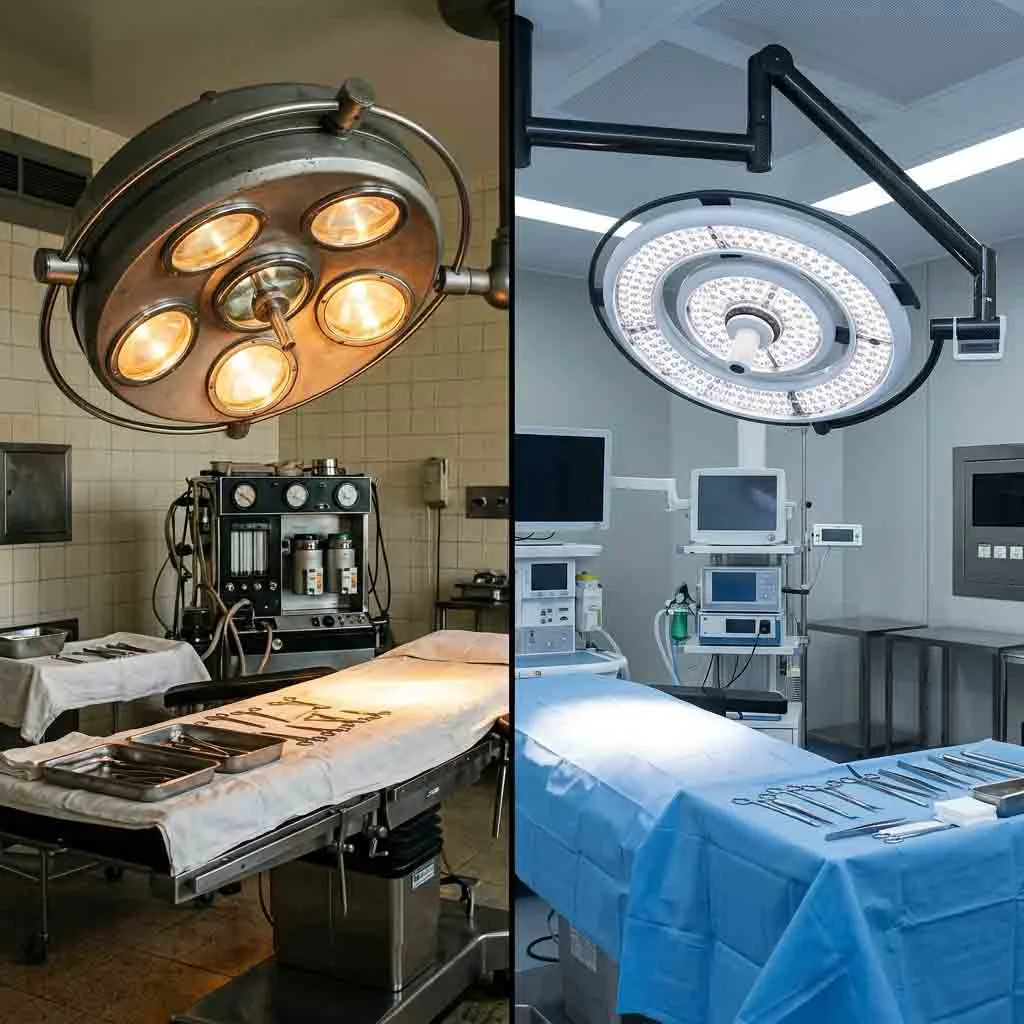
If you stepped into a major hospital operating room in the 1980s or 1990s, you would immediately notice the temperature. Suspended above the surgical table were massive, heavy metal domes housing high-wattage halogen or xenon bulbs.
While these legacy lights produced a high volume of brightness, they came with a severe physical penalty: massive thermal radiation.
Halogen bulbs emit a vast amount of their energy as infrared heat. Directly beneath these domes, the temperature could easily exceed 30°C to 35°C (86°F to 95°F). Surgeons, gowned in thick, impermeable sterile scrubs, would routinely sweat profusely, requiring circulating nurses to wipe their brows to prevent sweat droplets from falling into the sterile field.
Worse than the discomfort of the clinical team was the danger to the patient. The intense, focused infrared heat directed into the open surgical cavity caused rapid moisture evaporation. This led to surface tissue desiccation (drying), which increased the risk of localized tissue necrosis, prolonged postoperative healing, and elevated infection rates.
The invention and medical integration of the Light Emitting Diode (LED) changed the trajectory of surgical facility engineering forever. The modern LED surgical lighting system is no longer just a bright bulb in a metal dish; it is a highly calibrated optical computer designed to manage shadows, eliminate heat, and protect the sterile environment.
1. The Core Engineering Challenge: Shadow Dilution
In an operating room, light must travel approximately 1 meter from the ceiling dome to the patient. Between the light source and the patient stand multiple obstacles: the primary surgeon’s head, the assistant’s hands, surgical instruments, and retractors.
If a surgical light consisted of a single, massive bulb (like a standard flashlight), placing a head in front of the beam would cast a solid, pitch-black shadow over the surgical cavity.
To overcome this, engineers developed the principle of shadow dilution.
Plaintext
                     HOW SHADOW DILUTION WORKS
+-------------------------------------------------------------------------+
| TRADITIONAL SINGLE LIGHT SOURCE:                                        |
| [ Light ] ---> [ Obstacle ] ---> [ 100% Solid Dark Shadow ]             |
|                                                                         |
| MODERN MULTI-LED SURGICAL DOME:                                         |
| [ LED 1 ] --\                                                           |
| [ LED 2 ] ----> Overlapping beams wrap AROUND the obstacle.             |
| [ LED 3 ] --/                                                           |
| Result: The surgical cavity remains highly illuminated (diluted shadow).|
+-------------------------------------------------------------------------+
The Matrix of Light
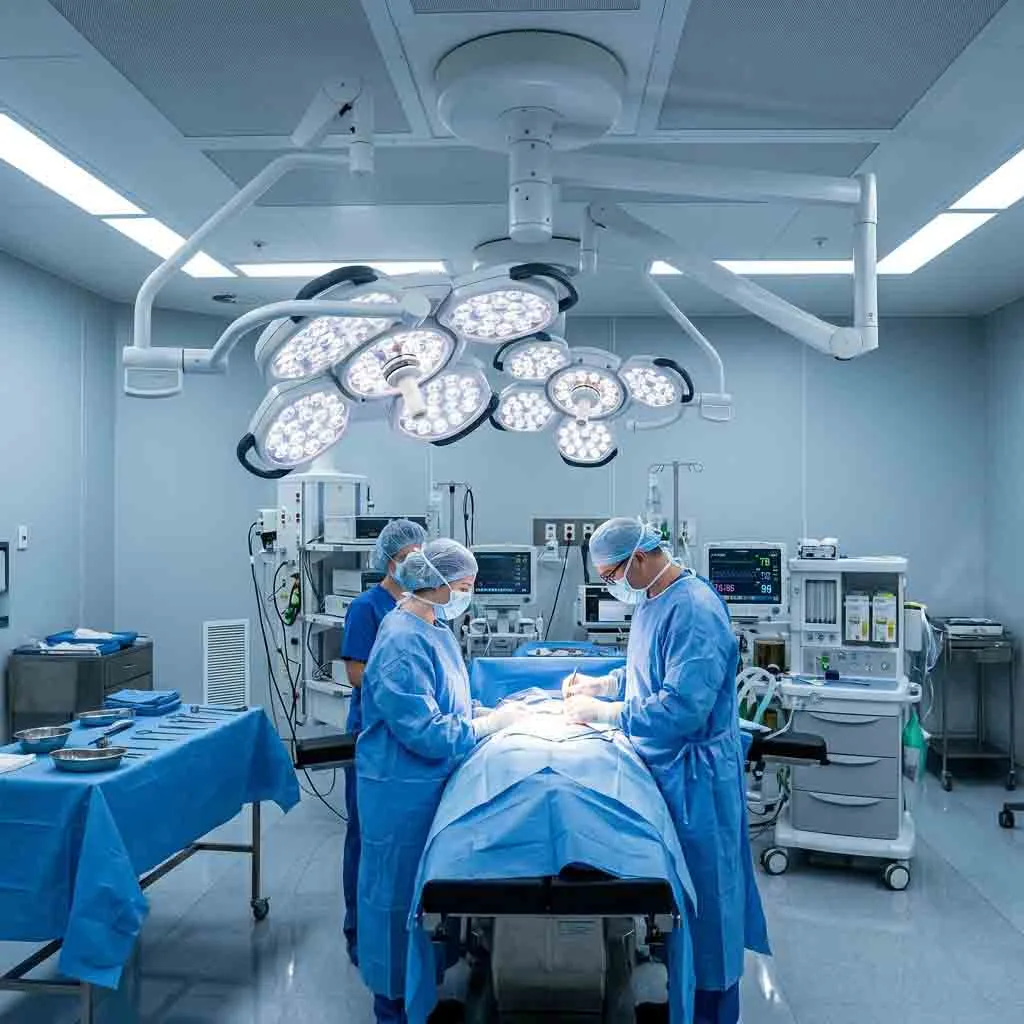
A modern shadow dilution surgical light does not rely on one bulb. Instead, the surgical dome houses an array of 40 to 100+ individual LED modules. Each LED is equipped with its own precisely angled micro-lens.
These individual beams are mathematically calibrated to converge at a specific focal distance (the surgical table). When a surgeon leans over the patient, their head may block 15% of the LED beams. However, the remaining 85% of the LEDs are striking the tissue from different, unobstructed angles. The light effectively “wraps around” the surgeon’s head.
To meet strict international medical standards (such as IEC 60601-2-41), surgical lights undergo rigorous shadow dilution testing using black spheres and masks to ensure that even with multiple obstructions, the central illuminance (Ec) inside a deep cavity remains strong enough for safe surgery.
2. Cold Light Illumination and Tissue Drying Prevention
The transition from halogen to LED was primarily driven by the need for cold light illumination.
When surgeons speak of “cold light,” they are not referring to the color of the light (which is often a warm, daylight white), but rather the complete absence of radiant heat in the light beam.
The Physics of Heat Emission
-
Halogen Lights: Convert roughly 80% to 90% of their electrical energy into infrared heat and only 10% to 20% into visible light. To manage this heat, old surgical lights required thick, heat-absorbing glass filters (which often cracked) and heavy internal cooling fans.
-
LED Surgical Lights: Convert the vast majority of their energy directly into visible light photons. While the back of an LED chip generates some thermal energy (which is dissipated harmlessly upward into the ceiling via aluminum heat sinks), the actual beam of light projected downward contains zero infrared radiation.
Clinical Tissue Safety
The elimination of infrared radiation achieved complete tissue drying prevention. Today, a surgeon can operate on delicate, exposed bowel tissue, exposed brain parenchyma, or open pediatric chest cavities for 10 consecutive hours under 160,000 Lux of LED light without the tissue drying out or suffering thermal damage. This single optical advancement has tangibly reduced post-operative complication rates globally.
3. HVAC Integration: The Laminar Airflow Compatible Light
One of the least understood but most critical functions of a modern surgical light is its aerodynamic shape.
Modern operating rooms are engineered as Class 10,000 (or better) cleanrooms. To prevent airborne bacteria, skin squames, and dust from landing in the open surgical wound, ORs utilize a Laminar Airflow (LAF) HVAC system.
-
A massive array of HEPA filters is installed in the ceiling directly above the surgical table.
-
These filters push a continuous, uniform, downward curtain of ultra-clean, sterile air over the patient.
The Turbulence Problem
If a hospital installs a large, flat, solid surgical light dome directly under these HEPA filters, the light acts like an umbrella. The sterile air hits the top of the light dome, bounces off, and creates chaotic, swirling air turbulence beneath the light. This turbulence sucks unsterile air from the edges of the room directly into the surgical wound.
Aerodynamic Dome Design
To solve this, optical engineers and fluid dynamicists designed the laminar airflow compatible light.
-
The Shape: Modern surgical domes are ultra-thin and aerodynamically sloped, resembling an airplane wing or a teardrop.
-
Open Architecture: Many high-end surgical lights feature a “petal” design (separated individual light pods) or a large open hole directly in the center of the dome.
These designs allow the downward curtain of sterile air to slice cleanly past and through the light fixture, maintaining the protective sterile airflow barrier over the patient. When hospitals design new operating theaters, HVAC compatibility is often the deciding factor in surgical light procurement.
4. Optical Precision: CRI and Variable Color Temperature
While intensity (Lux) provides the volume of light, the quality of the light is dictated by its spectrum. In a large operating room, overhead lights must accurately illuminate everything from pale skin to deep red organs.
The Importance of the R9 Value
Most procurement officers know to look for a high Color Rendering Index (CRI > 90). However, standard CRI is calculated using pastel colors. In surgery, the most important color is deep, saturated red (blood, muscle, and vascular tissue).
-
When evaluating an operating room light, buyers must specifically check the R9 (Deep Red) rendering value. A premium surgical light will boast an R9 value of 95 or higher, ensuring that surgeons can immediately detect subtle hypoxia (lack of oxygen in the blood) by noticing a color shift in the tissue.
Variable Color Temperature
Different procedures require different light tones.
-
Bone & Orthopedics: Bone is highly reflective and white. Surgeons often prefer a warmer light (around 3800K to 4000K) to reduce blinding glare off the bone surface and metal orthopedic implants.
-
Soft Tissue & Vascular: Surgeons prefer crisp, daylight-white (5000K to 5500K) to maximize the contrast of red blood vessels against yellow fat and pink muscle.
Modern LED surgical lighting systems feature adjustable color temperature controls. The surgical team can tap a touchscreen wall panel to shift the light from warm to cool depending on the anatomical target, optimizing visual comfort on the fly.
5. Sterile Control and Ergonomics
During a surgical procedure, the surgeon is scrubbed in and sterile. They cannot touch the unsterile outer rim of the surgical dome or the wall-mounted control panels. However, as the surgery progresses, the depth of the cavity changes, requiring adjustments to the light’s focus and intensity.
The Sterile Light Handle
The solution is the sterile light handle. Directly in the center of the surgical dome is a removable handle. Before the surgery, this handle is run through the hospital autoclave (steam sterilizer) and snapped into the center of the light by the scrub nurse.
-
The surgeon can grab this sterile handle to physically pull, tilt, and aim the heavy dome with effortless precision.
Integrated Touch-Controls
Modern engineering has turned the sterile light handle into an active control interface. By twisting the sterile handle, the surgeon can mechanically or electronically adjust the diameter of the light spot (widening it for surface closure, or narrowing it for deep cavity work). Advanced systems even include capacitive touch sensors on the sterile handle, allowing the surgeon to double-tap the handle to increase or decrease the Lux intensity without ever asking a circulating nurse to touch the wall panel.
Green Ambient Endo-Light Mode
With the rise of minimally invasive laparoscopic and endoscopic surgery, surgeons spend a lot of time looking at large 4K monitors rather than down at the patient. Bright overhead white lights create terrible glare on these TV screens.
-
Modern surgical lights feature an “Endo Mode.” The main white LEDs shut off, and a ring of low-intensity green or blue LEDs turns on.
-
This provides enough ambient light for the anesthesiologist to read their monitors and the scrub nurse to find instruments, but eliminates screen glare for the surgeon performing the endoscopy.
6. The Evolution Matrix: Halogen vs. Modern LED
For hospital administrators evaluating the technological leap in their operating theaters, the following matrix highlights the staggering generational differences:
| Metric / Feature | Legacy Halogen Surgical Light | Modern LED Surgical Lighting System |
| Heat Emission | High (Infrared radiation) | Zero (Cold light technology) |
| Tissue Safety | High risk of tissue drying | Guaranteed tissue drying prevention |
| Shadow Management | Poor (Single large bulb) | Excellent (Multi-lens shadow dilution) |
| Bulb Lifespan | 500 – 1,000 Hours | 40,000 – 60,000 Hours |
| Airflow Disruption | High (Bulky, flat dome) | Low (Aerodynamic, Laminar Airflow compatible) |
| Color Adjustment | Fixed (Usually warm yellow) | Variable (3800K to 5500K adjustment) |
| Energy Consumption | Very High (~300W per dome) | Extremely Low (~50W to 80W per dome) |
Conclusion: Engineering for Patient Safety
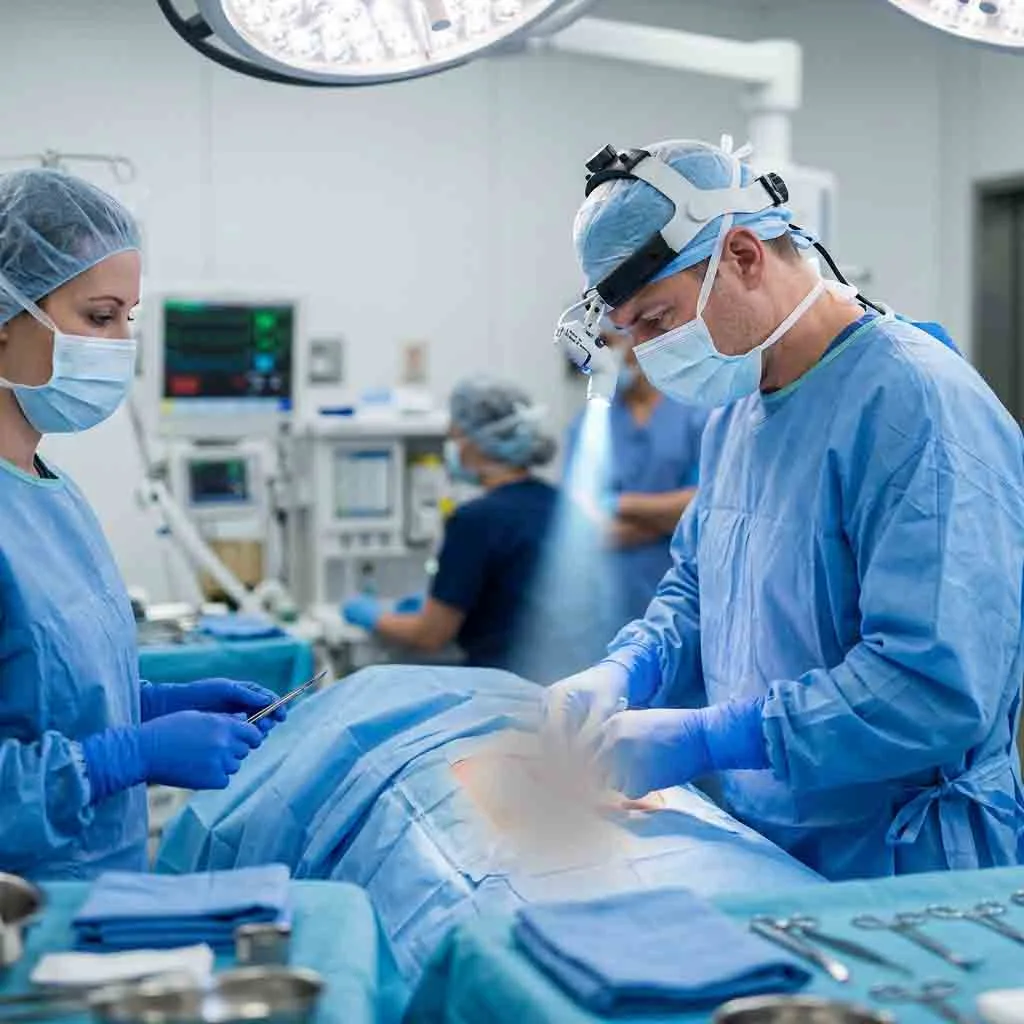
The evolution of operating room lights is a testament to the intersection of medical need and optical physics. The transition from sweltering halogen bulbs to intelligent, multi-array LED domes was not merely an upgrade in hospital energy efficiency; it was a fundamental leap in patient safety.
By mastering shadow dilution, ensuring tissue drying prevention through cold light, and maintaining sterile boundaries via laminar airflow compatible designs, modern surgical lights provide an invisible but critical layer of protection for every patient on the operating table.
Understanding the optical technology is only the first step. How do hospitals actually design their ORs, choose between ceiling and mobile mounts, and calculate the financial return on investment for these massive systems?