Purchasing an anaesthesia machine is one of the most critical investments a healthcare facility can make. For hospital administrators, clinic owners, and medical equipment procurement managers, this decision goes far beyond simply picking a well-known brand. You are investing in a sophisticated life-support system that directly impacts patient safety, operating room (OR) efficiency, and your facility’s long-term financial health.
Whether you are upgrading an aging fleet of hospital equipment, equipping a newly built ambulatory surgery center, or sourcing wholesale medical devices internationally, navigating the B2B medical supply market can be complex.
This comprehensive anaesthesia machine buying guide is designed to help medical procurement professionals make informed, cost-effective decisions. We will break down the essential features to look for, provide a realistic cost analysis, explain the Total Cost of Ownership (TCO), and share actionable tips for selecting the best anaesthesia machine for your specific clinical needs.
1. Key Features to Evaluate When Buying Anaesthesia Equipment
Modern anaesthesia delivery systems are highly advanced workstations. When comparing different models, prioritize the following technological capabilities to ensure they meet your surgical requirements.
Advanced Ventilation Capabilities
The integrated mechanical ventilator is the most crucial subsystem. Look for machines that offer a wide range of ventilation modes to accommodate diverse patient demographics (from neonates to bariatric adults).
-
Volume Control Ventilation (VCV) & Pressure Control Ventilation (PCV): Standard modes required for general surgery.
-
Synchronized Intermittent Mandatory Ventilation (SIMV): Essential for patients transitioning out of deep anaesthesia.
-
Tidal Volume Range: High-quality machines should support tidal volumes as low as 20 mL for pediatric care and up to 1500 mL for large adults.
Vaporizer Configuration and Precision
The vaporizer controls the delivery of volatile anaesthetic agents like Isoflurane, Sevoflurane, and Desflurane.
-
Dual or Triple Mounts: Ensure the machine has at least a dual-vaporizer mount with a safety interlock system (preventing simultaneous administration of two drugs).
-
Temperature and Flow Compensation: The vaporizers must deliver accurate concentrations regardless of fluctuations in ambient temperature or fresh gas flow rates.
Electronic Medical Record (EMR) Integration
For modern hospitals, data connectivity is non-negotiable.
-
Ensure the anaesthesia workstation supports standard communication protocols (like HL7) to seamlessly export real-time patient vitals, gas consumption data, and alarm histories directly into your hospital’s EMR system. This reduces manual charting errors and improves legal compliance.
Ergonomics and Footprint
Operating rooms are often crowded. Consider the physical dimensions of the workstation.
-
Does it have sufficient drawer space for drug storage?
-
Are the breathing circuit arms flexible?
-
Is the cable management system designed to prevent tripping hazards?
-
For smaller clinics, a compact or wall-mounted unit might be a better choice than a full-size cart.
2. Anaesthesia Machine Price Guide & Cost Analysis
Understanding the cost of an anaesthesia machine involves looking past the initial sticker price. Here is a breakdown of what procurement managers can expect in today’s medical equipment market.
Upfront Capital Costs
The price of an anaesthesia machine varies dramatically based on brand, features, and condition (new vs. refurbished).
| Equipment Condition / Type | Estimated Price Range (USD) | Best Suited For |
| Basic / Portable Models | $3,000 – $10,000 | Mobile clinics, veterinary practices, remote surgical camps. |
| Mid-Range Workstations | $15,000 – $35,000 | Ambulatory surgery centers, standard hospital ORs, day-surgery clinics. |
| High-End Premium Systems | $40,000 – $80,000+ | Large research hospitals, specialized cardiac or neurosurgery suites. |
| Refurbished / Recertified | $8,000 – $25,000 | Facilities with tight capital budgets seeking premium brands at a discount. |
(Note: Prices are estimates and fluctuate based on global supply chains, shipping costs, and included accessories.)
Total Cost of Ownership (TCO)
Smart B2B medical procurement focuses on the Total Cost of Ownership over the machine’s 7-to-10-year lifespan. When calculating your budget, factor in:
-
Consumables: The ongoing cost of breathing circuits, soda lime (CO2 absorbent), bacterial filters, and masks.
-
Anaesthetic Gases: Machines with low-flow anaesthesia capabilities can drastically reduce the consumption of expensive volatile agents (like Sevoflurane), saving a busy hospital tens of thousands of dollars annually.
-
Preventative Maintenance: Annual calibration, vaporizer servicing, and sensor replacements (such as oxygen cells).
-
Training Costs: Consider the time and money required to train your anesthesiologists and technicians on a new operating interface.
3. Sourcing Strategy: New vs. Refurbished Equipment
One of the biggest dilemmas in medical equipment procurement is deciding whether to buy brand new or opt for refurbished units.
Buying New Anaesthesia Machines
-
Pros: Latest technology, full manufacturer warranty, longer expected lifespan, lower immediate maintenance costs, guaranteed EMR compatibility.
-
Cons: High initial capital expenditure. Longer lead times for manufacturing and delivery.
Buying Refurbished Medical Equipment
-
Pros: Cost savings of up to 40-60%. Allows clinics to afford top-tier brands that might otherwise be out of budget.
-
Cons: Shorter lifespan, potential lack of replacement parts in the future, older software that may not integrate well with modern IT systems.
-
Pro-Tip for Buyers: If buying refurbished, ensure the supplier provides a complete recertification document, a solid warranty (at least 1 year), and has replaced all high-wear components (valves, batteries, O2 sensors).
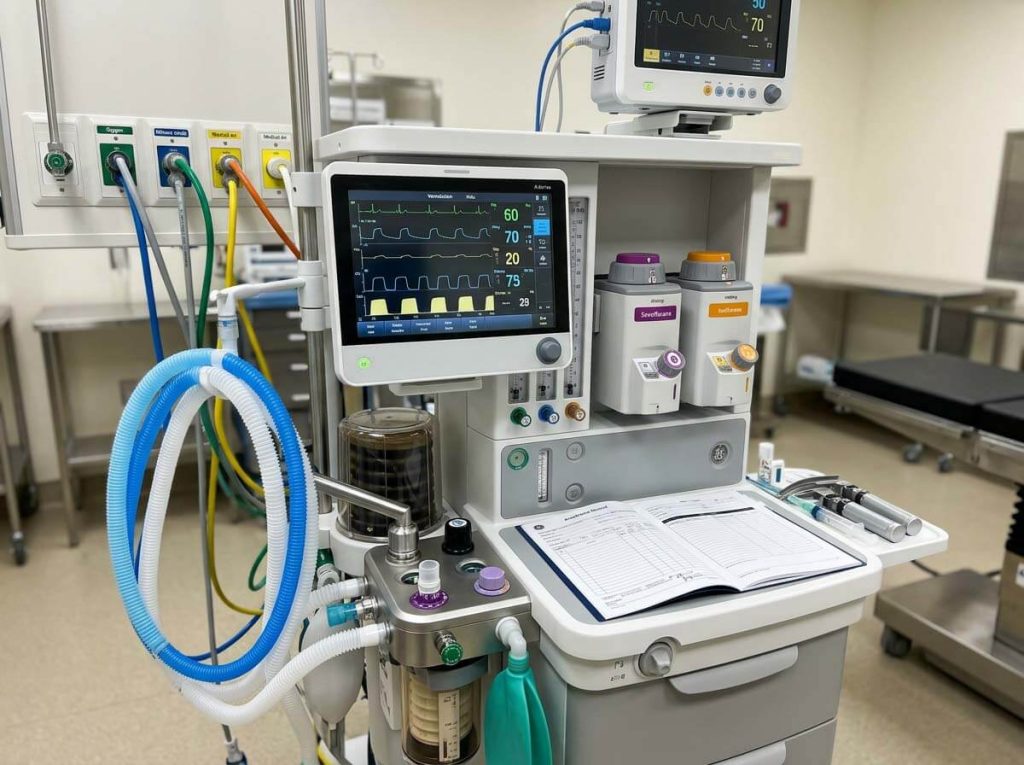
High-performance hospital anesthesia station featuring dual vaporizers, breathing circuit tubes, digital vital signs monitor, and medical gas pipeline connections.
4. International Procurement and Supplier Evaluation
Many medical distributors and hospital chains source equipment internationally to optimize their purchasing budgets. When buying wholesale medical devices from global manufacturers or B2B platforms, strict supplier evaluation is critical.
-
Verify Certifications: Never compromise on regulatory compliance. Ensure the manufacturer holds a valid ISO 13485 certification (Quality Management for Medical Devices). The specific machine must carry a CE Mark (for Europe), FDA 510(k) clearance (for the US), or equivalent approvals for your local jurisdiction.
-
Assess After-Sales Support: An anaesthesia machine is useless if it breaks down and parts take three months to arrive. Ask global suppliers about their local distribution networks, availability of spare parts, and response time for technical support.
-
Request Virtual Demonstrations: If you cannot inspect the equipment in person, request detailed video demonstrations of the machine’s interface, alarm systems, and internal component build quality.
5. Choosing the Right Machine by Facility Type
To maximize your Return on Investment (ROI), align the machine’s specifications with your facility’s core operations:
-
Large Inpatient Hospitals: Require high-end, continuous flow workstations with comprehensive EMR integration, advanced ventilation modes for critical care patients, and low-flow gas efficiency for long surgeries.
-
Outpatient / Ambulatory Surgery Centers (ASCs): Need reliable, mid-range machines that are fast to start up, easy to clean between rapid patient turnovers, and have smaller physical footprints.
-
Cosmetic and Dental Clinics: Often benefit from simpler, compact machines focused on standard sedation, prioritizing ease of use and space-saving designs.
Frequently Asked Questions (FAQ)
What is the average lifespan of an anaesthesia machine?
With proper daily maintenance and annual servicing, a high-quality anaesthesia machine typically lasts between 7 to 10 years. However, software obsolescence often drives replacement before mechanical failure occurs.
Why is low-flow anaesthesia important for procurement?
Low-flow anaesthesia machines use highly sensitive rebreathing circuits to recycle exhaled gases. This significantly reduces the volume of expensive anaesthetic drugs consumed during surgery, lowering the hospital’s operating expenses and reducing harmful greenhouse gas emissions.
Can I buy anaesthesia machines wholesale for my hospital network?
Yes, many international manufacturers and B2B medical suppliers offer tiered pricing for bulk orders. When purchasing wholesale, procurement managers can often negotiate extended warranties, bulk consumable discounts, and complimentary staff training packages.
What is the most expensive part of an anaesthesia machine to replace?
The vaporizers and the integrated mechanical ventilator system are generally the most expensive components. Regular maintenance and careful handling are essential to prolong their operational life.