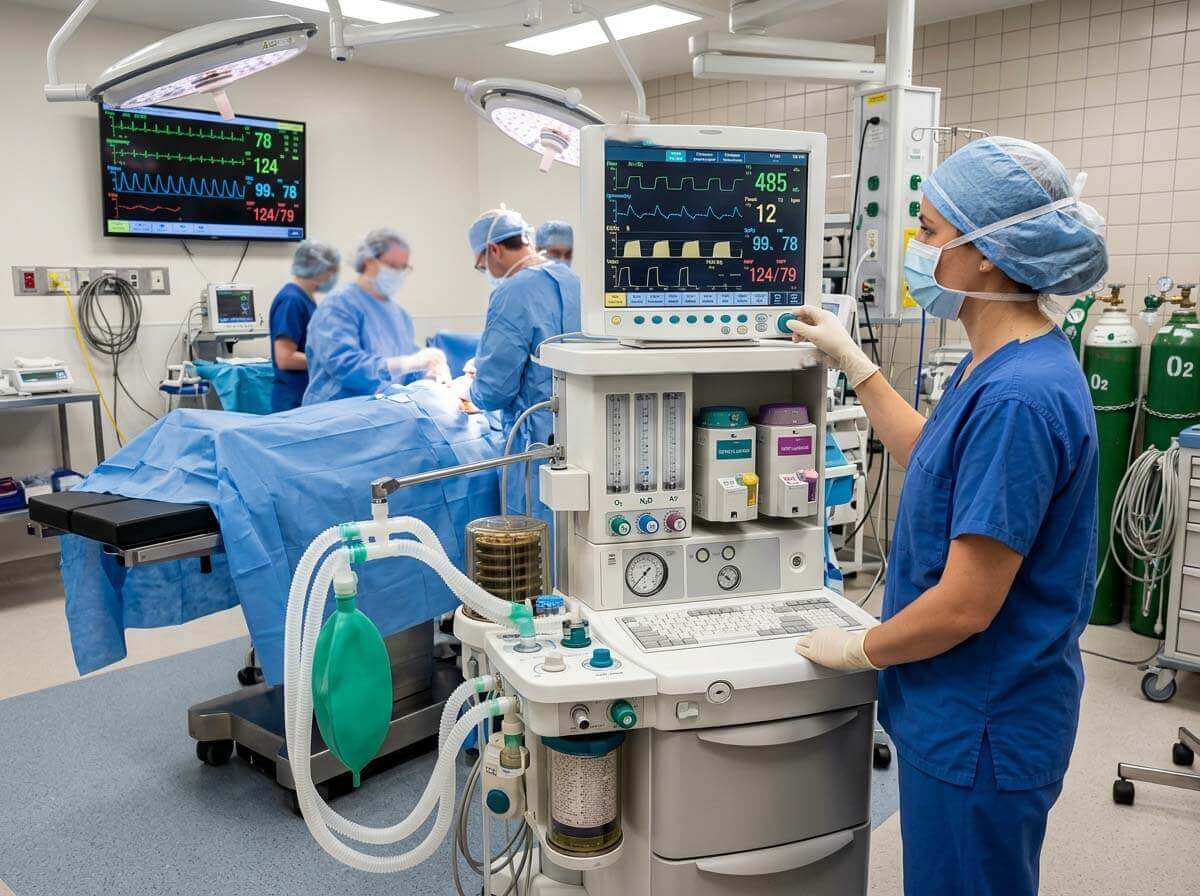
If you are a medical professional, a hospital procurement manager looking to upgrade your operating room configurations, or simply someone curious about medical technology, understanding the anaesthesia machine is essential. Often considered the heart of the modern operating room (OR), this complex piece of medical equipment is responsible for keeping patients safe, unconscious, and pain-free during surgical procedures.
However, searching for the right medical equipment or simply trying to understand how an anaesthetic delivery system works can feel overwhelming. The terminology is dense, and the technology is highly advanced.
In this comprehensive guide, we will break down everything you need to know about anaesthesia machines. We will explore what they are, detail their core components, explain their step-by-step working principles, and highlight the crucial safety features that every buyer and medical facility must consider. By the end of this article, you will have a clear, easy-to-understand picture of how these life-saving medical devices operate.
What is an Anaesthesia Machine?
An anaesthesia machine (also known in some regions as an anesthesia machine, anaesthetic workstation, or Boyle’s machine) is a complex medical device used by anesthesiologists and nurse anesthetists to support the administration of anaesthesia.
At its core, the primary function of this machine is to deliver a precise and continuous supply of medical gases (such as oxygen and nitrous oxide) mixed with an exact concentration of volatile anaesthetic vapour. This precisely measured gaseous mixture is delivered to the patient at a safe pressure and flow rate, ensuring they remain asleep and pain-free during surgery.
Modern anaesthesia workstations have evolved far beyond simple gas delivery systems. Today, they integrate advanced mechanical ventilators, comprehensive patient monitoring systems, and sophisticated safety alarms. Whether it is a major hospital performing open-heart surgeries or a specialized clinic handling minor outpatient procedures, a reliable anaesthetic machine is a non-negotiable requirement for patient safety.
Core Components of an Anaesthesia Machine
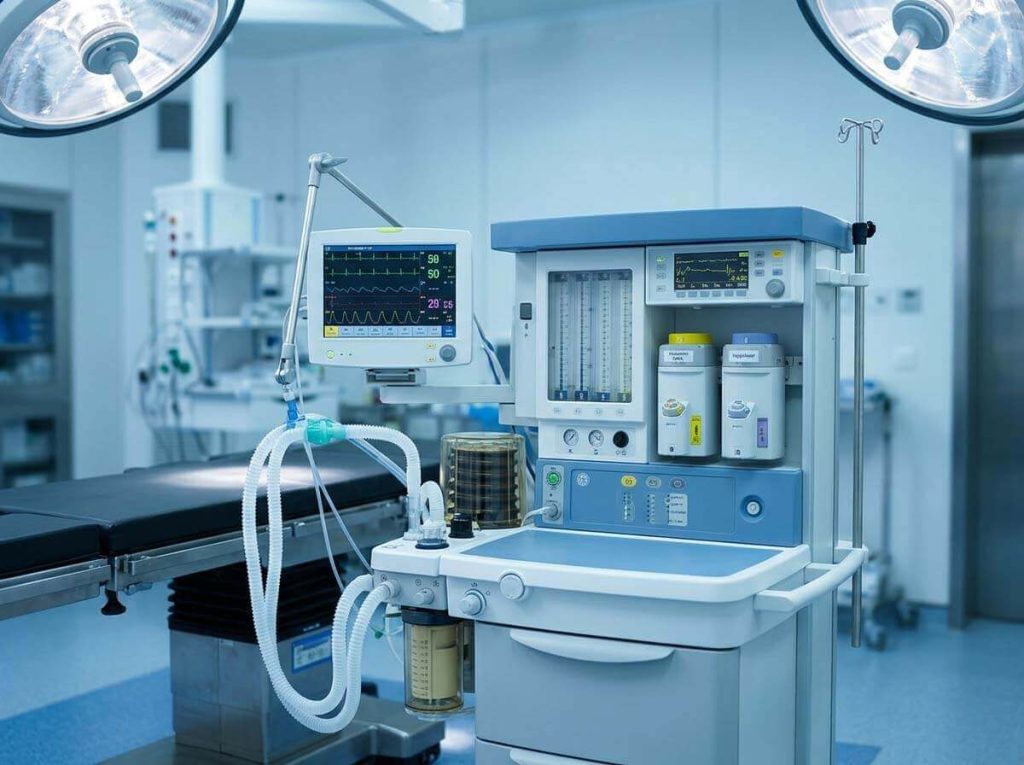
To understand how an anaesthesia machine works, we must first look at its “anatomy.” While different brands and models vary in design, every standard continuous-flow anaesthesia machine shares the same foundational parts and functions.
Here are the primary components broken down simply:
1. Gas Supply and Delivery System
The journey of the anaesthetic mixture begins with the gas supply. The machine must receive medical-grade gases—primarily Oxygen (O2), Nitrous Oxide (N2O), and Medical Air.
-
Pipeline Connections: Most hospitals have a centralized medical gas pipeline system. The machine connects to these wall outlets using color-coded hoses (to prevent accidental mix-ups).
-
Reserve Cylinders: In case the central hospital supply fails, the machine is equipped with backup gas cylinders attached via a yoke system.
-
Flowmeters: Once the gas enters the machine, the operator uses flowmeters (either traditional glass tubes with floating bobbins or digital electronic flowmeters) to precisely control the flow rate of each individual gas.
2. Anaesthetic Vaporizers
This is arguably the most critical and complex part of the machine. The medical gases alone cannot put a patient to sleep; they need to be mixed with volatile anaesthetic agents (such as Isoflurane, Sevoflurane, or Desflurane). These agents are liquid at room temperature. The vaporizer transforms this liquid anaesthetic into a vapour and precisely adds it to the gas flow (the oxygen and air mixture). Because different anaesthetic drugs have different boiling points and chemical properties, specific vaporizers are calibrated for specific drugs.
3. The Breathing Circuit
The breathing circuit is the bridge between the anaesthesia machine and the patient. It is a system of corrugated plastic tubes that delivers the final gas mixture to the patient’s airway (usually via a breathing mask or endotracheal tube) and carries away the exhaled gases.
-
Inspiratory Limb: Delivers the fresh gas mixture to the patient.
-
Expiratory Limb: Carries exhaled carbon dioxide (CO2) and unused anaesthetic gases away from the patient.
-
CO2 Absorber: Since modern machines use a “rebreathing” system to save expensive anaesthetic gases, the exhaled breath passes through a canister filled with soda lime. This chemical absorbs the toxic Carbon Dioxide, allowing the unconsumed oxygen and anaesthetic vapour to be safely recycled back to the patient.
4. Mechanical Ventilator
During deep anaesthesia, a patient’s natural ability to breathe is often suppressed by muscle relaxants and anaesthetic drugs. Therefore, the machine includes a built-in medical ventilator. The ventilator features a bellows or piston system that physically pushes the gas mixture into the patient’s lungs and allows it to flow back out, essentially breathing for the patient during the operation. Modern ventilators offer multiple breathing modes (such as Volume Control and Pressure Control) to suit different patient sizes, from large adults to small infants.
5. Scavenging System
Not all the anaesthetic gas is absorbed by the patient. Exhaled waste gases (which can be harmful if inhaled by the surgical team over time) must be removed from the operating room. The scavenging system safely collects these waste gases and vents them outside the hospital building, maintaining a safe working environment for the doctors and nurses.
How Does an Anaesthesia Machine Work? (Step-by-Step)
Now that we know the parts, let’s walk through the exact flow of how an anaesthesia machine operates during a surgery. Understanding this flow is especially helpful for medical equipment buyers assessing the efficiency of different models.
-
Step 1: Gas Preparation and Pressure Reduction High-pressure oxygen and medical air enter the machine from the hospital walls. The machine’s internal pressure regulators immediately step down this high pressure to a safe, low working pressure so it does not damage the internal components or harm the patient.
-
Step 2: Mixing and Measurement The anesthesiologist adjusts the flowmeters to create a specific ratio of Oxygen to Medical Air. This “fresh gas flow” moves toward the vaporizer.
-
Step 3: Vaporization As the fresh gas passes through the vaporizer, it picks up an exact, dialed-in percentage of the anaesthetic vapour. The mixture is now ready for the patient.
-
Step 4: Delivery to the Lungs The gas mixture travels through the inspiratory tubing of the breathing circuit. Pushed by the mechanical ventilator, the gas enters the patient’s lungs, keeping them safely unconscious.
-
Step 5: Exhalation and Recycling When the ventilator allows the patient to exhale, the breath travels down the expiratory tubing. It passes through the CO2 absorber, where carbon dioxide is chemically removed. The cleaned, unused anaesthetic gas is then mixed with a new batch of fresh gas and sent back to the patient, while any excess waste is pulled away by the scavenging system.
Crucial Safety Features You Must Know
For medical procurement teams, hospital administrators, and clinicians, patient safety is the ultimate priority. Modern anaesthesia workstations are designed with fail-safes that make anaesthesia delivery safer than ever before. If you are sourcing medical equipment, ensure your machines have these standard safety mechanisms:
-
The Hypoxic Guard System: This is a mechanical or electronic linkage between the Oxygen and Nitrous Oxide flowmeters. It prevents the operator from delivering a gas mixture with less than 21% oxygen (room air concentration). If the oxygen flow drops, the nitrous oxide flow automatically drops with it, preventing the patient from suffocating.
-
Oxygen Failure Alarm: If the central oxygen supply drops below a safe pressure, a loud, distinct whistle or electronic alarm will sound, and the delivery of all other gases will be instantly shut off to protect the patient.
-
Flush Valve: The Oxygen Flush Valve allows the doctor to instantly deliver a massive surge of pure oxygen directly to the patient’s breathing circuit, bypassing the vaporizers entirely in case of an emergency.
-
Vaporizer Interlock System: If a machine has two or more vaporizers mounted on it, this safety locking mechanism ensures that only one vaporizer can be turned on at a time. This prevents the accidental mixing of two different lethal anaesthetic drugs.
-
Pressure Relief Valves: To prevent the mechanical ventilator from blowing too much air and rupturing the patient’s lungs (barotrauma), pressure relief valves automatically pop open to release gas if the pressure inside the circuit gets too high.
Why Quality Matters for Procurement Managers
If you are buying wholesale medical equipment or sourcing for a healthcare facility, the anaesthesia machine is not an area to cut corners. A high-quality anaesthesia workstation does more than just deliverCould you provide a bit more detail? Are you looking to draft the first post for a marketing campaign, or did you have a specific topic or format in mind?