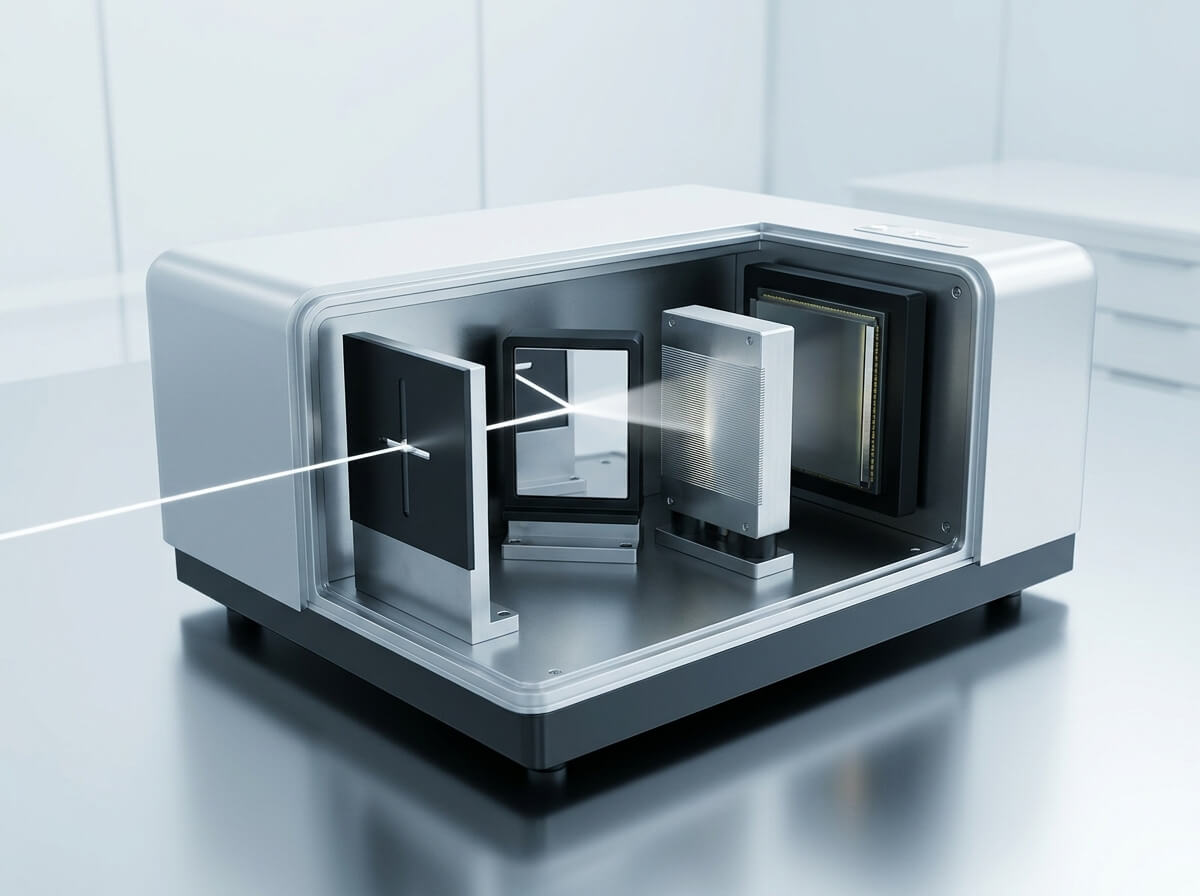
A spectrometer is an analytical instrument used to measure and study the spectrum of a physical signal, most commonly light. By separating incoming radiation according to wavelength, a spectrometer can show how much signal is present at different wavelengths.
In simple terms, a spectrometer helps answer questions such as:
- What wavelengths are present?
- How strong is the signal at each wavelength?
- What material or substance may be producing the spectrum?
- Is the composition changing?
- How does one sample compare with another?
Spectrometers are used in many areas, including scientific research, chemistry, pharmaceuticals, food testing, environmental analysis, materials science, agriculture, lighting, semiconductor testing, education, and industrial quality control.
You may also see related terms such as:
- optical spectrometer
- digital spectrometer
- laboratory spectrometer
- spectroscopy instrument
- spectral analyzer
- light spectrometer
- X-ray spectrometer
- Raman spectrometer
- UV-Vis spectrometer
- infrared spectrometer
The exact design depends on what the instrument needs to measure.
This guide explains what a spectrometer is, how it works, the main components, common types, important specifications, typical applications, and the difference between a spectrometer and a spectrophotometer.
What Is a Spectrometer?
A spectrometer is an instrument that measures a spectrum.
The word spectrum refers to a range of signals arranged according to a variable such as wavelength, frequency, or mass-to-charge ratio.
For optical spectroscopy, wavelength is one of the most common variables.
A simple example is visible light.
White light contains many wavelengths that the human eye perceives as different colors. A spectrometer can separate these wavelengths and measure their intensity.
The resulting measurement may look like a graph:
Wavelength → Intensity
A peak in the spectrum indicates that a stronger signal is present around a particular wavelength.
This information can be used for:
- material identification
- chemical analysis
- concentration measurement
- light-source testing
- quality control
- research
- process monitoring
So, when someone asks:
What does a spectrometer measure?
The simple answer is:
A spectrometer measures the distribution of a signal across a spectral range.
For an optical spectrometer, this usually means measuring light intensity as a function of wavelength.
What Is Spectroscopy?
Spectroscopy is the study and measurement of how matter interacts with electromagnetic radiation or other forms of energy.
A spectrometer is one of the instruments used to perform spectroscopic measurements.
In simple terms:
Spectroscopy = the measurement or study method
Spectrometer = the instrument
This distinction is useful because the terms often appear together.
For example:
- optical spectroscopy
- infrared spectroscopy
- UV spectroscopy
- Raman spectroscopy
- fluorescence spectroscopy
- emission spectroscopy
- absorption spectroscopy
Each technique examines a different type of interaction or spectral signal.
How Does a Spectrometer Work?
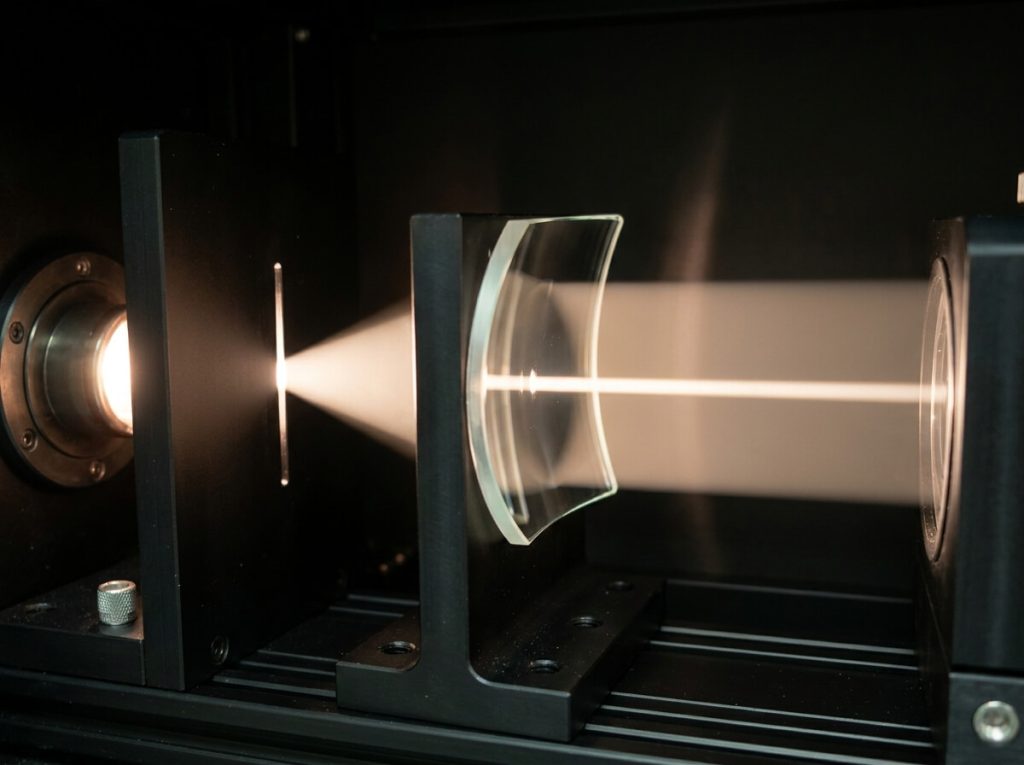
The exact working principle depends on the type of spectrometer, but a basic optical spectrometer can be explained with a simple sequence.
Step 1: A Signal Enters the Instrument
The incoming signal may come from:
- a lamp
- LED
- laser
- sample
- flame
- plasma
- chemical reaction
- reflected light
- transmitted light
- fluorescent emission
For an optical spectrometer, the signal is generally light.
Step 2: The Optical System Collects the Signal
The instrument uses optical components to collect and guide the incoming light.
These components may include:
- lenses
- mirrors
- optical fibers
- apertures
- entrance slits
The purpose is to deliver the signal to the wavelength-separation system.
Step 3: The Spectrometer Separates the Signal
A common optical approach uses a diffraction grating.
The grating separates different wavelengths into different directions.
Other optical designs can also be used depending on the instrument.
Step 4: A Detector Measures the Signal
The separated wavelengths reach the detector.
Depending on the wavelength range and instrument design, detector technologies may include:
- silicon detectors
- CCD
- CMOS
- InGaAs
- other semiconductor detectors
Step 5: Software Processes the Data
The detector generates electronic signals.
The instrument electronics and software convert these signals into usable spectral data.
The final result can be displayed as:
wavelength vs intensity
or another appropriate spectral representation.
What Does a Spectrometer Measure?
A spectrometer can measure different properties depending on its design.
For optical instruments, common measurements include:
wavelength
spectral intensity
absorption
transmission
reflection
emission
fluorescence
spectral distribution
Some instruments are designed for specialized analytical measurements rather than simple optical intensity measurements.
Therefore, the exact answer to “what does a spectrometer measure?” depends on the instrument type.
What Is a Spectrum?
A spectrum is a representation of a signal distributed across a range of wavelengths, frequencies, energies, or another spectral variable.
For optical spectroscopy, a spectrum is often displayed as a graph.
For example:
X-axis: Wavelength
Y-axis: Intensity
Different samples may produce different spectral patterns.
This pattern can provide useful information about:
- chemical composition
- molecular structure
- material properties
- light-source characteristics
- emission behavior
A spectrum may contain:
- peaks
- valleys
- broad bands
- narrow lines
- background signals
Scientists and engineers interpret these patterns to obtain information about a sample or source.
What Is Wavelength?
Wavelength is the distance between corresponding points of a wave, such as from one peak to the next.
It is commonly expressed in:
- nanometers (nm)
- micrometers (µm)
- millimeters
- meters
Different types of optical spectrometers operate over different wavelength regions.
For example, instruments may be designed for:
- ultraviolet
- visible
- near-infrared
- infrared
This is why spectrometer wavelength range is one of the first specifications a buyer should review.
What Is Spectral Range?
Spectral range is the wavelength region that the spectrometer is designed to measure.
Examples can include:
- UV range
- visible range
- UV-Visible range
- near-infrared range
- infrared range
A spectrometer intended for visible light does not automatically provide useful measurements in the near-infrared region.
Detector material, optics, grating, coatings, and instrument architecture all need to support the intended wavelength range.
Therefore, before choosing a spectrometer, ask:
What wavelength range do I need to measure?
This should be one of the first purchasing decisions.
Why Is Wavelength Range Important?
Wavelength range determines what types of signals the instrument can observe.
For example:
UV spectrometer → ultraviolet measurements
Visible spectrometer → visible light
NIR spectrometer → near-infrared
FTIR spectrometer → infrared spectroscopy
Raman spectrometer → Raman spectral shifts generated from laser excitation
If the target signal falls outside the usable range of the instrument, the spectrometer may not be suitable for the application.
Therefore:
Application → Required wavelength range → Detector and optical configuration
This is a simple way to start selecting the right instrument.
What Is Spectral Resolution?
Spectral resolution describes the ability of a spectrometer to distinguish nearby spectral features.
Imagine two peaks that are very close together.
A spectrometer with sufficient resolution may show them as two separate peaks.
A lower-resolution system may show them as one wider feature.
Spectral resolution can be expressed in units such as:
- nm
- cm⁻¹
- GHz
- other application-specific units
The actual specification depends on the spectrometer type.
One important point is that a smaller wavelength interval can represent finer spectral resolution in a wavelength-based optical system.
Spectral resolution is affected by several factors, including:
- slit width
- pixel size
- grating
- optical design
- detector
- wavelength range
Therefore, it is not enough to look at only one component.
What Is Spectrometer Sensitivity?
Spectrometer sensitivity describes how effectively an instrument responds to incoming signal.
A more sensitive system may be able to detect weaker signals under the specified conditions.
Sensitivity can be important when measuring:
- low-light samples
- weak fluorescence
- weak emission
- low-concentration substances
- distant or small optical signals
Sensitivity is influenced by:
- detector
- optical throughput
- grating
- slit
- wavelength range
- electronics
- integration time
- cooling
- system design
This is why sensitivity should be evaluated together with noise and signal-to-noise ratio.
What Is Signal-to-Noise Ratio?
Signal-to-noise ratio, commonly called SNR, compares useful signal with unwanted noise.
In simple terms:
More useful signal + less unwanted noise = easier measurement
A good SNR can be especially important for applications involving weak signals.
SNR may depend on:
- detector quality
- integration time
- optical throughput
- signal intensity
- electronic noise
- environmental conditions
When comparing spectrometers, always check how the manufacturer defines and measures SNR.
Different test conditions can produce different results.
Main Components of a Spectrometer
A typical optical spectrometer may contain several major components.
Light Input
The instrument needs a way to receive the signal.
This may be:
- free-space input
- optical fiber
- probe
- integrating sphere
- sampling accessory
Entrance Slit
The entrance slit controls the amount and geometry of incoming light.
Slit width can affect both:
- optical throughput
- spectral resolution
Collimating Optics
Lenses or mirrors can convert the incoming light into a suitable optical beam.
Diffraction Grating
The grating separates wavelengths.
Different gratings can be optimized for different wavelength ranges and resolution requirements.
Focusing Optics
The separated wavelengths need to be focused toward the detector.
Detector
The detector converts optical signal into an electrical signal.
Electronics
Electronics amplify, digitize, and process the detector output.
Software
Software presents the spectrum and may support:
- measurement
- analysis
- data storage
- calibration
- export
- comparison
What Is a Diffraction Grating?
A diffraction grating is an optical component with a repeated structure that separates light into its wavelength components through diffraction.
The grating is one of the most important components in many optical spectrometers.
Important grating specifications can include:
- groove density
- blaze wavelength
- diffraction order
- wavelength range
- material
- optical efficiency
Grating density can be described in:
grooves per millimeter
Common values may include:
- 300 lines/mm
- 600 lines/mm
- 1200 lines/mm
- higher-density gratings
The appropriate grating depends on the required spectral range and resolution.
What Is an Entrance Slit?
The entrance slit controls the light entering the spectrometer.
Slit width influences the balance between:
resolution
and
optical throughput
A narrower slit can improve spectral separation, but it can also reduce the amount of light entering the system.
A wider slit allows more light through but may reduce spectral resolution.
Therefore:
Higher resolution and higher optical throughput can involve a practical trade-off.
Some instruments use fixed slits, while others provide adjustable slit configurations.
What Is the Detector in a Spectrometer?
The detector is the component that receives the separated spectral signal and converts it into an electrical response.
Detector choice depends strongly on the wavelength range.
Common detector technologies include:
Silicon Detector
Often used for UV and visible or nearby wavelength regions, depending on design.
CCD Detector
A CCD spectrometer can use an array detector to measure multiple wavelengths simultaneously.
CMOS Detector
CMOS-based detectors are also used in compact digital spectrometers and optical measurement systems.
InGaAs Detector
InGaAs detectors are commonly associated with near-infrared applications.
The detector must be matched to the desired spectral range and measurement requirements.
What Is a CCD Spectrometer?
A CCD spectrometer uses a charge-coupled device array to detect spectral information.
Instead of scanning one wavelength at a time in some traditional systems, an array detector can measure a range of wavelengths simultaneously.
This can be useful for:
- fast spectral measurements
- laboratory analysis
- light-source testing
- education
- research
The performance of a CCD spectrometer depends on detector characteristics, optical design, wavelength range, pixel size, cooling, and other factors.
What Is a CMOS Spectrometer?
A CMOS spectrometer uses a CMOS-based detector or sensor architecture.
CMOS technology can be attractive in compact instruments because of its integration potential and electronics architecture.
CMOS spectrometers can be used for:
- portable measurement
- laboratory instruments
- LED testing
- optical measurement
- educational applications
- industrial sensing
The correct choice between CCD and CMOS depends on the complete detector and instrument design.
What Is an InGaAs Spectrometer?
An InGaAs spectrometer uses an indium gallium arsenide detector.
InGaAs is commonly associated with near-infrared measurement.
Applications can include:
- NIR spectroscopy
- fiber optic testing
- laser measurement
- material analysis
- agricultural analysis
- pharmaceutical analysis
- food inspection
When selecting an InGaAs spectrometer, the buyer should verify the actual wavelength range supported by the detector and instrument.
What Are the Main Types of Spectrometers?
There are many types of spectrometers because different applications require different measurement principles and wavelength regions.
Common categories include:
- UV spectrometer
- visible spectrometer
- UV-Vis spectrometer
- NIR spectrometer
- infrared spectrometer
- FTIR spectrometer
- Raman spectrometer
- fluorescence spectrometer
- emission spectrometer
- optical emission spectrometer
- mass spectrometer
- X-ray spectrometer
These instruments should not be treated as interchangeable.
Their working principles and applications can be very different.
What Is a UV-Vis Spectrometer?
A UV-Vis spectrometer measures light in the ultraviolet and visible spectral regions.
UV-Vis spectroscopy is widely used in:
- chemistry
- pharmaceutical analysis
- research
- water testing
- food analysis
- quality control
- life science laboratories
Typical measurements may include:
- absorbance
- transmittance
- wavelength
- concentration-related analysis
A UV-Vis instrument can be configured differently depending on the application and required wavelength range.
For many quantitative analytical methods, the spectroscopic measurement is linked to the relationship between absorbance and concentration.
What Is a NIR Spectrometer?
NIR stands for Near Infrared.
A NIR spectrometer is designed to analyze information in the near-infrared region.
NIR spectroscopy is often used for:
- food analysis
- agriculture
- pharmaceuticals
- polymers
- chemical analysis
- raw material identification
- process monitoring
NIR measurements can often be performed rapidly and can support non-destructive or minimally destructive analysis depending on the method.
What Is an FTIR Spectrometer?
FTIR means Fourier Transform Infrared Spectrometer.
An FTIR spectrometer measures infrared spectral information using a Fourier transform-based optical approach.
FTIR spectroscopy is commonly used for:
- material identification
- chemical analysis
- polymer analysis
- pharmaceutical testing
- contamination analysis
- research
FTIR results are often presented using wavenumber, commonly expressed in:
cm⁻¹
rather than wavelength alone.
What Is a Raman Spectrometer?
A Raman spectrometer measures the Raman scattering produced when a sample interacts with laser light.
Raman spectroscopy can provide information related to molecular structure and chemical composition.
Applications include:
- material identification
- pharmaceutical analysis
- chemical analysis
- research
- geological analysis
- mineral identification
- forensic analysis
- quality control
Raman instruments may be designed as:
- laboratory Raman spectrometers
- portable Raman spectrometers
- handheld Raman instruments
- fiber-coupled Raman systems
The appropriate system depends on the sample, laser wavelength, detection range, sensitivity, and measurement environment.
What Is a Fluorescence Spectrometer?
A fluorescence spectrometer, also called a spectrofluorometer in some applications, measures fluorescence emitted by a sample after excitation.
Fluorescence spectroscopy is used in:
- biological research
- chemistry
- pharmaceuticals
- biochemical analysis
- materials research
- environmental analysis
The instrument commonly has an excitation source, wavelength-selection system, sample holder, emission optics, and detector.
What Is an Emission Spectrometer?
An emission spectrometer measures light emitted from a source or excited sample.
The source may include:
- plasma
- flame
- gas discharge
- heated material
- electrically excited material
Emission spectra can contain characteristic spectral lines that provide information about elements or materials.
Different types of optical emission spectrometers are used in scientific and industrial analysis.
What Is an X-Ray Spectrometer?
An X-ray spectrometer is designed to analyze X-ray radiation.
X-ray spectroscopy can be used for:
- elemental analysis
- materials research
- scientific research
- characterization
- industrial testing
X-ray spectrometers are fundamentally different from visible-light spectrometers because the radiation range, optics, detection methods, and applications differ.
What Is a Mass Spectrometer?
A mass spectrometer is different from a conventional optical spectrometer.
A mass spectrometer measures ions according to their mass-to-charge ratio, rather than measuring optical wavelength.
It is commonly used for:
- molecular analysis
- chemical identification
- pharmaceutical research
- proteomics
- metabolomics
- analytical chemistry
The word “spectrometer” therefore covers more than optical instruments.
When specifying equipment, always identify the actual spectrometry technique required.
Optical Spectrometer vs Spectrometer
An optical spectrometer is specifically concerned with electromagnetic radiation in an optical or related spectral region.
It can include:
- UV
- visible
- near-infrared
- infrared
- Raman-related systems
The broader term spectrometer can include optical instruments as well as systems such as mass spectrometers.
Therefore, when searching for suppliers, it is useful to specify the measurement technology.
Spectrometer vs Spectrophotometer
This is one of the most common questions.
The terms are related but not identical.
A spectrometer measures spectral information.
A spectrophotometer is generally designed to measure how much light is absorbed, transmitted, or reflected by a sample as a function of wavelength.
In many laboratory applications, spectrophotometers are used for quantitative absorbance or transmittance measurements.
A spectrometer may be used more broadly to characterize the spectral distribution of a signal.
The exact terminology can vary between instrument manufacturers and applications.
Spectrometer vs Spectroscope
A spectroscope traditionally refers to an optical instrument or method used to observe spectra.
A spectrometer is generally designed to perform quantitative measurement.
Modern digital systems often combine spectral observation and electronic measurement.
For laboratory and industrial purchasing, “spectrometer” is usually the more appropriate equipment term when quantitative digital data is required.
What Are Spectrometers Used For?
Spectrometers have a wide range of applications.
Chemical Analysis
Spectrometers can be used to identify or characterize chemical substances.
Applications include:
- raw material testing
- composition analysis
- chemical identification
- quality control
Pharmaceutical Analysis
Spectroscopy can support:
- raw material verification
- drug research
- quality control
- formulation analysis
- process monitoring
Food Analysis
Spectrometers can be used for:
- food composition
- quality control
- ingredient analysis
- contamination screening
- raw material inspection
Environmental Testing
Applications can include:
- water analysis
- pollutant detection
- air analysis
- soil testing
- environmental monitoring
Materials Science
Spectroscopy can help study:
- polymers
- coatings
- metals
- ceramics
- minerals
- composites
Agriculture
NIR and other spectroscopic techniques can support:
- crop analysis
- soil assessment
- plant analysis
- food quality
- agricultural research
Lighting
Optical spectrometers are used for:
- LED testing
- lamp testing
- light-source characterization
- color-related measurements
- spectral power distribution
Laser Testing
Spectrometers can help measure:
- laser wavelength
- spectral width
- spectral distribution
- optical output
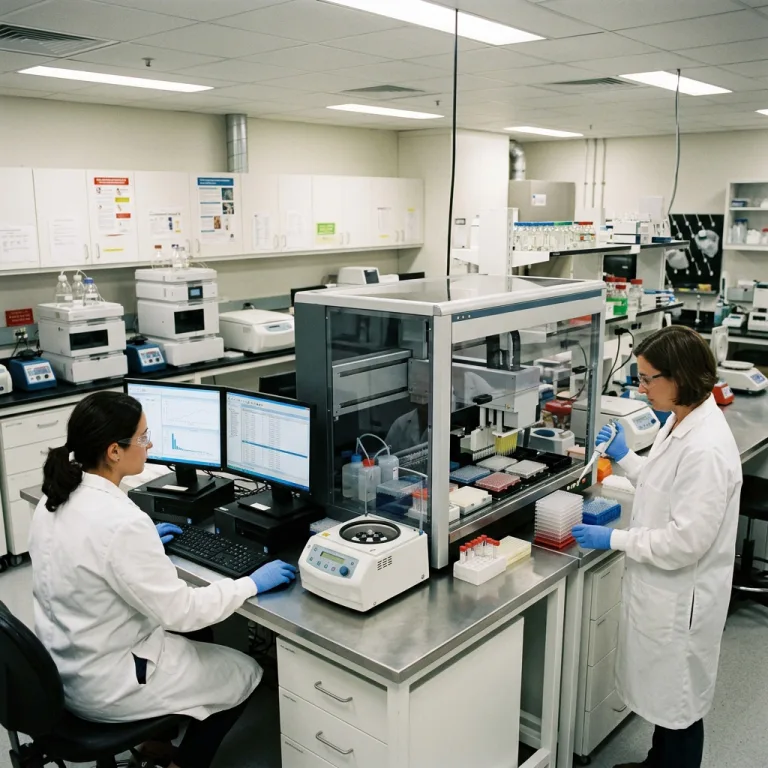
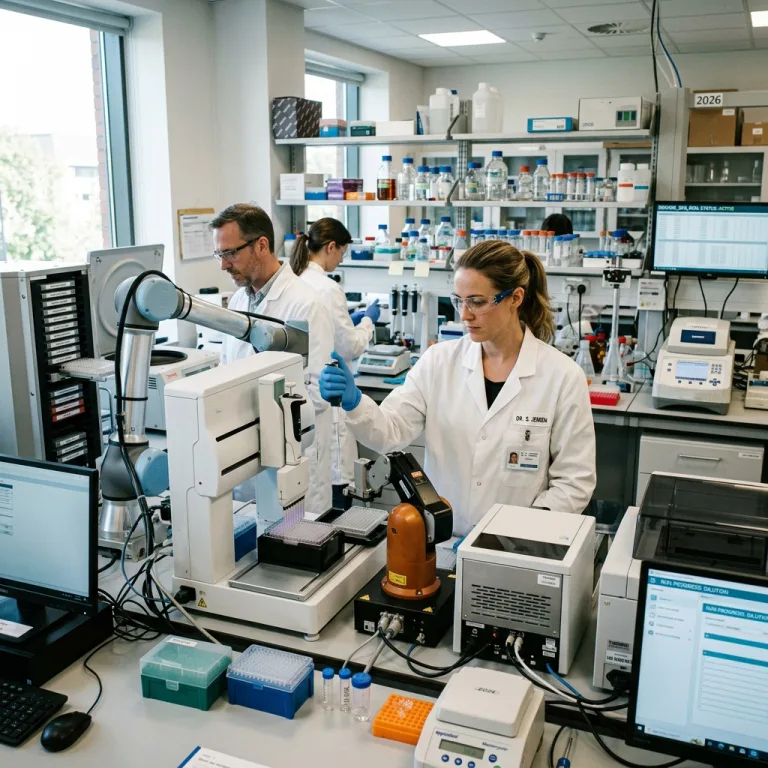
Spectrometer for Laboratory Analysis
The laboratory is one of the most common environments for spectroscopy instruments.
A laboratory spectrometer may be used for:
- research
- chemical analysis
- material testing
- pharmaceutical experiments
- sample characterization
- educational experiments
Laboratory buyers typically pay attention to:
- wavelength range
- spectral resolution
- sensitivity
- detector
- sample interface
- software
- calibration
- data export
- repeatability
The appropriate instrument depends on the analytical method.
Spectrometer for Industrial Quality Control
Spectrometers can also be integrated into industrial quality-control processes.
Possible applications include:
- raw material verification
- product inspection
- process monitoring
- composition analysis
- light-source testing
- material identification
Industrial systems may need:
- robust housing
- stable calibration
- fast acquisition
- repeatability
- software integration
- communication interfaces
For production environments, measurement speed can be as important as laboratory-level resolution.
Portable Spectrometer
A portable spectrometer is designed for measurements outside a traditional laboratory environment.
Portability can be useful for:
- field testing
- environmental analysis
- agricultural analysis
- material identification
- inspection
- industrial maintenance
Important factors include:
- size
- weight
- battery
- durability
- wavelength range
- measurement speed
- software
- connectivity
Portable does not necessarily mean suitable for every field application. Environmental conditions and required analytical performance should also be evaluated.
Handheld Spectrometer
A handheld spectrometer is a compact system designed to be operated directly by a user.
It can be useful when samples need to be inspected in different locations.
Applications may include:
- material identification
- field analysis
- incoming material inspection
- chemical screening
- agricultural testing
The correct handheld spectrometer depends on the measurement technology and application.
Fiber Optic Spectrometer
A fiber optic spectrometer uses an optical fiber to transfer the signal from the sample or measurement location to the spectrometer.
Fiber-coupled systems can provide flexibility when the sample cannot easily be placed directly at the instrument.
Applications may include:
- remote optical measurement
- laboratory spectroscopy
- process monitoring
- light-source testing
- industrial sensing
When purchasing a fiber optic spectrometer, check:
- fiber connector
- fiber type
- spectral range
- numerical aperture
- compatibility
- detector
- input configuration
Digital Spectrometer
A digital spectrometer converts the detected signal into digital data that can be processed by electronics and software.
Modern digital spectrometers may provide:
- USB connection
- Ethernet
- computer software
- real-time spectral display
- data export
- calibration functions
- measurement storage
The level of software functionality varies from simple spectrum display to advanced analytical tools.
How Accurate Is a Spectrometer?
Spectrometer accuracy depends on several factors.
Possible specifications include:
- wavelength accuracy
- wavelength repeatability
- intensity accuracy
- photometric accuracy
- stability
- calibration accuracy
Accuracy can also depend on:
- calibration
- temperature
- optical alignment
- detector characteristics
- electronics
- measurement conditions
Therefore, ask the supplier how accuracy is specified and tested.
What Is Wavelength Accuracy?
Wavelength accuracy describes how closely the measured wavelength corresponds to the actual wavelength.
This is different from:
spectral resolution
A spectrometer can have fine resolution but still require calibration to maintain accurate wavelength positioning.
For applications involving narrow spectral peaks, wavelength accuracy can be important.
What Is Wavelength Repeatability?
Wavelength repeatability describes how consistently an instrument reports the same wavelength under repeated measurements.
High repeatability can be important for:
- calibration
- quality control
- comparison between samples
- long-term monitoring
Both wavelength accuracy and repeatability are useful specifications when evaluating a spectrometer.
Spectrometer Calibration
Calibration helps ensure that instrument measurements remain aligned with known standards or reference values.
Calibration may involve:
- wavelength calibration
- intensity calibration
- detector response correction
- dark correction
- reference materials
- calibration lamps
The exact calibration procedure depends on the instrument.
For professional laboratory and industrial use, buyers should ask:
How is the spectrometer calibrated?
How often should calibration be performed?
Is calibration software included?
Are reference standards provided?
Does a Spectrometer Need a Computer?
Many modern spectrometers use a computer or embedded system for data collection and analysis.
Depending on the model, a spectrometer may connect through:
- USB
- Ethernet
- serial interface
- proprietary interface
- wireless communication
Some systems can also operate with an integrated display or controller.
The required computer configuration depends on the software.
Spectrometer Software
Software is an important part of a modern spectroscopy system.
Typical functions may include:
- real-time spectrum display
- peak identification
- wavelength analysis
- integration
- comparison
- background subtraction
- calibration
- data storage
- report generation
- export
Advanced spectroscopy software may provide automated analysis and database functionality.
Before purchasing, confirm whether the software supports your required operating system and workflow.
What Should You Consider When Buying a Spectrometer?
The first step is always:
Define the measurement.
Ask:
What am I measuring?
What wavelength range do I need?
How much spectral resolution do I need?
How weak is the expected signal?
What sample type will I measure?
Does the measurement need to be portable?
How fast must the measurement be?
Then compare:
- wavelength range
- spectral resolution
- sensitivity
- detector
- grating
- slit
- optical throughput
- SNR
- wavelength accuracy
- dynamic range
- acquisition speed
- software
- interface
- calibration
- size
- weight
This approach prevents buyers from choosing a spectrometer based on only one specification.
Common Spectrometer Specifications
A typical specification sheet may include:
| Specification | What It Means |
|---|---|
| Spectral range | Wavelength region measured |
| Spectral resolution | Ability to distinguish nearby spectral features |
| Wavelength accuracy | Accuracy of wavelength measurement |
| Wavelength repeatability | Consistency of repeated wavelength measurements |
| Detector | Sensor used to measure the spectrum |
| Pixel size | Physical detector pixel dimension |
| Grating | Optical component that separates wavelengths |
| Slit width | Controls optical input and affects resolution |
| SNR | Ratio of useful signal to noise |
| Dynamic range | Range of measurable signal levels |
| Integration time | Duration of signal collection |
| Acquisition speed | How quickly measurements can be collected |
| Interface | Method used to communicate with the computer |
| Dimensions | Physical size |
| Weight | Instrument mass |
The importance of each specification depends on the application.
Spectrometer Selection by Application
A simple approach is to match the instrument to the task.
Chemical Analysis
Consider:
- appropriate spectral technique
- wavelength range
- sensitivity
- resolution
- software
Pharmaceutical Testing
Consider:
- measurement accuracy
- repeatability
- validation requirements
- software
- sample handling
Food Analysis
Consider:
- wavelength range
- measurement speed
- calibration
- portability
- sampling method
Environmental Testing
Consider:
- sensitivity
- field portability
- ruggedness
- battery
- data storage
LED and Lighting Testing
Consider:
- visible spectral range
- wavelength accuracy
- optical input
- dynamic range
- spectral resolution
Laser Measurement
Consider:
- wavelength range
- resolution
- wavelength accuracy
- optical power
- detector suitability
Common Questions About Spectrometers
What is a spectrometer in simple terms?
A spectrometer is an instrument that separates and measures a signal according to wavelength or another spectral property.
What is the main purpose of a spectrometer?
Its main purpose is to measure and analyze spectral information to understand the characteristics of a light source, material, or sample.
How does an optical spectrometer work?
An optical spectrometer collects light, separates different wavelengths using an optical system such as a diffraction grating, detects the separated signal, and converts it into digital spectral data.
What does a spectrometer detect?
It detects spectral signals. Depending on the instrument, this may include light intensity, absorption, emission, fluorescence, Raman scattering, or other spectral information.
What is spectroscopy?
Spectroscopy is the study and measurement of how matter interacts with radiation or energy.
What is the difference between spectroscopy and a spectrometer?
Spectroscopy is the analytical method, while a spectrometer is an instrument used to perform spectral measurements.
What is a digital spectrometer?
A digital spectrometer converts measured spectral signals into digital data that can be displayed, analyzed, stored, and exported.
What is an optical spectrometer?
An optical spectrometer measures electromagnetic radiation in an optical or related wavelength region.
What is a laboratory spectrometer?
A laboratory spectrometer is a spectroscopy instrument designed for research, analysis, quality control, and other laboratory measurements.
What is a UV-Vis spectrometer?
A UV-Vis spectrometer measures spectral information in the ultraviolet and visible regions and is commonly used for chemical and laboratory analysis.
What is a NIR spectrometer?
A NIR spectrometer measures near-infrared spectral information and can be used in food, agriculture, pharmaceutical, chemical, and material applications.
What is an FTIR spectrometer?
An FTIR spectrometer is a Fourier transform infrared instrument used to measure and analyze infrared spectra.
What is a Raman spectrometer?
A Raman spectrometer measures Raman scattering generated when a sample interacts with laser light and can provide information related to molecular composition and structure.
What is a fluorescence spectrometer?
A fluorescence spectrometer measures fluorescent light emitted from a sample after excitation.
What is an emission spectrometer?
An emission spectrometer measures radiation emitted by an excited source or sample.
What is a mass spectrometer?
A mass spectrometer measures ions according to their mass-to-charge ratio. It is different from an optical spectrometer.
What is a spectrophotometer?
A spectrophotometer is generally designed to measure how much light is absorbed, transmitted, or reflected by a sample as a function of wavelength.
What is the difference between a spectrometer and a spectrophotometer?
A spectrometer focuses on spectral measurement, while a spectrophotometer is generally designed around quantitative measurements of light absorption, transmission, or reflection.
What is spectral resolution?
Spectral resolution describes the ability of an instrument to distinguish nearby spectral features.
What is spectral range?
Spectral range is the wavelength region over which the spectrometer can make useful measurements.
Why is wavelength important?
Wavelength determines the spectral region being measured and helps determine whether the spectrometer is suitable for the target application.
What is a diffraction grating?
A diffraction grating is an optical element that separates light into different wavelengths through diffraction.
What is spectrometer sensitivity?
Sensitivity describes how effectively the instrument responds to the incoming signal and detects useful information.
What is SNR in spectroscopy?
SNR, or signal-to-noise ratio, compares useful spectral signal with unwanted noise.
What is pixel pitch in a spectrometer?
Pixel pitch is the spacing associated with neighboring detector pixels and can influence sampling and spectral resolution.
Does a smaller pixel size always mean better spectrometer performance?
Not necessarily. Overall performance also depends on optical design, grating, detector response, slit, signal level, noise, and other factors.
What detector is used in a spectrometer?
Depending on the wavelength range, detectors can include silicon, CCD, CMOS, InGaAs, and other detector technologies.
What is an InGaAs spectrometer used for?
InGaAs spectrometers are commonly associated with near-infrared measurements and can be used for material, food, agricultural, pharmaceutical, and optical analysis.
What is a portable spectrometer used for?
Portable spectrometers can be used for field measurements, environmental testing, material identification, industrial inspection, and other applications where laboratory equipment is difficult to use.
What is a handheld spectrometer?
A handheld spectrometer is a compact spectroscopy instrument designed for direct operation in field or on-site environments.
What is a fiber optic spectrometer?
A fiber optic spectrometer uses an optical fiber to transport light from a sample or measurement location into the spectrometer.
How do I choose a spectrometer?
Start with the application and required wavelength range, then compare resolution, sensitivity, detector, grating, slit, speed, software, calibration, and other specifications.
Final Spectrometer Buying Checklist
Before purchasing a spectrometer, confirm:
Application
□ Chemical analysis
□ Pharmaceutical testing
□ Food analysis
□ Environmental testing
□ Material analysis
□ Research
□ Industrial quality control
□ LED testing
□ Laser measurement
□ Field testing
Technical Requirements
□ Spectral range
□ Spectral resolution
□ Wavelength accuracy
□ Wavelength repeatability
□ Sensitivity
□ Signal-to-noise ratio
□ Dynamic range
Optical System
□ Grating
□ Groove density
□ Slit
□ Optical input
□ Fiber optic connection
Detector
□ Silicon
□ CCD
□ CMOS
□ InGaAs
□ Other detector technology
Workflow
□ Software
□ Computer interface
□ USB
□ Ethernet
□ Data export
□ Calibration
Physical Requirements
□ Laboratory
□ Portable
□ Handheld
□ Industrial
□ Field use
Commercial Requirements
□ Price
□ Warranty
□ Technical support
□ Spare parts
□ Lead time
□ Supplier capability
Conclusion
A spectrometer is a powerful analytical instrument that measures spectral information and helps users understand the characteristics of light, materials, and samples.
The basic principle is straightforward:
Signal → Optical or analytical separation → Detector → Electronics → Spectrum
However, the exact technology depends on the application.
Common spectrometer categories include:
- UV-Vis spectrometer
- NIR spectrometer
- FTIR spectrometer
- Raman spectrometer
- fluorescence spectrometer
- emission spectrometer
- optical spectrometer
- portable spectrometer
- handheld spectrometer
- fiber optic spectrometer
When selecting a spectrometer, start with the application rather than the product name.
Then determine:
what you need to measure → wavelength range → resolution → sensitivity → detector → optical configuration → speed → software → operating environment
For laboratory users, technical specifications and analytical performance may be the main priorities.
For industrial users, measurement speed, stability, integration, and repeatability may become more important.
For field users, portability, battery life, durability, and ease of operation may be critical.
For procurement teams, the final decision should also include supplier capability, technical support, documentation, warranty, spare parts, and total cost.
A well-matched spectrometer can support applications ranging from chemical and pharmaceutical analysis to food testing, environmental monitoring, material characterization, lighting measurement, laser testing, research, and industrial quality control.
The key is to match the spectroscopy technique and instrument specifications to the measurement task.
A spectrometer should be selected for the job it needs to do—not simply for the longest specification list.