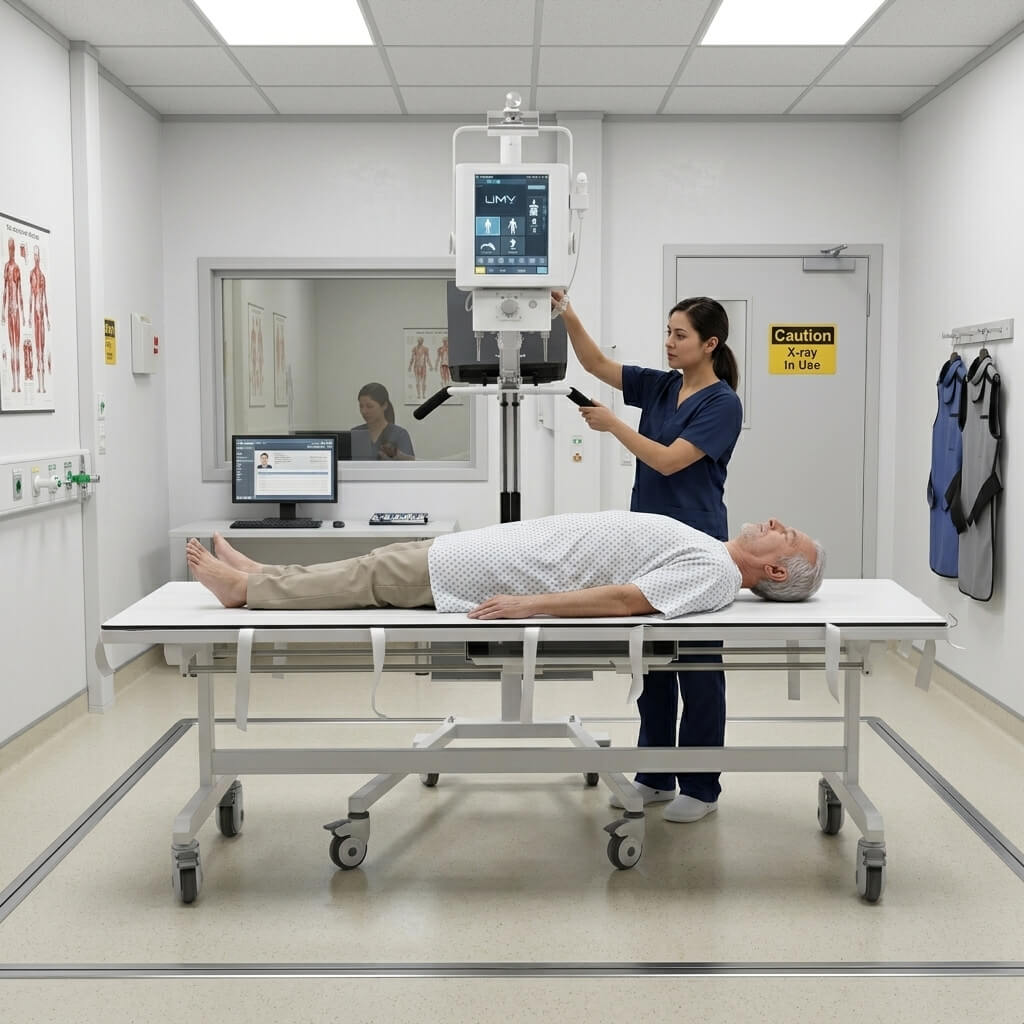
For hospital administrators, emergency clinic directors, and medical equipment distributors, investing in a portable x-ray machine is a key strategic decision. Lightweight, mobile Digital Radiography (DR) units allow clinicians to perform rapid bedside imaging in ICUs, urgent care centers, sports facilities, and disaster relief zones, eliminating the need to transport non-ambulatory patients.
This 2026 purchasing guide breaks down essential technical specifications, pricing models, and clinical applications to help healthcare buyers select the optimal portable imaging platform.
Technical Specifications: Key Parameters of Portable DR Units
When evaluating portable digital x-ray systems, procurement teams should compare these four primary engineering parameters:
| Feature Parameter | Standard Specification Range | Clinical Significance |
| Generator Power Output | 1.5 kW – 5 kW (High-Frequency) | Balances portability with penetration power for chest, extremities, and pediatric exams |
| Flat Panel Detector (FPD) | Wireless Cesium Iodide (CsI) / Gadolinium (GOS) | CsI detectors deliver superior diagnostic image quality with significantly lower radiation doses |
| Battery System | High-Capacity Lithium-ion Battery | Enables 100+ continuous exposures on a single charge for field and ward use |
| Total System Weight | 12 kg – 35 kg (Portable / Suitcase / Tripod) | Ensures effortless single-operator transport across clinical settings |
| Average Cost Range (USD) | $15,000 – $40,000 | Varies based on generator kW, detector size, and included PACS software |
Primary Clinical Use Cases for Portable X-Ray Machines
Portable DR systems serve a wide range of healthcare environments where space, mobility, or rapid deployment is critical:
-
Urgent Care & Outpatient Clinics: Delivers instant skeletal and chest imaging in space-constrained examination rooms.
-
ICU & Bedside Triage: Enables bedside chest radiographies for critically ill or immobilized patients without moving them to radiology suites.
-
Field Medicine & Disaster Relief: Compact, battery-powered suitcase units provide rugged, reliable diagnostic imaging in remote areas.
-
Sports Medicine & Mobile Health Vans: Lightweight tripod-mounted units offer immediate field diagnostics for musculoskeletal injuries.
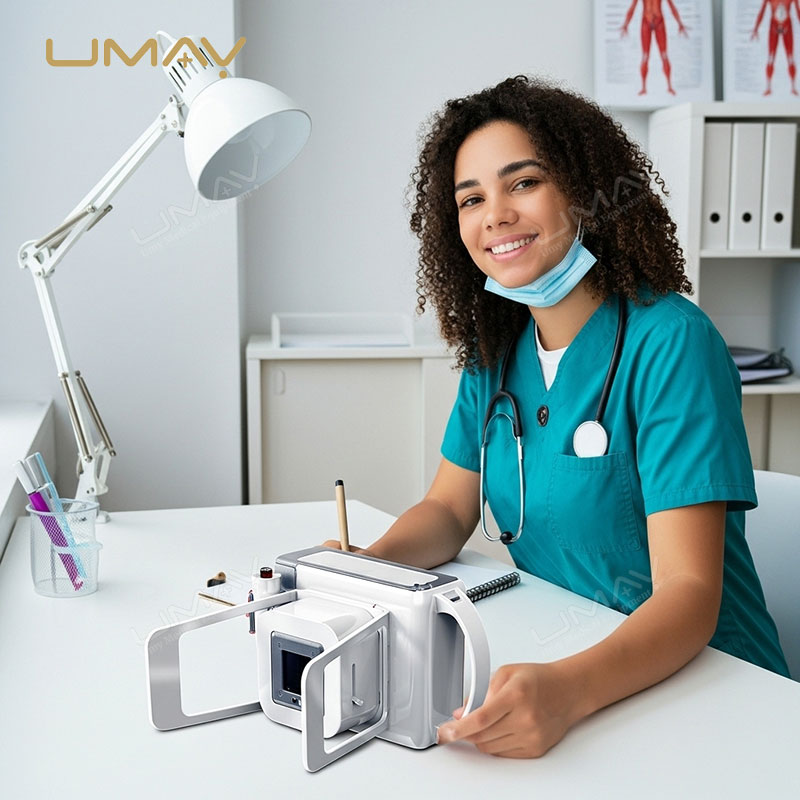
Why Partner with UMY Medical for Portable X-Ray Solutions?
As a leading global innovator and manufacturer of digital radiography systems, UMY Medical delivers reliable portable X-ray devices engineered to meet stringent global diagnostic standards.
Here is why global healthcare buyers and equipment distributors partner with UMY Medical:
-
High-Resolution CsI Detector Technology: UMY Medical portable DR systems utilize wireless Cesium Iodide flat panel detectors, delivering clear diagnostic images at low radiation doses.
-
Ergonomic & Rugged Design: Engineered with durable lightweight housing, long-lasting lithium batteries, and user-friendly touchscreens, UMY Medical units ensure rapid workflow integration.
-
Direct OEM/ODM Wholesale Value: Sourcing directly from UMY Medical gives distributors access to competitive factory pricing, international regulatory compliance assistance, long-term warranties, and post-sales technical support.
Procurement Checklist: Selecting the Right System
-
Evaluate Detector Sensitivity: Prioritize wireless CsI detectors to maximize diagnostic clarity while maintaining radiation safety protocols.
-
Verify Software & DICOM Integration: Ensure the system connects with hospital PACS/RIS networks for rapid image archiving and teleradiology over-reads.
-
Check Warranty & Spare Parts Availability: Choose manufacturers that provide comprehensive warranty coverage and readily accessible replacement components.
Frequently Asked Questions (FAQ)
Q1: What is the main difference between a portable x-ray machine and a mobile x-ray machine?
A portable x-ray machine is ultra-lightweight (12–35 kg) and designed to be hand-carried, packed into a suitcase, or mounted on a foldable stand, making it ideal for field medicine and small clinics. A mobile x-ray machine is a larger, motorized cart-based system with higher generator power (15–30+ kW) built specifically for heavy-duty hospital ward and ICU bedside examinations.
Q2: What generator power (kW) is required for a portable digital x-ray system?
For most outpatient, extremity, chest, and triage examinations, a high-frequency generator rated between 1.5 kW and 5 kW provides sufficient penetration power while keeping the overall system lightweight and battery-efficient.
Q3: How long does a battery last on a portable digital radiography (DR) unit?
Modern portable DR units powered by advanced Lithium-ion battery packs typically support 100 to 200+ continuous exposures on a single charge. Many systems also offer fast-charging capabilities or dual-battery swap systems for continuous clinical workflows.
Q4: Are portable x-ray machines safe for open-room use in outpatient clinics?
Yes, provided standard radiation safety protocols are followed. Portable DR systems utilize high-sensitivity Cesium Iodide (CsI) detectors that drastically minimize required radiation doses. Operators use mobile lead shields, lead aprons, and distance safety protocols to ensure compliance with international radiation safety regulations.
Request a Custom Portable X-Ray Equipment Quote Today
Looking to upgrade your facility’s mobile diagnostic capabilities or source high-performance portable DR systems for global distribution?
Contact the UMY Medical imaging engineering team today to receive technical data sheets, wholesale price catalogs, and customized B2B procurement packages.