For hospital directors, radiology managers, and healthcare procurement officers, acquiring an MRI machine is evolving beyond basic field strength (1.5T vs. 3.0T) evaluations. Modern healthcare facilities face dual pressure: accelerating patient scan throughput to reduce long waiting lists while lowering steep facility construction and cryogen maintenance costs.
In 2026, two key technological shifts—Deep Learning AI Reconstruction and Helium-Free/Low-Helium Magnet Architectures—are reshaping MRI return on investment (ROI) and operational sustainability. This purchasing guide breaks down how these innovations impact capital expenditure (CapEx) and operational expenditure (OpEx).
Key Technological Innovations Reshaping MRI ROI
Understanding these architectural advances helps hospital executives evaluate total cost of ownership (TCO):
| Technology Innovation | Operational Impact | Financial & Clinical Advantage |
| Deep Learning AI Reconstruction | Accelerates image acquisition rates by up to 50% without noise compromise. | Higher daily patient throughput; reduced motion artifacts and repeat scans. |
| Low-Helium / Helium-Free Magnets | Operates with under 1 liter of liquid helium (vs. 1,500+ liters in legacy units). | Eliminates helium quench pipe installation and costly liquid helium refill risks. |
| Compact System Footprint | Reduces required equipment room and control suite square footage. | Lowers hospital structural renovation costs by $100,000–$250,000+. |
| AI-Guided Workflow Positioning | Automates coil selection, patient centering, and protocol setup. | Reduces technologist workload and standardized exam turnarounds across shifts. |
Deep-Dive: CapEx vs. OpEx Breakdown for Radiology Departments
1. Capital Expenditure (CapEx) Optimization
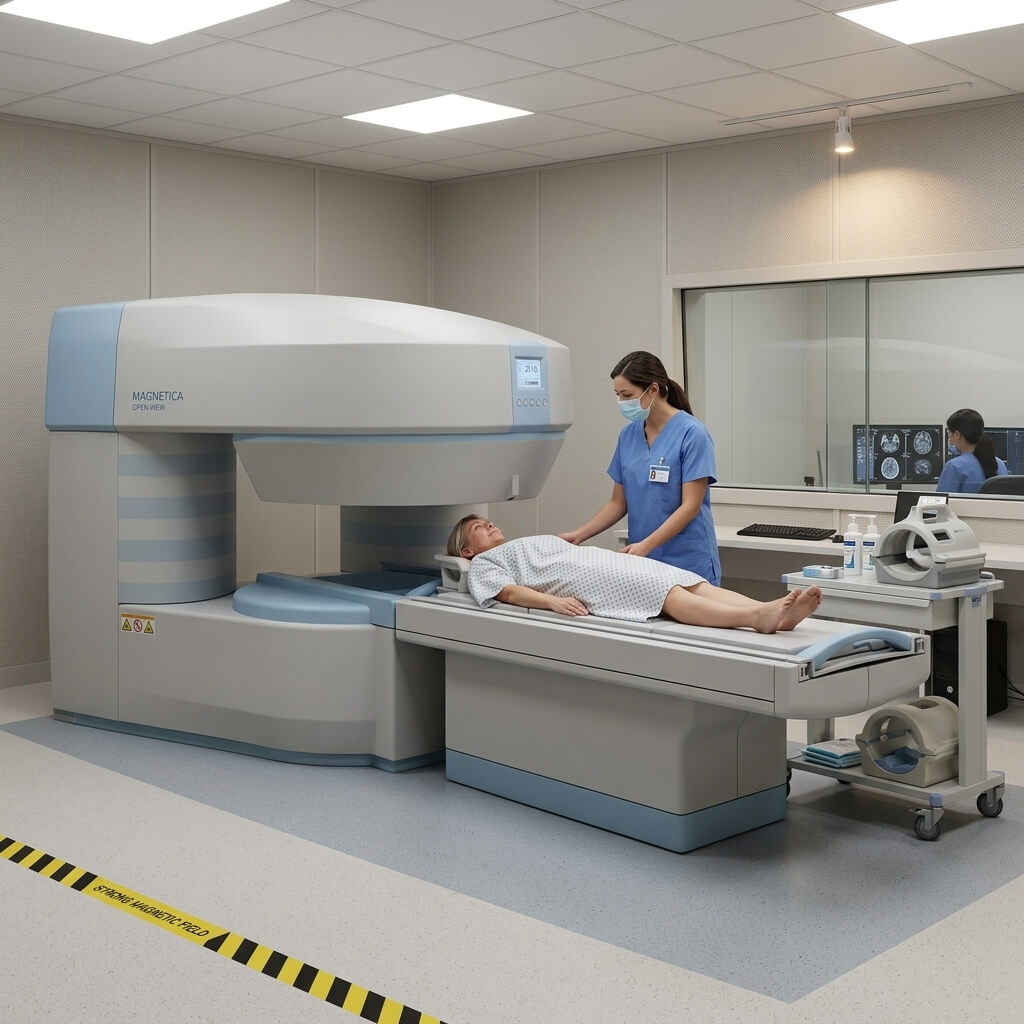
Historically, installing a high-field MRI required dedicated quench pipes, structural reinforced flooring, and extensive Faraday cage RF shielding. Next-generation compact scanners featuring sealed helium loops allow healthcare systems to install high-field units in standard outpatient rooms or ambulatory surgical centers with minimal site modifications.
2. Operational Expenditure (OpEx) Efficiency
Global liquid helium price volatility represents a major long-term risk for radiology budgets. Low-helium technology eliminates cryogen replenishment contracts. Combined with AI deep-learning algorithms that shorten exam times from 30 minutes to 15 minutes, facilities can effectively double patient capacity per shift.
Why Partner with UMY Medical for MRI & Diagnostic Equipment?
As a trusted global developer and supplier of high-performance diagnostic imaging devices, UMY Medical (www.umymedical.com) delivers reliable imaging hardware tailored for modern clinical demands.
Why healthcare procurement teams and medical device distributors choose UMY Medical:
-
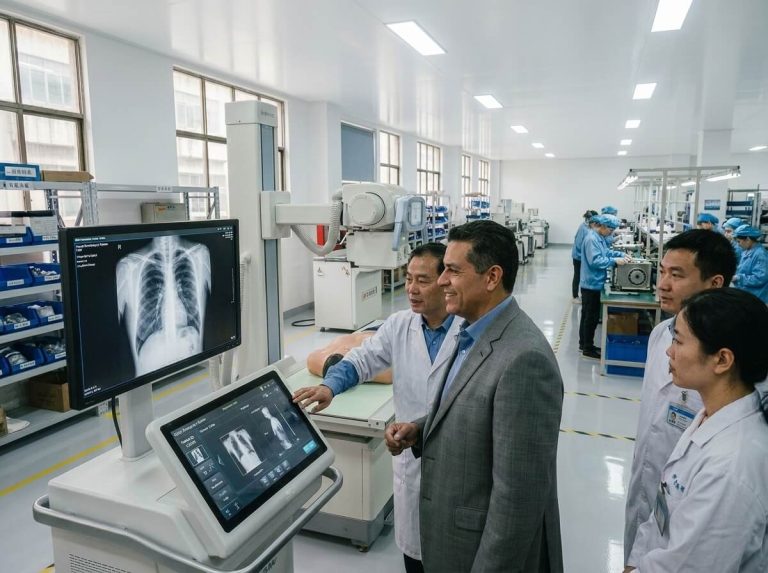
End-to-End Imaging Portfolio: From high-resolution digital radiography (DR) and portable color Doppler ultrasound machines to scalable MRI software and hardware solutions, UMY Medical covers multi-departmental diagnostic needs.
-
Factory-Direct Cost Advantage: Sourcing directly from UMY Medical helps health systems and B2B buyers maximize capital budgets while maintaining Tier-1 image quality and international regulatory compliance.
-
Comprehensive Global B2B Service: UMY Medical offers international buyers full OEM/ODM customization options, robust warranty coverage, site planning assistance, and responsive technical support.
Frequently Asked Questions (FAQ)
Q1: How does AI image reconstruction affect MRI diagnostic accuracy?
AI deep-learning algorithms are trained on extensive datasets of high-resolution images. Instead of suppressing noise at the expense of clarity, AI removes image artifacts directly from undersampled raw data, allowing fast scans to match or exceed the image quality of traditional long-duration sequences.
Q2: What is the primary operational advantage of a low-helium MRI machine?
Conventional MRI systems require 1,500 to 2,000 liters of liquid helium that must be periodically refilled and require expensive quench pipe infrastructure to vent gas safely during emergencies. Low-helium or sealed-loop systems use less than 1 liter of helium, eliminating boil-off risks, quenching pipes, and expensive maintenance refills.
Q3: How quickly can a facility realize ROI on an AI-assisted MRI scanner?
By shortening scan acquisition times by 30% to 50%, an AI-enabled scanner allows a busy clinic to handle 4 to 8 additional patient exams per day. Depending on regional reimbursement rates, the added throughput typically recoups the software upgrade investment within 5 to 9 months.
Request a Custom Equipment & Site Planning Quote Today
Looking to modernize your radiology facility or expand your medical distribution catalog?
Contact the UMY Medical sales engineering team today to request technical data sheets, wholesale pricing catalogs, and customized B2B procurement solutions.