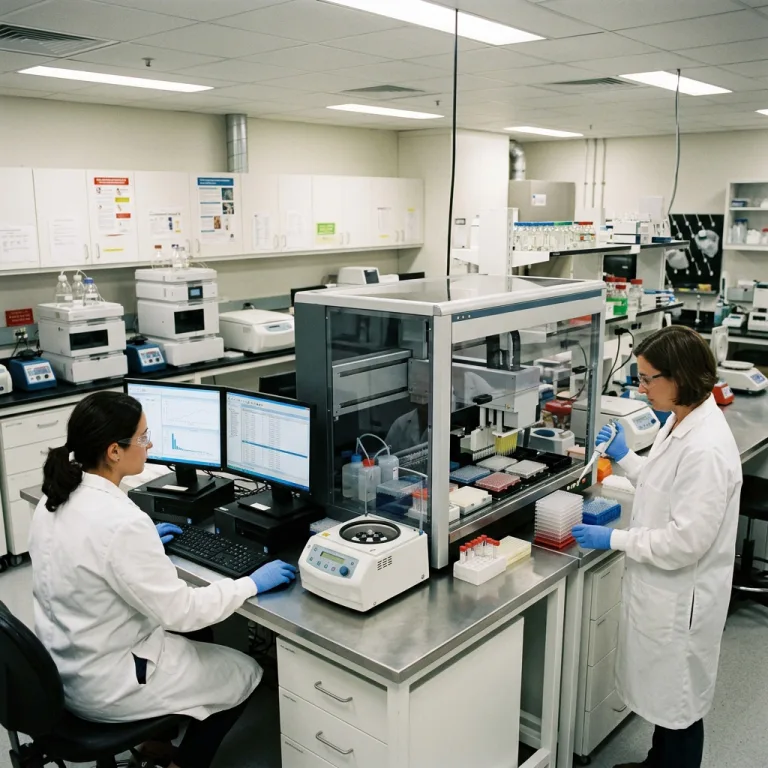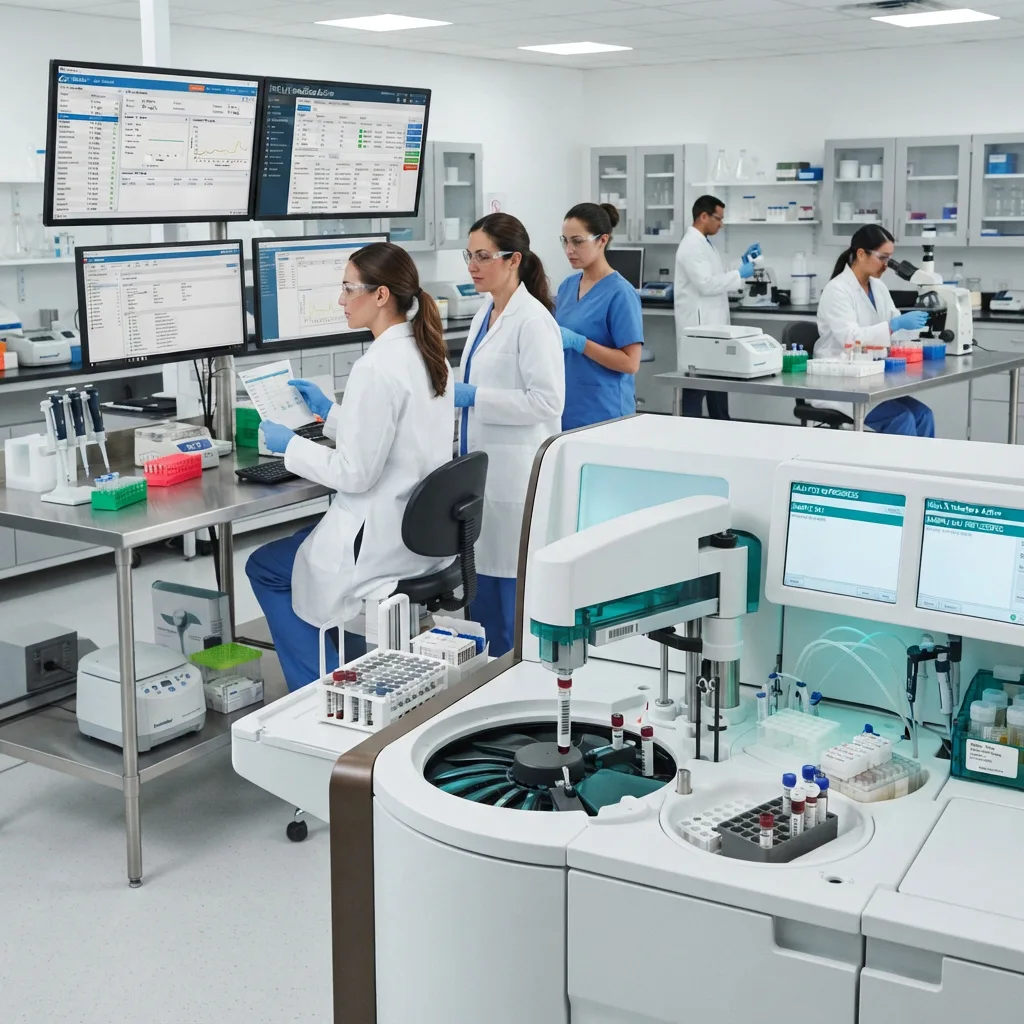
It is Monday morning in a bustling 500-bed regional hospital. The central laboratory has just received a batch of 150 blood samples from the morning ward rounds. The brand-new automated biochemistry analyzer processes these samples flawlessly in under an hour.
However, the results are not reaching the doctors.
Instead, a highly trained medical technologist sits in front of a computer monitor, manually typing thousands of individual data points—glucose levels, liver enzymes, and renal markers—from printed receipt tapes into the hospital’s database. Suddenly, the technician’s finger slips. A patient’s serum potassium result of 3.5 mmol/L (perfectly normal) is accidentally keyed in as 8.5 mmol/L (a critical, life-threatening emergency). Panicked alarms sound in the intensive care unit, and a physician prepares to administer aggressive, potentially fatal treatment based entirely on a clerical typo.
This nightmare scenario highlights the most critical vulnerability in modern diagnostics: a high-speed biochemistry analyzer is useless if its data is trapped behind a manual entry bottleneck.
To unlock the true clinical and financial potential of diagnostic hardware, healthcare facilities must digitally connect their instruments to a Laboratory Information System (LIS) and the broader Hospital Information System (HIS).
What is LIS and HIS Integration for Biochemistry Analyzers?
Direct Answer: Integration is the automated, bi-directional digital communication between a physical biochemistry analyzer and the hospital’s central computer network. Instead of technicians typing orders and results, an integrated Laboratory Information System (LIS) automatically sends patient test orders directly to the analyzer. Once testing is complete, the analyzer instantly transmits the precise diagnostic data back to the LIS, which then forwards the results to the Hospital Information System (HIS) so doctors can view them immediately on their tablets or workstation screens.
The Silent Killer of Turnaround Time: Manual Data Entry
Turnaround Time (TAT) is the most heavily scrutinized metric in clinical laboratory management. TAT measures the total time from when a physician orders a blood test to the moment they view the final diagnostic result.
When laboratory procurement teams focus exclusively on machine speed (Tests Per Hour), they often ignore the pre-analytical and post-analytical digital workflow.
THE BOTTLENECK EFFECT

[Physician Orders Test] ➔ [Blood Drawn] ➔ [Sample Prepped] ➔ [Analyzer Runs Test]
                                                                     │
           ┌─────────────────────────────────────────────────────────┘
           │
  MANUAL WORKFLOW (Bottleneck):
  [Analyzer Prints Paper] ➔ [Tech Types Results] ➔ [Tech Double-Checks] ➔ [Physician Views]
  Total Delay: 30 to 120 Minutes. Error Risk: High.

  INTEGRATED LIS WORKFLOW (Zero-Touch):
  [Analyzer Outputs Data] ➔ [LIS Auto-Validates] ➔ [Physician Views]
  Total Delay: 2 Seconds. Error Risk: Zero.
The financial and clinical consequences of manual data entry are severe:
-
Transcription Errors: Even with a 99% data entry accuracy rate, a lab processing 2,000 tests a day will generate 20 clinical errors daily. These errors trigger redraws, delayed discharges, and severe medical liability.
-
Staff Misallocation: Paying a certified clinical scientist to act as a data entry clerk is a massive waste of payroll resources.
-
Delayed Patient Discharges: In emergency departments, every minute a doctor waits for a metabolic panel costs the hospital money. Faster digital result delivery directly increases emergency room bed turnover.
The Digital Bridge: Uni-Directional vs. Bi-Directional Interfacing
When connecting a clinical chemistry analyzer to an LIS network, IT departments employ one of two communication protocols. Understanding the difference is critical for clinic owners and procurement managers negotiating software setups.
1. Uni-Directional Interfacing (One-Way Communication)
In a uni-directional setup, data flows in only one direction: from the analyzer to the computer.
-
The Process: The technician must manually type the patient’s ID and requested test profile (e.g., Liver Function Test) directly onto the analyzer’s touch screen. The machine runs the test and automatically pushes the final numerical result to the LIS.
-
The Verdict: While it eliminates typing errors on the output side, it still requires heavy manual data entry on the input side. This outdated standard is only acceptable for very small, low-volume rural clinics.
2. Bi-Directional Interfacing (Two-Way Communication)
In a bi-directional setup, the analyzer and the hospital network engage in a continuous, automated digital conversation.
-
The Process: The physician orders the test in the HIS. The HIS sends the order to the LIS. The LIS generates a barcode. When the barcode is scanned at the analyzer, the machine “asks” the LIS what to do. The LIS replies instantly: “This is Patient John Doe; run Glucose and Creatinine.” The machine runs the specific tests and pushes the results back to the LIS.
-
The Verdict: Bi-directional integration is the mandatory gold standard for modern hospitals. It enables true “walk-away” automation, zero manual typing, and complete digital traceability.
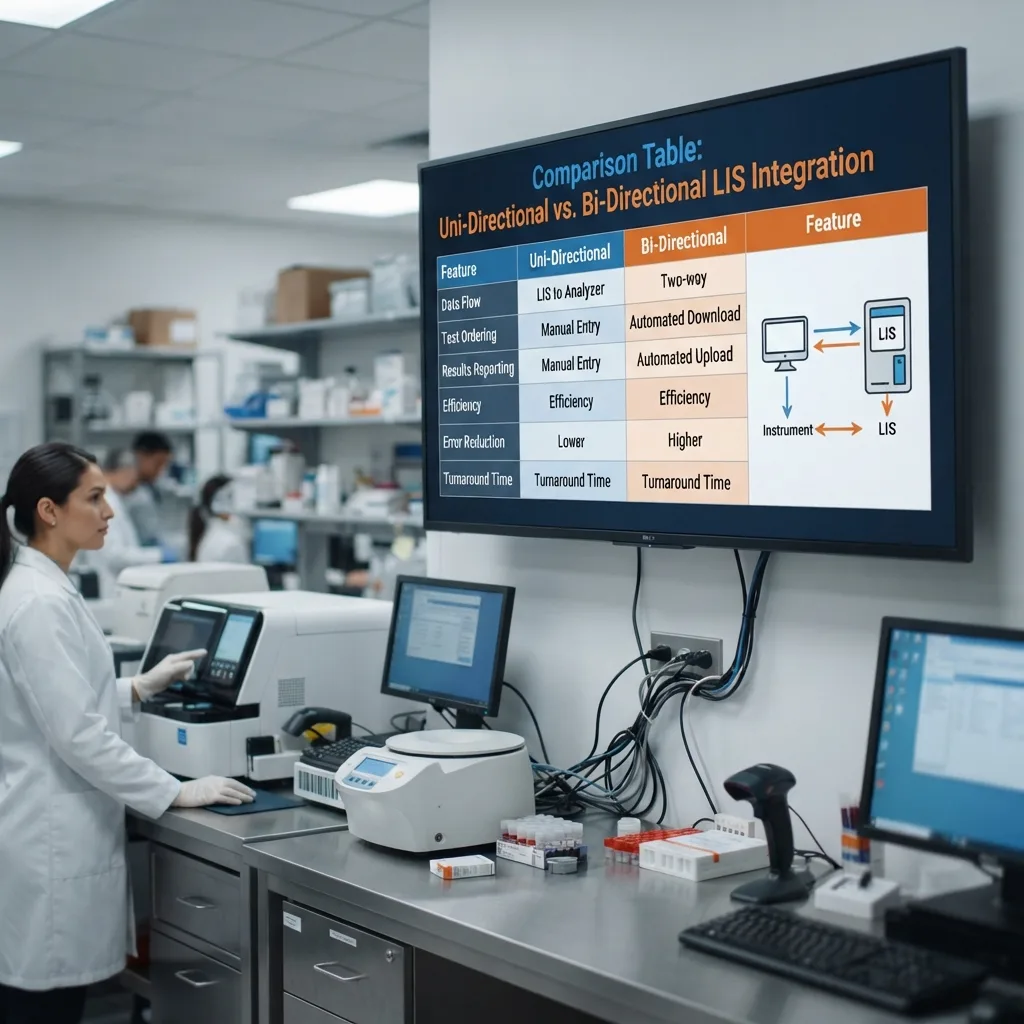
Comparison Table: Uni-Directional vs. Bi-Directional LIS Integration
| Feature / Capability | Uni-Directional Interface | Bi-Directional Interface |
| Data Entry Requirement | Tech must type patient ID & test orders into analyzer | Zero manual entry; barcode scanner handles all data |
| Risk of Patient Mismatch | High (Tech might type wrong ID) | Zero (Positive Patient Identification via barcode) |
| Workflow Speed | Slow (Delayed by manual order programming) | Instantaneous (Load-and-go efficiency) |
| Host Query Support | No | Yes (Analyzer queries the network for instructions) |
| Best Suited For | Standalone veterinary clinics, tiny rural practices | Polyclinics, commercial labs, and large hospitals |
Positive Patient Identification (PPID) and Barcode Scanning
The physical hardware that makes bi-directional LIS integration possible is the barcode scanner. This is the cornerstone of Positive Patient Identification (PPID).
When blood is drawn from a patient, the phlebotomist prints a unique 1D or 2D matrix barcode label from the LIS terminal and affixes it to the serum tube. This barcode contains a unique accession number, but it does not contain the patient’s name or medical history, ensuring HIPAA and data privacy compliance.
When the technician places this tube into the biochemistry analyzer’s sample carousel, the internal laser scanner reads the barcode as the carousel spins.
-
The Query: The analyzer sends the barcode string to the LIS middleware over the network.
-
The Command: The LIS checks its database, finds the doctor’s electronic order matching that barcode, and sends the specific testing instructions back to the machine.
-
The Execution: The analyzer’s robotic arm aspirates the exact amount of serum required for those specific tests.
This process guarantees that Patient A never accidentally receives Patient B’s diagnostic results.
The Power of Auto-Validation Rules Engines
One of the most transformative features of connecting a biochemistry analyzer to an LIS is Auto-Validation.
In an unintegrated lab, a pathologist or senior technician must manually review and sign off on every single printed test result before it is sent to the doctor. In a hospital running 5,000 chemistry tests a day, this human review process creates a massive administrative traffic jam.
Modern LIS middleware utilizes rules-based AI algorithms to perform auto-validation:
AUTO-VALIDATION DECISION TREE

[Result Generated by Analyzer] ➔ [Transmitted to LIS]
                 │
                 ▼
[LIS Checks Result Against Pre-Programmed Clinical Rules]
                 │
      ┌──────────┴──────────┐
      ▼                     ▼
[Result is NORMAL]    [Result is ABNORMAL / CRITICAL]
      │                     │
[Auto-Release]        [Flagged for Human Review]
Sent directly to      Halted on LIS dashboard.
HIS/EHR in seconds.   Requires pathologist override.
No human touch.       Alerts ER doctor via SMS/Pager.
If a patient’s fasting glucose comes back at 95 mg/dL (perfectly normal), the LIS recognizes that it falls within the healthy reference range, verifies that daily quality control (QC) passed, and automatically pushes the result to the patient’s Electronic Health Record (EHR).
If the result is 450 mg/dL (critically high), the LIS instantly stops the result, flags it in red on the laboratory dashboard, and demands a manual review. By auto-validating 70% to 80% of normal, routine results, clinical scientists can dedicate their complete focus and expertise to investigating the 20% of abnormal, life-threatening cases.
Understanding the Language of Integration: HL7 and ASTM
When discussing IT integration with a biochemistry analyzer manufacturer, procurement teams will inevitably hear two acronyms: ASTM and HL7. These are the standardized digital “languages” that medical machines use to talk to computer networks.
-
ASTM (American Society for Testing and Materials): This is the traditional, low-level serial communication protocol. It is specifically designed for point-to-point communication between a single laboratory instrument (like a chemistry analyzer) and the LIS server.
-
HL7 (Health Level Seven): This is the modern, high-level enterprise messaging standard. HL7 is the language used to transmit complex healthcare data—such as billing codes, patient demographics, and full diagnostic reports—across the entire hospital network (between the LIS, the HIS, and the electronic billing department).
Procurement Rule: Ensure that any biochemistry analyzer you purchase natively supports ASTM over TCP/IP (Ethernet). Avoid older machines that rely exclusively on outdated RS232 serial cables, as these require expensive, third-party terminal servers to convert the data for modern hospital networks.
The Role of Middleware in Clinical Chemistry
In complex laboratory environments, the analyzer does not speak directly to the massive Hospital Information System. Instead, it speaks to Middleware.
Middleware is a specialized, highly agile software layer that sits directly between the physical biochemistry analyzers and the main LIS server.
Why is middleware necessary?
-
Instrument Consolidation: A lab might have a chemistry analyzer from one brand, an immunology analyzer from another, and a coagulation machine from a third. Middleware translates all their different raw data outputs into one unified language before sending it to the LIS.
-
Quality Control (QC) Tracking: Middleware plots Levey-Jennings charts and monitors Westgard Rules in real-time. If an analyzer fails a QC check, the middleware will automatically sever the connection and block any patient results from that specific machine from entering the hospital records until the machine is recalibrated.
-
Delta Checks: Middleware performs historical comparisons. If a patient’s creatinine level jumps by 400% in just 12 hours, the middleware flags this massive “delta” (change). It alerts the technician that either the patient is in acute, sudden kidney failure, or the nurse accidentally drew blood from an IV line contaminated with fluids.
Compliance and the Digital Audit Trail
Clinical laboratories are subject to stringent regulatory audits from organizations such as CAP (College of American Pathologists), CLIA, and ISO 15189.
In a manual laboratory, proving compliance is a nightmare of filing cabinets and dusty logbooks. Fully integrated biochemistry networks solve this by generating an immutable digital chain of custody.
Every action is time-stamped and electronically signed:
-
10:02 AM: Doctor places order in HIS.
-
10:15 AM: Phlebotomist scans patient wristband and prints barcode.
-
10:45 AM: Analyzer scans barcode and aspirates serum.
-
11:05 AM: Analyzer pushes result to LIS.
-
11:06 AM: LIS Auto-Validation rules release the result to HIS.
If a diagnostic error is ever challenged in a medical malpractice inquiry, the hospital’s IT department can pull a flawless digital audit trail proving exactly when the sample was tested, which machine ran it, and whether the daily calibration was valid at that precise second.
Procurement IT Checklist: 5 Questions for Your Vendor
Before finalizing the purchase of an automated biochemistry analyzer, the hospital’s Chief Information Officer (CIO) or IT Director must verify network compatibility. Ask the equipment vendor these five questions:
-
Is bi-directional interfacing standard or an expensive add-on? (Some manufacturers hide the cost of LIS connectivity behind costly secondary software license keys).
-
What communication protocol does the instrument use? (Demand TCP/IP Ethernet connectivity over legacy RS232 serial ports).
-
Does the onboard software support automated Host Query? (Can the analyzer scan a barcode and independently ask the network what to do?)
-
Who is responsible for building the interface driver? (Clarify whether the analyzer manufacturer or your LIS software provider will write the specific API bridge).
-
Does the system support remote IT diagnostics? (Can the manufacturer’s software engineers remote into the machine via a secure VPN to troubleshoot data-transmission errors?)
Frequently Asked Questions (FAQ)
What is the difference between LIS and HIS?
LIS (Laboratory Information System) is the specialized software managing the internal operations of the laboratory—tracking samples, managing analyzer interfaces, and monitoring quality control. HIS (Hospital Information System) is the massive enterprise network that manages the entire hospital—including patient admission, electronic health records (EHR), pharmacy prescriptions, and billing. The LIS is a sub-department system that feeds data into the master HIS.
Can a clinic integrate a biochemistry analyzer without buying expensive LIS software?
For very small clinics, modern biochemistry analyzers often feature robust onboard software with built-in patient databases capable of storing up to 100,000 results. Clinics can connect a standard office printer directly to the analyzer to print professional patient reports without purchasing an overarching LIS. However, this data remains siloed on the machine and won’t automatically sync with cloud-based Electronic Medical Records (EMR).
What causes an LIS integration to fail during installation?
The most common cause of integration failure is a mismatch in IT protocols between the instrument vendor and the hospital’s LIS vendor. If the analyzer sends data formatted in a specific ASTM string, but the LIS is programmed to expect a different string format, the data will be rejected. Successful integration requires a coordinated “mapping” meeting between the hospital IT team, the LIS software provider, and the equipment manufacturer prior to installation.
Does LIS integration pose a cybersecurity or ransomware risk?
Because biochemistry analyzers run on embedded operating systems (often Windows IoT or Linux) and are connected to the hospital network, they are potential vectors for malware. Procurement and IT teams must ensure the analyzers are placed on isolated VLANs (Virtual Local Area Networks) and that middleware utilizes encrypted HL7 data transmissions to protect patient privacy against cyber threats.