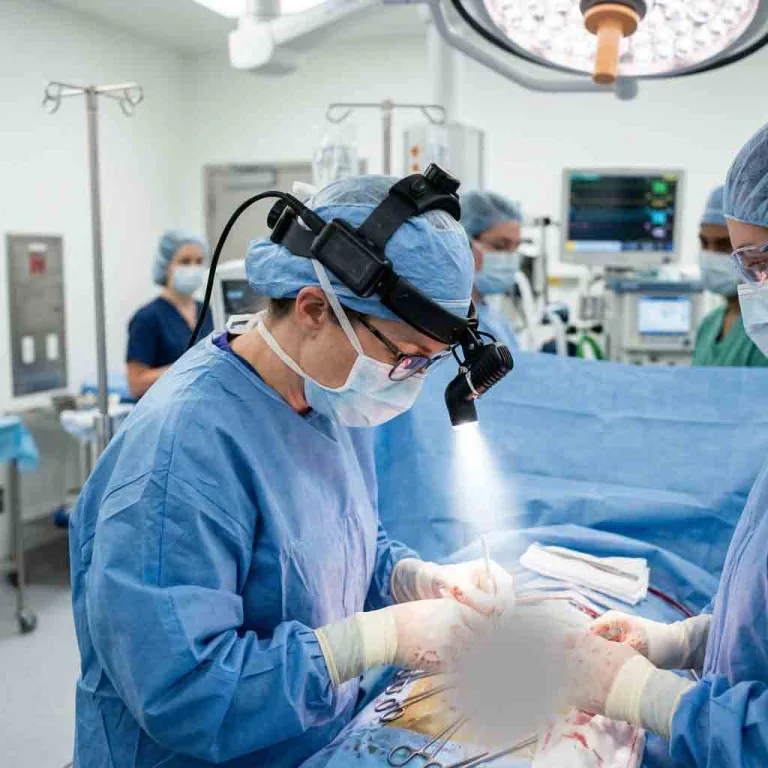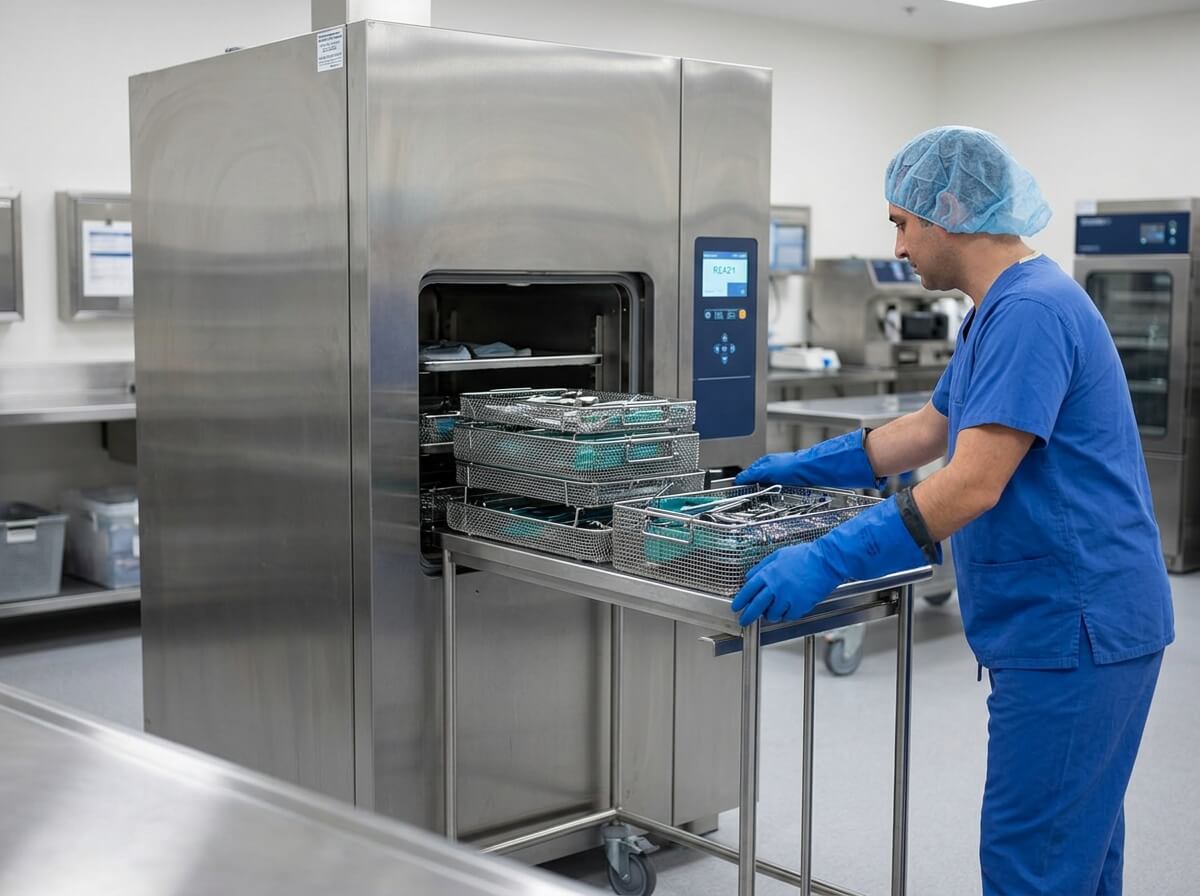
Understanding the autoclave sterilization cycle is important for hospitals, dental clinics, laboratories, pharmaceutical facilities, veterinary clinics, and medical equipment buyers.
An autoclave does not sterilize a load simply by heating it to a certain temperature. A successful steam sterilization cycle depends on several factors working together, including steam quality, temperature, pressure, exposure time, air removal, load configuration, packaging, and drying.
CDC describes four fundamental parameters of steam sterilization: steam, pressure, temperature, and time. It also explains that the required exposure time changes according to the sterilizer type, temperature, load, packaging, and material being processed.
For this reason, terms such as autoclave temperature, autoclave pressure, autoclave time, pre-vacuum cycle, gravity cycle, steam penetration, drying cycle, and sterilization parameters are important both for technical users and for buyers comparing autoclave equipment.
This guide explains how an autoclave cycle works, what happens during each stage, and what procurement teams should look for when comparing a steam sterilizer or autoclave machine.
What Is an Autoclave Sterilization Cycle?
An autoclave sterilization cycle is a controlled sequence of steps used to expose a suitable load to the required steam sterilization conditions.
A typical cycle can include:
Conditioning → Air Removal → Steam Admission → Heating → Exposure → Exhaust → Drying → Completion
The exact sequence varies between sterilizer designs.
CDC describes the autoclave process in terms of a conditioning phase, exposure phase, and exhaust phase, while modern systems may add automated vacuum, drying, and monitoring functions.
A complete cycle is therefore more than the time shown on the screen as “sterilization time.”
For example:
Total cycle time ≠ Exposure time
A machine can require additional time for:
- Air removal
- Heating
- Steam penetration
- Exposure
- Exhaust
- Drying
- Cooling or pressure equalization
This distinction is particularly important when comparing autoclave cycle time between different models.
The Four Main Parameters of Steam Sterilization
The four fundamental parameters are:
1. Steam
2. Pressure
3. Temperature
4. Time
CDC states that these four parameters work together to achieve steam sterilization.
A simple way to understand the relationship is:
Steam provides the heat transfer medium.
Pressure allows the system to achieve the required steam temperature.
Temperature provides the thermal condition required for microbial inactivation.
Time ensures that the load is exposed to those conditions for the required period.
If one part of the process is inadequate, the cycle may not achieve the intended result.
1. Steam in an Autoclave
Steam is the sterilizing agent in a steam autoclave.
For sterilization, the steam must contact the surfaces of the load appropriately.
CDC describes the ideal sterilizing steam as dry saturated steam, with a dryness fraction of at least 97%.
Steam quality matters because excessive water, inadequate steam conditions, or non-condensable gases can affect heat transfer and sterilization performance.
Why Does Steam Penetration Matter?
Steam must reach the areas that need to be sterilized.
This can be challenging when the load contains:
- Wrapped instruments
- Porous materials
- Textiles
- Hollow devices
- Narrow lumens
- Complex instrument assemblies
Air that remains trapped inside the chamber or load can interfere with steam contact.
This is one reason air removal is a major part of modern steam sterilization.
2. Autoclave Pressure
Pressure is often one of the first values people associate with an autoclave.
However, pressure itself is not the main sterilizing mechanism.
Instead, pressure allows saturated steam to reach higher temperatures.
Common search terms include:
- autoclave pressure
- steam sterilizer pressure
- autoclave pressure settings
- autoclave pressure gauge
- steam pressure sterilizer
- pressure cooker sterilizer
- autoclave PSI
- autoclave pressure in bar
- autoclave pressure in psi
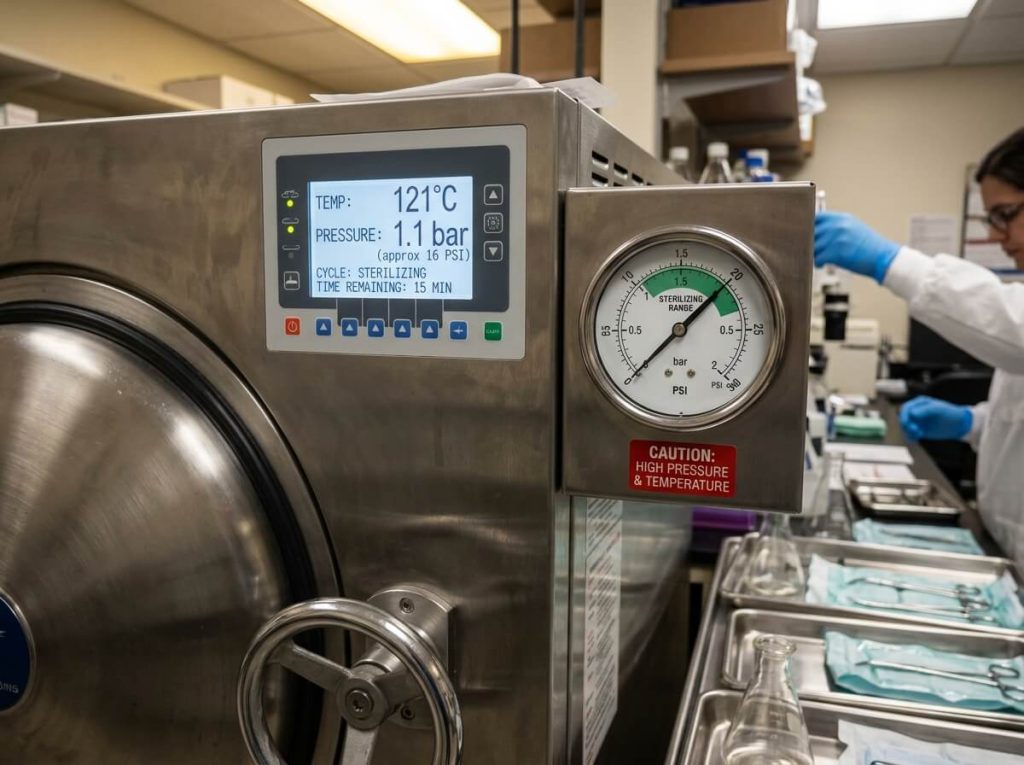
A commonly referenced gravity-displacement condition is around 121°C and 15 psi gauge pressure, while higher-temperature cycles can operate around 132–135°C at higher pressure. CDC identifies typical gravity sterilizer operating ranges and common steam sterilization temperatures in its guidance.
However, buyers should avoid choosing an autoclave based on PSI alone.
The important combination is:
Pressure + Temperature + Time + Steam Contact
3. Autoclave Temperature
Autoclave temperature is one of the highest-volume technical search areas.
Common search terms include:
- autoclave temperature
- sterilization temperature
- steam sterilization temperature
- autoclave temperature 121°C
- autoclave temperature 132°C
- autoclave temperature 134°C
- steam sterilizer temperature
- sterilizer operating temperature
- high temperature autoclave
Commonly discussed steam sterilization temperatures include:
121°C
and
132°C
with some modern systems and validated cycles operating at approximately 134°C or higher depending on the equipment and load.
CDC specifically identifies 121°C and 132°C as common steam-sterilizing temperatures and gives cycle examples that vary according to sterilizer type and load.
The important point is:
There is no single universal autoclave temperature for every load.
The correct temperature should follow the validated cycle for the specific sterilizer, product, packaging, and application.
121°C Autoclave Cycle
A 121°C autoclave cycle is one of the most common search terms for steam sterilization.
CDC’s table for minimum steam sterilization cycle times gives an example of:
121°C / 250°F
For wrapped instruments in a gravity-displacement sterilizer:
30 minutes exposure time
with an additional drying period.
This does not mean that every load requires 30 minutes at 121°C.
Exposure time varies according to:
- Sterilizer design
- Load configuration
- Packaging
- Instrument geometry
- Material
- Whether the item is porous
- Whether the item contains a lumen
Therefore, users should always follow the applicable validated instructions.
132°C Autoclave Cycle
132°C is another common steam sterilization temperature.
CDC gives an example of:
132°C / 270°F
For wrapped instruments in a dynamic-air-removal or pre-vacuum sterilizer:
4 minutes exposure time
followed by a drying period.
The comparison demonstrates an important principle:
Higher temperature can allow a shorter exposure period under an appropriate validated cycle.
However, temperature and time cannot be selected independently.
134°C Autoclave Cycle
134°C autoclave is widely used as a search term, particularly in medical, dental, and European-market sterilizer content.
A 134°C cycle may be used for certain compatible loads under the manufacturer’s validated program.
Some sterilizer systems operate at approximately 132–135°C, while individual cycles may use different exposure periods and drying times. CDC identifies this operating range for pre-vacuum sterilizers and related dynamic-air-removal systems.
The correct cycle is always determined by:
- Device
- Load
- Packaging
- Sterilizer
- Cycle validation
- Manufacturer instructions
Autoclave Temperature vs Pressure
A common question is:
Why does an autoclave use pressure?
The answer is that pressure raises the boiling point of water, allowing steam to reach temperatures above normal atmospheric boiling conditions.
For example:
| Steam Condition | Approximate Principle |
|---|---|
| Atmospheric pressure | Water boils near 100°C |
| Increased pressure | Steam can reach higher temperatures |
| Higher steam temperature | Faster thermal inactivation under appropriate conditions |
This is why an autoclave can use steam temperatures such as 121°C or 132°C.
The pressure gauge is therefore useful for monitoring the process, but pressure by itself does not prove sterilization has occurred.
What Is Autoclave Exposure Time?
Exposure time is the period during which the load is maintained at the required sterilization conditions.
It is different from:
Total cycle time
For example, one cycle could have:
- 10 minutes conditioning
- 5 minutes heating
- 4 minutes exposure
- 15 minutes exhaust
- 20 minutes drying
The actual exposure period is only one part of the overall process.
This distinction is important when buyers compare products described as:
- fast autoclave
- rapid sterilizer
- short cycle sterilizer
- high-speed steam sterilizer
A shorter total cycle is useful only when the complete validated process remains appropriate for the intended load.
How Long Does an Autoclave Take?
There is no universal answer to:
“How long does an autoclave take?”
Cycle duration depends on:
- Sterilizer type
- Chamber size
- Load size
- Load material
- Packaging
- Gravity or pre-vacuum operation
- Temperature
- Exposure time
- Exhaust
- Drying
- Heating system
CDC’s cycle table shows that even for the same sterilization method, minimum exposure and drying times differ according to sterilizer type and load configuration.
For example:
Gravity Displacement
A wrapped instrument load may require:
30 minutes at 121°C
or
15 minutes at 132°C
depending on the cycle.
Dynamic-Air-Removal
A wrapped instrument load may use:
4 minutes at 132°C
with a separate drying period.
These are examples from CDC guidance, not universal settings for every autoclave or every medical device.
What Is the Conditioning Phase?
The conditioning phase prepares the chamber and load for sterilization.
It may include:
- Air removal
- Steam admission
- Heating
- Pressure increase
- Steam penetration
In a gravity autoclave, steam displaces air.
In a pre-vacuum sterilizer, a vacuum system actively removes air.
The objective is to create conditions in which steam can contact the load appropriately.
Gravity Displacement Autoclave Cycle
A gravity displacement autoclave removes air primarily by allowing incoming steam to displace air from the chamber.
The basic sequence can be:
Load → Steam enters → Air is displaced → Temperature rises → Exposure → Exhaust → Drying
CDC identifies gravity-displacement sterilizers as a basic type of steam sterilizer and lists typical operating temperatures around 121–123°C and 132–135°C depending on the cycle.
Gravity cycles are commonly used for compatible:
- Instruments
- Glassware
- Liquids
- Laboratory materials
- Certain waste loads
The suitability depends on the sterilizer and load.
Pre-Vacuum Autoclave Cycle
A pre-vacuum autoclave actively removes air before steam exposure.
A typical sequence may be:
Load → Vacuum → Steam → Vacuum/conditioning → Steam exposure → Exhaust → Drying
The main advantage is more effective air removal for suitable porous and wrapped loads.
CDC explains that dynamic-air-removal sterilizers, including pre-vacuum systems, remove air rapidly to improve steam penetration.
Pre-vacuum systems are therefore common in hospital CSSD environments and applications involving wrapped medical instruments.
Gravity vs Pre-Vacuum Autoclave
| Feature | Gravity Autoclave | Pre-Vacuum Autoclave |
| Air removal | Steam displacement | Vacuum-assisted |
| Cycle design | Simpler | More complex |
| Wrapped porous loads | More limited | Better suited to many validated loads |
| Vacuum pump | Not necessarily required | Usually required |
| Hospital CSSD use | Possible | Very common |
| Equipment complexity | Lower | Higher |
| Cycle time | Can be longer | Often shorter for suitable loads |
| Drying | Depends on model | Often enhanced |
The important point is that pre-vacuum does not mean every load can automatically be sterilized faster.
The cycle still needs to be validated for the particular load.
What Is a Vacuum Cycle in an Autoclave?
A vacuum cycle uses a vacuum system to reduce the amount of air inside the chamber and, depending on the system, within the load.
Common search terms include:
- autoclave vacuum cycle
- pre-vacuum autoclave
- vacuum steam sterilizer
- vacuum sterilization
- vacuum pump autoclave
- autoclave air removal
- vacuum drying autoclave
Vacuum technology can be used during:
Conditioning
and/or
Drying
depending on the sterilizer design.
Why Is Air Removal Important?
Air is one of the main concerns in steam sterilization because steam must directly contact the load.
If air remains trapped in:
- Pouches
- Wrapped packs
- Textiles
- Hollow instruments
- Chamber areas
steam penetration can be affected.
CDC specifically notes that entrapped air interferes with steam contact, which is why dynamic-air-removal systems use vacuum or other air-removal methods.
This is also why sterilizer performance tests such as the Bowie-Dick test are important for applicable pre-vacuum sterilizers.
What Is a Bowie-Dick Test?
The Bowie-Dick test is a performance test for dynamic-air-removal steam sterilizers.
It is designed to detect:
- Air leaks
- Inadequate air removal
- Problems affecting steam penetration
CDC states that the Bowie-Dick test is used to evaluate air removal and leaks in vacuum-type steam sterilizers and should be performed according to applicable procedures before processing loads on days when the vacuum sterilizer is used.
If the sterilizer fails the test, CDC advises that it should not be used until it has been inspected and the test is successfully passed.
This makes Bowie-Dick test, vacuum sterilizer test, and steam penetration test valuable long-tail SEO topics for sterilizer-related content.
What Is Steam Penetration?
Steam penetration means the ability of steam to reach the surfaces that need to be sterilized.
It matters for:
- Wrapped instruments
- Porous loads
- Textile packs
- Hollow devices
- Lumened instruments
Good steam penetration requires appropriate:
- Air removal
- Packaging
- Loading
- Steam quality
- Cycle conditions
An autoclave chamber reaching the target temperature is not by itself enough if steam cannot reach the relevant surfaces of the load.
Autoclave Load Configuration
Load configuration refers to how items are arranged inside the chamber.
A good load configuration should allow:
- Steam circulation
- Air removal
- Heat transfer
- Exhaust
- Drying
Avoid unnecessarily:
- Overloading
- Blocking chamber drains
- Compressing porous materials
- Placing pouches incorrectly
- Mixing incompatible load types without a validated cycle
CDC’s sterilization guidance indicates that sterilization parameters vary according to load characteristics, including wrapped versus unwrapped items and porous versus nonporous materials.
Wrapped vs Unwrapped Sterilization
A wrapped instrument load and an unwrapped instrument load can require different cycles.
Wrapping is often used when instruments need to remain sterile after the sterilization process.
The packaging must allow:
- Steam penetration
- Air removal
- Sterilization
- Appropriate drying
- Post-cycle handling and storage
Because the packaging affects the sterilization process, buyers should consider the compatibility of:
Autoclave + Instrument + Packaging + Cycle
rather than evaluating the sterilizer alone.
Autoclave Drying Cycle
The drying cycle is another important part of steam sterilization.
After steam exposure, water and residual moisture may remain on the load.
The purpose of drying is to help produce an appropriately dry load when the selected process requires it.
CDC’s minimum-cycle table includes specific drying periods for different sterilizer types and loads. For example, wrapped instruments in a dynamic-air-removal sterilizer may require a separate drying period following the exposure phase.
Drying time can vary according to:
- Load type
- Packaging
- Sterilizer type
- Vacuum performance
- Load arrangement
- Manufacturer’s cycle
Why Are Autoclave Packs Wet?
Wet packs after autoclave are a common troubleshooting search.
Possible causes can include:
- Insufficient drying
- Overloading
- Incorrect loading
- Condensation
- Packaging issues
- Poor steam quality
- Inadequate vacuum
- Incorrect cycle selection
A wet load should not simply be assumed to be acceptable.
Hospitals should follow the sterilizer manufacturer’s instructions and applicable infection-control procedures when determining how to handle wet packs.
Autoclave Drying Time
Common search terms include:
- autoclave drying time
- sterilizer drying time
- autoclave dry cycle
- steam sterilizer dry time
- drying time for wrapped instruments
- autoclave drying temperature
There is no universal drying time.
For example, CDC’s examples list:
- 15–30 minutes for certain gravity-displacement wrapped instrument loads
- 20–30 minutes for certain pre-vacuum wrapped instrument loads
but the exact validated dry time depends on the specific sterilizer and load.
What Is the Exhaust Phase?
After exposure, the sterilizer needs to reduce the chamber pressure and remove steam.
This is the exhaust phase.
Depending on the cycle, exhaust may be:
- Fast
- Slow
- Controlled
- Followed by a vacuum drying stage
Liquid loads require special consideration because rapid pressure changes can cause boiling and splashing.
Therefore, liquid cycles are usually programmed differently from instrument cycles.
Autoclave Cycle for Liquids
Some laboratory autoclaves are designed to process suitable liquid loads.
Examples may include:
- Culture media
- Laboratory solutions
- Water
- Other heat-compatible liquids
Liquid loads can require:
- Specialized cycle
- Slow exhaust
- Controlled cooling
- Appropriate containers
- Adequate headspace
A liquid load should never be processed using an instrument cycle simply because the chamber temperature is the same.
The cycle must be appropriate for the load.
Autoclave Cycle for Porous Loads
Porous loads can include:
- Textiles
- Wrapped materials
- Certain porous medical devices
These loads can present greater air-removal and drying challenges.
Dynamic-air-removal sterilizers are commonly used for such applications when the cycle is validated for the load.
CDC identifies differences in exposure and drying requirements between porous and nonporous items and between gravity and dynamic-air-removal sterilizers.
Autoclave Cycle for Instruments
A common instrument sterilization workflow is:
Cleaning → Inspection → Packaging → Loading → Air Removal → Steam Exposure → Exhaust → Drying → Storage
The sterilization cycle is therefore one stage of a broader reprocessing workflow.
Before sterilization:
- Instruments should be properly cleaned.
- Instruments should be inspected.
- Packaging should be appropriate.
- The load should be arranged correctly.
After sterilization:
- The load should be allowed to cool appropriately.
- Packaging should be inspected.
- Sterility assurance procedures should be followed.
- Sterile items should be stored appropriately.
Autoclave Cycle Records
Modern sterilizers may record:
- Cycle number
- Date
- Time
- Temperature
- Pressure
- Vacuum
- Exposure time
- Drying time
- Alarms
- Operator information
A sterilization cycle record can help facilities document the processing history.
For larger hospitals and regulated environments, data recording may be an important procurement criterion.
When evaluating an autoclave, ask:
- Does it record cycle data?
- How long is data stored?
- Can data be exported?
- Is a printer available?
- Is USB or network transfer supported?
- Can the operator be identified?
Autoclave Cycle Monitoring
A sterilization cycle should be monitored using appropriate methods.
CDC describes:
Mechanical Monitoring
Reviewing the physical cycle parameters, such as:
- Time
- Temperature
- Pressure
Chemical Monitoring
Chemical indicators provide process-related evidence.
Biological Monitoring
Biological indicators provide a stronger challenge to the sterilization process using resistant spores.
CDC recommends use of mechanical, chemical, and biological monitoring as part of a comprehensive sterilization monitoring program.
These monitoring methods should be used according to applicable standards, facility procedures, and device-specific requirements.
What Is a Chemical Indicator?
A chemical indicator changes in response to one or more sterilization process conditions.
Search terms include:
- chemical indicator autoclave
- steam sterilization indicator
- autoclave indicator tape
- sterilization indicator
- autoclave tape
- chemical indicator strip
The indicator provides information about process exposure but should not be treated as the only evidence of sterilization effectiveness.
Chemical indicators are one component of the overall monitoring system.
What Is a Biological Indicator?
A biological indicator, or BI, uses resistant microorganisms or spores to challenge the sterilization process.
For steam sterilization, CDC identifies Geobacillus stearothermophilus as the biological indicator organism used for monitoring.
Common SEO terms include:
- biological indicator autoclave
- autoclave spore test
- steam sterilizer biological indicator
- BI test autoclave
- sterilization spore test
Biological monitoring should be performed according to applicable procedures and facility requirements.
Autoclave Validation
Autoclave validation is particularly important in hospitals, pharmaceutical facilities, and regulated production environments.
Validation helps demonstrate that the selected sterilization process consistently achieves the intended result.
Modern medical-device sterilization standards include moist-heat sterilization processes using:
- Gravity displacement
- Dynamic air removal
- Pre-vacuum or fractionated vacuum
- Steam-air mixtures
- Other defined moist-heat methods
FDA’s recognized standards database currently lists ISO 17665:2024 for moist-heat sterilization process development, validation, and routine control.
Common Autoclave Cycle Errors
Common error categories include:
- Failure to reach temperature
- Failure to reach pressure
- Vacuum failure
- Air-removal failure
- Door-lock error
- Water shortage
- Steam supply problem
- Temperature sensor error
- Pressure sensor error
- Drying error
- Drain blockage
- Cycle interruption
The exact error codes depend on the manufacturer.
A proper troubleshooting process should record:
- Error code
- Cycle type
- Load type
- Temperature
- Pressure
- Time
- Operator
- Previous maintenance history
This information can help technical service teams identify recurring problems.
Why Does an Autoclave Fail to Reach Temperature?
Possible reasons include:
- Insufficient water
- Heating system problem
- Steam supply issue
- Door not sealed properly
- Sensor problem
- Air-removal problem
- Valve problem
- Control system issue
Before troubleshooting internal components, staff should check the basic items specified in the user manual.
If a safety-related or internal technical fault is suspected, qualified service personnel should inspect the unit.
Why Does an Autoclave Fail to Reach Pressure?
Possible causes include:
- Insufficient steam generation
- Door seal issue
- Valve problem
- Water supply problem
- Sensor issue
- Steam leakage
- Heating problem
Pressure and temperature should always be interpreted together.
A pressure value without the corresponding temperature and cycle context does not establish that a sterilization cycle was successful.
What Causes an Autoclave Vacuum Failure?
Possible causes can include:
- Vacuum pump problem
- Door seal leakage
- Valve problem
- Drain issue
- Air leak
- Incorrect loading
- Maintenance issue
For pre-vacuum sterilizers, regular performance testing is important.
The Bowie-Dick test can help identify air-removal performance problems in applicable dynamic-air-removal sterilizers.
Autoclave Cycle Time vs Sterilization Time
These terms should not be confused.
Sterilization / Exposure Time
The period during which the load is maintained at the required sterilization conditions.
Total Cycle Time
The entire process, which may include:
- Conditioning
- Heating
- Air removal
- Exposure
- Exhaust
- Drying
Therefore:
Total cycle time is usually longer than exposure time.
This distinction is important when comparing:
- Fast autoclave
- Rapid autoclave
- Short-cycle sterilizer
- High-speed steam sterilizer
A cycle that has a short exposure period may still require significant conditioning or drying time.
How to Compare Autoclave Cycles
When comparing two autoclaves, do not compare only:
“How many minutes is the cycle?”
Instead compare:
- Cycle type
- Load type
- Temperature
- Exposure time
- Conditioning
- Air removal
- Drying
- Total cycle time
- Maximum load
- Packaging compatibility
- Monitoring system
This gives a much more realistic comparison.
Choosing an Autoclave Based on Cycle Requirements
When purchasing an autoclave, determine what type of loads will be processed.
General Instruments
Consider:
- Standard steam cycles
- Appropriate temperature
- Drying
- Instrument trays
Wrapped Instruments
Consider:
- Pre-vacuum
- Air removal
- Steam penetration
- Drying
- Packaging compatibility
Porous Loads
Consider:
- Dynamic air removal
- Vacuum performance
- Appropriate drying
Liquids
Consider:
- Liquid-specific cycle
- Slow exhaust
- Cooling
- Appropriate containers
Laboratory Waste
Consider:
- Waste-specific program
- Chamber volume
- Loading method
- Appropriate exposure conditions
The right autoclave should therefore be selected based on the load profile, not simply the largest chamber or lowest purchase price.
Autoclave Cycle Specification Checklist
When requesting an autoclave quotation, ask suppliers for:
| Specification | What to Check |
| Cycle Type | Gravity / Pre-vacuum / Other |
| Temperature | Available validated temperatures |
| Exposure Time | Cycle-specific |
| Pressure | Operating pressure range |
| Vacuum | Vacuum stages and performance |
| Drying | Drying function and duration |
| Chamber | Volume and dimensions |
| Load | Maximum recommended load |
| Steam | Internal or external source |
| Water | Water quality and consumption |
| Control | Automatic / programmable |
| Display | LCD / touchscreen |
| Monitoring | Temperature, pressure, vacuum |
| Data | Storage, printing, export |
| Alarms | Visual and audible |
| Safety | Door interlock, overpressure protection |
| Validation | Documentation and support |
Autoclave Cycle FAQ
What are the main autoclave parameters?
The four fundamental steam sterilization parameters are steam, pressure, temperature, and time.
What temperature is used in an autoclave?
Common steam sterilization temperatures include 121°C and 132°C, with some validated cycles using approximately 134°C or other temperatures.
How long does an autoclave sterilization cycle take?
It depends on the sterilizer, load, temperature, air-removal method, packaging, exposure time, and drying requirements.
How long is the sterilization time at 121°C?
CDC gives 30 minutes as an example minimum exposure time for certain wrapped instruments in a gravity-displacement sterilizer.
How long is the sterilization time at 132°C?
CDC gives 15 minutes for certain wrapped instruments in gravity displacement and 4 minutes for certain wrapped instruments in dynamic-air-removal sterilizers.
Is 134°C better than 121°C?
Not necessarily. Different temperatures are associated with different validated exposure times and load requirements.
What is a pre-vacuum autoclave?
It is a steam sterilizer that uses vacuum-assisted air removal before the sterilization exposure phase.
What is a gravity autoclave?
It uses incoming steam to displace residual air from the chamber.
Why is vacuum important in an autoclave?
Vacuum-assisted air removal can improve steam penetration into suitable porous and wrapped loads.
What is a Bowie-Dick test?
It is a test used to evaluate air removal and identify air leaks in applicable dynamic-air-removal steam sterilizers.
What is autoclave drying?
It is the portion of the cycle that removes residual moisture from the load after steam exposure.
Why are sterilized packs wet?
Possible causes include insufficient drying, incorrect loading, packaging problems, condensation, or equipment/cycle issues.
Does pressure sterilize the load?
Pressure itself is not the primary sterilizing mechanism. It allows steam to reach the higher temperatures required for the process.
What is steam penetration?
It is the ability of steam to reach the surfaces of the load that need to be sterilized.
What is autoclave exposure time?
It is the period during which the load is held at the required sterilization conditions.
Is total cycle time the same as exposure time?
No. Total cycle time can include conditioning, heating, exposure, exhaust, drying, and other stages.
What is a biological indicator?
A biological indicator is a sterilization-monitoring tool that uses resistant microorganisms or spores to challenge the process.
What is a chemical indicator?
A chemical indicator responds to specified sterilization process conditions and provides process-related information.
Does every autoclave require a vacuum pump?
No. Gravity-displacement autoclaves can operate without a pre-vacuum system.
What type of autoclave is best for wrapped instruments?
A dynamic-air-removal or pre-vacuum sterilizer is commonly used for suitable wrapped and porous loads, but the actual cycle must be validated for the specific load.
What should I compare when buying an autoclave?
Compare chamber size, cycle types, temperature, pressure, vacuum performance, drying, load capacity, water and power requirements, monitoring, safety, documentation, maintenance, and supplier support.
Conclusion
The autoclave sterilization cycle is a controlled process rather than simply a period of heating.
The key principles are:
Steam + Pressure + Temperature + Time + Appropriate Air Removal
The cycle may then continue through exhaust and drying before the load is ready for appropriate handling.
Common steam sterilization temperatures include 121°C, 132°C, and approximately 134°C, but the correct temperature and exposure time depend on the sterilizer, load, packaging, device, and validated instructions. CDC’s published examples demonstrate substantial differences between gravity and dynamic-air-removal cycles.
For buyers, the most important lesson is not to choose an autoclave based on one specification such as temperature, pressure, or cycle time.
Instead, evaluate the complete process:
Load → Conditioning → Air Removal → Steam → Exposure → Exhaust → Drying → Monitoring
Hospitals and laboratories should also consider Bowie-Dick testing where applicable, chemical indicators, biological indicators, cycle records, preventive maintenance, and validation requirements.
When selecting a steam sterilizer manufacturer or autoclave supplier, ask for validated cycle information for your intended load rather than relying only on general claims such as “fast sterilization” or “high-temperature sterilization.”
The next major SEO topic is the application side: hospital autoclaves, dental sterilizers, laboratory autoclaves, pharmaceutical sterilizers, veterinary autoclaves, and medical waste sterilization equipment.