An anaesthesia machine is a highly sophisticated life-support system. For hospital administrators, procurement managers, and operating room (OR) technicians, purchasing top-tier medical equipment is only the first step. To guarantee patient safety, comply with healthcare regulations, and protect your capital investment, establishing a rigorous anaesthesia machine maintenance protocol is absolutely essential.
Equipment failures during surgery are rare but potentially catastrophic. Most of these incidents can be entirely prevented through consistent daily checkouts, proper infection control, and professional preventative maintenance. Furthermore, well-maintained medical equipment operates more efficiently, reducing long-term repair costs and extending the lifespan of the machine.
In this comprehensive guide, we will provide a clear, step-by-step daily maintenance checklist, explore how to troubleshoot common anaesthesia ventilator alarms, and outline a long-term maintenance schedule that every healthcare facility should implement.
1. The Daily Anaesthesia Machine Checkout Procedure
Before the first surgical case of the day, the anesthesiologist or biomed technician must perform a complete pre-use checkout. This daily routine ensures that the gas supply, vaporizers, mechanical ventilator, and breathing circuits are functioning flawlessly.
While modern anaesthesia workstations feature automated electronic self-tests upon startup, a manual inspection remains a critical safety standard.
Step 1: Check Power and Gas Supplies
-
Electrical Power: Ensure the machine is plugged into a dedicated, unswitched electrical outlet (usually indicated by a red “emergency power” socket in hospitals). Verify that the internal backup battery is fully charged.
-
Pipeline Gas Supplies: Check that the central hospital hoses for Oxygen (O2), Nitrous Oxide (N2O), and Medical Air are securely connected. The pressure gauges should read between 45-55 psi.
-
Backup Cylinders: Open the backup gas cylinders (E-cylinders) mounted on the machine using a wrench. Check the gauges to ensure they have adequate pressure (at least 1000 psi for oxygen). Once verified, close the cylinders so the machine does not accidentally drain them instead of using the wall supply.
Step 2: The Breathing Circuit Leak Test
A leak in the breathing system means the patient will not receive enough oxygen or anaesthetic gas.
-
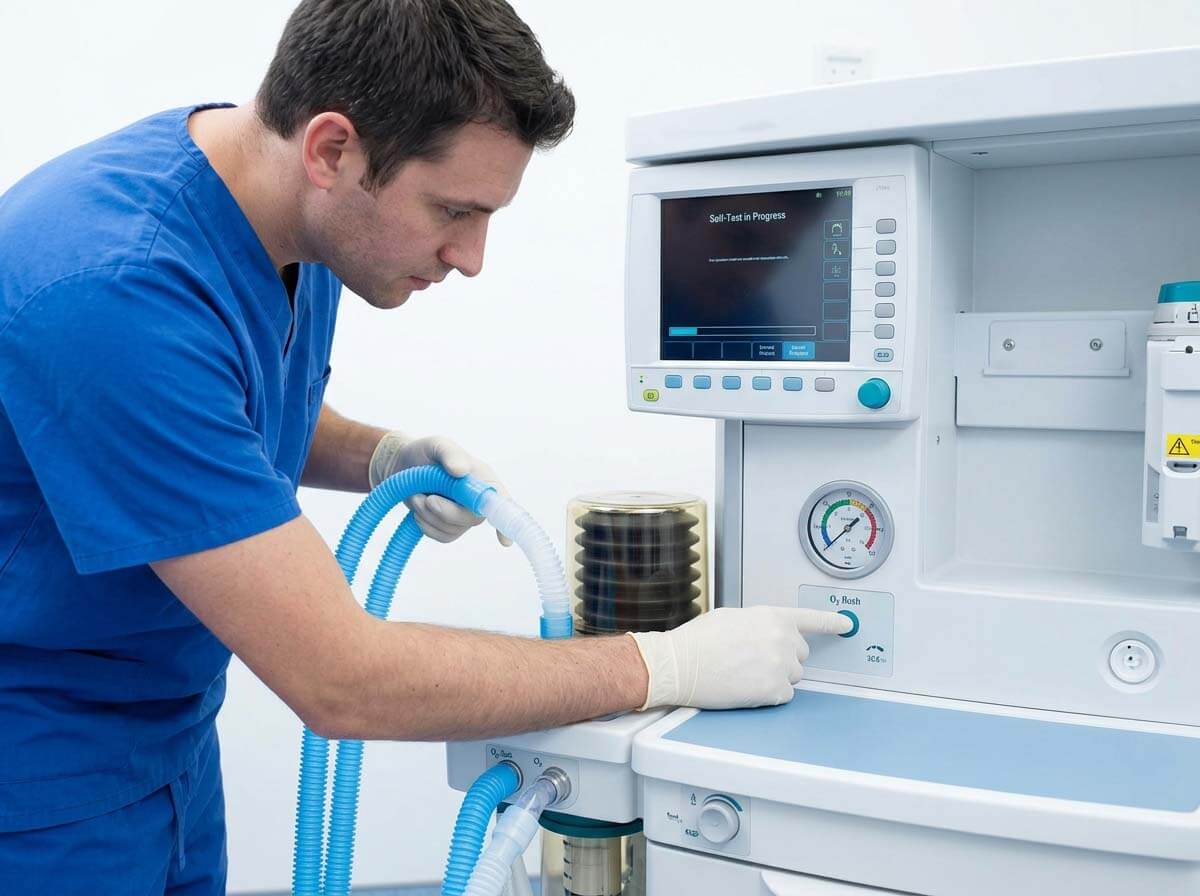
Close the APL (Adjustable Pressure-Limiting) valve.
-
Place a thumb or a plug over the Y-piece (the end of the breathing circuit that connects to the patient).
-
Use the oxygen flush valve to pressurize the system to about 30 cmH2O.
-
Watch the pressure gauge. If the pressure drops rapidly, there is a leak in the corrugated tubing, the CO2 absorber canister, or the vaporizer mounts that must be fixed before use.
Step 3: Vaporizer and Scavenger Checks
-
Vaporizers: Ensure the vaporizers are firmly locked onto the mounting manifold. Check the liquid level sight glass; refill the anaesthetic agents (like Sevoflurane or Isoflurane) if they are running low. Verify that the interlock safety system works (you should not be able to turn on two vaporizers at the same time).
-
Scavenging System: Confirm that the active gas scavenging system is connected and functioning. This prevents toxic waste gases from leaking into the operating room and harming the surgical staff.
2. Cleaning and Infection Control
Cross-contamination between patients is a severe risk in any surgical environment. Routine cleaning of the anaesthesia delivery system is a core component of daily maintenance.
-
Between Every Patient: The breathing circuit (tubing and masks) and the bacterial/viral filters must be discarded and replaced with new sterile or single-use ones. Wipe down the exterior surfaces, monitors, and knobs of the machine with medical-grade disinfectant wipes.
-
CO2 Absorber (Soda Lime) Replacement: The soda lime granules in the absorber canister remove exhaled carbon dioxide. These granules contain a chemical dye that changes color (usually from white to purple/violet) when exhausted. Procurement teams must ensure a steady supply of fresh soda lime, as exhausted granules can cause the patient to rebreathe toxic CO2.
-
Weekly/Monthly Cleaning: Autoclavable components, such as reusable ventilator bellows and expiratory valves, must be disassembled, sterilized, and thoroughly dried according to the manufacturer’s guidelines.
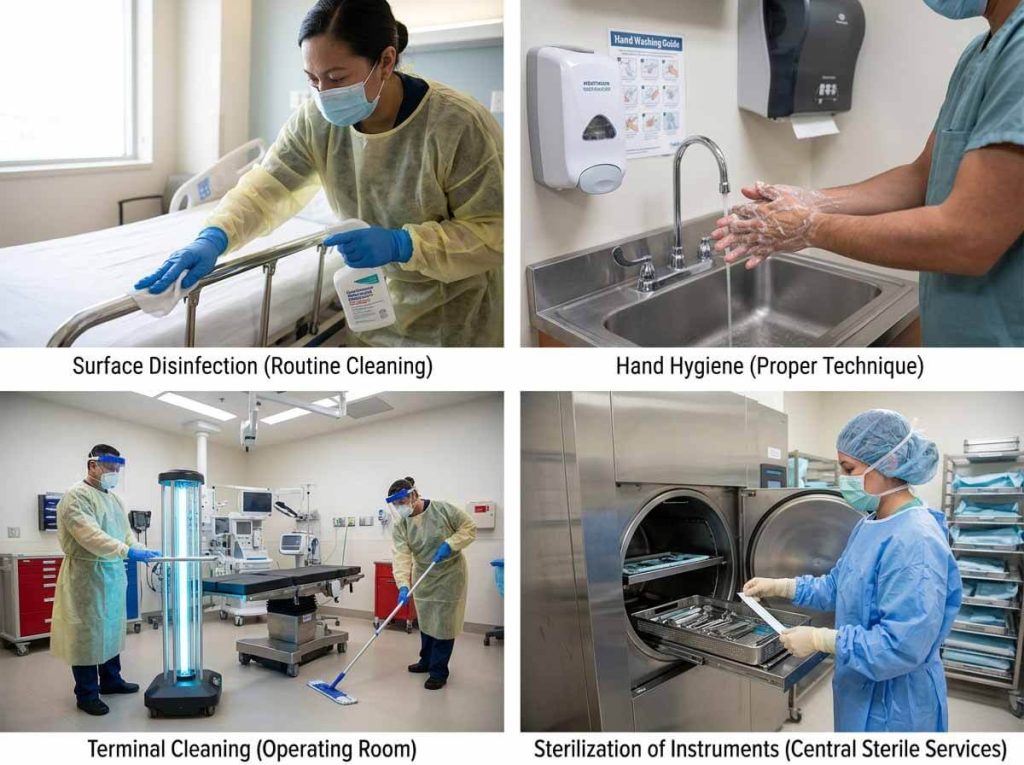
Visual guide covering medical cleaning protocols: surface wiping, proper handwashing technique, operating room UV terminal cleaning, and autoclave instrument sterilization.
3. Troubleshooting Common Anaesthesia Machine Alarms
Modern anaesthesia machines are equipped with highly sensitive alarm systems. When an alarm triggers, clinical staff must act quickly. Here is a troubleshooting guide for the most common ventilator alarms.
| Alarm Type | Potential Causes | Immediate Troubleshooting Actions |
| High Airway Pressure | Blocked breathing tube, patient coughing/biting the tube, asthma/bronchospasm. | Check the breathing circuit for kinks. Ensure the patient’s airway is clear. Switch to manual bag ventilation if necessary. |
| Low Airway Pressure / Disconnect | Disconnected Y-piece, severe leak in the breathing circuit, deflated endotracheal tube cuff. | Visually trace the tubing from the machine to the patient to find the disconnection. Perform a rapid leak test. |
| Low Minute Volume | Patient is not getting enough gas per minute. Caused by leaks, low fresh gas flow, or shallow breathing. | Increase the fresh gas flow. Check the ventilator settings (tidal volume and respiratory rate). Ensure the vaporizer and absorber are sealed tight. |
| Oxygen Supply Failure | Central hospital oxygen pressure has dropped below safe limits. | Instantly open the emergency backup oxygen E-cylinder on the back of the machine. Notify hospital maintenance. |
| High FiO2 / Low FiO2 | Oxygen sensor requires calibration, or the wrong gas mixture is being delivered. | Calibrate the O2 cell (sensor) to room air (21%). If the sensor is old (typically lasts 1-2 years), replace it immediately. |
4. Preventative Maintenance (PM) for Procurement & Facility Managers
For hospital administrators and buyers, the Total Cost of Ownership (TCO) of an anaesthesia machine heavily depends on long-term preventative maintenance. Relying solely on reactive repairs (fixing things only when they break) leads to expensive emergency service calls and dangerous equipment downtime.
Establish a Preventative Maintenance Contract
When sourcing medical equipment, always negotiate a comprehensive service contract with your medical device distributor or manufacturer. A standard PM schedule includes:
-
Bi-Annual (6-Month) Inspections: A certified biomedical engineer should inspect the internal pneumatics, test the alarm parameters, and verify the accuracy of the flowmeters.
-
Annual Vaporizer Calibration: Vaporizers are highly delicate mechanical devices. They must be professionally calibrated every year to ensure they are delivering the exact percentage of anaesthetic gas dialed in by the doctor.
-
Component Replacements: High-wear parts—such as oxygen sensors, flow sensors, internal batteries, and one-way valve discs—should be proactively replaced based on the manufacturer’s life-cycle timeline, even if they haven’t failed yet.
Frequently Asked Questions (FAQ)
How often should the anesthesia machine checkout procedure be performed?
A full, comprehensive machine checkout should be performed at the start of every day. Additionally, an abbreviated checkout (checking the breathing circuit, suction, and vaporizers) must be done before every single new surgical case throughout the day.
Why did the soda lime in the CO2 absorber change color?
The color change (usually to purple) is a chemical reaction indicating that the soda lime is depleted and can no longer absorb carbon dioxide. The canister must be emptied and refilled with fresh granules immediately.
What is the purpose of an oxygen sensor in an anaesthesia machine?
The oxygen sensor (O2 cell) continuously monitors the exact percentage of oxygen being delivered to the patient’s inspiratory limb. It triggers a critical alarm if the oxygen concentration drops too low, preventing accidental suffocation (hypoxia).
Can my internal hospital staff repair an anaesthesia machine?
Only certified biomedical equipment technicians (BMETs) who have been specifically trained and authorized by the equipment manufacturer should open the chassis or repair the internal pneumatics of an anaesthesia machine. Unauthorized repairs can void warranties and create severe liability risks.