Walk into almost any high-throughput clinical laboratory, and you will notice a striking paradox.
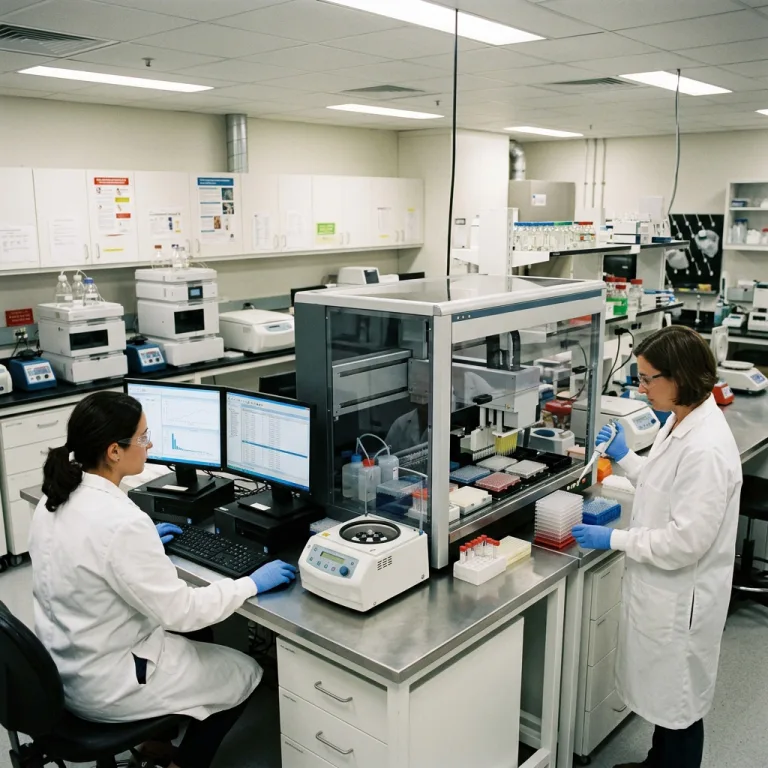
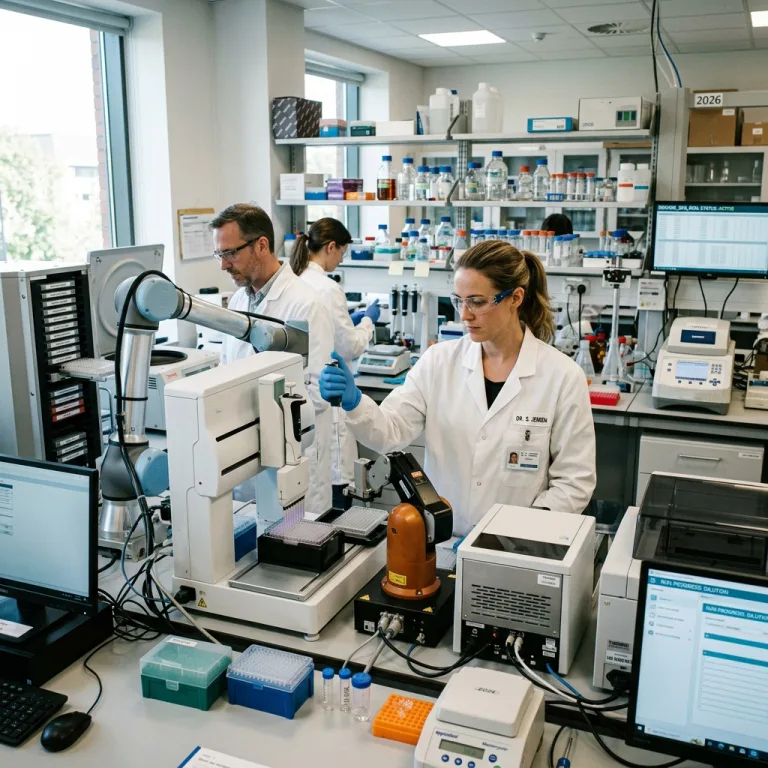
On one side of the room sits a row of state-of-the-art chemistry and molecular analyzers—multi-million-dollar instruments capable of processing hundreds of complex diagnostic assays per hour with breathtaking precision. On the other side sits a team of exhausted medical laboratory technicians hunched over workbenches, manually twisting off rubber tube caps, balancing centrifuge buckets by eye, and using hand-held pipettes to transfer micro-volumes of biohazardous fluids into secondary tubes for hours on end.
This is the dirty secret of modern clinical diagnostics: while analytical instruments have entered the space age, sample preparation in many facilities remains stuck in the 1990s.
Clinical research shows that up to 70% of all diagnostic errors occur in the pre-analytical phase—before the specimen ever reaches the analyzer. Furthermore, manual sample preparation accounts for over 60% of total laboratory labor time. Whether it is sample mislabeling, volume discrepancies, micro-clots, or cross-contamination from aerosolization, manual prep is the ultimate bottleneck choking clinical turnaround times and driving up laboratory operational costs.
Automated sample preparation systems solve this fundamental breakdown.
What is an automated sample preparation system?
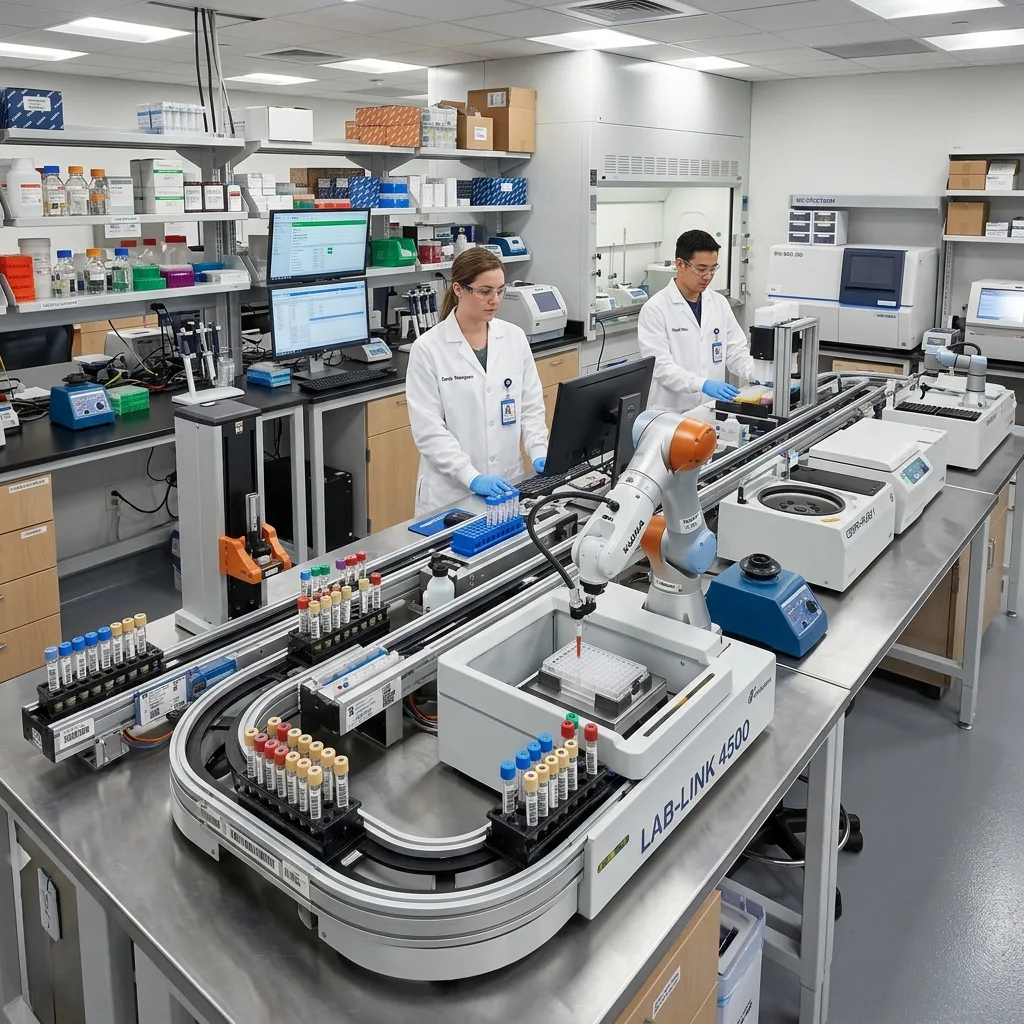
Direct Answer: An automated sample preparation system is a specialized robotic workstation that standardizes and executes the physical, chemical, and biological steps required to prepare raw patient specimens (such as whole blood, serum, urine, or saliva) for clinical diagnostic testing. These systems automate identification, decapping, centrifugation, liquid level sensing, aliquoting, nucleic acid extraction, and sorting without human intervention.
The Hidden Costs of Manual Pre-Analytics
To understand why laboratories are aggressively automating sample prep, procurement officers and lab managers must evaluate the direct and indirect liabilities of manual handling.
Raw Patient Specimen
   ├── Manual Check-in (Transcription & Label Errors)
   ├── Manual Centrifugation (Imbalance & Tube Breakage)
   ├── Manual Decapping (Aerosol Exposure & Repetitive Strain)
   ├── Manual Pipetting (Volume Variation & Carryover Contamination)
   └── Delayed Analysis (Degraded Sample Integrity)
1. The Human Fatigue Factor and Pipetting Inaccuracy
Even the most skilled medical laboratory scientist cannot maintain 100% volumetric accuracy when pipetting their 500th sample of the day. Hand fatigue, micro-tremors, and eye strain lead to meniscus misreads. A difference of just 2 to 3 microliters in an enzymatic assay or real-time PCR reaction can alter the threshold cycle ($C_t$ value), leading to false negatives, false positives, or expensive re-tests.
2. Ergonomic Strain and Workforce Attrition
Repetitive Strain Injury (RSI) and Carpal Tunnel Syndrome are occupational epidemics among laboratory professionals. Twisting tube caps and operating manual thumb pipettes for 40 hours a week causes chronic musculoskeletal damage. In an era where hospitals face severe clinical technician shortages, burning out qualified bench staff on manual pre-analytics accelerates turnover and drives up recruitment costs.
3. Biological Safety and Aerosol Generation
Manually popping open a vacuum-sealed blood collection tube creates micro-aerosols—tiny airborne droplets of potentially infectious blood, serum, or viral transport media. Technicians face continuous exposure risks to bloodborne pathogens and respiratory viruses. Automated sample prep platforms enclose this process behind sealed biosafety shields with integrated HEPA filtration and UV decontamination.
Core Operational Modules of Automated Sample Preparation Systems
Modern automated sample preparation systems are modular platforms designed to execute specific, high-precision tasks. Depending on whether your facility focuses on clinical chemistry, immunoassay, molecular diagnostics, or toxicology, these systems integrate several key functional stations:
1. Barcode Identification and Sample Tracking
The system reads 1D and 2D matrix barcodes on primary collection tubes at speeds of thousands of tubes per hour. The internal software cross-references the tube ID with the Laboratory Information System (LIS) to verify patient demographics, test orders, and required sample volumes before executing any physical step.
2. High-Speed Robotic Decapping and Recapping
Automated decappers grab tube caps—whether screw-top, rubber stopper, or push-cap—using pneumatic or motor-driven grippers, twist them off with controlled torque, and either discard them into biohazard disposal bins or recap them with clean archiving caps. This eliminates aerosol spray and completely protects technicians from repetitive strain injuries.
3. Integrated Centrifugation and Balancing
Centrifuging blood tubes requires perfect weight balance to prevent rotor vibration and catastrophic machine damage. Advanced sample prep workstations feature built-in automated centrifuges with robotic arm loading. Optical sensors or dynamic weighing systems automatically balance opposite buckets down to the milligram before spinning, ensuring perfect serum and plasma separation every cycle.
4. Precision Liquid Handling and Aliquoting
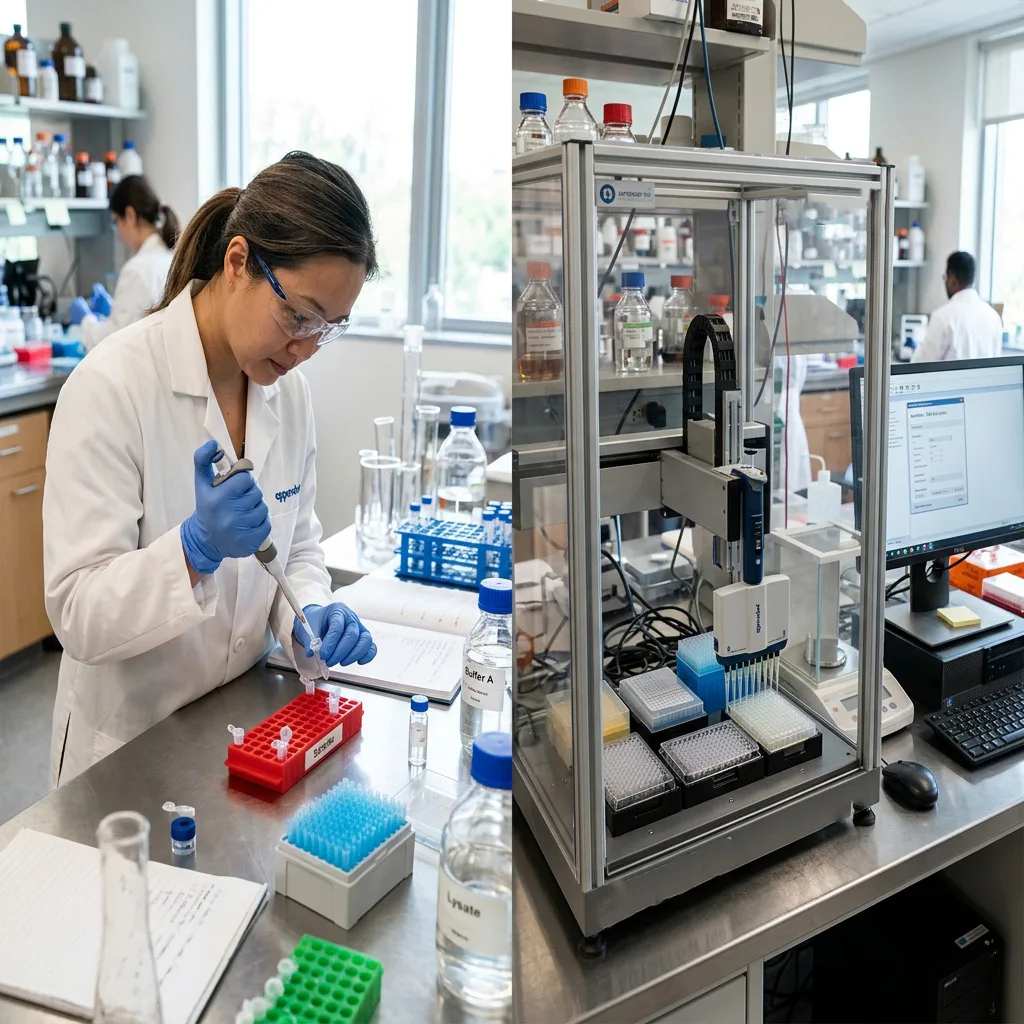
A single primary blood tube often needs to be split for multiple diagnostic departments (e.g., 500 µL for clinical chemistry, 250 µL for immunology, and 100 µL for send-out testing). Automated liquid handlers use disposable filtered tips or washable steel needles equipped with capacitive and pressure-based Liquid Level Detection (LLD). They detect the exact interface between serum and the red cell clot, aspirating the precise volume needed without disturbing the buffy coat. The system then dispenses the specimen into barcode-labeled secondary tubes (daughter tubes).
5. Automated Nucleic Acid Extraction
In molecular pathology and infectious disease testing, manual DNA and RNA isolation using spin columns is slow and labor-intensive. Automated sample preparation systems utilize magnetic bead technology. Robotic magnetic arms bind, wash, and elute purified genetic material across 96-well or 384-well plates, delivering PCR-ready nucleic acids with ultra-high yield and zero cross-contamination.
Performance Comparison: Manual vs. Automated Sample Preparation
| Evaluation Metric | Traditional Manual Sample Prep | Semi-Automated Workstation | Fully Automated Sample Prep System |
| Throughput (Tubes/Hour) | 40 – 60 tubes per tech | 150 – 300 tubes | 500 – 1,200+ tubes |
| Volumetric Precision (CV%) | High variability (>3.5%) | Low variability (<1.5%) | Ultra-low variability (<0.5%) |
| Risk of Sample Carryover | Moderate to High | Low (Disposable tips) | Zero (Disposable filtered barrier tips) |
| Technician Hands-On Time | 4 – 6 hours per shift | 1 – 2 hours per shift | Under 20 minutes (Load and walk away) |
| Traceability & Audit Trail | Manual logbooks, prone to error | Software logs batch runs | 100% digital chain-of-custody via LIS |
| Biohazard Exposure Risk | High (Open tubes, manual pour) | Low (Shielded work zone) | Negligible (Fully enclosed with HEPA/UV) |
Navigating Diverse Clinical Specimen Types
A major challenge for laboratory procurement teams is selecting a system capable of handling heterogeneous specimen types. Unlike clean water testing in industrial labs, human clinical specimens present dramatic physical and biological variations:
Specimen Diversity Challenges:
┌─────────────────────────────────────────────────────────────┐
│ Whole Blood & Serum   → Viscous, prone to clots and bubbles │
│ Urine & Body Fluids   → Cellular sediment, variable volume  │
│ Swabs & Sputum        → Highly mucoid, requires homogenization│
│ Biopsy & Tissue       → Requires enzymatic lysis & digestion│
└─────────────────────────────────────────────────────────────┘
-
Whole Blood, Serum, and Plasma: The primary challenge is clot detection. If a manual technician pipettes a serum sample with a hidden fibrin clot into an analyzer, it can clog internal fluidic lines, shutting down the instrument for hours. High-end automated liquid handling systems use pressure monitoring during aspiration; if a clot is detected, the system immediately flags the tube, purges the tip, and moves to an exception tray without interrupting overall workflow.
-
Viscous Body Fluids (Synovial, Sputum, Mucoid Swabs): Highly viscous specimens resist standard air-displacement pipetting. Specialized sample prep systems utilize positive-displacement pipetting or automated enzymatic pre-treatment to homogenize viscosity before liquid transfer.
-
Low-Volume Pediatric & Geriatric Samples: When only a few drops of blood are available from a heel prick, every microliter is precious. Automated systems equipped with optical laser height sensors can detect liquid levels in micro-collection tubes and draw precise 10 µL volumes without aspirating air.
Regulatory Compliance and the Digital Chain of Custody
In modern clinical diagnostics, data integrity is just as critical as diagnostic accuracy. Accreditation bodies like the College of American Pathologists (CAP), CLIA, and ISO 15189 enforce rigorous documentation standards for pre-analytical handling.
Manual sample preparation leaves dangerous blind spots. Did sample #4092 sit at room temperature for 45 minutes before centrifugation? Was it spun at 2,000 RCF or 3,000 RCF? Who signed off on the aliquoting volume?
Automated sample preparation systems create an immutable, automated audit trail:
-
Time-Stamped Milestones: The exact second a tube is decapped, spun, aliquoted, and sealed is recorded in the system database.
-
Positive Specimen Identification (PSID): The robotic camera confirms the primary tube barcode and writes the corresponding secondary tube barcode on the fly, eliminating human labeling errors.
-
Error Trapping: If a sample has insufficient volume (QNS – Quantity Not Sufficient) or severe hemolysis, the system logs the condition, notifies the LIS, and routes the tube to a quarantined hold area, preventing erroneous reporting.
Procurement Checklist: How to Choose the Right System
Before committing capital to an automated sample preparation workstation, hospital procurement committees should ask five practical engineering questions:
-
Is the liquid handling system based on washable needles or disposable tips?
-
Washable steel probes lower consumable costs but introduce carryover risk for sensitive molecular assays.
-
Disposable filtered tips eliminate cross-contamination entirely, which is essential for PCR and NGS testing, but add a recurring operational expense.
-
-
Does the system accommodate universal tube racks?
Can the robot accept different tube heights, diameters, and cap styles (BD Vacutainer, Greiner Bio-One, Sarstedt) simultaneously, or does it require you to standardize your entire hospital collection network to a single tube brand?
-
What is the footprint vs. daily capacity ratio?
Floor and bench space in hospital labs is exceptionally expensive. Look for compact, vertically integrated systems that place centrifuges or incubators underneath the main robotic deck rather than sprawling across multiple benches.
-
How adaptable is the software?
Can your lab technicians easily adjust pipetting heights, aspiration speeds, and deck layouts without paying the manufacturer expensive software engineering fees for minor protocol changes?
-
What are the preventive maintenance requirements?
Are motor drives, syringe pumps, and gripper belts easily serviceable by local biomedical engineers, or do they require proprietary factory technicians for routine calibration?
Frequently Asked Questions (FAQ)
What is the difference between an automated liquid handler and a complete sample preparation system?
An automated liquid handler is typically a benchtop pipetting robot designed specifically to move liquids between wells and plates. An automated sample preparation system is a broader diagnostic platform that combines liquid handling with physical pre-analytical operations like tube barcode reading, motorized decapping, centrifugation, sample balancing, and secondary tube labeling.
How do automated sample prep systems prevent cross-contamination?
Modern systems prevent contamination using three primary barriers: disposable aerosol-barrier pipette tips that prevent liquid and vapors from entering the robotic head, positive-pressure clean air filtration (HEPA) over the deck, and automated UV-C decontamination cycles run between testing batches.
Can an automated sample preparation system handle different tube sizes at the same time?
Yes, high-end modular systems feature adaptive robotic grippers and optical tube-sensing cameras. They can identify and process various tube diameters (e.g., 13 mm and 16 mm) and different tube heights in the same batch without requiring manual mechanical adjustments.
How quickly does an automated sample preparation system pay for itself?
Most clinical facilities achieve a full return on investment (ROI) within 18 to 24 months. The financial return comes from eliminating overtime labor costs, reducing reagent waste caused by pipetting errors, preventing expensive instrument clogs downstream, and avoiding diagnostic redraws.