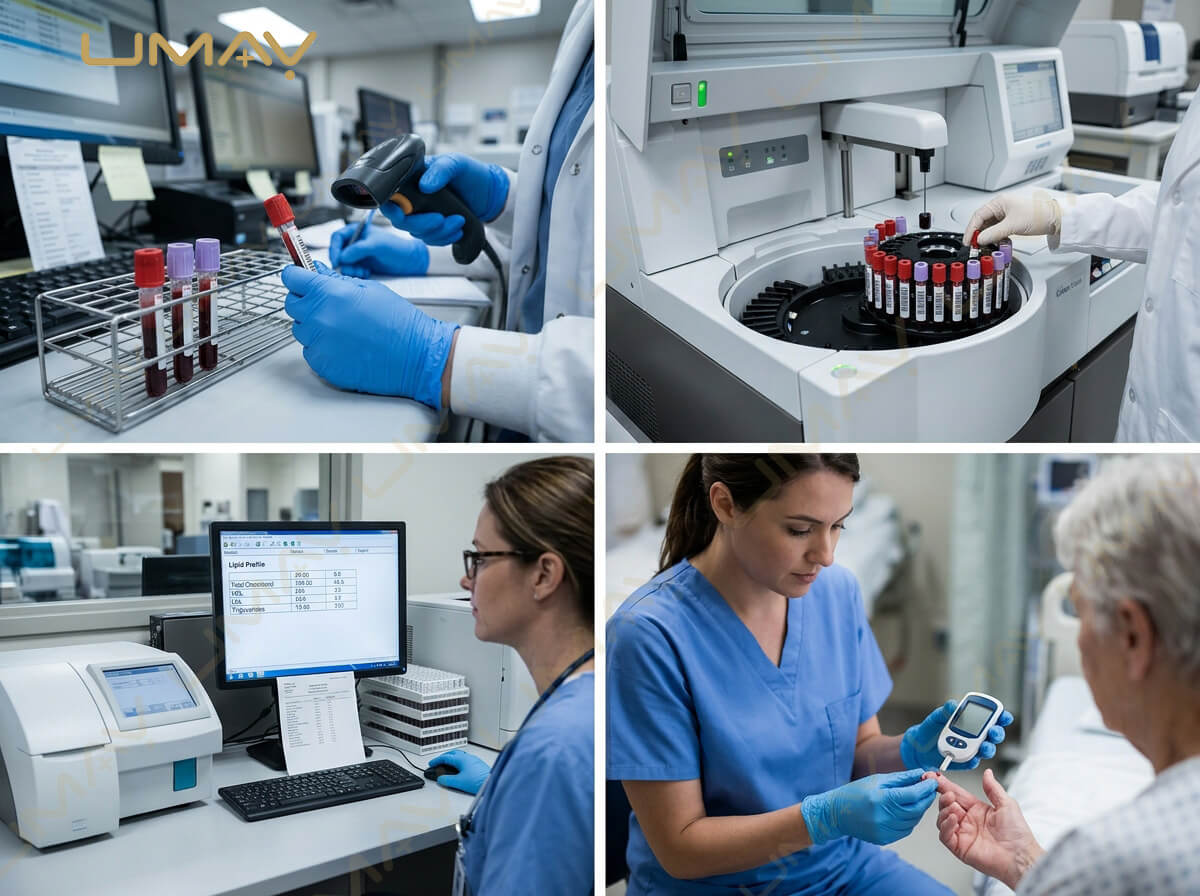
A biochemical analyzer is widely used in hospitals, diagnostic laboratories, clinics, medical centers, and other healthcare facilities to measure chemical substances in biological samples. These instruments are also commonly called biochemistry analyzers, clinical chemistry analyzers, clinical biochemistry analyzers, or chemistry analyzers.
One of the most important questions for a laboratory buyer is:
What tests can a biochemical analyzer perform?
The answer depends on the analyzer model, analytical method, reagent system, and validated test menu. Some systems are designed for basic routine chemistry testing, while others support a wider range of biochemical parameters and higher testing volumes.
Common biochemical tests include glucose, urea, creatinine, uric acid, cholesterol, triglycerides, bilirubin, albumin, total protein, ALT, AST, ALP, calcium, phosphorus, and amylase.
This guide explains the major biochemical analyzer tests and parameters, what they measure, how they are commonly grouped, and what buyers should consider when selecting an analyzer and test menu.
Important: The information below explains laboratory testing categories and analyzer applications. It is not a guide for diagnosing or treating a medical condition. Actual test interpretation should be performed by qualified healthcare professionals.
What Does a Biochemical Analyzer Test?
A biochemical analyzer measures specific analytes in biological samples.
An analyte is a substance or measurable component that a laboratory wants to determine.
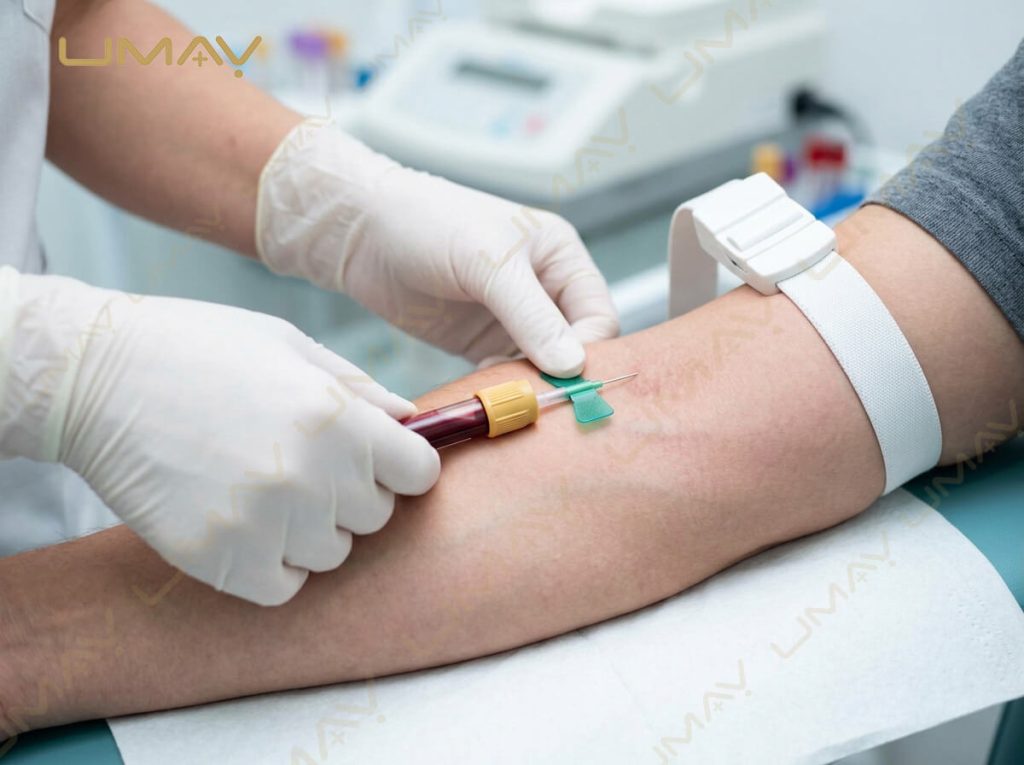
Depending on the analyzer and application, samples can include:
- Serum
- Plasma
- Urine
- Other validated biological specimens
The analyzer uses a specific reagent and analytical method to produce a measurable reaction. The system then measures the reaction and reports a result.
Common biochemical analyzer parameters can be divided into several groups:
- Glucose and carbohydrate testing
- Kidney-related tests
- Liver-related tests
- Lipid profile testing
- Protein testing
- Enzyme testing
- Mineral testing
- Electrolyte testing
- Other clinical chemistry tests
Not every analyzer performs every test.
For this reason, laboratories should always compare the actual test menu with their required applications before purchasing.
Common Biochemical Analyzer Tests
The following are some of the most common tests associated with clinical chemistry analyzers.
| Test Group | Common Parameters |
|---|---|
| Glucose | Glucose |
| Kidney-related | Urea, Creatinine, Uric Acid |
| Liver-related | ALT, AST, ALP, Bilirubin, Albumin, Total Protein |
| Lipid | Cholesterol, Triglycerides, HDL, LDL |
| Protein | Total Protein, Albumin |
| Enzyme | ALT, AST, ALP, Amylase |
| Mineral | Calcium, Phosphorus, Magnesium |
| Electrolytes | Sodium, Potassium, Chloride, depending on system |
| Other Chemistry | Depends on analyzer and reagent menu |
This classification helps buyers understand how a clinical chemistry analyzer test menu is organized.
1. Glucose Testing
Glucose is one of the most common parameters measured in clinical chemistry.
A biochemical analyzer can be configured for glucose testing using an appropriate reagent and analytical method.
Common search terms include:
- glucose analyzer
- glucose test analyzer
- biochemical glucose analyzer
- blood glucose analyzer
- glucose chemistry analyzer
- clinical glucose analyzer
- glucose laboratory test
- glucose biochemical test
- glucose testing equipment
Why Is Glucose Testing Included in Biochemistry?
Glucose is an important biochemical parameter used in routine laboratory testing.
For laboratories, glucose testing may be part of:
- Routine chemistry panels
- Health screening
- Hospital laboratory testing
- Diagnostic laboratory testing
- General biochemical testing
The exact application depends on the laboratory and clinical requirements.
2. Urea Testing
Urea is another common clinical chemistry parameter.
Urea testing can be performed using a biochemical analyzer with the appropriate reagent application.
Related keywords include:
- urea analyzer
- urea test analyzer
- biochemical urea test
- urea chemistry analyzer
- clinical chemistry urea test
- blood urea analyzer
- urea laboratory testing
Urea is commonly included in laboratory testing related to kidney and metabolic assessment.
When purchasing a biochemical analyzer, buyers should check whether the required urea reagent application is available.
3. Creatinine Testing
Creatinine is a widely used biochemical parameter.
A clinical chemistry analyzer can perform creatinine testing when the appropriate assay is available.
Common keywords include:
- creatinine analyzer
- creatinine test analyzer
- biochemical creatinine test
- creatinine chemistry analyzer
- clinical chemistry creatinine
- creatinine laboratory test
- kidney function analyzer
Creatinine is often included in laboratory testing panels related to kidney function assessment.
For laboratories purchasing a chemistry analyzer, creatinine is therefore a common parameter to include in the required test menu.
4. Uric Acid Testing
Uric acid is another common biochemical parameter.
Related searches include:
- uric acid analyzer
- uric acid test analyzer
- uric acid chemistry analyzer
- biochemical uric acid test
- clinical chemistry uric acid
- uric acid laboratory test
Uric acid testing can be included in routine clinical chemistry workflows.
5. Liver Function-Related Biochemical Tests
One of the largest groups of biochemical analyzer applications is liver-related testing.
Common parameters include:
- ALT
- AST
- ALP
- Total bilirubin
- Direct bilirubin
- Albumin
- Total protein
These tests are frequently grouped together when discussing liver function tests, or LFTs.
Relevant search terms include:
- liver function test analyzer
- LFT analyzer
- liver chemistry analyzer
- liver biochemical analyzer
- clinical chemistry liver tests
- biochemical liver test
- liver function testing equipment
The exact combination of tests depends on the laboratory’s testing protocols.
6. ALT Testing
ALT, or alanine aminotransferase, is an enzyme commonly included in clinical chemistry test menus.
A biochemical analyzer can measure ALT using a validated reagent application and appropriate analytical method.
Related keywords include:
- ALT analyzer
- ALT test analyzer
- ALT chemistry analyzer
- ALT biochemical test
- alanine aminotransferase analyzer
- ALT laboratory test
ALT is commonly included in liver-related biochemical testing.
7. AST Testing
AST, or aspartate aminotransferase, is another enzyme commonly measured by clinical chemistry analyzers.
Search terms include:
- AST analyzer
- AST test analyzer
- AST chemistry analyzer
- AST biochemical test
- aspartate aminotransferase analyzer
- AST laboratory test
AST and ALT are often included together in clinical chemistry test menus.
8. ALP Testing
ALP, or alkaline phosphatase, is another commonly available clinical chemistry parameter.
Relevant searches include:
- ALP analyzer
- alkaline phosphatase analyzer
- ALP chemistry analyzer
- ALP biochemical test
- alkaline phosphatase test analyzer
Laboratories may include ALP in their routine chemistry test menu depending on their application requirements.
9. Bilirubin Testing
Biochemical analyzers can also perform bilirubin testing.
Common parameters include:
- Total bilirubin
- Direct bilirubin
Search terms include:
- bilirubin analyzer
- bilirubin test analyzer
- total bilirubin analyzer
- direct bilirubin analyzer
- bilirubin chemistry analyzer
- biochemical bilirubin test
Bilirubin testing is commonly included in liver-related and general clinical chemistry testing.
10. Albumin Testing
Albumin is a common protein parameter in clinical chemistry.
Relevant keywords include:
- albumin analyzer
- albumin test analyzer
- albumin chemistry analyzer
- biochemical albumin test
- albumin laboratory test
Albumin may be included as part of a broader clinical chemistry or liver-related test panel.
11. Total Protein Testing
Total protein is another common biochemical parameter.
Related search terms include:
- total protein analyzer
- protein analyzer
- total protein chemistry analyzer
- protein test analyzer
- biochemical protein test
- clinical chemistry protein test
Depending on the analyzer and reagent system, total protein testing can be performed using a suitable photometric or colorimetric method.
12. Cholesterol Testing
Cholesterol is an important component of routine lipid testing.
A biochemical analyzer can measure total cholesterol using a suitable reagent system.
Common keywords include:
- cholesterol analyzer
- cholesterol test analyzer
- cholesterol chemistry analyzer
- biochemical cholesterol test
- total cholesterol analyzer
- clinical chemistry cholesterol
Cholesterol testing is often combined with other lipid parameters.
13. Triglyceride Testing
Triglycerides are another common lipid parameter.
Search terms include:
- triglyceride analyzer
- triglyceride test analyzer
- triglyceride chemistry analyzer
- biochemical triglyceride test
- TG analyzer
- triglyceride laboratory test
A laboratory may include triglyceride testing as part of a routine lipid profile.
14. HDL Cholesterol Testing
HDL cholesterol can also be included in a biochemical analyzer’s lipid testing menu.
Related keywords include:
- HDL analyzer
- HDL cholesterol analyzer
- HDL test analyzer
- HDL chemistry analyzer
- HDL laboratory test
- biochemical HDL test
The available assay and analytical method depend on the analyzer and reagent manufacturer.
15. LDL Cholesterol Testing
LDL cholesterol is another common lipid-related parameter.
Search terms include:
- LDL analyzer
- LDL cholesterol analyzer
- LDL test analyzer
- LDL chemistry analyzer
- LDL laboratory test
- biochemical LDL test
Depending on the testing system, LDL may be measured directly or calculated according to the laboratory’s selected procedure.
The exact method should be confirmed with the reagent and analyzer manufacturer.
What Is a Lipid Profile Analyzer?
A lipid profile analyzer is a clinical chemistry analyzer or testing system used to measure several lipid-related parameters.
A typical lipid profile may include:
- Total cholesterol
- Triglycerides
- HDL cholesterol
- LDL cholesterol
Common searches include:
- lipid profile analyzer
- lipid analyzer
- lipid chemistry analyzer
- cholesterol and triglyceride analyzer
- clinical lipid analyzer
- lipid testing equipment
- biochemical lipid analyzer
When selecting an analyzer for lipid testing, laboratories should check which lipid assays are available and whether the required reagents are supported.
16. Amylase Testing
Amylase is an enzyme that can be included in some clinical chemistry test menus.
Related keywords include:
- amylase analyzer
- amylase test analyzer
- amylase chemistry analyzer
- biochemical amylase test
- amylase laboratory test
Not every biochemical analyzer supports every enzyme assay, so buyers should verify the test menu before purchasing.
17. Calcium Testing
Calcium is a common mineral-related laboratory parameter.
Relevant search terms include:
- calcium analyzer
- calcium test analyzer
- calcium chemistry analyzer
- biochemical calcium test
- calcium laboratory testing
- clinical chemistry calcium
Depending on the system, calcium testing can be included in routine clinical chemistry.
18. Phosphorus Testing
Phosphorus is another commonly available biochemical parameter.
Search terms include:
- phosphorus analyzer
- phosphorus test analyzer
- phosphorus chemistry analyzer
- biochemical phosphorus test
- clinical chemistry phosphorus
The test may be included in chemistry panels depending on the laboratory’s requirements.
19. Magnesium Testing
Some biochemical analyzers can also support magnesium testing.
Related searches include:
- magnesium analyzer
- magnesium test analyzer
- magnesium chemistry analyzer
- biochemical magnesium test
- magnesium laboratory test
Availability depends on the analyzer and reagent system.
20. Electrolyte Testing
Electrolyte testing is another important area of laboratory diagnostics, although electrolyte measurement may use technologies that differ from conventional photometric biochemical testing.
Common electrolytes include:
- Sodium
- Potassium
- Chloride
Relevant searches include:
- electrolyte analyzer
- electrolyte chemistry analyzer
- sodium analyzer
- potassium analyzer
- chloride analyzer
- electrolyte testing equipment
Some clinical chemistry systems include integrated or separate ISE (ion-selective electrode) modules.
Therefore, buyers should check whether electrolyte testing is integrated into the analyzer or requires a separate module or instrument.
What Is an ISE Module?
ISE stands for Ion Selective Electrode.
ISE technology is commonly used for measuring ions such as:
- Sodium
- Potassium
- Chloride
An analyzer may use an integrated ISE module or a separate electrolyte analyzer.
For laboratories that require both routine chemistry and electrolyte testing, an integrated solution may simplify workflow.
When comparing analyzers, buyers can ask:
- Does the analyzer include ISE?
- Which electrolytes are supported?
- How many ISE channels are available?
- How often do electrodes need maintenance?
- What consumables are required?
Biochemical Analyzer Test Menu
The test menu is one of the most important specifications for a laboratory buyer.
A test menu is essentially a list of assays that the analyzer and compatible reagent system can perform.
A laboratory should not select an analyzer simply because it has a large number of possible tests.
Instead, create a list of required parameters.
For example:
Basic Chemistry Test Menu
- Glucose
- Urea
- Creatinine
- Uric acid
- Total protein
- Albumin
- Total bilirubin
- Direct bilirubin
- ALT
- AST
- ALP
- Cholesterol
- Triglycerides
Expanded Chemistry Test Menu
The laboratory may additionally require:
- HDL
- LDL
- Calcium
- Phosphorus
- Magnesium
- Amylase
- Other validated assays
The exact requirements depend on the laboratory’s services.
How Many Tests Can a Biochemical Analyzer Perform?
There is no universal number.
Some analyzers support a relatively small routine chemistry menu, while advanced systems may support a much larger range of assays.
The number of available tests depends on:
- Analyzer model
- Reagent system
- Analytical methods
- Wavelengths
- Calibration
- Sample handling
- Software
- Validated applications
- Local laboratory requirements
Therefore, the term “100 tests biochemical analyzer” or “200 tests chemistry analyzer” should be understood carefully.
The number may refer to the number of available assays rather than the number of tests the instrument can physically process at one time.
What Is the Difference Between a Test and a Parameter?
These terms are sometimes used interchangeably, but they can have slightly different meanings.
A test refers to the laboratory procedure performed on a sample.
A parameter usually refers to the specific analyte or measurement being determined.
For example:
Glucose test → Glucose parameter
Creatinine test → Creatinine parameter
Cholesterol test → Total cholesterol parameter
In product specifications, manufacturers may use “test,” “assay,” “parameter,” or “application.”
Buyers should look at the actual test menu rather than relying only on terminology.
Biochemical Analyzer Methods
Different biochemical tests can use different analytical methods.
Common methods include:
- End-point method
- Kinetic method
- Fixed-time method
- Colorimetric method
- Turbidimetric method
- Immunoturbidimetric method
- Photometric method
- Spectrophotometric method
The correct method depends on the assay.
What Is a Photometric Biochemical Analyzer?
A photometric biochemical analyzer measures changes in light associated with a chemical reaction.
In many routine chemistry assays, the reaction produces a color change or another measurable optical change.
The analyzer measures absorbance at a specific wavelength and processes the result.
Common search terms include:
- photometric biochemical analyzer
- photometric chemistry analyzer
- spectrophotometric analyzer
- clinical chemistry photometer
- laboratory photometric analyzer
Photometry is one of the fundamental technologies used in many clinical chemistry systems.
End-Point Testing
In an end-point method, the analyzer measures the reaction after it reaches a defined endpoint.
The measured signal is then used to calculate the test result.
End-point assays are common in clinical chemistry.
Kinetic Testing
A kinetic method measures the change in reaction signal over time.
Instead of simply measuring one final value, the analyzer monitors the rate of change.
Kinetic methods are commonly used for enzyme assays and other applications.
Relevant keywords include:
- kinetic biochemical analyzer
- kinetic chemistry test
- kinetic assay analyzer
- enzyme kinetic analyzer
Colorimetric Testing
A colorimetric assay uses a color change produced by a chemical reaction.
The biochemical analyzer measures the intensity of the color using an optical system.
Common searches include:
- colorimetric biochemical analyzer
- colorimetric chemistry analyzer
- colorimetric test analyzer
- clinical chemistry colorimetric testing
Turbidimetric Testing
Turbidimetry measures changes in the cloudiness or turbidity of a sample.
Some biochemical and protein-related assays can use turbidimetric methods.
Relevant terms include:
- turbidimetric analyzer
- turbidimetric chemistry analyzer
- immunoturbidimetric analyzer
- biochemical turbidimetry
Serum vs Plasma for Biochemical Testing
Serum and plasma are common sample types used in clinical chemistry.
The appropriate sample type depends on the specific test and analyzer application.
Serum
Serum is obtained after blood has been allowed to clot and the liquid portion is separated.
Plasma
Plasma is obtained from anticoagulated blood after separation of the cellular components.
Laboratories should always follow the sample requirements specified for the analyzer and reagent application.
Relevant SEO searches include:
- serum biochemical analyzer
- plasma chemistry analyzer
- serum chemistry test
- plasma biochemical test
- biochemical analyzer sample type
Sample Volume in Biochemical Testing
Sample volume is an important specification when choosing a biochemical analyzer.
Different analyzers require different amounts of sample.
Buyers should check:
- Minimum sample volume
- Reaction volume
- Dead volume
- Sample probe volume
- Dilution requirements
A lower sample volume can be useful in applications where sample availability is limited, but the analyzer should still meet the laboratory’s performance requirements.
Related keywords include:
- low sample volume biochemical analyzer
- low volume chemistry analyzer
- biochemical analyzer sample volume
- minimum sample volume analyzer
- micro sample chemistry analyzer
Reagents and Biochemical Analyzer Tests
The availability of compatible reagents is essential.
A biochemical analyzer may support many theoretical assays, but the laboratory also needs suitable reagents for the required tests.
Important reagent factors include:
- Reagent compatibility
- Reagent stability
- Storage temperature
- Reagent volume
- Reagent consumption
- Calibration requirements
- Lot management
- Supply availability
Before purchasing, buyers should request a complete reagent list and test menu.
Calibration and Biochemical Testing
Calibration is essential for establishing the relationship between the analyzer’s measurement signal and the expected analytical result.
Calibration requirements may vary depending on:
- Test
- Reagent
- Analyzer
- Calibrator
- Manufacturer instructions
Common search terms include:
- biochemical analyzer calibration
- chemistry analyzer calibration
- clinical chemistry calibration
- biochemical test calibration
- analyzer calibration system
Buyers should ask suppliers how calibration is performed and how often it is required.
Quality Control for Biochemical Analyzer Tests
Quality control, often abbreviated as QC, is an important part of laboratory testing.
QC procedures help laboratories monitor analytical performance over time.
Common terms include:
- biochemical analyzer quality control
- chemistry analyzer QC
- clinical chemistry QC
- laboratory quality control
- biochemical test quality control
An analyzer may include software for storing and reviewing QC results.
Laboratories should follow their established quality management procedures and applicable laboratory requirements.
Biochemical Analyzer Tests for Hospitals
Hospital laboratories often require a broad range of routine chemistry tests.
A hospital chemistry test menu may include:
- Glucose
- Urea
- Creatinine
- Uric acid
- ALT
- AST
- ALP
- Bilirubin
- Total protein
- Albumin
- Cholesterol
- Triglycerides
- Calcium
- Phosphorus
- Other assays
Hospitals may also require:
- High throughput
- STAT testing
- Barcode identification
- LIS connectivity
- Automatic rerun
- Automatic dilution
- Quality control management
The actual configuration depends on the hospital’s laboratory workflow.
Biochemical Analyzer Tests for Small Laboratories
Small laboratories may need a more focused test menu.
Common requirements can include:
- Glucose
- Urea
- Creatinine
- Uric acid
- ALT
- AST
- Bilirubin
- Total protein
- Albumin
- Cholesterol
- Triglycerides
A smaller test menu can simplify reagent management and equipment selection.
For small laboratories, buyers should prioritize the tests they actually perform rather than purchasing an analyzer based only on the maximum number of available parameters.
Biochemical Analyzer for Diagnostic Centers
Diagnostic centers may require a broader test menu and higher throughput.
Important factors include:
- Number of tests
- Daily sample volume
- Sample types
- Reagent availability
- Cost per test
- Automation
- Data connectivity
- Maintenance
- Technical support
A diagnostic laboratory may also need flexible test scheduling and STAT capability.
How to Select a Biochemical Analyzer Based on Tests
A simple process can make equipment selection easier.
Step 1: Make a Test List
Write down every parameter your laboratory currently performs.
Step 2: Identify Future Requirements
Consider whether you plan to add new tests.
Step 3: Compare Analyzer Test Menus
Check the manufacturer’s actual application list.
Step 4: Check Reagent Availability
Make sure the required reagents are available in your market.
Step 5: Check Sample Requirements
Confirm whether your available samples are compatible.
Step 6: Check Throughput
Make sure the analyzer can handle your expected workload.
Step 7: Review Operating Cost
Compare reagent consumption and other consumables.
Step 8: Confirm Technical Support
Ask about installation, training, maintenance, and spare parts.
How to Compare Biochemical Analyzer Test Menus
Suppose Laboratory A needs:
- Glucose
- Urea
- Creatinine
- ALT
- AST
- Bilirubin
- Cholesterol
- Triglycerides
Laboratory B needs all of the above plus:
- HDL
- LDL
- Calcium
- Phosphorus
- Magnesium
- Amylase
The two laboratories do not necessarily need the same analyzer.
Laboratory B may require a broader reagent menu, while Laboratory A may prefer a simpler and more economical configuration.
This is why test menu matching is more useful than simply comparing the total number of available parameters.
Common Questions About Biochemical Analyzer Tests
What are the most common biochemical analyzer tests?
Common tests include glucose, urea, creatinine, uric acid, cholesterol, triglycerides, ALT, AST, ALP, bilirubin, albumin, total protein, calcium, and phosphorus.
Can a biochemical analyzer test glucose?
Yes, many clinical chemistry analyzers support glucose testing using a compatible reagent and validated analytical method.
Can a biochemical analyzer test cholesterol?
Yes, total cholesterol is commonly included in clinical chemistry test menus.
Can a biochemical analyzer test creatinine?
Yes, creatinine is a common clinical chemistry parameter.
Can a biochemical analyzer perform liver function tests?
Many clinical chemistry analyzers support parameters commonly included in liver-related testing, such as ALT, AST, ALP, bilirubin, albumin, and total protein.
Can a biochemical analyzer perform kidney function tests?
Many systems support parameters such as creatinine, urea, and uric acid.
Can a biochemical analyzer perform lipid profile testing?
Many analyzers support total cholesterol and triglycerides, and some also support HDL and LDL assays.
Can a biochemical analyzer test electrolytes?
Some clinical chemistry analyzers include integrated or optional ISE modules for electrolytes such as sodium, potassium, and chloride.
Does every biochemical analyzer perform the same tests?
No. The available test menu varies by analyzer model, reagent system, analytical method, and manufacturer.
How do I know which test menu I need?
Start with your laboratory’s current test list, daily workload, sample types, and future testing plans. Then compare these requirements with the manufacturer’s validated applications.