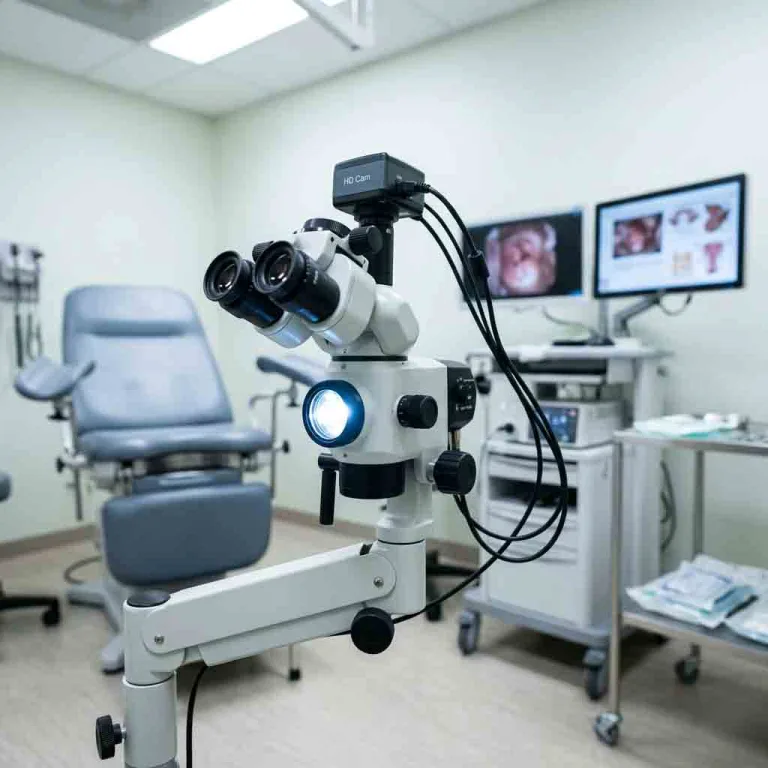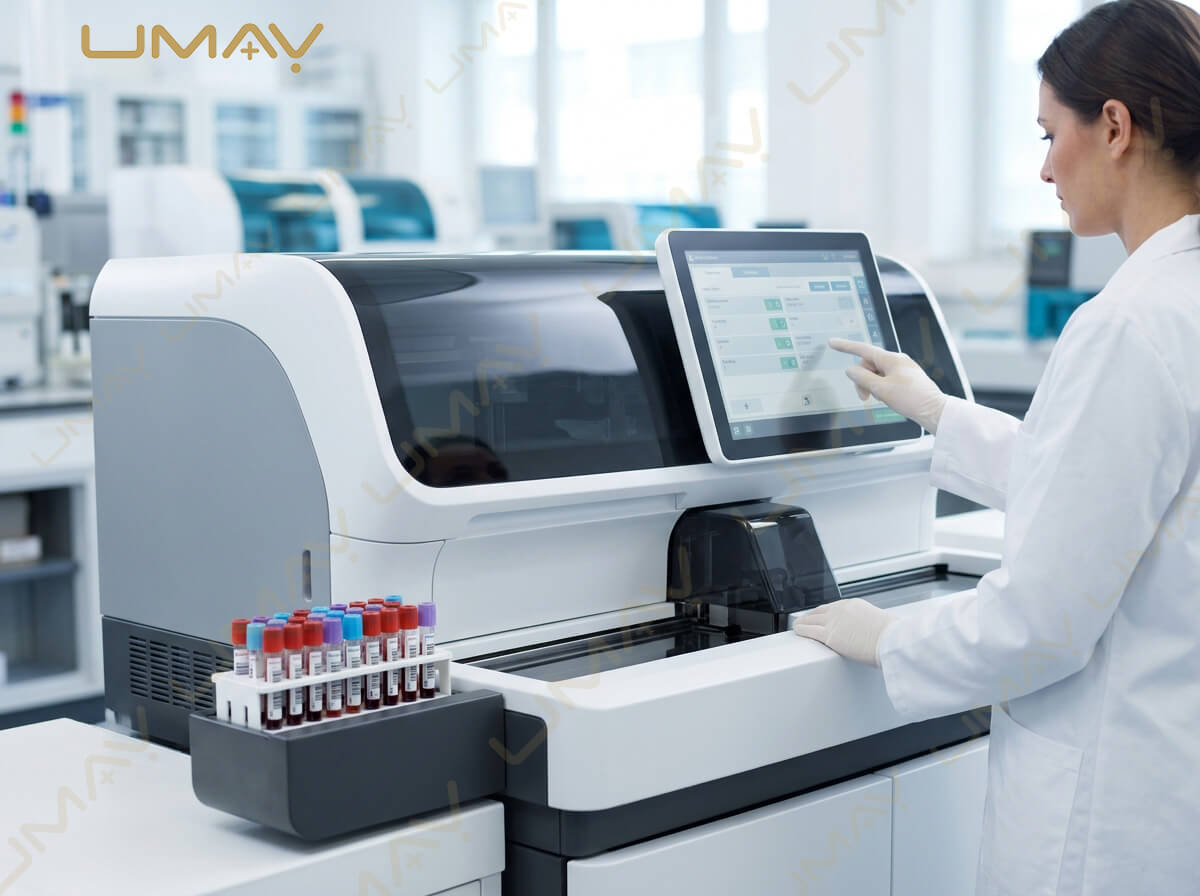
A biochemical analyzer is an important piece of laboratory equipment used to measure different chemical substances in biological samples such as blood, serum, plasma, and urine. It is commonly used in hospitals, diagnostic laboratories, clinics, medical centers, and other healthcare facilities.
You may also see the terms biochemistry analyzer, clinical chemistry analyzer, clinical biochemistry analyzer, or chemistry analyzer. Although the terminology can vary between manufacturers and regions, these systems generally perform laboratory tests that help measure substances such as glucose, cholesterol, urea, creatinine, bilirubin, proteins, and enzymes.
For laboratories, a biochemical analyzer can help standardize testing, improve workflow, reduce repetitive manual operations, and process multiple samples efficiently.
This guide explains what a biochemical analyzer is, how it works, the main types, common tests, applications, important specifications, and what laboratories should consider before purchasing one.
What Is a Biochemical Analyzer?
A biochemical analyzer is a laboratory instrument designed to analyze chemical components in biological samples.
In clinical laboratories, the analyzer can be used to perform clinical chemistry tests that provide information about metabolic processes and organ function.
Depending on the analyzer model, it may test:
- Glucose
- Urea
- Creatinine
- Uric acid
- Total cholesterol
- Triglycerides
- HDL cholesterol
- LDL cholesterol
- Total protein
- Albumin
- Total bilirubin
- Direct bilirubin
- ALT
- AST
- ALP
- Amylase
- Calcium
- Phosphorus
- Other biochemical parameters
The exact test menu depends on the analyzer, reagents, methodology, configuration, and laboratory requirements.
In simple terms, a biochemical analyzer takes a prepared sample, combines it with appropriate reagents, measures a reaction, and converts the measurement into a test result.
What Is a Clinical Chemistry Analyzer?
A clinical chemistry analyzer is another common term for equipment used in clinical biochemical testing.
The terms clinical chemistry analyzer, clinical biochemistry analyzer, and biochemistry analyzer are often used when discussing laboratory systems designed for routine biochemical testing.
Clinical chemistry focuses on measuring chemical substances in biological samples. These measurements can support laboratory professionals and healthcare providers when evaluating metabolic conditions and organ-related indicators.
For example:
| Test | Commonly Associated Measurement |
|---|---|
| Glucose | Blood sugar |
| Creatinine | Kidney-related assessment |
| Urea | Kidney and metabolic assessment |
| ALT | Liver-related assessment |
| AST | Liver and tissue-related assessment |
| Bilirubin | Liver and blood-related assessment |
| Cholesterol | Lipid profile |
| Triglycerides | Lipid profile |
| Albumin | Protein status |
| Total Protein | Protein measurement |
| Uric Acid | Purine metabolism |
| Calcium | Mineral metabolism |
A biochemical analyzer does not diagnose a disease by itself. Instead, it generates laboratory measurements that can be used as part of a broader clinical evaluation.
How Does a Biochemical Analyzer Work?
The biochemical analyzer working principle depends on its testing methodology, but the general workflow is relatively straightforward.
Step 1: Sample Preparation
A biological sample is collected and prepared according to the requirements of the test.
Common sample types include:
- Serum
- Plasma
- Whole blood, depending on the application
- Urine
- Other validated biological samples
Sample preparation may include centrifugation, separation, dilution, or other procedures depending on the laboratory workflow.
Step 2: Sample Identification
The analyzer or laboratory system identifies the sample using a sample position, barcode, laboratory information system, or another identification method.
Correct sample identification is essential for laboratory workflow and result management.
Step 3: Reagent Addition
The analyzer adds the appropriate reagent to the sample.
Different biochemical tests require different reagents. The reagent system can therefore be an important consideration when selecting a clinical chemistry analyzer.
Step 4: Reaction
The sample and reagent react under controlled conditions.
The reaction may involve changes in:
- Color
- Absorbance
- Turbidity
- Light intensity
- Other measurable physical or chemical properties
Step 5: Measurement
Many biochemical analyzers use photometric or spectrophotometric methods to measure the reaction.
The analyzer detects the change and converts the optical signal into a numerical result.
Step 6: Calculation
The analyzer processes the measurement according to the selected testing method and calibration information.
The system then calculates the final result.
Step 7: Result Reporting
Results can be displayed on the analyzer, printed, stored electronically, or transferred to a laboratory information system.
This workflow allows routine biochemical testing to become more standardized and efficient.
What Is the Working Principle of a Biochemistry Analyzer?
Many biochemical analyzers use photometry or spectrophotometry.
In a typical photometric test, a chemical reaction produces a measurable change in absorbance. The analyzer detects this change using an optical system.
The basic relationship between light absorption and concentration is commonly associated with the Beer-Lambert law.
In practical laboratory operation, the analyzer uses a defined testing method, calibration information, reagent system, and measurement process to determine the concentration or activity of the target analyte.
Different tests may use different analytical methods, including:
- End-point method
- Kinetic method
- Fixed-time method
- Colorimetric method
- Turbidimetric method
- Immunoturbidimetric method
- Other validated analytical methods
The available methods depend on the analyzer model and reagent applications.
What Tests Can a Biochemical Analyzer Perform?
One of the most common questions about a biochemical analyzer is:
What tests can a biochemical analyzer perform?
The answer depends on the analyzer’s test menu.
A clinical chemistry analyzer can commonly be configured for tests related to glucose metabolism, kidney function, liver-related indicators, lipid profiles, proteins, enzymes, minerals, and other biochemical parameters.
1. Glucose Testing
Glucose testing is one of the most common applications in clinical chemistry.
Related search terms include:
- glucose analyzer
- blood glucose analyzer
- glucose chemistry analyzer
- glucose biochemical test
- glucose laboratory test
- glucose testing analyzer
Glucose measurement can be included in routine biochemical testing panels.
2. Kidney Function Tests
Biochemical analyzers can be used for several laboratory parameters associated with kidney function assessment.
Common tests include:
- Creatinine
- Urea
- Uric acid
Related keywords include:
- kidney function test analyzer
- KFT analyzer
- creatinine analyzer
- urea analyzer
- uric acid analyzer
- renal function testing
- kidney chemistry test
These measurements are commonly included in clinical chemistry laboratory workflows.
3. Liver Function Tests
A biochemical analyzer may also support tests used in liver-related laboratory assessments.
Common parameters include:
- ALT
- AST
- ALP
- Total bilirubin
- Direct bilirubin
- Albumin
- Total protein
Common search terms include:
- liver function test analyzer
- LFT analyzer
- liver chemistry analyzer
- ALT analyzer
- AST analyzer
- bilirubin analyzer
- albumin analyzer
- total protein analyzer
- liver biochemical test
The combination of available parameters depends on the laboratory’s test menu.
4. Lipid Profile Testing
Biochemical analyzers are also widely associated with lipid profile testing.
Common parameters include:
- Total cholesterol
- Triglycerides
- HDL cholesterol
- LDL cholesterol
Relevant keywords include:
- lipid profile analyzer
- cholesterol analyzer
- triglyceride analyzer
- HDL analyzer
- LDL analyzer
- lipid chemistry analyzer
- cholesterol testing equipment
These tests are commonly included in routine clinical laboratory testing.
5. Enzyme Testing
Clinical chemistry analyzers can perform various enzyme-related tests.
Examples include:
- ALT
- AST
- ALP
- Amylase
- Other enzyme assays
Related search terms include:
- enzyme analyzer
- enzyme testing analyzer
- biochemical enzyme test
- ALT test analyzer
- AST test analyzer
- amylase analyzer
- ALP analyzer
6. Protein Testing
Protein-related biochemical testing can include:
- Total protein
- Albumin
Depending on the analyzer and reagent system, additional protein-related assays may also be available.
Related keywords include:
- protein analyzer
- protein testing equipment
- albumin analyzer
- total protein analyzer
- biochemical protein test
7. Mineral and Other Biochemical Tests
Some laboratory analyzers can also support tests such as:
- Calcium
- Phosphorus
- Magnesium
- Uric acid
The actual test menu should always be checked against the manufacturer’s specifications and validated reagent applications.
Main Types of Biochemical Analyzers
Biochemical analyzers can be classified according to automation level, physical design, workflow, throughput, and intended application.
The most common categories include:
- Semi-automatic biochemical analyzer
- Fully automatic biochemical analyzer
- Benchtop biochemical analyzer
- Automatic clinical chemistry analyzer
- Compact chemistry analyzer
- High-throughput chemistry analyzer
- Point-of-care chemistry analyzer
What Is a Semi-Automatic Biochemistry Analyzer?
A semi-automatic biochemistry analyzer automates some parts of the analytical process while requiring laboratory personnel to perform other steps manually.
Depending on the system, an operator may need to:
- Prepare the sample
- Add sample or reagent
- Select the test
- Place the reaction mixture into the analyzer
- Start measurement
- Review the result
The exact workflow varies by model.
Semi-automatic systems can be useful for:
- Small laboratories
- Clinics
- Basic diagnostic centers
- Laboratories with lower sample volumes
- Facilities with limited automation requirements
Common search terms include:
- semi automatic biochemistry analyzer
- semi automated chemistry analyzer
- semi automatic chemistry analyzer
- semi automatic clinical chemistry analyzer
- small laboratory biochemistry analyzer
- benchtop semi automatic analyzer
What Is a Fully Automatic Biochemistry Analyzer?
A fully automatic biochemistry analyzer automates more stages of the testing process.
Depending on the system, automated functions may include:
- Sample pipetting
- Reagent dispensing
- Mixing
- Incubation
- Optical measurement
- Washing
- Result calculation
- Result storage
Some systems also support barcode identification, automatic calibration, quality control functions, STAT testing, and laboratory information system connectivity.
Fully automated systems are commonly considered when laboratories need to process a larger number of samples or reduce manual handling.
Relevant keywords include:
- fully automatic biochemistry analyzer
- fully automated chemistry analyzer
- automatic clinical chemistry analyzer
- automated biochemical analyzer
- high throughput biochemical analyzer
- automatic laboratory analyzer
Semi-Automatic vs Fully Automatic Biochemistry Analyzer
The difference between semi-automatic and fully automatic analyzers mainly relates to workflow automation.
| Feature | Semi-Automatic | Fully Automatic |
| Sample handling | More manual steps | More automated |
| Reagent handling | Often manual or partially automated | Automated |
| Workflow | Operator-assisted | Automated workflow |
| Throughput | Generally suitable for lower volumes | Suitable for higher volumes |
| Laboratory size | Small or medium laboratories | Medium or large laboratories |
| Manual workload | Higher | Lower |
| Automation level | Partial | High |
There is no single analyzer type suitable for every laboratory.
A small clinic with limited daily testing may have different requirements from a central hospital laboratory.
What Is a Benchtop Biochemical Analyzer?
A benchtop biochemical analyzer is a compact laboratory analyzer designed to be placed on a laboratory workbench.
Benchtop systems can be useful where laboratory space is limited.
Typical applications include:
- Clinics
- Small laboratories
- Diagnostic centers
- Medical centers
- Research laboratories
- Satellite laboratories
Common search terms include:
- benchtop biochemical analyzer
- tabletop chemistry analyzer
- compact biochemical analyzer
- small chemistry analyzer
- laboratory benchtop analyzer
When selecting a benchtop analyzer, laboratories should consider dimensions, sample capacity, throughput, test menu, reagent requirements, power requirements, maintenance, and connectivity.
What Is a High-Throughput Biochemical Analyzer?
A high-throughput biochemical analyzer is designed to process a relatively large number of tests or samples within a defined period.
Throughput may be expressed in terms such as:
- Tests per hour
- Samples per hour
- Number of tests per day
High-throughput systems can be relevant to:
- Large hospitals
- Central laboratories
- Diagnostic laboratory networks
- High-volume medical centers
However, throughput should not be evaluated alone.
A laboratory should also consider the actual daily workload, test mix, STAT requirements, reagent loading, sample handling, and workflow integration.
Where Are Biochemical Analyzers Used?
Biochemical analyzers have applications across many healthcare environments.
Hospitals
Hospitals use clinical chemistry analyzers for routine laboratory testing and a wide range of biochemical parameters.
Search terms include:
- biochemical analyzer for hospital
- hospital chemistry analyzer
- hospital laboratory analyzer
- clinical chemistry analyzer for hospital
Diagnostic Laboratories
Diagnostic laboratories may process large numbers of patient samples.
Relevant keywords include:
- biochemical analyzer for diagnostic laboratory
- chemistry analyzer for diagnostic lab
- diagnostic chemistry analyzer
- laboratory biochemical analyzer
Clinics
Compact or semi-automatic systems may be suitable for some clinics depending on testing requirements.
Related terms include:
- biochemical analyzer for clinic
- chemistry analyzer for clinic
- clinic laboratory equipment
- small clinic chemistry analyzer
Medical Centers
Medical centers may require laboratory analyzers for routine biochemical testing.
Research Laboratories
Some biochemical analyzers may also be used in research environments, depending on the instrument’s validated applications and specifications.
Key Components of a Biochemical Analyzer
Although analyzer designs differ, a typical system may include several important components.
Optical System
The optical system detects changes associated with chemical reactions.
It may include:
- Light source
- Filters or wavelength selection components
- Cuvette or reaction system
- Photodetector
- Optical measurement components
Sample System
The sample system handles the biological specimen.
Depending on the analyzer, this may include:
- Sample tray
- Sample rack
- Sample probe
- Sample cups
- Barcode reader
Reagent System
The reagent system stores and delivers the reagents required for different tests.
Important considerations include:
- Reagent capacity
- Reagent stability
- Reagent compatibility
- Reagent loading
- Reagent consumption
Reaction System
The reaction system provides controlled conditions for mixing, incubation, and measurement.
Software
Analyzer software can control testing procedures, calculations, calibration, quality control, result storage, and user operation.
Data Connectivity
Some systems can connect with laboratory information systems.
Relevant keywords include:
- biochemical analyzer LIS
- chemistry analyzer LIS
- laboratory information system integration
- laboratory analyzer connectivity
What Is the Difference Between a Biochemical Analyzer and an Immunoassay Analyzer?
A biochemical analyzer and an immunoassay analyzer are different types of laboratory instruments, although both can be used for clinical testing.
A biochemical analyzer commonly performs clinical chemistry tests using methods such as photometry, colorimetry, or other chemistry-based analytical techniques.
An immunoassay analyzer is designed for tests based on antigen-antibody reactions and related immunological methods.
Some modern laboratory systems combine multiple analytical technologies, but laboratories should review the actual specifications and validated test menu before purchasing.
Biochemical Analyzer vs Hematology Analyzer
These two instruments are also frequently confused.
A biochemical analyzer mainly measures chemical substances in biological samples.
A hematology analyzer focuses on blood cell analysis.
For example, a hematology analyzer may report:
- White blood cells
- Red blood cells
- Hemoglobin
- Platelets
- Hematocrit
- Red cell indices
A biochemical analyzer may report:
- Glucose
- Creatinine
- Urea
- Cholesterol
- Triglycerides
- ALT
- AST
- Bilirubin
In a hospital laboratory, both types of analyzers may be used because they provide different categories of laboratory information.
Important Biochemical Analyzer Specifications
When comparing laboratory analyzers, buyers should not focus on the product name alone.
Important specifications may include:
Throughput
How many tests can the analyzer process within a given period?
Search terms:
- biochemical analyzer throughput
- chemistry analyzer tests per hour
- analyzer testing capacity
Test Menu
What biochemical parameters are supported?
Search terms:
- biochemical analyzer test menu
- clinical chemistry test menu
- chemistry analyzer parameters
Sample Volume
How much sample is required for each test?
Search terms:
- biochemical analyzer sample volume
- low sample volume chemistry analyzer
- minimum sample volume analyzer
Reagent System
Check reagent type, loading capacity, compatibility, stability, and consumption.
Calibration
Review the calibration process and calibration requirements for different assays.
Quality Control
Quality control functions can be important for maintaining consistent laboratory workflow.
STAT Testing
For laboratories handling urgent samples, STAT capability can be an important consideration.
Connectivity
Consider whether the analyzer can communicate with existing laboratory information systems.
Maintenance
Review routine cleaning, consumables, replacement parts, maintenance requirements, and technical support.

How to Choose a Biochemical Analyzer?
There is no universal answer to the question:
Which biochemical analyzer should I buy?
The correct choice depends on the laboratory’s actual requirements.
Start with these questions:
1. How many samples do you process each day?
A small clinic may have very different requirements from a high-volume hospital laboratory.
2. What tests do you need?
Prepare a list of required parameters before comparing analyzers.
3. How much automation do you need?
Determine whether a semi-automatic system is sufficient or whether a fully automatic workflow is more appropriate.
4. What is your available laboratory space?
A benchtop system may be suitable when laboratory space is limited.
5. What sample volume can you provide?
Low-volume testing requirements may influence the choice of analyzer.
6. What reagents are available?
Check reagent compatibility, supply stability, packaging, storage, and operating costs.
7. What level of throughput is required?
Do not select a high-throughput analyzer simply because its capacity is higher. Match throughput to actual workload.
8. Do you need LIS connectivity?
If the laboratory already uses a laboratory information system, compatibility may be an important purchasing requirement.
9. What technical support is available?
Consider installation, training, preventive maintenance, troubleshooting, spare parts, and after-sales support.
10. What is the total operating cost?
The purchase price is only one part of the overall cost.
Consider:
- Reagents
- Consumables
- Calibration
- Maintenance
- Spare parts
- Service
- Training
- Labor requirements
What Should You Ask a Biochemical Analyzer Supplier?
Before purchasing a biochemical analyzer, buyers can prepare an RFQ (Request for Quotation) containing specific technical questions.
For example:
- What is the analyzer’s throughput?
- How many test positions are available?
- What is the sample volume?
- How many reagent positions are available?
- What test menu is supported?
- What analytical methods are available?
- What wavelengths are supported?
- Is the system semi-automatic or fully automatic?
- Does it support STAT testing?
- Does it support barcode identification?
- Is LIS connectivity available?
- What reagents are required?
- Is an open or closed reagent system used?
- What are the calibration requirements?
- What quality control functions are available?
- What consumables are required?
- What routine maintenance is required?
- What training is included?
- What technical support is available?
- What is the expected delivery time?
These questions can help buyers compare different biochemical analyzer manufacturers and suppliers more objectively.
Biochemical Analyzer Supplier and Manufacturer Considerations
For international buyers, choosing the analyzer is only part of the purchasing process.
The supplier should also be evaluated.
Important areas may include:
- Product specifications
- Manufacturing capability
- Quality management
- Product documentation
- Regulatory information
- Technical support
- Installation support
- Operator training
- Spare parts availability
- Reagent supply
- Warranty terms
- OEM/ODM capability
- Export experience
For distributors, hospitals, and laboratory equipment dealers, long-term product support can be particularly important.
A reliable supplier should be able to provide clear technical documentation and communicate product specifications before an order is placed.
Biochemical Analyzer for Different Laboratory Sizes
Small Laboratory
A small laboratory may prioritize:
- Compact size
- Simple operation
- Lower sample volume
- Flexible testing
- Easy maintenance
- Reasonable operating cost
A semi-automatic or compact biochemical analyzer may be considered depending on the workload.
Medium Laboratory
A medium-sized laboratory may need:
- Higher throughput
- Larger test menu
- More automation
- Better sample management
- Data connectivity
- Flexible reagent management
Large Hospital Laboratory
A large laboratory may prioritize:
- High throughput
- Automated sample handling
- Multiple reagent positions
- STAT testing
- LIS integration
- Continuous workflow
- Service and technical support
The correct solution should always be matched to actual laboratory requirements rather than simply selecting an analyzer with the largest specification.
Common Biochemical Analyzer Questions
Is a biochemical analyzer the same as a chemistry analyzer?
In many laboratory contexts, biochemical analyzer, biochemistry analyzer, and clinical chemistry analyzer can refer to similar categories of laboratory equipment. However, the exact meaning can vary by manufacturer and application.
What samples can a biochemical analyzer test?
Depending on the analyzer and validated applications, common samples include serum, plasma, and urine. Always check the manufacturer’s specifications for approved sample types.
What tests are performed on a biochemical analyzer?
Common tests include glucose, urea, creatinine, uric acid, cholesterol, triglycerides, bilirubin, albumin, total protein, ALT, AST, and other clinical chemistry parameters.
What is the difference between semi-automatic and fully automatic analyzers?
Semi-automatic analyzers require more operator involvement, while fully automatic analyzers automate more stages of sample and reagent handling.
How many tests can a biochemical analyzer perform?
There is no single number. The available test menu depends on the analyzer model, reagent system, analytical methods, and laboratory application.
Is a biochemical analyzer suitable for a small laboratory?
It can be. Compact or semi-automatic systems may be considered for laboratories with relatively low testing volumes, while larger facilities may require greater automation and throughput.
How much does a biochemical analyzer cost?
The cost varies significantly according to analyzer type, automation level, throughput, configuration, test menu, reagent system, and supplier. Buyers should evaluate both the purchase price and ongoing operating costs.
Conclusion
A biochemical analyzer is an important laboratory instrument for performing clinical chemistry and biochemical testing. It can measure a wide range of parameters, including glucose, urea, creatinine, cholesterol, triglycerides, bilirubin, proteins, and enzymes.
The market includes different types of systems, from semi-automatic biochemistry analyzers and compact benchtop systems to fully automatic clinical chemistry analyzers designed for higher-volume laboratories.
When choosing a biochemical analyzer, laboratories should look beyond the equipment’s basic specifications. Throughput, test menu, sample volume, reagent system, automation, calibration, quality control, LIS connectivity, maintenance, technical support, and total operating cost can all influence the purchasing decision.
For hospitals, clinics, diagnostic laboratories, and distributors, the most suitable analyzer is the one that matches the laboratory’s actual workflow, testing requirements, budget, and long-term operating needs.
If you are comparing biochemical analyzer manufacturers or requesting a quotation, prepare your required test menu, expected daily workload, sample types, automation requirements, and connectivity requirements first. This makes it easier to compare suppliers and select an analyzer configuration that fits your laboratory.